The Reign of God is About Abundant Love and Grace

“Jesus walked by the Sea of Galilee, went up on the mountain, and sat down there. Great crowds came to him, having with them the lame, the blind, the deformed, the mute, and many others. They placed them at his feet, and he cured them” (Mt 15:29-30).
There is a key yet subtle point before Jesus began to heal that might be missed. Before great crowds came to him, Jesus “went up on the mountain, and sat down there.” This is no insignificant sentence. The posture of sitting on the mountain would have been recognized right away by the people of Jesus’ time, especially those who were Jewish. This was the posture of the teacher. The sitting on the mountain to teach, was a reference to Moses. Prior to the healing in this setting, as he did throughout the Gospels, Jesus most likely taught about the reign of God. In fact time and again, Jesus’ “works of healing took place in this context of his preaching of the kingdom of God” (Lohfink, 58).
A great multitude of people came to Jesus to hear his message, they also came with a full range of needs. Jesus accepted them, restoring that which they needed to be healed. He encountered them as they came in their need. There is no record in this Gospel account that Jesus asked for any identification, that he discussed their belief system before healing them, nor did he ask if they were Jewish or Gentile, and no where in the account did Jesus deny anyone who came to him. Jesus encountered each person and provided for their need. Their response to being healed and restored was that “they glorified the God of Israel“. This is because, “where God is master, there is salvation and healing” (Lohfink, 62).
These recorded accounts of mass healings, are but a foretaste of the heavenly realm of eternal communion with the Father. Jesus is the kingdom of heaven at hand, for as St Irenaeus wrote, “Jesus opened up heaven for us in the humanity he assumed.” Jesus though was not done. The whole process took some time, which is probably an understatement, and as people were getting ready to leave, Jesus shows compassion on the people yet again. He seeks the disciples assistance because he does not want to send the people away hungry.
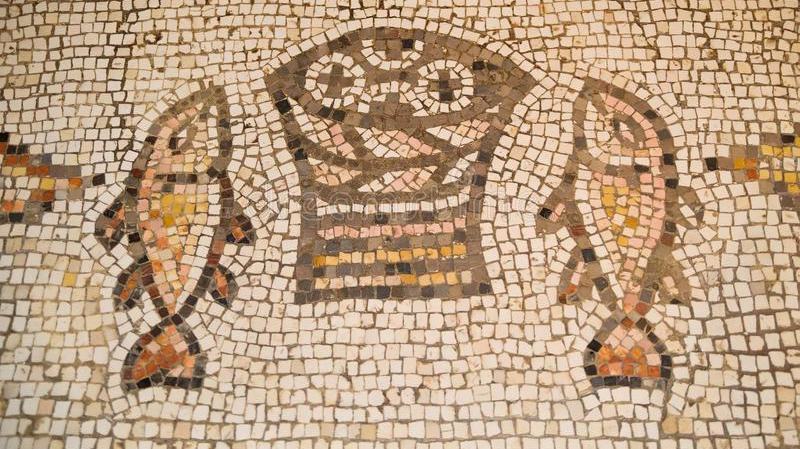
The disciples of course are taken aback as to how they could possibly feed the four thousand gathered. Jesus asked what they had with them and they shared just some bread and fish. Jesus took “the seven loaves and the fish, gave thanks, broke the loaves,
and gave them to the disciples, who in turn gave them to the crowds. They all ate and were satisfied. They picked up the fragments left over–seven baskets full” (Mt 15:36-37).
Again, Jesus met the needs of the people, not in a way of bare subsistence either, but he cured and healed those that came to him and provided enough food for all to eat so that everyone was satisfied. Not only that; Jesus started out only with seven loaves, but finished with seven baskets full of leftovers! Jesus is showing quite clearly to the disciples and all gathered, that God is a God of mercy, love, and abundance.
May our response, day in and day out, be the same as was those in the Gospel today. May we make time to sit at the teacher’s feet and learn from the master. We can do so by reading and seeking how to apply the Gospel to our daily life. May we pray and meditate with an openness to be led, to be present, and to learn from Jesus and those he sends into our life. May we seek healing from Jesus through our prayers of petition and bring the names of those who need healing before him in our prayers of intercession. May we not stop there.
This Advent let us trust in Jesus, believe in Jesus, have faith in Jesus, and glorify God the Father. Let us surrender our will to God and live for him as Jesus did, and may we serve as he did. Not stopping to ask for identification, religion, race, gender, creed, or political affiliation. And no matter how little we have, let us give it to Jesus in solidarity for his purpose, as did the disciples with the seven loaves and fish, so to experience with those we serve, the abundance, love, and grace of our loving God and Father.

Image from loaves and fish mosaic found in the Church of the Multiplication in Tabgha, Israel on the northwest shore along the Sea of Galilee. Picture from link:

https://www.dreamstime.com/stock-photography-ancient-mosaic-tabgha-image9375762

Lohfink, Gerhard. No Irrelevant Jesus: On Jesus and the Church Today. Collegeville, MN: Liturgical Press, 2014.

Link for today’s Mass readings:

http://www.usccb.org/bible/readings/120617.cfm
 

The Wonder of Creation, The Wonder of the Creator – God our Father!

“All things have been handed over to me by my Father. No one knows who the Son is except the Father, and who the Father is except the Son and anyone to whom the Son wishes to reveal him” (Lk 10:22).
God the Father knows God the Son and God the Son knows the Father. They do not just know about each other, they know each other with a deep intimacy that is far beyond our human comprehension. What can blow our mind even more, if we take the time to contemplate this gift we are preparing to celebrate this Advent, the coming of Jesus into our lives, is the deepest reality that this infinite knowing between God the Father and God the Son we can participate in!
“… anyone to whom the Son wishes to reveal him.” Jesus wished and wishes to reveal his Father, he came for exactly that reason: to reveal his Father to us, to undo the effects of the sin of separation that has so ruptured and wounded our relationship with God our Father. He came as reconciliation, he came to restore our relationship with God. In this way we can come not just to know about God, but to intimately know God as he does.
For us to know God the Father ourselves is beyond an intellectual exercise, it is beyond the grasp of scientific empiricism. Knowing God is who he has created us to be and is a gift of grace restored to us through his Son who became one with us so we could become one with him. Knowing God the Father is not about proving that he exists, this will end in utter frustration because God is not a being, though he is the infinite foundation of our existence. We can discuss attributes about God, what God is and more easily what God is not.
If we want to know God, we are invited to do so as we would get to know anyone else. We are invited to spend time with him. The amazing part about all of this is that the infinite creator of all existence, knows us, us!!! We in the whole realm of the cosmos are so insignificant it is beyond the realm of the deepest imaginative pursuits, but he knows us and wants to be known by us. Does he need us, no. Sorry, if you feel that is a slight. But it is really a deeper wonder! God does not need us in the least, but loves us and seeks to be in relationship with us.
Spend today embracing the wonder of creation, the wonder of our creator, the vast expanse of it all, have you seen the moon the past few nights? May we sit in silent wonder and adoration in the gift that the season of Advent lays out for us: the wonder of wonders is that Jesus wishes to reveal his Father to us so that we can enjoy getting to know the Father and the Son, and so we can share the same Love they share, God the Holy Spirit!

Photo of buffalo I took while driving in South Dakota in between Pine Ridge and Rosebud reservations – a moment of wonder at God’s creation as it appeared the buffalo were walking right out of the sun.

Link for today’s Mass readings:

http://www.usccb.org/bible/readings/120517.cfm

Learning From the Centurion

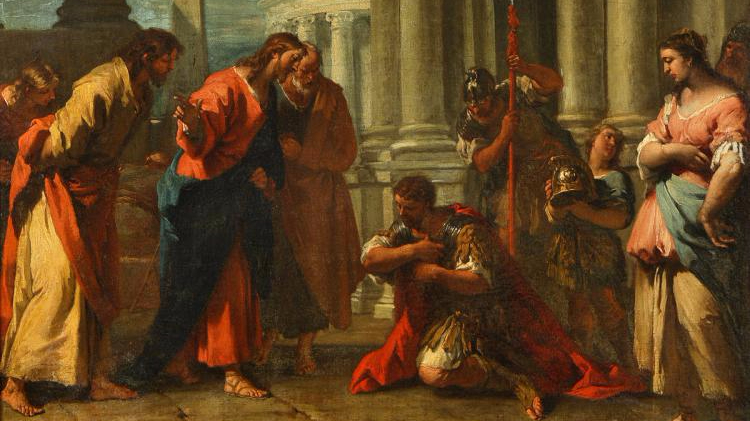
“Amen, I say to you, in no one in Israel have I found such faith. I say to you, many will come from the east and the west, and will recline with Abraham, Isaac, and Jacob at the banquet in the Kingdom of heaven” (Mt 8:10-13).
The one to whom Jesus is referring to is a Roman centurion who approached Jesus seeking healing for his servant. I imagine that Jesus was not only amazed with the man’s humility, recognizing his sinfulness, not only that he believed that Jesus could heal from a distance with simply his word, but also that he was aware of the need and suffering of his slave and willingness to do something about it. This Roman centurion clearly embodied the teachings of Jesus! The centurion’s words are the words we speak before receiving Jesus in the Eucharist during each Mass: “Lord, I am not worthy that you should enter under my roof, but only say the word and I shall be healed.”
The ticket for the banquet to the Kingdom of Heaven is not only for the chosen people of Israel, but also for all those from the east and the west who follow the will of the Father as did Abraham, Isaac, and Jacob, like this centurion, who has much to say to us this Advent.
The first point we can learn from the centurion is that he was aware of the need of his slave. The slave was not invisible to him, he was not indifferent to his suffering and pain. We need to be aware of those who are in need among us. We need to resist the temptation to walk around, over, or by others that are different in any way. We need to embrace the gift of our diversity, not stiff arm and keep those who are different at arm’s length.
We also can see the need to embrace humility and acknowledge our own sinfulness, and when we do so, we are better able to see other’s needs. None of us are perfect. No one person is above any other. We all have gifts as well as shortcomings. We need each other because we complement one another. When we engage in dialogue and cooperation we are stronger.
Not only do we need one another, we need a savior, for apart from Jesus, who we prepare to encounter this Advent season, we can do nothing, but with Jesus all things are possible. Jesus is the Truth and the Fulfillment that we seek. He has sent out a universal invitation of communion for all, to Israel first and then to all from east and west, north and south. Our yes comes in the form of the Roman Centurion who recognized his own sinfulness, acknowledged it before Jesus, was aware of the need of his slave and moved to seek help when he knew he was helpless, and then had faith and hope in the one who could provide healing.
This Advent may we take time to examine our conscience, have the humility to confess our sins, to acknowledge when and where we have been wrong and wronged others. May we be willing to forgive others and seek forgiveness ourselves. May we be willing to resist the temptation to embrace fear and close ourselves off from others and be indifferent to the plight and needs of others, but instead assume a posture of openness to the gift of the rich diversity of our humanity. May we be willing to lock arms with one another in solidarity to seek the healing and betterment of all peoples in our communities, states, nation, and world. We have so much to offer one another when we are willing to work together instead of against one another. We who have received the forgiveness of Jesus and felt the embrace of his love are to be the first to reach out in hope to those who stand at a distance. As Jesus called us and we have answered yes, we are to call others who he has called, but are not able to hear his voice.

Painting: Sebastiano Ricci – Christ Heals the Centurion’s Servant, 1726-1729

Link for today’s Mass readings:

http://www.usccb.org/bible/readings/120417.cfm


As Night Gives Way to Day, May We Watch and Pray

As the earth turned again one more time on its axis last night, and the shadows began to fall, night slowly crept over each part of our planet. Our sacred text, our sacred word, is not only written in the Bible, but the finger of God has traced his word across all of the earth, the galaxy, the universe, the whole of the created order, for God continues to write his love song. The ground, foundation, and source of creation and our very being is the outpouring of the Trinitarian Love expressed between God the Father, God the Son, and God the Holy Spirit.
As night gently made its way across our miniscule earth in this part of the Milky Way, so also came with it the beginning of the new liturgical year and the season of Advent. We heard or will hear again today the words of Jesus to his disciples in today’s Gospel for the first Sunday of Advent: “Be watchful! Be alert! You do not know when the time will come” (Mk 13:33).
Traditionally, the readings of the first two weeks of Advent focus on our watching for the second coming of Jesus. We are to watch and pray, two words that may challenge many of us who instead are too busy and in a tense posture ready to react. But as the daily cycle of day to night and night to day repeats each day, so are we called to enter into a daily rhythm of watching and praying so that we can be more aware and more alert for the signs of his coming, like a watchman standing guard over the city.
During Advent we also prepare in the final two weeks to remember again the first humble coming of Jesus, the Incarnation, in which the infinite Son of God took on flesh at his miraculous conception in the womb of Mary and became man. Fully God and fully man he experienced our human condition in the most vulnerable of settings. We are a people of memory, though we often forget, that is why we hear the story again of the simple birth of our savior, who many rejected even then, saying there was no room for him in the inn.
The third way we prepare for the coming of Jesus is in our everyday experiences. “Be watchful! Be alert! You do not know when the time will come” We who have much in way of material comfort need to remember, how God heard the cry of the poor and saved his people by sending Moses to free them from their bondage in Egypt, he sent them judges and kings to guide them, and he sent his Son to free us from our bondage to the sin of our pride, seeking of fame and celebrity, greed, lust, sloth or acedia, gluttony, despair, and wrath.
May we remember this Advent who we are and who we are called to be: the Church of Jesus Christ, “is the people of God, and the people of God welcome, love, forgive, and encourage others by how they live” (McCann, 5). As we prepare for Jesus coming again, and to remember his birth, may we also remember to watch for him in our encounters with those we meet each day, and to spend time in the rhythm of his creation.
We have been created by Love and to love. As gently as the night gave way to the morning rays of the sun this morning, may we live and move more gently upon this earth. May our thoughts, actions, and words be filled  to overflowing with kindness, compassion, and mercy toward those we encounter today. May we remember the forgotten, the invisible, the lonely, and dehumanized, may we see Jesus as St. Mother Teresa saw him in the distressing disguise of the poor: the material poor as well as the spiritually poor, the one hundred percent, who are in need of a savior this Christmas.

Photo: Sunrise at Our Lady of Florida Spiritual Center

McCann, Deborah. 30 Days of Reflections and Prayers: What Pope Francis Says About Mercy. New London, CT: Twenty-Third Publications, 2015.

Link to to today’s Mass readings:

http://www.usccb.org/bible/readings/120317.cfm

May We Stand Before Jesus, as Vigilant People of Prayer

“Be vigilant at all times and pray that you have the strength to escape the tribulations that are imminent and to stand before the Son of Man” (21:36).
These are the last words we will hear or read this year from the readings of the Mass. The season of Advent and the new liturgical year begins tonight at the vigil Mass. As I read these words, I thought they are not only good words to end the year with but that they would also be good words to read at the beginning of each day.
“Be vigilant at all times” are certainly words to abide by. We need to resist the temptation of speeding through life with blinders on and not taking time to listen to that quiet voice of God that guides us day in and day out. The more we hear the subtle, quiet leading of the Holy Spirit and ignore it, the less we grow in our awareness of his presence in our lives or the presence of those who need his mercy, grace, and love. Worse, the more we listen to the myriad of other voices that are not of God, they might lead us into areas of mind games, action, and settings that our not for our highest hope and good. That is why prayer is so important, so we can develop an ear for our loving Father’s guidings and urgings. He speaks to us all the time, but if we want what we want when we want, if we just keep up our pace at a fever pitch, if we are feeding ourselves with apparent goods, we can open ourselves up to some pretty horrible scenarios.
We must pray that we may have the strength to escape the tribulations that are imminent. There are predators that seek to do us harm in so many ways and forms that are unconscionable, yet pretending that they aren’t there, doesn’t work, being paralyzed in fear will not work. We do not need to be paranoid, but we do need to be aware. We need to be aware of what our boundaries are for ourselves and communicate that with others, in the smallest to the greatest ways. Each time we listen to our intuition, our conscience, the whisperings of the Holy Spirit, we increase our confidence in who we are, we are able to hear clearer His voice, and who God leads us to be. We can also side step scenarios that can lead us down some very dark pathways.
Even while being vigilant, people of prayer, darkness can still fall upon us and those we care for. We still live in a fallen world of sin. There is darkness within the Church as well. But in each and every case, we are to maintain hope in the one who we prepare for this Advent, the Son of Man, who we stand before. The Light that shines in the darkness who has not and will not be overcome by it (cf. John 1:5). Jesus is the one we can trust. Jesus is the one who will accompany us through the trials and tribulations we face. In the end, Jesus the Christ will be the one to lead us home to the Father’s embrace for all eternity. Watch and pray!

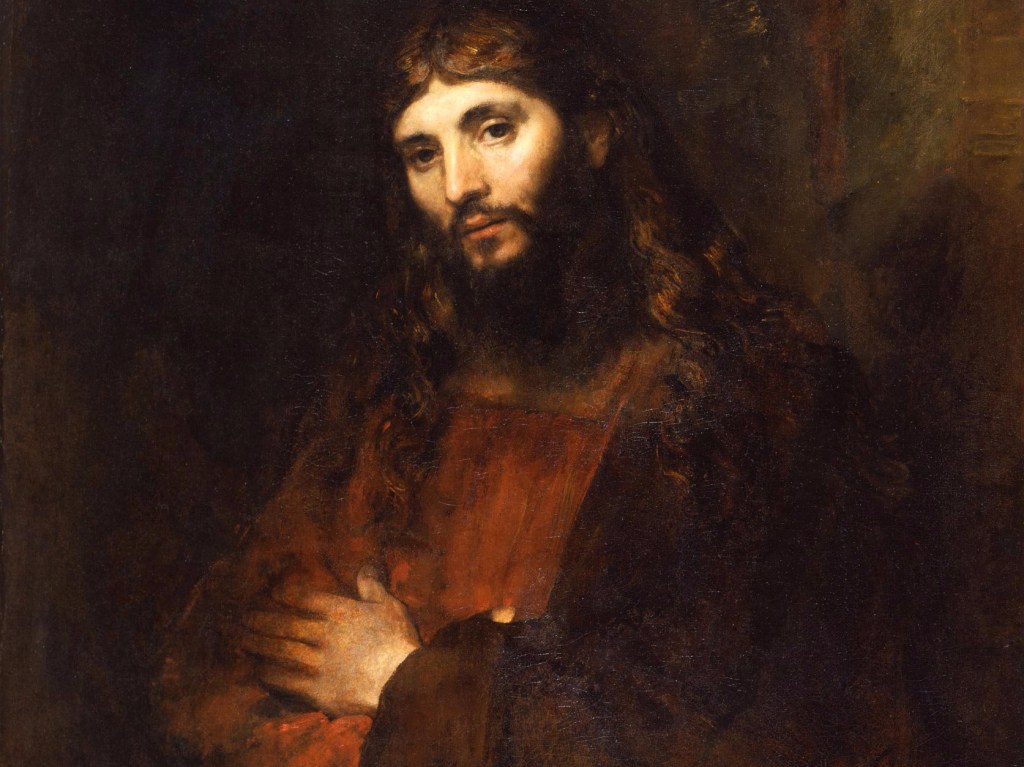
Painting: Rembrandt’s Christ with Arms Folded. To see a fuller version of the image, go to main page of my blog, click on menu in upper right corner of page, click on blog and scroll down to postings listed.

Link for today’s Mass readings:

http://www.usccb.org/bible/readings/120217.cfm

Signs of the Seasons

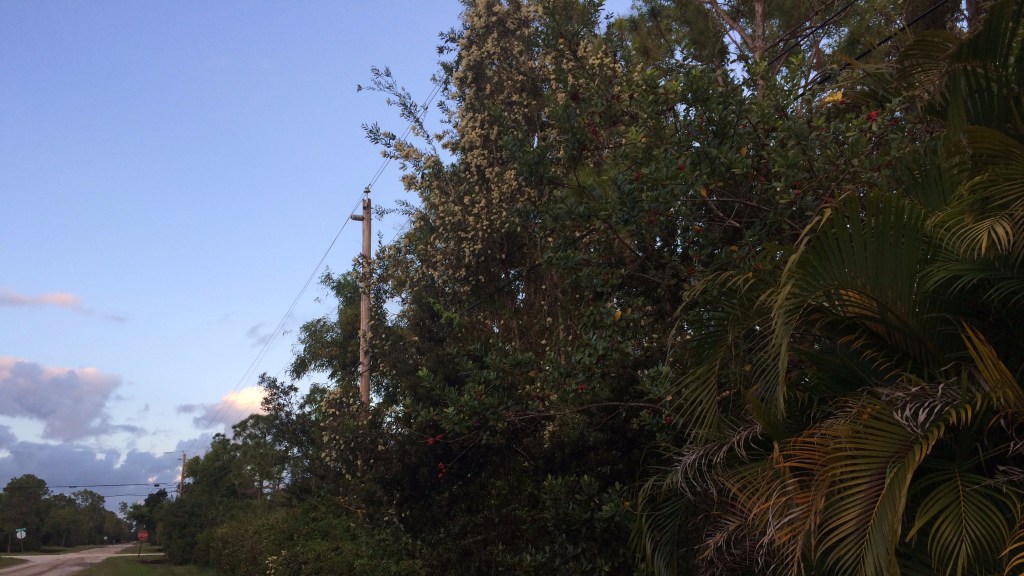
When I arrived home yesterday after school, rolled our garbage can and carried our recycle bins to the road I noticed the white blooms of our melaleuca trees, the red berries on our Florida hollies, and a green vine and acacia trees showing some buds with yellow. This scene is not as majestic as the brilliance of the Northeast maples and oaks, but each of the signs of nature’s poetry mean the same thing: Fall has arrived.
Jesus, in today’s Gospel reading from Luke, related how the signs of summer are near: “Consider the fig tree and all the other trees. When their buds burst open, you see for yourselves and know that summer is now near; in the same way, when you see these things happening, know that the Kingdom of God is near” (Lk 21:29-31).
When we are aware around us to the signs, nature helps us to be aware of the seasons. A handful of people I haved talked to in Florida say that we have no Fall Season. What they are most likely saying is we do not have a Fall as other people in the north experience. Again it isn’t as brilliant, but there are signs to see. If you have been reading my blog regularly, I believe I have mentioned our swamp maple at least twice. When the maple changes to bright red and yellow winter is here in Florida!
Depending on our focus, and even attitude, these natural signs can be noticed or missed. Just as with Jesus’ public ministry, his exorcisms, healings, and teachings, can be read as the signs of the presence of the kingdom of God in the midst of his followers and onlookers, or they can be missed or dismissed. More powerfully, but more subtly, were the signs within the disciples of Jesus themselves. Did they notice anything different about their lives having experienced spending time with Jesus? The budding, blooming and bursting forth for them would not be more readily apparent and visible until after the Resurrection, Ascension, and coming of the Holy Spirit at Pentecost, but for them to stick with Jesus and to return to him after they left him, the seeds Jesus planted must have taken firm root.
How about us today? Do we notice any signs, any differences in our lives because we believe in and are disciples of Jesus? Better yet, do those closest to us notice? If you are not sure even where to look, St Paul can be of help. Take a look to see if you have any mature, “fruit of the Spirit” such as “love, joy, peace, patience, kindness, generosity, faithfulness, gentleness, self-control” (Galatians 5:22-23). Meditate on these attributes, see which one seem to be a bit frail and could use some care. Consider paying attention to one intentionally over this season of Advent. If you would like to be more loving, patient, or kind, coming into this Christmas Season, spend some time each day making a commitment to pray, think, speak, and act to develop your chosen fruit. Examine your conscience at the end of the day to see how you did. Of course ask the Holy Spirit for help. Would be nice for one to ripen in time for Christmas. Any one of these gifts would be wonderful to share!

Photo: Some of the bloom of Fall!

Link for today’s Mass readings:

http://www.usccb.org/bible/readings/120117.cfm

Say Yes to Jesus and Fish for People!

He said to them, “Come after me, and I will make you fishers of men” (Mt 4:19).
Today’s Gospel account recalls Jesus calling of Simon Peter, Andrew, James, and John. An interesting contextual point about this recollection is that Jesus was the one doing the calling. Spiritual teachers were common during the time of Jesus within and without of Judaism. What was common in those accounts were that the disciples came to the master. It was rarer that the master would search out and call his followers.
Another point that we can observe is that Jesus met the brothers in the midst of their everyday activities of fishing. Jesus came to them as they were working. The encounter with Jesus was not on some isolated mountain top, it was not at a gathering revival, nor at the temple or synagogue. Jesus met them in the midst of Simon and Andrew casting their nets and James and John mending theirs.
A third point we can gain from this short pericope is that Jesus immediately followed up his invitation to Simon and Andrew to come after him with the insistence that they will be fishers of people. They to are not going to enter their new apprenticeship with Jesus having the idea that they will wait for others to come to them. They will travel out of their comfort zones, literally, leaving their fishing businesses, their security, and trusting in Jesus as they learn about and share the Good News that the kingdom of God is at hand.
The three points above apply directly to us as well. Jesus invites us, we do not need to go looking for him. We just need to be open to receiving the invitation and saying yes as Simon, Andrew, James, and John had done. Jesus also meets us in our everyday moments. He encounters us in our workplace, among our interactions with family and friends, in our class and dorm rooms, as well as in our activities and leisure. Jesus often meets us in those unprepared for interruptions we experience. Jesus certainly meets us in our prayer, but if we have the desire to pray it is because he has already placed it there. Also, our time of prayer helps us slow down and become aware of his presence in our life, so that when we leave our times of prayer and worship, we will be more able to see him in the midst of our daily activities.
Finally, Jesus calls us to share what we have learned and experienced from our encounter with him. No matter how small. When we reach out in faith the Holy Spirit will provide the means. We will make mistakes, we will not be perfect, but if we are humble, we will learn and grow as his disciples. Remember who he called? Peter, Andrew, James, and John. There are four Gospels full of accounts of their false starts, gafs, and “Oops”. We grow and learn by doing. As we crawl, we will soon learn to walk, as we walk we will soon learn to run, and as we run, we will soon learn to fly!
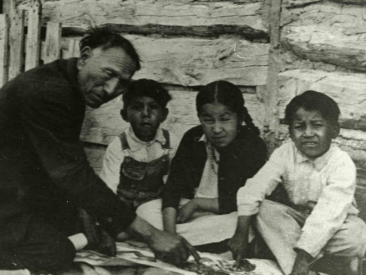
We are not just to sit on the gifts Jesus has given us, we are not to wait for others to come up to ask us about our relationship with Jesus. We are to live our life and be open for opportunities to share our faith by accompanying those in our realm of influence through the normal means of interaction we have. Again, remembering first and foremost to do so in a way that respects the dignity of each person we encounter. One of the reasons the cause for canonization has recently been promoted for Nicholas Black Elk, a wicasa wakan, Lakota holy man, was that when he, like St Andrew whose feast we celebrate today, said yes to Jesus, he became a catechist, and 400 people came to believe in Jesus also. Let us say yes to Jesus’ invitation to come and follow him, and become fishers of people! St Andrew pray for us, Servant of God Nicholas Black Elk pray for us.

Photo: Source Marquette University Catholic Mission Archives. Nicholas Black Elk catechizing the children of Broken Nose.

Link for today’s Mass readings:

http://www.usccb.org/bible/readings/113017.cfm


We Strive for an Imperishable Crown!

Jesus said to the crowd: “They will seize and persecute you, they will hand you over to the synagogues and to prisons, and they will have you led before kings and governors
because of my name” (Lk 21:12).
Each of the predictions above; being seized, persecuted, handed over, and led before the rulers happened to Jesus’ disciples as was recorded by Luke in his second volume, the Acts of the Apostles. Jesus did not nor does he hide or paint a rosy picture of discipleship. He consistently shared and modeled in his own life how demanding it will be to follow his lead, the will of his Father, the demands of discipleship, as well as endure the reaction of others. In fact, the number of Christian martyrs in the twentieth century has risen to a higher level than at any other time in history.
Yet, there have been those who have said yes to the invitation generation after generation. We each have to make our own commitment to Christ. It is a personal invitation and a personal response. Though the demands, the sacrifices, and the expectations are high, Jesus is present with us through the journey. St. Paul equated discipleship with the running of a race: “Every athlete exercises discipline in every way. They do it to win a perishable crown, but we a imperishable one” (I Cor 9:25).
Any athlete, musician, artist, or person engaged in any endeavor, must discipline themselves to accomplish their goal of freedom for mastery, for excellence. Without any concerted discipline, fluency and freedom for the sought after goal will not be attained. The same is true with discipleship.
The discipline Jesus presents today in the Gospel of Luke is that we may and will face overt pushback if we are authentically living our faith. We are inspired to not even be swayed by family, friends, and/or peers. This is where the issue of putting God first comes to bear again. We are not to be belligerent or in someone’s face about living our faith. We are to meet others with love, mercy, and respect, while at the same time not backing down and away from what we believe. We are called to learn the teachings of our faith, share it with others, and clarify what we believe in dialogue and charity.
May we respect and allow another the opportunity to do the same. From a place of mutual respect and honoring the diversity of others within and without of our own faith tradition, as well as those having none, we grow. People are free to decide as they wish. We need to resist the temptation to water down what we believe to be accepted or liked. Sometimes people will react emotionally, rudely, crudely, or even violently. Yet that is not an excuse nor does it provide the green light to respond in kind. If we do, then we may feed into the person’s preconceived notions. As Archbishop Fulton Sheen said: “There are not one hundred people in the United States who hate the Catholic Church, but there are millions who hate what they wrongly perceive the Catholic Church to be.” Our job is to learn our faith well and dialogue with others.
Being a disciple of Jesus is demanding, will take discipline, and we will face hardship, misunderstanding, as well as outright hostility at times. Yet, the prize, a foretaste of which we can receive in this life and the fullness of it in the next, is the gift of deepening our relationship with the one who made us for himself. Jesus is with us every step of the way. He invites us to yoke ourselves with him. When we do, there is also amid the trials and tribulations a joy and a peace that surpasses all understanding (cf. Philippians 4:7). This makes the demands and trials worth all the effort. May we be true to who we are and who God calls us to be! “I do not fight as if I were shadowboxing. No, I drive my body and train it, for fear that, after preaching to others, I myself should be disqualified” (1 Cor 9:26-27). We do not strive for a perishable crown, but an imperishable one!

Photo from my Freshmen year theatrical makeup class at Central CT State University. My design project was to make myself look like Rocky Balboa. “I do not fight as if I were shadowboxing :)”

Link for today’s Mass reading:

http://www.usccb.org/bible/readings/112917.cfm

End of the World? Only the Father Knows.

While some people were speaking about how the temple was adorned with costly stones and votive offerings, Jesus said, “All that you see here– the days will come when there will not be left a stone upon another stone that will not be thrown down” (Lk 21:5-6).
As we read yesterday, Jesus observed the widow donating her two coins. Today Jesus observes those who are commenting about the wonders of Herod’s temple. Jesus responds by sharing, as did Jeremiah, that the temple will fall, and not a stone upon another stone will be left. This statement would come to pass in 70 AD, when the Romans destroyed the temple and crushed the Jewish rebellion in the Jewish War from 66-70 AD. The only significant remnant of the temple still to this day is the western retaining wall, also known as the Wailing Wall.
The people of the ancient Near East certainly witnessed to and passed on tales of the rise and fall of mighty kingdoms beginning with Egypt’s impressive reign from about 3,000 to 721 BC, followed by Assyria who then gave way to Babylon. The Babylonian army would destroy Solomon’s temple as predicted by the prophet Jeremiah. The Persians would then overtake the Babylonians and push west only to be repelled by the unification of the Greek city states under the Macedonian Philip and then his son Alexander the Great who would continue south and east all the way to India. The massive Greek empire would then give way to Rome. Rome would then fall in 476 AD.
As each empire fell, and definitely with the fall of Rome, there was the great concern that the end of the world drew nigh. Throughout the ages up until the present day, nation has continued to “rise against nation, and kingdom against kingdom…” as well as “powerful earthquakes, famines, and plagues from place to place” (Lk 21:10-11) that made their historical impressions on those who lived through them. There have also been a plethora of end of the world predictions from the ancients up to the more well known modern prognosticators such as Jeane Dixon, Pat Robertson, a handful of predictors around 2000, and most recently Harold Camping who caught a lot of attention with his prediction of the end of the world that was to have happened on October 21, 2011.
As of this typing we are still here. In the Gospels of Mark and Matthew they both pretty much record Jesus sharing the same point almost word for word: “But of that day or that hour no one knows, not even the angels in heaven, nor the Son, but only the Father” (see Mark 13:32 and Matthew 24:36, RSV translation). In Luke’s presentation from today’s Gospel he moves further away from Mark and Matthew’s eschatological or end of times talk, and spoke more toward the destruction of the temple. We have a few more days of Luke and Ordinary Time to go before the end of the liturgical year and we begin Advent.
When will the end of the world come? That is for the Father to know. We are to be about striving to be good stewards here and now, making our corner of the world a better place for all. May we resist being enamored by our own technological ingenuity, as were those who were admiring the adornment of Herod’s temple (I wrote enamored; technology has its place and can be genuinely beneficial. I do recognize after all that I am typing on a laptop and will have sent this out via social media and not pony express.). May we consistently embrace the wonder of the gift of life; human, animal, plant, all of God’s creation. May the decisions we make and the actions we take have as a starting point the dignity of humanity and the respect for creation and how we will impact the next seven generations.

Photo: Cardinal Newman HS morning moon.

Link for today’s Mass readings:

http://www.usccb.org/bible/readings/112817.cfm

“Give until it hurts with a smile.”

“I tell you truly, this poor widow put in more than all the rest; for those others have all made offerings from their surplus wealth, but she, from her poverty, has offered her whole livelihood” (Lk 21:3-4).
The biblical recommendation for giving is a tithe of our income, meaning ten per cent. We can see an example of this in the book of Genesis when Abraham offers a tithe of his possessions to the priest Melchizedek in thanksgiving to God for a successful battle through which he rescued his nephew Lot (cf. Genesis 28:20-22). Tithing was practiced consistently and this or the giving of alms was most likely what Jesus was observing at the temple. The widow went further than giving a simple tithe. Widows in Jesus’ time were often destitute and needed care and support from others, often recipients of alms. There was a long tradition in Judaism of the mandate to care for the widow and orphaned. This widow, though giving a significantly smaller amount than the heftier donations before her, proportionally gave much more, indeed, “her whole livelihood.”
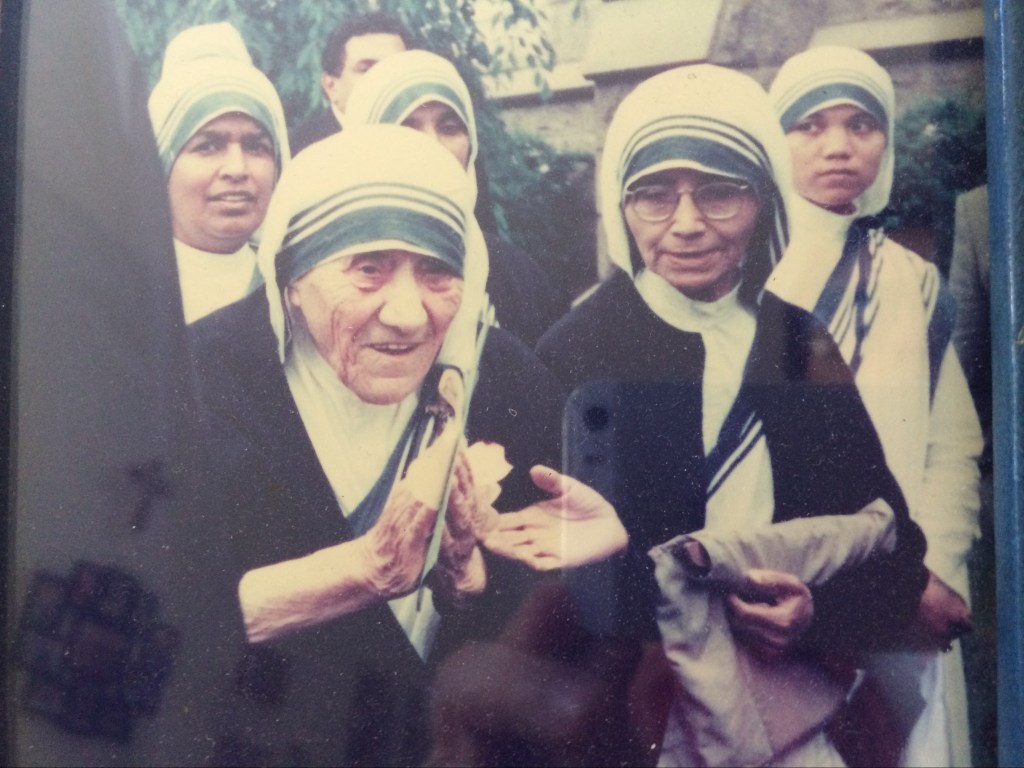
St. Mother Teresa understood these verses very well, especially after receiving her “second call” in which she left her Loretto Convent and went to serve among the poorest of the poor in Calcutta. Often in her talks she mentioned giving until it hurts, not from our surplus, but more like the widow. To her this was true giving. One of the many examples Mother Teresa witnessed of this was when she gave a cup of rice to a Hindu family. The mother was very grateful for the gift and as soon as she received the rice, she went to her Muslim neighbors and gave them half of what she had received. Upon her return, the woman told Mother Teresa, “They are hungry too.”
What impressed Mother Teresa was not that the woman shared the meager amount that she received, she had observed the generosity of the poor often. She was touched by the fact that this woman was aware of the need. Mother’s charge to us is, “Are we aware?”
Are we willing to see the needs within our own family as well as beyond to the needs of others? Are we then willing to share? We do not need to share just monetarily. We can and ought to discern how we can share of our time, talent, and treasure. Jesus again with his observation of the widow’s gift is showing us what the kingdom of God is to be. We are to recognize all that we have is a gift from God and all truly belongs to him. We are simply stewards of what he has given us. Remember the recent parables of the talents, the gold coins, and Matthew 25 from yesterday, what you do to the least of my brothers, you do it to me? May we take some time to pray and ask God how we can best be stewards of our time, talent, and treasure so that all of our life is a participation in the building up of the kingdom of God. Let us, as St Mother Teresa shared, “give until it hurts with a smile” so we can experience the joy of sharing God’s love.

Photo of photo of Mother Teresa that I took when seeing her in Massachusetts in early 90’s.

Link of video of St Mother Teresa talk at National Prayer Breakfast 1994. Her talk begins at 48:58: https://www.c-span.org/video/?54274-1/national-prayer-breakfast

Link for today’s Mass readings:

http://www.usccb.org/bible/readings/112717.cfm