Let us be there for one another.

In today’s Gospel from Luke 13:18-21, Jesus compares the Kingdom of God to a mustard seed and yeast. Each of these elements are not only small but tiny. As an embryo within the shell, the seed is planted in the earth, provided with nourishment, and continues to germinate, develop and grow into a large bush. Yeast, a single-cell organism, is the catalyst for assisting dough to rise, strengthen, and ferment, thus providing a more appealing and tasty bread.

Jesus offered these simple examples from everyday agrarian life that his listeners definitely understood from experience. If we have planted seeds or made our own homemade bread, we could be in a better position to relate to these two small parables as well. Jesus himself worked in small ways, person to person, contact to contact, through personally inviting others to: follow, be healed, be exorcised, and/or be taught. Jesus’ interaction was not abstract theory but happened on the concrete, one to one level of breaking bread together, walking along the road together, sharing stories, healing with his touch, and he still does so today. The smallest, genuine act of kindness or love can seem insignificant to the onlooker, but what happens unseen, can show dramatic results over time.

There is a story that expresses this point called, “A Simple Gesture” from the collection Chicken Soup for the Soul. The short tale describes how one day a boy named Mark was walking home from school and came upon another boy who had tripped and dropped all of his books, two sweaters, his bat, glove and tape recorder. Mark offered to help carry some of the load of the other boy, who, as they walked home, found out was named Bill. They talked about common interests and when they approached Bill’s home, Bill invited Mark in for a Coke and to watch some T.V. They spent the afternoon together, then interacted on occasion for the rest of their middle school and into their high school years.

Three weeks prior to their graduation, Bill asked Mark if they could talk. Bill shared that the reason he had been carrying all of that stuff home that day was because he didn’t want to leave a mess for anyone else to clean up. He had saved some of his mother’s sleeping pills and had planned to commit suicide. Bill shared that, after their original encounter and afternoon together, he realized if he had killed himself that day he would have missed more opportunities to talk and laugh. Bill finished the conversation by saying, “So you see, Mark, when you picked up my books that day, you did a lot more. You saved my life” (Canfield and Hansen, 35-36).

Personal encounter was how Jesus helped others to realize that the Kingdom of God was at hand. Mark, in committing a random act of kindness for Bill, showed how this can still be true today. Like a modern day Good Samaritan parable, “A Simple Gesture”, helps us to see that when we are aware of opportunities to help and act upon them no matter how small, with genuine care, we can have a dramatic affect on another’s life. The opposite is also true. When we do not reach out or stand up for another, we can have a dramatic affect on another’s life.

Many people have a lot on their plate, we may not be aware of even half of what others are going through. That is why we need to be attentive to the move of the Spirit in our lives. When we are encouraged to be present to others in their time of need, may we summon the courage to will the good of the other. In doing so, we become like the mustard seed, or the yeast, in another’s life. We may affect the positive germination that though may be hidden over time, and what may appear to be miniscule or mundane in the moment, may in fact be life changing and transforming.


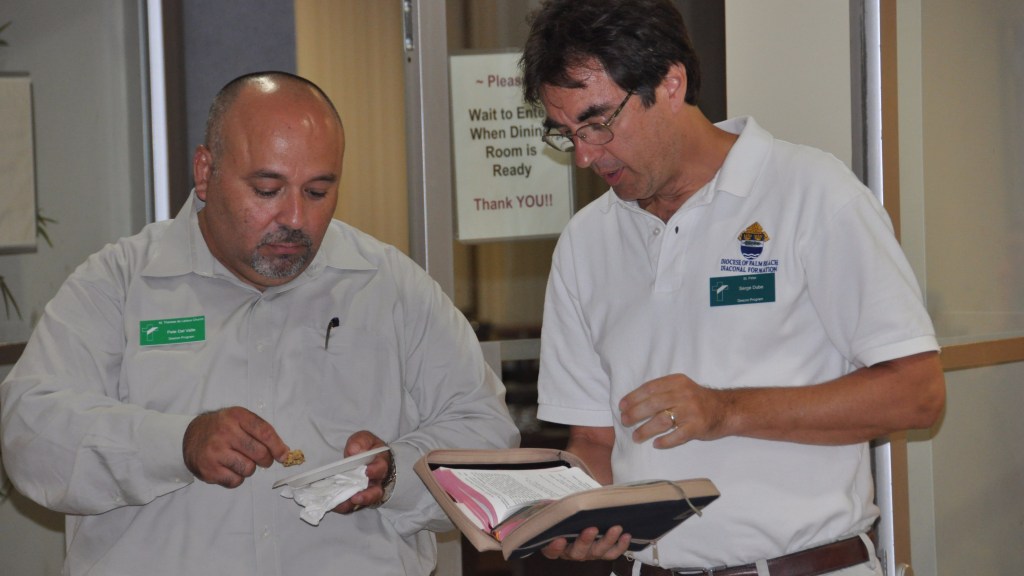
Photo: Planning prayer with my classmate and brother Pete at husband/wife retreat during formation at Our Lady of Florida Spiritual Center.

Canfield, Jack and Hansen, Mark Victor. Chicken Soup for the Soul. Deerfield Beach, FL: Health Communications, 1993.

Link for the Mass Readings of the Day:

http://www.usccb.org/bible/readings/103117.cfm
 

Awareness, Invitation, Healing

Jesus was teaching in a synagogue on the sabbath. And a woman was there who for eighteen years had been crippled by a spirit; she was bent over, completely incapable of standing erect. When Jesus saw her, he called to her and said, “Woman, you are set free of your infirmity.” He laid his hands on her, and she at once stood up straight and glorified God (Lk 13:1013).

In reading this Gospel passage, we see again the compassion and mercy of Jesus. He was aware and saw the need of the crippled woman, called her to himself, she came, and through his words and laying on of hands the woman was healed. He did so without hesitation, knowing that since he was healing on the sabbath this would bring further scrutiny and criticism. Yet, Jesus did not think of himself, he thought of the woman in need and made himself present to her.

Jesus provides for us a model of service. Jesus was aware of her need. The first step in building a culture of life is to respect the dignity of each person we encounter and to be aware of their need. It is much easier to not be aware or to operate from a position of they brought the issue on themselves. We can react with impatience because we really would rather not be bothered with another’s issues.

The next step is invitation. Once Jesus becomes aware of the woman, he invites her to come to him. Jesus did not impose his will, even to will the woman’s good and bring her healing. He instead invited her to come. We need to respect another’s option to say no to help and allow them to come on their own. Though there are times, such as those who are dealing with an addiction, when there may be a need for more direct intervention.

Let us resist being stumbling blocks to others in need of the healing presence of Jesus. We may or may not have the gift of healing, but we are all capable of accepting another where there are and as they are, we can will their good, and we can be a healing, understanding, and supportive presence to another in need. We can be a means of healing as were the four men who brought their crippled friend to Jesus through a roof (see Mark 2:1-12 and Matthew Matthew 9:1-8). We can bring the love and mercy of Christ to others. When there is awareness, invitation, acceptance of invitation, then there can be healing.


Link to the Mass readings for today:

http://www.usccb.org/bible/readings/103017.cfm

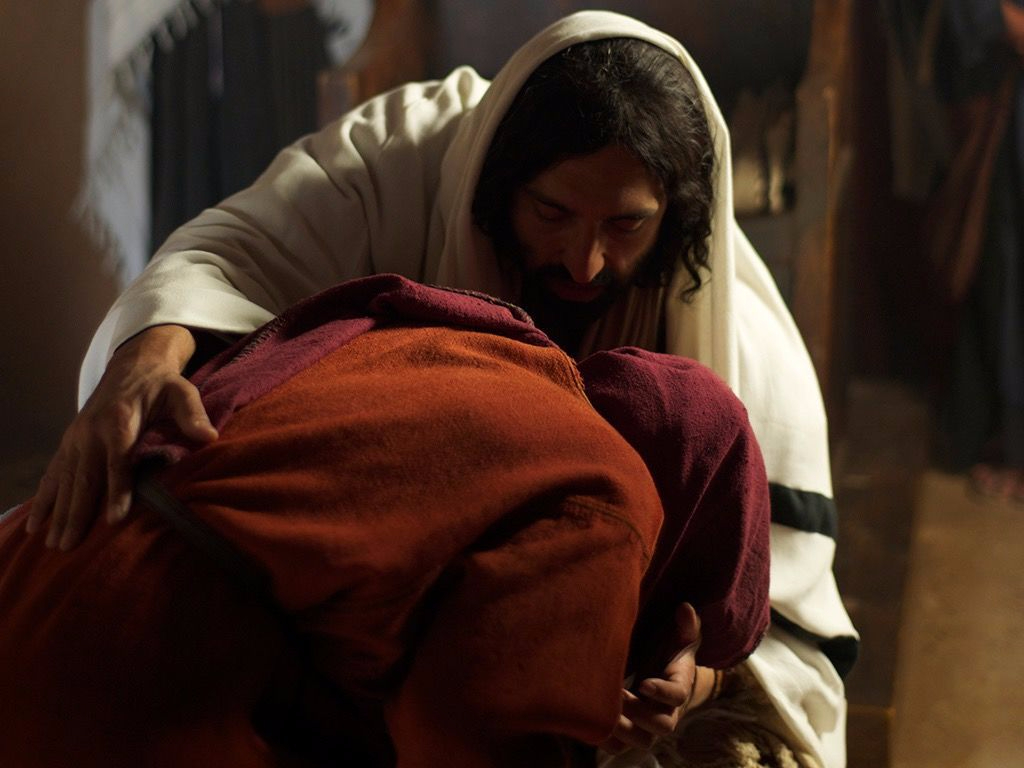
Photo: from freebibleimages.org

My God and My All!

“You shall love the Lord, your God, with all your heart, with all your soul, and with all your mind. This is the greatest and the first commandment. The second is like it: You shall love your neighbor as yourself. The whole law and the prophets depend on these two commandments.” (Mt 22:37-40).

The scholar of the law who asked Jesus to share with him which commandment of the law is the greatest was a common question among Jews for they had 613 laws! Following these laws was how one showed their faithfulness to God. Yet, the practicality of learning and practicing all 613 presented quite a challenge. How do we do with just following the Ten Commandments today? Could we even recite the Ten? Often then there was a discussion as to which were the most important and which were those of lesser rank.

The scholar brought Jesus into this debate. Jesus’ response, that we call today the Great Commandment, was a masterful synthesis of the Torah, the Law, or the Teachings. He drew from Deuteronomy 6:4-5 which was the beginning of the Shema, the prayer that Jews offered each morning and each evening while facing the Temple that stated: “Hear, O Israel! The Lord is our God, the Lord alone! Therefore, you shall love the Lord, your God, with all your heart, and with all your soul, and with all your strength.” Jesus then added to it Leviticus 19:18: “Take no revenge and cherish no grudge against your fellow countrymen. You shall love your neighbor as yourself. I am the Lord.”

As we witness time and again with Jesus, he did not come to abolish the law but to fulfill it (cf. Mt 5:17). Jesus sought to help people to come to know his Father who he knew so intimately, who he loved so fully, and he sought to make that way easier not harder. Though the Great Commandment sounds simple enough, and it is, it demands our whole self, our full commitment to be contemplatives in action. We are called to love God with our whole heart, soul, and mind. That means all of us, physically, socially, emotionally, and spiritually. We are to recognize that God is actively engaged in all of what we do and who we are in every aspect of our self-identity and integrity. Our lives will be richer and more fulfilled once we embrace, once we open ourselves up to this reality, and resist the temptation to compartmentalize our time with God. Saying we are only with God on Sunday while in the sanctuary of the Church but leaving him there in the tabernacle is not loving God with our whole heart, soul, and mind.  Stepping into the parking lot becomes like a time warp in which we go back into secular apparent reality, where in the first instant of encounter with our neighbor cutting us off with their car, our hand gesture is most likely not a blessing in the form of the sign of the cross.

If we can turn on a dime so quickly, have we really worshipped at all? Are we living our lives more as Pope Francis calls, “defeated Christians”? Are we just going through the motions of our faith, showing up but our heart, soul, and mind aren’t fully engaged? Pope Francis shares that “the one who confesses the faith well, the whole faith, has the ability to worship, to worship God” (Francis, 292).

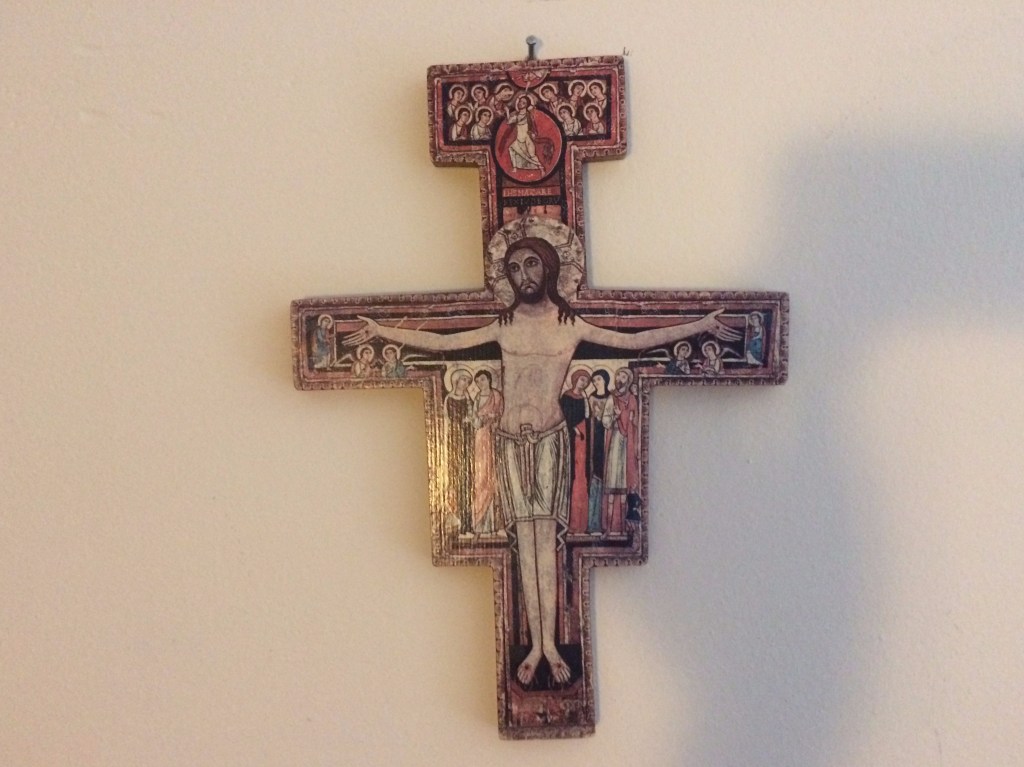
We become Christians, contemplatives in action when we give our all as did St Francis who would often pray this simple prayer “My God and my all”. He gave himself in love, all of who he was to God. He encountered the God of Jesus Christ who is Love, received his loving embrace, and went forth to share that love with others. This is called the Greatest Commandment not one of the Greatest Commandments, because loving God and neighbor is one and the same act.

May we embrace the gift of who God is for us, not just as the one who created us and went away to do whatever God does, that is deism, but the God who is unconditional love, the one who is present with us always, in all the practical and mundane we do, and in everyone we meet. Through this embrace of God and his love and going out from ourselves to will the good of the other, the better we will be able to heal from our wounds of prejudice, bigotry, selfishness, pride, greed, lust, fear, and anxiety.

Our very life is a blessing, a gift, to be thankful to God for and to share and bless others with. May each word we speak, each action we take, each facial gesture we express be one of encouragement, of support, of empowerment, of love. We can approach our life one day at a time making a commitment to love God and neighbor a little bit better today than yesterday. To aid us in our trust and conviction, let us pray often the prayer of St Francis, “My God and my all”.


Link for today’s Mass readings:

http://www.usccb.org/bible/readings/102917.cfm

Pope Francis. Encountering Truth: Meeting God in the Everyday. NY: Image, 2015

The Examen – St Ignatius of Loyola

The text below is from Fr. James Martin, S.J. originally posted on his Facebook page August 27, 2012. As a Jesuit, a speaker, an author, a spiritual director who has guided others in the practice of the Examen and more importantly one who practices the Examine daily. I feel he is in a much better position than I to explain the Examen. Read, watch, and pray!

The examen, or examination of conscience, is a quick prayer to help you to see where God was active in your day. Usually done for fifteen or twenty minutes at the end of the day, the prayer was popularized by St Ignatius of Loyola, the founder of the Jesuit Order, in his classic text, The Spiritual Exercises.
Use these five easy steps to pray the examen every and soon you will begin to see God’s presence more easily.

1.      Presence: Remember that you are in the presence of God in a special way when you           pray. Ask God for help in your prayer.

2.     Gratitude: Recall two or three things that happened today
for which you are especially grateful. Savor them. Then
thank God for these gifts.

3.     Review: Review your day from start to finish, noticing where
you experienced God’s presence. Notice everything from
large to small: from an enjoyable interaction with a friend to
the feel of the sun on your face. When did you love?
Where did you love?

4.     Sorrow: You may have sinned today or done something you
regret. Express your sorrow to God and ask for forgiveness.
If it’s a grave sin, pray about seeking forgiveness from the
person offended, or the sacrament of reconciliation.

5.     Grace: You may want to return to a meaningful part of your
prayer and speak to God about how you felt. At the close of
the prayer, ask for God’s grace for the following day.

Over time, as you pray the examen, you’ll notice God’s presence in the moment, rather than just at the end of the day. You’ll see that your whole day can be a kind of prayer. Soon you’ll discover that you’ve become, as Jesuits like to say, contemplatives in action.

• Fr. James Martin, S.J.

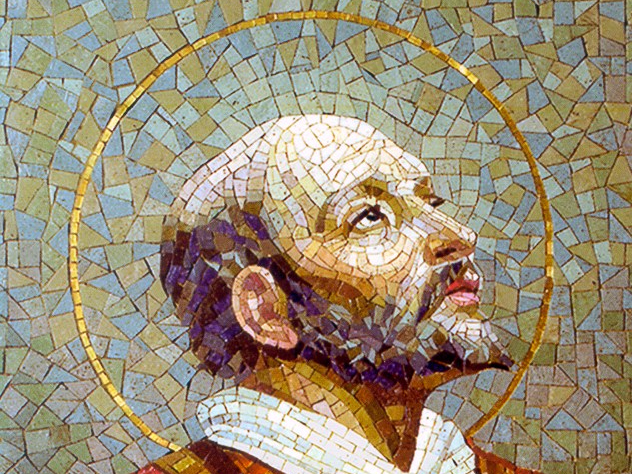
Photo of mosaic accessed from:

Story

A twenty minute video clip of Fr. Jim explaining the Examen:

Let Us Turn Our Heart and Mind to God in Prayer

Jesus went up to the mountain to pray, and he spent the night in prayer to God (Lk 6-12).

Jesus spent the whole night in prayer to God. When his disciples asked Jesus to teach them to pray he taught them what we call the Our Father or Lord’s Prayer. What is prayer? All of us as human beings seek meaning and to belong. We desire security and stability, as well as direction and adventure. We want to be accepted, to love and to be loved: to be in relationship. These are very primary yearnings that can operate consciously or unconsciously. The key is to be aware of our needs and desires, and resist the temptations of filling and appeasing our wants such that we aspire to achieve apparent goods, that ultimately leave us unsatisfied and more important ignoring what will truly fulfill us: developing a relationship with God through prayer.

If you want to pray, you have already begun. The desire in and of itself to pray is prayer. The danger of reading about prayer in learning to pray, is that we think we are praying, but only imagining we are doing so because as we turn each page, complete each chapter, we feel as if we are accomplishing something. Peter Kreeft wrote: “It is tempting to remain in the comfortable theater of the imagination instead of the real world, to fall in love with the idea of becoming a saint and loving God and neighbor instead of doing the actual work, because the idea makes no demands on you” (Prayer for Beginners, 12).

There are a myriad of ways to pray and each practice will match each of our unique personalities. The key to prayer is to make a commitment to a time and a place to pray each day. Start with five minutes and build to ten. Depending on the discipline of prayer you practice, your schedule, you may go to twenty minutes or spend the night in prayer! The amount of time is not important. What is important is the commitment to pray each day. Over the past few days I have been sharing a prayer practice that helps with becoming aware of God in our everyday lives. This is called the Examen. I will post the five steps of the Examen tonight or tomorrow if you would like to experience it.

A good way to approach prayer is as did St John Damascene who wrote: “Prayer is the raising of one’s mind and heart to God or the requesting of the good things from God” or similarly, St Therese of Lisieux who wrote, “For me, prayer is a surge of the heart; it is a simple look turned toward heaven, it is a cry of recognition and of love, embracing both trial and joy” (CCC, 2559). Both acclamations are good starting points. As we pray our goal is that our life is conformed to Jesus, we encounter and build a relationship, such that our experience of prayer matches St Augustine’s: “True, whole prayer is nothing but love” (Foster, 1).

As we pray, may we experience and participate in the Trinitarian communion of love. We are all beginners at prayer. It is the healthiest attitude to have. Let us begin to pray today.


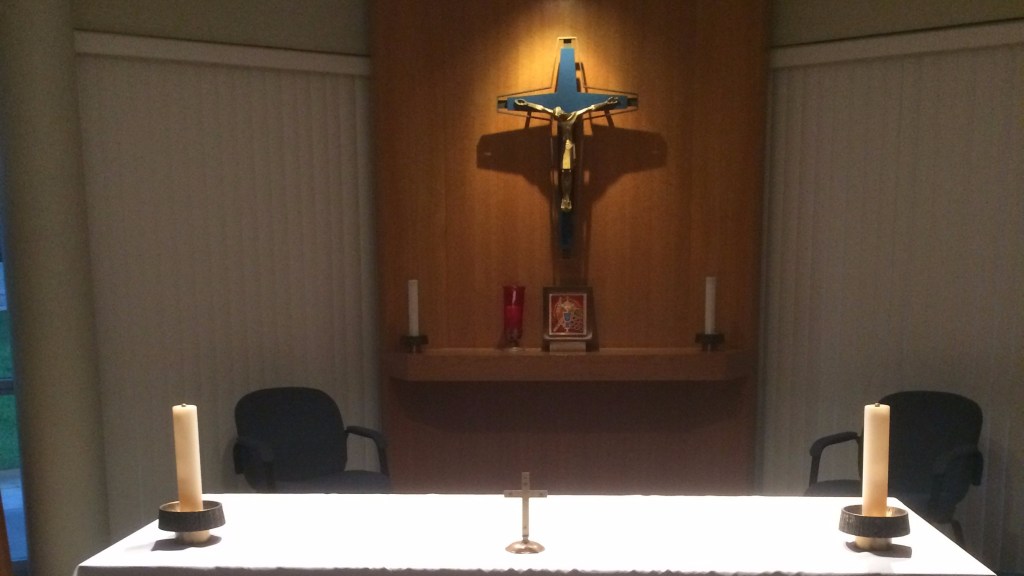
Photo: Small Chapel at Our Lady of Florida Spiritual Center, a great place to pray!

Link for today’s Mass readings:

http://www.usccb.org/bible/readings/102817.cfm

Catholic Church. Catechism of the Catholic Church: Revised in Accordance with the Official Latin Text Promulgated by Pope John Paul II. Vatican City: Libreria Editrice Vaticana, 1997.

Foster, Richard J. Prayer: Finding the Heart’s True Home. NY: HarperCollins, 1992.

Kreeft, Peter. Prayer for Beginners. San Francisco: Ignatius Press, 2000.

Reading the Signs

“You know how to interpret the appearance of the earth and the sky; why do you not know how to interpret the present time” (Lk 12:56).

Reading this verse brought two memories from my childhood. The first one is from when my friend Steve and I had a general interest in the weather, reading the natural signs and the patterns, and we enjoyed watching our local weather forecaster, Hilton Kaderli. Another memory was with my cousin Danny. We were at my Uncle Pierre and Aunt Claudette’s house one afternoon and we saw a storm rising. We headed to the road and started running as fast as we could in the opposite direction to see how far we could get before the storm caught us, and when it did we walked home, sucking in air, being pelted by the rain, and enjoyed a good soaking. We read the signs of the earth and the sky, but we didn’t pay to much attention to things of the spirit.

Jesus made a wake up call to his listeners. What Jesus was doing: teaching and preaching on his own authority, not from the training of a learned Pharisee or rabbi; casting out demons, forgiving sins, healing people, meeting with sinners and women. These were some pretty amazing signs that the Messiah was in their midst, yet there were those who did not see, would not see, rationalized away that he could not be who he said he was. Though there were those who did see, did hear, did believe.

Because they did so, some two thousand years later, Jesus speaks to us again. The stories and encounters of Jesus have been preserved, passed on generation after generation. Do we see his presence working in our lives? Do we see coincidences or God-incidents? May we take some time today to be still for five or ten minutes, to take some deep breaths and ask God to help us in reviewing the past twenty four hours so we can acknowledge what we are grateful for, to recall some God-incidents no matter how small, to admit to the times in which we may have said no to some of his invitations to reach out beyond our self to another. Let us ask Jesus to help us to be aware of how much the Holy Spirit has been present in our experiences and thank him. For those times that we have refused his presence or failed to recognize his closeness, especially from others seeking help, we can ask for his forgiveness and assistance to be more aware, to more intentional tomorrow.


Link for today’s Mass readings:

http://www.usccb.org/bible/readings/102717.cfm

Photo: souls-of-my-shoes world teach tumbler


On Fire for Jesus

Jesus said to his disciples: “I have come to set the earth on fire, and how I wish it were already blazing” (Lk 12:49)!

Yesterday I had mentioned also about Jesus setting the fire on earth and that we were to catch and carry that fire. In reading this verse today, I believe Jesus meant more, not just that we catch and spread the fire, like touching a torch and becoming a torch bearer. He wants us to be consumed by the fire.

Whatever fire touches it transforms. Many in California are unfortunately experiencing this up close and personal. Encountering Jesus effects a change in us. Once the embers in the depths of our souls are fanned through an encounter in prayer, worship, injustice, love, or suffering, and we move out of our complacency, we turn to Jesus for help, the tinder begins to ignite. If we continue to fuel the fire, getting in touch with what God has called us to do in our place and in our time, the fire continues to spread and like the saints whose shoulders we stand upon we are consumed and transformed.

We come to Christ, not to be a Christian in name alone but in thought, word, and deed. Such that consumed and transformed by the fire of his Love, others look at us and they see no longer us but Jesus Christ. Pope Francis, in his exhortation The Joy of the Gospel, wrote: “THE JOY OF THE GOSPEL fills the hearts and lives of all who encounter Jesus. Those who accept this offer of salvation are set free from sin, sorrow, inner emptiness and loneliness” (Francis, 9). Joy is a gift, a holy flame, that is given to us by the Holy Spirit and it wells up within. It is different than passion which arises when the stimulation of the senses are aroused, but fade once the external stimulus has ended.

Happiness is also external and fleeting. It lasts longer than passion in that the memory of the experience will linger on, but it too will also dissipate. Joy wells up from within, as it is imparted by God and can be present even when the external experiences are stressful or chaotic. I experienced this while I was still teaching 5th and 6th Grade Religion, acting as the dean of students at Rosarian Academy, while at the same time immersed in my studies and formation activities for the permanent diaconate, parish, and family life.

One particular morning I woke up exhausted. When the alarm went off my first response was to skip my morning prayer and hit the snooze button to get an extra twenty minutes before getting up to go to school. Instead, I literally crawled to my small chapel area, lit the candles and opened my breviary. When I read the words in Psalm 42: “Hope in God; I will praise him still, my savior and my God”, something ignited within my soul. I felt an energy well up within me that I cannot fully describe. I felt a joy that was inexpressible. Not only did the experience carry me into the day, but lasted through the whole week.

God meets us where we are in our present situation, and even when we are at our lowest, running on reserves, we need to remember to turn to him and he will provide the fuel to keep the flame burning. Pope Francis encourages us to discern the path that Jesus points out for us and we are “to go forth from our own comfort zone in order to reach all the ‘peripheries’ in need of the light of the Gospel” (24). When we are on fire for Christ that fire will continue to burn as long as we resist dousing the flame with indifference and complacency, but instead continue to share it, to spread it, such that we join with Jesus and set the world on fire. “The joy of the Gospel is for all people: no one can be excluded” (25).


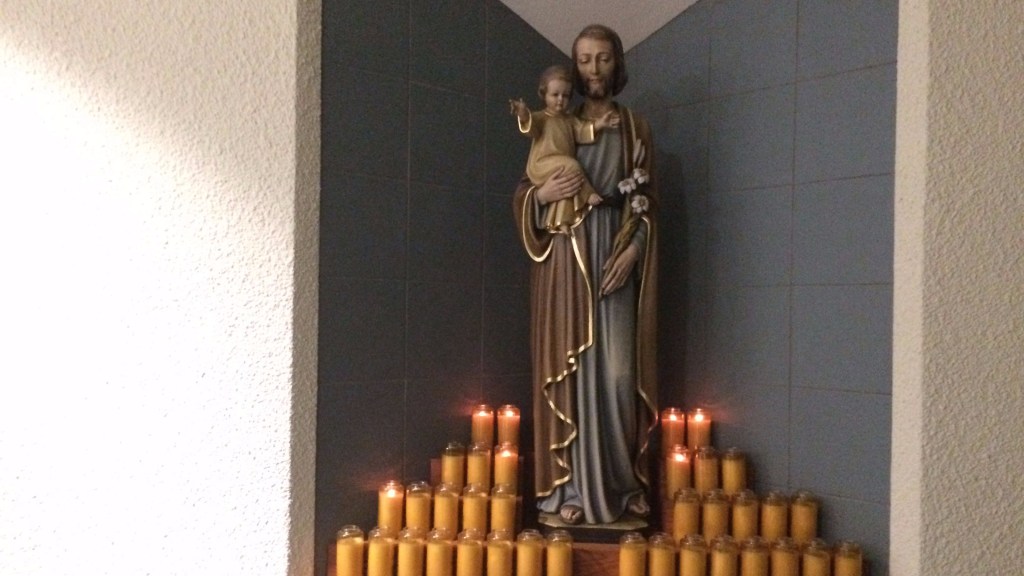
Photo: Statue of St Joseph and Jesus, St Peter Church, Jupiter, FL

Link for today’s Mass readings: http://www.usccb.org/bible/readings/102617.cfm

Pope Francis. Evangelii Gaudium: The Joy of the Gospel. Frederick, MD: The Word Among Us Press, 2013.

Bearers of the Light of Christ

“That servant who knew his master’s will but did not make preparations nor act in accord with his will shall be beaten severely” (Lk 12:47).

Jesus, as did the prophets, spoke in ways that can be jarring. The purpose was to shake his listeners out of a dulled state and to make clear his point. In today’s Gospel passage, Jesus addressed Peter’s question: “Lord, is this parable meant for us or for everyone” (Lk 12:41)? Jesus was most likely speaking to Peter and the Twelve. They are the ones he entrusted with continuing his mission of the kingdom of God. And just as he had been clear to point out those Pharisees who had abused their positions, he was being clear with Peter and the apostles. They knew his will and better follow it. The reason was that to not make the preparations that Jesus required of them would not only affect the Twelve, but those whose care they have been entrusted with.

We have been witnesses to those in Church leadership who have in effect “beat the menservants and the maidservants, to eat and drink and get drunk” (Lk 12:45) on their own power. Those who have: abused children, covered abuse, skimmed off the top of the donations of the blood and sweat of their parishioners donations, limited access to positions within the leadership of the Church to only male or clergy, been unmerciful confessors, held up the sin of one group or groups while turning a blind eye to others. These and other forms of hypocrisy do irreparable damage.

We need to remember that the world was fallen before the Son of God was born of Mary, reached a deeper darkness at his death, but his light still shown in the darkness. The Resurrection and Ascension into heaven of Jesus has set a fire on this earth that we are to catch and carry. Even when those of the Body of Christ are infected by the darkness we are not to lose heart nor hope. As Bishop Robert Barron writes, we are called out of “the realm of hatred, racism, sexism, violence, oppression, imperialism, what Augustine termed the libido dominandi (the lust to dominate).”

We are to continue the mission of Jesus, to bear his light to a world still in darkness. We are to shine his light so that we and others will recognize the sin present in our lives, repent, and turn back to the True, the Good, and the Beautiful. We are the Church, the Body of Christ. We are the heralds of his Good News. May we seek opportunities to share the healing salve of the Father’s Love we have received with those we meet today.


Link for today’s Mass readings:

http://www.usccb.org/bible/readings/102517.cfm

Photo: Crucifix front entrance of Our Lady of Florida Spiritual Center

Barron, Robert. Catholicism: A Journey to the Heart of the Faith. (NY: Image, 2011), 149.


Plan or Prepare?

Jesus said to his disciples: “Gird your loins and light your lamps and be like servants who await their master’s return from a wedding, ready to open immediately when he comes and knocks” (Lk 12: 35-36).

Jesus is emphasizing that as disciples we need to be ready for his coming, yes for when he comes again, but more importantly to be prepared for his coming each day in the midst of our lives. If we do not prepare to encounter him daily, the likelihood of us being  prepared for his coming again, and only the Father knows the time or the hour, will be slim. One of the most important lessons that I learned from my one and a half years with the Franciscans of Holy Name Province was the distinction between planning and preparing.

To plan means we outline all that needs to be done down to the last detail. This can be an advantage especially when we are dealing with blueprints for a home or building. By having detailed plans we can be sure we have the proper materials and tools, an estimated budget, hire the help needed to accomplish the goal. There are many areas in our life where planning is an advantage. Planning our spiritual life is important, deciding when and how we are to pray, meditate, study, engage in Bible and spiritual reading and/or watching, scheduling which service we are going to attend, establishing a routine of spiritual direction, time for fellowship or small groups. These are all plusses to planning.

The challenge with planning is when we become too radically attached to the plan and we leave no room for the Holy Spirit, no awareness for the knock at the door because we are so focused on finishing the plan. Thanksgiving and Christmas dinners are on the horizon. How many times have we experienced planning a dinner and guests, and spent more time adhering to the plan and its execution such that we miss engaging with those we are working so hard to provide hospitality for?

Preparation is pretty much all of the steps of planning I discussed above. The only difference is that we are more open and flexible with the execution. Life is not perfect, no matter how well we plan, unforeseen circumstances arise. Not holding so tightly to the plan, we can be in a better posture to adjust and see new possibilities that we had not planned for and more easily make adjustments in the moment. Also, in the midst of accomplishing the goal we may be more open to the guidance of the Holy Spirit instead of completing the plan come hell or high water. The upcoming familial meals can be much more enjoyable, even if a little messier, if we place a priority on spending time with those gathered instead of making sure each detail of the list is checked off at the proper time.

Jesus calls us to be ready, to be prepared to receive him. He thirsts and yearns for us to answer him when he knocks: in the classmate, colleague, family member, or neighbor who asks for help at what we feel is an inopportune time, the homeless person who is asking for some aid, the undocumented immigrant, or refugee looking for safety and security, the unborn striving to actualize her potential, the coworker that has not been pleasant to us in the past five years, the person that we perceive to be different from us – whether it be by gender, race, ethnicity, nationality, political party, religious or non religious affiliation – who we keep at arm’s length.

May we take some quiet time this day to reflect on those recent invitations we received to spend some time with Jesus through those he brought into our life and we refused. After some time of reflection can we be better prepared to be more open to encountering those we meet today as human beings, as brothers and sisters, created in the image and likeness of God? Are we willing to see and serve Jesus, who is present in them, for: “Amen, I say to you, whatever you did for one of these least brothers [or sisters] of mine, you did for me” (Mt 25:40).


Link for today’s Mass readings:

http://www.usccb.org/bible/readings/102417.cfm

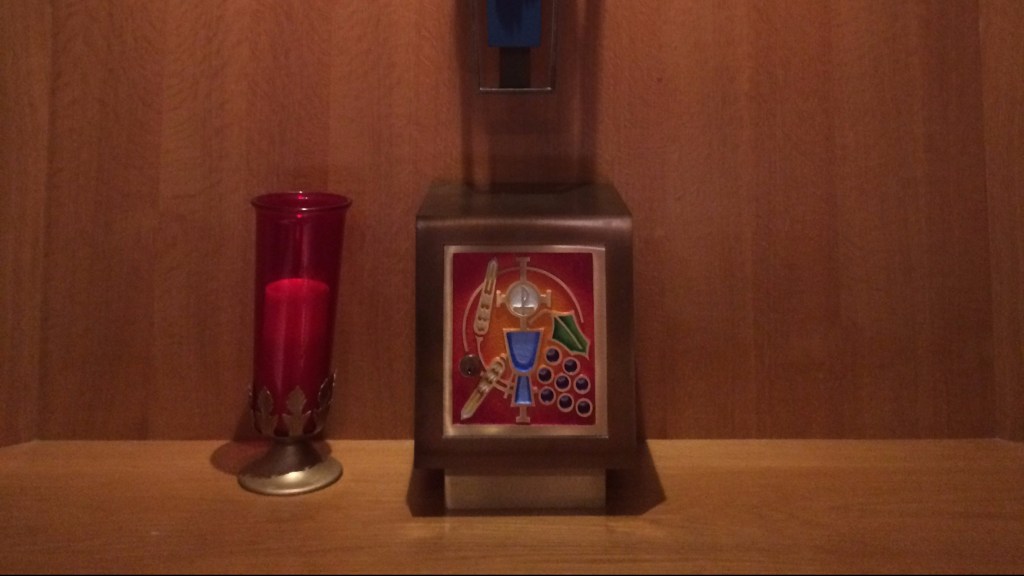
Photo: Tabernacle and Sanctuary Lamp in the small chapel at Our Lady of Florida Spiritual Center.

“One’s Life Does not Consist of Possessions”

“Take care to guard against all greed, for though one may be rich, one’s life does not consist of possessions” (LK 12:15).

Jesus wisely warns us to be careful to resist the temptation of greed, which can be defined as an intense, selfish desire for something. Here Jesus addresses the greed of money, but we can also have unhealthy selfish desires for anything. Jesus also stated that “one’s life does not consist of possessions.” Material goods are finite and will not ultimately fulfill us but they can be good when used for the purpose they were intended and in moderation.

God provides for our need. Fostering an attitude of thanksgiving for that which we have received and then being good stewards helps us to resist the temptation of greed. St Clement of Alexandria (150-215 AD) wrote: “How could we do good to our neighbor if none of us possessed anything.” God does bless us, and from what we have been given we are to assist those in need. The problem comes when we interfere with the flow of receiving by stopping the giving and instead hoarding what we have received and rationalizing our unwillingness to share. Also, when we look to our wealth as our safety net, instead of God’s providence, we begin to cling to what we have and develop an unhealthy attachment.

Acts of charity, willing the good of the other in our love and support for one another in need will help us to resist the temptation of greed and help us to be open conduits of God’s mercy. Pope Leo XIII (1810-1903 AD) has written that, “Once the demands of necessity and propriety have been met, the rest of your money belongs to the poor.” How many of us are willing to put that quote on our bathroom mirror? More so, put it into practice? How about posting this quote from John Chrysostom (349-407 AD) over our closet and reading it before we enter: “The man who has two shirts in his closet, one belongs to him; the other belongs to the man who has no shirt.”

God has given us the gift of his Son, Jesus. In so doing he has given us the free gift of our salvation. He loved us into creation and is loving us into eternity. We are invited to participate in the love of the Father and the Son and the Holy Spirit. We are to share what we have received from this infinite source and spring of eternal Love. We will be fulfilled people of joy, not by how much we have in our bank account, but by how much love we invest in our realm of our influence.


Link for today’s Mass readings:

http://www.usccb.org/bible/readings/102317.cfm

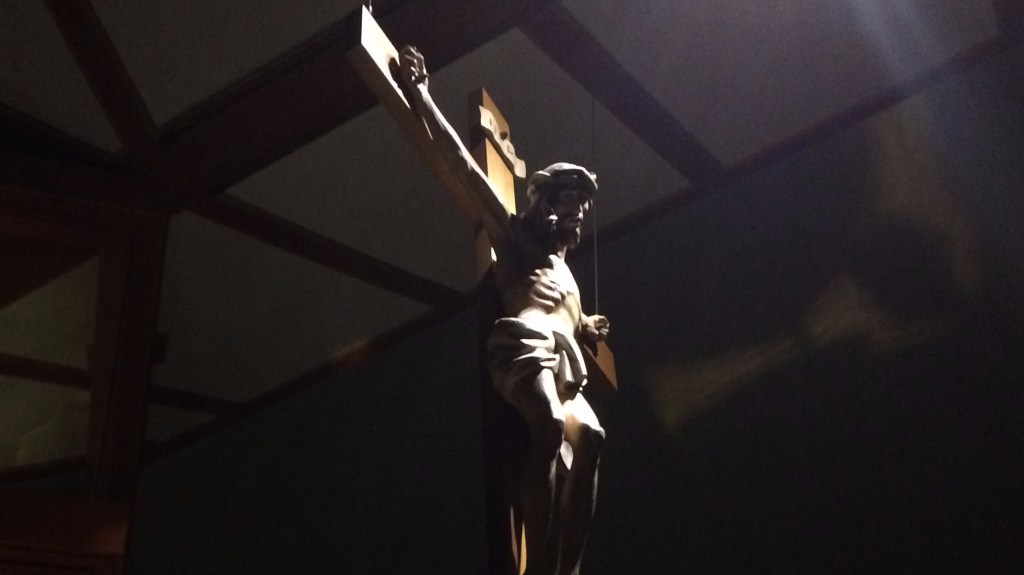
Photo: Crucifix in the main sanctuary of St Peter Catholic Church, Jupiter, FL.