Reflections on the Gospel Reading for the Day


Jesus is the light that can reach into even the deepest darkness of our internal imprisonment.
Jesus and his disciples have entered the Gentile territory of the Gerasenes. As soon as they get out of the boat a man possessed by an unclean spirit rushes up to him. He himself was in a worse state than the storm that Jesus had stilled. He called himself Legion as he was possessed by many demons. He had been living in the tombs, away from society, family, and friends, some of whom had made multiple attempts to restrain him, cure him, bring him back to his right mind, but to no avail. The encounter with Jesus ultimately brought about the result of this man “sitting there clothed and in his right mind” (Mk 5:15). Jesus was able to liberate this man from his desperate state. If you have not done so, I recommend reading the full account (Mk 5:1-20).
Many scoff at the healing power and miracles of Jesus, and they certainly would also discount demonic possession. A strict approach of scientism that only accepts the empirical, only that which can be measured by the five senses, discounts not only the divinity of Jesus and the reality of God but any talk of a spiritual realm. This is unfortunate because this is a limited approach to understanding the fullness of creation. We ourselves are both physical and spiritual. A healthy embrace and experience of both will help us to better appreciate and understand the world around us.
Too many today are in the same need of experiencing the liberating power of Jesus as the Gerasene. Just as chaotic and tumultuous, especially among too many of our youth, are those who are consumed and imprisoned by the vice grip of addiction. Family members and friends reach out desperately to help, to provide aid, and find themselves in the same situation as those who sought to care for this man who had been living in the tombs. Somehow this man caught “sight of Jesus from a distance, he ran up and prostrated himself before him” (Mk 5:6). There must have been some ember at the core of who he was that could still move and bring himself to Jesus.
We need to join in prayer and seek the best means to provide support and aid for all those suffering, bound, and shackled by the wide range of addictions that plague too many today. This growing epidemic damages individuals, families, and friends and could benefit from a unified approach of the best that science, psychology, prayer, and spiritual direction can offer. Each of us is ensnared at some level and seek to be free to feel the harmony and peace we were created for.
Jesus is the light that can reach into even the deepest darkness of our internal imprisonment. Yet we must choose, as did the Gerasene demoniac to surrender to Jesus. May we resist the temptation to flee from him, and instead run into his open arms. Resting in the grip of his embrace, we will come to know that we are not alone in our suffering, that our deepest anguish, sins, and wounds can be healed.
Jesus is stronger than any evil that seeks to bind and divide any of us, and we claim victory in his name and by the power of his word for all those who are suffering from any form of possession and/or addiction. May Jesus lead all of us to freedom, to our right minds, and like the Gerasene man who was healed in today’s Gospel account, experience the fullness of his healing whereby we too may go forth to help others to find the same path to atonement, redemption, liberation, restoration, and reconciliation.
—————————————————————————————–
Photo by Alan Ferreira from Pexels
Link for the Mass readings for Monday, January 31, 2022
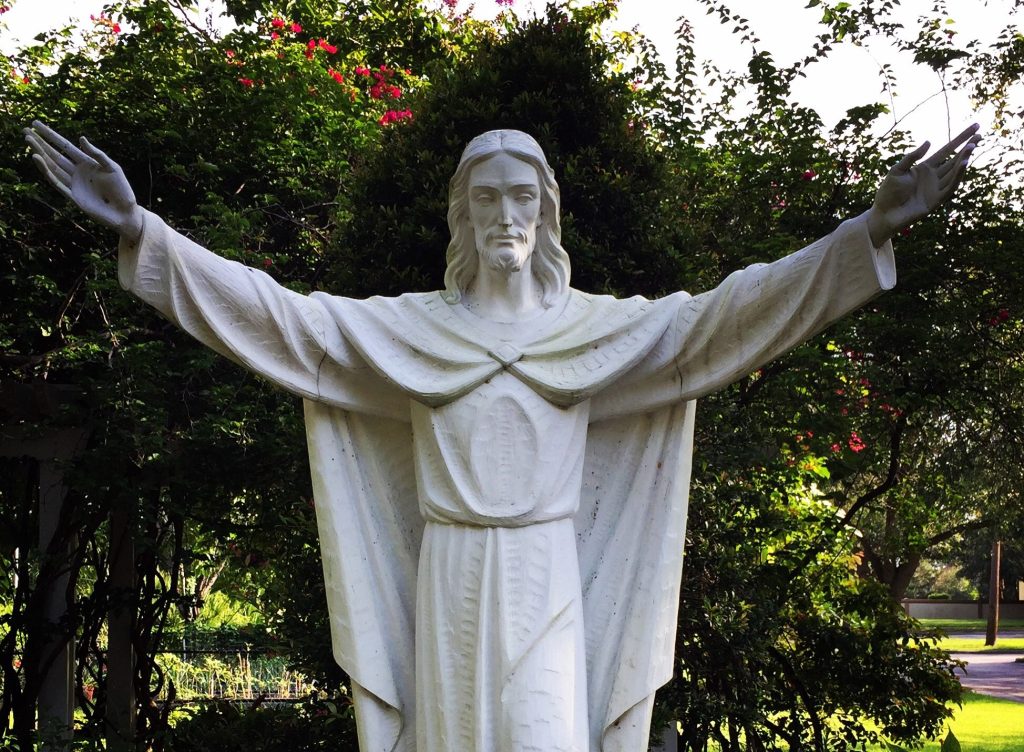
Will our love be constricted or expand?
The people of the synagogue in Jesus’ hometown rose up, drove him out of the town, and led him to the brow of the hill on which their town had been built, to hurl him down headlong (Lk 4:29). Why did Jesus’ own rise up in such a fury that they sought to physically expel him from their midst?
Jesus dared to equate others outside of his own tribe as equal to them. Just before the uprising to throw him tumbling down a hill, Jesus shared that God had already been working to reveal his invitation of salvation to those beyond the people of Israel. Elijah was sent to the widow of Zarephath and Elisha brought healing to Naaman the Syrian. These two individuals that the prophets engaged with were Gentiles.
The people hear clearly in Jesus’ inaugural address that he is bringing glad tidings to the poor, the captive and the oppressed of not only the Jewish nation but all nations. Jesus’ invitation of salvation is for all people. His own would have none of it. They were too closed in on themselves to be willing to grow beyond their shortsightedness such that they could not see that they were part of this plan of salvation as well, not to keep their light under a bushel basket, but instead to be the light to the nations.
Self autonomy, self appropriation, self focus, and ego centeredness has no place if living the Gospel is central to our lives. As St. Paul writes in his first letter to the Corinthians: “So faith, hope, love remain, these three; but the greatest of these is love” (1 Cor. 13:13). For love to grow, there needs to be not constriction but expansion. If love is to increase in us, we are to give it away.
The very simple act of breathing means that we are alive, but when we are anxious, stressed or afraid, our breathing is constricted, our blood flow is diminished, we become cold. We are surviving, yet not thriving. When we consciously take some deep breaths, our lungs expand, our intake of oxygen increases, our blood flow to the small blood vessels improves and our heart rate regulates. Our blood pressure stabilizes and we have the opportunity to be less reactive, more peaceful, and we become warm.
Jesus invited the people of his hometown to expand beyond their posture of survival and defensiveness. He invited them to move beyond tribalism to inclusiveness. Jesus invited his people to love, to will the good of others. He invites us today to do the same. Will we contribute to our present condition of defensiveness and polarization in our interactions in person and on line, perceiving reality only from our own limited point of view, reacting impulsively, impatiently, disrespectfully, or will we say yes to Jesus’ invitation to breathe deep, receive his love, so as to love in return?
Photo: Jesus’ arms are wide open to embrace us all in his love. Garden of St. Peter Catholic Church.
Link for the Mass readings for January, 30, 2022
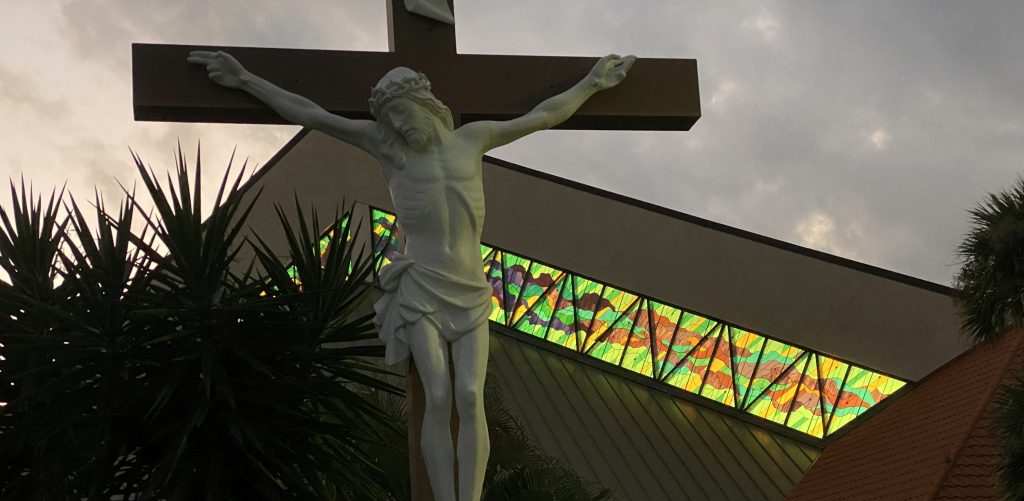
Jesus is our peace in the midst of any storm.
On display in Mark’s recounting of the calming of the storm at sea is the humanity of Jesus. He had finally succumbed to the exhaustion from being pulled and touched, challenged and accused, the constant interaction through his service of teaching, healing, forgiving, and exorcising, such that he not only fell asleep on the boat but was in such a deep state that he was as if dead, even during the height of the storm. Also, we see his divinity expressed when his disciples wake him and he calmed the storm immediately with just his word: “Quiet! Be Still” (Mk 4:39)!
The disciples have grasped his uniqueness and have accepted him as their rabbi, their teacher, but they are still grappling with the reality that Jesus is at the same time the Son of God. The disciples will continue to experience his miracles, but it will not be until after his resurrection and ascension, that their faith will find the maturity to participate in the fullness of the ministry Jesus was grooming them for.
Storms arise in our lives, sometimes just as unannounced and as quickly as the squall from today’s Gospel. A health issue, an injury, an economic shift, a conflict, the effects of a mistake in judgment, or a sinful choice, all can arise at a moment’s notice. Covid has certainly been wreaking havoc since last March. We, like the disciples, can sometimes only hold on so as not to be tossed into the sea, or bail out water so we don’t sink. Sooner or later, we need to turn to Jesus to seek his aid. A helpful point to keep in mind that I have learned from one of our past retreat directors, Fr. RB, is: “Sometimes the Lord calms the storm, and sometimes the Lord lets the storm rage on and calms his child.”
To understand this statement is to begin to mature in our faith. No matter the severity of the storm, we are to trust in Jesus. He remains with, accompanies, and does not abandon us. Whether we brought the storms upon ourselves or they arose from another source, Jesus does not leave us to fend for ourselves. When we remember to call on his name, he will either calm the storm or bring us a sense of peace as we travel through it empowered by the assurance that he will give us that which we need to ride it out to the other side. I have felt his closeness and presence dealing with the sickness and death of JoAnn, as well as during my recovery process of pneumonia a year later.
The experience of this closeness of Jesus is to be shared. We are also to be there for others during their storms. We are to be a presence of calm assurance for those who need Jesus but do not know him or are focusing on the anxiety and fear of the storm instead of him. We do this best when we are willing to enter the chaos of another and allow God to happen.
Photo: Storm clouds gathering as I leave Mass one night. Jesus is our peace through any storm!
Fr RB Williams home page and link to his homily – http://www.rbwords.com/wttw/date/2018-01-27
Link for the Mass readings for Saturday, January 29, 2022
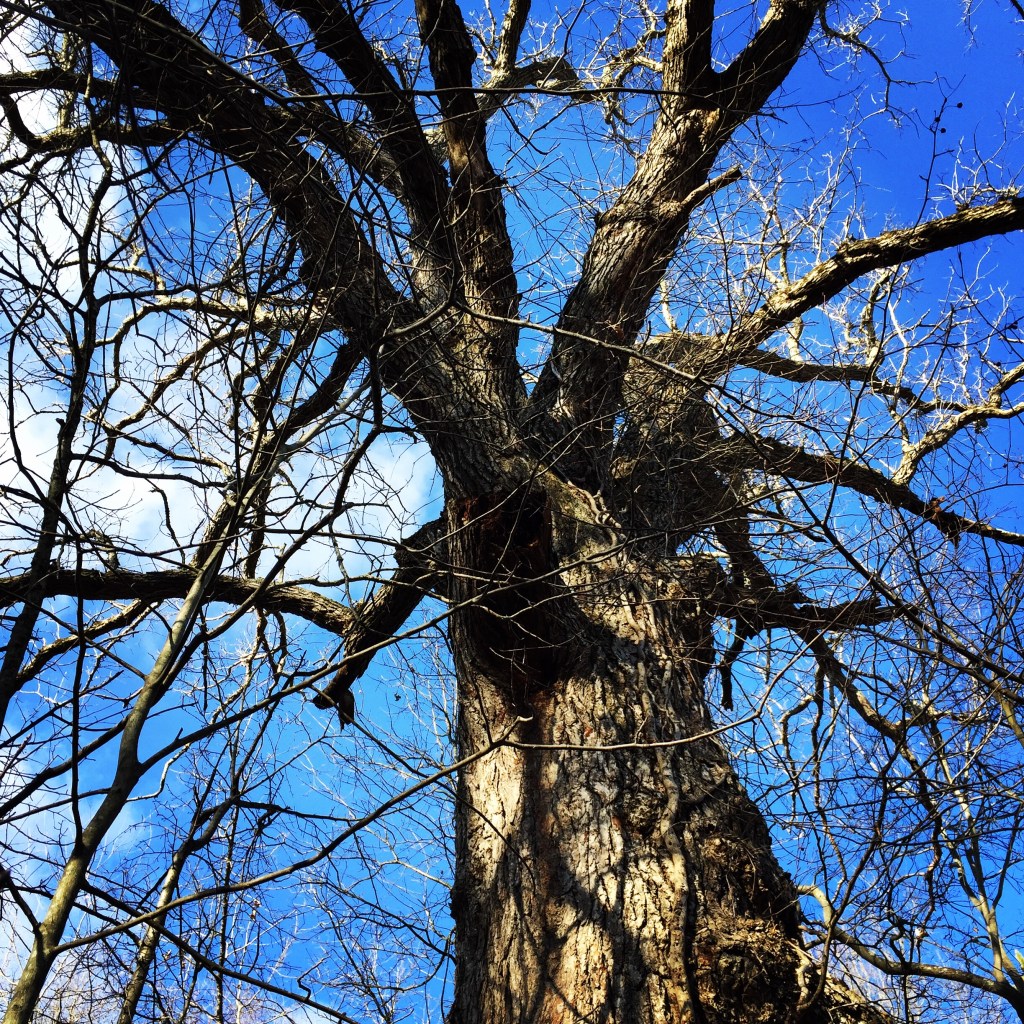
Watching a tree grow will give us a taste for how God works.
Two parables are presented by Jesus today in the Gospel of Mark. Both are presenting what the kingdom of God is like. The first presents a man who sows seeds, and the second is a mustard seed that is planted. In both cases, the seeds germinate and go through the process of becoming mature plants. The kingdom of God is like these plants in that God works through the smallest of and many times, unnoticed beginnings. Also, God’s timing is not our timing. In our rapid-paced world of instant access, we would do well to slow down.
God not only begins small, and on his own timetable, but he is often working beyond the realm of our awareness. This is evident in the first parable offered by Jesus: “This is how it is with the Kingdom of God; it is as if a man were to scatter seed on the land and would sleep and rise night and day and the seed would sprout and grow, he knows not how” (Mk 4:26-27). This is not to say that God has set everything in motion and is indifferent or despondent to his creation. Quite the opposite. God has a plan and has been intimately engaged in guiding his creation and each of our lives as well. He revealed this truth to Jeremiah: “Before I formed you in the womb I knew you, before you were born I dedicated you” (Jeremiah 1:5). God is present, in a relationship with us, whether we know it or not and quietly invites us to participate in his plan.
Even though God has no need for us, he invites us to know him, to participate in the spreading of his kingdom. Just think of someone who you have, for the longest time, wanted to meet. If the opportunity arose to spend time with that person, how excited would you be? We have the opportunity to do so with the Creator of all that exists, and not just today, or tomorrow, but for all of eternity.
God has created us to know him, to love him, and to serve him. He invites us to share in his relationship, his work of salvation history in simple and subtle ways in this life. Are we making an effort to be aware, are we willing to watch and pray? Are we willing to place ourselves in a posture so better to receive his Word as well as his Silence? Just as an acorn that is sown matures and grows over time into the mightiest of oak trees, so may our relationship with our Loving God and Father also grow and mature that we become one with him in this life and into the next for eternity.
Photo: Oak canopy from a tree behind my parent’s house that I have watched grow since I was five. Took this picture the Christmas of 2019. It is wonderful to watch God’s hand at work!!!
Link for the Mass readings for Friday January 28, 2022
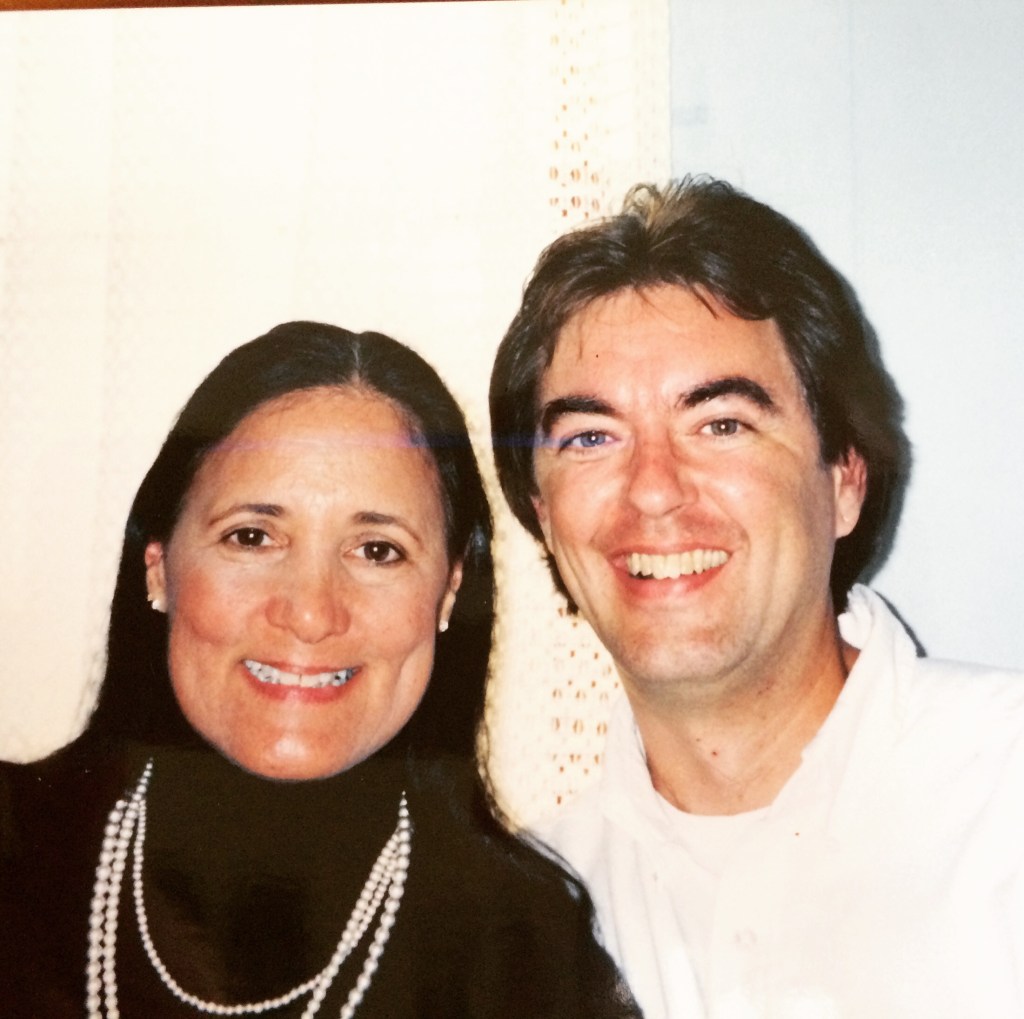
Feeling a bit off or down, offer a smile.
Jesus said to his disciples, “Is a lamp brought in to be placed under a bushel basket or under a bed, and not to be placed on a lampstand” (Mk 4:21)? The obvious answer is no. A lamp is brought in to illuminate a room so one can read, find something misplaced, and it can even provide some warmth if needed. It would be absurd to do the things with a lamp that Jesus presented in today’s Gospel.
We are like lamps in that we are invited to shine the light of Christ to dispel the darkness of our fallen nature and world. This is the path of a disciple. Yet, many of us do not allow the light of Jesus to shine through us. Here are a few reasons why this may be.
To draw the analogy of the lamp into our modern electric lamp instead of an oil lamp of Jesus’ day, one reason a lamp does not work is that it is not plugged into its source. Are we plugged into Jesus? Are we spending time in prayer, worship, study, building relationships, and serving God and one another?
Another reason may be that the light bulb is not screwed in all the way or the bulb has gone out. We may be plugged into the source of Jesus, but we are just going through the motions. We show up for Mass or church physically but are not engaged in any meaningful way. We spend time in prayer but we are just saying words or going through the motions without listening to God or willing to allow him to challenge us to go deeper. We have a nice pile of spiritual reading, apps, and DVDs, but the books are only gathering dust, and the apps and DVDs were not opened since they were first accessed or purchased.
Another reason a lamp may not work is that it has been damaged. Many of us may be broken or wounded. It is hard to risk sharing the light when our trust has been manipulated, misused, and/or abused. We need not despair or lose hope. Jesus meets us in our pain, our injury: emotional, psychological, physical, and/or spiritual, and offers his healing and restorative power so we too can shine his light again.
We are called and empowered by Jesus to shine his light. If we haven’t been doing so because of our woundedness, may we be open to his healing. If we aren’t plugged in to the life and source of our being, let us ask for God’s grace to be more disciplined and dedicate ourselves to spending more quality time engaged in prayer, worship, study, and fellowship. If we feel like we are in a rut, we are just going through the motions, and/or our spiritual and relational life is dry: We must consider how to rouse one another to love and good works (Hebrews 10:24). A kind act, a listening ear, or a smile is the simplest way to begin to allow the light of Jesus to shine through us to others. We just need to begin or begin again!
Photo: JoAnn’s smile still makes my heart soar!
Link for the Mass readings for Thursday, January 27, 2022

Rich soil comes with daily attentiveness.
Each of the elements of the Parable of the Sower is worthy of meditation and reflection. A very good practice would be to take some time to reflect on each aspect and ask what limits the germination and growth of the seeds God has sown in our lives, and also what helps us to bring about successful growth and a successful yield. When did we experience God’s word but have it almost immediately snatched away; when did we gain an insight, experience joy from his word and guidance, but did not in any way put the learning into practice; how many times have trials, hardship, and lack of courage or outright persecution, robbed us of stretching out of our comfort zone, and we instead withdrew, not wanting to risk growth?
Many of us can relate to: “Those sown among thorns are another sort. They are the people who hear the word, but worldly anxiety, the lure of riches, and the craving for other things intrude and choke the word, and it bears no fruit” (Mk 4:18-19). Distractions pull at us from within and without, from one second to the next. So much seeks to undo us, tear us down, and drive us into states of anxiety, despondency, cynicism, and depression. So many apparent goods and false truths entice us to feed our desires for power, wealth, fame, and pleasure. Material temptations offer promises of fulfillment but shortly after purchase leave us feeling empty. All the while, there is so much good that needs to be done and so much work to do. Even if we are willing to look beyond ourselves to be of help, we may not even be sure how to serve or where to begin.
Jesus offers us in the Parable of the Sower his promise that the seed sown in rich soil will grow to be a mature plant that bears much fruit. To bear fruit we need to be attentive to making rich soil. This means breaking into hard ground such as the hardness of our hearts, prejudgments, and pride by spending time and being present with not only those close to us but also with people who we keep at arm’s length. We also need to be willing to face our fear of rejection and be willing to encounter a person with understanding and respect instead of preconceived notions, then we can begin to diffuse false judgments, prejudices, and fears.
We often react from a defensive posture or give in to our immediate impulses, when instead we need to be more mindful. We do so when we take a moment to inhale deeply, discern each thought, situation, purchase, and action, to pray and seek God’s guidance, and to rely on trusted family, friends, colleagues, and classmates for guidance. We can learn from past experiences and resist making any rash or reactive decisions. Regarding service, it is best to start small, apply the same points just mentioned, and engage in reaching out in our own small ways, but with, intention, confidence, and persistence.
These are just a few ideas that can help us start to uproot weeds and overgrowth, to begin to remove rocks and soften the earth, and enjoy the process of preparing some rich soil – our heart, mind, and soul – to better receive and nurture the seed of the love of God that he sows, which is Jesus his Son. In time, as we surrender more to his will, continue to be nourished by his word, accept and put it into practice, and trust in him and not the temptations that entice, distract, and disrupt our growth, we will see sprouts begin to grow, and soon mature plants that will “bear fruit thirty and sixty and a hundredfold” (Mk 4:20).
——————————————————————
Photo: Class of 2017 models of creating rich soil!
Link for the Mass readings for Wednesday, January 26, 2022
As we receive, we are to give away.
In today’s gospel account, chosen because of the feast of St Paul’s conversion, we read:
Jesus appeared to the Eleven and said to them: “Go into the whole world and proclaim the Gospel to every creature” (Mk 16:15).
The Eleven, and Paul who would encounter Jesus after his Resurrection (cf. Acts 9:1-9), are commissioned with carrying the Gospel to the whole world. What did they preach? How are we do follow in their footsteps?
The earliest kerygmas, Greek for to preach, and in this case to preach the Gospel, were very simple but effective mnemonic devices. Each disciple was taught what was needed to be covered in sharing the Good News. One such “blueprint” was the symbol of the fish. In Greek, fish is written as ichthus. Each of the characters of ichthus represented the keywords that needed to be covered as follows:
Iesous – Jesus
Christos – Messiah or Anointed One
Theos – God
Hyios – Son
Soter – Savior.
Jesus Christ is the Son of God our Savior.
The dynamic truth of these five words is profoundly transformative if we truly believe them. What we need to ask ourselves is, do we believe this statement to be true? If we do, how can we stop ourselves from smiling, from dancing, from sharing that Jesus is truly who he said he is!
Jesus is fully God and fully man and he became one of us so that we can become one with him. Through the Son of God’s Incarnation, Passion, Resurrection, and Ascension, we are called, as were the first disciples, to share in the divinity of Jesus. We become deified, meaning we become God through our participation in the life of Jesus. The foundation of our faith has to do with our encounter with Jesus the Christ.
This encounter is personal for each of us. No one can save another. We can only propose, invite, and present the Good News that Jesus Christ is the Son of God our Savior, and share our own experiences of this reality. Our encounter with Jesus does not need to be as brilliant as happened with Paul. More often, Jesus invites us in more quiet and subtle ways. We are to share the Gospel with joy and accompany each other on our journey by providing support, encouragement, and guidance, and let God be who he is and work through us as he will.
The Apostles and Paul, Mary the Mother of God, Mary Magdalene and the many who have continued to answer yes to his invitation through the ages up until this day were willing to be shaped, conformed and sent on mission. Each of us, have a part to play in salvation history, and so are invited to have our own unique experience of Jesus. As Bishop Robert Barron says often, “Our faith will grow as we give it away.” We too are called. When we say yes to Jesus, we too will be shaped, conformed, and sent on mission to proclaim the Gospel, to give our faith away!
——————————————-
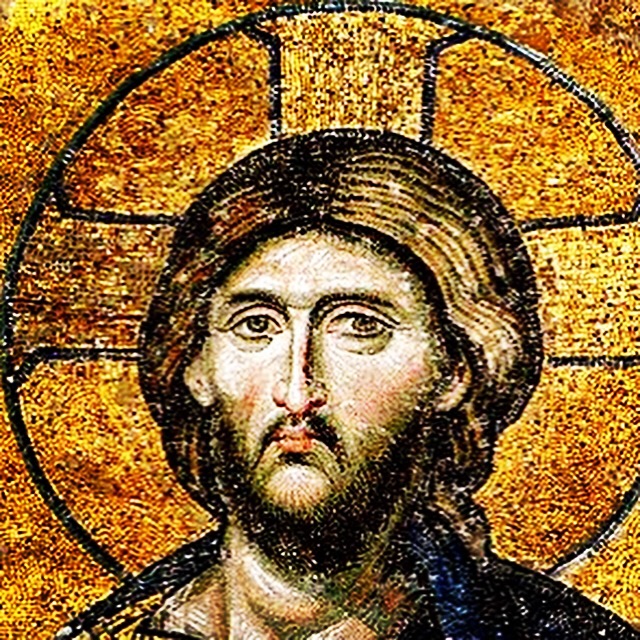
Picture: The mosaic of Jesus Christ the Pantocrator, Ruler of the Universe, at Hagia Sophia, in Istanbul, Turkey.
Link for the Mass Readings for Saturday, January 25, 2022

We can be a cloud blocking the light of Jesus or the rainbow radiating the light of Jesus.
The scribes who had come from Jerusalem said of Jesus, “He is possessed by Beelzebul,” and “By the prince of demons he drives out demons” (Mark 3:22).
The scribes experience for themselves Jesus exorcising demons, and do not understand how he is able to cast them out to heal those possessed. They judge that he does this feat, not by the power of God but, by the power of Beelzebul, the prince of demons. Could their purpose be to delegitimize, or literally demonize, Jesus in such a way that those beginning to follow him will begin to doubt or outright turn away from him? If Jesus is who he says he is, then the scribes are actually the ones serving Satan in aligning with him to sow discord and disunity.
Jesus provides an invitation to build bridges of reconciliation and healing to restore the unity that has been lost by those choosing to sin, to put self first over God. He also meets those on the peripheries, those who have been kept at arm’s length, healing those conditions which have been used to justify their separation. Yet Jesus does not impose, he proposes. Even so, Jesus demands a choice.
Jesus shows over and over again by word and deed not only how he is creating bridges of connection between the human and the divine, he is in actuality the bridge, the kingdom of God in our midst, and yet, he is not going to drag anyone over it against their will. Jesus calls all who encounter him to make a choice, there is no middle ground, we are either for him or against him.
We have witnessed in the Gospel accounts how some of the scribes, Pharisees, and even some of his relatives reject Jesus. He is able to perform only a few miracles in his own hometown. Those who say no to the invitation cut themselves off, separate themselves from the very source of their life, the very core and sustaining force of their being. Those who say yes and repent, like those that receive his healing, will be transformed, and are freed from their enslavement to sin.
They align themselves with the very source and communion they have been created for, God the Father, when they continue to say yes, day by day, decision by decision. This is no one revelatory moment but a daily commitment of saying yes to Jesus. Even in messing up or falling down, we refuse to stay down but arise, repent, and begin again and again. We must always and everywhere reject the lie that echoes in our minds that we cannot be forgiven. Jesus loves us more than we can ever mess up, he loves us more than our worst choice or mistake.
If this is true, then what does Jesus mean when he says that “whoever blasphemes against the Holy Spirit will never have forgiveness, but is guilty of an ever lasting sin” (Mk 3:29)? Jesus refers here to our free will to accept or reject the free gift of his grace. We can observe this played out in the choices of Peter and Judas. Peter repented, was forgiven, and transformed. Judas withdrew within himself, cut himself off from Jesus, did not believe that Jesus would forgive him, and took his own life. Jesus would have forgiven Judas as he had Peter, but Judas kept himself at a distance. He refused to accept the love of the Holy Spirit.
We have a choice to make each day. We can let ourselves be defined by our sin and our worst mistakes, believe the father of lies and division who wants us to help him build up walls separating us from Jesus and each other. We can walk the path of darkness which consists of living defensively, keeping those who we deem as different at a distance, or worse, demean, belittle, and degrade others. We can live in the shadows of indifference and cynicism.
Or we can surrender our will to Jesus and repent from our pride, prejudice, greed, lust, envy, gluttony, sloth, and wrath. We can believe that Jesus is who he said he is, refuse to build walls of separation but instead align ourselves with him and join in the task of building bridges of unification and communion.
We will take steps forward and steps back, and we will fall, but through each experience, the hand of Jesus is still there to help us back up and if we are willing, we can begin again and again and again. We are not alone. Mary the Mother of God and all the saints said yes to Jesus’ invitation. They understand what we are going through. They are also cheering us on, guiding us, empowering us, so that one day we too will be where they are, seeing God the Father face to face.
Jesus invites us to be unified in his love. May we place our hand in his, follow him, and live our lives in communion with others committed to his mission. By doing so we will radiate his light, in our own unique way, like a rainbow, expressing the gift of glory that God has given us.
———————————————————-
Photo: Rainbow at Cardinal Newman HS, sometime in August 2018
Link for the Mass readings for Monday, January 24, 2022

 Spiritual Stepping Stones