Reflections on the Gospel Reading for the Day

“There are no limits. There are plateaus, but you must not stay there, you must go beyond them.” – Bruce Lee
“Where did this man get such wisdom and mighty deeds? Is he not the carpenter’s son?” (Mt 13:54-55).
Many people wonder what Jesus did from the age of twelve until he began his ministry around the age of thirty. Today’s reading gives us some insight into that question. Most likely, Jesus did nothing extraordinary, he was just as ordinary as any other first-century Palestinian Jew living in the small town of Nazareth, with a population of about 250 to 500 people.
Jesus most likely worked as a carpenter. This was rough, menial work, and as a day laborer, a position that was looked down upon. We can even see evidence of this in the Gospel accounts. Mark describes Jesus as the carpenter, the son of Mary, Matthew in today’s account portrays Jesus as the carpenter’s son, and Luke and John just refer to Jesus as Joseph’s son, leaving out any reference to carpenter altogether. Most scripture scholars believe Mark was written first, so we can see a progression in the biblical tradition moving quickly away from identifying Jesus as a carpenter.
Jesus’ return to his hometown and his teaching was first met with wonder. The question arose, “Where did he get such wisdom and how did he work such mighty deeds?” But wonder soon turned to judgment. Who is he? Isn’t he just the carpenter of Nazareth, no better than any of us. In effect, “Who does he think he is?” Not only does this show that Jesus probably lived a very simple peasant life, but that Jesus’ social status was set in stone.
The people’s hearts and minds were closed to Jesus. THEY KNEW who he was and there was no way someone like him could do what they had heard, so they “took offense at him… And he did not work many mighty deeds there because of their lack of faith” (Mt 13:57-58).
How many times have we judged someone? Have we said to ourselves, “I know who he or she is.” We box them in, not as they are, but as WE see them, as we define or label them. We look at another individual not as a person with dignity, but as a two-dimensional caricature to satisfy our own prejudgments and lack of vision. We also do this to ourselves by limiting our potential when we say we can’t do this or that.
Maybe we have had a similar experience as Jesus did in returning to his hometown, in that we have sought or are seeking to move beyond our particular social status, or follow a dream or career out of the norm of familial or community expectations. No matter our age, through no fault of our own, by pursuing this path some or many may feel threatened. Thus, not willing to accept our vision, those who are not willing to grow beyond what they have always known.
I read an account from the writer/producer Stirling Silliphant and how one day Bruce Lee challenged him to run five instead of his usual three miles. Into their fourth mile, Stirling said, “if I run any more I’m liable to have a heart attack and die.” [Bruce] said, “Then die.” He was so mad he finished the five miles. Afterward, Stirling approached Bruce and asked him why he said that.
Bruce replied, “Because you might as well be dead. Seriously, if you always put limits on what you can do, physical or anything else, it’ll spread over into the rest of your life. It’ll spread into your work, your morality, into your entire being. There are no limits. There are plateaus, but you must not stay there, you must go beyond them. If it kills you, it kills you. A man must constantly exceed his level” (p. 23).
Jesus rebukes limiting attitudes and perspectives. His Father has a plan for our lives and so he invites us to open our minds and hearts, to see the potential he sees in us. Jesus, the carpenter, invites us to embrace the infinite possibilities that will arise when we participate in his life and love. This invitation is for each and every one of us, no matter our race, ethnicity, nationality, gender identification, religious, political, economic, social, immigrant, or migrant status.
The Holy Spirit seeks to free us from the shackles that bind us, the limitations imposed upon us without, as well as those we impose upon ourselves. Cooperating with the Spirit, we will actualize who God calls us to be as well as be encourage to not put labels and limits but to empower others.
———————————————————————–
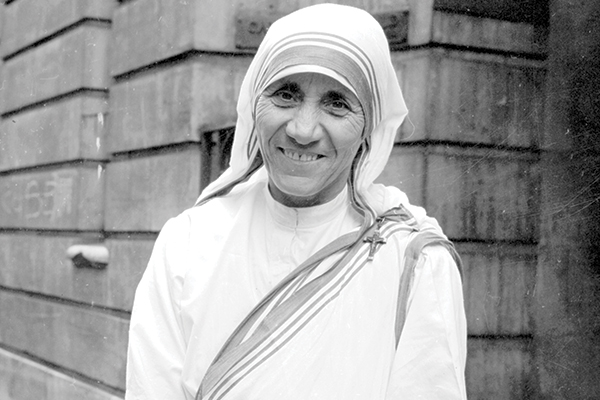
Photo accessed from Bruce Lee Podcast Episode #77
Stirling Silliphant story accessed from Bruce Lee: The Art of Expressing the Human Body, compiled and edited by John Little.
Parallel Gospel accounts: Mark 6:3, Matthew 13:55, Luke 4:22, and John 6:42
Link for the Mass readings for Friday, July 30, 2021
“True love stories never have endings.” – Richard Bach
The Gospel account from Luke may be more challenging because of the encounter of Martha and Jesus. Martha approached Jesus in the midst of his teaching looking for support in rebuking her sister Mary for sitting at his feet with the male disciples gathered around him. Jesus not only did not do so but said that Mary had chosen the better part. Martha’s boldness is on display again in today’s Gospel reading from John. Martha again approaches Jesus when she becomes aware that he has come close to their home. She does not wait but “went to meet him” (Jn 11:20). Martha’s brother, Lazarus had now been dead for four days and Jesus, who had the time to arrive before his death, was not present to help his friend Lazarus in his time of need.
How many times have we been in Martha’s position? We felt that Jesus was not there when we needed him most. Why does God allow suffering? Especially the age old question of why does God allow the suffering of the innocent. Part of the answer is that we live in a fallen world of sin and self-centeredness. God does not bring about suffering but he does allow it because he loves us so much he is willing to give us the free will to reject him and each other. The cost of our freedom to choose means that there are consequences to our choices which can be detrimental or beneficial. We are all interconnected so when we choose to act on our own apart from God’s guidance and the welfare of others, the damage that ensues affects not only those around us but everyone. On the other side of the coin, there is the presence of grace when we draw close to God and each other.
We are not alone in our suffering, especially, when we do as Martha did. She went out to meet Jesus, most likely not holding back any of the full range of her hurt and pain. Martha’s words expressed her anguish. “Lord, if you had been here, my brother would not have died” (Jn 11:21). We can only see from our limited point of view, especially in the midst of our own grief. Yet God sees far beyond our finite perspectives and Jesus helps to not only bring about a greater good, though it may take time to come to understand and experience, he accompanies us in each agonizing breath of our suffering.
Jesus came too late to heal his friend, which Martha and Mary could not understand, but what he did was beyond their wildest imaginings Jesus came to restore him to life, which would also be a foreshadowing of his own Resurrection. The difference being that Jesus would not merely be resuscitated as Lazarus was and die again. Jesus conquered death and became the firstborn of the new creation. We need not fear death, our own, or our loved ones. Jesus has conquered death for all of humanity.
It will be two years this September since JoAnn died and I still sometimes feel like she will walk through the door any minute or when I come home, she will be there. Neither will happen. Jesus did not heal her from pancreatic cancer. I also know despite these facts we were not alone in our suffering. Many people drew close from near and far in many unique ways and Jesus was present with us every step of the way during those agonizing months. My heart is still heavy and still aches and it doesn’t take much for tears to flow, yet, I believe that JoAnn who has died with Christ has also risen with him to experience the greatest healing beyond anything we can ever imagine in this lifetime. I believe that God will bring about a greater good for me and our adult children because I believe with Martha that Jesus is the Christ, the Son of God (cf. Jn 11:25-27).
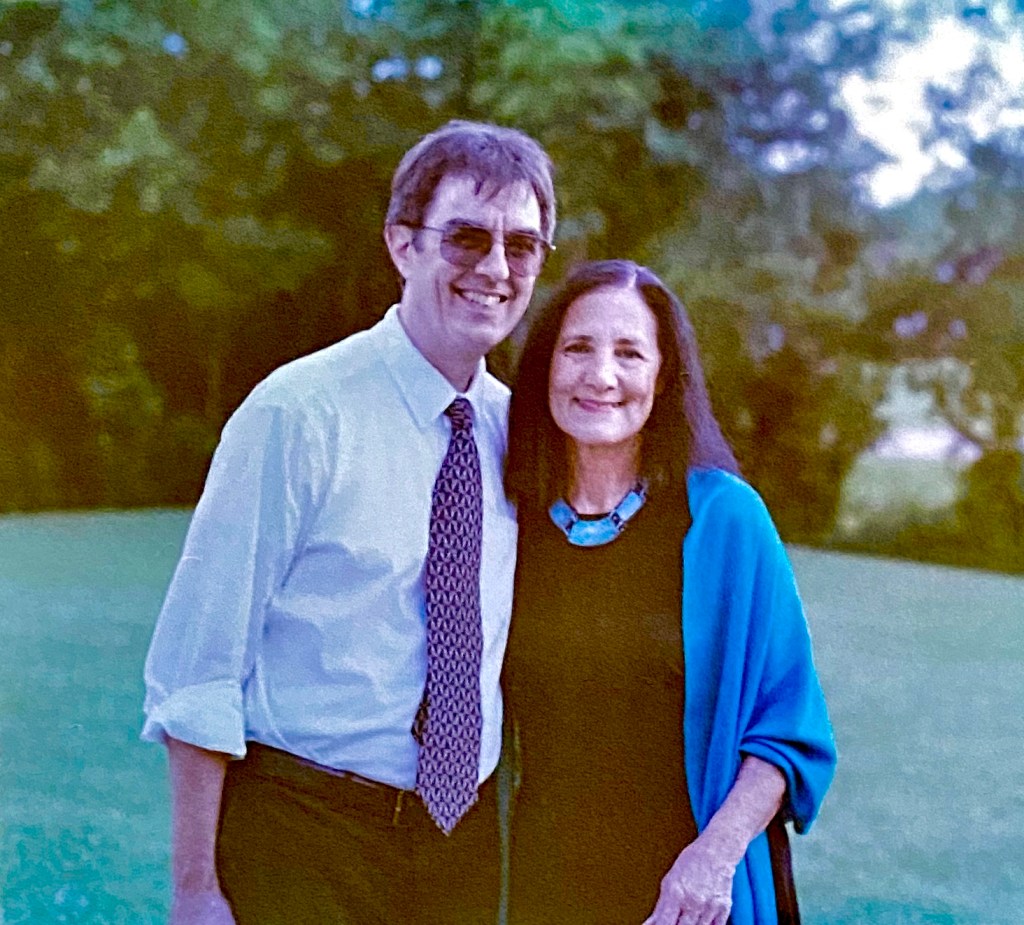
Photo: Pictures and stories shared can help us to remember that love never dies.
Link for the Mass readings for Thursday, July 29, 2021

“The Kingdom of heaven is like a treasure buried in a field.”
Jesus said to his disciples: “The Kingdom of heaven is like a treasure buried in a field, which a person finds and hides again, and out of joy goes and sells all that he has and buys that field” (Mt 13:44).
God is hiding in plain sight. God is in our midst, present to all of us, a wonderful treasure just waiting to be found. God’s eternal love and grace is ever reaching out to us. Our soul hungers, yearns, and seeks for that love, whether we know it or not. It is when we seek satisfaction, filling this deepest of our desires in material and finite pursuits alone, that we miss the mark. When we sin, create idols, seek the allure of apparent goods, we block our access to the very union we seek, we are not satisfied and our desire increases all the more. We can attempt to keep filling that hunger with more or different apparent and material goods and yet, we will continue to feel empty and unfulfilled. God acts in the everyday events of our lives, but we limit those experiences by waving them off as mere coincidences. Each time we do so, we miss the opportunity to find a great treasure.
The saints and the mystics are those who have found the treasure of God’s will in their lives, they have experienced his love and mercy. They have encountered the living God in the mundane events of their lives and given all to be immersed in his communion. They “are amplifiers of every person’s more hidden life of faith, hope, and love. Their lives help us to hear the interior whispers and see the faint flickers of divine truth and love in ourselves and others. The Christian mystics point the way to fully authentic human life by illustrating what it means to be a human being, what life means: eternal union (which begins here) with the God of love” (Egan 1996, ix-xx).
God speaks in the silence of the heart. Setting aside time to be still will help us to hear his whisperings. Opening our hearts and minds to recognize those faint flickers and God-incidences present in our daily experiences will help us to recognize God’s ongoing presence. We can also experience Christ by reading and meditating on his Word, as well as reading the lives of the mystics and the saints, those who have found the treasure of Jesus’ presence and want to share it: St Francis of Assisi, St Teresa of Avila, St John of the Cross, St Therese of Lisieux; and/or St Mother Teresa, so many leading us and urging us on to experience the rich encounter of the loving God of Jesus Christ.
Another who found this great treasure was St. Ignatius of Loyola (1491-1556), whose memorial we will celebrate this Saturday. He found great consolation in reading the lives of the saints. “While reading the life of Christ our Lord or the lives of the saints, he would reflect and reason with himself: ‘What if I should do what St. Francis or St. Dominic did?'” (Luis Gonzalez, The Liturgy of the Hours, vol III, 1975, 1566). Might we ask this same question so to find the great treasure in our midst which is to experience the love of God in the depths of our soul, to love as Jesus loves us so as to become saints.
St. Ignatius, Pray for us!
———————————————————————–
Photo: Hiking in California a few years back.
Egan, Harvey D. An Anthology of Christian Mysticism, Second Edition. Collegeville, MN: Liturgical Press, 1996.
Link for the Mass Readings for, Wednesday, July 28, 2021

Storms may be already upon us or on their way. With Jesus we shall overcome.
“Explain to us the parable of the weeds in the field.” He said in reply, “He who sows good seed is the Son of Man, the field is the world, the good seed the children of the Kingdom. The weeds are the children of the Evil One, and the enemy who sows them is the Devil.” (Mt 13:36-39).
In this parable of the wheat and the weeds, Jesus is addressing the ancient question of why God allows evil and how are we to deal with it. Why do bad things happen to good people? As a starting point, we need to recognize that God is God and we are not; meaning that we are not capable of reading the mind of God. Any answer to explain how and why God allows suffering will be insufficient. A second reality is that the Devil exists, though he is a created being. An angelic being, yes, but not equal in any way to God.
God is not a being. At best we can say he is Infinite Act of Existence, he is, or as God told Moses, “I am who am” (Exodus 3:14). God did not create evil, he only created good. “God looked at everything he had made, and found it very good” (Genesis 1:31). The Devil, Satan, the one who opposes, was created good also, as a high archangel, Lucifer, yet he chose to turn away from the will of God, and those angels who followed him are demons. God is greater than the Devil and his demons, and his good is greater than the evil they sow.
Evil is not so much a created thing, but a deprivation, or distortion of the good. God does not create evil, but he does allow it, and even though we cannot understand the reasons why God allows or permits evil or suffering, it is not a sufficient reason to say that God does not exist. This is especially true if we are seeking to grasp spiritual realities and truths from purely physical and rational means alone. We are indeed rational beings, who seek to know and to understand which is good, but we are so much more. As human beings, we are physical AND spiritual, so need not limit ourselves to the merely sensate and empirical realm alone.
To better be guided by God, to hear his voice in the silence of our soul, to be fulfilled, our hearts and minds need to be open to the will of the Holy Spirit working in our lives. We are called to be people of prayer. As we mature spiritually and deepen our relationship with God we will come to experience God as did Job: “I know that you can do all things, and that no purpose of yours can be hindered. I have dealt with great things that I do not understand; things too wonderful to me, which I cannot know” (Job 42: 2-3). In essence, Job acknowledged and accepted that God was in control and he was not, and though he could not grasp everything, he trusted in the will of God for his ultimate good.
How do we deal with evil then? We need to surrender our pride and control over to God and acknowledge that he is in charge and knows what is best for us. We need to choose to put God first above ourselves and everything and everyone else. Our fundamental option, our telos, our end goal, is to be above all an embrace of the reality that we are striving to be in a relationship with God. From the moment of our conception, we are a living, craving, hunger, and desire to be one with God and one another. This is true of the atheist and the mystic alike, whether we believe it or not. As we embrace this reality, put God first and focus on him, no matter what arises, we will begin to experience his presence in not only our everyday lives but begin to feel his presence with us in the midst of our suffering. We will come to know that he is stronger than any pain or evil, his grace is greater than any of our sins, and he will guide us through and give us what we need to endure.
Our loving God and Father has given us the means to understand suffering and evil especially in sending his Son to enter into our humanity, to suffer with us, even unto his unjust death on the cross. Our deepest prayer is when we willingly offer up our suffering and enter into the Mystery of the Passion of Jesus. Jesus, the pure and innocent one, beaten and crucified, understands our pain and agony, our cry for the horrors of injustice, and he understands the presence of evil. Jesus himself, asked not to be crucified, though he relinquished in saying, “Not my will but yours be done” (Lk 22:42).
In that acknowledgment, Jesus faced the utter evil, horror, betrayal, and injustice of humanity, his crucifixion. In taking upon himself the sin of the world on the Cross, he even felt his separation from the Father. Through his complete surrender into God forsakenness, into his death, and descent into hell, Jesus made the Resurrection possible. He conquered suffering, evil, and death forever, he brought about a greater good, through the evil of the crucifixion. No matter what trials we face, the Father has the last word over sin, suffering, and even our death.
We may not receive a sufficient answer to suffering but we can enter into the challenges we face with our hope intact because we can trust that God hears our prayers and is present in our trials and tribulations. For our part, we need to be willing to be honest in our prayer, even when we are angry, afraid, doubtful, or frustrated. We will not find Jesus when we deny or run from our challenges. We will find him with his arms wide open and waiting for us when we are willing to except his help, enter into, and face our suffering and pain. “Suffering is never the last word. Life is stronger than death, love is stronger than hatred, hope is stronger than despair, nothing is impossible with God” (Fr. James Martin, S.J.).
We are not alone in our suffering when we resist running from our pain and instead bring what we are going through to Jesus. Our faith grows with each experience of Jesus accompanying us through every agonizing ache. He understands our pain because he experienced the worst of what we suffer through himself being betrayed, his suffering, and dying on the cross. Our hope is strengthened because Jesus has already won the battle and he sends us the Holy Spirit to give us the strength to endure.
No darkness can or will overcome the love of the Holy Spirit. Aligned with God we will be victorious even in the face of the greatest evil that confronts us. Let us, with God and each other, meet whatever storm that arises with confidence and courage as did Jesus when he set his face toward Jerusalem. Empowered by the Holy Spirit we shall overcome.
———————————————————————–
Photo by Johannes Plenio from Pexels
The quote above comes from Fr. James Martin, S.J. who answered a question on how we deal with suffering. You may access his answer on the YouTube video On Pilgrimage With James Martin SJ Fordham University. His response to dealing with suffering begins around the 1:30:00 mark. The whole video is well worth watching!
Link for the Mass Readings for Tuesday, July 27, 2021

A small act of love can make big difference.
“The Kingdom of heaven is like a mustard seed that a person took and sowed in a field. It is the smallest of all the seeds, yet when full-grown it is the largest of plants.” (Mt 13:31-32).
God can do so much with so little. This is so because even the smallest detail is important to God. Just think of the immensity, not only of our solar system and galaxy but the whole cosmos. Despite the grandiosity and massive expanse of all creation, not even a sparrow can fall to the ground without the notice of God. Even all the hairs of our head can be counted (cf Mt 10:29-30). Our life, who we are, and who we are becoming matters to God.
God sows his seeds of divine grace, a movement of his love, reaching out to us in a joyful way. He watches us, his children, and shares his life with us. We can accept or reject his love which falls afresh upon us like the morning dew upon the grass. To accept the reality that God loves us as we are is of great benefit. From a posture of saying yes to the outpouring of God’s love, we become more aware of the gift already bestowed. As we experience the nourishing and life-giving gift of God’s love we are then to share it with others.
What we will come to realize is that as we give more of God’s love away, we receive more in return. Our smallest thoughts, words, or deeds make a difference because they reflect our yes or no to this invitation. We have an opportunity today to think, speak, and act today as bearers of our loving God and Father. May we share a smile, a word of encouragement, a wave, and/or a hug, or be truly present with someone today. No matter how small a sharing of God’s love we offer, it can mean more than we will ever know or can even imagine to that person.
Photo: Spending time with JoAnn’s mother, Christmas 2011.
Link for the Mass reading for Monday, July 26, 2021
Spend some quiet time with Jesus.
Jesus went up on the mountain, and there he sat down with his disciples. The Jewish feast of Passover was near. When Jesus raised his eyes and saw that a large crowd was coming to him (Jn 6 3-5).
People were approaching Jesus because of the signs they saw him perform. Jesus raised his eyes and saw the large crowd coming, but he also saw their need. He could see that they were tired, they were wounded, they were hungry. Jesus would provide for the vast multitude from the meager five barley loaves and one fish that a young boy had with him. The people sought Jesus, he recognized their need, came down from the mountain and met them on their level, and provided for their need.
The same is true today. Though Jesus has ascended from our three dimensional plane of existence, he has not left us orphaned. Just as Jesus went up on the mountain in today’s reading, Jesus ascended to a greater height, a higher plane or pitch of existence in his ascendance, so to better see us and to see our need.
How often do we find ourselves hungry for we know not what; how often may we feel adrift, confused, not quite sure of the direction we ought to take? How often are we hurting or ill, know of someone else who is in pain, suffering, or dealing with a chronic physical or mental situation? How often do we feel alone, misunderstood, anxious, or afraid? If you are feeling any of the above or something else not listed, may we, like the people in today’s Gospel come to Jesus.
How do we do that? How do we come to him? Because of the fact that Jesus has ascended, he has greater accessibility to us now than he did the day he fed the multitude. One way Jesus is present to us is in the sacraments. For just as he received the loaves and fish and multiplied them for those reclining on the grass, in the Mass through the priest he receives the matter, bread and wine, and he offers the prayer to his Father, the form, or words of institution. In each sacrament, there is a particular matter and form, such that Jesus is present. He raises his eyes to see us when we come to participate in the sacraments of the Eucharist, Baptism, Confirmation, Reconciliation, Anointing of the Sick, Matrimony, and Holy Orders.
We can also come to Jesus when we read the scriptures prayerfully and place ourselves in his word through our imagination, meditation, and contemplation; we can come to Jesus in our service and acts of love and generosity offered; any time we open our hearts and mind to Jesus in prayer individually, in a small group, or during our worship as a community of faith, Jesus is in our midst. We can come to Jesus in the wonders of creation, on a mountaintop, at the ocean, sitting in a tree, or watching a sunrise or sunset.
There are so many ways to experience Jesus in our lives. We just need to come to him and as we draw near, he will raise his eyes and see us approaching. We can rest assured that he will welcome us, be present, and accompany us in our need. One of the simplest of encounters that best exemplifies how we can experience Jesus was told by St. John Vianney (1786-1859), also known as the Curé de Ars, French for the Pastor of Ars, a small village in France.
St. John would come into the church sanctuary early each day to prepare for Mass, and each day he witnessed a man sitting in the front pew gazing at the tabernacle. After some days of observing this daily practice, the Curé de Ars approached the man and asked him what he was doing so early in the church each day. The man replied that he was sitting, looking at Jesus, while Jesus was looking at him.
Let us do likewise, approach Jesus today in the way that suits us best, thank him for the gift of his presence in our lives, share with him our needs, and allow him to help us to make our burdens a little lighter. As we go through our day, may we carry Jesus within us and be open for opportunities to share him with others.
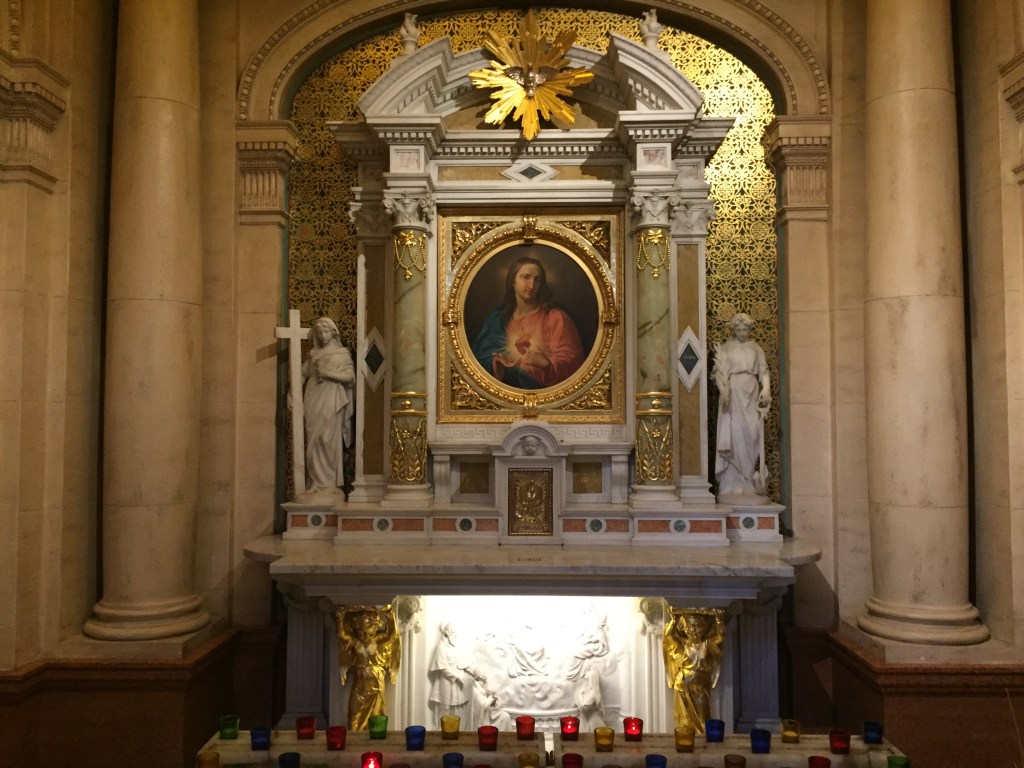
Photo: Side altar, St Ignatius Church, University of San Francisco, 2019 visit.
Link for the Mass readings for Sunday, July 25, 2021
Aligning ourselves with God’s will and supporting one another, we can mature to who we are called to be.
“’Master, did you not sow good seed in your field? Where have the weeds come from?’ He answered, ‘An enemy has done this.’ His slaves said to him, ‘Do you want us to go and pull them up?’ He replied, ‘No, if you pull up the weeds you might uproot the wheat along with them. Let them grow together until harvest” (Mt 13:27-30).
One of my favorite trees is the Maple. When JoAnn, the kids, and I moved to Florida over twenty years ago, the thought did not cross my mind that Maples grew in Southern Florida. A few years after we moved into our home, I was walking in our backyard and thought I saw a maple leaf. I squatted down for a closer look and found that not only was it a maple leaf but a sapling with three leaves! I carefully cleared some of the weeds and grass growing among and around it, but otherwise let it be because it was so fragile. As it grew I cleared more around it. Today it is a fully mature Swamp Maple!
About a year ago, I saw a new Maple sapling emerging, though this time, some poison ivy was growing around it. I sprayed poison ivy killer, thinking I was carefully avoiding the Maple. Unfortunately, I must have gotten some of the poison spray on the Maple leaves because the sapling also shriveled up and died.
I can relate to Jesus’ parable from today’s Gospel. The master warned his servants to let the wheat and weeds grow together until they were more mature at the time of the harvest, so as not to pull up the wheat with the weeds. Weeds in this verse is translated from the original “Greek [as] zizanion [which] refers to a noxious weed that in its early stages closely resembles wheat and cannot be readily distinguished from it” (Harrington 2007, 204). Both, in their immature state, were indistinguishable.
Jesus is calling us to resist the temptation of judging one another. Even when there are those who commit heinous acts of evil, we may feel justified in our judgment and condemnation. Jesus says no. We may convict the person of their action and we are certainly to hold each other accountable, but judge and condemn, no. The Father is the ultimate arbiter and judge.
All of humanity has been created in the image and likeness of God, each of us are a unique gift to this world. We have been created good, yet all of us fall short of the glory and grace of God and because of our fallen nature our image and likeness to God has dimmed. God the Father will judge at the end of time between the wheat and the weeds and only he knows the time or the hour. Let us leave the judgment to God, and let us instead be about following the teachings of Jesus, repenting, and encouraging each other in the maturation process which can include, convicting others when needed, yes, but also encouraging and supporting.
We are to resist the temptation to spread the poison of judgment, gossip and condemnation, otherwise we are promoting division and a culture of death. We are to instead welcome, nurture and care for one another, promoting unity while respecting diversity of person and thought so to support a culture of life.
May we pray for patience, understanding, and the ability to seek forgiveness in our interactions, as well as be willing to forgive each other. Life, even when going well, is hard. We need the encouragement and support of each other if we are to mature and actualize the fullness of who God calls us to be and strive through God’s grace to restore our image and likeness to God. “Encourage each other while it is still today” (Hebrews 3:13).
—————————————
Photo: Our Maple tree today with morning rainbow, much more mature than the little sapling I discovered about twenty years ago.
Mass readings for Saturday, July 24, 2021
Harrington SJ, Daniel J. “The Gospel of Matthew”. In vol. 1, Sacra Pagina Series, edited by Daniel J. Harrington. Minnesota, Liturgical Press, 2007.
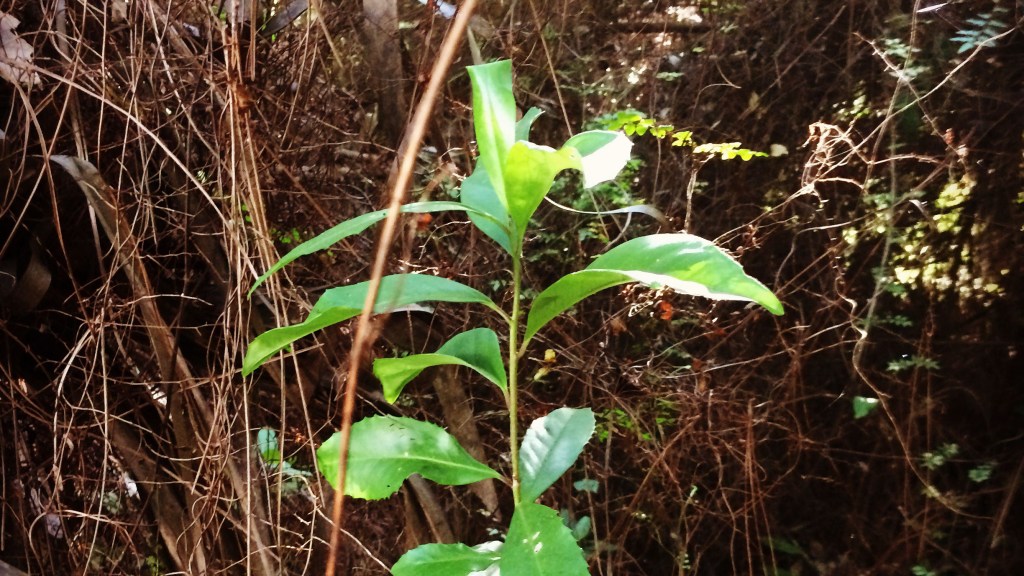
Worldly anxiety and the lure of riches will not choke us when we are grounded in Christ.
In the Gospel today, Jesus explains to his followers his Parable of the Sower. I see many Christians experiencing the third category: “The seed sown among thorns is the one who hears the word, but then worldly anxiety and the lure of riches choke the word and it bears no fruit” (Mt 13:22). Jesus is a part of our life, we may be growing in our faith, but our discipline and maturation is stunted, and so the bearing of mature fruit is diminished. We are limited because Jesus is only a part of our life, not the core foundation. This is because we look to the world and its false promises to be our security and support.
Pope Francis questioned in his apostolic exhortation, The Joy of the Gospel: “How can it be that it is not a news item when an elderly homeless person dies of exposure, but it is news when the stock market loses two points? This is a case of exclusion. Can we continue to stand by when food is thrown away while people are starving? This is a case of inequality” (Francis 2013, 53). How often is it that the top voting issue in our national elections have to do with the state of and concern for the economy?
If we are placing our hope and focus, if our primary source of building for ourselves a secure foundation is in the political and economic realm, we are going to be consistently anxious and stressed. Our faith is going to be choked, and worse our politics will be shaping the Gospel instead of the Gospel shaping our politics. We will justify and rationalize behaviors from our leaders that are contrary to living our life aligned with the teachings of Jesus as long as the economy is going well.
These vines of false security also promote a privatization of our faith. If we seek to counter and challenge injustice, if we call for an awareness of those who are vulnerable and suffering, if we call out actions that are immoral, speaking out for the rights of the unborn, we can face the backlash of being accused of stamping on an individual’s personal rights; being called a socialist or a leftist, by seeking to keep migrant families together, to provide safe haven for asylum seekers or refugees. Taking the risk to be “God’s microphone”, to speak the Gospel publicly, is challenging today because: “The process of secularization tends to reduce the faith and the Church to the sphere of the private and personal” (Francis 2013, 64).
To live our faith is not just a hobby. If we are going to mature as disciples of Jesus, we are going to need to resist the false lures of riches and material security, we are going to need to be willing to face the anxieties of criticism and hostility for speaking the truth of our faith. The unfortunate part is that we may face a lot of push back from those of our brothers and sisters even within our own churches, the Body of Christ. Disagreement and division has certainly been on the rise, but we need to remember it has been within the Church since the Apostles. We are human and fallen at that, so we need to continually give our selves over to God by surrendering our wills to God’s will.
We can do so and mature as disciples when we are willing to commit daily to reading the Bible, hearing his Word proclaimed and receiving his Body and Blood each Sunday or more often when we can, seeking resources to better understand his word, praying and meditating, pondering and struggling with the teachings of Jesus, and so better have the eyes to see and ears to hear his Word and guidance. As we build our foundation on Jesus and his teachings, put them into action in our everyday lives, build a support group, we can share with others the trials and successes of our journey of faith. These small acts will make a tremendous difference.
Courage is a mark of feeling the fear, not denying it or fighting it but embracing it and saying and doing what we are inspired by God to do. Calling on the name of Jesus when we are tempted to place our trust in anything other than God grants us access to divine support. Calling on the love of the Holy Spirit opens our minds and hearts to receive the words to speak and the actions to impart with understanding and kindness when we find ourselves in the midst of unjust, disrespectful, or dehumanizing words or actions.
Jesus calls us as he did his first disciples to deepen our relationship with God and each other. We are to invite others, within and without of our faith tradition, to join us as we walk the road ahead. There will be pain and suffering, there will be trials and loss, but we are to resist the temptation to bury our heads in the sand or to turn away from God. Trusting in our interconnectedness with God and one another, we will become more mature in our faith.
Apparent goods and false senses of material security are the vines of riches that will lull us into excessive comfort, complacency, hyper self-sufficiency, and indifference to the needs of others. Curving in upon ourselves will choke and cut us off from each other, leading to an increase in our stress. Instead of allowing anxious thoughts to overwhelm and keep us indecisive and unresponsive we need to seek God’s will and engage in guidance from others we trust. God heals us but also calls us to step out beyond our comfort zones. This happens when we are willing to love and serve others in need. Difficult? Yes. Yet, we can trust that God will also give us the means to accomplish the task at hand.
We need to remember that we will not to face any trial, tribulation, or challenge alone. When we turn toward and trust in Jesus and reach out to our brothers and sisters in faith and good will, we cut away the vines and thorns, all that is not of God, that attempt to impale and choke us. As the vines are uprooted, our soil will be aerated. The Love of the Holy Spirit will have more room to grow and increase in our hearts, minds, and souls. We will begin to see others through God’s eyes, become more human, and bear the fruit of love, joy, peace, patience, kindness, goodness, gentleness and self control.
——————————————————————
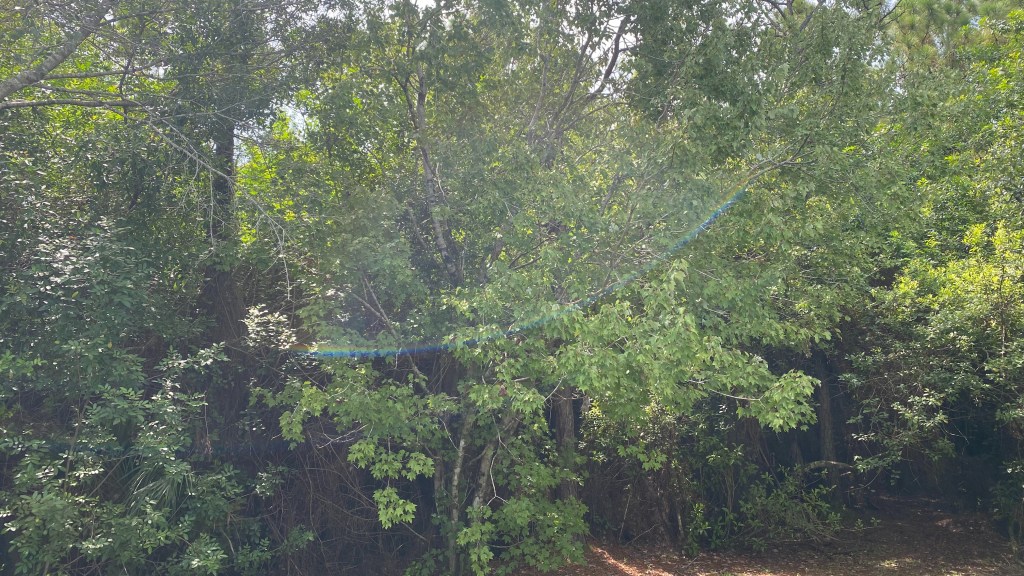
Photo: Plant in our backyard, a symbol for us who place our trust and are rooted in God, growing and maturing despite the vines that attempt to choke us.
Pope Francis. Evanglelii Gaudium: The Joy of the Gospel. Frederick, MD: The Word Among Us, 2013. Link for online access:
http://w2.vatican.va/content/francesco/en/apost_exhortations/documents/papa-francesco_esortazione-ap_20131124_evangelii-gaudium.html
Link for Mass readings for, Friday, July 23, 2021
 Spiritual Stepping Stones