Reflections on the Gospel Reading for the Day


We are one in the Spirit, we are one with God.
“Holy Father, keep them in your name that you have given me, so that they may be one just as we are one” (Jn 17:11).
Jesus is well aware of the temptations of the world and recognizes that the disciples will need the protection of his intercession and that they will remain faithful only if they remain in his love and in relationship with him. The unity that the Father and Son share is an eternal communion. Jesus, as the Son of God, continued to be one with his Father, while fully experiencing his humanity. As a human being, Jesus faced the same temptations present in this world that we face. The difference is that with each choice that he made, as a human being with a free human will, he chose to say yes to his Father at each and every opportunity, and so their unity remained intact and deepened.
Jesus sought the same unity that he shares with his Father for his disciples and he seeks the same for us today, that we may be one as he and the Father are one. Yet, he is not going to pull us out of the world for that to happen. “I do not ask that you take them out of the world but that you keep them from the Evil One” (Jn 17:15). The disciples then and us today, are to do as Jesus did. We are to develop a relationship with God, come to know his will, and share it with those we encounter in our realm of influence. We are not to be transformed by the world, but we are to allow God to transform us by the renewal of our mind and heart. In this way, we can participate in changing the world, as God works through us one person at a time.
Following the will of God is not easy to do. Many distractions, diversions, and temptations pull at us and attempt to draw us away from being faithful and true to God, ourselves, and who God calls us to be. Many times these distractions not only appear to be, but are good things. The challenge is not that we are being good or doing good, but are we doing what God is calling us to do?
I have struggled much of my life because I have had and pursued many interests in many areas, and so I have been pulled in many directions. Since my ordination in 2013, the challenge has increased as I have become more and more aware of the needs of others and the many ministries to be a part of. I am not able to do half of what I feel drawn to do, but I continue to pray and seek what God would have me to do. Since my time in Los Angeles, I have also been meditating more each day.
We can deepen our relationship with Jesus and his Father when we slow down our pace, so to become still within and in this way better be able to hear his voice. The Holy Spirit will also reveal to us the gifts that he has imparted, and above all guide us to clearly know his direction and grant us the courage to follow it. If any fear or anxiety arises about what we are invited to do, we just need to remind ourselves that God will provide the means and support. We are not meant to do what he calls us to do alone. God’s grace is sufficient, God’s grace is enough.
We will accomplish that which God the Father requires of us when we continue to turn to him for guidance and he will place the people and the means, reveal to us the temptations and pitfalls and instill in us the desire for us to complete the task that we have been given. We just need to be willing to change, to be transformed, to grow, and to extend ourselves out of our comfort zones to serve others. When we risk doing so, it will be worth it. Because in the end, as we follow the will of God and trust his support, we will experience his joy, we will find meaning and fulfillment in our life, and ultimately, through the love of the Holy Spirit, we will grow in our oneness with Jesus, the Father, and each other.
————————————————————————–
Photo: Juniors finishing finals last year, graduates this year!
Link for the Mass readings for Wednesday, May 27, 2020

Growing in the love and joy of the Lord
“Now this is eternal life, that they should know you, the only true God, and the one whom you sent, Jesus Christ” (Jn 17:3).
This is our goal, to know God. Eternal life or heaven is not only experienced when we die but through experiencing the life of Jesus we can have a foretaste of heaven now. We can experience this as the joy that rises up from within, that is not merely pleasure, which is a response from the stimulation of our senses and which dissipates once the experience ends. Nor is joy even happiness which comes from the lasting memories of these pleasurable experiences. The experience of joy is not based on external situations and stimulations, joy comes from an encounter with the living God who is present to us, closer to us than we are to ourselves.
We often first experience this joy, this closeness to God when we experience love exchanged between ourselves and another. Even a love that begins in infatuation is a drawing out of ourselves toward another. The hope is that this love matures and develops into a friendship.
This maturation happens when we spend time getting to know each other’s interests, goals, and dreams. We experience another as a person, and with time and continued trust, we begin to risk and allow our masks to be taken off. Inevitably, if relationships begin to mature, they will go through times of miscommunication, misunderstanding, and conflict. The relationship will come to a crossroads, but this does not mean that the relationship will come to an end. If the relationship devolves into abuse, dehumanization, and self-gratification alone, the relationship will need to end. But if there is a willingness to forgive, to work together, to meet each other with humility and seek mutual understanding, relationships will grow stronger and deeper.
Our first experience of developing relationships is in our families. None of us are perfect, so none of us have had perfect experiences of family life. Familial relationships develop in a similar fashion as listed above. We all go through ups and downs. The more that we can be present to one another, support one another, communicate and love one another, the more likely our familial relationships and friendships will grow.
The level most of us hope to attain is to come to a place within ourselves where we can accept and love ourselves and develop mature relationships with a core group of family and friends. Most of us could be quite happy with that. Yet, as Jesus invites and guides us to reach this point of development, he also continues to help us to strive to love beyond family, friends, and tribe. All of us are ultimately called to a universal, unconditional love that sees a sister and brotherhood in all of humanity and all of creation. This is not some utopian philosophy, but who we all are created for and desire to be from the very depths of our being.
We will not get to this place alone, or through our own will power or discipline. Apart from God, there is no way. We have seen the atrocities committed time and again in the name of God across all faith traditions. When we place self over God and others, we isolate and disconnect ourselves from the True, the Good, and the Beautiful. God is not some transcendent, impersonal force, nor is God an omnipotent, tyrannical overlord. The God of Jesus Christ is a God of love, who invites us into a relationship, and when we say yes to this invitation we experience a foretaste of heaven on earth.
Jesus, help us in our encounters today, to experience the love of God through coming to know you as we come to know each other. May we see each other as God sees us, as a unique gift that has never been nor ever will be again. Help us resist reacting to the rough edges and exterior projections of those wounded from living in a fallen world, to instead be compassionate and understanding, and to see the truth and fullness of the potential of each person as God sees in us. Jesus please help us to see each other as God sees us, to allow God to love us and others through us today, one person at a time and one encounter at a time.
———————————————————
Photo: Happiness for the ending of the school year or for the joy of the Holy Spirit?
Link for the Mass readings for Tuesday, May 26, 2020
Happy Anniversary My heart, My love!

Twenty-four years ago today I was blessed to be married to this beautiful and wonderful woman, JoAnn. I was also given, in the words of my grandfather, the gift of an instant family with JoAnn’s three kids, Mia, Jack, and Christy.
We were at our best together. We were not two halves making a whole, but two people who complemented and loved Jesus and each other. Life wasn’t perfect but we were committed to and supported each other through each of the challenges we faced.
JoAnn often said life was hard and would wonder what we were here for. She received her answer one day at the funeral Mass of a fifth grader named Oakley Debbs when his mom, Merrill, shared a message she received from Oakley after he died. “Love, love, and more love.”
JoAnn taught me how to love, she sought the best for others, and I am still learning from her. I miss her every day. Happy Anniversary, my heart, my love.
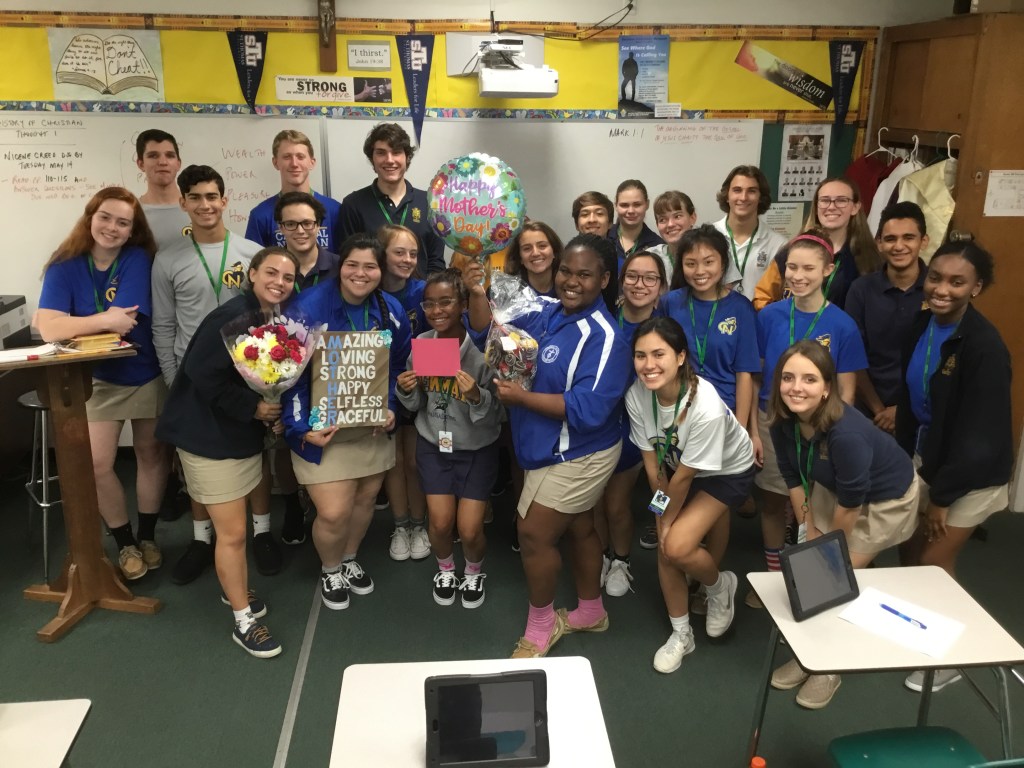
We are not alone when moved by the love of Jesus.
The disciples are beginning to have a better understanding that he is who he says he is, that “he came from God.” Jesus does not rest on or savor this insight and affirmation, but shares with them how, they still do not fully comprehend. He shares with them that each will leave him alone in his most desperate hour. Those he takes to be with him in the Garden of Gethsemane will fall asleep. When Jesus asks them to watch and pray with him, to be a support for him as he receives the will of the Father, they will fall asleep when Jesus hears he will be sent again, sent to do the Father’s will by giving his life on the Cross for them, for us all. The disciples then all fled when the guards, led by Judas, come to take him into custody. Peter will then betray him three times.
What is interesting is that just as Jesus shares with them, that even though they, his most intimate followers, his closest friends would betray him, he says: “I am not alone, because the Father is with me. I have told you this so that you might have peace in me. In the world you will have trouble, but take courage, I have conquered the world.”
These words are words of comfort and hope for us today! No matter if we betray or are betrayed ourselves, we let others down or are let down, we see and experience the devastating effects of our fallen world and fallen human nature, from without and within; no matter what conflict, challenges, or tribulations we are faced with, we do not need to succumb to cynicism, hopelessness, and despair.
We are not alone! Jesus reveals to us the way to his Father because Jesus is the Way! We need to resist seeking affirmation from the culture or the world. Our priority instead ought to be to build our relationship with Jesus, who will lead us to the Father so to experience the Love of the Holy Spirit! When we acknowledge the presence of Jesus in our lives and when we turn to him for help and support, there is joy, there is peace, and all things are possible.
Jesus is the light that shines in the darkness, and he will not be overcome by it, for he has conquered death, and overcome the world. We are an Alleluia people because through our participation in the life of Jesus the Christ we will overcome as well. As an Alleluia people, we are not to be shaped by the culture and the world but are to instead shape it by authentically living the Gospel, by being and sharing the light, joy, and peace of Christ in every aspect of our lives and interactions with one another.
Photo: This year’s seniors as juniors last year putting their love into action by creating and gathering surprise Mother’s Day gifts for JoAnn when they found out she was diagnosed with pancreatic cancer.
Link for the Mass readings for Monday, May 25, 2020

Pondering the Ascension of Jesus
For many of us, when we hear about the Ascension of Jesus we are just as beguiled as the disciples who as recorded in the Book of Acts were standing around, looking at the sky. Also, depending on where you live, will depend on when you celebrate this solemnity. If you live in the ecclesiastical Provinces of Boston, Hartford, New York, Newark, Omaha, and Philadelphia you already celebrated Ascension Thursday on its traditional day, this past Thursday. For the rest of the country it is a holy day of obligation celebrated today, on Sunday. The reason for Ascension Thursday is that the Ascension of Jesus took place 40 days since the Resurrection and 10 days before Pentecost. The point of concern for moving to Sunday observance was lack of attendance on Thursdays.
Regarding what the Ascension of Jesus is, sometimes, we can understand a term better by saying what it is not. The Ascension was not an event where Jesus went up, up, and away in my beautiful balloon, or Superman zipping away to destroy an asteroid hurtling toward the earth. Also, it is not that Jesus had had enough of us and left the Apostles to fend for themselves.
The Ascension is the culminating event of the Paschal Mystery of Jesus Christ. Jesus, the Son of God who became a human being like us, lived among us, experienced the joys and sufferings of life like us in all things but sin, yet took our sins upon himself on the cross. Jesus then died, entered into the utter godforsakeness of death, and conquered death. He rose again through the Love of the Holy Spirit, not as a ghost or a spirit, but still fully God and fully man, yet his body was transfigured. Jesus became the firstborn of the new creation.
After the forty days that he spent gathering his disciples, eating with, teaching, and empowering them to continue his work of making the will of his Father known, Jesus Ascended back to the Father still fully human, and so with our humanity too. This is a type of physical and spiritual physics. God did not create us as autonomous and completely independent. God created us as interconnected and this is why St. Paul can write to the Corinthians, “For just as in Adam all die, so too in Christ shall all be brought to life” (1 Cor. 15:23)!
As Bishop Robert Barron explains: “The Ascension is the translation of this earthly reality into a heavenly reality.” Jesus is no longer limited by the time and space of our present temporal reality. He transcends our recognized third-dimensional reality and now exists at a higher pitch of existence. Just as Jesus was able to pass through a locked door, he is able to be present to us at Mass on Thursday or Sunday or any time that the Mass is celebrated anywhere in the world. Jesus is present to us where two or more are gathered in his name and he is present when we call on his name. Jesus is present to all of us everywhere because we are united by our humanity and the humanity of Jesus!
Through the event of the Ascension, Jesus brings something of our humanity to heaven, and at Pentecost, which we will celebrate next week, he sent something of heaven to us in the descent of the Holy Spirit. And who is the Holy Spirit, but the Love that is breathed, that is shared between the Father and the Son.
What the Ascension means for us is that we are separated no longer from the reality of heaven. St Irenaeus wrote that “Jesus opened up heaven for us in the humanity he assumed.” We can see this displayed in biblical accounts such as the sky was torn open at the baptism of Jesus, as the veil was torn in two outside the Holy of Holies in the temple at the moment of his crucifixion, and as Jesus ascended with our humanity, to return to the right hand of the Father. Heaven and earth have been wedded.
We become part of the Church, the bride of Christ through encountering Jesus in the Sacraments, especially in our Baptism when we become part of the Body of Christ, when we are nourished by the Eucharist, and empowered through Confirmation. Jesus did not leave us alone when he ascended, we were no longer separated from God, but instead, we became an organic part of the Mystical Body of Christ through our participation in the life of Jesus.
We are transformed, divinized, made God through our participation in the life of Jesus. We are made holy, and our commission, the same as the Apostles, is to continue the work of being a bridge for the communion of the human and the divine. We are to work to follow the will of God, on earth as it is in heaven, to “Go, therefore, and make disciples of all nations” (Mt 28:19).
Having heard this Good News of the Ascension, let us not, as the two angels said about the disciples, just “stand around looking at the sky” (cf Acts 1:1-11), but go forth and share the love that we receive in the Eucharist, even spiritually, for Jesus is not limited by space and time, and invite all to participate on earth what is celebrated in heaven, the love of the communion between the Father, and the Son, and the Holy Spirit. Amen! Alleluia!!!
————————————————————–
Photo: An evening walk earlier in the week. A hawk and I pondering the things that are above.
The Mass readings for Ascension Sunday, May 24, 2020

We are loved by God and sent to love others in return.
“I came from the Father and have come into the world. Now I am leaving the world and going back to the Father” (Jn 16:28). This phrase, in one form or another, has been a consistent message in John’s recording of Jesus’ farewell discourse. These words not only show his connection to the Father through his coming from and returning to the Father and then his sending of the Holy Spirit, but these statements help to prepare the way for our understanding of the Trinitarian Communion.
What theologians have termed as the Immanent Trinity, as God within himself, is expressed by the divine communion of God the Father, God the Son, and God the Holy Spirit. All that God the Father is, he gives all, holding nothing back, to God the Son perfectly. God the Son receives all that God the Father has given perfectly, and returns all that he has received, holding nothing back, perfectly to God the Father. This giving and receiving, this going out from and returning to, this perfect willing of each other’s good, is the purest expression of Love. This Love shared infinitely and perfectly between God the Father and God the Son, is God the Holy Spirit.
The Son of God became one with us, sharing in our humanity, so we can also share in his divinity. His ascent and return back to the Father makes this even more possible. Now his divine nature, as the Son, always remained in full communion with the Father. Jesus is one divine Person as the Son, yet he subsists in two natures the divine and the human. The Ascension of Jesus was a point in salvation history, in which the human nature of Jesus transcended our three-dimensional reality to enter the eternal present, the immanence, of the Trinitarian communion, and because God created all humanity and creation as interconnected with one another, we are now able to share in the intimate, divine dance, perichoresis, of the Love, shared between God the Father, God the Son, and God the Holy Spirit.
We are all invited, 24/7/365, with every breath, thought, word, and action, to experience the Holy Spirit, the communion of Trinitarian Love. But this is not an imposition, it is an invitation, meaning no matter how wonderful, no matter that this is what we have been created for and will bring us fulfillment and joy, we can reject or accept this offer.
Thankfully, because of the Divine Mercy of God this is an open invitation. Even if we had said no for years, we can say yes at this moment. Once we say yes, even just a little, the love of God grows within us, just like the image of the mustard seed. As we experience the love of God in our own lives, we begin to realize how God is the foundation of our being and all creation.
We come to see how God is the foundation of all things, how he is present to us in our everyday actions when we participate in the very being and life of Jesus. We do so when we participate in the sacraments. Jesus is even more present to us in the sacraments than when he was present to the Apostles. We also experience and encounter God through our participation in the three transcendentals, the ways of our being that God has imparted to us to experience him, which are the Good, the True, and the Beautiful. It is through the expression of our creativity in music, dance, and the arts that we come to experience the Beautiful. By embracing our gift of reason and intellect, through prayer, study, and sharing of ideas, we come to know the True. In recognizing the gift of others as human, through our fellowship, loving and engaging one another in the corporeal and spiritual works of mercy we come to experience Love which leads us to the Good.
God has given us the wonderful gift of life to experience not just to endure, even in the midst of our trials, tribulations, and sufferings. We just need to remember to open our hearts, minds, and souls to receive the gift of God working in and through us. Just as the Son is, we are sent to risk, to give our love away, by sharing his love with others. Our offer can be turned down or rejected. Even so, we must resist the temptation to judge or to take offense, but instead assume a posture of understanding, of being present, and being available to witness and allow God to reach others through us. We never truly know the pain and suffering of another, nor what they may be dealing with.
Each of us is on a journey of growing in faith. We are invited to open ourselves to the will of God, so we can experience the Good, the True, and the Beautiful so that we too can experience, perichoresis, the infinite dance of the Love shared between God the Father, God the Son, and God the Holy Spirit. This is our fundamental option, our end goal, heaven, which is to enter into the fullness of the divine dance and communion of the Trinity. What Jesus has brought to us through his Paschal Mystery; his life, suffering, death, resurrection, and ascension into heaven, is the reality of how we can experience heaven on earth right now. Our vocation is to say yes to God’s invitation to embrace the love of the Trinity so to love others as we have been loved, for: “This is the time of fulfillment. The kingdom of God is at hand. Repent and believe in the Gospel” (Mk 1:15).
————————————————————————
Photo: Christmas hike 2010 – photo credit Jack McKee
Link for the Mass readings for Saturday, May 23, 2020
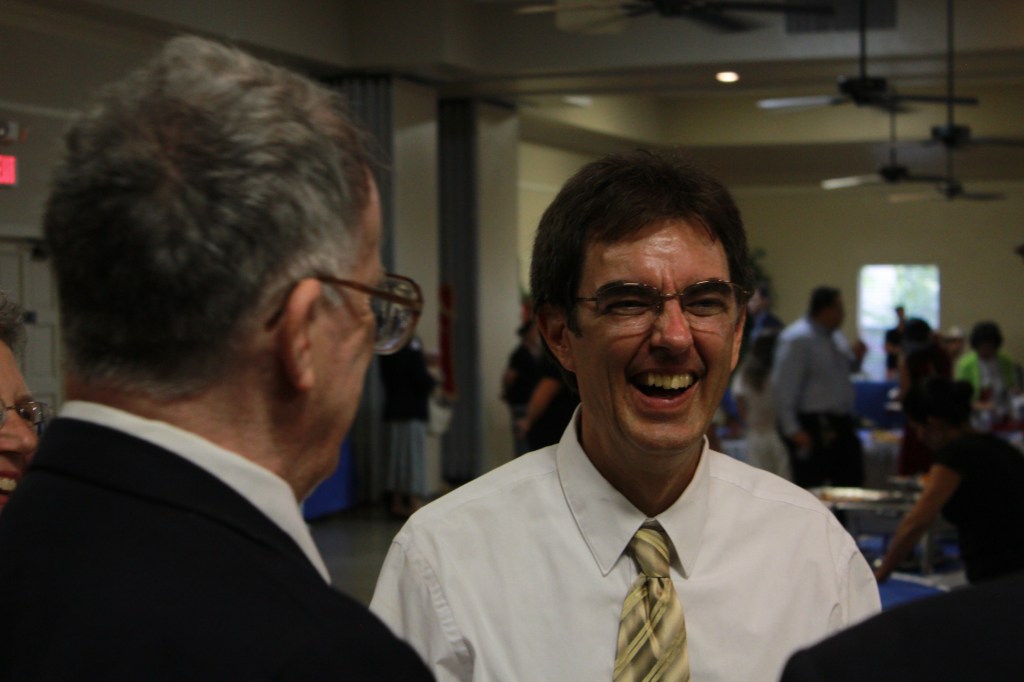
Sharing the joy of Jesus, we become bearers of his light in the darkness.
“But I will see you again, and your hearts will rejoice, and no one will take your joy away from you” (Jn 16:22). Jesus continues to prepare his disciples for his horrific death by offering hope that he will see them again. That he will see them again is not a typo. We can read about the exchanges between Jesus and his risen disciples. Jesus appeared to Mary of Magdalene at the tomb, he appeared to Cleopas and his companion on the road to Emmaus, and he appeared to the ten and then the eleven with Thomas. Jesus sought out those he commissioned to proclaim his Gospel message after his Resurrection, just as he had done during his ministry before his crucifixion.
When Jesus did appear to them again, at the moment of recognition, there was wonder and great joy! It is hard for us to even imagine these early Resurrection accounts. The disciples witnessed his brutal death, lived in fear because of the very real possibility of their own persecution and similar death, and then, they encountered the risen Jesus. St Paul would also shortly thereafter encounter Jesus on a different road, the one to Damascus en route to continue his persecution of the followers of Jesus. All of their hearts rejoiced and it was this joy that they proclaimed with boldness. The Apostles, like Jesus, led with joy and love to embark on their evangelical mission. They lived a difficult and challenging life that for many ended in their own brutal deaths, yet their joy carried them through and into eternity.
Life is hard, even in the best of circumstances. There is evil present in this world, not of God’s creation, because all that he has created is good. Through the corruption of the good that he has created bad things happen to good people, and good people do bad things. Suffering, disease, violence, natural disasters, division, corruption, hatred, and dehumanization abound. It can be easy to succumb to the overwhelming tide of negativity and assume a stance of cynicism, detachment, denial, defensiveness, and/or indifference. Yet this is not the response Jesus modeled nor has infused his followers through the ages with.
Our response to the evil and darkness of this world is to be bearers of the joy of Jesus! We are to be as lights shining in the darkness, providing hope for those in despair, accompanying those in their struggles, and being willing to receive help when we are ourselves are in need. We cannot do any of this alone and on our own but it can be done in participation with Jesus and each other. The Apostles, disciples, and saints, those who have gone before us, have shown us that it is possible to be beacons of hope in very dark places.
Pope Francis reminds us about our mission in The Joy of the Gospel (276): “However dark things are, goodness always re-emerges and spreads. Each day in our world beauty is born anew, it rises transformed through the storms of history. Values always tend to reappear under new guises, and human beings have arisen time after time from situations that seemed doomed. Such is the power of the resurrection, and all who evangelize are instruments of that power.”
Even during this pandemic, we can and need to trust that Jesus is with us, closer than we can ever imagine, filling us with his love and joy. No one can take this joy away from us except us if we are unwilling to share it. We can and must choose to allow the light of his joy and love to radiate through us, no matter how small or insignificant an act of kindness may seem. When we do so the darkness in our realm of influence will begin to fade away.
Photo credit, Jack McKee: September 2013, ordained to share the joy of Jesus!
Link for the Mass readings for Friday, May 22, 2020
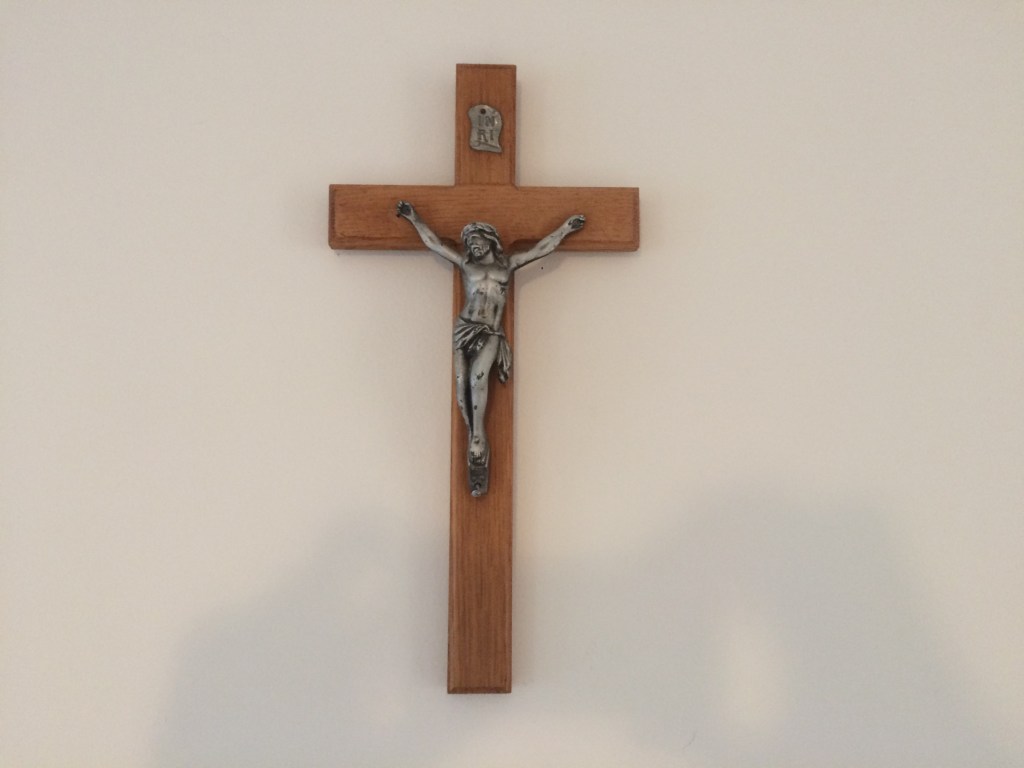
Our sign of victory over death and the grave!
Jesus continues his farewell discourse and appears to be speaking in riddles to his disciples saying that “A little while and you will no longer see me, and again a little while later and you will see me” (Jn 16:16). We who know what is coming for Jesus understand what Jesus is talking about, but for the disciples, not so much. Jesus will be crucified and rise again from the dead. Jesus then goes on to explain further that: “Amen, amen, I say to you, you will weep and mourn, while the world rejoices; you will grieve, but your grief will become joy” (Jn 16:20). Jesus is speaking about the same two points of reference, his Crucifixion and Resurrection.
The most brutal sign of oppression during the reign of the Roman Empire was the cross. It was a weapon of terror, torture, an extreme case of punitive justice or capital punishment, and in actuality state-sanctioned terrorism. The person would be stripped of all their clothing, would be nailed by the wrists, or palms and wrists tied, nailed by the feet, and then lifted up for public display. Then would begin their humiliation, dehumanization, and long agonizing death; a sign for anyone to think twice about challenging the authority of Rome.
The disciples wept and mourned, their hopes dashed, they were stunned, ashamed, and demoralized, while others rejoiced as Jesus and the two others beside him were lifted up. The centurions flaunted their authority and prowess. Others gathered around and jeered at the false prophet dying on Golgotha, the hill of the skull, where so many had gone before. Where other hopes and dreams had been crushed under Roman dominance and oppression.
Jesus was sometimes described as being hung on a tree in some letters of the Bible because writing the word cross was still too raw and vivid in people’s minds. Yet, this was not the final chapter. The grief of the Apostles would turn to joy because of the Resurrection. The cross, this symbol of torture, would become a sign of victory over death and the grave.
Yet, one centurion got it right: “Truly this man was the Son of God” (Mk 15:39)! For many Christians today, the Crucifix and Cross are no longer a sign of oppression and fear but are displayed as a sign of the triumph and victory that Jesus has won for us. They are not magic talismans, but they are sacramental signs, concrete objects that are tangible, that we can see, wear, and hold on to, for the purpose of reminding us that we have a God who understands our humanity because he lived life as we do.
Jesus cried as we cry, he laughed as we laugh. His family thought he was crazy and he enjoyed table fellowship with those on the peripheries. Jesus faced rejection, misunderstanding, trials, and tribulations, he overcame conflict and rejection, he died as we will die, and he ultimately conquered death, so that through our participation in his Life and Resurrection we will rise again in Christ as well.
I invite you to spend some time meditating in front of a crucifix or cross today. If you are going through a particularly rough patch, hold it in your hand, feel the wood, allow your gaze to fall upon the face and wounded body of Jesus to remind you that he understands because he experienced what we experience, and that means God experiences what we experience. When we allow him, Jesus will also embrace us with those arms outstretched to ease our suffering and pain.
Jesus is and will continue to be present with us, closer even than the crucifix we hold or look upon. If all is going well, or you just received some great news, do the same! We don’t only go to Jesus with our trials and tribulations, but our joys and celebrations as well. Simply share with him your heart and allow him to share his with you.
——————————————————————–
Photo: My grandparent’s crucifix that hung over their bed hangs now over JoAnn and my bed.
Link for the Mass readings for Thursday, May 21, 2020

 Spiritual Stepping Stones