Reflections on the Gospel Reading for the Day


Jesus has not left us as orphans to fend for ourselves.
What is common to all of us is that we experience some expression of loneliness to varying degrees consciously, or mostly unconsciously. We are social beings, we want to belong, to be part of, and this is why we are communal. We may do, say, or turn a blind eye to behaviors that go against our conscience just to be accepted, acknowledged, or noticed. This behavior further feeds our loneliness, because though we may be accepted, we become more alienated from our true self.
At the core of our being, what we all seek is to be loved, and to love. We strive from the moment of our conception not only to exist but to actualize the fullness of our potential. Through our time of gestation, we are not potential human beings, we are human beings actualizing out potential. A difference between me typing this now and when I was in my mother’s womb is that before and after my birth, I was smaller and more vulnerable.
We as human beings are a living, craving hunger and desire to be in communion with God and one another from the moment of our conception until our natural death and continuing on into eternity. This is true to the believer and the atheist alike. Until we embrace this deepest of needs and desires, we will be restless, anxious, and unfulfilled. We can feel isolated and alone, even in the midst of a hundred people or daily likes on social media.
God has made us for himself and constantly invites us to be in a relationship with him and with each other because he is the foundation and source of our being. Sin is the turning away from that invitation, a curving, or caving in upon oneself away from God and others. It is also the unwillingness to bother or care, to reach out toward another in need. For what we do to the least of our brothers and sisters, we do to God. We are not just to be pro-birth, we are to be pro-life, and we are invited to promote a consistent ethic of life.
Jesus became human in his Incarnation to show the importance of the dignity of the person and that it is grounded in our relationship with God our Father, meaning we are all brothers and sisters. Jesus was not a plan B, but he was always the primary plan. In the fullness of time, when God so willed, he sent his Son to become one with us so that we can become one with him. Jesus is the face, hands, and body of God. He came that we might see and experience God. Jesus experienced all we experience except for sin because he never in any act rejected or said no to his Father. His whole life was a yes to the will of God. Jesus is the bridge, the way to love and be loved, authentically.
In today’s Gospel, Jesus continues his farewell discourse. He prepares his disciples for the reality that he will be returning to the Father, and yet at the same time, he will not leave us alone. He will be with us for all ages. This is so because as the Son of God made man, in his Ascension, he returned to the Father not just in his divinity as the Son, but also in his humanity. God created all of humanity and his creation as interconnected, and because of that, we all experience this transcendent act of the Ascension.
Jesus shared with his disciples: “When the Advocate comes whom I will send you from the Father, the Spirit of truth who proceeds from the Father, he will testify to me. And you also testify, because you have been with me from the beginning” (Jn 15:26-27). Jesus is talking about the Holy Spirit, the third person of the Trinity, the infinite Love experienced and shared between the Father and the Son. We become sharers in this divine love and communion of the Holy Trinity through our participation in the life of Jesus.
As we experience and enter into the love of God and develop a relationship with him we begin to feel alive, we begin to heal and to feel whole, because we have experienced the love we have been made for. We have experienced being loved for who we are and as we are. We no longer have to say, do, or accept those actions that we don’t agree with that go against our conscience, to belong. St. John Cardinal Newman has stated that our conscience is the “Aboriginal Vicar of Christ”. Jesus dwells within us, to guide and lead us. He encourages us to say yes to his Father as he has and continues to do.
This Trinitarian love that we share because of our participation in the life of Jesus, this great gift, will continue to grow as we testify to this love and share it with others, give it away. The more we give, the more we will receive. We share the love of God by being willing to accompany one another. That does not mean fixing others or their problems. We are called to be present, to accompany, and journey with others, meeting them as Jesus met others and meets us, as and where we are. We are to laugh with, to cry along, to encourage, empower, and support, but above all to be present, to allow God to happen through us.
Jesus has not left us as orphans. His return to the Father through his Ascension has given us a greater and more intimate access to the Holy Spirit, the love shared between the Father and the Son. By saying yes to and trusting in his love, we free ourselves from the tendrils of fear and anxiety. We are not alone when we say yes to God and develop our relationship with him. As we do so, we continue to actualize the fullness of our potential, we become who we were created to be, and we become truer to ourselves. We experience that peace that surpasses all understanding and develop relationships with others based on authenticity and integrity, regardless of external pressures and experiences. We are loved and we love in return, which is what we all seek, which is who we are called to be.
——————————————————————————–
Photo credit: luizclas from Pexels
Link for the Mass readings for Monday, May 18, 2020

Jesus is our guiding light through any darkness or storm.
We are living in such uncertain times in so many areas of our lives that we may be experiencing a mix of emotions such as feeling uneasy or unsure, unsettled or upended, fretting or fearful, anxious or angry and that is ok. These are human emotions that arise from our perceptions that all is not well and that there is real instability in our society and world right now.
We don’t want to deny our emotions but we do want to be aware and mindful of them such that they do not overwhelm us or take control such that they dictate how we choose to live our lives. We also want to resist the temptation to shut down and adopt a posture of cynicism, defeatism, or despair.
I have always been drawn to lighthouses. These buildings set on the shore emit a penetrating light to guide sailors to a safe haven, especially during times of darkness and stormy seas.
The Bible very much operates as a lighthouse for us, to help to guide us home to a safe haven, to our final destination. When we avail ourselves of the gift of God’s word we are never lost or alone no matter how strong the winds of unpredictability blow or how unstable and turbulent the waters are. No matter the external circumstances, what remains a constant source of direction and support is the light of God’s presence in our lives.
Each of our readings today offers us some illumination to ponder today and through the week.
In the Gospel, Jesus said to his disciples: “If you love me, you will keep my commandments. (Jn 14:15)”.
Upon first reading, a cynical view might be, “Well that is a pretty conceited thing to say. There goes the Church again telling me what to do. There’s unconditional love for you.” And that is the view many people take regarding authority because many view institutions, the Bible, the Church, Jesus, and God from the view of our woundedness, sins, and failures. We are a culture of celebrity and we place our sports figures, entertainers, political and religious leaders on pedestals where they don’t belong, and when they fall we find ourselves in a crisis of leadership.
Jesus is not them and he speaks consistently as the way, the truth, and the life. He is that lighthouse guiding us to a safe haven. To say that we do not need the commandments is like telling the lighthouse keeper as we head off into the calm ocean to shut the light off, we will be able to find our own way back home. Yet when a sudden storm rises, or darkness falls sooner than we expect, will we be able to find our way back?
Too many of us do the same when being offered God’s commandments as a guide. We fail to do so, for the same reason that we fail at most of our New Year’s resolutions. If we set a goal at all we often do so without placing a system in place to attain it. We also determine too often that we can go it alone on our own will power and determination. Yet as many diversions and distractions arise, we choose apparent goods over and above our highest hope and good and find ourselves adrift without direction.
In our first reading from the Book of Acts, we see how “Peter and John ‘laid hands on them and they received the Holy Spirit’” (Acts8:17).
The early Church took root and thrived even while under heavy persecution because they encountered Jesus and followed the principles he set forth, yet not on their willpower alone. For left, to themselves, they were all utter failures. It was not until the coming of the Holy Spirit at Pentecost that they were empowered by the love of God to now put into action what Jesus had prepared them to do.
The gifts of the sacraments are the means by which we are empowered by the Holy Spirit today. These are direct encounters with Jesus in which we are transformed by the fire of his love, die to our self-centered focus, and are reborn in him as a part of his body and life.
There is no secret to living as a Christian. Each day we must set aside time to pray and meditate, spend time in the Bible, go out from ourselves to serve others, all the while being attentive to our families, school, or work responsibilities. This balancing act will ultimately play out depending on our station and demands in life and this is why we need a savior to guide us and lead us with his light.
Our final point comes from our second reading from St Peter.
Always be ready to give an explanation to anyone who asks you for a reason for your hope, but do it with gentleness and reverence, (1 Peter 3:15-16).
As Christians, we are to be in relationship with God and one another. This is who we are created to be. We are to share our faith, we are sent on mission to share our relationship with Jesus. That does not mean imposing our views on others or assuming we are right and others are wrong, or that we are charged with saving those in our midst. It means that we are to share our stories, our encounters, our experiences with the living God. This means we need to know God.
We do so when we know and put into practice the commandments, especially to love God, place him first in our lives and to love our neighbors as ourselves. We are to continually open our hearts and minds to accept the power of the Holy Spirit in the sacraments as well as in our daily spiritual disciplines and in our willingness to love, serve, and suffer with others.
When we live a life governed by the commandments and are continually open to being transformed by the Spirit, when we bring our trials and tribulations to Jesus and we put into practice his guidance, and experience his presence through each challenge, we will be people of hope and joy. This is what will draw others to God. When they ask us the reason for our joyful disposition, we will have some stories to share.
Because ultimately, no matter what challenges we are experiencing now, or those that will rise before us, no matter how dark the night or how violent the storms, we know that God is our light, that he is with us, and that he will guide and provide for us in each of the ups and downs of our lives. We are not alone.
Photo by Skitterphoto from Pexels
Mass readings for Sunday, May 17, 2020
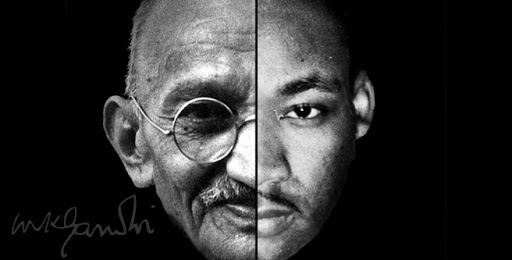
We are to counter hate with love.
When Jesus said to his disciples: “If the world hates you, realize that it hated me first”, Jesus was not proposing an-us-verses them mentality. It can be easily taken that way and certainly has been lived out in many ways in our society and world. Yet, an-us-verses them mentality is usually a defensive posture assumed by those who feel or are actuality being persecuted. It is an understandable posture. It is just not the stance that Jesus proposes us to take. We are to love our enemies, we are to love those who hate us. Impossible? Only on our own will power alone, for apart from Jesus we can do nothing, but with him all things are possible.
Jesus is making it plain to his disciples that they need to be prepared, that what is coming is the same that has been happening to him. They will be persecuted, mocked, imprisoned, and give their lives just as Jesus did. The gospel message is a challenge. We are challenged to have a change of mind and heart, to be conformed to the love of Jesus the Christ. This means that our focus must shift from that of self first and foremost to God who is to have the primary sense of place in our lives.
We know we are putting God first instead of our fallen nature when we react less and love more. Reactions are based on an-us-verses them mentality. They are responsible for the state I am in, they are taking my jobs, they are not allowing me to worship or speak in the way I want to, it is all their fault, they made me do it, are all reactive thoughts that lead to uglier statements and actions. Jesus invites us to assume the disposition of mindful action not reaction.
The way we can be more mindful and less reactive is to be people of prayer and meditation. Much of our reaction comes from our harried pace, keeping us from being in touch with our deep-seated fears and prejudices. We run from the mirror Jesus holds up to us. We need to stop and pray regularly. See the sin in our hearts so we can admit it and let it go or going to Jesus for healing or confession. We begin by taking some deep breaths, asking Jesus to be present in our lives, asking him to shine the light of his love so to see what we have hidden, so we can bring the hate to the surface, let is go, be forgiven, and be set free.
We can then be in a better place to ask for the healing to continue, for Jesus to help us to be more patient, understanding, truer to who he calls us to be, which is people of love, willing the other’s good, accepting and encountering each other as fellow brothers and sisters on our journey together, recognizing that the common denominator for each of us is that we are wounded, lonely, and just want to belong.
During this pandemic, may we have the eyes to see the light that truly reveals to us how interconnected we are between all peoples of the world. Let us continue to follow the encouragement of Pope Francis and pray with people of all faith traditions and people of good-will, to renew and continue to conform our lives to the One who gave his life that we might be free from our own sins, prejudices, and darkness. May we allow the flow of the love of the Holy Spirit to guide us, so to tear down walls of hate and division, and instead build bridges of love and reconciliation.
In this way, when we experience hate, dehumanization, and defamation, indirectly through multiple media platforms and directly in our own lives, let us greet each with a breath, a pause, and a turning again and again to Jesus for the strength to resist the easy and impulsive reaction, and respond instead with mindful thoughts, words, and actions of understanding, faith, hope, and love.
We are to hold people accountable, but not by reacting in the same negative manner. In a world filled with darkness, hate, and violence, let us instead be bearers of light and love, and advocates of reconciliation. I will leave you today with two quotes from those who lived this truth not only between individuals but spurred on social movements that still inspire us today.
“Darkness cannot drive out darkness; only light can do that. Hate cannot drive out hate; only love can do that.” – Dr. Martin Luther King, Jr.
“The nectar of Love alone can destroy the poison of hate.” – Mohandas K. Gandhi
———————————————————————————-
Photo: accessed from Metrospirit.com
Link for the Mass readings for Saturday, May 16, 2020

Let us love one another as Jesus has loved us!
Jesus said to his disciples: “This is my commandment: love one another as I love you” (Jn 15:12). This verse is foundational to our faith as we seek to live as disciples of Jesus. Love is what Jesus lived, modeled, taught, and commanded, but even more so, Love is who, as the second person of the Trinity Jesus embodies because he is Love. By becoming human, as one of us, and embracing the Paschal Mystery: his suffering, crucifixion, death, Resurrection, and Ascension into Heaven, the Son of God opened up the reality for us that we can also participate in the very same love he shares with his Father.
We are capable of loving others because Jesus has loved us first. How did he love us? We are blessed in that Jesus gave his life for you and me, each and every person, for those who believe in him and those who don’t, he gave his life for the good and the bad alike. Jesus was willing to suffer the scourging, agony of his carrying the cross, crucifixion, and death. He was not just going through the motions, his divine Person was not somehow hovering over his body. Jesus felt the rejection, the betrayal, the physical torment of the nails, because, “No one has greater love than this, to lay down one’s life for one’s friends” (Jn 15:13).
Some of us may have heard this verse so many times that we do not fully appreciate the impact of it. The gift of the liturgical seasons is that the readings of Scripture are offered again and again so we can experience the telling again and again. We just need to slow down and ponder the significance of this reading, breathe in the reality of this passage, so that it becomes the living Word of God, not just a dead letter. As we do so, we will be less apt to take our life for granted, the life we have been given at such great cost. In coming to realize the gift that Jesus gave for us, and meditating on that reality, hopefully, we can see others in our life who we may have taken for granted. Those who have loved us, have been there for us, have been there when maybe when no one else has been.
What is our response to the love of Jesus that we have been blessed with? Jesus answers: “This I command you: love one another” (Jn 15:17). Jesus ends today’s Gospel as recorded by John where he began at the beginning, he invites us to love. Jesus loves us more than our worst mistakes or our most grievous of sins; he loves us more than we can ever hope or imagine. This is important to not only hear but to allow the reality of this grace to fill us to overflowing, such that we seek to love others as well in the same fashion.
In embracing the love of Jesus, his invitation of friendship, and with a heart full of gratitude, maybe just maybe, we too will love others a little more today than we did yesterday, and a little more tomorrow than today. Love is not a willingness to love each other only when everything is going well. Love is being willing to do so one conflict at a time, one interruption at a time, one inconvenience at a time, one heartbreak, and even one betrayal at a time. We are able to truly love when we are willing to see each other as Jesus sees us, as friends: as human beings endowed with dignity. When we are willing to do so, we are ready to love, one encounter, one moment, one person at a time.
Photo: Learning to will each other’s good through junior and senior year and hopefully continuing to as they finish their freshman year of college!
Link for the Mass reading for Friday, May 15, 2020
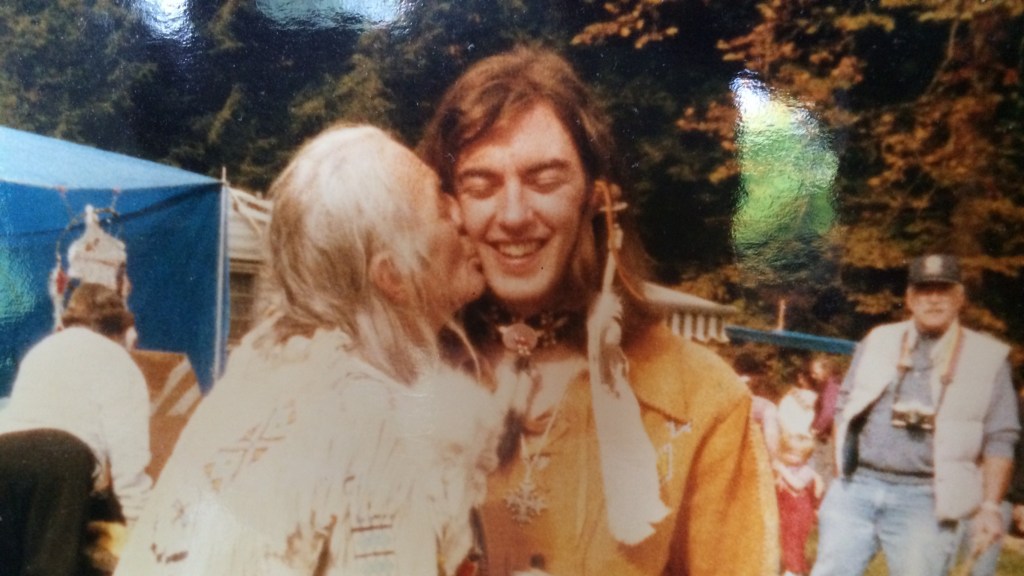
Respecting the dignity of each person is to be our starting point.
“This is my commandment: love one another as I love you” (Jn 15:12).
This is how God created us, to be loved, and to love. The love that Jesus is talking about is unconditional and not just relegated to those closest to us, although, hopefully, in our families and friendships is where we first experienced being loved and learned to love in return.
The love that Jesus commands that we are to participate in as his followers, is a going out from, a giving of ourselves to one another. We are not to seek in return, but to seek to empty ourselves and to give ourselves away. The return we get is from experiencing the infinite wellspring and source of the Holy Spirit. The more we hold back, the less we receive, the more we give, the more we experience. We are to tap into the living stream, not separate and isolate ourselves, so as to become a stagnant pool.
The love Jesus commands cannot be done on the fly. To love is to be present with another. To love is to stop, to put our agendas and thoughts on the side, and be willing to accompany another. Love is also not coercion and manipulation, it is accepting another as they are and where they are and sharing the journey of life together. Love, as I have also written before, is as St Thomas Aquinas has written, to will the good of the other as other. This means that we seek to will another’s good. This may mean saying things that others may not want to hear, or guiding them away from actions, relationships, and habits that are detrimental to their highest hope and good, but first and foremost meeting each person where they are and walking with them.
The reality of living in the love of Jesus is not exclusive but universal. We are to love those in our family, community, place of worship, tribe, political party, and nation, while at the same time we are not to be limited to our common groups only. We must be willing to go out from our protected spaces to risk to love, to direct our thoughts, words, and actions toward those who are different, those who do not see the world as we see it, and even those we consider our enemies. This does not mean we have to agree or even like someone else, but we are commanded to love, to respect the dignity of the person as our starting point.
We can and ought to state clearly our beliefs, our thoughts, and dreams, but also allow others to do the same. In this way, though we may differ in our points of view, we can see how we are much more alike than different. When we talk at and over one another, demean and belittle one another, we dehumanize each other. In an open dialogue, we encounter the person, and instead of keeping each other at arm’s length, we can embrace, learn and grow from one another as friends, as mutual brothers and sisters on this journey we call life.
—————————————————————-
Photo: Wolf Den Pow Wow, with my hunka father, Fire Hawk, in late 80’s.
Link for the Mass readings for Tuesday, May 14, 2020
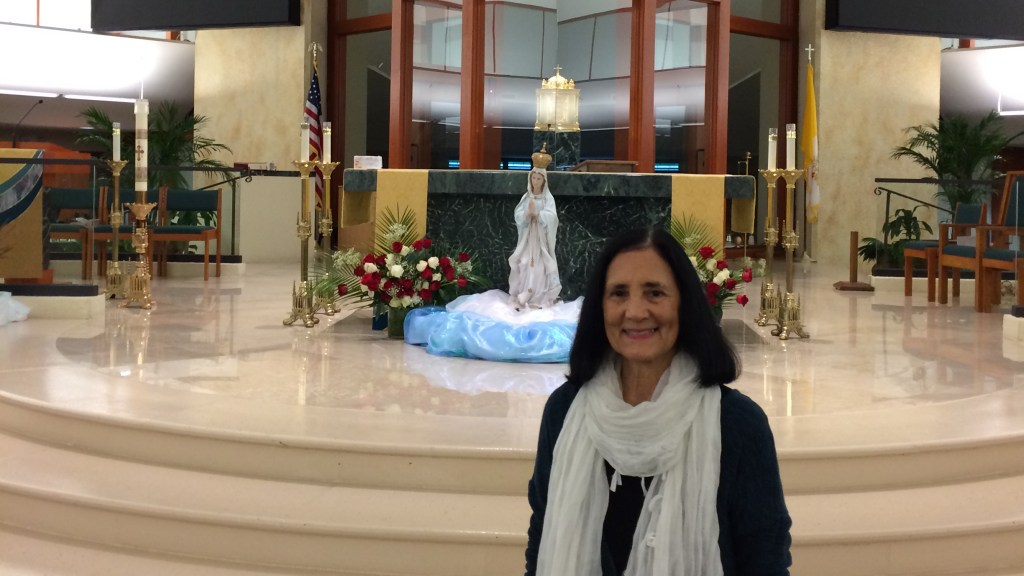
Attached to the vine, we will mature and bear the fruits of compassion, kindness, and love.
In today’s Gospel reading, we experience the imagery of the vine and the branches. As the branch of the vine matures, it begins to look more like the vine itself. As it remains connected, is sustained by the nourishment provided, and protected by the vine grower, the branches become more and more conformed to the vine. This is also true in the event that a branch not originally attached to the vine is grafted to it. Over time, the branches are almost indistinguishable from the vine itself.
Our hope, as disciples of Jesus, no matter what our background, culture, gender, ethnicity, or race will be the same. We are to be one as the Son and the Father are one. As St Paul has written to the Churches in Galatia and Collosse: In Christ there is neither Jew or Greek, circumcision or uncircumcision, male or female, barbarian, Scythian, slave or free because we are all one in Christ (cf. Galatians 3:28, Colossians 3:11).
We are not to be automatons, cyborg, ants, all following mindlessly. Being a Christian means the opposite, the more we are conformed to Jesus, the more we come to know him and also to really come to know our self. We begin to let go of the pressures to conform to that which stunts our growth and begin to embrace who we are, the truth of our reality and dignity. That sense of being fully who we are that sometimes just wants to burst out is allowed to be free when we die to our false self and live in Christ.
We must resist turning in upon ourselves, for when we do so, we disconnect ourselves from the vine, from the very source of our life. Just as the body will suffer without water regularly, so our soul will suffer if we are separated from the living spring of our sustenance. Remaining attached to Jesus, the vine, means that we will mature and live our life to the full, with joy that reaches out beyond ourselves to serving the needs of others, thus bearing fruit to share.
We can bear fruit that will last today and all days by putting the words of St Paul into action: “Put on then, as God’s chosen ones, holy and beloved, heartfelt compassion, kindness, humility, gentleness, and patience, bearing with one another and forgiving one another, if one has a grievance against another; as the Lord has forgiven you, so must you also do. And over all these put on love, that is, the bond of perfection. And let the peace of Christ control your hearts, the peace into which you were also called in one body. And be thankful” (Colossians 3:12-15).
————————————————————-
Photo: Two models of compassion, kindness, and love – Mary and JoAnn – Memorial of Our Lady of Fatima, May 13, 2018. Our Lady of Fatima on your feast day, pray for us!
Link for the Mass readings for Wednesday, May 13, 2020
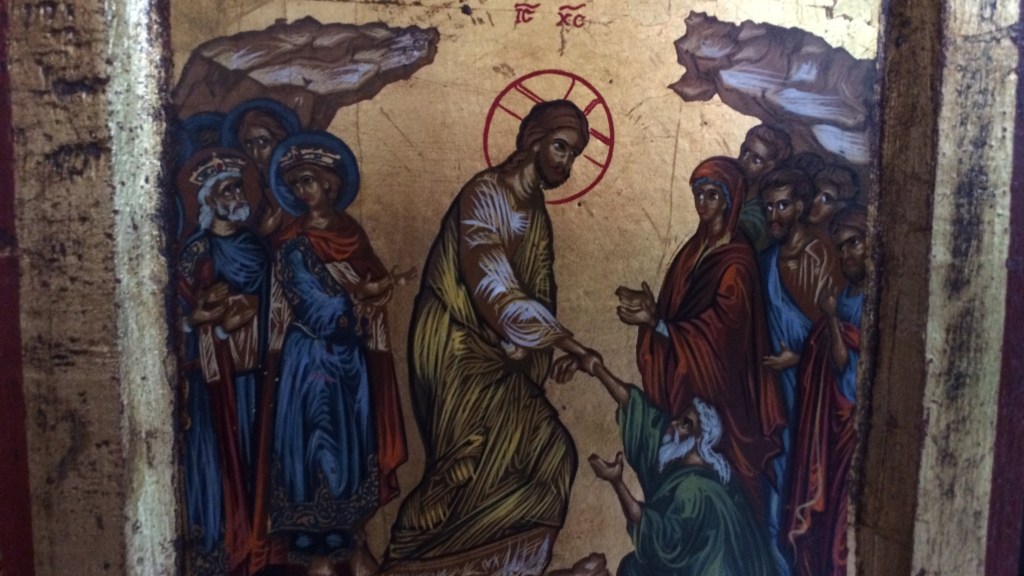
Receive the gift of Jesus’ peace and share it, person, to person.
Have you ever wondered why there is so much violence? How many countries, including our own, were founded on taking of lands by force and oppression of aboriginal peoples? Has there ever been a time without war? How many of our youth and citizens die from gun violence and mass murders? So many examples of road rage, domestic abuse, human trafficking, terrorism – foreign and domestic, and the myriad of random acts of violence that are occurring daily?
We often hear goodwill speeches, petitions, and intercessions ringing from our pulpits and prayer groups, participate and see people march, and vote for change. There are those working in the trenches, putting their own lives at risk, matching their words and their deeds, yet do any of these efforts make a difference? And now for the past few months, we are overshadowed by a pandemic.
Amidst our own experiences, directly and indirectly, and with the constant temptation of cynicism and despair biting at our heels, the words of Jesus are proclaimed in today’s Gospel from John: “Peace I leave with you; my peace I give to you” (Jn 14:27).
The peace that surpasses all understanding, the peace that is not of this world, has been and continues to be offered to us as a gift. Many have indeed said, “If there is a God, well then, why doesn’t he do anything?” He has. The reality is, the peace that God shares through his Son, is one person at a time. This is why when he resurrected he only appeared to those he chose and not the whole world. Even if he had, these experiences, in time, would have been attributed to mere myth and legend. Jesus must be encountered and his relationship is built with each person in each generation. What we pass on as disciples, as we encounter and build a relationship with him for ourselves, are the ways for others to open their hearts and minds to receive him and enter into their own relationship with Jesus, to accept the gift of his grace that he offers.
The peace that Jesus offers is not some abstract formula, the command to love is not some pie in the sky universal love for all. The acts of peace and love Jesus shares throughout the Gospel are very concrete, individual, and personal. Jesus interacts with people as people, not as numbers. He interacts and directs us to do the same, by encountering, accompanying, and loving a person. The real question is not why isn’t God doing anything? The real question is why have we left the gift of his peace that he has given us unwrapped?
If we want peace, our heart and mind must be open to receive it, to embrace, and to live it in the most minute of details. We also need to have the room to receive it so we must be willing to let go of our weapons of hate, prejudice, cynicism, racism, paternalism, and the like. God created us as beings who are interconnected, which means that what one does affects all, for the sun rises and sets on the good and the bad alike.
If we want peace, we need to be more aware and mindful of our thoughts, words, actions, and even the expressions of our faces. The thoughts that we feed are the ones that bear fruit in our words and deeds. Figuratively and literally, we need to be willing to “beat our swords into plowshares and our spears into pruning hooks” (cf. Isaiah 2:4).
This verse becomes real in our lives when we disagree with someone, we resist being disagreeable and respect the person. When we make a mistake, we resist beating ourselves up over the process and instead look to learn from our misstep, and begin again. We also need to be willing to offer the same understanding and patience to someone who speaks or acts in a way that gets under our skin.
What we need to decide today, is do we really want to receive the peace that Jesus gives and put it into practice now, with each person we encounter? Can we really bring about world peace? In some abstract form, for all people, for all time, no. What we can do, is choose to respect the dignity of each person we encounter. We can offer a smile, a random act of kindness, an understanding and encouraging ear or word, even to someone who we consider unapproachable, one person at a time.
—————————————————————
Photo: Of my Eastern Orthodox icon of the Resurrection of Jesus destroying the gates of Hell, and saving our ancestral parents, Adam and Eve, and so us! Do we want to be saved? Do we want his peace? Grasp the hand of Jesus that he extends out to us today, receive his peace that surpasses all understanding, and share it with another!
Link for the Mass reading for Tuesday, May 12, 2020

The balance of commandments and love will give us freedom for excellence.
Two points jump out of the Gospel of John today: commandments and love. How is each one of these related to living life as a disciple? Often, many who hear the word commandments, often react and are immediately put off. There goes the Church again telling me what I can and cannot do. Yet what Jesus is doing is connecting the following of his commandments to being a true expression of loving him.
Love is another word that evokes reactions. One reason is that, even though the English language has a plethora of words to utilize and choose from, there is only one word for love and it is interpreted in many ways. In Ancient Greek, there are four words that are used to connote love. There is eros, which has to do with attraction. It is the beginning stage of love because we are drawn out of ourselves as we are attracted to another. The next word for love is philios, which has to do with friendship. This is the love between friends. If our love matures it moves from attraction or infatuation to friendship. The third word is storge or the deeper love shared with family members. The fourth word is agape, which is unconditional love.
When Jesus shares that we are to follow the commandments, he is not demanding that we do so as a tyrant would. He is providing the boundaries and parameters for us to grow and mature as people who love, who, in the words of St Thomas Aquinas, will the good of the other as other. As humans, we are social beings. We want to belong, to be accepted, and to be a part of. We seek meaning, purpose, and fulfillment in our lives. This is best done through cooperation and collaboration with God and with one another, striving to love unconditionally, agape.
If we operate from a self-centered posture in which we are only turned in upon our self, and we only seek to manipulate and get from others, instead of working for consensus and sharing a common vision with others, we will ultimately be empty with the exchange on any level, because we will be left wanting more. This is true because once the immediacy of the stimulation, whether material or sensual, ends, so does the experience of the feeling. Some happiness may linger from the effect, but we will never be filled or satisfied with finite things. We will continue to seek more and more until the pursuit of instant and constant gratification ensnares us and we are entangled in a web of addiction.
The commandments, grounded in love, are meant to provide boundaries for us, training wheels, and to keep us free from enslavement to sin, while at the same time help us to be persons who move away from being self-centered to maturing to become other-centered instead. Discipline in this way is meant to be a means of freedom for excellence such that we can become who God calls us to be and who we truly desire to be. God is not in competition with us. He is our biggest fan. As St Irenaeus wrote, the glory of God is the human being fully alive!
Commandments and morality imposed without reason or an end goal is a bludgeon. Love and mercy without accountability and justice can be enabling. Jesus provides the blueprint for a balanced both/and approach. May we seek this day for opportunities to be loving guides, to align ourselves with the Holy Spirit, who is the Love expressed and shared between the Father and the Son. May we seek where we can improve our lives so we can be more mindful and whole, to be more honest with our weaknesses, and to seek God when we are tempted and seek forgiveness when we have fallen.
As we journey in this life, we do not do so alone. As we seek to follow Jesus’ lead, as we grow and mature, we do so while in the midst of encountering and forming relationships with others. Conformed by following the commandments, we reach out in love to each other as Jesus has done for us. As we form and deepen relationships, new and old, may we encourage, support, and love one another while at the same time, challenge and hold each other accountable as we strive to be who Jesus invites us to be.
———————————————————–
Photo: Last year’s CN graduates: After three years of religious studies with me, how have they been putting into practice what they have learned in their freshman year at the university level? Anyone want to weigh in?
Link for the Mass readings for Monday, May 11, 2020

 Spiritual Stepping Stones