Reflections on the Gospel Reading for the Day
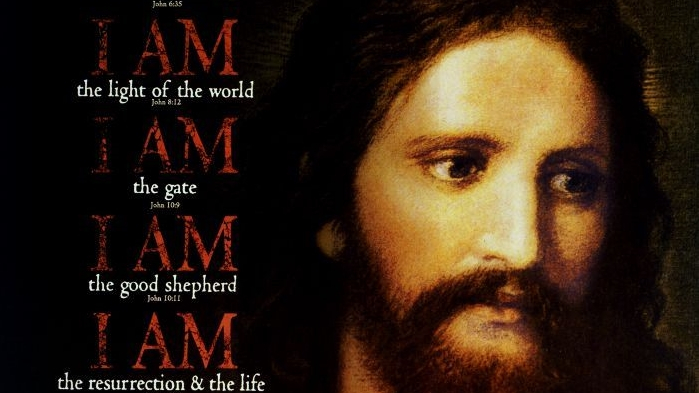
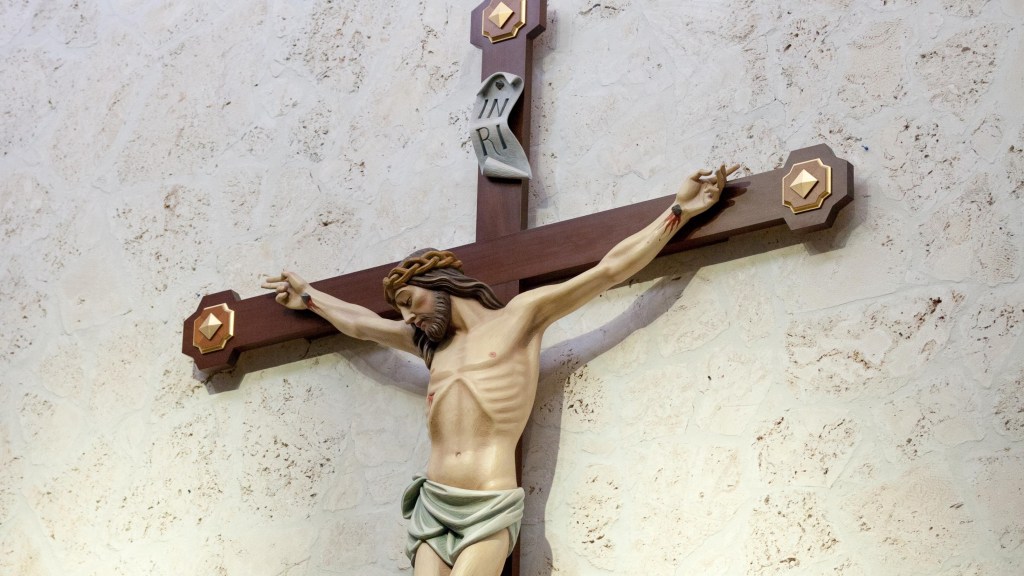
Jesus came to free us, to save us from our sins.
It is interesting to note that in today’s Gospel reading from John, Jesus spoke to those who “believed in him” (Jn 8:31). But the more he talked, the less they seemed to understand who he was: “If you remain in my word, you will truly be my disciples, and you will know the truth, and the truth will set you free.” His listeners balked at the word “free”, asserting that because they are ancestors of Abraham they have never been enslaved by anybody.
In the United States of America, freedom is also highly valued. Many of us would probably react very much in the same way. We may have different ways of expressing why we feel that we are free, but we would certainly assert that we are not enslaved to anybody or anything.
Jesus’ words ring just as true then and today: “Amen, amen, I say to you, everyone who commits sin is a slave of sin.” Jesus shined his light on the truth that many of us do not see, which is our enslavement to sin. If we truly seek to be free, then we need to acknowledge this point. What many of us claim to be freedom, doing whatever we want to do, when we want to and how we want to do it, is not true freedom. We cannot even hear the clanking of the chains or feel the weight of the shackles chaffing at our skin as we raise and shake our fists while asserting our freedom of indifference!
The response to Jesus’ statement of “who commits sin is a slave of sin” is not to hide, deny, rationalize, attack or flee, but to embrace the truth that Jesus is placing before us. In this way, we allow his light to expose the darkness in our heart where sin speaks and we say yes. In this way, the thoughts, words, and actions that we put before God are revealed.
When Pope Francis was asked, “Who is Jorge Mario Bergoglio?” he answered, “I am a sinner, but I trust in the infinite mercy and patience of our Lord Jesus Christ, and I accept in a spirit of penance.” We are all sinners because of the fact that we all in some form or fashion place idols before God. This is not a negative or defeatist attitude, quite the contrary. When we call out our sin in truth, we can be free from it. When we think our life is about us first and foremost, and ignore or rationalize our sin then we are enslaved by our sin, such that it chokes and threatens to undo us. Then we experience its debilitating effects and attempt to free ourselves, yet the process becomes likened to a Chinese finger trap. The more we pull to escape, the tighter the grasp.
We become free from our sins by acknowledging that we are sinners, that we cannot be freed by our efforts alone, and that we need the mercy of Jesus. We need a savior. Jesus accepts us as sinners, as we are. We do not have to be perfect or have our house in order for him to come to be present with us, for he is already waiting for us. We do not need to be worthy, we just need to be willing to open the door when he knocks, and invite him into the chaos of our lives so to heal us with his grace, love, and mercy. “So if the Son frees you, then you will truly be free.” Let Jesus in today, and each day so to be free for excellence!
——————————————————————
Link for the interview with Pope Francis from America Magazine, September 30, 2013:
https://www.americamagazine.org/faith/2013/09/30/big-heart-open-god-interview-pope-francis
Photo: Crucifix in the sanctuary of the cathedral, St Ignatius of Loyola, PBG, FL
Link for the Mass readings for Wednesday, April 1, 2020
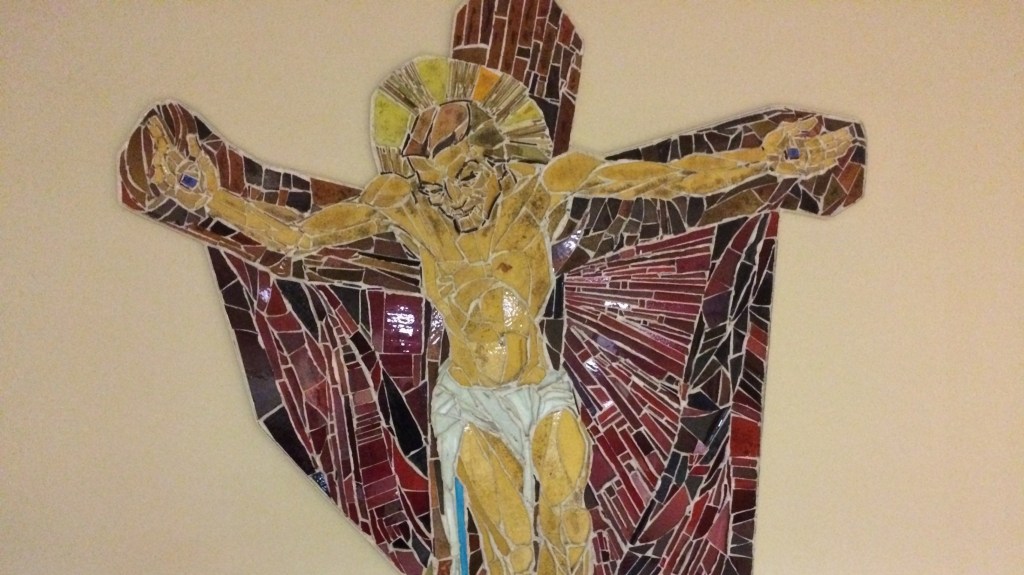
Jesus was lifted up on the cross to free us from our sins.
Jesus seeks again to help the Pharisees to understand who he is. In the preceding section of today’s Gospel of John, the Pharisees do not believe in his claim of being “the light of the world” because he testifies on his “own behalf, so [his] testimony cannot be verified” (Jn 8:13). The point being made here is that for verification there must be support given by two or three valid witnesses (cf. Deuteronomy 19:15). Jesus states that he testifies on his own behalf as does his Father who sent him (cf. Jn 8:19). His witness in this matter is God.
Jesus continues in today’s Gospel account to attempt to help the Pharisees and those gathered around them to understand who he is and what is about to transpire in his crucifixion. Jesus shared that God the Father sent him and continues to be with him. He has not left Jesus alone because Jesus maintains the intimacy of their relationship as he follows the will of his Father and will continue to do so all the way to being lifted up on the Cross.
Those listening to Jesus do not understand, they asked if he was talking about killing himself. Often throughout the ministry of Jesus many, even his Apostles, do not understand what Jesus taught, and that was because they were trying to make sense of what he said from this purely material and finite reality. Jesus invited them to seek a deeper understanding by sharing that he is from above and they were from below. They were needing to be born from above, to open their mind and hearts to him, as Simon Peter did when he came to realize that Jesus was the Christ, the Son of the living God. Jesus gave those he taught a choice. They could die in their own sin or repent and choose to live in participation with him.
Discipleship is a journey. We will not come to understand Jesus from one instance or encounter. Even Saul, who had an amazing experience and encounter with Jesus and changed his name to Paul, would take about three years to digest the significance of what happened to him that day on the road to Damascus. It will be so with us as well. We need to resist the world’s craving for instant gratification, especially regarding the growth of our discipleship and spiritual maturity.
We will develop on our faith journey as we acknowledge and repent from our sin, hear his call, believe in Jesus, remain committed to him, and walk with Jesus day by day and follow the will of his Father as he did. The gift of the liturgical seasons is that as we walk each year with Jesus and assess our growth, we will, like a finger making an upward spiral motion, come again and again to the same point each year, and hopefully, we are higher up that spiral each time.
Sometimes it is hard to see our changes in our day to day reality, but over time with the gift of hindsight, we can discover that we indeed have made a closer walk with Jesus a reality. When we can honestly assess that this is not so, it is not too late to begin again, to repent from that which keeps us bound to this world and turn our gaze to that which is above. Jesus made his choice to follow the will of his Father, to be lifted up, and to die on the cross for us. We too have been given a choice. We can hold tight to our sins or leave them at the cross and be free.
——————————————–
Picture: Mosaic of Crucifixion from Our Lady of Florida Spiritual Center, Palm Beach Gardens, FL
Link for the Mass readings for Tuesday, March 31, 2020

“Neither do I condemn you.”
“Let the one among you who is without sin be the first to throw a stone at her” (Jn 8:7).
As these words came forth from the mouth of Jesus, there must have been a deafening stillness. A mob had gathered that wanted blood around a woman seeking to stone her for being caught in the act of adultery. Had this woman actually been caught in the “very act”? Were there those that were scheming so scrupulously that they would spy on her at that moment, or like our first reading from the Book of Daniel was this a false accusation because the woman refused the advancement of someone who wanted to commit adultery with her and she refused? Either way, Jesus helped to restore the dignity of this woman by showing the common shortcoming of our fallen humanity.
Today’s Gospel account from John helps us to come to terms with the reality that we are all unified in the reality that we all fall short of the glory of God that we were originally created for. Fortunately, there was no one present who thought himself so self-righteous that he had not committed any sin. All left and only Jesus and the woman remained. It was only then that he spoke to her.
Jesus’ goal for each person he encounters is that we come to terms with our own sin, to repent and believe in the Gospel. Yet, he does so not by condemning us but by showing us how we are off the mark and bestowing his mercy and love upon us. In this way, he guides us to the path that will lead to what is truly good, not the false allures of apparent goods that may glitter at the moment, but then fade.
Jesus loves us more than we can ever mess up, but he does not want us to remain in our sin. By doing so, we are separating ourselves from a more real and intimate relationship with God and one another. Jesus is about healing those aspects of our choices, behaviors, habits, and vices that keep us separated. Lent is a more intense period where we make the time to become more aware of our vices so that through the love and mercy of God and in collaboration with him, we can transform them into virtues.
May we examine our conscience, call to mind those areas in which we have fallen short of the glory of God in our lives, where we have sinned, and with humility share them with Jesus and so with the woman caught in adultery hear too his words, “Neither do I condemn you. Go, and from now on do not sin any more” (Jn 8:11).
—————————————
Photo by Alexandro David from Pexels
Link for the Mass readings for Monday, March 30, 2020

Does the account of the raising of Lazarus have something to say to us as we deal with this pandemic?
John’s Gospel account of the raising of Lazarus from the dead is very poignant for our present time. Mary and Martha and Jesus’ disciples wonder why Jesus does not go to be with his friend as soon as he receives word that he is dying. Jesus has healed and restored so many people, why would he delay? With the present worldwide spread of Covid-19. Many of us may be asking the same thing. Why is Jesus allowing this to happen? Why do so many have to suffer? Why the delay?
Jesus responded to the disciples’ inquiry by saying, “This illness is not to end in death,
but is for the glory of God, that the Son of God may be glorified through it” (Jn 11:4). We know from the Gospel reading for today that Jesus raised Lazarus from the dead. We do not know the ending regarding our present plight. What many have experienced is the death of their family and friends, as did Martha and Mary. Many people are in fear and their daily lives have been uprooted on a massive scale. Many who are elderly or immunocompromised are facing the real prospects of death. There are those who want to help but they are being told to stay home. Many people want to worship in their faith communities, of all faith traditions and are not able to do so.
Does the Gospel speak to us today in our present moment, in our present global crisis? Yes. As I echoed yesterday from Pope Francis, Jesus, “more than anyone, cares about us.” Just as Jesus wept when he witnessed the anguish of Mary, the sister of Lazarus, so he weeps in this present situation. We were able to see God’s glory revealed in Jesus raising Lazarus, but we are in the midst of our own anxiety, pain, and anguish now as Martha and Mary were when Lazarus was sick, dying, then died. It would not be until four days later that Jesus came.
We may still be experiencing the first day of our crisis. Jesus had a plan for Lazarus and he has one for us. We need to have the same faith as Martha. Though she did not understand why Jesus had not come sooner, she trusted in him and who he was, the Messiah, the Son of God. Just as Jesus was present to Martha, he is present and among us as well.
I do not believe that God brought this pandemic upon us as a punishment, but I do believe he has allowed it to bring about a greater good, and that is different for each of us. What we need to do in times like these is to evaluate what is really important in our lives, who are really important to us. What are apparent goods and what is truly good?
Also, many of us who have been and continue to be so better off financially are experiencing some serious inconveniences, loss of work, livelihood, but we may have savings, we will be able to recover. There are many throughout our country and world that have been dealing with subsistence living and mere survival for maybe their whole lives. Maybe we can gain a little more empathy for those who have been suffering all along and are even more vulnerable now to the Corona Virus than many of us who have homes to isolate ourselves in.
Much of the anxiety we face may be having to deal with the reality of our own mortality. We are looking at the very real possibility of our death either from knowing those who have died or hearing about the vast numbers who have died from Covid-19. Being faced with the prospect of our death is a good thing. Those who I have known who have done so, have more often than not lived their lives more fully because they have not taken their lives for granted, they have lived their lives more richly, and they have been more present to others.
The key take away from the story of Lazarus is that no matter how wonderful the raising of Lazarus, a dead man four days in a tomb, was, it was just a foreshadowing of the truly incredible miracle of miracles we are about to celebrate in just a few weeks. The fact that Jesus rose again from the dead himself was no mere resuscitation as with Lazarus. Jesus experienced the fullness of death and conquered it becoming the firstborn of the new creation. Jesus would later ascend into heaven and from the right hand of his Father, he would send us the Holy Spirit.
We are not alone in our present suffering. Jesus cares and accompanies us in each of or present situations. I do not know how much worse this pandemic will get before it gets better, but I trust as did Martha and Mary in Jesus. As we draw closer to him and each other, we will see the glory of God at work and we will overcome and emerge stronger than before all this began.
Photo: sunset a few nights ago on my evening walk
Link for the Mass readings for Sunday, March 29, 2020
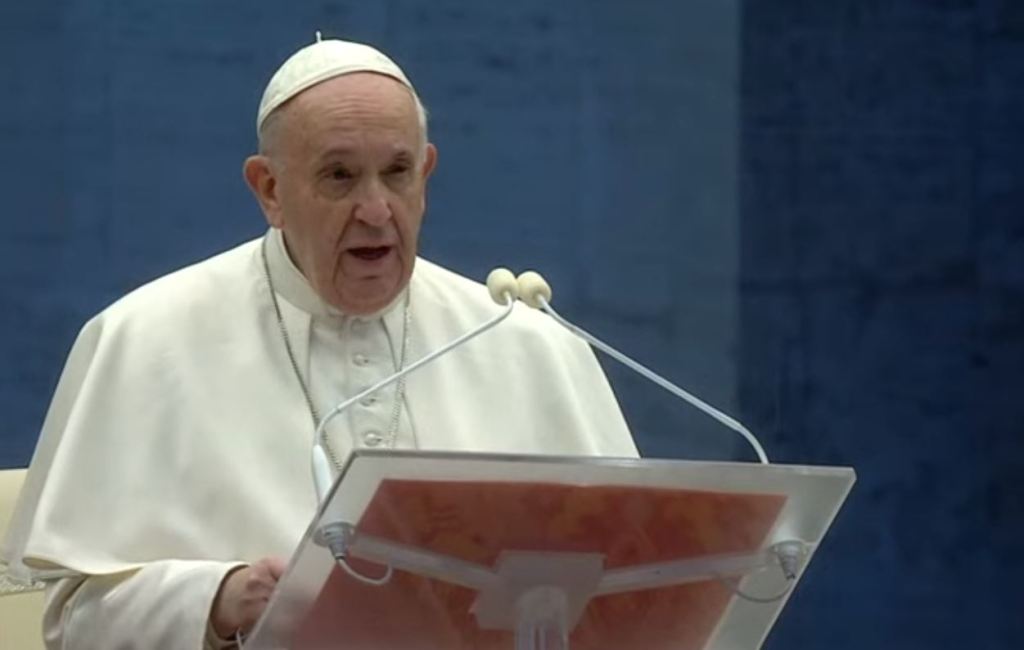
Jesus, “more than anyone, cares about us.” – Pope Francis
Jesus is recorded a few verses before (cf. 7:37-39) today’s Gospel. He speaks about quenching the thirst of those gathered around to listen to him. The thirst he is talking about fulfilling is spiritual thirst, that thirst which we all desire to be refreshed by, that which we have been created to receive; the thirst to belong, to be in communion, to be loved and to love in return. Jesus speaks of coming to those who thirst to be refreshed with: “Rivers of living water [that] will flow from within” (Jn 7:38). Jesus spoke of the day when he would send the Holy Spirit to well up from within the soul of each person who would follow him. All who participate in the life of Jesus would come to experience also the love shared between God the Father and God the Son, who is God the Holy Spirit.
Some who heard Jesus speaking in this way were deeply moved, they believed him to be the Prophet, others believed him to be the Messiah. Yet, there were those who could not see past their own preconceived notions. They heard his teaching, may have even been moved as well but said, “The Messiah will not come from Galilee, will he” (Jn 7:41)? Remember Nathaniel’s first reaction when Philip had told him that they had found the Messiah? Nathaniel asked if anything good could come out of Nazareth (cf. Jn 43-47). Jesus was also rejected because he was looked down upon because of his trade as a tekton, a carpenter or a day laborer.
Why the region of Galilee, the town of Nazareth itself, would be disparaged is a matter of speculation. The fact was that there were those, unlike Nathaniel, that could not see past their initial prejudices. Even though Jesus spoke and taught with authority, though as the Temple guards who were sent to arrest him said, “Never before has anyone spoken like this man” (Jn 7:46), and even when Nicodemus spoke out rationally, requesting they hear Jesus out and give him the opportunity to make his case, there were those in authority and among the people who could or would not hear Jesus. They closed themselves off to the invitation to receive the gift of the love of God. Their charge was that he was not from Bethlehem, he was not of the line of David, case closed.
We must come to terms with our ingrained, prejudicial attitudes and our limitations of thought that prevent us from seeing as God sees, otherwise, we will become like a stagnant pool and, as did those in today’s Gospel account from John, close ourselves off from the invitation of Jesus. Many of our daily routines, habits, livelihoods, health, and very lives have been shaken and threatened by this pandemic. We can react out of fear or to the other extreme, react as if nothing has changed putting our lives and others at risk. Aristotle wrote that virtue is the means between two extremes. There are sensible precautions we can take that we are all now well aware of to keep ourselves and those around us safe.
This more reasonable and rational approach is true for us spiritually as well. We can give in to fear and say that Jesus has left us, that he doesn’t care, or that he does not exist, for what kind of Lord would put us through this? But as Pope Francis shared in his Ubi et Orbi message Friday, Jesus, “more than anyone, cares about us.” Jesus cares. His hand is held out before us. We can reject it or grasp it, the choice is ours. Jesus is the source of living water, he is the eye in the midst of any storm, he is the light leading us through the darkness. When we choose to breathe more and react less, we will be more likely to recognize and accept the offer of Jesus. By taking his hand and allowing him to lead us, we will act with more prudence, be more present and mindful, and better prepared to support one another each day going forward
———————————————————————————-
Photo: Pope Francis delivering his reflection before his Urbi et Orbi blessing for the world – Vatican Media accessed from zenit.org
Link for the Mass readings for Saturday, March 28, 2020
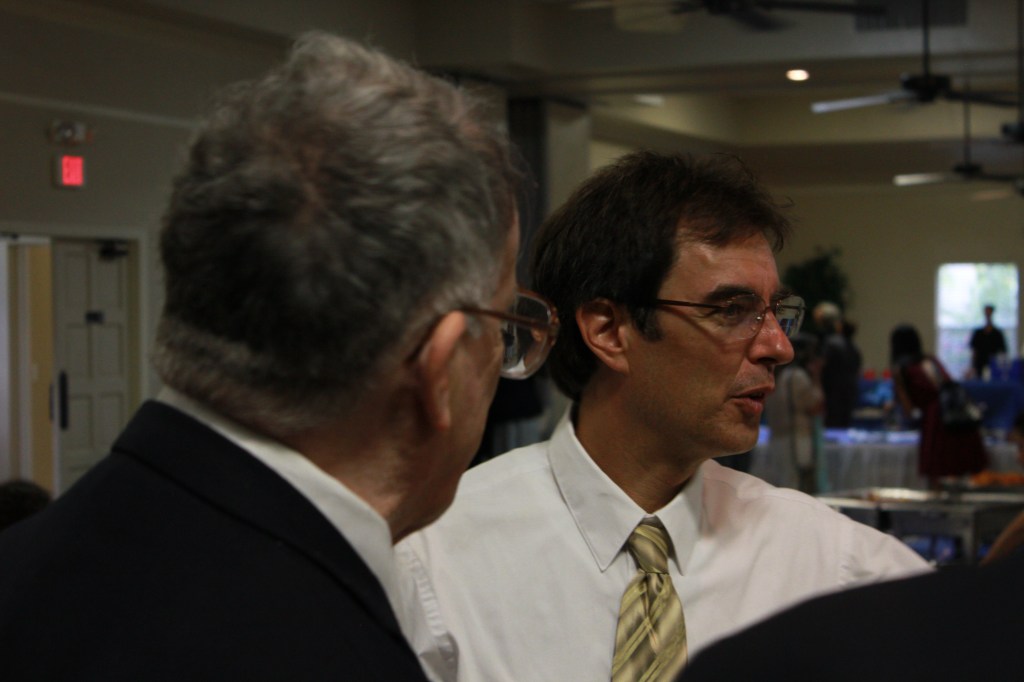
Convincing ought not to be our goal, but dialoguing, informing and sharing is.
Jesus affirms who he is and whose he is in today’s Gospel of John. Despite those who do not believe that he is the Messiah, Jesus again makes his point very clear: “I did not come on my own, but the one who sent me, whom you do not know, is true. I know him, because I am from him, and he sent me” (Jn 7:28-29). Jesus is the Son of God made man and he belongs to the One who sent him, God the Father.
As Jesus was challenged in his time, he continues to be challenged today. That level of challenge has increased even to the degree that his human existence is even dismissed in some circles as a mere legend. Even as a historical figure, some speculate that Jesus did not walk the roads of Galilee and Judea as recorded in today’s Gospel. This need not be a reason for alarm. Though it is a reason to know our Tradition, the deposit of faith that has been preserved and passed on from Jesus to his Apostles and disciples, and to those early Church Fathers and Mothers named and unnamed, and passed on up to us to this day in an unbroken apostolic succession. We need to know the Bible, how to read the sacred Word, to understand its context and schedule a daily time to encounter the Word proclaimed in worship, prayer, and private study.
It is important to know what we believe, who we believe in, and whose we belong to. In this way when we are challenged by others, we do not need to stoop into a defensive crouch, but instead listen to the person’s points, their critiques, and ask questions of what they believe and why they believe what they believe. We can defend our position while at the same time being open to understanding where our questioners are coming from. We can then respond with the truth, just as Jesus did, with an open mind and heart of surrender to allow the Holy Spirit to be present through us.
When we are anxious, defensive, argumentative, seeking to be right, or fearing to be wrong, we limit what Jesus can do through us. God is not about numbers and quotas, he is about building relationships, one person at a time. It is more important to build relationships than to win arguments. We can learn much from St. Bernadette of Soubirous who when challenged time and again regarding the validity of her experiences and encounters with Mary responded, “My job is to inform, not convince.”
During this time of self-quarantine and isolation, we may be more interactive on social media platforms. This is a good time to learn, grow, and continue to develop our relationship with Jesus, and as we continue our journey of faith, to share what we have received in a spirit of charity and dialogue with those we interact with. We are all on this journey of seeking the True, the Good, and the Beautiful together. Especially during times of uncertainty and instability, it is important to respect and love those who have differing perspectives outside of and even within the Church, and be open to the reality that we can learn from each other and allow God to guide each of us through our common challenges.
————————————————————————–
Photo: Nothing like a good discussion – though right now at least six feet apart, online or on phone ;)!
Link for the Mass readings for Friday, March 27, 2020
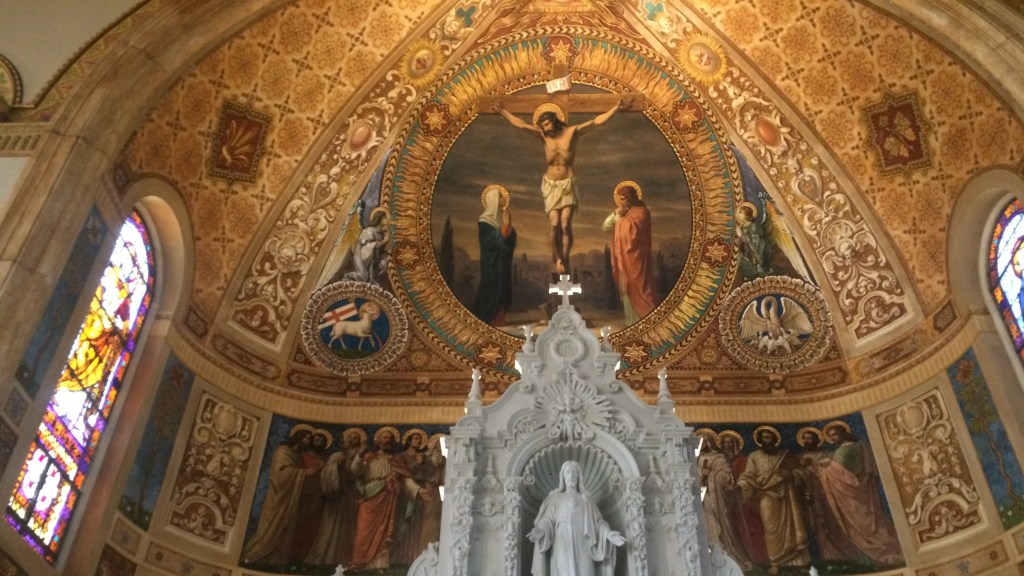
God has made his will known to us. Are we ready to receive it?
God heard the cry of his people who were suffering their enslavement in Egypt. God called and sent Moses to free them. Pharoah did not accept the request of Moses to let his people go and instead put more pressure on his slaves to fulfill their daily quota of bricks as before, though now without providing the straw that they needed to accomplish the task (cf. Exodus 5). The Hebrew slaves did not take out their frustrations on their oppressors but on Moses. This pattern of complaint continued time and again, even after their freedom was assured and they wandered in the desert. They complained regularly when things got tough, and stated that they were better off in their slavery and dependency on the Pharaoh instead of placing their trust and dependency on God.
God the Father sent his Son to free us from our slavery to sin, just as he sent Moses to free the Hebrews enslaved under Pharaoh. How many times do we, like our ancestors, also complain, preferring our life of sin, a life of mere existence, over embracing the gift of a life lived to the full because it is what we know. Even worse there are too often those in positions of spiritual leadership who abuse their power, look out for their own interests, instead of guiding and serving the people entrusted to their care.
Jesus is recorded in today’s Gospel addressing those who are missing, “how God has made his will known to the people, the Father who sent me has testified on my behalf. But you have never heard his voice nor seen his form, and you do not have his word remaining in you, because you do not believe in the one whom he has sent.” God the Father has sent his Son to reveal his will but too many do not have eyes to see or ears to hear.
Those who are learned “search the Scriptures, because [they] think [they] have eternal life through them; even they testify on my behalf. But [they] do not want to come to me to have life.” What is hidden in the Hebrew Scriptures is revealed in the New Testament: the New Covenant made with Jesus and all of creation. The prophecies of old testify that the Messiah will come as a suffering servant, he will unify the nations, cleanse the Temple, and the enemies of God will be placed at his feet. These affirmations are presented and known by those who study the sacred texts, yet they still do not recognize the signs that the Messiah is in the very midst of them.
Even Moses testified of Jesus when he said: “I will raise up for them a prophet like you from among their kindred, and will put my words into the mouth of the prophet; the prophet shall tell them all that I command” (Deuteronomy 18:18). Yet the successors of Moses would not even believe in his writings, so Jesus said how would they believe in his words?
Jesus shows us in our Gospel reading today how the people of his time could have known he was who he claimed to be. This is true for us today as well. If we are sincerely seeking God who has and continues to make his will known, we will find him in philosophy, mathematics, the sciences, literature, his creation, in our service to each other, in truths of other faith traditions, but the fullness of the Father is revealed in our encounter of him through his Son, “whom he has sent”. Do we have eyes to see or will we miss God’s invitation because we do not believe in “the one whom he has sent”?
Jesus is also revealed in Scripture, the Old and New Testaments. To understand the New Testament we must understand the Old, for Moses and the prophets testify to his coming and Jesus came not to abolish but to fulfill the Law and the Prophets. Do we leave the Bible on the shelf like any other book? If we do read it, do we do so as if it were a dead letter, or do we read and hear it as it is truly meant to be read and heard, as the living Word of God proclaimed?
The Father makes himself known to us through the presence of his Son and the love of the Holy Spirit. To experience the truth of this reality we need to do accept his invitation to relationship. As we reach out to God, we come to realize that he is already present and reaching out to us through his Son. We do not need to run to God, because he is already running to meet us, waiting to hold us in his arms, now and forevermore!
—————————————————
Photo of the apse, the semi-circular area behind the altar of St Edwards, Palm Beach, FL,
Link for the Mass readings for Thursday, March 26, 2020

As with Mary, we too have a part to play in the drama of salvation history.
Why celebrate the Annunciation at the beginning of the third week of Lent? Simple math. If we celebrate the birth of Jesus on December 25, it is logical to celebrate his conception nine months earlier on March 25.
Gabriel, an angel, a messenger of God, a spiritual being, interacts with a human being; though Mary is not the first one to experience such an encounter. There are personal encounters with God and his messengers throughout the Bible. This is how the God of Israel, the God of Jesus Christ acts, person to person, through invitation, either directly himself or indirectly through one of his angels.
We can read such encounters going back to Genesis. God invited Abraham to be the father of a people that God would call to be his own. This reality would come to be with the birth of Isaac, while Sarah was well past child-bearing years. Jacob would wrestle all night with an angel and become the father of the twelve tribes of Israel, during the time of the Judges the mother of Sampson and Hannah, the mother of Samuel, both barren women would encounter angels bearing the message of men born unto them that would lead the people Israel in their time of need. Moses, the judges, David, and the prophets all would hear and answer God’s invitation. Zechariah had an encounter in the temple and his wife Elizabeth, also barren and older, would give birth to John the Baptist. God has communicated and reached out to his created beings in history, in time, and place.
With Mary, this announcement and encounter were different, for, at this appointed time, the Son of God himself would become, while remaining fully divine, a human being in the womb of Mary. The God who is. Period. Full stop. He is not a being, not a human, or even a supreme being. He is Infinite Act of Existence, the Sheer Act of to Be, who took on flesh and dwelt among his created beings. This is the message that Mary receives, and we can understand why she might be “troubled”. Yet Mary, the model of discipleship, pondered what this might mean as Gabriel said to her:
“Do not be afraid, Mary, for you have found favor with God” (Lk 1:30).
Mary, who knew the arch of salvation history as briefly sketched above, knew of the encounters God had with his people, her ancestors, knew of the promised coming of the Messiah, would now be the bridge between heaven and earth, the bridge between the old and the new covenant, the bridge between a people lost and a people found. Mary in her fiat, her yes, would become Theotokos, the God-bearer.
This is why we celebrate this feast each year: The Son of God has been born to us because Mary said yes. Yet, her yes is not in isolation. It is made possible by so many who had gone before her. Joachim and Anna, Mary’s parents who provided care and guidance, as well as the many named above and not named throughout the Biblical tradition who said yes to God and played a part in making this moment possible. Mary is not alone in the Annunciation, not alone in this definitive moment. This is the distinctive feature of Judaism and Christianity: We cannot save ourselves. We are not God. Our very life as created beings is a gift from God and we are in need of constant help and support from God and one another (cf. Lohfink, 254).
God invites us, not just today as we celebrate the feast day of the Annunciation, but every day. Each day is a day to ponder, to wonder, to be still, to be in awe. The Son of God, the Second Person of the Trinity, loved us so much more than we can ever imagine, more than we can ever even begin to conceive, that he became one with us so that we can become one with him. Us, you reading this, me writing this, and each unique person taking a breath on this earth.
No matter how much we have messed up, no matter how distant we feel we may be from him, no matter how confused, overwhelmed, disillusioned, he is present for and with us. The question is not whether we are worthy, for none of us are worthy, the question is, “Are we willing?”
We are invited to play our part in the ongoing drama of salvation history. Mary’s answer to this invitation was: “Behold, I am the handmaid of the Lord. May it be done to me according to your word” (Lk 1:38). This is her definitive yes. We too are called. What will our response be?
——————————————
Painting: Henry Oswana Tanner, The Annunciation, 1898
Lohfink, Gerhard. No Irrelevant Jesus: On Jesus and the Church Today. Collegeville, MN: Liturgical Press, 2014.
Link for today’s readings for Wednesday, March 25, 2020
 Spiritual Stepping Stones