Reflections on the Gospel Reading for the Day

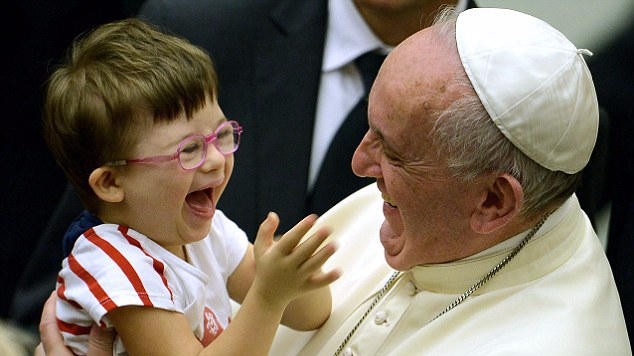
Embrace the gift God offers and share it with others!
Woe to you, scholars of the law! You have taken away the key of knowledge. You yourselves did not enter and you stopped those trying to enter” (Lk 11:52).
I have quoted my friend, mentor, and brother, Dr. Sixto Garcia, before, and it is worth quoting him again: “We are a living, craving, hunger, and desire to be one with God and one another. This is true for the atheist and believer alike.” At the very root, in the very bowels of our being, we yearn for God. The psalmist echoes this point as well: “As the deer longs for streams of water, so my soul longs for you, O God” (Psalm 42:2). Whether we know it or not, believe it or not, we yearn for God. He is the only one who can fulfill what our deepest longing is because as St Augustine wrote in his Confessions, he “has made us for himself and we are restless until we rest in thee”.
To prevent access, to those who seek, as did those for whom Jesus points in today’s Gospel, is an egregious offense. Especially in the way that Jesus describes. They themselves have the key to enter, do not avail themselves of the gift they have received, and worse, prevent others from going in! I remember a time in eighth grade where I had wanted to ask a girl I liked out to the school dance. I confided this hope with someone but of course, the word got out. A few days later in math class, the teacher laughed aloud and announced to the whole class that I was the first one he had ever heard of being rejected before I could even ask someone out. I wanted to melt into the floor.
Now, this may not be the most direct example of what Jesus was talking about, but there is a parallel. Teachers, like religious leaders, are entrusted with the care of those they have been entrusted to teach, and when they betray that trust and belittle those they are charged to empower, they slam doors in the faces of those who seek to actualize their potential. We are all caretakers of each other. We need to resist any temptation to belittle, to dehumanize, or crush the spirit of anyone.
St Paul in his most theologically mature letter wrote: “We who are strong ought to put up with the failings of the weak and not to please ourselves” (Romans 15:1). People are hungry for God. We must resist building walls or refuse to open doors to those who seek. We need to build bridges of encounter and accompaniment. Even when the seeker does not recognize they are seeking, and expresses their thirst to us, in not the most pleasant of ways. Here it is even more important that we resist reacting, and slipping into a defensive posture, but instead risk to be open, to be understanding, to listen with our spirit instead of our ego for what the need truly may be.
As Pope Francis wrote: “Each one of us is called to be an artisan of peace, by uniting and not dividing, by extinguishing hatred and not holding on to it, by opening paths to dialogue and not by constructing new walls! Let us dialogue and meet one another in order to establish a culture of dialogue in the world, a culture of encounter” (Pope Francis, 128).
Pope Francis. The Church of Mercy: A Vision for the Church. Chicago: Loyola Press, 2014.
Photo of Pope Francis and friend: © AFP/Getty Image
Link for the Mass readings for Thursday, October 17, 2019

Jesus invites us to come out of the darkness and to live in his light.
After Jesus continues to call out those Pharisees who follow their own will and put themselves in place of honor instead of God, one of the scholars of the law said to him in reply “Teacher, by saying this you are insulting us too.”
Jesus does not miss and beat and convicts the scholar as well when he said, “Woe also to you scholars of the law! You impose on people burdens hard to carry, but you yourselves do not lift one finger to touch them” (Lk 11;45-46).
Jesus is clear about his mission, about what the kingdom of God is not and what it is. Jesus is shining a light on the practices of the Pharisees and the scholars of the law in the hope that they can see the darkness that is blinding them. Unfortunately, unlike Bartimaeus (see Mk 10:46-52) who knew he was blind and wanted to see, this is not true for these men who Jesus confronts in today’s Gospel.
How about us? As Jesus shines his light and love in our direction, do we cover our eyes because the light is too bright and withdraw further into the shadows or do we remain still and allow our eyes time to adjust so that the brightness of the Mystery of God will reveal to us that which has kept us bound in sin? Will we justify, or rationalize our behavior or that of others that we know are sinful, or will we be transparent and walk further into the light and the embrace of Jesus, so to repent and believe in the Gospel?
We need to resist the path of those Pharisees and scholars of the Law who imposed heavy burdens on those seeking a relationship with the living God and instead be willing to follow Jesus and meet others where they are in the moment, so to accompany, encourage, and support each other in living the Gospel in our everyday lives. Hiding in the darkness, enslaved by our fears and prejudices, is no longer an option. Jesus beckons us to come out from the shadows and into the radiance of his light. As we experience his love and mercy, he encourages us to continue to move out of our comfort and complacency and encounter others with the same love and mercy we have received.
In actuality, the prescriptions that Jesus places on us as his disciples are more challenging. The difference is that what Jesus invites us to do, he will accompany us and give us the divine assistance to accomplish. What we need to remember is that it is Jesus working through us, not us doing it on our own. Apart from Jesus, we are nothing, but with Jesus all things are possible.
———————————————————
Photo from Cathopic
Link for the Mass readings for Wednesday, October 16, 2019
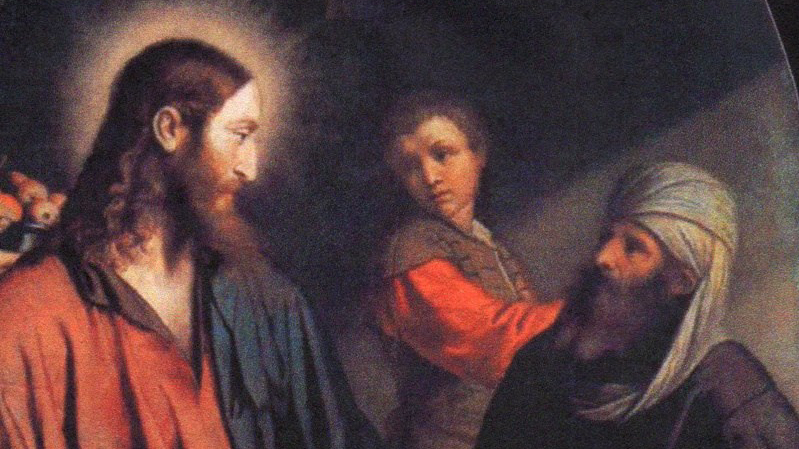
May we have the courage to allow Jesus and others to be a part of our lives.
The Lord said to him, “Although you cleanse the outside of the cup and the dish, inside you are filled with plunder and evil. You fools” (Lk 11:39).
Jesus’ harshest critiques were for acts of hypocrisy. He did so to show, in no uncertain terms, how dangerous this was, especially for religious leaders. These men were entrusted with the care of God’s people. They may have observed the proper rituals, spoke, and dressed to match the part, but this all meant nothing if their hearts were hardened and they were closed to the will of God. Most of all, the danger was when they themselves became obstacles, stumbling blocks to those who sought God. Jesus indicting them as fools meant that they were bereft of the wisdom of God they projected to have.
A recent Pew study tracing religious affiliation from 2007 to 2014 found that approximately 56 million Americans identify themselves as following no religious affiliation. Some have labeled this group as the “Nones”. I am sure the context and nuance of why this trend is on the rise have many components, but I believe one ingredient is that many feel they have witnessed unacceptable levels of hypocrisy that have turned them off to organized faith traditions. Our present crisis regarding the abuse of minors and cover-up within the Catholic Church by religious, priests, and bishops continue to support this trend. That the very leaders commissioned to bring the Good News, guide, and protect their flock have instead abused anyone is horrific and unconscionable.
In the depths of our very being, we seek and yearn for the transcendent, the infinite. We are spiritual seekers, yet, time and again, we experience suffering, injustice, and hypocrisy at the hands of the very ones who are our leaders in both the religious and political sphere. This is why Jesus convicted those who abused their positions because he knew the significant damage that could be inflicted.
No one is perfect, our leaders or ourselves. We all fall short of the perfection of Christ, even those of us who seek and aspire to live by the Gospel. If we put anyone up on a pedestal they, sooner or later, are going to fall, and the higher up they go, the greater the fall. God is to hold the priority of place. One way we can sidestep this trap of hubris is by resisting the urge to project all is well and good, that we are fine when we are not. None of us are supermen or women. If we think we can go it alone, we will fall sooner or later.
When we turn to Jesus in our weakness and our sin, we can experience his transformative power in our lives. To be vulnerable, to allow Jesus to shine his light into our inner darkness takes courage, but when we open all of our lives to him we will identify and be able to release our own “plunder and evil”. The Holy Spirit can also help us to trust one another with our weaknesses, faults, and shortcomings.
In assuming a posture of humility and openness, in reaching out for help, in entrusting ourselves to a core group of people will allow the unique gifts of others to come to the fore so we can empower one another while holding each other accountable at the same time. When we are transparent with our weaknesses and willing to accompany one another, we as Church can resist the temptation of hypocrisy and instead embrace the gift of hospitality.
———————————————————————————
Painting: Supper In the House of Simon, by Italian artist Moretto da Brescia (1150-1554)
Link for the Mass readings for Tuesday, October 15, 2019
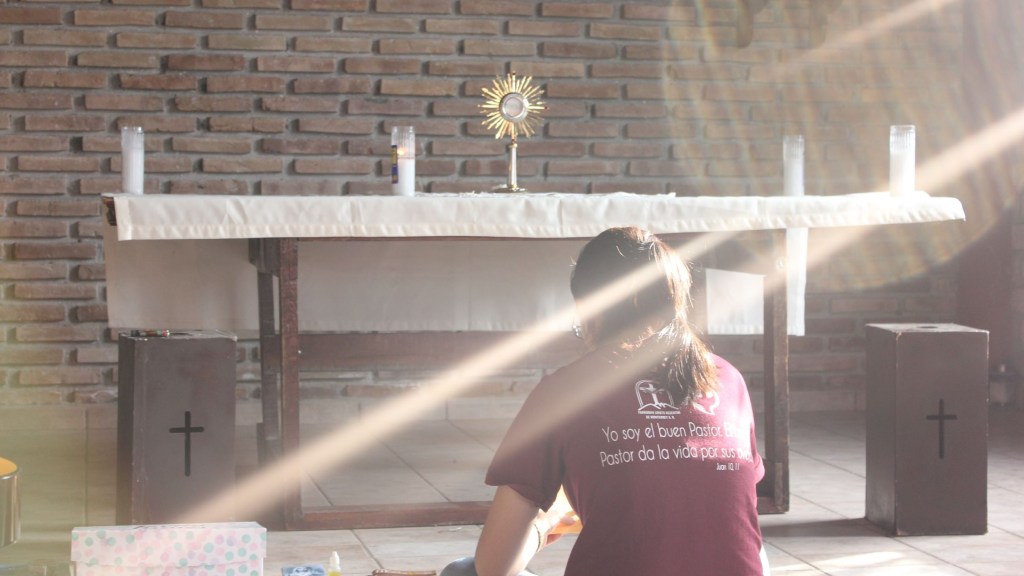
We need not seek signs but instead, repent, empty ourselves, and be conformed to the life of Jesus.
While still more people gathered in the crowd, Jesus said to them, “This generation is an evil generation; it seeks a sign, but no sign will be given it, except the sign of Jonah” (Lk 11:29).
To understand what Jesus means we need to understand the sign of Jonah. Jonah was sent by God to go to Nineveh, the capital city of Assyria, to call them to repent from their wicked ways. The Jews not only considered Nineveh to be a place of decadence, wickedness, and godlessness, but the military of Assyria had invaded Israel and eventually conquered the northern kingdom around 721 BC. We can understand Jonah’s initial refusal to follow God’s lead. Not only did he not want to go to Nineveh, but Jonah also wanted God to punish and destroy them. Those who have read the Book of Jonah, know that Jonah finally acquiesced, and within hours of his proclamation to the citizens, including the king, they repented and God showed them mercy.
Jesus draws a parallel between the people of Nineveh and his listeners. The people of Nineveh heard and repented to a reluctant messenger. The Ninevites, Gentiles, the sworn enemies of Israel, received God’s mercy when they repented. Now, in their midst was one greater than Jonah, the Son of God, and they were demanding of him a sign. The sign of Jonah was repentance. Jesus, from the beginning of his public ministry, preached the same: “This is the time of fulfillment. The kingdom of God is at hand. Repent, and believe in the Gospel” (Mk 1:15).
We would do well to listen to Jesus’ message. Repentance is a foundational spiritual discipline. We are called to consistently examine our conscience and to come to accept that we live in a fallen world. This is not a pessimistic view. This is an awareness of the reality of our present condition.
By accepting that we live in a fallen world, that there is only so much that we can do by ourselves, we will begin to recognize that we do need a savior. The next step that we can make is to acknowledge that we need to repent and turn back to him who can save us. For apart from him, we can do nothing, yet with God, all things are possible.
St Mother Teresa recognized the need for Jesus and stressed this when she taught her novices that she was not interested in numbers, she was not interested in having a branch of social workers. She and those who followed Jesus were to be missionaries of God’s charity. They were to serve Jesus in the distressing disguise of the poor. To do so they participated in daily Mass for an hour so they could bring Jesus to those they encountered that day. After returning from their time of service they participated in adoration for an hour. Empowered and renewed by Jesus, blessed by his mercy and love, they could serve Jesus in those they met in the harshest of conditions.
The Gospel message today is clear. We are not so much to seek signs but to seek Jesus. By emptying ourselves of our preconceived notions and opening our hearts and minds to follow his lead and being conformed to his life, we can be about doing God’s work. As long as we stay connected to him, he will guide and give us the means to accomplish that which he sends us to do.
We empty ourselves by repenting from our own selfish pursuits and accepting the invitation of Jesus to be the center of our lives, the very source of our thoughts, words, and actions. For it is, “Through him we have received the grace of apostleship, to bring about the obedience of faith, for the sake of his name” (Romans 1:5).
——————————————————-
Photo credit: Caro Mendoza from cathopic.com
Link for the Mass readings for Monday, October 14, 2019
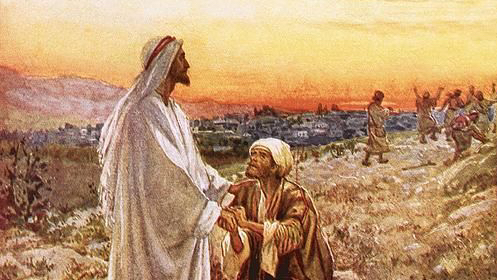
We, like the Samaritan, can act on the stirring of God within us and be saved.
“Ten were cleansed, were they not? Where are the other nine” (Lk 17:17)?
Jesus makes this statement to the Samaritan who fell at his feet praising God and thanking him for his healing. The other nine received the same physical healing. Some saw this man turn back and go to Jesus, yet each one of them continued on their way to see the priests as Jesus had directed them. The purpose of this was so that they could be pronounced clean, and so re-enter the life of communal worship and living among their people. I am sure they were ecstatic to do so.
Jesus healed all ten of their leprosy without even saying a word of healing, yet, the issue of salvation is for each individual to make. I am sure each of the ten received the same invitation. There were those who were probably so excited about the healing that they did not hear it, others may have but dismissed it, and a few, who heard it stronger, as did the Samaritan, could not quiet whatever mind noise that stopped them from doing something as simple as changing their course and coming back to say thank you.
The Samaritan that comes to Jesus in gratitude experienced something deeper than his physical healing. He recognized God’s activity in his life, an opening to a relationship and communion with him. Jesus acknowledged this step of faith, of following this invitation from within and resisting any mind noise that may have tried to dissuade him when he said, “Stand up and go; your faith has saved you” (Luke 17:19).
In answering the invitation that welled up from within, this man received more than just physical healing that day, he received salvation. This means not just that his body was restored and made whole again, but that the separation from his relationship with God had been reconciled.
God invites us in so many small ways in the silence of our hearts to be more engaged in a relationship with him, in our own lives, and the lives of others. We too can crowd out the invitation by keeping ourselves busy, distracted, and/or diverted. We can hear the whisper but discount it outright for many selfish reasons, we can also believe the cacophony of mind noises that is fed by our fears, prejudgments, or apprehensions. Yet, we can also be like the Samaritan. We can hear and experience the invitation of God and act on his leading and so be saved.
———————————————————————
Painting: “Jesus With the One Leper Who Returned to Give Thanks” by William Brassey Hole
Link for the Mass readings for Sunday, October 13, 2019
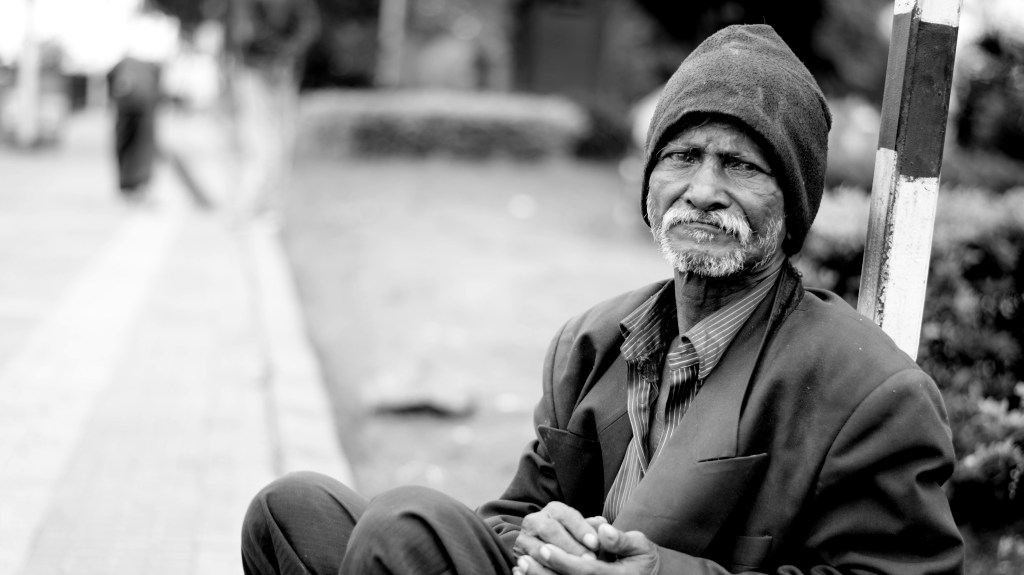
God calls us to encounter one another. Are we willing to hear and observe his word?
While Jesus was speaking, a woman from the crowd called out and said to him, “Blessed is the womb that carried you and the breasts at which you nursed.” He replied, “Rather, blessed are those who hear the word of God and observe it” (Lk 11:27-28).
The woman’s comment directed to Jesus in today’s Gospel account from Luke is certainly better than the charge leveled against him yesterday that he was healing by the power of Beelzebul, yet even this complement is still off the mark. What made Mary truly blessed was her fiat, her yes, to be willing to participate in the incarnation; conceiving, carrying to term, and giving birth to the Son of God. Then continuing to listen for and be guided by the word of God and observing it through the rest of her life. Mary is the model disciple.
With the response of Jesus, he is seeking to realign the woman who called out, those present, and us today to a keep proper perspective regarding living under the kingdom or reign of God. God is to be sovereign, primary, first and foremost. We need to be careful not to put any “thing” or any “one” before God. Even today we need to be careful not to make Mary into a goddess. We honor Mary and the saints, we invoke their intercession for assistance as we do family and friends with us now, but we do not adore them, as we do with God. Mary points us to her Son, not to herself. She is like the moon that radiates the light of the sun. This is the point of discipleship.
As Blessed, and very soon to be St. John Henry Cardinal Newman articulated so well in his prayer, “Radiating Christ”, the goal of the disciple of Jesus is to come to that point where others may look up at us and “see no longer me, but only Thee, O Lord!” How do we do that?
We place ourselves in a posture of humility, of prayer, of being willing to hear the word of God, observe it, and then act upon it and serve him through serving one another when we slow down, resist the urge to accomplish and just get something done. Even prayer can just become a function instead of an encounter with the living God.
We don’t only hear and experience God in prayer and meditation but this will happen in the events of our daily lives as well when we are attentive and willing to follow his subtle invitations. Such as resisting the temptation to walk around or away from someone who is homeless, and instead share a few moments, a few dollars, some food, and to even ask their name. Is this uncomfortable, yes, challenging, yes, but the Word of God calls us out beyond our comfort zones, and to be there for others.
I was recently in San Francisco visiting our oldest daughter, Mia. She was away the first two days that I arrived and on Saturday night I visited the cathedral for Mass. On the way back to her apartment, I walked downtown to see some of the sights and came across a panhandler named Oman. I gave him a dollar, shook his hand and we talked for a few minutes. As I was leaving, a man across the street called out and said, “What about me?” I waved and smiled and started up the street. Then I stopped, turned back, crossed the street and gave Charlie a dollar, a handshake and some of my time as well.
From this place of union with Jesus in our willingness to encounter one another, may love replace our fears, prejudices, and pride, so that we have the courage to be present, to provide aid and comfort to those he sends us to encounter. May we say yes, as did Mary, and so allow the Son of God to dwell within us, in the very depths of our souls, such that our thoughts, words, and actions, all reflect Jesus to others.
———————————————-
Photo: Accessed from Pexels.com
Link for the Mass readings for Saturday, October 12, 2019
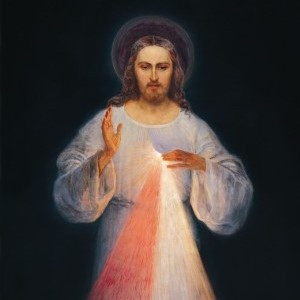
Trust in and call on Jesus for he is our light in the darkness.
When Jesus had driven out a demon, some of the crowd said: “By the power of Beelzebul, the prince of demons, he drives out demons”(Lk 11:15).
There are consistent acts present in the Gospels that show Jesus teaching, preaching, healing, and exorcising demons. Many will accept that Jesus preached and taught, some might even agree that he healed, but there are many who might dismiss that he exorcised demons. The person in today’s passage did not scoff at the fact that Jesus dispelled a demon but emphasized that he did so through the power of Satan. Jesus corrected him with simple logic by stating that, “if Satan is divided against himself, how will his kingdom stand?”
This account from Luke expresses the reality of the culture and beliefs of their time. Were, and are, all illnesses caused by demons? Most likely no. But to dismiss demons altogether, we do so at our own peril. There is a spiritual reality as well as a physical reality. Demons are fallen angels. They fell because they chose to follow Satan, the archangel, Lucifer, instead of God. The term śāṭan is Hebrew and is found in both the Old and New Testaments. There are some English equivalents depending on how it is used. Most commonly śāṭan can be translated as accuser, slanderer, or adversary. Clearly, Satan is one who opposes the will of God and the demons are his minions who support him in that effort.
Satan and his demons roam the world seeking to sow division, to do us harm, as well as seeking the ruin of souls. Their power lies in false truths, temptations of apparent goods, deception, diversion, and condemnation. Although it is important to acknowledge that they exist, we need not fear them; for no demon, nor Satan himself, can possess or harm us against our will. The weakest Christian can overpower any negative spiritual influence because we have access to the name of Jesus. In invoking the name of Jesus, the powers of evil have no sway. We can take strength in the instruction of James from his letter: “So submit yourselves to God. Resist the devil, and he will flee from you” (James 4:7).
Condemnation is one of the devil’s most effective attacks. First, we are tempted, and then when we fall, the hammer of accusation and slander comes down to invoke shame. We are not to feel guilty regarding our misdeeds or sins. Instead, we are to have a healthy sense of guilt. The difference is that when we walk around moping in a cloud of feeling guilty and berating ourselves for how awful we are, we keep the focus on our self and sink deeper into our own morass of self-pity. When we embrace a sense of guilt though, we acknowledge what we have done or have failed to do, then with humility admit that sin, come to a place of contrition, meaning we are truly sorry. Healing continues when we seek confession, absolution, forgiveness, and reconciliation.
Satan, demons, and evil are presently active in this world, yet God did not create evil. All that God created he created good. One way of looking at evil as a deprivation, a twisting, and distortion of the good. God created angelic beings with a free will like us, and some turned away. Demons distort their original purpose as messengers of God. We need not be paranoid, just aware. We need to develop a spiritual discipline of discerning spiritual influences, from both our guardian, as well as resisting the temptings of fallen, angels. We can do this best when we build an intimate relationship with Jesus, knowing that we are God’s children and under his care and protection.
We need to resist any thought that says we are not worthy of being in a relationship with God, that our sin is too great, or that it is too late to repent. God loves us more than we can ever mess up, more than we can ever imagine, and he does not define us by our worst choices. Be confident, strong and stout-hearted, and be not afraid. Whenever you feel threatened, anxious, tempted, self-critical beyond a healthy sense of guilt, or fearful, just speak the name of Jesus aloud, he is our great deliverer, our light in the darkness, and will be present whenever we call.
One of the most powerful weapons against evil is music, a reflection for another time. But for now here is a quote from the chorus of “Trust in Jesus”, track 5, from Third Day’s album, Move, as well as the YouTube link. A good song to carry with you throughout the day!
Trust in Jesus
My great Deliverer
My strong Defender
The Son of God
I trust in Jesus
Blessed Redeemer
My Lord forever
The Holy One, the Holy One
https://www.youtube.com/watch?v=v2ZzULDM-XM
Painting of St Faustina’s vision of the Divine Mercy by Eugeniusz Kazimirowski
Link for the Mass reading for Friday, October 11, 2019
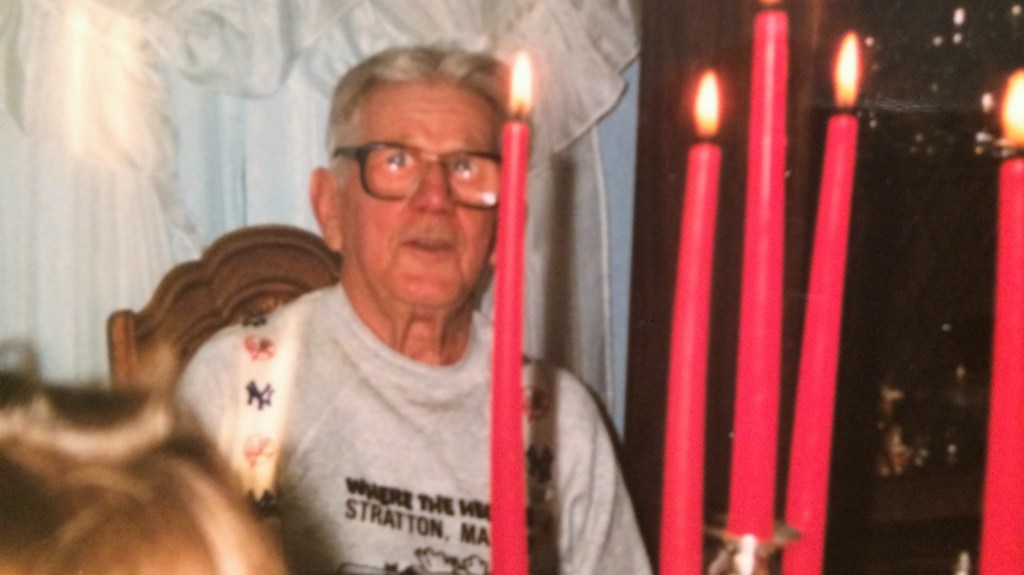
Prayer is about building relationships with God and one another.
“And I tell you, ask and you will receive; seek and you will find; knock and the door will be opened to you. For everyone who asks, receives; and the one who seeks, finds; and to the one who knocks, the door will be opened” (Lk 11:9).
We can be frustrated in prayer because when we do make the time to pray, we feel or think that nothing is happening or has happened. We may pray for a specific petition for our self, or for a particular intention for another and felt, or thought, that there was not an answer from God. One may pray a sincere, seemingly selfless prayer for a loved one, a child, a spouse, a friend, to be healed and the person still dies. They may be deeply hurt because they did what Jesus said; they asked, they pleaded and begged, but felt they did not receive the healing; that which they sought for, was not given and, instead what they found was nothing but pain and heartache from the loss; they knocked until their knuckles were raw and experienced no one on the other side.
Our attitude and orientation to prayer matters. When we sincerely turn our hearts and minds to God in prayer, something happens between us and God, though it may be beyond our cognitive grasp to understand or our sensory awareness to experience. There may indeed be emotional highs and consolations experienced in prayer, but if seeking those is the primary motivation for prayer we will find ourselves more frustrated than not. There may also be lows in prayer, dryness, even desolations, and even feeling God’s absence are also a reality. Emotions are fleeting and not a good barometer when measuring the effectiveness of prayer.
Another big misconception is that we pray to God as if he were a gumball machine. It may seem a silly analogy, but how many of us really do pray and only pray that way, and when we do not receive the specific thing we asked for, at the time specified, when we wanted and as we wanted, we brood and think God doesn’t care or does not, in fact, even exist. We may even slip into the barter posture. God if you grant me this, I will do that. If we are only open to receive what we want on our terms, again we are setting ourselves up for frustration.
The very desire to pray, a turning our hearts and minds to God though, is an answer to his invitation, for he is the one who reaches out to us. The answer to what or who we ask, seek, and knock is found at the end of the Gospel reading for today: “If you then, who are wicked, know how to give good gifts to your children, how much more will the Father in heaven give the Holy Spirit to those who ask him” (Lk 11:13)?
God knows what is best for us, he sees our potential, he wants us to experience joy and be fulfilled. How can we best live our lives in this world to attain that reality? We do so by receiving the Holy Spirit. Who is the Holy Spirit? The infinite, communal love expressed between God the Father and God the Son. Our goal in prayer is to enter into God’s reality of infinite Love.
Through building a relationship with God, which we are able to through our participation and conformation to the life of Jesus, we come to see the truth of empty promises, apparent goods, substitutes to fill our emptiness and faulty defense mechanisms that we have been utilizing as guideposts to merely survive and get through life.
When we stay consistent in an authentic prayer life our lives will change, we will begin to bear the fruits of the Holy Spirit which are love, joy, peace, patience, kindness, goodness, gentleness, and self-control (cf. Galatians 5:22-23)?
Why may God not appear to answer a prayer for our healing or for a loved one with a chronic condition or one who is dying? I do not know. But we need to resist running from the pain of loss and be willing to trust that God has not abandoned us but is with us as we spend time in prayer. The tears that arise from our suffering can then become a healing salve, a doorway into the open arms and embrace of Jesus who awaits us in the depth of our grief and pain. Even our loved ones, who have died, have not come to an end but have experienced a new beginning with our loving God and Father. JoAnn often would say in her last few weeks that she was just changing her address.
Ultimately, what we ask, what we seek, and what we knock for when we pray is to be loved, to belong, to be a part of something, someone greater than ourselves. We have been created as a living, craving hunger, and desire to be one with God and each other. This is true for the atheist and the mystic alike. We have been created to be loved and to love.
The Holy Spirit is the gift of prayer that is open to us all. He is the love shared between the Father and the Son, that we too can experience. This is why he is the answer to our prayer, though sometimes to be aware of him in our lives takes perseverance. It may not be that God is not answering, but that we are not patient enough to receive the answer. Prayer is about building a relationship and like any other relationship before we can grow into it, we may be needing more time to heal or to build trust, and we must spend time together. Most importantly we need to learn to communicate and that means learning God’s profound language of silence.
———————————————————————————
Photo: Christmas 2017
Link for the Mass readings for Thursday, October 10, 2019