Reflections on the Gospel Reading for the Day
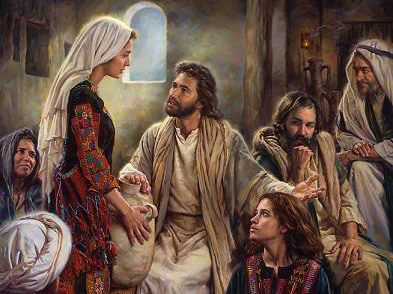
Who is our neighbor? Jesus lets us know.
“And who is my neighbor” Luke 10:29.
This question of the scholar of the law lines up with Peter’s question: “Lord, if my brother sins against me, how often must I forgive him. As many as seven times” (Mt 18:21)? Both the scholar and Peter knew the letter of the law but sought justification in following a minimalist approach to putting the law into practice. Jesus invites us to a deeper appreciation of the purpose of the law of God and that is to uphold the dignity of each person. Laws can be certainly unjust, and a mere following of the law for the law’s sake can wreak havoc.
Jesus made this point when he was challenged for even thinking that he would heal someone on the Sabbath when he said: “The Sabbath was made for man, not man for the Sabbath” (Mk 2:27). Time and again Jesus is calling us to have the courage to resist keeping others at arm’s length. He is calling us to risk assuming a stance of understanding, taking time to listen and be present to, as well as accompany those we encounter.
The Samaritan did just that. The Jericho road was known for attacks just as the one suffered by the man who was left for dead. The priest and Levite may not have stopped to help because they might have thought the man was faking, or in the time they took to care for the man those that harmed him could have returned to abuse them. We don’t know the reason they continued on, because it was Jesus’ parable and he did not tell us. What we do know is that they did not stop to help, but the Samaritan did.
When Jesus asked who was the neighbor to the man robbed and beaten, the scholar said, “The one who treated him with mercy.” The scholar could not bring himself to say the Samaritan, as the Jews and Samaritans had a long-standing agreement of mutual loathing. Just remember a few days back when we read how Jesus sought hospitality from a Samaritan home, did not receive the invitation, and James and John were quick to implore God to send fire to destroy them.
Before we discuss or implore our lawmakers to enact policies to address such life issues as the unborn, people on death row, immigrants and refugees fleeing from violence and Mexico and Central America, Syria and other war-torn regions, those seeking hope and a better life, children who have made a life here and this is the only home they know, oil corporations seeking to lay pipelines that threaten clean water resources and disregarding indigenous people’s rights, opening up dialogue with the LGBT community who have felt like they have been treated like dirt, people of color who have been humiliated, profiled, and lost their lives, and too many forgotten in rural and urban America, we may want to read the parable of the Good Samaritan again, slowly and prayerfully.
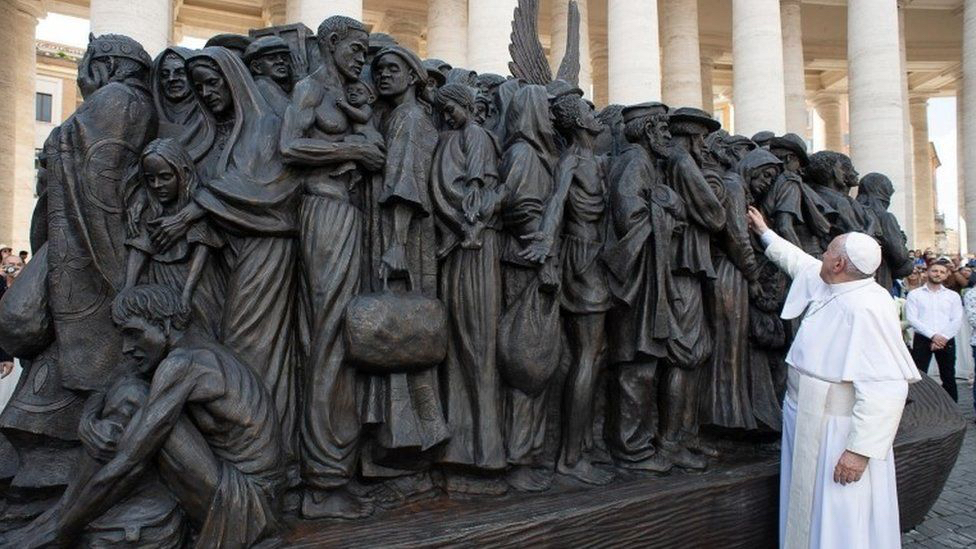
In a homily given on September 29, Pope Francis said, “Loving our neighbor means feeling compassion for the sufferings of our brothers and sisters, drawing close to them, touching their sores and sharing their stories, and thus manifesting concretely God’s tender love for them.” Many human beings who feel demeaned, dehumanized, lost, and afraid are our neighbors. They are wounded and in need.
Will we, like the priest or the Levite just walk on the other side of the road, indifferent or afraid; will we dig in our heels and embrace our fears and prejudices; or will we have the courage to show forgiveness, mercy, compassion, and understanding and accompany those that God has brought before us? The scholar said the neighbor was the one who showed mercy. Jesus’ response to him is the same to us: “Go and do likewise.”
———————————————————————
Photo: “Angels Unawares” by Timothy P. Schmalz unveiled at the Vatican. Picture credit European Pressphoto Agency
Link for Mass readings for Monday, October 7, 2019
Opening our hearts and minds to God will not diminish but expand us.
So should it be with you. When you have done all you have been commanded, say, ‘We are unprofitable servants; we have done what we were obliged to do’” (Lk 17:10).
This ending verse from today’s Gospel account from Luke flies in the face of the ideals of fame and honor that many in our culture believe we ought to be striving for. After all, everyone wants their fifteen minutes of fame, don’t they?
The point Jesus is making with his disciples is one of perspective. We need to constantly remember that God is the Creator and we are his created beings. Our life is completely dependent on him and whether we like the analogy or the reality that we are servants, that is not only how we were created, but what will, in the end, bring us the most meaning and fulfillment, serving God and one another without hesitation.
This is no dictatorial or tyrannical power play by God through his crown prince Jesus. Jesus himself consistently served his Father and would do so in the fullness of giving himself on the Cross. This is best summarized by Paul in his Letter to the Philippians, when he echoes one of the most ancient Christian hymns: “Though he was in the form of God, Jesus did not deem equality with God something to be grasped. Rather he emptied himself and took the form of a slave, being born in the likeness of men.”
Jesus, the divine Son of God, entered into our human condition because he was serving the will of his Father. We are to do the same. God is the director of his epic drama and each of us has a part to play. Our faith grows as we empty ourselves from our own grasping nature of seeking control, of being in charge, and seeking to be the director.
One of the reasons many of us have trouble with this type of imagery and language is because we consistently see so much abuse of power for selfish gain. This is not God’s goal. He does not need us, he is fully self-sufficient without our worship or service. It is we who need him and through the opening of our mind and heart to his direction, by acting on every word that comes from him, we do not become diminished we expand and become more!
We truly become ourselves, we are fully alive, when we resist living in the past or projecting ourselves into the future. Fr. Robert E. Kennedy states this point well: “Our true self is given to us moment by moment. We live, we find ourselves, to the extent that moment by moment we turn to the will of God.” This is the beating heart of our faith, to place ourselves in a posture to hear the will of God, and act upon it in our willingness to serve him. In doing so, we lose our life, so to find it.
—————————————————
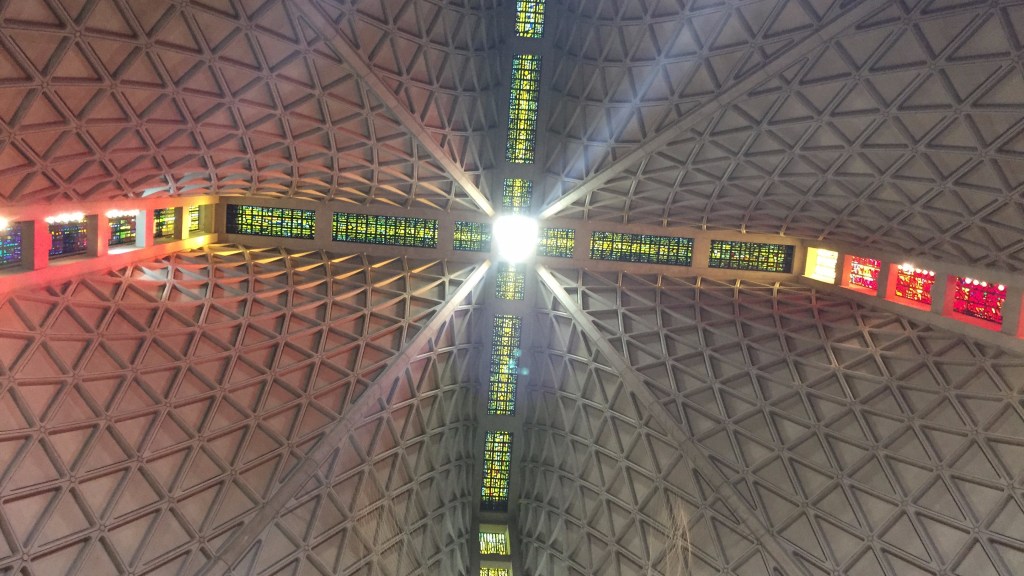
Photo: Ceiling from the Cathedral of St Mary of the Assumption, where I went to Mass for the Saturday Vigil last night while visiting our daughter Mia in San Francisco. A good picture to meditate on!
Kennedy, Robert E. Zen Spirit, Christian Spirit. Continuum International, NY: 2004.
Link for the Mass readings for Sunday, October 6, 2019
Losing our ego is a prerequisite for losing ourselves in God.
Turning to the disciples in private he said, “Blessed are the eyes that see what you see. For I say to you, many prophets and kings desired to see what you see, but did not see it, and to hear what you hear, but did not hear it” (Lk 10:23-24).
What did the disciples see, what did they hear that the prophets and kings desired to see? The kingdom of God in their midst was no longer a saying or teaching of Jesus, but a reality uniquely experienced by the disciples who were sent by him. Those who were sent by Jesus took the risk, trusted, and believed in him and went out and preached, exorcised, and healed in Jesus’ name doing what they had seen him doing!
Deeper still the disciples experienced the gift of the Mystery of God. The Mystery of God is not a problem to be solved because God is not one being among many, not even the greatest or supreme being. God is, “I am who am” (Ex 3:14), as he described himself to Moses. He cannot be solved or proven, but he can be experienced, and that was the joy and exhilaration that the disciples felt coming back after having experienced God working through them. Jesus himself rejoiced in the Holy Spirit, not so much because they had healed in his name but that they had entered into communion with the Father, “do not rejoice because the spirits are subject to you, but rejoice because your names are written in heaven.” (Lk 10:20).
In following Jesus, learning directly from him, and then going off to minister in his name, they experienced the kingdom of Heaven. They had participated in the loving communion of the Father and the Son and the Holy Spirit. How did they do so? They became childlike in that they lost themselves in their mission of following the will of God. Jesus had prepared them to be free from all sense of the ego-self, how others would look at them or how others would react to their preaching or healing. The disciples were in the zone of being directed by God and doing his will, like Jesus, without hesitation.
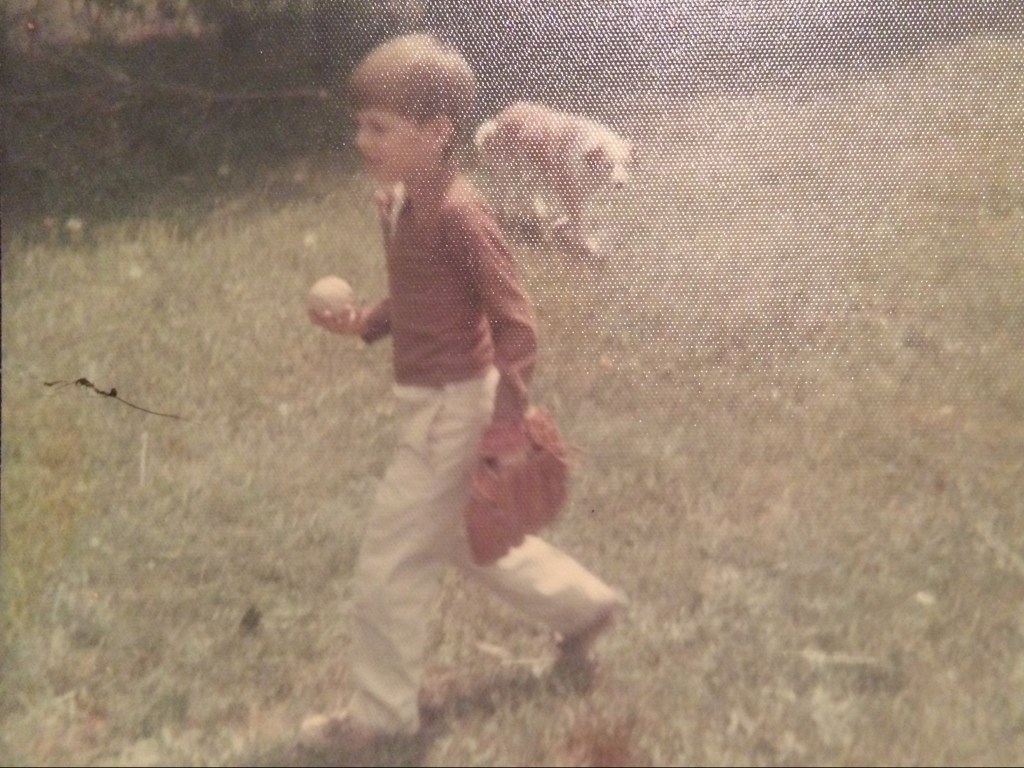
When I was younger I used to live, eat, and breathe baseball and hockey. I would make up different versions of playing for the NHL or MLB with those players of that time in our backyard which became the Montreal Forum or Yankee Stadium.
One experience I remember was setting up cinder blocks in the formation of steps, three on the bottom, two next, and then one on the top. I then strode some paces back with my left hand fit snugly into my worn baseball glove and tennis ball in the right. Each step led me to the pitching mound of Yankee Stadium. When I wound up and threw a tennis ball at the makeshift concrete pitchback the game had begun and within minutes, I was on the field with Willie Randolph, Thurman Munson, Mickey Rivers, looking to retire the batters Jim Rice, Pudge Fisk, and Carl Yastrzemski.
Each time the ball soared into the air or skirted across the ground, I leaped into the air, or dove sideways to come up and throw to first base, then zipped over to first to make the stretching grab. Of course, during some of the better plays I reenacted them as an instant replay. I completely lost myself in the game, I was in the zone. After some time, I happened to look up and saw looking out of the screen door my mother, stepfather, and some family friends who had all come over to visit, all of them with big smiles on their faces. I sheepishly put my head down and stood for a few moments. Within a minute or so, they went back to their business and I returned to Yankee Stadium to finish the game.
I share this experience to show an example of how we as children can lose ourselves, “free of reactions, expectations, and approval of those around” us. The disciples did the same, the only difference is that they lost themselves in hearing the word of God and just doing what he wanted them to do. Bishop Robert Barron shared it this way in a homily: “The best moments in life occur when we lose the ego, lose ourselves in the world and just are as God wants us to be.”
Lose yourself today in something you love to do, whether that be drawing, painting, singing, playing an instrument or sport, running, praying, reading, writing, or serving in ministry, even as Brother Lawrence did, he lost himself in doing the dishes. Find moments to be free of expectations and approval, release the weight of what others might be thinking or expecting. Instead, be present and mindful in the moment and immerse yourself in what you are doing.
These are very real acts of spiritual discipline that prepare us to be in the present, where we experience and find the God who is reaching out to us, and so then like the disciples, we will be better able to experience him and follow his will, serve him, without hesitation or concern for what others think. We will then also experience Jesus rejoicing with us that we have our names “written in Heaven”.
——————————————————–
Photo: Me about seven?
Quote from Bishop Robert Barron’s homily from 10/7/2017. Bishop Robert Barron’s daily Gospel messages can be accessed from:
https://www.wordonfire.org/resources/blog/free-daily-gospel-reflections-from-bishop-barron/5315/
Link for Mass readings for Saturday, October 5, 2019

Jesus, please dwell within us that we may shine your light before others like the dawn from on high.
Whoever listens to you listens to me. Whoever rejects you rejects me. And whoever rejects me rejects the one who sent me (Lk 10:16).
On the surface, today’s Gospel may sound like a Debbie Downer of a message, but it is actually the road map, the passage that will lead us from the darkness of slavery steeped in our own sin to the light of truth and freedom in Christ. Jesus is continuing to prepare the 72 that are about to go out to proclaim his message of repentance. This echoes Mark’s recording of Jesus’ mission statement: “This is the time of fulfillment. The kingdom of God is at hand. Repent, and believe in the gospel” (Mk 1:15).
Sin is any actively contemplated thought, word, or action that we knowingly know goes against the will of God and we freely choose to act on it anyway. This is why many of us prefer the darkness to the light because we do not have to see and name our sins. We hold on to apparent goods or substitutes that we believe will make us happy and fulfill us, otherwise we would not hold on to them when in actuality they are empty promises. After experiencing the lack of satisfaction, once the emotion or passion of the moment or experience wanes, we either seek more to fill the void or hopefully, recognize the false lure.
If we choose to seek more, we continue along a slippery slope of ensnarement and addiction. But if we repent, allow the light and truth of Jesus into our darkness, trust in his willing our good, we can begin to see our sin, name it, let it go, be forgiven, be healed, and fulfilled by receiving the love of God and deepening of our relationship with him for whom we have been created for.
As servants of the Lord, we are invited to repent, to realign ourselves in such a way that we are saying yes to building a relationship with God, recognizing that this is a daily, lifetime task of examining our conscience to continue to see and confess our sin. This process is not just for ourselves.
We are called to bring the light of truth to those we meet. This does not mean we are perfect. Through the awareness and confession of our sin, we are incrementally more open to receiving the love and light of Jesus within us, such that he can shine his light through us into another’s darkness and gently guide them to come out of the shadows.
We need to resist the temptation to go forth and wag thy finger of judgment. For then we are only a darker storm cloud approaching those we seek to provide healing. They will either draw deeper into their own shell or come out fighting seeking to dispel us from their midst. Jesus sends us to instead encounter one another with understanding, mercy, patience, understanding, and love. We also need to remember that in the beginning, our light needs to be soft, like the morning dawn, so as not to blind those we seek to offer an invitation.
May we embody the Canticle of Zechariah: “In the tender compassion of our God, the dawn from on high shall break upon us, to shine on those who dwell in darkness and the shadow of death, and to guide our feet into the way of peace” (Lk 1:76-79). Let us no longer be barriers preventing access to Jesus and instead help to prepare the way for others to encounter him.
Jesus, this day and each day going forward, dwell within us, so that as we meet those you place on our path we may be present to them with your warmth, welcome, and joy. May we respect each person before us, accept them, be present and accompany them, so that they may know that they are not alone, that they, in fact, do exist, that they matter, that they are loved as you love us. May we be like the first light of the dawn to help awaken those in the darkness of their pain, suffering, and sin, so to be a lamp unto their feet and a light unto their path, that leads to an encounter and embrace with you; our Truth, our Way, and our Life. Amen.
———————————————————
Image: Photo by Amy Chung from Pexels.com
Link to the Mass readings for Friday, October 4, 2019

Spend some quiet time experiencing the wonder of God’s creation.
Jesus appointed seventy-two other disciples and said to them, “Go on your way; behold, I am sending you like lambs among wolves. Carry no money bag, no sack, no sandals” (Lk 10:3-4).
The opening of today’s Gospel continues the same theme of the past few days and that is the call of a radical dependence on God. Jesus sent his disciples out with no money, no credit cards, no sack, no luggage, no sandals, no Crocs. They were to rely solely on divine providence. They were taught by Jesus to believe and trust in the Father, and now they would put both to the test.
How well could we fare today? Do we even leave the house without our cell phones?
Jesus meets us and accepts as we are and where we are, but calls us to go deeper, to expand beyond our present understanding and practices. We may say to ourselves that we are not capable of being a great saint, but that would miss the point of who a saint is. A saint is not one who was great, but one who chose to release that which kept him or her from receiving more of God in their life.
There are so many distractions, diversions, demands, and many material enticements, that we are lured by. What all of us can do is assess how much of what we have, what we think, and how we spend our time, is getting in the way of our trusting in God more and allowing him to expand us so to receive more of him in our lives.
A periodic extended time of letting go is a wonderful practice. About two to three weeks before JoAnn died, we stopped watching TV because it was too uncomfortable for her. She needed quiet and stillness as much as possible and four weeks later, except for watching a few movies and a couple of shows with Jack and Christy, I have not watched any television and I have not missed it.
Since our return to California after JoAnn’s funeral, as we mourn, rest, heal and begin again, I have spent more time being quiet, praying, and meditating. Even though we live a half-mile from downtown LA, each day I hear bird song, I see trees and feel the sun on my face. I encourage you to carve out some time in your day to be still and to spend time in the wondrous, beauty of his creation. When we do so, we can hear God speak to us in the silence, we can experience him who we depend on for everything and allow him to become more present in our daily lives.
—————————————————-
Photo: JoAnn and I spending some time together in the open air of the NW corner of CT before our move to Florida in the summer of 1997.
Link for the Mass readings for Thursday, October 3, 2019
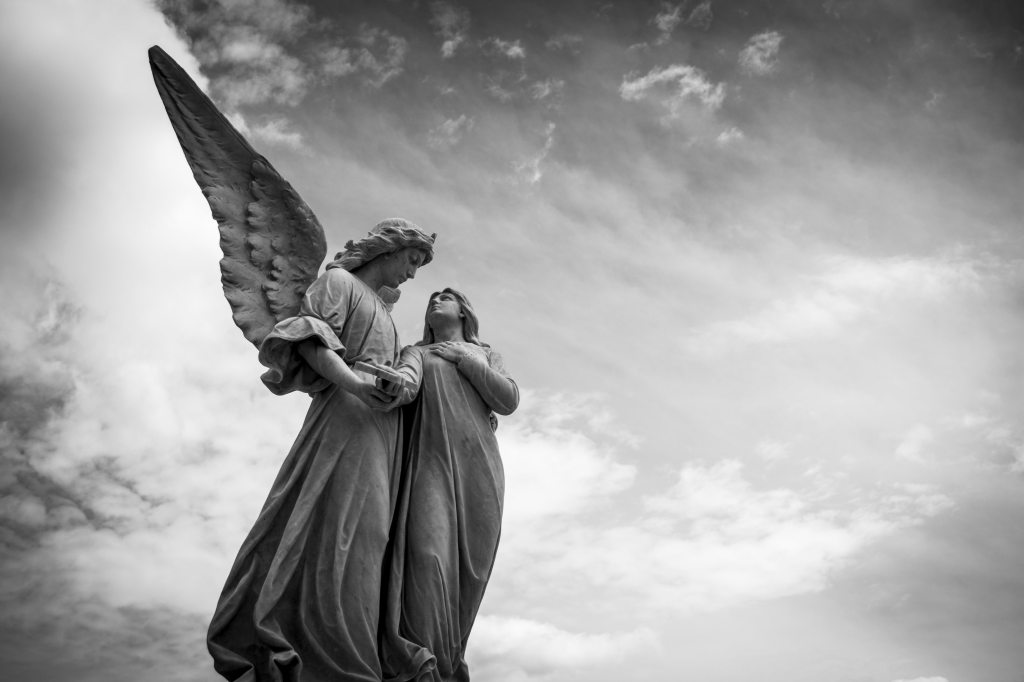
As disciples of Jesus, we are to rely on God as children do on their parents.
“Whoever humbles himself like this child is the greatest in the Kingdom of heaven. And whoever receives one child such as this in my name receives me” (Mt 18:4-5).
Children during the time of Jesus were seen if at all, to have little worth. They were vulnerable, had little if any, status in society. They were under the radar, nothings, nobodies, and thus completely dependent on their parents for survival. Jesus invites a child to come to him, identifying himself with the child, as a response to the disciples’ question as to who would be considered the greatest in the Kingdom of heaven.
Jesus taught his disciples and he teaches us today that we need to be completely dependent on God our Father, as a small child is totally dependent on his or her parents. What leads us to greatness in the Kingdom of heaven is our turning away from the temptation to curve in within ourselves, resisting the urge to feed our ego, and as St Thomas Aquinas taught, resisting the cultural lures and substitutes for God: power, pleasure, honor, and wealth. We are to reject the image that we are supermen and women that need no one as we strive for complete autonomy and self-sufficiency. We are to place our complete dependency and trust in God and rely on him for everything.
Participating in the reign of God is not one of lordship over another, but instead of assuming the humility to accompany and walk along with each other along our journey in this life. We see this in the reality of Jesus, who as the Son of God entered into our human condition. While remaining fully divine, he became human when through the power of the Holy Spirit was conceived in the womb of Mary, developed through his period of gestation, and was born into our world. As an infant and child, he was completely dependent on Mary and Joseph and God his Father.
As Jesus continued to grow as a young child, he experienced the fullness of the human condition. He laughed, he cried, he got sick, he was tempted, he felt pain, he experienced heartache and joy. Throughout his life, and especially during his public ministry, he met people where they were and as they were. He understood their suffering and weakness from his own experience of being human and so accompanied them and loved them by willing their good and pointing the way for them to rely wholeheartedly on his Father.
We are to do the same by resisting to put our self-interests first, by surrendering ourselves in prayer to God and give of ourselves in our service to one another. We are able to do so when we acknowledge our dependence on God and others. We are not self-sufficient and we need to be humble enough to accept and ask for help. Our guardian angels, whose memorial we celebrate today, are at the ready awaiting our call.
When we realize that we are not alone, and experience some supernatural support, we may be more willing to be present and accompany those who are in our midst. We are not alone in our everyday struggles or in celebrating our successes. We are called to help others to realize that they are not alone either. We can be a shoulder to lean on, provide an ear to hear, we can offer a smile, a hug, a voice that speaks for the voiceless, a soul open to praying with others, and we can help to remind others to invoke their guardian angel’s assistance.
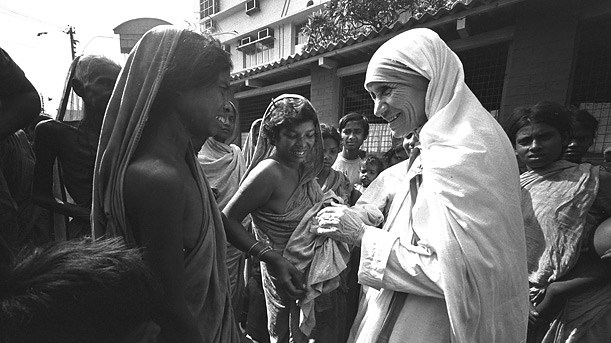
St Mother Teresa embodied the discipleship Jesus calls us to when she picked up that first dying man in the street. She did not ask his religion, was not concerned if he was of a different race or nationality, was not afraid to risk illness or injury by attending to him. She knelt down and was present to him in his time of dire need. May we follow Jesus and St Mother Teresa by placing our dependency in God’s hands and accompany others in doing little things with great love. When we do so, we say to another, you exist, you matter to me.
Photo: accessed from pexels.com
Link for Mass readings for Wednesday, October 2, 2019
Jesus can help us to grow together instead of apart in each of our relationships.
“Lord, do you want us to call down fire from heaven to consume them?” Jesus turned and rebuked them, and they journeyed to another village (Lk 9:54-56).
James and John’s request of Jesus ought to be recognizable to many, if not all of us. How many times when feeling slighted or disrespected do we want to act in kind or offer some retribution to our perceived offender? Many times, we do not even think we just react overtly back or we engage in our own tumultuous internal maelstrom.
Jesus rebuked James and John’s request immediately and moved on. He did not allow the rejection of the Samaritans to deter his course for even one second.
The most helpful response to today’s Gospel is to affirm that Jesus is correct in his response to the Samaritan’s lack of hospitality and James and John are wrong. If we can agree with that as our starting point, then we can seek to understand what Jesus can teach us when encountering others.
First, our approach to others extending unkind behavior is to be one of understanding. We are all dealing with a lot, and much of what others are dealing with are unknown to us. If we approach another’s unkind or disrespectful action from a place of understanding instead of seeking revenge, we will have a better chance of not reacting in kind and also possibly being able to help another to get in touch and reveal something they are struggling with.
Often a negative response may come from misunderstandings. Our first response ought to be one of giving the person the benefit of the doubt to explain their understanding of what happened in a given situation. We are not mind-readers and we also are not the best of communicators so resisting jumping to rash conclusions is a better course of action.
A third approach is to receive a critique with humility. Maybe, we have done something to cause hurt toward another, intentionally or unintentionally. By taking responsibility for that which we have done and apologizing for it, we create a better bridge for reconciliation.
We are only responsible for our actions. We cannot dictate or change the behaviors of others. We are not to be doormats for another’s abuse nor take on their stuff either. But we are to approach conflict and obstacles with patience, understanding, a willingness to bring clarity, and humility for acknowledging what we have done and what we have failed to do, but if another is not willing to hear reason, we move on.
We pray for and respect the dignity of the person whether we agree or disagree with the outcome while holding them accountable at the same time. Jesus is very clear that we are to love, meaning that we are to will each other’s good and we need to be willing to forgive, to love each other through our mistakes and sin.
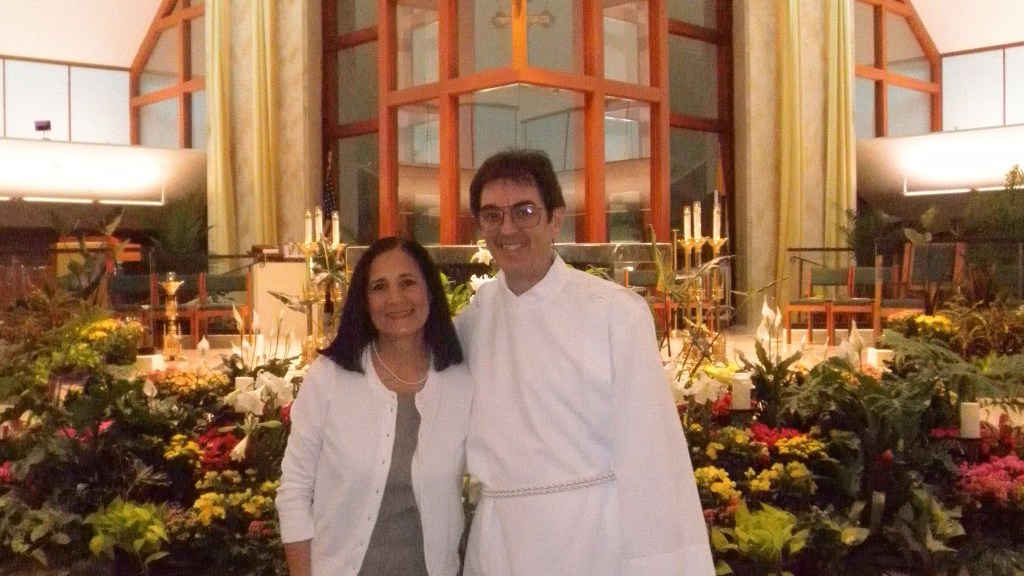
None of these steps are easy. Human relationships are difficult in the best of scenarios, but still well worth the effort. Neither JoAnn nor I were perfect, but we did our best to follow these principles and others, such that our conflicts became opportunities that helped us to grow closer together rather than further apart. Above all we need to seek the guidance of Jesus and those who we trust and are willing to hold us accountable such that we can grow and mature as the disciples of Jesus that he calls us to be.
—————————————————
Jesus brought JoAnn and me together and putting him first in our lives helped us to grow in our relationship with him and each other.
Link for the Mass readings for Tuesday, October 1, 2019

Let us hear the word of God and do it, as well as work with others willing to do the same!
The Apostle John attempted to prevent someone from casting out demons in Jesus’ name because he was not one in their “company”, he was not on the inside. This person casting out demons in Jesus’ name was not like Simon the Magician (see Acts 8:9-25) who sought to buy the power of God from the Apostles to perform feats to boost his own fame and ego, this person was doing what the apostles were doing and in the proper way, by invoking the name of Jesus.
Jesus said to him, “Do not prevent him, for whoever is not against you is for you” (Lk 9:50). The important part about being a disciple is surrendering ourselves into and following the will of God. This was a consistent point Jesus pointed out to his followers time and time again. Being a disciple of Jesus had nothing to do with whether or not someone was in or out of their company, or whether they were related to Jesus, as is recorded just in the last chapter of Luke 8:21, “My mother and my brothers are those who hear the word of God and do it.”
Jesus, in today’s Gospel, is pointing out the danger of groupthink for its own sake. This is something we desperately need to get in our present-day and age. What is important is not putting our self, our family, our tribe, our party, our nation first. What is important is putting God first.
The man in today’s Gospel did not rely on his own strength or will power but called on the name of Jesus to cast out demons. John was getting hung up that this man wasn’t one of them, wasn’t in their company, and he was doing what they were called to do. John may have also been a bit miffed that this man was doing a better job of it as well.
I say the more the merrier! There is much that needs to be done, there is too much pain and suffering in the world, and we are losing precious resources and hours by fighting amongst ourselves, instead of actualizing the unique and diverse gifts each of us has. We have much more in common with one another than we have differences.
There are ways to diminish the growing polarization and division within and without of the Church and the best way to begin is we need to be willing to cast aside our protective and defensive postures, make a commitment to respect the dignity of each person we encounter and strive ourselves to be people of virtue, integrity and strive to be holy. Whoever is not against us is for us.
Photo by burak kostak from Pexels
Link for the Mass readings for Monday, September 30, 2019