Reflections on the Gospel Reading for the Day

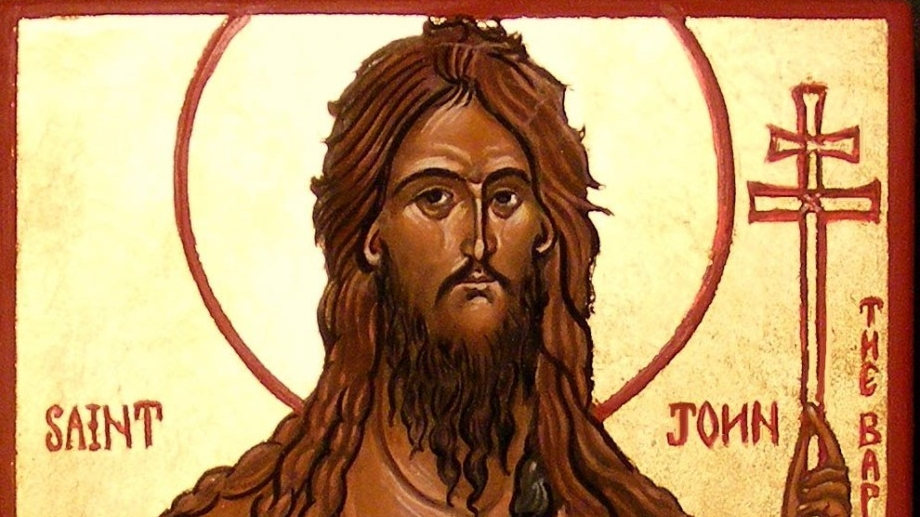
St John the Baptist gives us some insight into family life
Herodias’ own daughter came in and performed a dance that delighted Herod and his guests (Mk 6:22).
Mark paints a word picture of a family: Herod, Herodias, and their daughter: ancient manuscripts differ as to whether she was Herod’s or Herodias’ daughter. Also, two times, in Mk 6:22 and 6:28, she is referred to in the Greek as korasion, meaning a young woman, as young as twelve years old (Donahue 2002, 198). The setting is the banquet hall of Herod, the tetrarch or prince of Galilee. His high officials, military commanders, and the elites of Galilee were all gathered to celebrate Herod’s birthday. This is a royal, opulent family.
The daughter comes out to dance for Herod. Her dance delights Herod and he grants her anything she wants. Following the counsel of Herodias, she asks for the head of John the Baptist on a platter. The reason for this request was because Herodias held a grudge toward John because he stated that it “is illegal for you to be married to your brother’s wife” (Mk 6:18). Herod was distressed at the daughter’s request but granted John’s death sentence to save face before his honored guests. The execution was swift, the head of John was brought on a platter, given to the girl, who then brought it to her mother.
This is not the ideal image of the family that we hopefully aspire to. John’s upbringing as we learn from Luke had a different experience. His mother, Elizabeth, and father, Zechariah, were devout Jews. They raised their son as a person of integrity and we can see from today’s reading of Mark the extent to which he would do so. John was willing to give his life, rather than compromise his principles. This stands in stark contrast to Herod Antipas who, with little contemplation about what he was doing, acted pretty quickly in giving the order to end the life of John in such a brutal fashion.
Could there be any two starker images of family life than in today’s Gospel? One family as corrupt, conniving, and malicious as can hardly be imagined and another as faithful, pure, and holy as can be hoped for. Families are not perfect, but most, if not all are a bit messy. We do the best we can to support and love one another. Hopefully, most of our families fall somewhere in between, and hopefully closer to, John’s family than to the Herodians.
Even when life goes well, it can be difficult and challenging. The best we can do as family is striving to accept and support each member for the unique gift and person we are, make it known that we are praying and thinking about one another, commit to be present and encourage one another, be willing to forgive one another, continue to communicate with one another, and even when we disagree, may we agree to respect one another.
No matter how bumpy the road of life gets or how high the waves of trials and tribulations toss us about, may we support each other to follow in the line of St John the Baptist to strive to be people of integrity. May we stand up for the dignity of ourselves and others no matter what. Even when we mess up, may we commit to accompany, love and be there for one another.
For all families, and especially those who are suffering from abuse in any and all of its forms, on this his memorial day, we ask St John the Baptist to pray for us.
Photo: Icon of John the Baptist accessed from: https://thejoecatholic.org/?p=3700
Donahue SJ, John R. and Daniel J. Harrington SJ. The Gospel of Matthew, in Sacra Pagina Series, vol. 1. Ed. Daniel J. Harrington. Minnesota: Liturgical Press, 2002.
Link for the Mass reading for Wednesday, August 29, 2019
Are we whitewashed tombs or fulfilled human beings?
Jesus said, “Woe to you, scribes and Pharisees, you hypocrites. You are like whitewashed tombs, which appear beautiful on the outside, but inside are full of dead men’s bones and every kind of filth. Even so, on the outside you appear righteous, but inside you are filled with hypocrisy and evildoing” (Mt 23:27-28).
How many of us spend an inordinate amount of time regarding physical externals? Washing, makeup, the right clothes, the correct scents, teeth whitening, plucking, nipping, and tucking. How about time spent exercising through gym memberships, home exercise equipment, physical trainers, sports, stretching, running, or cycling. How about time spent towards a career through education, updating, professional learning, seminars, webinars, Linkedin and networking. There are other categories that I can add, and the point is that there is not anything necessarily wrong with any of the above in moderation and each in balance is healthy in practice.
Though if external activities are all we are investing of our time and energy, then Jesus has a point. We may “appear beautiful on the outside” with great looks, a body that doesn’t quit, and a career to die for, but what is going on inside? Are we empty, unfulfilled, achieving goal after goal, yet feeling adrift or hollowed out? Do we have all the right social skills and etiquette down, know the right things to say in public, we have friends in the hundreds on our social media accounts, yet we feel alone and not a part of anything meaningful?
Worse yet, do we go to Church, say the right prayers, are active in ministry, we tithe, are members of boards, involved in the community, and doing some great works of charity, but when the door is closed, and no one is looking… what kind of “hypocrisy and evil doing” are we up to? I bet you’d like me to go back to Jesus chewing out the Pharisees, right now, wouldn’t you?
The above represent some of the extremes of external behavior, and I am sure much of us are more balanced in our lives, but we do need to take a good, solid look at what time we invest and where we are focusing our energies. We need to examine our conscience regularly regarding a real assessment of the health of our relationship with God, family, significant friendships in our lives, our vocation instead of occupation, and our service to those within and beyond our intimate circle.
Making time for prayer, study, worship, finding and living out our vocation, and service to others helps to build a foundation for developing the inside. Making time to rest, renew, and reflect on the core of who we are in the depths of our soul, getting in touch with who God calls us to be, leads to contentment and peace. Standing up for who and what we believe in, speaking what we believe with confidence and respect while allowing others to do the same, leads to fulfillment and joy. With these points as our foundation then we are more apt to address the externals in a healthier, balanced way, such that we achieve a fuller experience of life, identity, and integrity.
St Augustine, whose memorial we celebrate today, got it right when he said, “You have made us for yourself, O Lord, and our hearts are restless until they rest in thee.” If we spend our time whitewashing the tomb, chasing the finite and material pursuits alone, we will be restless, living life on the outside. But if we conform our lives to Christ, we will be transformed from within and find rest.
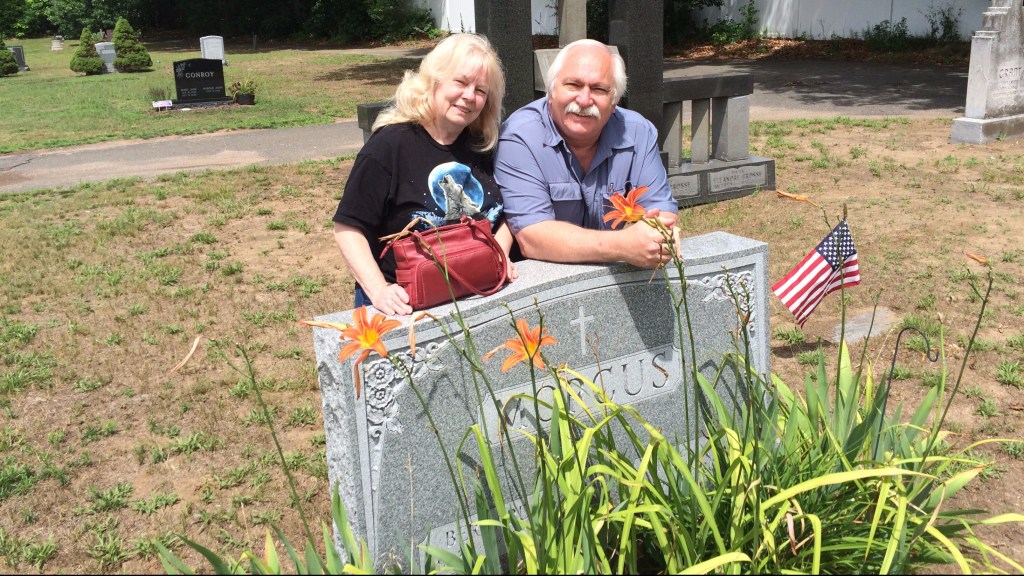
Photo: My mother and step-father at the grave of my maternal grandparents.
Link for the Mass readings for Wednesday, August 28, 2019
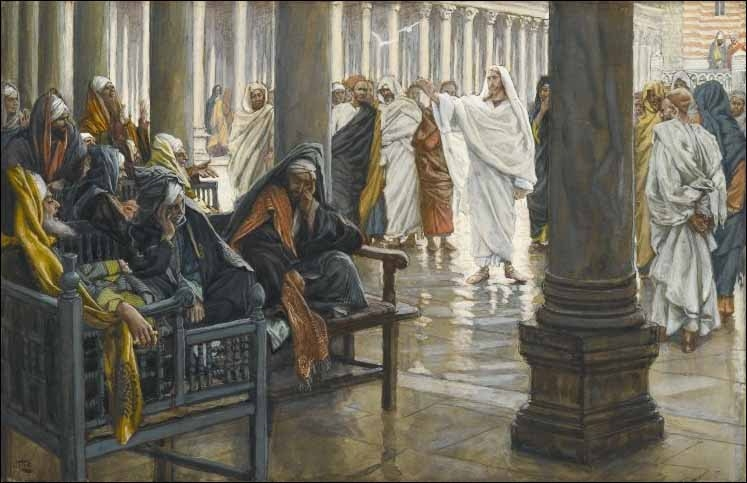
Woe to you hypocrites, who have abused and/or covered up.
The Gospel readings from the past week have been a ringing denouncement by Jesus regarding the abuse of the leadership and religious authority of his day. Yesterday and especially today, even more overtly so, as we witness Jesus calling out those scribes and Pharisees who have abused their power and positions: “Woe to you, scribes and Pharisees, you hypocrites. You cleanse the outside of cup and dish, but inside they are full of plunder and self-indulgence” (Mt 23:25).
The most unfortunate part of this Gospel is that the Church today is still not immune from these indictments. Over the past year, there have been reports in the US and worldwide regarding the worst kind of self-indulgence and that is the abuse of children by clergy and cover-ups from those who were placed in positions as shepherds to protect their flocks. This has left a gaping wound in the Body of Christ because of the devastation, first and foremost, to those who have been gravely wounded physically, emotionally, and spiritually, as well as for those families who have accompanied their loved ones through these years of trauma.
Jesus bestowed dignity on the vulnerable youth of his day when he chided his disciples for not allowing the children to be brought to him for a blessing (cf. Mt 19:13-15). Jesus modeled the proper treatment of children and at-risk adults time and again throughout his ministry, and as disciples of Christ, first and foremost, we too are to stand up for and protect the dignity of each person, but especially the most vulnerable among us. There is no defense for these horrific actions, nor the egregious coverups.
The majority of the reports revealed abuses that happened prior to the first significant waves of revelations of 2002. Since that time, many dedicated laypeople and clergy have been diligently working together, to protect at-risk adults and children, to implement strategies and programs of awareness, to educate parents, children and all who work with children and at-risk adults in our dioceses across the country.
Yet, as investigations such as the Pennsylvania grand jury report unearthed systemic abuse, the greater majority of which happened again prior to 2002, each of us are reminded that each diocese needs to bring to light, be transparent, and open records of abuse as far back as they have them and not wait for others to go digging. Those who have been responsible for acts of abuse, those who have been complicit in covering up their actions or shuffling priests around, no matter their level within the hierarchy, need to step down from public ministry. To those who are still hiding in the shadows, they need to remember that Jesus said, “There is nothing hidden that will not become visible, and nothing secret that will not be known and come to light” (Lk 8:17).
There can no longer be a practice of covering up heinous crimes and abusers to protect the identity of the institution of the Church. We are the Body of Christ, and where one suffers, we all suffer. Jesus Christ promoted integrity over identity. The dignity of the person is to be placed before any institution. We need to pray for, while at the same time provide full access to those who have been abused. This means that they are to be heard, that their claims will be fully investigated, and they will have access to resources for healing, mentally, physically, spiritually and socially. Part of that process will be to allow them to share their stories which need to be told and heard. We also need to continue to be vigilant in protecting settings that provide access to children and at-risk adults from predators.
We need not leave the Church because of those who sin, we all fall short of the glory of God. We need not be paranoid either, but we do need to be clear to put boundaries and proven protective practices in place, we need to be alert and vigilant to the warning signs regarding those who do not respect boundaries, as well as be fully open and cooperative with revealing the abuses enacted in the past.
We also need to be authentic people of prayer, because this is also a spiritual problem, and so on this memorial of St Monica, may we seek her intercession in praying for those who have have been abused, for their healing, for accountability for those who have abused, for this darkness to be revealed by the light, and for those who have lost their faith because of the stain of hypocrisy that has tainted the Church. Let us strive to be people of integrity, building a true culture of life, that respects, protects, empowers, and stands up for the dignity of all.
Photo: “Woe to you Scribes and Pharisees” – James Tissot, late 19th century
Link for the Mass reading for Tuesday, August 27, 2019

We are not to lock the doors of heaven with hypocrisy but open them for others with the authenticity of living the Gospel.
“Woe to you, scribes and Pharisees, you hypocrites. You lock the Kingdom of heaven before men” (Mt 23: 13).
Context, in any reading of the Gospels, or any scriptural text, is important, but certainly with today’s reading. Our country is already experiencing enough division, polarization, and racial unrest as it is. These comments have too often been used to fuel anti-Semitic rhetoric. We need to remember that Jesus is Jewish. “The criticisms are leveled with those of power and/or influence as in the prophetic denunciations, not against the whole people of Israel. The aberrations denounced by Jesus were also denounced by other Jewish teachers in the rabbinic tradition. The goal of the denunciations is to highlight the error, to preserve others from it, and perhaps to bring those who err to the way of righteousness” (Harrington 2007, 327).
Those who would use these verses to denounce people of the Jewish faith tradition, just for being Jewish, would be acting in the same way as those for whom Jesus was convicting. Jesus spoke to the specific actions of specific leaders he had encountered who were using their power and influence for their own means and agendas. The hypocritical behavior that Jesus brought to light unfortunately still exists in our civil and religious leadership, though not all. It is why so many people are disillusioned with our religious and civic institutions and leaders.
We seek truth, authenticity, and transparency because these qualities are foundational for building trust and relationships. St. Augustine, whose feast we celebrate in two days, wrote in his Introduction to his Confessions, “You have made us for yourself, O Lord, and we are restless until we rest in you.” He experienced a life without God and with him, and regretted the days he had resisted his invitation. It is unfortunate how many today have not come to embrace the words of Augustine, because of their experiences with those, who in the name of Christ, have “locked the kingdom of heaven” before them.
It is very easy to point fingers at others and how hypocritical they are, but Jesus is also speaking in today’s Gospel directly to each one of us. How have we erred, been hypocritical ourselves? In what areas of our lives have we allowed past hurts and wounds, anxieties and fears, prejudicial and judgmental attitudes, to limit us from living a more authentic life aligned with the teachings of Jesus. We all fall short in living the “Way, the Truth, and the Life” (cf Jn 14:6), but the good news is that when we have the humility to be contrite, to recognize and to be sorry for the hurt we have caused, to admit when we have been wrong, we have a loving Father with arms wide open to embrace, comfort, lead us to reconciliation, and offer us healing.
As we are more conformed to living our lives like Jesus, we have more credibility when we speak up, out, and against any act that diminishes or denounces the dignity of another, while at the same time resisting the temptation to do so in a way that diminishes those who inflict division and hate. Jesus invites us to convict others and hold them accountable as he and the prophets who came before him did with those who did not fulfill and unfortunately also abused their roles of leadership. We need to be convicted and held accountable ourselves for our errors and preserve others from theirs with the intent of winning back our brother or our sister, not humiliating and degrading them, but by leading them to a place of contrition and reconciliation, such that each of us can be people of integrity, transparency, and holiness. By doing so, we will not lock the doors of heaven with our hypocrisy but will open them with the key of authenticity Jesus gives us.
Photo: Knocking on Heaven’s Door, a photo I took last summer back home in Florida.
Link for the Mass readings for Monday, August 26, 2019
Harrington, S.J., Daniel J. The Gospel of Matthew, vol. 1, in Sacra Pagina, Ed. Daniel J. Harrington, S.J. Collegeville, MN: Liturgical Press, 2007.

Any relationship to go deeper must pass through the narrow gate of mutual vulnerability.
“Lord, will only a few people be saved?” He answered them, “Strive to enter through the narrow gate, for many, I tell you, will attempt to enter but will not be strong enough (Lk 13:23-24).
This can be a challenging verse to understand and to put into practice. Our salvation is assured in Christ, for he died for all of us and not just for a select few. It is also true that there is no way we can buy or nothing we can do to earn our way into heaven. That said, with the free gift of the grace we have been given by Jesus in the giving of his life for us, we have a responsibility to work out our salvation in this life.
Christianity is not a pie in the sky or walk in the park religion because Christianity is about a relationship. God loves us and gives us the choice to reject or accept his love. If we say yes, then we collaborate in building a relationship with him as we go forward to do the same with one another.
Authentic relationships take an investment of time and hard work if those relationships are to move beyond the masks and pretenses we project out to people, pretending to be something we are not or trying to be who others want us to be. To mature in our relationships we need to learn to love each other, which means more than an emotional experience, but a willing of each other’s good. Love is accepting the other as other, in their brokenness and pain, their failings and shortcomings, their sin. It means being willing to take off our masks, being vulnerable, revealing our fears, and resist being defensive or reactive when we are hurt or offended by those who are close to us.
Love does not mean that we endure physical and emotional manipulation and abuse, for then we are enabling someone’s destructive behavior. The goal of healthy relationships is to mutually respect each other’s boundaries, be willing to support and empower one another and grow together. We accept each other as we are, while at the same time, we are willing to accompany one another as we seek to actualize our potential and who God calls us to be.
Every relationship, if it is to grow and develop, will at some point, come to a cross-road, a narrow gate, in which each person needs to make a decision. Will, each person work through the conflict that arises to the best of their ability mutually supporting one another, get help as needed if the challenge is beyond them, and strive to support the growing bond that is present. The other choice by one or both persons, is to not be willing to risk putting in the work to address the root of the conflict, not having the humility to say, I am sorry or I forgive you, or just not willing to face the deeper issues to heal or let go of any fear that may be in the way.
Being willing to go through the narrow gate, means being willing to invest in the love that God has given us freely and being willing to risk and be vulnerable with him if we are to grow and mature in our relationship. It means putting in the discipline of working out our salvation with his guidance, while at the same time, doing so in conjunction with the relationships he has blessed us with in our life.
Photo by Pedro Sandrini from Pexels
Link for the Mass readings for Sunday, August 25, 2019
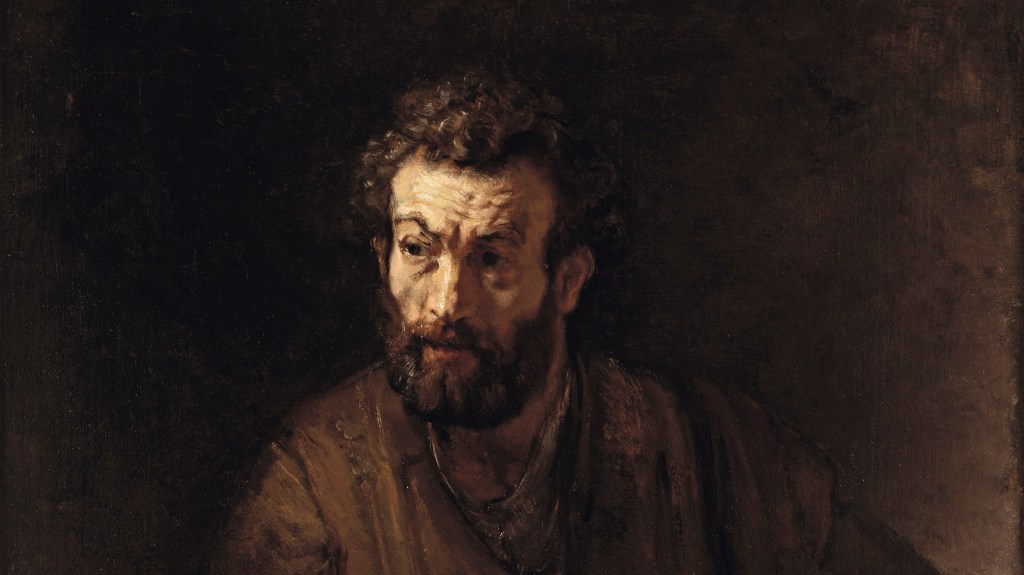
St Bartholomew, free us from that which limits us from coming to see Jesus.
But Nathanael said to him, “Can anything good come from Nazareth?” Philip said to him, “Come and see” (Jn 1:46).
Many biblical scholars believe that Nathanael is the same man as the Apostle Bartholomew, who is mentioned in Matthew, Mark, Luke, and Acts. We see in today’s Gospel from John that his initial reaction to Philip’s invitation is doubt. Why? Because of where he came from. Nazareth was a small peasant village with a population of about 1,600 people (Meier, 317). I don’t think its small size would be the main reason for Nathanael’s offering a bit of humor at the expense of Jesus’ hometown, though he must have had some reason to believe that nothing good could come from Nazareth. The more important point is that Nathanael did not allow his preconceived opinions of Nazareth to keep him from following Philip’s invitation to “Come and see.”
Nathanael would not only “come and see”, but after Jesus shared how he first saw Nathanael under the fig tree, Nathanael claimed that Jesus was “the Son of God… the King of Israel” (Jn 1:49). What he was able to see in Jesus, Jesus’ own townsfolk of Nazareth were not able or willing to see. Though, like the other Apostles, Nathanael was off the mark regarding the kind of messiah Jesus would be. Jesus would not be the warrior king, but the suffering servant of Isaiah. Jesus also told Nathanael that he would “see greater things than this” (Jn 1:50). Francis Moloney articulates that: “Faith based on miracles will not suffice; something more is needed. This greater faith will enable all disciples to see the revelation of the heavenly in Jesus, the Son of Man” (Harrington, 57).
Though we do not know much about Nathanael other than the encounter described in today’s gospel, we know that he was willing to set aside his initial doubt and prejudice of Jesus’ hometown, was willing to encounter, follow, and remain with Jesus to become one of the Twelve. There is speculation that he traveled to India to spread the Gospel he received. Most likely he encountered those who had the same doubt that anything good could come from the One from Nazareth. There would be those who refused to believe and so he was killed. Yet, before and after his martyrdom, some, though initially doubtful, some like Nathanael, came and saw and believed.
St Bartholomew, son of Tholami; Nathanael, gift of God, pray for us that we may resist the temptations of our own biases, doubts, and prejudices, so to open our hearts and minds to “come and see” Jesus in those we meet today, especially in the distressing disguise of the poor. Help us not only to resist judging others because of where they come from but instead grow in our faith so that we come to see in each encounter a person, a child of God, a brother or a sister along the way.
Painting: The Apostle Bartholomew by Rembrandt, 1657
Meier, John P. A Marginal Jew, vol. 1 : The Roots of the Problem and the Person. New York: Yale University Press, 1991.
Moloney, S.D.B., Francis J. “The Gospel of John, vol.4.” In Sacra Pagina, edited by Daniel J. Harrington, S.J. Collegeville, MN: Liturgical Press, 1998.
Link for today’s Mass readings for Saturday, August 24, 2019
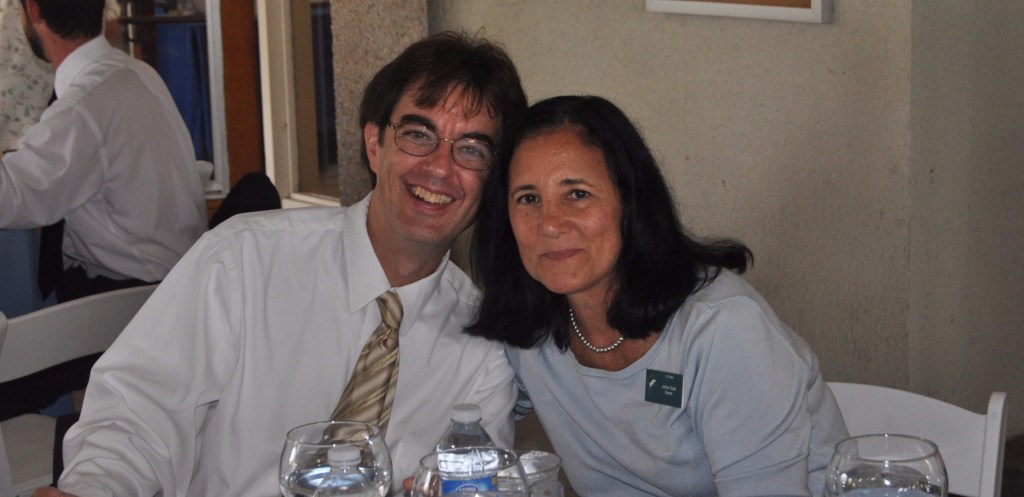
Love someone by sharing a smile today.
When the Pharisees heard that Jesus had silenced the Sadducees, they gathered together, and one of them, a scholar of the law, tested him by asking, “Teacher, which commandment in the law is the greatest?” He said to him, “You shall love the Lord, your God, with all your heart, with all your soul, and with all your mind. This is the greatest and the first commandment. The second is like it: You shall love your neighbor as yourself. The whole law and the prophets depend on these two commandments.” (Mt 22:34-40).
Jesus, in response, was not just throwing up a cloud of theological dust into the eyes of the Pharisees. His answer to, “which commandment in the law is the greatest?” was drawn directly from the Torah. Jesus quoted from Deuteronomy 6:5 and Leviticus 19:18 and merged the two verses together as one unit. His purpose was to emphasize the point that what was to be the greatest aspiration for humanity was to love God and to love our neighbor as ourself, not either/or. Jesus again was showing that he did not come to abolish the law and the prophets, but that he came to fulfill them (cf. Mt 5:17).
In this statement, Jesus also revealed the foundation of reality, the Trinitarian communion of love. For the immanence of God – God within himself – has always been, always is, and always will be a communion of love. God the Father loves the Son, God the Son receives the Father’s love and in return loves God the Father, and God the Holy Spirit is the love expressed and shared between God the Father and God the Son. The overflow and abundance of this perichoresis, or divine dance of trinitarian communion, has loved creation into existence.
This means that we as his created beings have been loved us into existence too! Created in his image and likeness means we are capable of loving him, and one another. Thus, as God has loved us so we are invited to mirror on earth the love that is shared in Heaven. It is through our participation in the love of Jesus that we can live up to his command to love our enemies, best expressed in the parable of the Good Samaritan (Lk 10:29-37).
Rejoice in the love of God, who is Love, today. Thank him for giving us the gift of life. Resist the temptation of complacency and taking each other for granted, for life, even at its best, is so fragile and can slip away from us in the blink of an eye. Take each opportunity that arises to share the Love we have received from God that is the source of our existence with each person we encounter.
If we catch the eye of another smile. If someone says, “How are you today?” say, “Better that you asked.” If someone interrupts you, let everything go for that moment and be really present to that invitation to encounter another. Go out of your way to do some random acts of kindness, especially for that someone who ordinarily and regularly gets under your skin. We need never fear that God’s supply will ever run out, so today, go for it! Perichoresis! Participate in the dance of God’s trinitarian Love and let his Love reign free in your everyday encounters.
“Dance, dance, wherever you may be
I am the lord of the dance, said he
And I lead you all, wherever you may be
And I lead you all in the dance, said he.”
Picture: Sharing our smiles with you. JoAnn and I at the reception following our class’ installation as a lector during formation for the permanent diaconate about 8 years ago.
Chorus from the hymn: Lord of the Dance by Sydney Bertram Carter
Link for today’s Mass readings for Friday, August 23, 2019
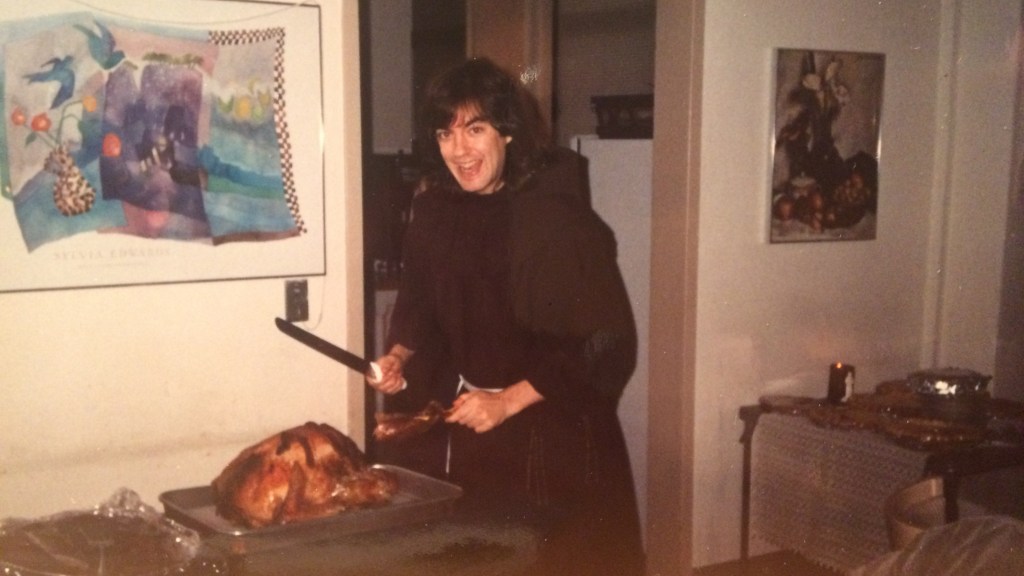
The banquet is prepared, come in proper attire to participate in the feast.
“The Kingdom of heaven may be likened to a king who gave a wedding feast for his son” (Mt 22:2).
Throughout the Gospels, Jesus not only talked about feasts but he is recorded as often celebrating table fellowship with others. Those he ate with ranged from people who were considered sinners to the religious elite among the Pharisees.
In the parable from today’s Gospel, Jesus presented a wide range of reactions to the invitation offered from the king through his servants. Some are so caught up in their own lives, that they are not able or willing to break away and others reject the invitation outright and do so violently, by mistreating and even killing the servants of the king. Then others, the good and bad alike, welcome and say yes to the invitation.
God invites, but we must be willing to change our hearts and minds to see the invitation for what it is, an eternal gift. Those who refused, were unwilling to change their plans, as well as others who, with hearts of stone, were outright hostile, willing to abuse and even kill the servants.
Near the end of the parable, Jesus presents a curious fellow that the king found present at the banquet without the proper attire. This is not a literal indictment of not having the proper clothes, but the wedding garment imagery may be a recognition of a willingness to receive the benefits of the invitation without a yes to the responsibility involved with the invitation of transformation.
In our first reading from Judges, we see the responsibility of the weight of an oath and the sacred bond that is involved in making such an oath in ancient society. Jephthah vows to God that if he wins the battle against Ammonites, he will sacrifice the first person to come to him through his doors. Jephthah wins the battle, but who comes out of his house when he returns but his only daughter. Both Jephthah and his daughter though are willing to fulfill the oath to God.
Jesus made a sacred oath with his Father and he was willing to fulfill that oath with his very life. We are invited to participate in the banquet of eternal life with God. The invitation is freely given, yet it requires that we dress for the occasion of participating in the banquet of a king. This dress is no material garment of fine linen and gold embroidery, but our willingness to repent, to turn away from those idols, that which we have placed or put before God, to have our heart and spirit renewed. We are invited to be a part of God’s new creation by participating in the life of his Son, the first born of the new creation.
God the Father offered an invitation to an eternal banquet to the judges, the prophets, the people of Israel, to be one with him that they might shine brightly before all so to make his will and glory known to the world. In God’s timing, he sent his Son to fulfill that mission of invitation and to be with us in our present moment and in our present condition in life. Jesus meets us where we are right now in our everyday experiences and tells us that “the feast is ready.”
This is an invitation to begin again, to give up our old ways, to receive a new heart and a renewed spirit. But we need to be willing to let go, to change our hearts and minds, to be transformed and perfected through our participation in the life of Jesus and through the purifying fire of the Holy Spirit.
Our yes demands accountability, we can’t just show up and take up space. As we are transformed, we must at the same time be willing to devote our time, discipline, talent and treasure to serving at the banquet and inviting others to attend. “Many are invited, but few are chosen” (Mt 22:14). The first step is saying yes to the invitation. The second step is being willing to let go and go beyond our comfort zones so to embrace the change we are invited to. We need to be willing to be transformed, which is not easy, but we can also take comfort that we are not alone. Jesus invites us, as well as guides us, empowers us all the while as he accompanies us.
The banquet is ready. The table is set. Are we willing to attend? Are we willing to wear the proper attire?
Photo: Serving Thanksgiving dinner at Seton Manor, my novitiate year (about 1992) with the Franciscans. Seton Manor was one of my ministries assisting people living with HIV.
Link for the Mass readings for Thursday, August 22, 2019