Reflections on the Gospel Reading for the Day
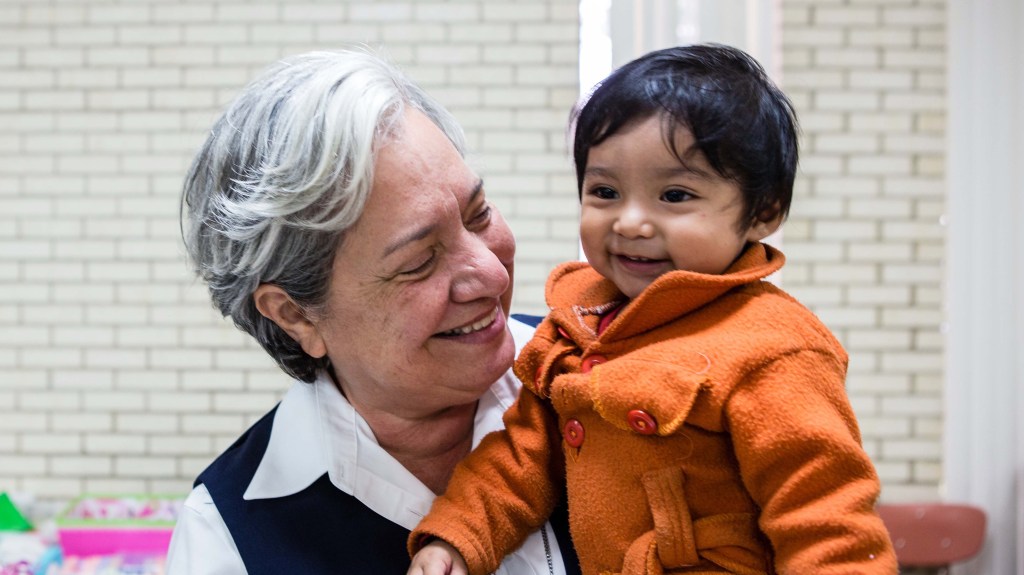

The kingdom of heaven is at hand, not for a select few, but for everyone.
“As you go, make this proclamation: ‘The Kingdom of heaven is at hand” (Mt 10:7).
Empowered by Jesus, the Apostles were sent to proclaim that the Kingdom of heaven is at hand, that the God of all creation is present in our midst and seeks to restore a relationship with his fallen creatures. The Apostles are to continue Jesus’ saving act of restoring and healing humanity’s relationship with God, through word but more so through deed.
Salvation was to be experienced through encounter and interaction with individuals. The Apostles, followed Jesus who devoted himself to people, “accepting them, receiving them into fellowship with him and granting them forgiveness of sins. The power of his affirmation is to be found in his attention to the concrete individual, in particular to the despised, the abused, the sinner, but also involving himself with people in a very personal way… in giving himself away to them” (Gnilka 1997, 111).
We are called to do the same. Empowered by Jesus, we are sent to enter into the chaos of the lives of concrete individuals in our midst and on the margins in a very personal way. The Gospel is not just for a select few but for everyone. Let us no longer feed our fears, prejudices, and pride, but instead come to a place of contrition, sorrow for the hurt we have caused others, for our actions and omissions, for failing to reach out in love.
Jesus, help us to be more present, accepting, understanding, kind and forgiving and send us to bring your light, love, mercy, and fellowship, so to spread your proclamation: “The Kingdom of heaven is at hand!”
Photo: Lifting one another up!
Gnilka, Joachim. Jesus of Nazareth: Message and History. Massachusetts: Hendrickson Publishers, 1997.
Link for the Mass reading for Wednesday, July 10, 2019

Feeling troubled and abandoned? Follow the Shepherd.
“At the sight of the crowds, his heart was moved with pity for them because they were troubled and abandoned, like sheep without a shepherd” (Mt 9:36).
There is much that pulls at us for our time and attention. Jesus witnessed the anxieties, struggles, pain, and feelings of being lost of those in his midst. Are we so different today? Jesus knows the Father, he knows the joy and fulfillment of what being in a full relationship with him entails. Jesus saw then and sees in us now how lost we are, how easily distracted we are, how many things we put before our relationship with God, and he “is moved with pity.”
Jesus’ heart goes out to us, he yearns to be one with us, he loves us, but in that very act of love, he risks. He loves us so much, that he is willing to let us choose ourselves, others, or a myriad of pursuits over him. Jesus invites us to enjoy developing a relationship with him so we can come to know his Father, while at the same time he does not impose himself on us. We are given the whole world to choose from or we can choose him. Who do we put first? Is God a priority in our life? If we find that God is at best an after-thought, or at worst a no thought, what is it that we may be choosing over him? Instead of our getting to know God better, what are we putting before him?
Jesus invites us, but too often we ignore the invitation or, we choose other pleasures, distractions, temptations, and apparent goods. With time and experience we may come to see the emptiness of the lure of these worldly promises, as well as see that our attachments to these often lead to many of our troubles, trials, stresses and anxieties. We may also get in touch with our feelings of unfulfillment, abandonment, and being alone, because there is only one answer to our innermost longing, and that is God himself.
Fr. Thomas Dubay writes that the “one who seeks delight in God alone finds peace and joy no matter what happens” (Dubay 1989, 154). Jesus offers to lead us, just as Jesus has led his disciples through the ages. He sees our potential, our promise, the fullness of who we can become. What made the difference for the saints, was that they said yes to the call of the Shepherd. How will we answer the Shepherd’s invitation today?
Photo: by Kat Jayne from Pexels
Dubay, S.M., Thomas. Fire Within: St. Teresa of Avila, St. John of the Cross, and the Gospel on Prayer. San Francisco: Ignatius Press, 1989.
Link for the Mass readings for Tuesday, July 9, 2019
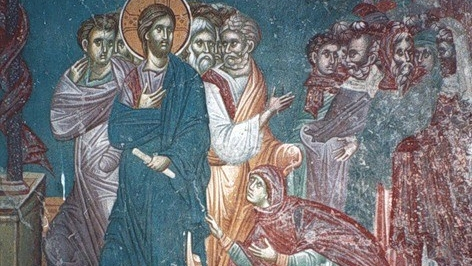
In reaching out to Jesus, we reach out to each other.
“If only I can touch his cloak, I shall be cured.” Jesus turned around and saw her, and said, “Courage, daughter! Your faith has saved you.” And from that hour the woman was cured (Mt 9:21-22).
Just to touch his cloak may seem a small and insignificant act, but by doing so, this woman showed tremendous courage. Suffering from hemorrhaging for twelve years, broke from spending all her resources to be healed, she risked. She could have been severely punished, beaten or stoned for this small act. Under the Levitical code her condition deemed her unclean, in the same category as a leper, a pariah. Touching someone else in that condition would then make them unclean. Yet, in that small touch, that great act of courage, “power had gone forth from him” (Mk 5:30), and she was completely healed. Not only did the woman have courage to touch Jesus, but to admit she had done so when Jesus questioned who had touched him.
In calling the woman who touched him out, Jesus was not condemning her, Jesus was acknowledging her faith and restoring her to the community from which she had been ostracized. Jesus restored her dignity. How many women today still feel and experience the pain of exclusion, not having access to the full and equal benefits of society and the Church? How many people are still considered outcasts and pariahs in our communities?
Pope Francis in his general audience from August 31, 2016 stated: “Once again Jesus, with his merciful behavior, shows the church the path it must take to reach out to every person so that each one can be healed in body and spirit and recover his or her dignity as a child of God”. We too then are to treat each person we encounter, in person and online, with dignity, mercy, and respect.
May we respect the dignity of the women in our realm of influence, have the courage and persistence of this woman, to risk and reach out to Jesus even when it may cost us to do so, as well as recognize that Jesus is present in the marginalized, those on the peripheries among us, those we may consider unclean. In risking to reach out and touch one another, the healing presence of Jesus will go forth from us to one another and our lives will be transformed!
Icon of woman touching the cloak of Jesus
I invite you to read and meditate today on the story in full from each of the synoptic records: Mark 5:21-43, Matthew 9:18-26 and Luke 8:40-56. These are powerful accounts!
Link for the Mass readings for Monday, July 8, 2019:
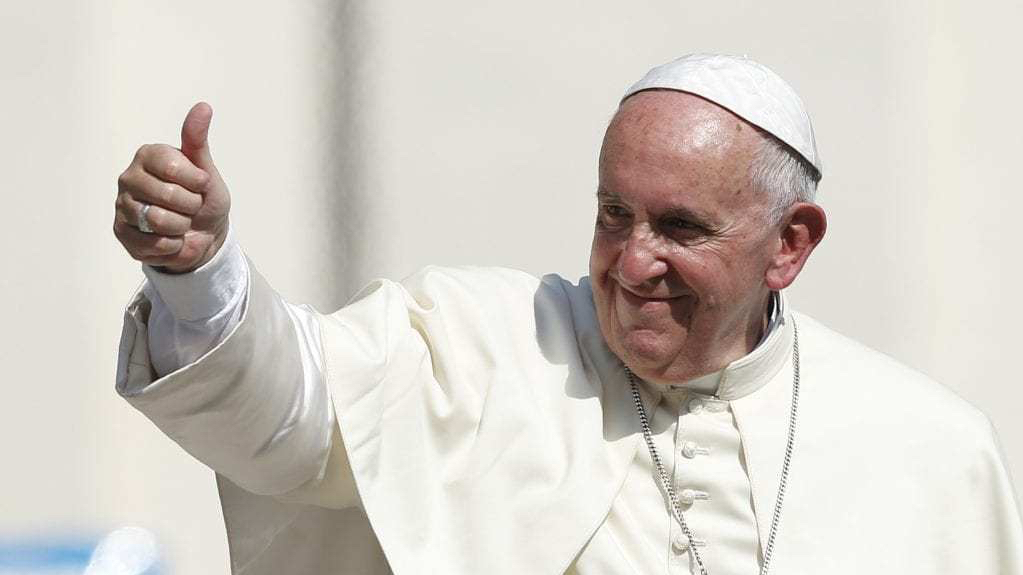
“As far as God’s love is concerned, no one is useless or insignificant.” – Pope Francis
“At that time the Lord appointed seventy-two others whom he sent ahead of him in pairs to every town and place he intended to visit” (Lk 10:1). Jesus did not stop with this action, he continued and continues to call people to himself and sends them on mission to proclaim the same words: “The kingdom of God is at hand for you” (Lk 10:9).
To be a disciple of Jesus is to be both about maintaining the Church he instituted and going out on mission. This is why at the end of each Mass the deacon or priest in the absence of a deacon will say, “Go and proclaim the Gospel of the Lord” or three other formulas of being sent to be missionaries in our communities. This is not a call for clergy and religious only but for all of the baptized.
Pope Francis has asked that this October of 2019 we renew our commitment to our missionary awareness. “This missionary mandate touches us personally: I am a mission, always; you are a mission, always; every baptized man and woman is a mission. People in love never stand still: they are drawn out of themselves; they are attracted and attract others in turn; they give themselves to others and build relationships that are life-giving. As far as God’s love is concerned, no one is useless or insignificant. Each of us is a mission to the world, for each of us is the fruit of God’s love.”
There is much here in the Pope’s words to meditate upon and put into action. We are not just to go out and do missionary work, to evangelize and share the Gospel, we are to embody mission. We “are a mission.” At the moment of our conception we exist as a unique individual already distinct from our parents. We are endowed with dignity and worth just by the fact that we exist.
A foundational part of the Good News is to again embrace the wonder and dignity of all life, to allow ourselves to be loved by our Creator again, to embrace the free gift of his love, and to go out on fire with and express the joy and love of being fully alive. We are to give ourselves to others through our willingness to encounter, accompany, and serve one another in love with the purpose of building “relationships that are life-giving.”
When we are touched by the wonder and love of God, when we respect the dignity of life from conception, through all stages of life, until natural death, we come to recognize that “no one is useless or insignificant.” Each and EVERYONE of us are a unique gift to the world that has never been nor will ever be again. Jesus has called us to himself with the purpose to send us out on mission. The time to be, to live, to love is now, for: “The kingdom of God is at hand” (Lk 10:9). Let us go forth this day as missionary people, as contemplatives in action, in peace, to glorify the Lord by our life.
Pope Francis photo accessed from crux now.com and credit: CNS photo/Paul Haring
Pope Francis: Message of His Holiness Francis For World Mission Day 2019:
Link for the Mass readings for Sunday, July 7, 2019:
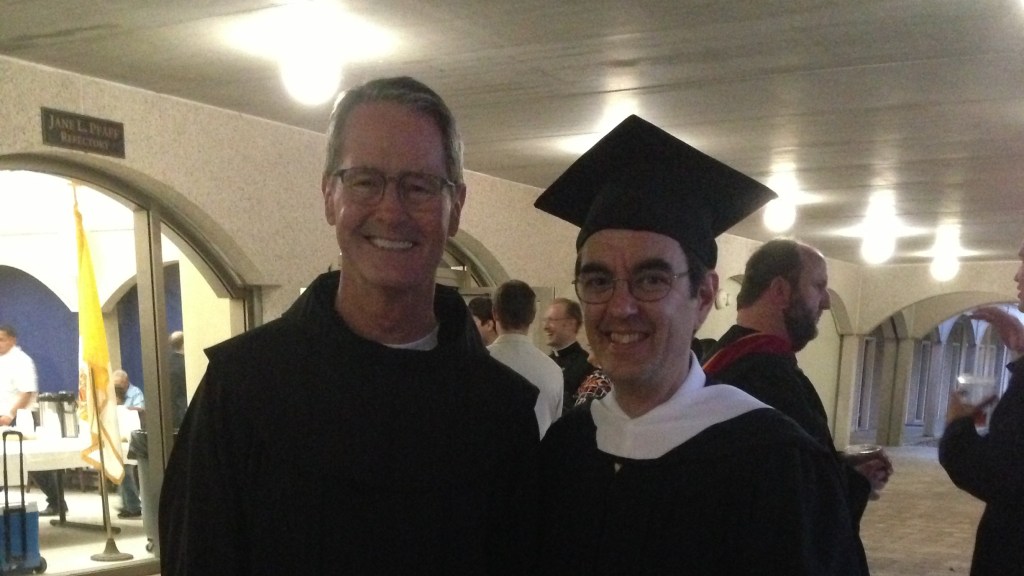
We need to expand, to change our hearts and minds, to receive Jesus’ new wine, the Gospel.
“Rather, they pour new wine into fresh wineskins, and both are preserved” (Mt 9:17).
Mark, Matthew and Luke all record the reference of pouring new wine into fresh wineskins. What Matthew adds is, “and both are preserved.” Luke adds: “[And] no one who has been drinking old wine desires new, for he says, ‘The old is good.’”
The Gospel authors are reflecting the tensions of those who would reject Jesus and those who would follow him and his new way. The new wine is to accept the Gospel, the Good News of the kingdom of God in their midst, and to do so means to change one’s mind and heart. “The tension, and often incompatibility, between the old and the new is part of every religious tradition and attends every change within that tradition. Matthew and Luke wrestled with it and adapted it to their community situation. Contemporary Christians have no less a challenge” (The Gospel of Mark, Donahue, SJ, p. 109). Matthew shared with his community that Jesus is the new Temple, the old has been destroyed. Following him in fact meant that both the old and new covenants would be preserved. Jesus did not come to abolish the of the law and prophets, but he is the natural progression of what went before him.
We are invited to wrestle as well. The Church is called to change, to be transformed by the Living God. Many say the Church needs to change this and that, not realizing that we are the Church, the People of God, the Body of Christ. If the Church is to mature and grow each of us are to embrace transformation, being made anew through the guiding presence of the Holy Spirit. This invitation is a call to let go of those habits, lifestyles, behaviors, mindsets, attachments, and addictions that are weighing us down or worse holding us in bondage and slavery to our sin, keeping us separated from God. Much of the material and finite things we hold onto prevents us from receiving the new life God wants to pour into us.
Jesus has come to set us free from our enslavement to sin by inviting us to try some new wine which consists of contemplating upon and living the message of his teachings and actions as recorded in the Gospels. We do not have to be afraid of the change and transformation Jesus is calling us to experience. As St Irenaeus, the second century bishop of Lyons is attributed to have written: “The Glory of God is Man fully alive!” Jesus is inviting us to live our life and live it to the full!
To become new wineskins then, we are called to identify and let go of those selfish and sinful inclinations that keep us constricted and rigid. When we love as Jesus loves, we are expanded and open to receive the new wine Jesus wants to pour in us.
Each time we come to God in stillness, he will reveal to us that which distracts us from going deeper. You may be thinking the old wine is good, but I have had some of the new. The new wine is much better! As we are more and more conformed to Jesus, who we are remains intact, in fact, the false self begins to fall away as we expand and become more of our authentic and true self.
Photo: With Fr. Bill Burton, ofm, 2013 graduation from St Vincent de Paul Seminary. Fr. Bill helped me to shed my old skin and so to better receive the new wine of the Gospel!
Donahue, John R. S.J., and Daniel J. Harrington, S.J. The Gospel of Mark. Vol. 2 of Sacra Pagina, edited by Daniel J. Harrington, S.J. Collegeville, MN: Liturgical Press, 2002.
Parallel Scriptural accounts: See Mark 2:22, Matthew 9:16-17 and Luke 5:37-39
Link for the Mass readings for Saturday, July 6, 2019: http://www.usccb.org/bible/readings/070619.cfm
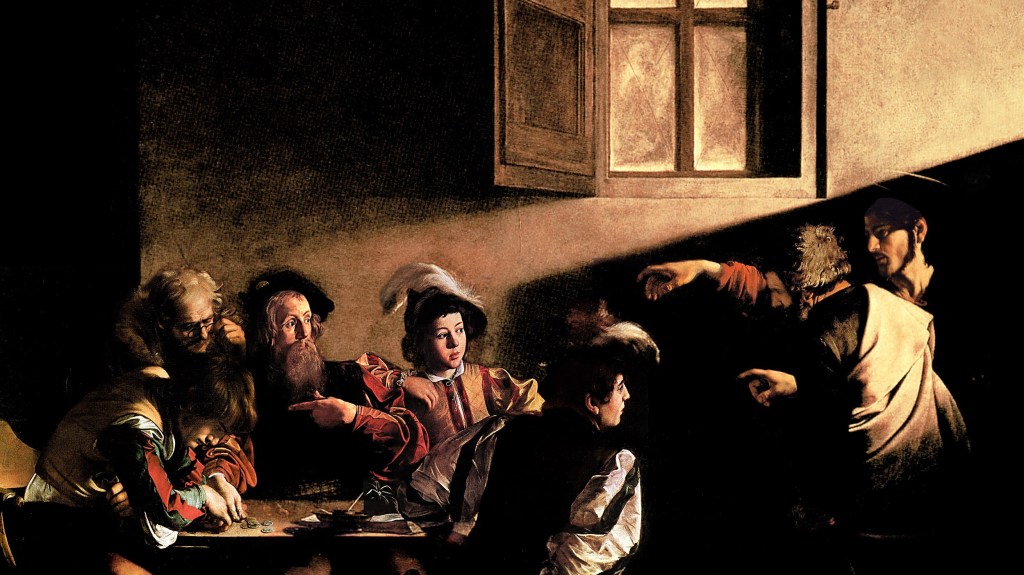
Jesus meets us as we are and calls us to follow him.
“Those who are well do not need a physician, but the sick do. Go and learn the meaning of the words, I desire mercy, not sacrifice. I did not come to call the righteous but sinners” (Mt 9:12-13).
How could Jesus have called Matthew, named Levi in Mark and Luke, to be part of his inner circle and then how he could eat with sinners? Matthew is a tax collector. Tax collectors were, at the least, believed to be collecting money over and above, skimming off the top, the allotted prescribed taxes. Think of how much IRS agents are thought of in our country. At worst though, they were considered to be in collusion with the occupying power of Rome. Not only were they considered unethical and unclean, tax collectors were in league with the enemy! And Jesus is sitting down and eating with THEM!!!
In quoting Hosea 6:6, “I desire mercy, not sacrifice,” Jesus was drawing reference to the growing Pharisaic influence to aspire to and take on the ritual purity status of the priests sacrificing at the Temple. To be in favor with the religious leadership, to be accepted as part of the religious community, one had to follow certain prescriptions and practices, otherwise be recognized as unclean and while in that state, one did not belong to the community. Sharing table fellowship was a measure of that social construct, so if one was unclean, they were to eat alone.
Jesus would have none of that. Jesus sought to enter into relationship with anyone who was willing, even those who were considered unclean, on the outside, the peripheries. He loved people then and loves us today for who we are and as we are, a beloved child of God. There is no THEM or OTHER for Jesus! He bestowed and bestows his mercy, love, and healing first, as the starting point of any relationship. Jesus calls us to a better and more fulfilling life now, so that it may carry over into eternity. He accepted and accepts people first, builds relationships first, then continues to walk with us, to empower us to be perfect as his heavenly Father is perfect (cf. Mt 5:48).
The bar of perfection is indeed high, higher than that of the Pharisees; the difference is that Jesus’ mercy, his willingness to enter into the chaos of another, is higher. Jesus meets us in our sin, he enters through our door, but he does not want us to stay there, he wants us to exit out of his door. Jesus’ teachings are hard, and when we fall, he does not kick us in the teeth and cast us aside, he lays down, right in the muck and mire with us, and face to face, wipes the dirt and tears from our eyes, offers his hand, and helps us to continue on our journey to see and experience that which is good, true and beautiful in life.
No matter what we are dealing or struggling with today, know that Jesus loves us more than we can ever mess up and he does not define us by our sin and/or worst decisions. I type as, Peter said, to you the reader, “I have neither silver nor gold, but what I do have I give you: in the name of Jesus Christ the Nazorean, [rise and] walk” (Acts 3:6).
Arise, as did Matthew in today’s Gospel, and walk with Jesus. Step by step with him we will be transformed as a part of God’s new creation. As we do so, may we also be willing to extend God’s healing, love and mercy with those we will meet today and all days.
Painting: The Calling of St Matthew – Caravagio, 1600
Link for the Mass readings for Friday, July 5 2019: http://www.usccb.org/bible/readings/070519.cfm
Parallel readings: Mt 9:9-13, Mk 2:13-17, Lk 5:27-32
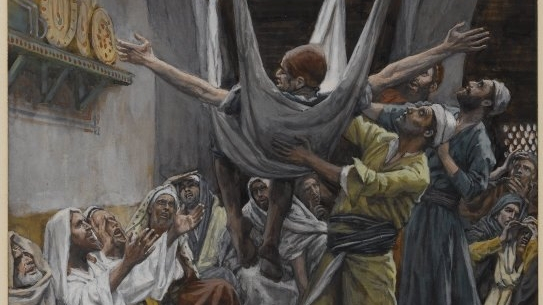
Let us be aware of another’s need, be present to them and allow God to happen.
And there people brought to him a paralytic lying on a stretcher. When Jesus saw their faith, he said to the paralytic, “Courage, child, your sins are forgiven” (Mt 9:2).
Matthew’s account of this scene is much simpler than Mark and Luke’s, but the point is the same. The person paralyzed received healing because some people were willing to bear his weight and creatively bring him to Jesus. In neither of the three Gospel accounts do we know who the people are that bring this man to Jesus for healing. Were they family, friends, or neighbor? It does not matter. They were aware of someone in need, they believed Jesus could heal, and they put forth the effort to bring this man to Jesus.
Are we like those men in today’s Gospel; are we aware, do we care? St. Mother Teresa often said that people are “not only hungry for bread – but hungry for love, naked not only for clothing – but naked for human dignity and respect, homeless not only for want of home and bricks, – but homeless because of rejection.” Let us resist the temptation to be indifferent to the needs of others, to rationalize why we ought not to care, or worse give in to our fears and prejudices so to dehumanize and reject others in need.
Are we aware, are we willing to care that there are human beings in need. How is God speaking to our conscience, how is he moving our hearts? If we feel called and moved to support the unborn – good, the refugee or immigrant – good, the disabled – good. There are so many who are hurting and suffering. Let us not get trapped into criticizing others for reaching out to help in a different way than we feel called. We just need to be honest about where God is leading us and act as the four in our Gospel reading today did; be aware of someone in need, be willing to meet that need, access our personal gifts of creativity and bring them to Jesus as we are able. By collaborating with Jesus in this way miracles can and still do happen.
Today, let us reject the temptation to turn away from another person in need, and instead respect the human dignity of those we encounter and allow God to happen. We can apply this directly to the horror and inhumanity condoned on our southern border by meditating this Independence Day on the words that Pope Francis shared during Mass on Sunday, January 14, 2018: “Migrants and refugees don’t represent just a problem to be solved, but are brothers and sisters to be welcomed, respected and loved.”
The Lord hears the cry of the poor do we?
Painting: Healing of the Paralytic – James Tissot
Link for the Mass readings for Thursday, July 4, 2019: http://www.usccb.org/bible/readings/070419.cfm
See Mark 2:1-12, Matthew 9:1-8 and Luke 5:17-26
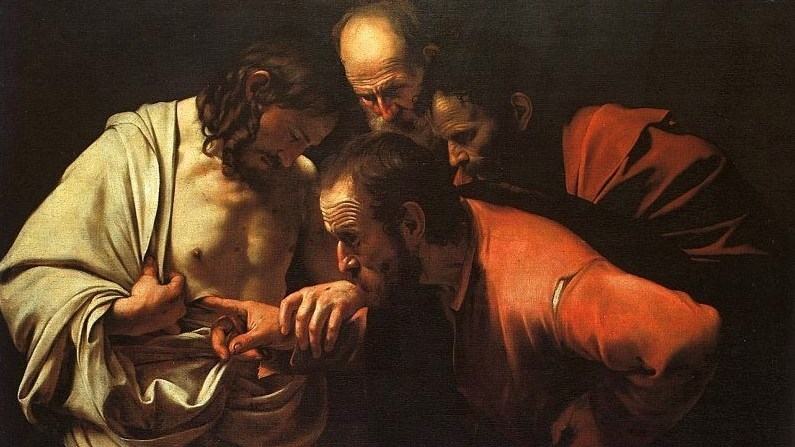
“My Lord and my God!”
Then Jesus said to Thomas, “Put your finger here and see my hands, and bring your hand and put it into my side, and do not be unbelieving, but believe.” Thomas answered and said to him, “My Lord and my God” (Jn 20:27-28)!
Thomas’ acclamation “My Lord and my God!” came from his touching the wounds of Jesus. Jesus who had risen from the dead, had conquered death, and yet still bore the wounds of his Passion. This is a profound message to the Apostles, those Jesus sent to proclaim his Gospel, and for us who have been called to follow him today.
The Body of Christ is still wounded by the sin and division of our fallen nature that put him on the Cross. This reality is a reason that many doubt and do not believe today. Many decry, how can a loving God allow such suffering and pain, especially of the innocent? Blaming and scapegoating, or putting blinders on and keeping the messiness of life at arm’s length is not the answer. The path of a disciple, an apostle, is to first say yes to Jesus’ invitation to, “Come and follow me”, and then to allow ourselves to be led by Jesus into our own woundedness, while at the same time, enter into the pain and suffering of others. Immersed in the chaos of life, like Thomas and the other Apostles, we come to touch the wounded side of Jesus, where healing can begin.
Though the temptation is strong to deny, rationalize or flee from the conflict, challenges, hurt, and pain that we and others are experiencing, we must resist. If we don’t, embrace our or other’s trials, we will not come to the root cause of them. We touch the wounded Body of Christ, as Thomas did today, when we are willing to touch one another, to be present and accompany those who bear his wounds, those who are vulnerable: the unborn, widows, orphans, those with chronic illness, the dying, refugees, immigrants, hungry, homeless, and those without access to clean water; those who suffer from addiction, poverty, depression, disease, oppression, prejudice, discrimination, dehumanization, racism, sexism, misogyny, unjust immigration policies, incarceration, those on death row, unemployment, underemployment, wage theft, human trafficking, domestic violence, slavery, violence, war, terrorism, and natural disasters. For what we do to the least among us, we do it to Jesus.
We can easily be overwhelmed with the suffering of the world or our own challenges, but denial or indifference is not the answer. Nor is it healthy to run to others who are in need so we don’t have to face our own issues. There is an act of balance that Jesus calls us to participate in as we learn to love God, love others and love our neighbors as ourselves. The answer is found when we are willing to encounter Jesus and follow his lead.
We do not know where Thomas was when the Apostles first encountered Jesus after the Resurrection, but we do know he was not with Jesus. Apart from Jesus we can do nothing, yet with Jesus, the one who conquered death, all things are possible! When we feel overwhelmed, helpless, or indecisive, may we acclaim with Thomas, “My Lord and my God!”
Jesus is present with us, so we can be confident and on our way today to make our corner of the world a better place by reaching out person to person, to share a smile, a touch, provide a listening ear, and/or speak up or out, write a letter or make a phone call to our congressional representatives on behalf of the dignity of those who do not have access or a voice.
Painting: The Indredulity of St Thomas by Caravaggio, 1601-1602
Link for the readings of the Mass for Wednesday, July 3, 2018: http://www.usccb.org/bible/readings/070319.cfm