Reflections on the Gospel Reading for the Day
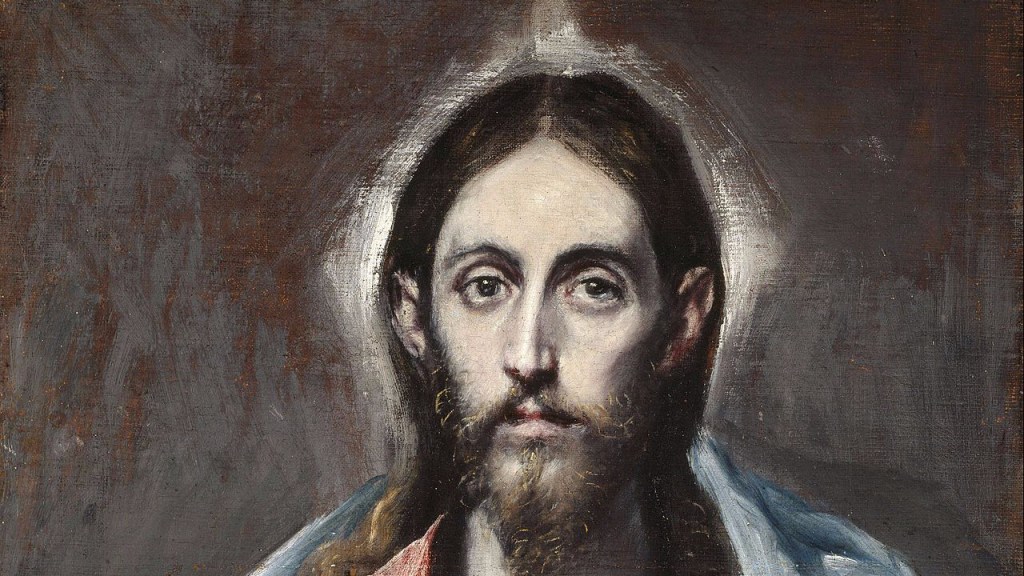
Seek not revenge but to love as Jesus loves us.
“Lord, do you want us to call down fire from heaven to consume them?” Jesus turned and rebuked them, and they journeyed to another village (Lk 9:54-56).
Jesus and those traveling with him to Jerusalem were not welcomed by those they came upon in Samaria. James and John made this statement as a reaction to the rejection of the Samaritans. Many of us act in similar ways when we have been rejected, offended, or not shown hospitality. When the offense comes from someone outside of our group, we feel even more justified.
“Jesus turned and rebuked” James and John for their violent reaction. To follow Jesus meant and means for us that we are to set our ego aside, we are to set our knee-jerk reactions aside, and we are to set our seeking of revenge and vengeance aside. The way of Jesus is the way of love and non-violence. This makes no sense if we define love merely as an emotion or some warm and fuzzy feeling. Jesus commands that we are to love our neighbor and to love our enemies.
To do so, means that we are to will each other’s good. At the first moment of conflict with another we need to resist entering into a defensive posture, we are to resist caving in or withdrawing in upon ourselves, but instead we are to assume an openness, and embrace a posture of understanding.
There are so many people that are hurting, that are dealing with wounds, issues and are weighed down by years of emotional baggage, that not only we are not aware of, but they themselves may not be aware of. We do not know what another is going through or how they are suffering. When the offensive word. action, or lack of reaching out to us comes, and they will come, the easy response is to react negatively in kind, but if we do so, Jesus will rebuke us as he rebuked James and John in today’s Gospel account.
Jesus commands that we are to love one another as he loves us. We are to see in our everyday encounters, people with dignity and worth, even though, like us, they may be wounded and afraid. We are not to see someone as other, but a brother or sister. If we are not able to do so, then we can call on Jesus to love the person through us. We do not have to give in to our fears, our prejudices, or act from our own woundedness. We can be a little kinder to ourselves and each other today, if we are willing to love as Jesus loves in and through us.
Painting: El Greco – The Savior of the World
Link for the Mass readings for Sunday, June 30, 2019:
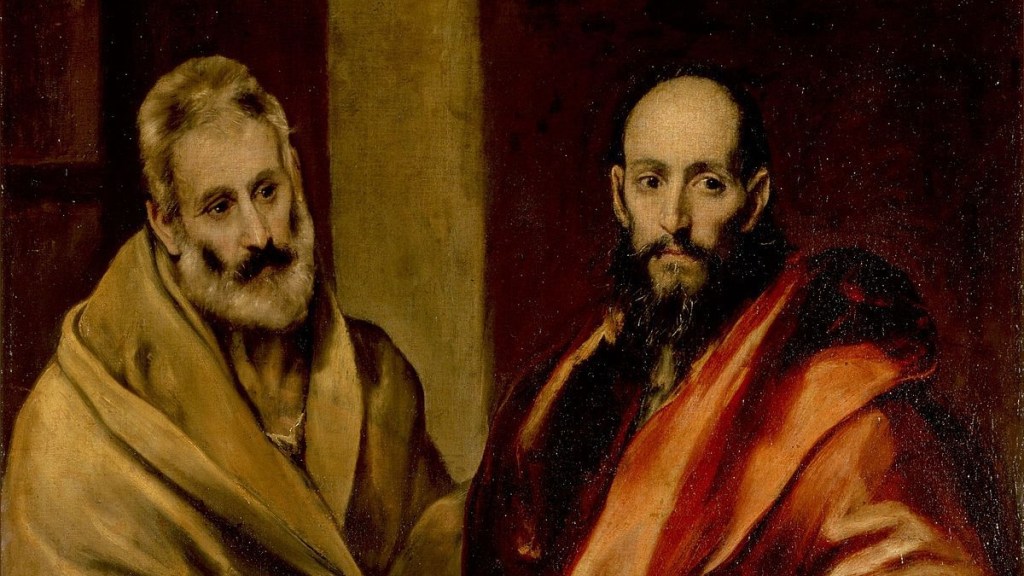
Jesus asks us also, “Who do you say that I am?”
Jesus said to his Apostles, “But who do you say that I am” (Mt 16:15)
Have we answered the same question he posed to his apostles for ourselves? Too often we move from this to that, one situation to another, putting out fires and moving from one crisis to another, or we are just seeking to make it through another day.
To be a Christian is not a call to stop living our lives, but it is an invitation to live our lives in, with, and for Jesus. We have been described as a People of the Book, along with Jews and Muslims. This is true, yet, in addition, we are also a people of encounter; we encounter the Living Word, the Son of God, Jesus the Christ.
Peter and Paul encountered Jesus in their lives and were changed forever. We can encounter the same Jesus when we slow down enough to pray with the word proclaimed in Liturgy or read in personal prayer.
As a very simple example: except for the first Office of the day, in praying the Liturgy of the Hours, the prayer begins, “God come to my assistance, Lord make haste to help me.” I have said those words mindlessly too many times as I began my prayers, and didn’t really take in what I was saying!!! How many times do we make the Sign of the Cross without being attentive to the profound act we have just engaged ourselves in?
Through invoking this prayer and making this sacramental gesture, we are inviting the Creator of all that exists to come to be a part of our lives. Each are also prayers we may lean on when tempted, stressed, worried or anxious. Each are affirmations of a commitment to resist giving in to a mindset of minimalism and fear. All things are possible when we mindfully choose to align ourselves with Jesus and participate in the communion of the Holy Trinity.
Peter and Paul both answered the question that Jesus posed. Peter as recorded in Mt 16:16, said, “You are the Christ, the Son of the living God.” and Paul in Acts 9:20 “proclaimed Jesus in the synagogues, that he is the Son of God.” Let us spend some time praying and meditating on how we will answer Jesus’ question: “Who do you say that I am?” How we answer this question makes a difference as to the kind of Christian we are and will be.
Saints Peter and Paul, pray for us!
Painting of Saints Peter and Paul by El Greco, 16th Century
Link for the Mass readings for Saturday, June 29, 2018: http://www.usccb.org/bible/readings/062919-day.cfm
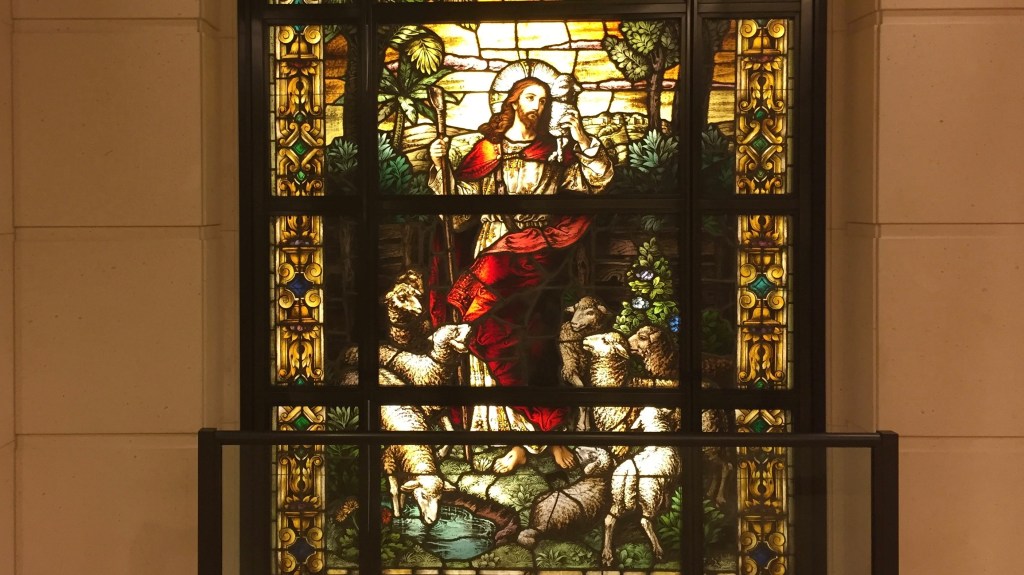
Jesus loves us with a radical love, that as we experience, we are to share.
“What man among you having a hundred sheep and losing one of them would not leave the ninety-nine in the desert and go after the lost one until he finds it” (Lk 15:4)?
At first hearing, how many of those present hearing the parable, or us today reading it, would answer yes? To most of us it would not make sense to leave the ninety-nine to go and search for the one that was lost.
What this parable represents is the love that God has for each and everyone of us. He knows us better than we know ourselves. God loves us with an everlasting love and is continually reaching out to us because he is the foundation and source of who we are. This parable also represents a microcosm of the public ministry of Jesus.
Jesus met people one on one, person to person. He encountered the blind, the lame, the leper, the Syrophoenician woman, the woman at the well, the woman accused of adultery, the daughter of Jairus, the widow’s son, and Lazarus. Jesus not only healed these people and so many others who were considered to be on the outside looking in, he restored their dignity as human beings. Jesus loved each of them as a unique person.
Jesus encounters us in our uniqueness, as we are and where we are and loves each and everyone of us more than we can fathom. No matter how far we may feel we have strayed, or messed up, Jesus loves us, he will not leave us. Jesus does not define us by our worst sins or mistakes. He opens his arms and invites us into his loving embrace so that we may feel and experience the beating of his Sacred Heart. With each thump, thump, thump, all our anxiety, fears, hurts, and pain begin to fade away and we begin to heal, we begin to feel our dignity, we begin to feel loved.
No matter what we may be going through or experiencing, Jesus is searching for us, reaching out for us, for he is already present to us. We just need to be willing to be found and allow him to lift us up on his shoulders and carry us and care for us. As we do so and as we continue to experience his love, we will come to believe and say, as did St Paul,“Who can separate us from the love of Christ? Trial, or distress, or persecution, or hunger, or nakedness, or danger, or the sword?… Yet in all this we are more than conquerors because of him who has loved us” (cf. Romans 8:35-37).
Once we experience the beating of the Sacred Heart of Jesus, rest and renew in the rhythm of it, we are to share his love with others. We too are to love with the same radical love of the Shepherd who left the ninety-nine to rescue the one, no matter who that one may be.
—————————————————–
Photo: Stain glass window at Cathedral of Our Lady of the Angels, Los Angeles, CA
Link for the Mass readings for Friday, June 28, 2019, Feast of the Sacred Heart of Jesus: http://www.usccb.org/bible/readings/062819.cfm

Listen, hear and put the words of Jesus into action!
“Everyone who listens to these words of mine and acts on them will be like a wise man who built his house on rock” (Mt 7:24).
Jesus speaks to us, in the Gospels, in the silence of our hearts, through our conscience, through the words of others, in our daily activities, and through creation which has been loved into existence through collaboration with his Father and the Holy Spirit.
We can be unaware of the words he speaks among us, we can hear his words but not listen, hear his words but ignore them, listen but not act upon them, or we can do with his words as Jesus encourages us to do. We can listen to the words of Jesus and put them into action. We can hear and let them come in through our mind and enter our heart, where we can then be transformed.
Jesus became one with us so that we can become one with him. Not one with us, so that we can know about Jesus. Not one with us, so that we can say that we prophesy, cast out demons, do mighty works, cite Bible chapter and verse to show our knowledge or justify our behavior in his name. One with us so that we can become one with him.
Jesus meets us on our level and leads us up to his. Jesus has been doing just that in his Sermon on the Mount which we have been reflecting on these past few weeks. If you are just coming in today or need a refresher, this gathering of teachings began at chapter five of Matthew and takes us up to today with chapter seven. Jesus presented us with the Beatitudes, that we are called to be salt and light, he built on the law and the prophets by giving us the six antithesis (You have heard it said, but I say to you…), he taught us to pray the Our Father, that we are to depend and place our trust in God and not the things of this world, we are to refrain from judging others, we are not to cast our pearls before swine, we are to do to others as we would have them do to us, we are to seek to enter through the narrow gate, and to be aware of false prophets.
These are but just some of the words of Jesus that we are to put into action if our house is to be built on solid rock. May we go back through chapter five, six, and seven of Matthew and see which teaching Jesus is leading us to ponder, meditate upon, and put into action.
If this list is a bit overwhelming, let us start with what St Irenaeus taught us. Jesus became one with us so that we can become one with him. Jesus entered our humanity so that we can participate in his divinity. Jesus invites us to be in relationship with him, to know him, so that we can know his Father, so that we can be one as Jesus and the Father is one. Jesus loves us as we are, and for who we are, right now at this very moment. Jesus loves us more than we can ever imagine. May we receive his love as we would receive a loving embrace, stay with it, savor it, so to return his love, by loving each other as he has loved us.
Photo: Building a firm foundation on the rock of Jesus!
Link for the Mass reading for Thursday, June 27, 2019: http://www.usccb.org/bible/readings/062719.cfm
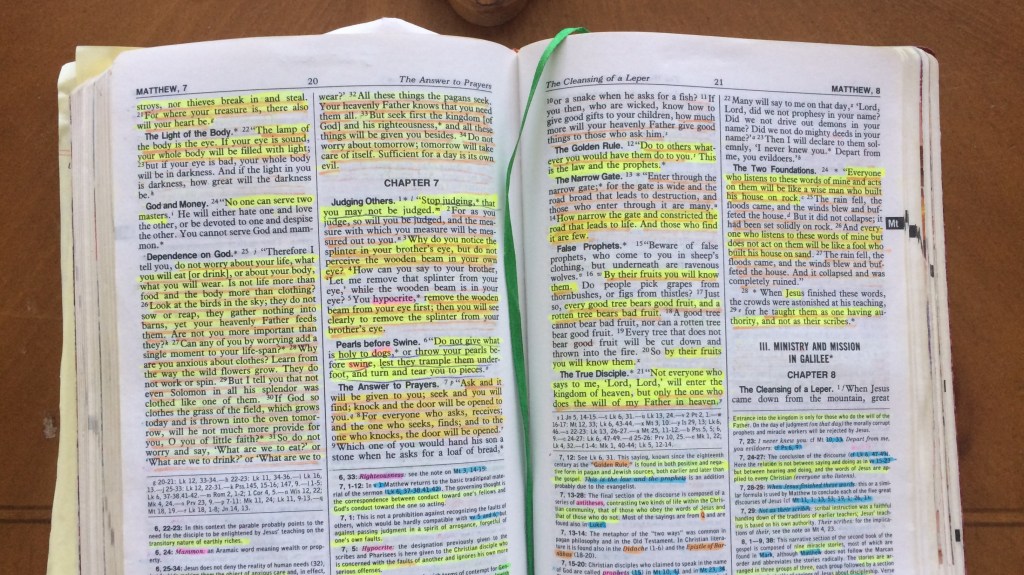
We come to know Jesus and false prophets by reading and praying with the Gospels.
“Beware of false prophets, who come to you in sheep’s clothing, but underneath are ravenous wolves. By their fruits you will know them” (Mt 7:15-16).
So as not be taken in by false prophets within in our Church and society, and most importantly, so as not to be wolves in sheep’s clothing ourselves, we need to know the Shepherd. We need to know, as St Irenaeus (whose feast we celebrate on Thursday) described: Jesus, “who did, through His transcendent love, become what we are, that He might bring us to be even what He is Himself” (p. 526 Against Heresies, Book V, Introduction). Jesus Christ, the second person of the Trinity, who entered and embraced our fallen and wounded condition to become fully human while remaining fully divine, came to shine a light on that which causes division and disunity. Jesus came to reveal those sinful acts which estrange us from God and one another. Jesus came to show us the value of our unique dignity as human beings, the wonder of God’s creation that we are, and empower us so as to restore our relationship with God and one another.
How can we know Jesus?
One way is that we can begin by following the lead of Pope Francis who has been encouraging us to read and prayerfully reflect upon the Gospels each day.
This does not mean that we just read the words on the page with the sole intent to finish it and move on to something else, so as to complete one more task. Instead we are to read slowly, reflectively, spending time with Jesus by mediating on a word or phrase from the Gospel that peaks our attention. We may receive an insight, an intuition, a confirmation, a sense of excitement, or a question as we are reading. We can also place ourselves in the scene as if we are watching a movie. In this way, allowing our senses to come alive and again pay attention to what arises.
Another gift of encountering Jesus in the Gospels, that some may not recognize as a gift, is that we will naturally be drawn to examine our conscience as we read and ponder the life and teachings of Jesus. As we are able to see those fruits of selfishness, greed, judgment, gluttony, lust, pride, indifference, sloth, envy, wrath, and/or any others that we are bearing. We can then seek God’s forgiveness so to begin to prune those branches within us that lead to such fruits. This discipline will provide more energy and nourishment for the fruits of love, joy, peace, patience, kindness, chastity, goodness, generosity and self-control, to grow and mature in our life.
It is important to sit with the encounters we experience from a reflective and meditative reading of the Gospels and not just blow off what arises. We need to pay attention, meditate for a time on that word, phrase, insight or other experience that has arisen, and then return to ponder them at different moments during the day. Through a daily commitment of praying with, meditating upon, and allowing Jesus to speak to us through the Gospels, we will not only know about Jesus, but come to encounter and know him and his voice as his disciples did. We will also see the fruit that Jesus bears and encourages us to bear through our thoughts, words, and actions.
As we come to know Jesus and his voice, we will begin to recognize, through the fruits that others bear, those false prophets who seek to lead us astray, and so be better able to resist their temptations, as well as our own temptations within. We will better know the truth of who we are and who God calls us to be. More importantly, we will no longer lead others astray, but as we bear the fruits of the Holy Spirit we will lead others through word and deed to experience the Shepherd in their lives.
Photo: The Bible I received for my confirmation.
Link for the Mass readings for Wednesday, June 26, 2019:

Let us take the hand of Jesus and allow him to lead us through the narrow gate.
“Enter through the narrow gate; for the gate is wide and the road broad that leads to destruction, and those who enter through it are many. How narrow the gate and constricted the road that leads to life. And those who find it are true” (Mt 7:13-14).
Jesus meets us where we are in our present state of life. He accepts us as we are in this very moment. At the same time, Jesus does not want us to just settle, to be minimalists and merely get by, surviving day by day. Instead he guides us to be fully actualized. He calls us to perfection, to holiness, to be saints! He sees in us, as he did in his disciples and apostles, the promise of our potential and who his Father calls us to be. We each have a unique gift or gifts to offer to the world, each and every one of us.
Entering the narrow gate means that we need to say no to those apparent goods and half truths that will in the end, burden us, weigh us down, and ultimately lead us to emptiness. To pass through the narrow gate, we need to say yes to that which will truly bring us happiness, fulfillment, and freedom and this means we need to say no to supporting our false ego and our slavery to sin; to fear, anxiety, and worry such that we turn in on ourselves. We need to instead be willing to expand and go out from ourselves and will the good of and accompany others.
Let us spend some quiet time in prayer today with Jesus, seeking and discerning his will and listening for his guidance. Allow those burdens of worry, anxiety, or fear; pride, judgement, or prejudice; sinful actions, habits, or addictions to surface, so we can say no and begin let go of them. This will not be a one time, done now for all activity, but a daily, disciplined commitment. We also will not be able to enter the narrow gate and stay on the path alone.
We need to continually open our heart to the Holy Spirit to give us the courage to do so. In our time of prayer, imagine placing our hand in Jesus’ hand and allowing him to lead us off the broad road that leads us to sin and destruction, so to pass through the narrow gate with him that will lead us to experience the love, mercy, and grace of our loving God and Father. What Jesus leads us to do, he will also give us the strength and resources to bring to completion, which ultimately will be a life of communion with God and one another.
———————————————————————-
Photo credit: Photo by Rene Asmussen from Pexels
The Mass reading for Tuesday, June 25, 2019: http://www.usccb.org/bible/readings/062519.cfm

Identity gives us our roots, but integrity gives us wings to fly!
“No. He will be called John” (Lk 1:60).
With these simple words three inter-related points arise. First, Elizabeth is beginning to shift the momentum of original sin. Eve was tempted by the serpent to eat of the fruit that God had told her and Adam not to, yet she did. Adam did not support her in her dialogue but remained silent in the face of the pressure placed upon Eve, both of them slipped into sin, by not following the will of God.
At the time of the birth of Elizabeth’s son, there was even more cause for celebration, for Elizabeth was past child bearing years. The day had come to have him circumcised and named, her relatives and neighbors had gathered around with great excitement and there appeared to be a unanimous decision to name the boy after his father. Elizabeth did not, like Eve, cave to the pressure and temptation. Unlike Adam who lost his voice at the time he needed to speak up, Zechariah found his voice, had Elizabeth’s back and followed the will of God. Both Elizabeth and Zechariah knew what God wanted them to do, and were faithful to follow through.
The second point is already alluded to in the first, and that is how Elizabeth and Zechariah were faithful to God even amidst the familial and social pressure placed on them. We may be removed by such social pressure when naming a child, although some of us may still have experienced this pressure. Elizabeth held her ground and stood firm that the boy would be named John. Ignoring her, the people deferred to Zechariah, the boy’s father, thinking he would have more sense, but he, ignoring the paternal cultural pressure, supported Elizabeth. The point here is not so much the name, but the following of the will of God in the face of pressure to do the opposite.
This brings us to the third point and that is the maturation in moving from identity to integrity. Culture and traditions are not sacred, but God is. Elizabeth and Zechariah faced a lot of familial and social pressure to conform, yet they chose to be true to God, to be true to themselves, and they chose integrity over their identity.
The very simple account of Elizabeth and Zechariah naming their child John in opposition to the familial and societal pressure offers for us a way to counteract the rising tide of polarization and conflicts that we face in our own country today. Identity provides safety, support, and security. It fuels one of our deepest hungers and that is to belong, to be a part of something bigger than ourselves. We can find our identity in family, friendships, our religious traditions, culture, political affiliations, common interests, clubs, activities, and hobbies. But our identity, which provides us with security, can also be a trap.
We want to belong so much, the drive is so strong, that we may have made decisions, acted in ways, and supported others, that go against who we are, just so we can belong. We may have known what God wants from us, heard the whispers of his voice in our conscience, yet were pulled by the louder voices of our group. We are sometimes so engrained by our identity that we are being strangled and suffocated by it.
In today’s Gospel account, Elizabeth and Zechariah were true to the will of God even in the midst of challenging their family and neighbors and people were happily amazed. More often though, being a person of integrity does not go so well. Their own son, who would grow to be John the Baptist, would lose his life, challenging the priesthood of his day and by speaking truth to power.
John would also show his integrity when he said, “I must decrease and he must increase” (cf. John 3:30). John was talking about Jesus who embodies the moral courage that we all need today. Though more than just a model of a life well lived, more than just a word on the page, Jesus is the Word of God. Jesus is present to us now, to guide and lead us, to empower us with the same love that he embodies, such that when we invite him into our life, we too can be transformed to live a life of truth, moral courage, and integrity.
Becoming less and allowing Jesus to work through us, we can act and speak up when there are those that are being belittled, demeaned, and/or dehumanized, no matter who it is that is doing so. May we be willing to treat each other with dignity and respect, whether we are in the same “group” or not.
————————————————————————–
Photo: accessed from http://www.pexels.com
Link for the Mass readings for Monday, June 24, 2019: http://www.usccb.org/bible/readings/062419-day.cfm

With Jesus there is a way.
Luke records how Jesus had been teaching and healing a large crowd of five thousand men. As the day was drawing to a close, the Twelve approached him and said, “Dismiss the crowd so that they can go to the surrounding villages and farms and find lodging and provisions; for we are in a deserted place here” (Lk 9:12). The disciples appear to show concern for the many gathered. Yet the response of Jesus may reveal otherwise.
When Jesus tells them to, “Give them some food yourselves” (Lk 9:13), the disciples are stymied, for all that they had, five loaves and two fish, would be just enough to feed themselves. The disciples first sought to send the people away, then could see nothing but the limited resources they had, they saw lack.
What follows is the miracle of the multiplication of the loaves and the fish such that everyone present had enough to eat. “They all ate and were satisfied. And when the leftover fragments were picked up, they filled twelve wicker baskets” (Lk 9:17). This miraculous account is recorded in all four Gospels. Time and again, throughout the Gospel accounts, Jesus is able to provide a way where there appeared to be no way.
How many times have we given up not knowing had we just persevered a bit more we would have accomplished what we sought out to do, how many times have we been overwhelmed before we even began a task so did not even begin, how many times have we not reached out to help because we wondered if we really could make much of a difference any way, and how many times have we seen lack instead of a way?
If you are like me, and can answer in the affirmative to any and all of the above, we are in the same place as the disciples just before Jesus multiplied the loaves and fish and fed the five thousand. We saw lack, where Jesus saw a way. We are finite human beings living in a finite world, yet we are not alone. Jesus, fully human and fully divine, is still with us, present to us, just as he was with his disciples. Apart from him we are limited, we cannot do much if anything alone. Yet, with Jesus all things are possible, he will provide. With Jesus there is a way.
Photo by Skitterphoto from Pexels
Link for the Mass readings for Sunday, June 23, 2019: http://www.usccb.org/bible/readings/062319.cfm