Reflections on the Gospel Reading for the Day

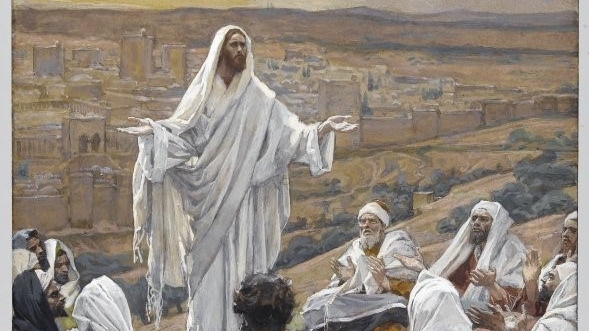
One, two, three of mindful prayer: examine our conscience, sign of the Cross and pray mindfully the Our Father
Prayer is not so much about bending God’s will to our will, but it is about our transformation and conformation, a freeing ourselves from the sole focus on ourselves as the center of the universe. The world actually does not revolve around us. We are invited to build a relationship with the One who is the creator and sustainer of all that exists.
Jesus guides his disciples on this point when he teaches them how to pray. Jesus said to his disciples: “In praying, do not babble like the pagans, who think that they will be heard because of their many words. Do not be like them. Your Father knows what you need before you ask him” (Mt 6:7-8). Jesus is sharing that words matter and have meaning in everyday life as well as in prayer. The words that we speak are to be transformative, not just mindlessly evoked or invoked. Formulaic expressions and the mere volume of words means very little compared to a few words said with clear intent, focus, and in a mindful way.
Jesus is helping us to understand that the form or the words do not so much matter as understanding why we pray. We pray to deepen and develop our relationship with the trinitarian communion of God the Father, God the Son, and God the Holy Spirit. The very desire to pray is a prayer in itself, because we are hearing the invitation of God to be one with him. The first step is to acknowledge this invitation and then to turn our heart and mind to God. Thomas Dubay, in his book, Fire Within, paraphrases St. Teresa of Avila, the 16th century doctor of the Church, in saying that “one vocal prayer, even so little as one petition of the Our Father, if well said, is better than many recited thoughtlessly or hurriedly” (Dubay 1989, 76).
Reciting the Our Father, or Lord’s Prayer, that Jesus shares with his disciples in today’s Gospel of Matthew, can be a struggle, because the biggest challenge to a life of prayer is taming, what Buddhists call, the “monkey mind”. Our thoughts can be actively engaged or random, and we can be easily distracted away from our intended course when undisciplined. To overcome this challenge we can return to St Teresa again.
When we begin to pray, St. Teresa of Avila suggests that we begin “with self-examination and the sign of the Cross” (Dubay 1989, 77).
In this way, we can bring to awareness some issues, struggles, temptations, and sins that we have been dealing with. We can settle into them, instead of run from them and seek God’s help to be healed and reconciled. In making the sign of the Cross, we bring our self, as we are, into the presence of the Trinity. We receive and experience the love, acceptance, and mercy of God and recognize that we are loved as we are, and that we are not alone because we belong and are a part of this infinite community of love. In this simple gesture we are also uniting our body, mind, and soul with the One who will lead us in our prayer.
The next step is to imagine that Jesus is with us to guide and lead us in our prayer, just as he did in today’s Gospel account (Mt 6:9-15). “Imagine that this Lord Himself is at your side and see how lovingly and how humbly he is teaching you” (Dubay 1989, 77). By mindfully engaging in examining our conscience and making the sign of the Cross, we slow ourselves down from our pace of running from ourselves, we become still, we are able to breath, and allow ourselves to experience the presence of Jesus.
Next, we can imagine Jesus teaching us the Our Father as if for the first time, as he did his disciples. Going slowly, one word, one verse at a time, allow Jesus to not only share his words with us, but we can also pause and add our own words. In this way we begin to discipline and turn our mind to God such that we can enter into a dialogue with God and receive the blessing of his mercy and love. “Focusing on the indwelling presence, says Teresa, is for wandering minds ‘one of the best ways of concentrating the mind’ in prayer” (Dubay 1989, 77).
—————————————————————–
Photo: James Tissot, The Lord’s Prayer by Online Collection of Brooklyn Museum; Photo: Brooklyn Museum, 2006, 00.159.167_PS1.jpg, Public Domain, https://commons.wikimedia.org/w/index.php?curid=10904489
Dubay, S.M., Thomas. Fire Within: St. Teresa of Avila, St. John of the Cross, and the Gospel on Prayer. San Francisco: Ignatius, 1989.
Link for the Mass readings for Thursday, June 20, 2019: http://www.usccb.org/bible/readings/062019.cfm

Prayer, Fasting and Almsgiving, are not just for Lent!
Jesus continues his Sermon on the Mount today. We have been graced thus far with the teachings of the Beatitudes, being salt and light, as well as the six antithesis we have been reflecting upon over the past week. Today, Jesus presents common practices of living a life of faith. The key point he is making though has again to do with our end goal. As discussed yesterday, as his disciples we are called to be “perfect just as [our] heavenly Father is perfect” (Mt 5:48). Again perfection here is that our telios, or end goal, is to be one with God. We are striving to become holy, to be saints, for the purpose of deepening our bond and relationship with God.
Our being perfected in Jesus is a process whereby we become less and Jesus becomes more. What decreases is our focus on self, especially the ego self, our sense of self-centeredness. Jesus provides for us three ways in which we can practice drawing closer into communion with God and one another. We are to give alms, pray, and fast. We may remember these as being the three pillars of Lent that we put extra emphasis on during that penitential season.
Jesus cautions his disciples and us. When we give alms, pray, and fast, our intent must be properly ordered. If we give alms with the intention to “win the praise of others” (Mt 6:2), pray in a public display “so that others may see” us (Mt 6:5), and in our fasting “look gloomy” and “neglect [our] appearance, so [we] may appear to others to be fasting” (Mt 6:16), then we are seeking to do so such that the focus become on us. We think to ourselves, how holy and pious we are. Instead we are hypocrites, because in each of these actions, we are not seeking to improve our relationship with God, nor to build up his kingdom. The intent is to build up our own pride and ego, the focus is on us.
Jesus indeed calls us to holiness. What that means is we are to give of ourselves to others in a service of love, so that others may be empowered, strengthened, and grow in their faith life, so they too may join us in building up God’s kingdom. We are to seek Jesus in prayer with the intent of receiving the purifying fire of the Holy Spirit that we may be purged of that which feeds our false self so we can be freed of the dross of our accumulated sin, our imperfections, and that which we are attached to. In our time of prayer and examination of conscience, Jesus reveals to us that which we have an unhealthy attachment too, that which keeps our focus on ourselves instead of God. It is to these areas that we can fast from. In these conscious acts of the will, we choose God over self and continue to mature into who he calls us to be.
In our prayer today, let us ask Jesus to reveal to us one way that we are putting ourselves before God, for him to reveal to us a pattern or habit of sin that keeps us bound to our own pride and prejudice, and/or something that we are attached to that we can fast from. And then one way we can reach out and give of ourselves to someone else. Prayer, fasting, and almsgiving are not only for Lent. There are many people that are in need of God’s support and help right now. We become the hands and feet of Jesus when we are willing to allow him to lead us to serve others with the love of the Holy Spirit and simply allow God to happen in our encounter today.
—————————————————–
Photo: One place I have found to pray, meditation garden by our apartment in LA. Where is your sacred space?
Link for the Mass readings for Wednesday, June 19, 2019: http://www.usccb.org/bible/readings/061919.cfm
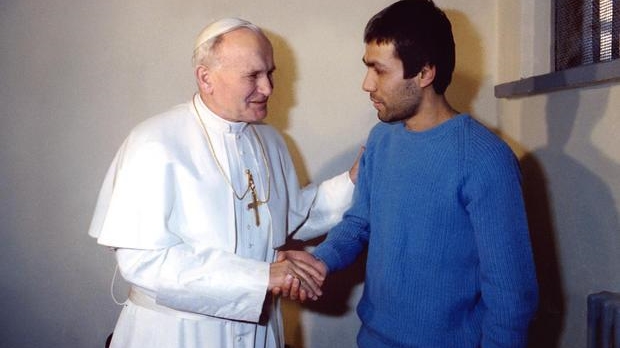
“Love your enemies and pray for those who persecute you”.
The sixth antithesis may be the most challenging of them all. “You have heard that it was said, You shall love your neighbor and hate your enemy. But I say to you, love your enemies and pray for those who persecute you, that you may be children of your heavenly Father” (Mt 5:43-45). The parable of the Good Samaritan provides a nice parallel to this verse. It can be found in Luke 10:25-37. For in that parable Jesus shows our enemy and our neighbor to be one and the same.
A good examination of conscience would be to read the above verse, ponder who would come up for you as an enemy, and then read the Parable of the Good Samaritan. Whenever the word Samaritan comes up, drop the word Samaritan and insert the person or persons who came up for you in reading the first verse. When we have finished this exercise, then, may we pray for the person or persons defined by us as our enemy, for if we only love those who love us, what makes us any different than anyone else? If we are to be disciples of Jesus, if we are to be children of our heavenly Father, we are not only to love those who love us, but we are to also love our enemies. We are to love those for whom there is little chance of being loved in return.
Jesus offers us the way to be able to accomplish this seemingly impossible feat of loving our enemies as follows: “So be perfect, just as your heavenly Father is perfect” (Mt 5:48). We are able to love our enemy as ourselves by being perfect. This is not much help unless we understand that the English word used here is translated from the Greek word telios, which means complete, whole, to reach one’s goal or purpose in life. As a Christian our end goal, our purpose, our fundamental option, is to be in full communion with God our Father, who is Love. God the Father is not just loving, not just a lover, but the very embodiment of Love. God is Love.
God as the embodiment of Love, “makes his sun rise on the bad and the good, and causes rain to fall on the just and the unjust” (Mt 5:45). We strive in our life to attain the end goal of being perfected by Jesus the Christ, when we, through an act of our will, allow ourselves to become transformed into becoming agents of his love. The most challenging of enemies is facing the enemy within. To love as God loves, we are to follow the words and actions of Jesus and the prophets. This means speaking truth to power, using our access and means to advocate for the voiceless, or comforting the afflicted and afflicting the comfortable. This means calling sin, sin, but doing so without falling into sinning ourselves. Calling out hate, with hate, we will only contribute to more hate.
Each day we are given a choice to make. We can choose to embrace our fear, seek revenge, dig in our heels and embrace our ego, react in kind to negativity and/or remain indifferent to the suffering in our midst. We may refuse to love our enemies, we may withdraw our love, but know when we do so, we contribute to the condition of sin, polarization, violence, and dehumanization that plagues our culture, nation, and our world.
We can choose instead to live out our inheritance as children of God and assist Jesus in ushering in the reign of our Father’s kingdom. To do so, we must acknowledge that our telios, our completion, the end goal of that which we seek, is to embody the love of God in our thoughts, words, and interactions with each other, even those we would consider our enemies.
We can choose to practice today’s Gospel by defusing the power of hate by loving our enemies and being perfected by Jesus the Christ. We can choose to align ourselves with the will of his Father and collaborate with the Holy Spirit to be agents and models of love and forgiveness in our realm of influence. We can choose to love today, person to person, brother to brother, sister to sister, enemy to enemy.
Let us pray, provide support and understanding, while at the same time hold up mirrors to appeal to the consciences of those who would seek to harm, persecute, demean and dehumanize us and others. We need to refuse to lower ourselves into the darkness of fear and hate, and instead disarm our enemies with the light of Jesus as we will the good of and pray for those who contemplate, participate, and perpetuate violence. In this way, we all may be transformed and healed, channeling our energies instead to work for justice, mercy and peace.
—————————————————————-
Photo: Pope St. John Paul II met, prayed with, and forgave Mehmet Ali Agca at Rebibbia prison on December 27, 1983 for shooting him and attempting to kill him on May 13, 1981. ARTURO MARI/AFP/Getty Images
Link for the Mass readings for Tuesday, June 18, 2019: http://www.usccb.org/bible/readings/061819.cfm

Instead of seeking revenge, let us be loving contemplatives in action
Today we receive the fifth antithesis, in which, Jesus said to his disciples: “You have heard that it was said, An eye for an eye and a tooth for a tooth. But I say to you, offer no resistance to one who is evil” (Mk 5:38-39). The Mosaic law, an eye for an eye, that Jesus first addressed was an attempt to curb the emotive response of revenge. If someone had killed a clan or tribal member, there would have been those who would choose to retaliate by inflicting as much carnage as possible to the people responsible, even up to and including the death of the whole clan or tribe, even the women and children. The rationale behind this was that there would then be no one to come back for revenge. The idea of seeking instead an eye for an eye, was to temper the retribution to a more measured response.
Jesus though, is saying that “an eye for an eye” does not go far enough, and raises being his disciple to a higher level, being that even the thought of revenge is not to be considered. Jesus is not seeking to lessen the cycle of violence, he is giving us a means to end it. Forgiveness is the cornerstone of the teachings of Jesus. Instead of seeking revenge, Jesus is commanding that we seek to forgive those who have harmed us. We who pray the Our Father or the Lord’s prayer, are to take to heart, we are to be mindful of the words we pray when we say, “forgive us our trespasses as we forgive those who trespass against us.“
The urge for revenge is powerful and primal. Revenge is wired into our survival instinct to protect ourselves. Jesus invites us to grow beyond our mere instinctual responses and survival instincts. He is calling us to be a people who do not merely survive, but thrive. Jesus is seeking to infuse us with his divine life so that we will be transformed. This is true not only for ourselves, but for those who would seek to do us harm. Instead of striking back with revenge, we are to be flexible and adept enough to instead appeal to their conscience. We are to take all that others throw at us, and meet them with the courage to stand and receive their worst, and disarm them with the blinding light of the love and forgiveness of Jesus.
This is no easy task. To put into practice the turning of the other cheek, we need to start small. We need to resist the immediate thoughts of revenge that arise for the smallest of offenses. When someone makes a snarky comment, and/or offers demeaning or dehumanizing comments directed at us or others, we resist retaliating in kind, but instead appeal to their conscience, hold them accountable, and remind the person of our dignity and/or the dignity of the person they seek to demean. In this way, we seek to lead them away from the perception of another person as being somehow other, to one of being a brother or sister.
To be a disciple of Jesus, to be a peacemaker, we need to be contemplatives in action. We need to be people of prayer who come to know Jesus, to return to these hard teachings of the Beatitudes and antitheses often, believe in them, meditate on them, keep them at the forefront of our mind and then pray for the courage and guidance of the Holy Spirit to put these teachings into action.
We cannot resist thoughts and acts of revenge and walk the path of forgiveness on our own will power. We need Jesus, who as the Son of God became one with us so that we can be one with him, so that he may transform us as he works through us, forgives through us, and loves through us. This path starts with our surrendering our ego to Jesus, and allowing ourselves to be a pencil in his hand.
———————————————————–
Photo: The next generation of C.I.A. – contemplatives in action
Link for the Mass readings for Monday, June 17, 2019: http://www.usccb.org/bible/readings/061719.cfm

The Spirit of truth will guide us to all truth.
Today we celebrate Trinity Sunday. The Trinity is the foundation of not only our faith but the reality of all that exists. God has been, is, and always will be. God exists as a communion of three Persons, God the Father, God the Son and God the Holy Spirit. Three Persons in one God, but not three beings.
Anything we say about God is going to be woefully inadequate of the truth about who God is. We have a better chance of saying what God is not. To say that God is not a being is a good place to start, because God is not in the same genus as us, nor in any genus. God is not even a supreme being, the being of all beings. God transcends beyond all space and time. God is completely self sufficient, thus he does not need us for our existence, nor does he need anything to exist.
God is infinite act of existence, or in the Latin of St Thomas Aquinas, ispum esse subsistens, the sheer act of “to be”. This means that God has no limitations. To say that God is three Persons is harder for us to comprehend because we often in our modern sense use the words person and being synonymously. To use the word person in speaking of God means to speak relationally.
We describe God as Father because he begets God the Son, God the Son is the one begotten. The Son is not generated or created, because the Son has always existed with the Father. This is true because they are not finite beings separate from one another. They are infinite, though distinct in their relation to one another. God the Holy Spirit is then the Love shared between God the Father and God the Son. God within himself then is an infinite communion because of the infinite giving and receiving between each other. Each Person gives and receives infinitely, perfectly giving all and holding nothing back.
We will never be able to fully comprehend God because he transcends our finite reality, but we can encounter him and develop a relationship with him, because he draws close to us, he reveals himself to us, he seeks us out, his created beings. We are blessed to live in a time when he has already drawn close to us in the Person of his Son.
Jesus, fully the Son of God, fully divine and fully human, has revealed God the Father to us. Through his incarnation, in his becoming one with us in our humanity, we are able to share the love that he shares as Son with his Father who is the Holy Spirit, because all of God’s creation is interconnected, such that what affects one, affects all.
The best way to understand, to know, to build our relationship with God, is not to force God to fit into our finite reality, mindset or limited view, but to be open to, “the Spirit of truth, he will guide [us] to all truth” (Jn 16:13). The Holy Spirit will guide and lead us to all truth when we resist curving or turning in on our self and instead are open to following his lead. When we are willing to be expanded by his love conforming us to God’s will, which means being open to opportunities to be loved and to love in our everyday moments. For where the willing of the good of each other is, God is.
When we as fathers follow the will of the Father, when we are willing to be loved by the Holy Spirit and to love others in return, and when we are willing to sacrifice and serve as Jesus, we are at our best. Happy Father’s Day!
Photo credit: Jonathan Petersson from pexels.com
Link for the Mass readings for Sunday, June 16, 2019: http://www.usccb.org/bible/readings/061619.cfm

“Do not swear at all”, instead turn from the darkness of deceit and embrace the light of truth.
In today’s Gospel, we read about the fourth antithesis where, Jesus said to his disciples: “You have heard that it was said to your ancestors, Do not take a false oath, but make good to the Lord all that you vow. But I say to you, do not swear at all (Mt 5:33-34). Jesus is guiding us not to make any false oath, but especially not to do so by taking the Lord’s name in vain. This means that when someone would tell a lie they would justify it by invoking an oath to make it more believable. “I swear on my mother’s grave that I did not…, I swear on our friendship that I did not…, or I swear to God as my witness that I did not…”
Jesus is stating that we are to resist the temptation to swear an oath at all. We are to just tell the truth in all circumstances. We are to be people of integrity and stand on what we say as the truth on its own merits. We are definitely living in a time period in our country where the ability to tell the truth is certainly being called into question, where lies are becoming common place. This is one of the reasons why so many people have such a low opinion of secular as well as religious leadership. But it is also present in our day to day interactions with one another.
In a 2014 episode of Dr. Phil, he gave a list of reasons researchers gave for why people lie: People lie to take what is not rightfully theirs, to escape accountability, to create a fantasy/false self-esteem to escape their mundane life, to avoid punishment (to which I would add – to avoid facing accountability), to inflict pain, to feel better in the moment; steal admiration, and to gain advantage to exploit others.
This is by no means an exhaustive list, but it is a very good place to start. Lying destroys the very foundation of relationships which is trust. Once trust has been broken, it is very hard to come back from and rebuild. Lying also supports our false self of the ego, so even if we do not get caught in a lie, we know, and our conscience convicts us of that fact. Their is an ache in our soul because we are not being true to who we really are.
Covering up lies also expends a lot of energy because we have to remember what we said in the first place and then one lie often leads to another, and we string together a web of lies and we continue to feel sick inside, because we have not been created to be deceitful and dishonest. We have been created good, to be people of integrity.
Examining our conscience is a good daily practice, and being humble enough to admit where we have lied is the next best step. In the beginning, when we are first working on undoing a habit of lying, we can visualize ourselves apologizing to the person we have lied to and imagine how we could have handled the original situation in a more honest way. Then we can actually reach out to the person and apologize and move toward reconciliation.
When we see that there is a deep seeded pattern or area in which we habitually lie, then the Sacrament of Reconciliation is an opportunity to experience the grace of Jesus and receive his healing and strength to confess that pattern and habit of sin. We can also seek strength from Jesus to catch ourselves at the instant we begin to form a lie in our mind, call on his name, so it does not come to fruition in our words. In time, we can transform our habits of deceit into new habits of honesty as we strive to live by Jesus’ command to make our, “‘Yes’ mean ‘Yes,’ and [our] ‘No’ mean ‘No.’ Anything more is from the evil one” (Mt 5:37).
——————————————————————–
Photo credit: by Anastasiya Lobanovskaya from Pexels
Link for the clip of the Dr. Phil list for why we lie:
https://www.youtube.com/watch?v=0qQ0vT_47ms
Link for the Mass reading for Saturday, June 15, 2019: http://www.usccb.org/bible/readings/061519.cfm

It is possible to resist lust and live chastely in 2019.
Jesus continues to speak up for the dignity of human beings in today’s Gospel as he continues with his second and third antithesis. The third regarding, Jesus’ teaching on divorce, I reflected upon in my May 25th, 2018 entry and refer you to that post, Marriage is a Sacred Bond, if you would like to read it. I will focus today on the second antitheses: “Jesus said to his disciples: “You have heard that it was said, You shall not commit adultery. But I say to you, everyone who looks at a woman with lust has already committed adultery with her in his heart (Mt 5:27-28). Again, by disciplining our mind we can have more control over our actions.
Too many people today believe that our sexual urge is too powerful to channel and direct in chaste ways. In fact, to even attempt to do so, some would say is damaging to our development. The Church has lost some credibility in this area in directing and guiding us because of those within her number who have not only abused children sexually, but those who have turned a blind eye to warning signs, as well as those bishops who have covered up the abuse.
Each of these points do not change the fact that Jesus still calls us to embrace our sexuality, yet channel it positively through the respecting of others as people endowed with dignity. Our sexuality is a powerful gift that has the potential to participate in creating new life, and it is not to be misused to objectify women, children, or men, as has been done throughout the ages and into our own day.
To be able to discipline and channel our sexual desire in healthy ways, we have to begin by choosing better what we put into our mind. If the majority of our reading, music, what we watch, what we think and fantasize about, are erotic and evocative, then yes, being chaste is not a realistic goal. Since we live in a culture that is hyper sexualized, such that there is large support and normalization of acting out sexually at a younger and younger age, enticing advertisements on TV, the computer, billboards, pornography, every day shows, movies, and music, this is no easy task. To counter this momentum, I am not suggesting that we literally have to tear out our right eye as Jesus offers in his hyperbolic word display. But we do need to follow Jesus’ guidance so to help us recognize the seriousness of an undisciplined approach to our sexuality.
We need to realize that we can be disciplined with our thoughts and actions. If Jesus’ starting point is that we are not to look at another with lustful thoughts, then that is where we ought to begin and realize that this is possible with his help and a change of lifestyle. We need to resist seeing each other as objects for our own fantasy and pleasure, and instead look to one another as people endowed with dignity so as to be respected and not objectified.
The normalization of lust, pornography, objectification of another must be countered with healthier and chaste ways of living our lives. We figuratively tear out an eye or cut off a hand that leads us to sin by recognizing that any of these three or any variation of them are not acceptable thoughts or actions to entertain. Nor are we to fall into the puritanical, opposite extreme, that our sexuality and all things human are bad. Suppressing our sexuality is not a helpful practice either. God created us good, and our sexuality is good when we integrate it into the wholeness of the physical and spiritual aspects of our humanness.
Living a chaste life is possible by recognizing that we and other people deserve to be treated with respect and dignity. We need to put into practice the cardinal virtue of temperance, which is the disciplining of our mind such that we weed out at the roots those thoughts and actions that will lead us to sinful actions. While at the same time we replace them by making a firm decision to live chastely.
We then communicate that decision with friends and family, we surround ourselves with those people who will support our decisions and respect our boundaries, we need to establish a healthy and moderate diet, and be engaged in an exercise program that will help us on the physical level. We also need to seek the help of Jesus, especially through his presence in the sacraments of the Eucharist and Reconciliation, develop a consistent prayer life and participate regularly in worship in a community. It is also helpful to be engaged in acts of service, in healthy activities through work, hobbies, and interests.
In these ways, we will be better able to build chaste relationships that are more stable, have more meaning, and are mutually encouraging as we support one another to live lives of holiness and participate with Jesus in guiding one another to actualize the fullness of who God is calling us to be. We can best resist lust by learning to love one another.
———————————————————————
Photo: From Gallery Quotes – catholic-link.org
Link for the Mass readings for Friday, June 14, 2019: http://www.usccb.org/bible/readings/061419.cfm

Make some time to ponder on how we treat one another with our thoughts, words and actions.
The Sermon on the Mount was most likely not one long discourse, but a gathering together of Jesus’ teachings. Just as with itinerant preachers, speakers, and lecturers of today, this material recorded in Matthew was not only shared one time. Jesus probably shared different segments of these teachings at different locations throughout his ministry, and in slightly different ways depending on the group he was speaking with. Also, the Gospel writers would want to highlight different aspects of his teachings for their audiences.
As was presented yesterday, Jesus made it clear that he did not come to abolish the law or the prophets but he came to fulfill them. With the beatitudes, Jesus offered practical ways in which we can find fulfillment and happiness. In today’s account, he introduces the first of six antithesis. With these apparent contrasting statements, Jesus is providing for his disciples the way to avoid the trap that some of the religious leadership of his time fell into: “I tell you, unless your righteousness surpasses that of the scribes and Pharisees, you will not enter into the Kingdom of heaven” (Mt 5:20).
Those scribes and Pharisees that Jesus was talking about were those who believed that they were following the letter of the law, but their hearts were not changed. They may have been adhering to the external provisions of the law, but were not changed themselves, their hearts were hardened, they were focused more on their own access to honor and power. They were also imposing strict adherence to the law without providing the support or means for others to achieve what the law imposed. The law became more important than the dignity or value of the person. Jesus recognized the law, but also realized that it was in place to help to provide guidance and discipline so one could better resist the temptations of our fallen nature. The law was to be a foundation to be built upon, not the end goal in and of itself.
Just as children need clear boundaries and structures in place to provide a clear path toward healthy development, so this is true for those growing and maturing in their faith. We need to learn to crawl, to build strength and balance, before we can take those first wobbly steps. With continued support we are then able to walk and soon run. Jesus is not only providing the means to go through each of these stages in our faith life, figuratively teaching each of his disciples and us today to not only crawl, walk, and run, but to also be able to fly!
The Beatitudes and six antithesis are challenging, because each of them are counter to much of the way the structure of our fallen world has been governed for centuries. If we are to catch the fire that Jesus has come to set, we need not only to read, pray, meditate and contemplate on the teachings of the Sermon on the Mount, we need to see their relevance and practicality to our time and place today, and begin to put them into practice. As Christians our faith ought not to be shaped and informed by our culture, but we are to be shaped and conformed by the Gospel of Jesus the Christ, so to shape and inform our culture.
Today we start with the first antithesis: “You have heard that it was said to your ancestors, You shall not kill; and whoever kills will be liable to judgment. But I say to you, whoever is angry with his brother will be liable to judgment, and whoever says to his brother, Raqa, will be answerable to the Sanhedrin, and whoever says, ‘You fool,’ will be liable to fiery Gehenna (Mt 5:21-22). The seeds of anger can begin to sprout in our mind from our knee jerk reaction to a perceived or actual threat, from our hearts hardened by prejudgments, prejudices, and/or a reflection of our level of spiritual immaturity.
Jesus addresses the known provision against murder. He then builds a hedge around the Torah. If one does not want to break the law, another is imposed so as to protect one from even getting close to breaking the first. If we can resist the temptations of our reactions and instead make decisions based on mindfulness and loving one another, such that we resist the temptation to criticize, judge, demean or dehumanize another, then there is little chance for our anger to grow into wrath, that left unbridled could lead to murdering someone.
Jesus is saying that our words matter, that they have the power to destroy or to create. Look at the example Jesus gives. He says that calling someone Raqa, Aramaic for a block head or idiot, and then calling someone a fool, would “be liable to fiery Gehenna” (Mt 5:22). Just think of how far from those two words we have fallen with the use of our language directed toward one another. How polarized we have become as a country, the level of demeaning words, tone, and language that is condoned, supported and justified is unacceptable. This has a ripple affect that poisons our culture and society. We then wonder why we have so much violence, hateful rhetoric, and prejudice in our country.
Our words and our actions matter. Jesus is challenging us in today’s Gospel to encourage, empower, and to respect the dignity of each person first and foremost. When we resist a pharisaical approach to the law and instead recognize the value and dignity of each person, we will have a better starting point of seeking to build relationships with one another, to serve one another, support and lift up one another, and shape policies that are not just for a select few, but that respect the dignity of each person from the womb, through birth and addressing each condition through their lives until natural death.
May we all take some time today to reflect on Jesus’ teaching about how we think, speak to and about, and act toward one another. May we examine our conscience and seek forgiveness for those times we have thought, condoned, or justified thoughts, words, and/or actions that have been demeaning, dehumanizing, and belittling of one another coming directly from us or others.
Jesus help and support us to be open to your infusing power of love and mercy so to live out your teachings in our daily lives. Help us to recognize the need and to strive to support, empower, and accompany our brothers and sisters, and to commit to building a culture of life and dignity for all, one person and encounter at a time. Help us to not so much change our behavior to avoid “fiery Gehenna”, but help us to mature in our faith such that we glorify God by our life, such that our hearts are burning within, moving us to desire deepening our relationship with you and our brothers and sisters that we meet and encounter each and everyday.
——————————————————————–
Photo: My pondering view when I make some time for quiet and prayer in our new apartment.
Link for the Mass readings for Thursday, June 13, 2019: http://www.usccb.org/bible/readings/061319.cfm