
Reflections on the Gospel Reading for the Day
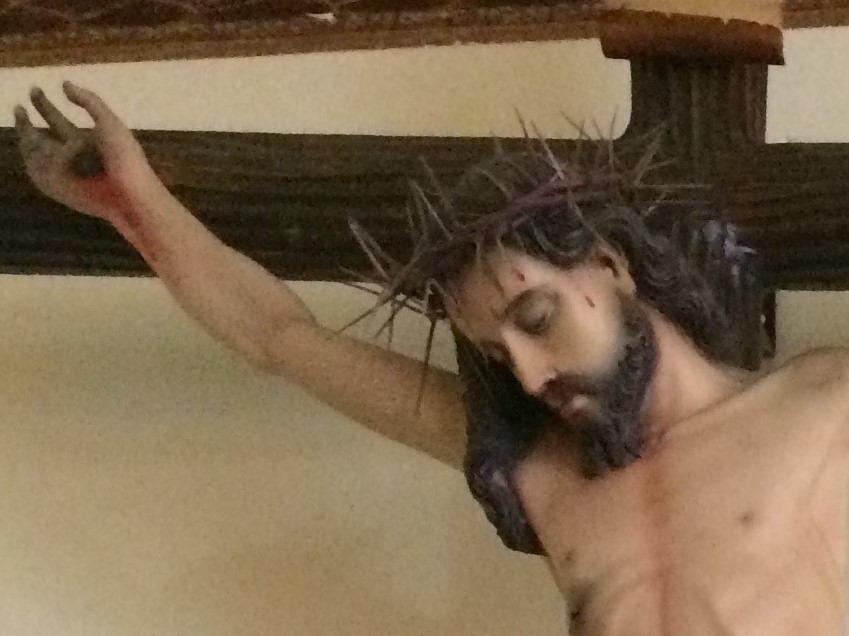
Draw close to the touch of Jesus, so to be healed that we may hear, speak, and love.
Those who witnessed Jesus healing the man who was deaf with a speech impediment grasped something more than just the healing when they stated: “He has done all things well. He makes the deaf hear and the mute speak” (Mk 7:37). With these words they are acknowledging the deliverance of Israel by the Lord, promised by the prophet Isaiah, when he mentioned how, “the eyes of the blind will be opened, the ears of the deaf will be cleared” (Isaiah 35:5).
The beauty of this healing may be missed by us in the modern age because of the graphic nature of the details used by Mark. Jesus places his fingers in the man’s ears, spits into his own hands and then touches the man’s tongue. Jesus is mixing his own saliva with this man in need of healing. We don’t even share drinks from the same container anymore like we used to when we were kids!
Jesus is showing the intimacy of communion that he offers us. Jesus gave his saliva and mingled it with this man’s saliva. With such human contact and co-mingling, the man was not only healed, but divinized, made one with God. This graphic encounter is also a microcosm of how the Son of God, in no way diminishing the fullness of his divinity, entered into the very real corporality of our humanity. He became one with us so that we can become one with him. This was true then and it is still true for us today!
We all suffer with physical, emotional, psychological, and spiritual trials. But we also suffer from not being able to hear God’s word, and when we do, we are more often than not mute to speaking his word. Jesus, may or may not provide a healing or a solution to a trial or struggle we may have or are right now going through. In either case though, Jesus is present and accompanies us.
Jesus invites us to consciously resist the temptation to avoid our suffering, pain, conflicts, or challenges and instead deal with and enter into them. We are not expected to do this alone, but to bring our need for healing to Jesus. In this way we are aligning our suffering with his on the Cross. While at the same time when we also choose to offer up our pain and suffering on behalf of another, we participate in redemptive suffering.
Others can experience relief and healing from our sacrifice in participation with Jesus.
This act of the will gives meaning to our suffering such that we do not endure what we are going through in vain. May we embrace, head on, that which is presented before us, actualizing the guidance of Jesus as well as the advances of modern medicine, science, and psychology, embracing a posture that engages both faith and reason. Our approach will be best if we are more mindful and balanced with our discernment. Just masking struggles without dealing with the root cause will only prolong and possibly worsen the condition.
As St. Mother Teresa has taught: “Pain and suffering have come into your life, but remember, pain, sorrow, suffering are but the kiss of Jesus – a sign that you have come so close to him that he can kiss you.”
Jesus still heals today, just as he healed the deaf and mute man. Jesus is just as intimately present with us as he was with the man he healed. Jesus does not leave us forsaken nor alone in our suffering and pain. Jesus accompanies us, he kisses us that, our ears be opened to hear his word, our tongue loosened to speak his word, and our hearts expanded to love one another as Jesus has loved us. We love in a deeper way when we resist turning in on ourselves and instead lift up our suffering, our trials, our pain for the needs of others for their healing.
We can do this best by resisting to run away or mask our pain and instead enter into it. When we do so, Jesus meets us with his arms wide open to receive all that we offer and makes our suffering redemptive. In participating in the practice of redemptive suffering, we align ourselves in a deeper way with Jesus, we draw closer to him who gave his life on the Cross for us, we participate in the divine loving embrace of the Holy Trinity. Embracing Jesus in our suffering can be a means of sharing his Father’s grace and the love of the Holy Spirit with a broken and hurting world.
________________________________________
Photo: Close up of the Crucifix in the Cardinal Newman chapel.
Link for the Mass reading for Sunday, September 9, 2018:
http://www.usccb.org/bible/readings/090918.cfm

Let us be the calm in the eye of the storm.
The Book of the genealogy of Jesus Christ, the son of David, the son of Abraham (Mt 1:1).
Many may gloss over the long genealogy of names that follows verse one. Matthew certainly had a reason, Luke also had his, as did other ancient writers for compiling genealogical lists. Those reasons are interesting in and of themselves, but I wanted to key in on something basic we may miss if we quickly pass over Jesus’ bloodline.
Matthew placed the context of the incarnation of the Son of God in history, time, and place. Jesus belonged to a people. All of us, as human beings, have the same desire and yearning for belonging. Knowing where we come from, sharing stories of our families, of our culture, ethnicity, race, language, customs, celebrations, rituals, and religion, provide a place for us, provide stability and security. On the flip side, the more we lose the connectedness to our roots, the more we may feel adrift. The need to belong is primal.
Matthew penned for his community the roots of Jesus’ genealogy. Matthew invites us to hear them again, to recognize our place in the same saga of salvation history, for this is our genealogy also. The Church chose this Gospel today as we remember and celebrate the nativity of Mary. All of the Bible, this rich library of faith, is a part of a sacred Tradition, not separate from, but an integral part of sacred Tradition. The Bible, from Genesis to Revelation, is a compilation from Mary and our ancestors who encountered God and shared their stories. They passed them on, generation after generation, to provide for us a foundation, so we can know that we are never alone, that we have a place, that we are a people, we stand in solidarity with one another, that we belong. We are a part of something greater than ourselves.
The only thing that can weaken the richness of the foundation of our roots and identity is when it is corrupted by a lack of integrity. We see this time and again throughout these same pages of the Bible. Those who not only turn their back on their faith, tradition, and God for their own means and purposes, but those who do not speak up for what is right and just. Yet, even in the darkest of times, there have been those judges, prophets, and people of integrity who have stood up to speak truth to power, to give voice and access to those on the peripheries, leading up to Mary and Jesus himself and his disciples who took this path of solidarity presenting and living out such teachings as the Beatitudes.
Even if we may feel like our country, church, or even our own lives are spinning out of control, let us remain faithful and seek courage and strength from our ancestors in the faith, those people of integrity who remained true, remained faithful, and did not turn and flee, but drew closer to God and became his mouthpiece, even willing to give their lives for what they believed in.
May we resist the swirling clouds of corruption, negativity, hate and division, and instead draw strength from the Son of Mary, and conform ourselves to his life and teaching such that we choose to seek transparency, hold others accountable, empower, love, and seek reconciliation and unity. May we seek and live that peace that only God our Father can give, that peace that surpasses all understanding, such that we can be for ourselves and others a light in the darkness and a calm in the eye of the storm.
Photo: Gathering clouds last evening before sunset, yet the light was still shining through.
Link for the Mass readings for Saturday, September 8, 2018: http://www.usccb.org/bible/readings/090818.cfm

Allow Jesus to lead us beyond our comfort zones.
And no one who has been drinking old wine desires new, for he says, ‘The old is good'” (Lk 5:39).
Many of us can relate to holding on to the old. It is more comfortable, it is proven to be good and true. A favorite wine, a pair of broken in jeans or shoes, a favorite book read time and again, these are all part of the simple pleasures of life. In Jesus’ parable he is challenging us to go deeper. He is inviting us to recognize those things that we are holding onto that may be preventing us from more than just a mere existence mode of living, to instead actualizing the potential for ourselves and others.
We have created patterns in our life that may appear and feel safe, but in actuality may be holding us back from a deeper and fuller experience in life. We may be influenced by cultural or social tremors that dictate to us that we are too old, that we are too young, that to do this or that is too much of a risk… Each of these examples can be challenging on the material plane of existence, yet while Jesus seeks the best for us in our everyday, at the same time, he is calling to go even deeper spiritually as well.
God the Father is infinite and inexhaustible. Though the Gospel remains the same, there are always new ways, new means to hear the message, to go deeper with it, so to better be able to share it. Each generation has to claim the deposit of faith passed on for generations as its own. I had heard of social media and its handful of platforms for some time, but had not experienced any of it myself until a few years ago. For over a year now, I have been sharing these reflections as a way to share my thoughts on the Gospels and journey with Jesus.
I was quite happy reading, learning, and sharing within the four walls of my classroom, but I felt Jesus urging me a few years back to reach out a bit more, go beyond the four walls, to take a risk and try some new wine. I wasn’t sure how to begin, but took a few steps and I have been typing away each day to share a reflection like this one that you are reading now.
In what way is God calling you to take a step out of your comfort zone? In what way can you share your faith journey with others? As you take a look at the horizon this morning, take some deep breaths as the sun rises, realize that you have a unique gift or talent to share, a way that Jesus is inviting you to participate in building up his kingdom. A life surrendered to Jesus, lived in collaboration with him, is ever new, ever better. Let us be open to hearing his guidance and being willing to be led by him, to be engaged in a new way we haven’t experienced before.
Photo by Chetan Manaria at pexels.com
Link for the Mass reading for Friday, September 7, 2018: http://www.usccb.org/bible/readings/090718.cfm

May we trust, take the risk, and follow the lead of Jesus.
After he had finished speaking, he said to Simon, “Put out into deep water and lower your nets for a catch.” Simon said in reply,” Master, we have worked hard all night and have caught nothing, but at your command I will lower the nets” (Lk 5:4-5).
Faith is to trust in God and believe that what he tells us is true. On our own initiative and will power we are limited as finite beings as to what we can understand and do. Today’s Gospel reading provides an example of this. Simon had been fishing all night with no results. Simon Peter follows Jesus’ command to go back out and put into the deep, and Simon not only accomplishes what he originally set out to do, he did so beyond anything he had ever imagined! When we follow God’s direction and initiative all things are possible for us as well.
God’s initiative and grace enter our life daily as Jesus entered Simon’s boat. Do we have eyes to see, ears to hear, and a willingness to listen and follow the initiative of Jesus? Remember the rich man who had followed all the commandments, but when Jesus invited him to sell all and come and follow him, he could not do it. Simon the magician saw the works of Philip, Peter, and John and wanted to buy the power of the Holy Spirit to heal but was rebuked. Turning away from Jesus’ invitation or seeking to manipulate Jesus for our own personal gain will not bring us the fulfillment that we seek.
We need to follow the example of Mary. The archangel Gabriel, shared God’s message with her that she was to bear a child. Even though she did not understand how this could be, Mary trusted. She conceived in her womb, through the overshadowing of the Holy Spirit, the God Man, the incarnate Son of God, Jesus the Christ. May we also follow such examples as Peter, James, and John, who said yes to lowering their nets, even though they did not see the point, yet they followed and were amazed. Then led by Peter’s humility and contrition, they “left everything” and followed Jesus. They went on to announce the Gospel of the Lord and caught people for the Kingdom of heaven.
Do we have the humility to follow Jesus, even when we may feel or see no point in his request? Jesus has a plan for us, as he did for Mary and the Apostles. He will give us the means to accomplish what he calls us to do. In that quiet place in our soul, in the stillness of our hearts, Jesus is inviting us to follow him, to put out into the deep water. What we may hear may seem unbelievable, or insignificant, we may experience anxiety or fear. Yet, let us take the risk and follow Jesus where he leads, where he would have us go, and what he would have us do.
Photo: Following the lead of JoAnn and Jesus to teach first grade mid year at Rosarian Academy, some thirteen years ago – truly blessed from the decision!
Link for the Mass reading for September 6, 2018: http://www.usccb.org/bible/readings/090618.cfm

Let us rise, be on our way with Jesus, to proclaim the Gospel!
“But he said to them, “To the other towns also I must proclaim the good news of the Kingdom of God, because for this purpose I have been sent” (Lk 4:43).
Jesus himself, the Son of God incarnate, fully divine and fully human, the foretaste of heaven in the midst of those he encountered then, and continues to be today, as he works through us, his Church. His work of preaching, teaching, healing, and casting out demons, shows the divine flow of the Father’s Love being infused into our fallen human condition. Jesus came to restore unity to that which had been lost and once he began his public ministry he was ever on the go.
Through our Baptism we have been conformed to and indelibly marked by Christ, and for Christ. We are nourished by his Body and Blood in the Eucharist and were empowered through the laying on of hands by the bishop at our Confirmation. We have been divinized, made God through our participation in the life of Jesus the Christ. We too then are priests, prophets, and kings in his name. We also are, to preach and teach the same Gospel, to be his healing and comforting presence, to make Jesus present to those in our midst, and yes we too are called to cast out all demons, and to shine the light on negativity, fear, and division in his name. As James teaches, we are to “submit [our]selves to God. Resist the devil, and he will flee” (James 4:7).
Jesus did not travel very far during his three and a half year public ministry, yet his Word has reached all the corners of the world. That is because of those who have encountered him, said yes to his invitation, submitted to the will of his Father, so to be transformed into his saints, and they continued to spread his teachings and life.
May we also surrender our life to Jesus moment by moment, in each circumstance and situation so to build up our relationship with him, and embrace the gift of the unique vocation we have been called to do, to be holy, to be his saints. Let us go off to a deserted place and contemplate what Jesus’ inaugural message means to us: “This is the time of fulfillment. The kingdom of God is at hand. Repent and believe in the Gospel” (Mk 1:15). Then, filled with the Holy Spirit, proclaim with joy, in word and deed, this Good News through our everyday experience. Let us rise this day to follow Jesus and be on our way!
Photo: Early morning at Cardinal Newman.
Link for the Mass readings for Wednesday, September 5, 2018: http://www.usccb.org/bible/readings/090518.cfm

With Jesus at our side, let us stand firm against the darkness.
Jesus returned to his hometown of Nazareth, as we saw in yesterday’s reading, and that did not end so well, with his fellow Nazoreans running him out of town (Lk 4:29). In today’s reading, Jesus was teaching in the synagogue at Capernaum. The initial reaction to Jesus’ teaching was similar in both accounts; the people were “amazed” and “astonished” with his teaching. But no one in either group makes the bold statement that arises today: “I know who you are – the Holy One of God” (Lk 4:34)! This phrase was professed by a demon. He who taunted Jesus.
From the very beginning of Jesus’ ministry opposition was present. In Nazareth, the fallen nature of our humanity reared its head. The people he grew up with were unwilling to see beyond the ordinary Jesus they always knew. Wasn’t he just the son of Joseph, just the carpenter? Jesus was safe when he merely worked a quiet life, participated in the life of the synagogue, even when he returned from surrounding territories amidst words of praise, and even stepping up to read in the synagogue from the words of Elijah: he was the hometown boy making good. But once Jesus began to equate himself in the line of the prophets and share how God was working beyond the people of Israel, with his accounts of Elijah going to the Gentile widow, and Naaman, another Gentile, going to Elisha, highlighting that God worked beyond the people of Israel, even his own had enough. Jesus had to go (Lk 4:29).
In today’s account, another source of opposition, is the taunting demon. Jesus rebuked the demon immediately and called him out of the man. Jesus faced time and again the fallen nature of humanity, disbelief, lack of faith, as well as the opposition of demons, and soon the failure of religious and civic leadership. Sound familiar?
Where do we find our self in the scenes of Jesus’ ministry and teaching, in our own time today? Following Jesus is a day to day commitment and we must be willing to face the same challenges that his disciples did. We need to be willing to face our weaknesses, our woundedness, and own shortcomings and conform our lives to the will of Jesus. By doing so we will be confronted with the darkness and sin within ourselves. May we have the humility to resist defending, rationalizing, and covering over our short comings, and instead be willing to repent, to turn away from our sin, and be willing to be healed.
We also need to resist dismissing Jesus’ encounter with the demon in today’s Gospel too quickly. Demons do exist and play a role in the principalities and powers that influence us and our world. We ignore this reality to our own detriment, for they will tempt and subtly attack us at our weakest and most vulnerable points. This is not a cause for anxiety and fear. The weakest Christian is stronger than the devil himself, but we must be aware and vigilant. When faced with temptation by Satan or his demons, we need to turn to Jesus and call on the name of Jesus, they all must flee from our midst. This is why it is so important to regularly examine our conscience, to be aware of and confess our sin. Otherwise, they can and will be used against us.
The closer we draw to Jesus, the more we experience his light, the more of our own sin we will see. This is not a cause to run and hide, but to humbly embrace the truth, so to be healed. This also means we will see more clearly the dark influences that plague us and our world which we are blinded to when we turn in upon ourselves and our own selfishness, embrace our own pride, and turn away from God.
May we instead place our trust and belief in Jesus today and each day, spend time in prayer, in his word, examine our conscience, and be willing to be led by him to serve one another, speak up for one another, and stand strong against the temptations and darkness of this world. When we fall short, fail, as we will, as did the apostles, we need to follow, not Judas, but Peter: repent, confess our love for Jesus, and begin again. Together, with our Loving God and Father, may we hold one another accountable, support and lift one another up in love, for Jesus is at our right hand, and, even in the darkest moments, with Jesus, we will stand firm!
Photo Credit: Reuters Daniel Chan
Link for the readings for Tuesday, September 4, 2018: http://www.usccb.org/bible/readings/090418.cf
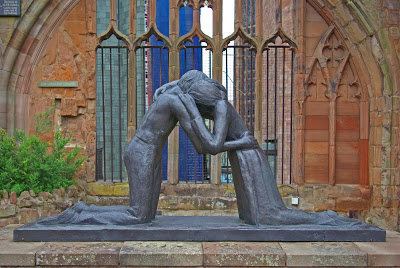
Let us collaborate with Jesus to bring healing and reconciliation to others.
He said to them, “Today this Scripture passage is fulfilled in your hearing” (Lk 4:21).
Jesus, who had just sat down, spoke these words to his hometown congregation in Nazareth who had just heard him read the passage from the writings of the prophet Isaiah. Jesus proclaimed that he was the one to whom Isaiah was talking about. Luke chose to place this event as the starting point of Jesus’ public ministry, of bringing glad tidings to the poor, proclaiming liberty to the captives, recovering sight to the blind, letting the oppressed go free, and proclaiming a year acceptable to the Lord (Lk 4:18-19).
This is a message of universal healing for all of humanity, that restoration and reconciliation would come and Jesus would be the vehicle to bring all the nations, all people, back into communion and relationship with his Father. The poor mentioned were not just in reference to those experiencing material poverty, but to those finding themselves on the margins of society, the outcasts, those on the peripheries. The captives were not only those imprisoned for debts or crimes, but those bound in the chains of their own sin and addiction. The blind were not only those who could not physically see, but those who experienced the spiritual blindness of pride and arrogance. The oppressed, were not just those under the iron fist of totalitarian and dictatorial regimes, but those pressed down through their own self imposed anxieties and fears.
In what ways are we in need of Jesus’ healing and restorative power? What is keeping us on the peripheries, apart from communion and fellowship? What sins and addiction keep us bound, what fears and anxieties keep us oppressed? Today we hear or read again Jesus’ words proclaimed in the Gospel. Jesus invites us to be healed and to align ourselves with his will and ministry of loving service to others. The same words he spoke to his own hometown he is speaking to us. Will we hold on to our biases and prejudices and run Jesus out from our midst to hurl him over a cliff because he is not only offering his healing hand to us, but also to others outside our tribe, our nation, our political party? Or will we come to Jesus, kneel before him, acknowledge our need for his healing and make him the Lord of our life?
Let us take some time today to examine our conscience. Then come to Jesus with a contrite, sorrowful heart for what he have done and what we have failed to do. May we feel his healing hands on our bowed heads and the warmth of his love pouring through us to purge us of our sin and pride and heal us from that which keeps us bound. Then, in recognition of how much suffering and pain is present in our country and world, let us ask Jesus how and where we can participate with him in bringing healing and reconciliation to others, to bring about an “acceptable year of the Lord” (Lk 4:19).
The statue, “Reconciliation” by Josephina De Vasconcellos photographed by Leslie Taylor: https://imagecapturer.blogspot.com/2013/06/st-michaels-church-coventry.html
Link for the Mass readings for Monday, September 3, 2018: http://www.usccb.org/bible/readings/090318.cfm

Let us be a light that shines in the present darkness.
“But what comes out of a person, that is what defiles. From within people, from their hearts, come evil thoughts, unchastity, theft, murder, adultery, greed, malice, deceit, licentiousness, envy, blasphemy, arrogance, folly. All these evils come from within and they defile” (Mk 7:20-23).
We unfortunately see the words of Jesus today on full display in our country, on almost every level imaginable, politically, culturally, and religiously. What Jesus is calling for from his hearers then and us today is not to look or act the part, but to actually live a life with a heart dedicated to God with humility and integrity.
May we resist the temptation to be despondent or give in to despair, may we also resist contributing to the negativity that seems to have a megaphone right now. There are many people doing very good things, living their lives quietly and faithfully. Let us do the same. May we follow the guidance of St James and “put away all filth and evil excess and humbly welcome the word that has been planted in [us] and is able to save [our] souls” (James 1:21).
May we resist being shaped and conformed to the present culture of division, polarization and death, and instead be willing to be transformed by the renewal of our minds that we may discern what is the will of God, what is good and pleasing and perfect (cf. Romans 12:2). To do so, may we turn our hearts and minds over to Jesus this day so that he will renew them with his love and grace.
Let us align ourselves with the will of our heavenly Father through examining our conscience and discerning with Jesus such that we come to know that which is truly good, pleasing and perfect, so that we may cloak ourselves in the mantle of integrity. May we be willing to hold ourselves and others accountable with justice and mercy by standing up for the dignity of the person in each and every situation.
May we not only be hearers of the word but doers of the word. For: “If anyone thinks he is religious and does not bridle his tongue but deceives his heart, his religion is vain. Religion that is pure and undefiled before God and the Father is this: to care for orphans and widows in their affliction and to keep oneself unstained by the world” (James 1:26-27). May we resist standing by silently witnessing or worse participating in the poison of gossip, demeaning, belittling, or dehumanizing words or actions, the abuse of power over others in all its forms overt and subtle, but instead shine a light of truth in the darkness.
We do so by speaking truth to power, by standing up for each other while at the same time seeking to win back our brother and sister. We will do this best as we keep our self in check, continue to be willing to have our heart and mind conformed to Jesus, as we commit daily to respecting the dignity of each person we encounter within our homes and in our realms of influence such that what we think, the words we speak about someone or speak toward another, as well as the deeds we put into action, will lift up, empower, and affirm.
Photo: Lighthouse from Pexels.com
Link to the Mass readings for Sunday, September 2, 2018: http://www.usccb.org/bible/readings/090218.cfm
Take courage and share the talents God has given.
“Then the one who had received the one talent came forward and said, ‘Master, I knew you were a demanding person, harvesting where you did not plant and gathering where you did not scatter; so out of fear I went off and buried your talent in the ground. Here it is back'” (Mt 25: 24-25).
I used to struggle with this verse of Jesus’ Parable of the Talents, not because I didn’t relate to it, but because I did. The problem was that I sided with the servant who buried his talent in the ground. What the servant did made sense to me, he kept his master’s talent safe and returned what he had been given. Historically, burying was considered a safe and acceptable practice in ancient Palestine when protecting someone else’s money. Even in reading carefully back to the beginning of the parable, I could see no reference to investing the talents. Though in the Gospel of Luke, there is an explicit demand to “trade with these until I come” (Lk 19:13). What is Jesus saying?
Actually, Jesus in this parable, offers a microcosm of salvation history, the thread of which has been woven through all of Sacred Scripture from Genesis to Revelation. God, through his sovereign will, has consistently called, calls today, and will continue to call into the future a people to himself. In each age, God has bestowed upon humanity his generous gift of grace, inviting us to receive and share in his very life, which is what we have been created for. This is a free gift, to be freely accepted or rejected. Once received though – no matter how little we choose to receive, we are directed to share what we have been given. Through a life lived of accepting, receiving, giving back to God and to one another, we are given even “greater responsibilities”.
In receiving the gift of God, himself, and sharing what he has given, ultimately his love, for God himself is Love, we not only mirror on earth, albeit dimly, but share in the divine communion of the love between God the Father, God the Son, and God the Holy Spirit. To reject this gift outright, or to receive some of the benefits and not to share, we cut ourselves off from the very life force and source of our being.
We can see this pattern emerge in this parable. The master gives his servants talents. To one he gives five, to another two, and to a third he gives one. All accept what they have been given. But differ in what they do with the gift. The first two double what they have been given, and the third buried what he had been given. Two have received and multiplied their talents, the one refused to and kept it to himself. The master returns, commends and rewards the two, then berates and even takes the little the one had been given and gives it to the one who had more.
The message of this parable is as clear as it is challenging. John P. Meier summarizes that, “Jesus is insistent; along with sovereign grace, serious demand, and superabundant reward comes the possibility of being condemned for refusing the demand contained in the gift. Indeed, one might argue that no aspect of Jesus’ teaching is more pervasive in the many different streams of the Gospel tradition, and no aspect is more passed over in silence today” (Meier 2016, 309).
God has created us and all of creation from the abundant outpouring of his love. Will we reject the gift of his love and invitation of communion? Will we receive, yet not actualize who we are called to be for our self and others because we would rather merely just exist, willing to be lured and entrapped by the temptations of anxiety, fear, apparent goods, and half truths? Will we give in to the fear, too afraid to risk, to go out from ourselves to serve others? Or, will we appreciate the gift of our life and say thank you for the breath that we breathe? Are we willing to expand the love we have received by being willing to share, to multiply our talents, to embrace who God calls us to be, to love in kind, to will the good of others in the unique way God calls us to serve, whoever they may be?
I have lived the life of the wicked servant who buried his talent out of fear. I have embraced the sin of sloth and resisted opportunities to share what God has given me to invest. This was no path to fulfillment, but an experience of separation from the fullness of the One who wants so much more. To live a day to day existence adrift and dulled, is certainly not the way I hope to spend another day. I am trusting more in the love of God, seeking to discern and follow his will, though at times, I still do so with indecision and trepidation. I do better when I reach out and seek the hand of Jesus and accept to be led by him. I have risked and fallen, made mistakes and duffed up time and again, but have learned, persevered, and each year of life there is a little less of me and a little more of Jesus shining through.
We are not alone. What Jesus invites us, gives us, and yes, demands us to do, he will at the same time provide the support and energy we need to carry out the task given to us and to bring it to fulfillment. God has something for us to do, a talent or two to invest. May we allow the light of Jesus to shine through us as a prism in our own unique way so to dispel the darkness of our current political, social, and Church climate. May we not be afraid to be who God calls us to be. May we not be afraid to love and to be loved. May we, in the words of Jesus and St John Paul II who echoed them as he began his pontificate:
“Be not afraid” (Mt 14:27).
———————————————————————————-
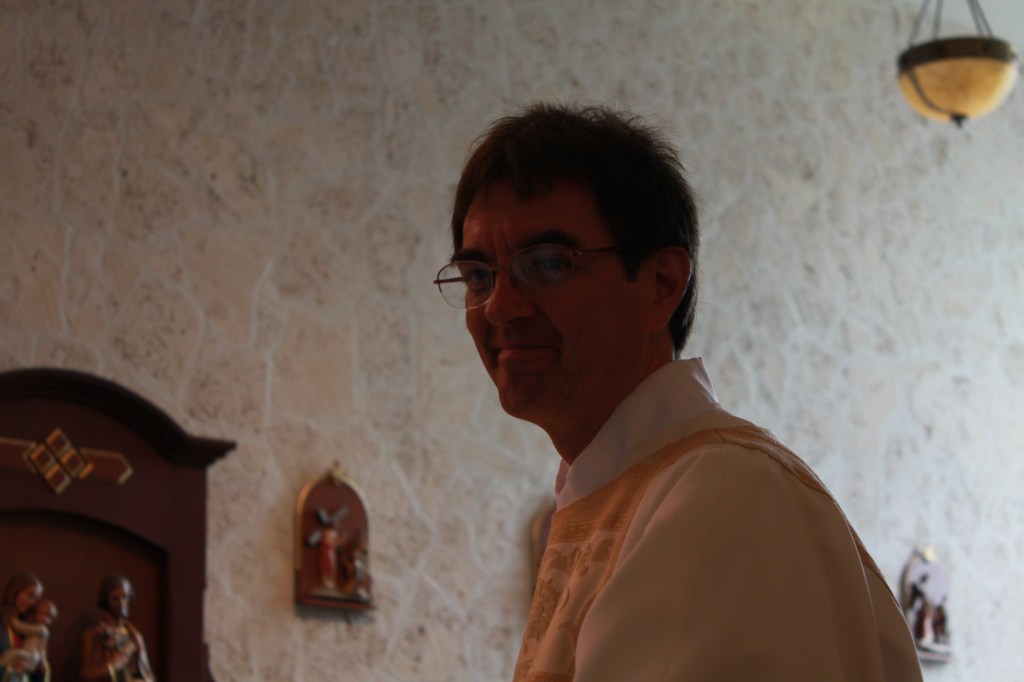
Photo: Invited to seek ordination, took the risk, said yes, and haven’t looked back since 😉 Picture taken by Jack McKee during ordination 2013.
Meier, John P. A Marginal Jew: Probing the Authenticity of the Parables. Vol. 5. New Haven: Yale University Press, 2016.
Link for the Mass readings for Saturday, September 31, 2018: http://www.usccb.org/bible/readings/090118.cfm

