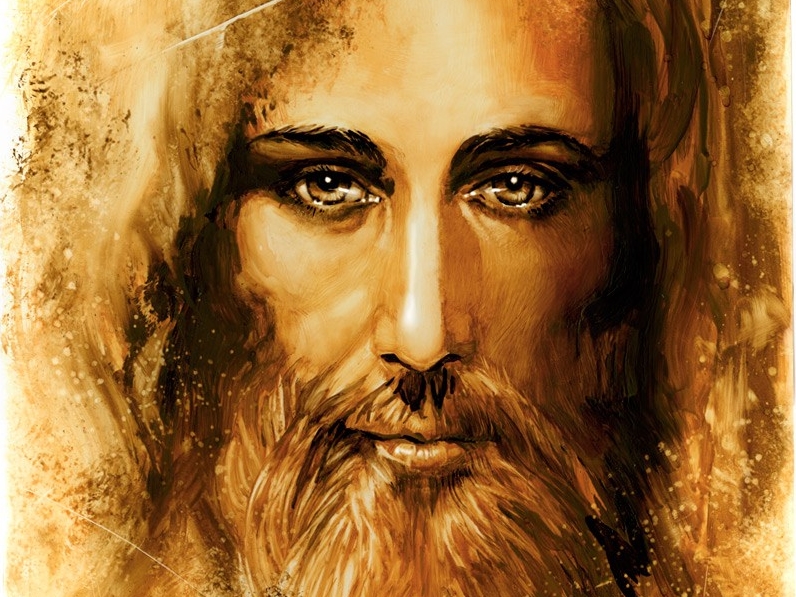
Aligning ourselves with the One who fulfilled the law and the prophets.

Jesus said to his disciples: “Do not think that I have come to abolish the law or the prophets. I have come not to abolish but to fulfill” (Mt 5:17). Jesus was a devout Jew, he grew up practicing and understanding the law and the prophetic tradition. We see evidence of that when, at twelve, he is found by his parents among the teachers and scholars discussing, with understanding and wisdom, the law. Jesus in his public ministry very much stands on the shoulders of the prophets, for he speaks on behalf of God, calling the people of Israel back to the law, both those who have turned away from God as well as those who used the law as a bludgeon and for building a wall to keep others out.

Jesus shows time and again that being true to Torah, is about building relationships with God. He extends his hand, person to person as a bridge for people to come to God, and he calls out the religious leadership who have utilized the law to build walls, to keep people out. Jesus healed on the Sabbath, Jesus forgave sins, Jesus touched lepers, and ate with tax collectors, prostitutes, and sinners, those on the peripheries, not because he was being willy-nilly with the law, but because he was showing by his lived example that the greatest commandment of the law was to love God with all his mind, heart, and strength and to love his neighbor as himself.

This practice goes right to the foundation of our creation. All of humanity has been created in God’s image and likeness. By that very fact, each of us are endowed with dignity. In Jesus, we see that the highest call to the law of God is to love. Jesus met each person where they were and accompanied them. That also meant calling out those who misused the law by keeping others at arm’s length. Jesus did the opposite. As the Son of God, Jesus became one with us in our humanity, so that we could become one with him in his divinity. Jesus offered others his arms extended outward, inviting others to enter into his loving embrace. He would show this fully on the cross, where he opened his arms wide to embrace all peoples and nations.

Jesus built on the law and the prophets, because he was the fulfillment of them, and in doing so, he gave the law its greater context. The foundation of the law and the prophets were founded in Love, meaning its highest expression, which is to will the good of the other as other. This means that the law is not like a stagnant pool, where we grasp onto the law and tradition for its own sake, but the divine law of God is rather like a running stream, it is always fresh and renewing.

What Jesus ushered in, was the reign of God, which was possible through the foundations laid by those who had gone before him: Abraham, Isaac, Jacob, Joseph, the judges and prophets, David, those who answered the call of God to serve in his name. From a person, Abraham, to a clan and a nation, Israel, God called a people to himself. Then at the appointed time, he sent his Son, to be one with the people he called to draw all nations to himself so that all of the peoples, created in his image and likeness, could be invited to come to be one with the God of all creation.

Our joy and fulfillment will be experienced as we are transformed by the love of God. As we build on the traditions of our faith that give us a solid foundation, but not to hold on to them so tightly that they strangle us and suck the life out of us. That which leads us to encounter and renew our relationship with Jesus in love is what we are to embrace and preach. That which has become stagnant and no longer is an avenue for affirming life must be pruned.

The love and mercy of God extended to us by the presence of Jesus among us is not a watering down of the law and the prophets. I would argue that it is not only the fulfillment of them, but they are harder to put into practice and demand a closer walk with Jesus. This is so because we cannot fulfill a life of love and mercy on our own. We can only fulfill Jesus’ invitation to love and be able to enter into the chaos of another if we are transformed ourselves by his love and continue to allow Jesus to be present to others and love them through us.

God’s love invites us out of the darkness of our own sin and withdrawing into our own false sense of control. We become healed when we are humble enough to trust God, are willing to confess how we put our own self interests first, are contrite – enter into the sorrow of the hurt we have caused others, and become less drawn to making excuses and protecting the false self of the ego. Through participating in the life that Jesus invites us to, we drink from the living stream of his love, we come to experience the freedom of being true to ourselves and who God calls us to be and we can then become light for others who are experiencing the shadows of a life of half truths and/or immersed in the darkness of a false and empty life.


Painting:  Painted by Melody Owens – The original painting is 11″x14″ gouache.

Link for the Mass readings for Wednesday, June 13, 2018:
http://www.usccb.org/bible/readings/061318.cfm

How to be salt and light? Share a smile.

One of the key focal points of the season of Ordinary Time is that the liturgical readings from the Gospels will focus on the life and teachings of Jesus. Our series of readings for the next few weeks will continue with Jesus’ Sermon on the Mount that we began to reflect upon in yesterday’s reading from the Gospel of Matthew. Jesus began with the Beatitudes and today he encourages his disciples to be “the salt of the earth” and “the light of the world” (cf. Mt 5:13-16).
This call continues to ring true for us today as his disciples. We too are to be “salt” and “light”. Salt has two major properties, preservation and flavor. Jesus emphasizes the aspect of salt being seasoning that one puts on food, which enhances its flavor. Light allows those to see in the darkness. How then can we be salt and light?
We begin by remembering that we are an Alleluia people, meaning that we are a people grounded in hope and joy because we who die with Christ will rise with him. Also, our faith is not just for us alone, we are to go out and share it with others, we are to bring Jesus to others. Pope Francis, in the very first line of his apostolic exhortation, Evangelii Gaudium, writes: “The joy of the gospel fills the hearts and lives of all who encounter Jesus. Those who accept his offer of salvation are set free from sin, sorrow, emptiness, and loneliness.” The Pope is not saying that when we accept Jesus into our life and develop a relationship with him that all will go our way, their will no longer be conflict or pain, and that our life will now be perfect. What he does mean is that Jesus is the very embodiment of love, and a light that leads away from the darkness of our sin. Jesus is present and accompanies us in our pain and sorrow, and assures us that we are not alone. Jesus is the one who fulfills the longing of our heart’s deepest desire, he reveals to meaning and vocation in life. Jesus brings us hope and offers his hand to lead us through our darkest nights of despair and trauma.
We who have experienced the healing balm of the presence of Jesus in our life, have grasped his hand for strength, have leaned on his shoulder to cry on, and experienced the joy of our encounter with him, are then to be present to others in the same way. We are to be salt by bringing the joy of Jesus to all those we encounter. Too many who claim to be Christian, walk with a cloud of gloom around them, they have become salt that has lost their flavor. Instead of drawing others to the gospel, they withdrawn within themselves and push people away.
A simple, yet genuine smile can work wonders for someone who begins to believe that no one cares or has the time of day for them. This is true for the recipient as well as the giver. If you have felt like you have lost some of your flavor, or if you are not sure how to be a light for others, next time you catch the eye of another, smile.
I am not the most extroverted of persons, and was more introverted in my youth. In my freshman or sophomore year of college, I heard a talk on cassette given by St Mother Theresa. She had mentioned reaching out to others with a smile. I still remember the first time of risking to smile at someone after hearing Mother’s encouraging words. I was walking up the side walk toward the parking garage on campus. I do not even remember the person I smiled at or if the person smiled back, but I do remember the feeling of joy that filled me. Having heard of how to share the light of God’s love with another, and then to follow through with the courage to do so, filled me with the joy of Jesus.
How can we be salt and light? I would recommend beginning by smiling at those we encounter. May it not only be limited to those we feel comfortable with or like. May we also smile with those we may have had conflicts with, those we may feel a prejudice toward. This is only a small beginning, but it draws us out of our own self centered focus and out toward another. In this small act we also say to another that we care enough to notice them, that they are loved and cared for, that they have worth and dignity just as they are in that moment. Just that simple smile can bring a little flavor to someone in a sour mood, as well as a little light to someone in a very dark place.

Photo: A smile for your day, may you receive it and pass it on!
Mass readings for Tuesday, June 12, 2018:
http://www.usccb.org/bible/readings/061218.cfm

Wanting to enter the kingdom? Let us not be attached to our possessions!

All of us seek to be happy. Even if we do things that are not exactly the healthiest or best choice for our lives, they are still committed as apparent goods with the intent that the action will make us happy, although the after effects or results may not be so. Eating salty or sweet foods have this element of seeking pleasure attached. A consistent diet on these foods alone will keep the manufacturers of these products in business and our doctors well paid, but we will not find ultimate fulfillment and happiness in our consumption of potato chips and ice cream. This is true for the many decisions and actions we make about our life as well. If we want to be really happy, find meaning and fulfillment in our lives, Jesus shows us the way.
In the Gospel Reading today from Matthew, Jesus begins his Sermon on the Mount, the beginning of which is his sharing of the Beatitudes. Beatitude can mean blessing. For the people of Jesus’ time, an example of a solemn blessing that was invoked was when the father bestowed a blessing on the first born son. This meant that he inherited all that the Father had. The gift of these beatitudes is that all of us who follow them will receive the blessing from our Father in heaven. This blessing goes beyond just the first born, to all those who follow the teachings of Jesus.
Beatitude also means happy. As we read through the beatitudes we can look at them as an outline of how we can be truly happy. The Beatitudes build on the foundational stones of the Ten Commandments given to Moses by God. Our freedom, which we so hunger for and aspire to actualize, is not summed up by being able to do anything we want, whenever and however we want to, this is a freedom from indifference, that will lead us to a series of apparent goods that will leave us still wanting.
The Beatitudes, like the Ten Commandments, are boundaries that define us as children, inheritors of God’s will and blessing. We have been created to be disciplined, so to strive for a freedom of excellence. Those who are disciplined to practice and train for hours have the freedom, are blessed, to play a violin, a guitar, a French horn. I still possess the same guitar my father gave me when I was seven. I can pick it up and play some notes, but because of my lack of discipline in practicing daily, I do not have the freedom nor am I able to experience the joy my father does when he plays his guitar.
This holds true for any endeavor in the arts, sports, business, family, or our spiritual life. We become truly happy when we are blessed by God, when we actualize our gifts, discipline ourselves so have the freedom to put them into action, and seek these pursuits and desires when a relationship with God as the foundation of our life.
The Beatitudes that Jesus presents to us today as recorded by Matthew in his Gospel offer us then opportunities to experience meaning, fulfillment, and joy. Each of them are worthy of a reflection in their own right, but for today, let us look at the first Beatitude which will help us to understand that joy is not merely the seeking of pleasure, because when the external stimulus that creates the pleasure stops, so does the feeling involved.
“Blessed are the poor in spirit, for theirs is the kingdom of heaven” helps us to find happiness in the fact that we have been created to be members of God’s kingdom. What keeps us outside of this wonderful relationship of participating in God’s reign is our attachment to possessions, to the material and finite things of the world. Just remember the exchange between Jesus and the rich man. The man had followed all the commandments, was blessed with wealth, but when Jesus showed him that the one thing he lacked to enter the kingdom was to sell all his possessions and follow him, the man could or would not do so, and so he walked away sad (cf. Mk 10:17-25). Jesus is inviting us to recognize that all that we have is a gift from God, and we are to be good stewards of them.
A greater temptation we can fall for when are attached to our possessions, is that we begin to treat each other as possessions. We begin to dehumanize one another. Jesus is inviting us to realize that, what is finite and material will not fill us, satisfy us, because we have been created for more. We have been created as a living, craving, hunger and desire to be one with God and each other. What will fulfill us, make us truly happy and experience the joy such that no external experience can touch, or tamp down, is saying yes to God’s love and experiencing a relationship with him and sharing it with others. We are created to be loved and to love.
Looks like I will need to do some purging of books this summer to embrace this beatitude 😉 Pray for me.

Photo: Just one of the many piles of books to sort through!
Link for the Mass readings for Monday, June 11, 2018:
http://www.usccb.org/bible/readings/061118.cfm

Whoever does the will of God is my brother and sister.

Confrontations continue for Jesus in today’s Gospel from Mark. There are two main groups that are highlighted, the scribes as well as his relatives. These are not just any two groups. If we think about the foundational support network for people of ancient Israel and many of us today, would it not be the family and the faith community? Yet, both are challenging Jesus today.
Jesus has returned home, and word of his preaching, teaching, exorcisms, and miracles has preceded him and reached the ears of the hometown faithful. The rumors have also sparked the attention of the religious leaders in Jerusalem who sent some of their emissaries, the scribes, to come and check out the matter. The reaction from the clan of Jesus is that, “He is out of his mind” (Mk 3:21). The scribes say that Jesus has performed such miracles because: “He is possessed by Beelzebul,” and “By the prince of demons he drives out demons” (Mk 3:22).
Yet in both cases, Jesus does not cave, even to the most powerful of peer pressures: family and faith tradition. Jesus schools first the scribes on the basis of simple logic, stating that, “How can Satan drive out Satan? If a kingdom is divided against itself, that kingdom cannot stand” (Mk 3:23-24). This statement is rich in the historical mind of Israel, in that under the unification of the Twelve Tribes of Israel, the Chosen People were free of oppression, but once they became divided they fell. Beginning with David’s own unfaithfulness and treachery, the excesses and unfaithfulness of Solomon in the latter part of his life, and the continuing decline and steady slide into corruption of successive kings, the gap between the rich and the poor increased, unfaithfulness to the God of Israel grew, and further polarization and division spread between the ten tribes of the north and the two to the south. The Assyrians would destroy the northern tribes around 721 BC and the Babylonians would finish the job in 587 BC and decimate, not only the final two tribes of Judah and Benjamin, but destroy the Temple as well.
This was a lasting wound that had deep seeded roots in the people. Jesus came to restore that which has been lost. He had called the Twelve to himself. This is not an insignificant number. Jesus is restoring Israel, and through Israel the world. Jesus is also showing that entrance into the restored kingdom of Israel is not through bloodline, political, or religious position: “Who are my mother and my brothers?” And looking around at those seated in the circle he said, “Here are my mother and my brothers. For whoever does the will of God is my brother and sister and mother” (Mk 3:33-35). The entrance into the new kingdom is through faithfulness to the God of Israel, the God of Jesus the Christ.
We see a clear demarcation point in today’s Gospel. There are those that are aligning themselves with Jesus and the reign he is ushering in. There are others who feel threated, do not understand, and/or are challenged by it. How can a mere carpenter say and do such things? To become a part of God’s kingdom, to be a part of God’s reign is to believe in the one whom God had sent, his Son and the love of the Holy Spirit.
To be followers of Jesus, we will face the same challenges that those people who witnessed Jesus faced. We will face the religious established order that have chosen pride of position over the guidance of the Holy Spirit. We will face family members who see the abuses of the Church, and rightly critique them, but unfortunately, walk away from the Truth, the Way, and the Life, because of the hypocrisy they witness, and think us mad for staying. We will also face the challenge that Jesus poses to us as well, to build on our identity, to go further, to be people of integrity.
We are to stand up for what is the Good, the True, and the Beautiful in God’s creation and the beginning place is with the dignity of the person. We are to resist the temptation to slip into gossip, dehumanization, and belittling of others, when we do not understand or agree with another, even those who are actively engaged in these actions, directing them at us or others. Instead we are to follow the will of God in and out of season, even when that means conflict within our families. We are to be people of prayer and worship, we are to serve one another through the corporal and spiritual works of mercy.
We follow Jesus as was recorded in today’s Gospel. We do not reject those who do not believe as we do, and who may even openly reject and attack us. Instead we continue to love God and place him first. As we do, we will grow, mature to be more patient, more present, more understanding and loving even when facing challenges from our own. As we grow closer to God we will face our conflicts with love and truth, so to grow closer to those in our realm of influence. Our task as disciples of Jesus is to follow the will of his Father, invite others to do the same, and allow God to happen.

Photo: Aspiring disciples of Jesus!
Link for the Mass readings for Sunday, June 10, 2018:
http://www.usccb.org/bible/readings/061018.cfm

May we embrace the questions of others, ponder more, and react less.

There are two points that struck me in today’s Gospel from Luke. The first is what Jesus was doing when Mary and Joseph found him. After three days they found him in the temple, sitting in the midst of the teachers, listening to them and asking them questions, and all who heard him were astounded at his understanding and his answers (Lk 2:46-47). Other than his infancy, this is the only other account we have of Jesus in his youth. Jesus was listening to his teachers and asking them questions.
One of the greatest joys that I experience is when I am teaching. There are times, when I actually feel like I step out of my body and I am watching the exchange along with the students. These are times when the students are asking questions, they are listening and engaged, and I believe that in that exchange the Holy Spirit is present.
The second point was Mary’s response to the whole affair. After three days of anxiety trying to find Jesus, Jesus’ response that they ought to have known where he was, that he was about his Father’s business, and their lack of understanding of what Jesus said, Mary did not meet Jesus with a head slap to the back of the head, instead she “kept all these things in her heart” (Lk 2:51). As Mary did with the news of the shepherds at the birth of Jesus, Mary’s response was ponder.
We learn best when we enter into an exchange of dialogue where we listen to each other and ask each other questions. We commit an egregious sin when we stifle questions, inquiry, critical thought, and dialogue and slip into monologue and demagoguery. This is especially true in the realm of religious pursuits when we are talking about transcendental realities. None of us will ever fully comprehend God and if we say we do we are fooling ourselves.
We are wired to wonder from a very young age. If you have been around a three or four year old for any length of time, the question of, “Why?” will come up. Unfortunately, this natural curiosity is often tamped down, because answering questions takes time. Questions can challenge our own beliefs, they also help us to recognize what we know and do not know. It is one thing to think we understand something, and it is another to articulate it.
When we do not understand, when we are challenged, when we are presented with a response that we do not expect or agree with, may we resist the temptation to react and strike out. Instead may we assume the posture of Mary and instead ponder, to keep things in our heart. May we actually listen to the question, may we pray for discernment, may we seek to understand the words of the question, and then honestly answer the question from what we know and be willing to say that we do not have an answer when we do not know. Our part as people of faith is to know our faith tradition and share it the best we are able and then allow the person we are in dialogue with to accept or walk away. As St Peter guides us may we “be ready to give an explanation to anyone who asks you for a reason for your hope, but do it with gentleness and reverence, keeping your conscience clear” (1 Peter 3 15-16).

Photo: As we celebrate Mary’s memorial today, let us call out, “Immaculate Heart of Mary, pray for us!”
Readings for the Mass for June 9, 2018:
http://www.usccb.org/bible/readings/060918.cfm


Jesus loves us into death and into new life

But when they came to Jesus and saw that he was already dead, they did not break his legs, but one soldier thrust his lance into his side, and immediately blood and water flowed out (Jn 19:33-34). With that thrust of the centurion’s lance it appeared that all was lost. The long sought for messiah, the promise of Jesus appeared to be no more. His healings, exorcisms, words, and teachings were now nailed to the cross, that dismal sign of torture. Rome continued to brutally occupy Israel. Might appeared to continue to triumph over right. Darkness and the fullness of it, pride, betrayal, weakness, fear, corruption, and ego, all seemed to have won the day.
We ourselves, may have, may presently, or will be in a similar situation, from our own perspective or experience, as the disciples were. A place where all may appear to be hopeless, where what was promised and what has been hoped for seems to be dashed to pieces, where the rug may feel like it has been pulled out from under us, where up seems to be down and down up, where all may appear to be lost.
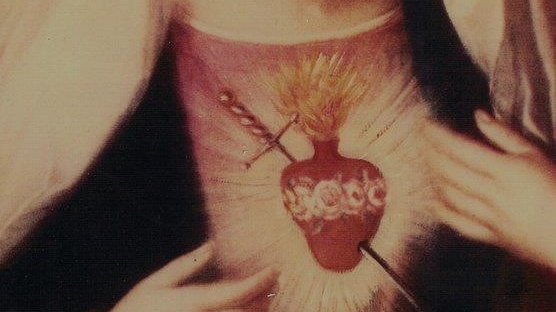
But the event of the crucifixion is not the end of the story, but the continuation of the Paschal Mystery. The Son of God, the second Person of the Trinity became one with us in our humanity, lived our life, experienced our life in all things but sin, yet through his Passion, he became a magnet. Like moths attracted to light, Jesus took upon himself the sin of the world, and entered into the most unique of human experiences, our death. With the piercing of his side, even his heart was pierced for us and blood and water flowed.
The Son of God, even in his death mirrored the reality of God within himself; where the Father pours himself out, all that he is to the Son, and the Son receiving all the Father is, returning, giving all he has received, all that he is to the Father holding nothing back. Jesus, repeated this same act of exchange on earth as he does in heaven. Jesus gave all that he is to us, for us. He loved us into existence, then came to save us from ourselves, becoming one with us, so we could truly and fully be redeemed, by loving us into his death.
Into his death, he experienced utter God forsakenness to the brink of complete abandonment, complete emptiness, just as the blood and water poured forth from his side, Jesus was pouring all he was out of himself for us. In that act, his grace poured out on the world, building upon the natural order of his creation. He would experience, with those who had totally turned within themselves and separated themselves from their birthright, their relationship with God, to win them back by giving himself to them in love. Then, from that very moment of complete emptying, he was pulled back by the Love of God the Holy Spirit, who is the Love shared between God the Father and God the Son, the divine unity of the Holy Trinity.
Jesus rose again. He conquered death and the grave. This was no mere resuscitation but a new birth. Jesus is the first born of the new creation, and we who share in his Baptism become indelibly marked, conformed to this new creation. We are part of the story of Salvation History. We have a part to play in the redemption of the world. All was not lost on that cross that day on Golgotha, the hill of the skull. That day was the beginning of our rebirth.
When we face trials and tribulations, when all seems lost, may we look to the Crucifix, and see not a morbid death, but the infinite love of God. In that wound on the side may we see the pouring out of Jesus. May we see in the image of the Sacred Heart of Jesus the totality of how much he understands what we are going through, because he went through it for us. When we are going through our own time of the cross, know that the same power of love that brought the Son back from the brink of separation, is only a word or phrase away from our accessing the same power as well. Jesus, I Trust in You!
May we not take the gift of Jesus giving his life for us for granted. May we resist the temptations of despair, fear, and anxiety, and the lures of power, pleasure, wealth, and honor. Let us not pull within ourselves, bury our head in the sand, or keep others at arm’s length. Let us instead seek to live as Jesus did. Let us receive the love of the Father, and so love him and our neighbor in return. Let us pour out ourselves for one another, will each other’s good, and seek to empower one another. May we strive to be people of integrity and courage, to stand up for the welfare of those on the peripheries, to embrace the will of God and live it.
May we call on the name of Jesus when tempted, meditate on the crucifix or image of the Sacred Heart, so to receive his strength. In this way we can say with the same confidence and assurance as Paul, “Who can separate us from the love of Christ? Trial, or distress, or persecution, or hunger, or nakedness, or danger, or the sword?… Yet in all this we are more than conquerors because of him who has loved us” (cf. Romans 8:35-37). Let us also resist seeking grandiose acts of love, so to draw attention to ourselves, but instead, today and each day, seek the path of the little way of St. Therese of Lisieux and echoed by St. Theresa of Kolkata, “Do little things with great love.” Sacred Heart of Jesus, pray for us!
—————————————————–
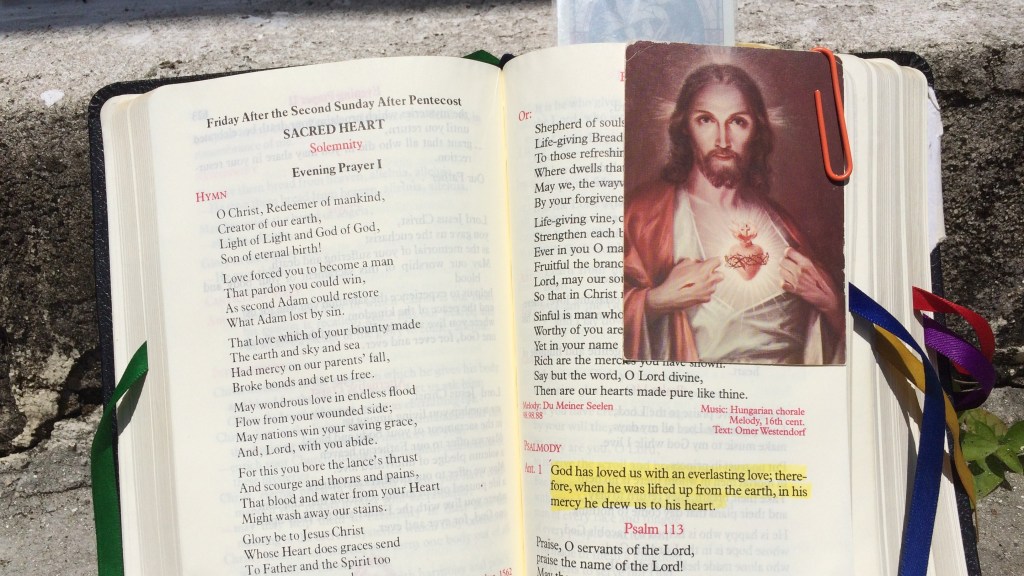
Photo: My breviary open to today’s Feast, the Solemnity of the Sacred Heart, highlighted antiphon: “God has loved us with an everlasting love; therefore, when he was lifted up from the earth, in his mercy he drew us to his heart.”
Link for the Mass readings for Friday, June 8, 2018, Feast of the Sacred Heart of Jesus:
http://www.usccb.org/bible/readings/060818.cfm

Good morning, I love you.

In today’s Gospel from Mark, one of the scribes approached Jesus and asked him, “Which is the first of all the commandments” (Mk 12:28). This may have been a challenge to Jesus or it may just have been a valid question of one seeking the Truth. Scribes were the experts in the securing and making known the Torah. They could read and write, a skill not only used for protecting and passing on the faith, but also for the daily tasks of commerce and contract writing.
This question of the scribe was one that was asked often by those who sought how best to live out Torah. Not only were there the Ten Commandments, but throughout the Torah, there were 613 prescribed laws! A common debate that was often entered into was which were the most important to follow to be faithful, as well as the minimalist approach, being, which were the most important to be followed so someone could just get by?
Jesus replied, “The first is this: Hear, O Israel! The Lord our God is Lord alone! You shall love the Lord your God with all your heart, with all your soul, with all your mind, and with all your strength. The second is this: You shall love your neighbor as yourself.
There is no other commandment greater than these.” With this response, Jesus drew first on Deuteronomy 6:4-5 and then regarding loving your neighbor, Leviticus 19:18. By answering in this way, Jesus stated that when we orient our life in the way that aligns ourselves to who God has created us to be, which is to Love God first, place God at the center instead of ourselves, we can then better love our neighbors and ourselves.
St Augustine, the bishop of Hippo (354-430), echoed Jesus’ “Greatest Commandment” by stating that we can love God and do whatever we want. The order of that statement is aligned to the commandment Jesus gave. God is first. The problem many of us have is that we place ourselves first, and seek to bend God’s will to our own. We look to flip the words to, do what I want and God will love me. True God will love us, but we will not experience his love, for we have disconnected ourselves from our relationship with him.
When we shift our orientation to seeking God first, such that this is our foundational approach to our life, our world opens up. Many of us are wounded by our own sin and the sin of others. We retreat into defensive postures and actualize defense mechanisms to survive. These may be good and necessary in the moment, but the challenge is that if we continue to live in a posture of survival mode, we are merely existing.
God wants us to strive, to be fully alive. His greatest joy is when we become fully alive and flourish, actualizing our vocation and the truth of who we have been created to be. This becomes a reality in our life when we open ourselves to the love of God, when we recognize we need him in our life, that we need him to bring us the healing balm of his love and mercy. Once we begin to experience the love of God we will begin to see ourselves and others, not from our own limited perspectives, but from the greater breadth and depth of how God sees us.
God is reaching out to us in so many ways to tell us that he loves us. He is loving us more than we can ever imagine. We unfortunately, are so turned in on ourselves that we close ourselves off to him. May we recognize the reality that his love is unconditional, it is not based on a feeling or emotion, though we sometimes experience those. God’s love is a deeper experience of willing our good. God loves us as we are, right now, right at this moment. Let us make some time to sit, breathe and experience God loving us. As we slow down enough to receive the love of God, we will begin to see in the course of our day how many ways he reaches out to us.
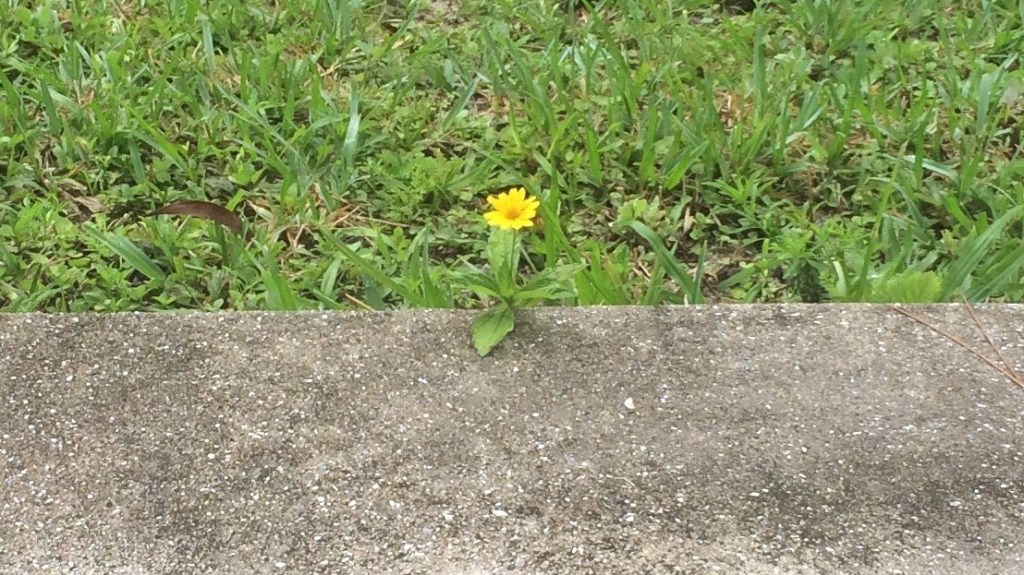
When I woke up this morning, I looked out the back door and saw a small yellow flower. I had the thought enter my mind of God saying to me, “Good morning, I love you.” God is sharing of himself in so many ways like this. May we be open to receive his love, be open to healing and risking again to reach out to others with the love we have experienced, so to not merely exist, but to begin to be free of that which binds us, so to fly and soar to the heights of joy and fulfillment that God calls us to. We will reach these heights as we love God, love our neighbors as ourselves and let God happen.

Photo: Yellow flower that I woke up to this morning.
Link for the Mass readings for Thursday, June 7, 2018:
http://www.usccb.org/bible/readings/060718.cfm

Embrace the Mystery of God, and experience a foretaste of heaven.

In today’s account from the Gospel of Mark, Jesus faces another challenge, but this time and the only time recorded in Mark, it is the Sadducees that confront Jesus. They present a hypothetical case based on the provision of Deuteronomy 25:5-6, which states that if a man dies and leaves a widow who has not as yet given birth to a son, that she is not to marry outside of the family, but she is to marry her husband’s brother. The reason was so that the first-born son would “continue the line of the deceased brother”(Donahue 2002, 352).

This was the starting point of the presentation. The representative of the Sadducees, then presented the absurd case in which six brothers die, all before the woman gives birth to a son. “Last of all the woman also died. At the resurrection when they arise whose wife will she be? For all seven had been married to her” (Mk 12:22-23). The logical presentation was presented in this way to prove their point that there is in fact no resurrection of the dead. The Sadducees did not believe in a resurrection of the dead because they saw no overt mention of it in the Torah, the Law or the Teachings, or what we would call the first five books of the Old Testament.

The reply of Jesus aligns him with the belief of the Pharisees, as they do believe in a resurrection of the dead, that is not a mere resuscitation, but that “the whole person will be restored to life” (Donahue 2002, 352). Jesus counters the claim of the Sadducees by inferring that they did “not know the Scriptures or the power of God” (Mk 12:24). Jesus shares, not if, but when the dead rise, they will not marry as they had done during their life on earth, but that they will be like the angels. Jesus also cites an account in Exodus when Moses encounters God. During their exchange God states that he is the God of Abraham, Isaac, and Jacob. “He is not God of the dead but of the living. You are greatly misled” (Mk 12:27).

God our Father is a God of the living. He is the source and sustainer of our life and that life is to continue beyond the temporal reality of our present experience and on into eternity. God has created us to yearn for communion with him, to find our true fulfillment in our relationship with him. In this life and in the next, we will not ever be able to exhaust that hunger and desire to be one with him. His love beckons us ever on.

We limit ourselves and the gift of wonder, as the Sadducees did, if we reduce the mystery of heaven to a problem to be solved. It is natural to think and ask questions like what do we do in heaven, who will we meet, and will…, fill in the blank here, be there? In our present state of three dimensional reality though, there are probably no words or descriptions that would suffice. A better way to exert our energy is to realize that heaven is not so much a place as it is a communal state of unity with God.  We are better able to do so when we open and prepare our hearts, minds, and souls to receive the one who has loved us into existence and continues to invite us into a deeper communion with him. To be aware that he permeates and is present in all aspects of our lives now, and that we just need to attune our awareness to his presence.

As we begin to experience his love, his nearness, may we then reach out beyond ourselves and share it, by being present to others within our interactions and beyond to those we may have closed ourselves off to in the past. We are to help others and be open to allow others to help and support us as we strive for our end goal of eternal communion with God. God comes closest to us in our relationships with one another. Ass we are loved by God and share our love with others, that love increases and the source will never run dry.

May we begin today by asking God to show himself to us, to help us to be open to encounter him in our experiences as well as those we will meet today, to remember to seek him if anxieties, conflicts, and struggles arise, and to thank him for the gift of our life, for his being with us, to love and guide us. In seeking God we will be found by the God who is already seeking us, and in our encounter with him we will experience the foretaste of heaven.


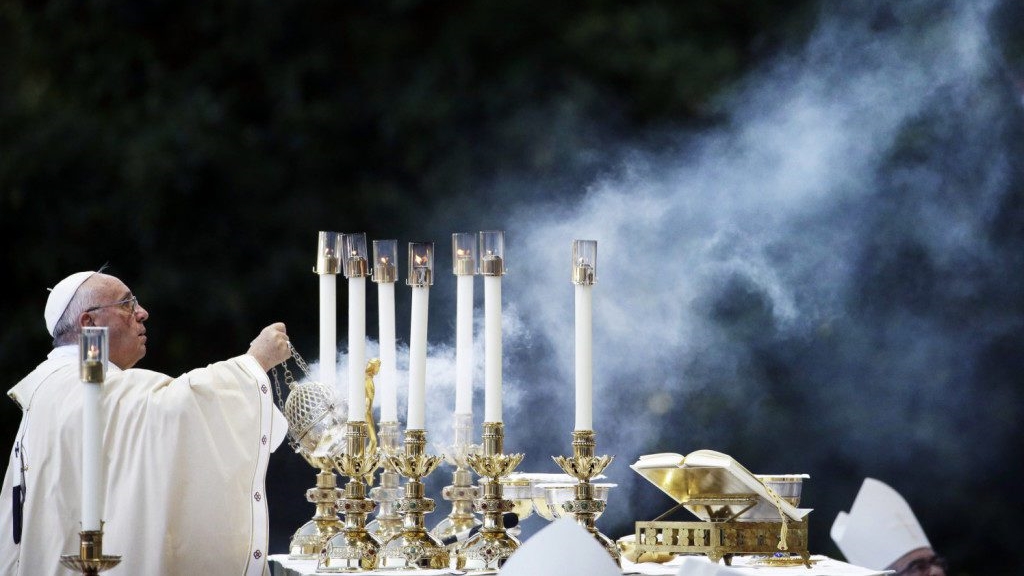
Photo: Pope Francis incensing the altar during outdoor Mass at the National Shrine of the Immaculate Conception, Wednesday, Sept. 23, 2015, in Washington D.C. (AP Photo/David Goldman).

John R. Donahue, SJ and Daniel J. Harrington, SJ. The Gospel of Mark, vol. 1 of Sacra Pagina. Edited by Daniel J. Harrington, SJ. Collegeville, MN: Liturgical Press, 2002.

Link for the Mass readings for Wednesday, June 6, 2018:

http://www.usccb.org/bible/readings/060618.cfm

Embracing faith and reason

Two groups who are generally opposed to one another, the Herodians and the Pharisees, appear to have formed an alliance. The Herodians, most likely supporters of the Galilean tetrarch Herod Antipas, have acquiesced and have allied themselves with the Roman occupation so that their “party” can be in leadership. The Pharisees, are opposed to Roman occupation and certainly do not support Caesar’s self imposed status as a god. Mark indicates that representatives of each group are sent to Jesus to “ensnare him in his speech.” They are seeking to gain evidence to bring charges against him.
They come up with an elaborate plan that seems foolproof. A representative from this groups asks Jesus, “Is it lawful to pay the census tax to Caesar or not? Should we pay or should we not pay” (Mk 12:14). If Jesus answers that they ought to pay, then the Pharisees can bring charges against him for idolatry. If Jesus refuses to pay, the Herodians can then bring charges against him for disobeying Caesar’s tax. Jesus asks for a denarius, a Roman coin, and asks what image is on the coin, the response is Caesar. So Jesus said to them, “Repay to Caesar what belongs to Caesar and to God what belongs to God.” They were utterly amazed at him (Mk 12:17).
Jesus bested them at their own game, in thinking outside of the limitations that were imposed on him by his questioners. Our faith is built on Jesus’ response. Not in the modern distinction of church and state, but more often than not we are to follow Jesus’ model and guidance of how we are to live in the world but not be of it, is not to be an either/or response, but a both/and response, and the final determiner is God.
One such example is the false dichotomy that is often displayed whereby one is to choose either faith or reason. One could approach Jesus today and say, rabbi, should we follow faith or reason? We are more authentic in actualizing and pursuing the greater breadth and width of understanding about who we are as human beings and our place in the cosmos when we embrace both faith and reason. Our science and intellect are spurred on by our sense of wonder and awe in that we seek to understand our world around us. Using our ability to reason, hypothesize, and ask why, have lead humanity to some wonderful discoveries. Reason and science though can only take us so far.
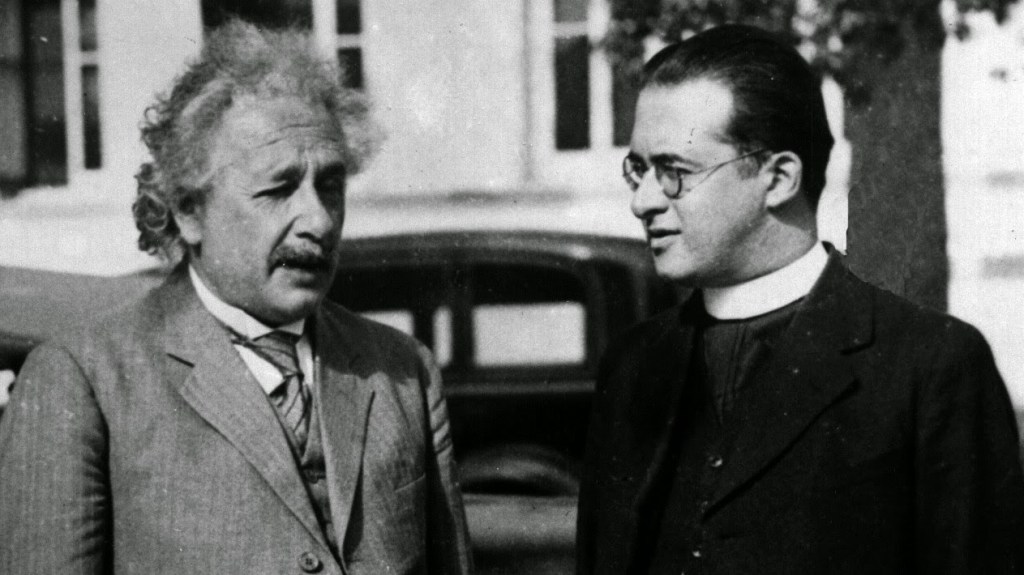
The gift of faith helps us to answer the questions that go beyond the ability to solve problems and to enter into the Mystery of entering into a relationship with God and the spiritual realm of his creation, that transcends our physical world and capacity to measure it. Just a few of those people from our past who have shown this both/and approach are Copernicus (1473-1543), who developed the theory of heliocentrism, meaning that the earth is not the center of the universe but instead revolves around the sun; Nicolas Steno (1638-1686), who excelled in the study of anatomy, geology and is considered the founder of the study of fossils; Gregor Mendel (1822-1844), who was an Augustinian friar and is considered to be the father of genetics; and Fr. Georges Lemaitre (1894-1966), who is considered the father of the Big Bang Theory.
The Catholic Church is not opposed to science, but discourages the concept of a hyper scientism, which states that we can only believe that to be real or exist if it can be measured by the senses or experimentation. This is a limitation to the gift of wonder. As St. Pope John Paul II wrote in his encyclical Fides et Ratio: “Faith and reason are like two wings on which the human spirit rises to the contemplation of truth; and God has placed in the human heart a desire to know the truth—in a word, to know himself—so that, by knowing and loving God, men and women may also come to the fullness of truth about themselves.” To excel at our passion and desire, we can best do so by bringing God into any endeavor we pursue.

Photo: George Lemaitre and Albert Einstein
The following link lists an article by Shaun Mcafee regarding 11 Catholic scientists through the ages: https://epicpew.com/11-amazing-catholic-scientists-you-should-know/
Link for the Mass readings for Tuesday, June 5, 2108:
http://www.usccb.org/bible/readings/060518.cfm

Instead of putting each other on pedestals, let us be good stewards of one another.

In today’s Gospel from Mark 12:1-12, Jesus shares the parable of the man building a vineyard and leasing it out to tenant farmers. “At the proper time he sent a servant to the tenants to obtain from them some of the produce of the vineyard.” Unfortunately, not only did the tenants not offer the produce due, they beat the servant and sent him back empty handed. This pattern was repeated, the owner sent servants, who were beaten and even killed, and then he even sent his son, thinking that they would respect him, but they killed him as well, thinking that then the inheritance would be theirs. Jesus ended the parable with an account of the swift retribution of the tenant farmers by the owner and the redistribution of the vineyard to others. The chief priests, the scribes, and the elders realized that the parable Jesus told was directed at them.
The leaders that Jesus shared this parable with were not happy about being compared to the wicked tenant farmers. This only deepened their resolve to arrest and persecute him. Would that the parable have been an opportunity to see that they were indeed like the tenants in that they were not being faithful stewards of God’s chosen people, and instead of digging in their heals, repented from their ways of turning their back to the will of God.
We who read Parable of the Tenants may be quick to judge the whole lot of them: the stewards, chief priests, scribes, and elders, but let us resist that temptation. What does this parable say to us? How have we been good stewards of that which God has given to us, including our self? A common mantra is that this is my body and I can do whatever I want with it. Though this may be a popular cry of individualism and self autonomy, it is not biblical.
All that we have is a gift from God, including our life and our very being. Each of us are a unique wonder to behold, while at the same time we are not our own to do with as we please. Our knee jerk and sometimes visceral reaction against this notion and choice instead to embrace a more radical individualism is that we want to be in control of our life. We believe that we know better, that we know what will make us happy and what will fulfill us, we want to give in to our pleasure, passions, and wants. Discipline is a dirty word. Our reaction also comes from our wounds, and our living in a fallen world where those we have put up on pedestals: our leaders, religious, political and familial, have time and again all fallen off and let us down.
This will continue to be the pattern unless we are willing to let go of our attachment to the things of this world, including our own self aggrandizement, and support of cults of personality. Let us instead look to the things of heaven. What will truly make us happy, what will fulfill us, is embracing who we are called to be: co-redeemers with God. God has given each of us gifts to better his kingdom. We are to be good stewards and bear fruit that will last.
The best way that we can begin this process is to acknowledge that we are stewards and not the owner, God is God and we are not. God has sent his Son to us. He has come to lead us to all that is Good, all that is True, all that is Beautiful. He is also the only one we can count on. We need to place our trust in Jesus first, so when others fall, we do not fall with them and/or despair, because none of us are perfect. Each of us have our strengths as well as our weaknesses. May we be there to empower each other, to utilize our gifts and our strengths, and allow others to empower us in our weakness. Let us be good stewards to one another.

Photo: JoAnn and I on a Christmas hike, 2010, taking turns carrying the food backpack. Photo credit – Jack McKee
Link for the Mass readings for Monday, June 4, 2018:
http://www.usccb.org/bible/readings/060418.cfm