Reflections on the Gospel Reading for the Day
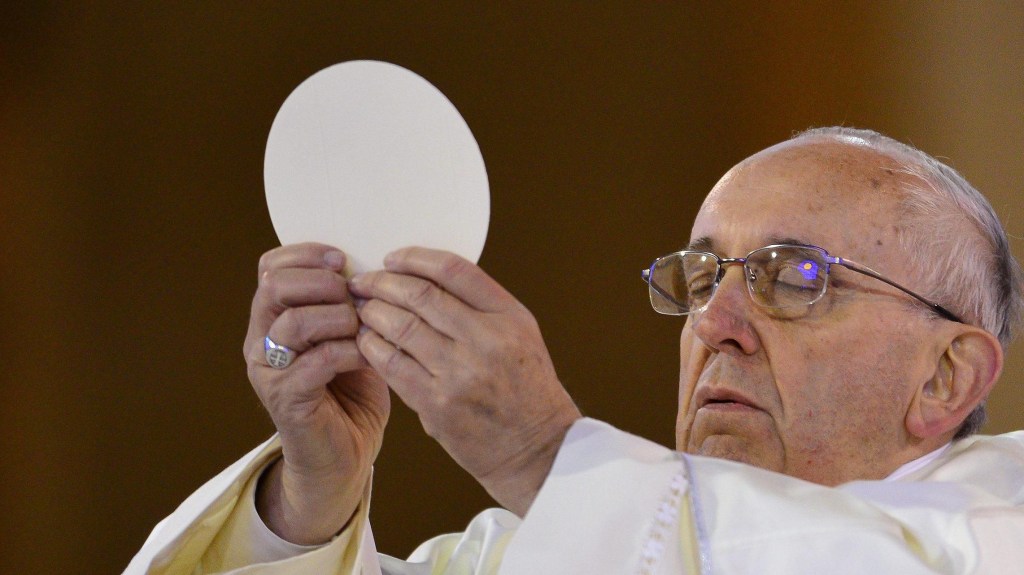

By what authority do we act, our own or God’s?
Jesus had not only created a scene when he turned over the tables literally in the Temple, but since the beginning of his public ministry, Jesus had been figuratively turning the tables on the religious leadership regarding how to worship and live out their faith in following God. The conflicts between Jesus and those in leadership were not subsiding but only growing, especially now that Jesus was present at the Jewish spiritual center of the Temple, the very seat of God. The chief priests, the scribes, and the elders, are becoming more concerned about the teachings and actions of this itinerant preacher, and believe him to be a false prophet, so they approach him when he returns to the Temple and ask, “By what authority are you doing these things? Or who gave you this authority to do them?” (Mark 11:28)?
Jesus deftly turns the table on them again. In doing so, they reveal that they do not believe that John or Jesus are operating under the authority of God, but they fear the reaction of the people gathering around their discussion. This is the time of the Passover, and many pilgrims have come to Jerusalem to celebrate. The area is teeming with people. The last thing that the Jewish leaders want is another scene as Jesus had staged from his turning over the tables the day before. The last thing they wanted was for the Roman centurions to get involved.
They refuse to answer Jesus’ question. Jesus follows like fashion then and does not answer theirs. This episode and exchange, as with the other conflicts with Jesus leaves them frustrated and even angrier at Jesus. They believe Jesus to be a false prophet, yet they are not willing to call him out publicly, so their indecisiveness fuels their resentment. Jesus is at peace because he knows that he is following the will of his Father and so he has nothing to prove.
How do we do with conflict? Are we as surefooted and confident as Jesus? If not, there can be many reasons, but foundationally, are we following the will of the Father in all that we do? The peace that surpasses all understanding that Jesus promises comes from the assurance that he is with us, he has our back, and supports us. It also comes with the confidence of knowing we are aligned with what God is guiding us to think, say, and do. The challenge is to be clear in our discernment that we know the difference between his and our own will, and when our decisions are in accord with or opposed to his.
From time to time we may receive absolute clarity. Many other times we are indecisive. The answer to knowing God’s will is knowing God intimately. We encounter and develop a relationship with God as we would with any other person, though until we develop a deeper faith life, that is easier said than done. As many of the saints attest, the closer they grow in relationship the more distant he appears. This is true because God invites us to go deeper, so we come to the point that we resist relying on our emotions, inspirations, our capacity to make sense of what we are asked, to come to the point to where he leads and we follow with clarity and without hesitation. Just as the sheep knows the voice of the shepherd, we strive to recognize and hear the voice of God speaking to us in the silence of our hearts.
Photo: Just as the sun rises each day, we know God is with us to guide us!
Link for the Mass readings for Saturday, June 2, 2018:
http://www.usccb.org/bible/readings/060218.cfm
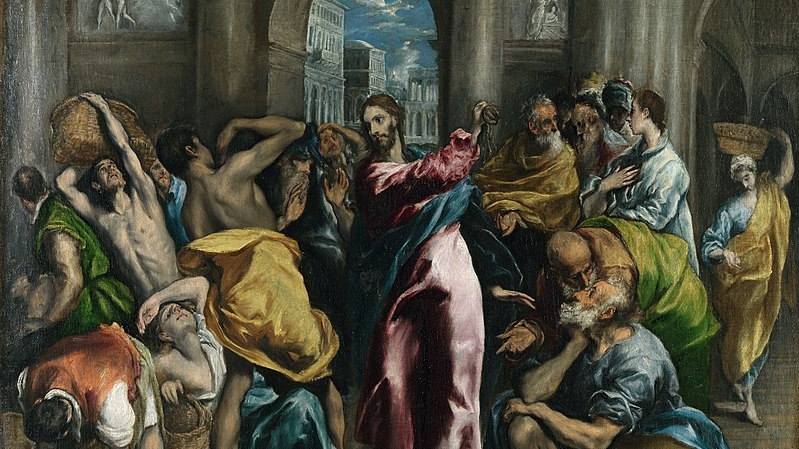
Hangry or Prophetic?
Upon a first reading of today’s Gospel from Mark it appears that Jesus woke up on the wrong side of the bed and that he was having a pretty bad day. He and the disciples were heading to Jerusalem, he was hungry, so spying a fig tree in leaf, he walked up to it and when he saw that there were no figs growing, he unleashed the words, “May no one ever eat of your fruit again” (Mk 11:14)!
In the next scene, we find Jesus returning to the Temple. He witnessed the money changers in the outer court, and he began to drive out those selling and buying there. He overturned the tables of the money changers and the seats of those who were selling doves (Mk 11:15). Good thing for the doves that Jesus only went for the seats.
There is a series of commercials that have been airing in which a character is very hungry and acting out of sorts until they are able to eat a candy bar. Once they do so, the character is transformed back into themselves. Is this what is going on with Jesus? Is he just hangry? Has his blood-glucose level taken a nose dive? Or is there something else going on?
Remembering that Jesus fasted for forty days in the Judean desert, I would speculate that there is something else going on here. What is more likely is that Jesus is asserting his prophetic role. As with other prophets recorded in the Old Testament, like Jeremiah, who gathered the elders of the people, then smashed a potter’s flask, then shared that this is what God would do to them for being unfaithful (cf. Jeremiah 19), Jesus is most likely going with a hyperbolic display to make a dramatic point.
The fig tree is often a sign for Israel and is recorded as such in Hosea and Jeremiah. When Jesus comes to the fig tree, his reaction is an expression of the unfaithfulness of Israel not so much at the fig tree. The chosen people are to be faithful to God in and out of season. When the disciples and Jesus passed by the fig tree the next morning, Peter exlaimed that the fig tree Jesus had cursed had withered to the roots. Jesus, not missing a step, mentions to his disciples that they are to: “Have faith in God” (Mk 11:22). By doing so, they will not whither and fade as those not being faithful to the covenant.
Jesus assumes his role as a prophet again when he is casting out the money changers in the temple precincts. It is no minor detail that the tables with caged doves were spared. If Jesus was going off in some kind of rage, he would not have thought twice about turning over the tables on them as well. Jesus again is making a spectacle that people would take notice. “Is it not written: My house shall be called a house of prayer for all peoples? But you have made it a den of thieves” (Mk 11:17). Jesus is restoring the Temple to its proper place as a house of prayer, but he is also showing that the temple tax that has been paid and the sacrifices that have been offered will no longer be needed. Jesus is foreshadowing how he will replace the brick and mortar and become the New Temple. Jesus will be scourged and crucified, he will be the sacrifice offered and the price paid for our sins. The altar will be the new table where his sacrifice will be memorialized and re-presented.
Jesus’ message of the fig tree and the cleansing of the Temple are clear messages to us today. As his followers we are to bear fruit in and out of season, this means that we are to live out his teachings in all areas of our lives, individually and in communion with one another. Jesus has given us all a gift to offer, something that no one else can or ever will quite do in the way we can. This is how we are to bear fruit. Jesus in cleansing the Temple, shows that he is the new Temple. We too are to be a part of this Temple. We are to resist the corrosive and corruptive temptations that assail us, and remain true to our calling and faithful to God’s will as members of the living Temple. We are precious stones, to be polished and refined, that we might radiate the light of Christ to those in our midst.
Painting: El Greco, Christ Driving the Money Changers from the Temple
Link for the Mass readings for Friday, June 1, 2018:
http://www.usccb.org/bible/readings/060118.cfm
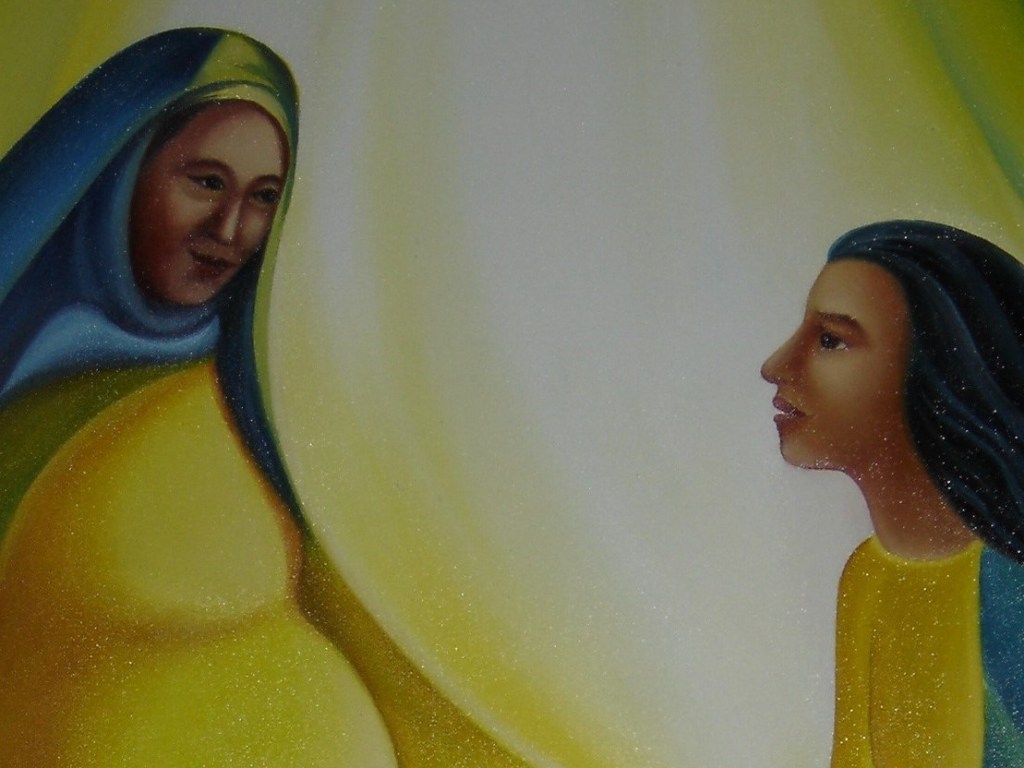
Let us share the Joy of Mary and Elizabeth with all we encounter, one smile at a time!
Mary “traveled to the hill country in haste” (Lk 1:39) and as she drew close and called out to announce her arrival: Elizabeth heard Mary’s greeting, [and] the infant leaped in her womb, and Elizabeth, filled with the Holy Spirit, cried out in a loud voice and said, “Most blessed are you among women, and blessed is the fruit of your womb” (Lk 1:41-42). This is an encounter of joy. Elizabeth’s response is a confirmation to Mary’s yes to the angel Gabriel, that she has indeed conceived in her womb the Son of God who was taking on flesh and becoming one of us, a human being, as she traveled to the hill country. Elizabeth’s son recognized him, and in leaping with joy, helped to get the celebration started!
The encounter and interaction between Mary and Elizabeth, Jesus and John, at the Visitation is a model for us of discipleship. Touched by the Holy Spirit we are to go out to share the Good News that God our Father loved us so much that he sent his Son to be one with us. He was willing to enter into our humanity. Some of the earliest heresies in the Church, which are still perpetuated today, were birthed because of an unwillingness to accept this gift, that God entered into and embraced our humanity, that God would become human was and is inconceivable. Yes, we have been wounded by sin, but we have not been destroyed. The coming of the Son of God as one of us is an opportunity to be healed, to be born again from above, and this can happen through the same love of the Holy Spirit that inspired John to leap and Elizabeth to rejoice.
May we resist the mind noise from within, and without from other people who tell us overtly and/or covertly that we are worthless or nothing. Not true! Through our very being, we are created in the image and likeness of God, we have been created by Love, to receive and to share love. We are a living craving hunger and desire to be in communion with God and one another. This is true for the atheist and the believer alike. We are called to will the good of the other as other as they are, unconditionally. If we have fallen short, a little or a lot, in the way we have been treating ourselves or others lately, today is a new day to take Jesus’ hand and begin anew. Let us celebrate with Jesus, Mary, Elizabeth and John.
We are celebrating that Jesus was born for us, he lived that we might not only be shown a better way, but know that he is the Way. Jesus became vulnerable for us, a key ingredient in unconditional love: to be willing to risk being authentic to who God called him to be, even to being willing to be rejected, even if that meant that all might walk away from him. May we be willing to be vulnerable, to risk, to share with others who we are, free of masks and pretense. May we be present to, and also walk and accompany one another. Being there for our family and friends is important, and if we take our Christianity seriously, we must come to acknowledge, in concrete ways, person to person, that we are all brothers and sisters, that in Christ we are all related.
Just as the sun shines on the good and the bad alike, Jesus died for each and every human being, all of us. After his Resurrection and Ascension into heaven, he sent the Holy Spirit, the Love shared between the Father and the Son, to empower us to live as he did, in communion with his Father, so to better actualize our communion with one another.
An invitation for the transformation of all humanity and creation happened at the Galilean hill side when two simple women said yes to God and embraced with joy. They came to embrace not only each other, but their vocation. May we join them in saying yes to God, follow his will with joy as Mary and Elizabeth did and with them, celebrate the gift of life, because as each of these mothers would experience all too soon, life can be taken quicker than they or we could ever imagine.
The lives of Jesus and John were not given in vain. They were offered up for us, you and me, so many hundreds of years later, as well as every other person then, passing on to each generation up to and including now living on this earth, that we all could have life and live it to the full. Let us resist the temptation to take this life we have been given, any moment we have been given, for granted. The life we have is not perfect, many suffer, many grieve, many are in pain. Our life is fragile, but precious a gift. That is why we have much work to do. Let us embrace our vocation and as J.R.R. Tolkien put in his character Gandalf’s mouth, “All we have to decide is what to do with the time that is given to us.” May God help us to know and guide as to what we are to do!
May some of that time be devoted to letting those we care about know that we love them. Let us make that call, send that card, email, or text, and/or invite that person for a walk, to sit down and visit. Even amidst the rising tide of divisive and polarizing darkness, may we be a light to all we encounter. Empowered by the love and joy of Jesus, may we conform our minds to his, so to think, speak, and act, toward anyone we might encounter with dignity, respect, kindness, and understanding. May we encourage, empower, and lift up one another. The easiest way to start is when you catch the eye of another, smile. In that simple gesture we say to the other person that by making time to smile we care enough about them to acknowledge their dignity, their worth, and let them know that they exist and have meaning.
Painting of Elizabeth and Mary in the church of El Sitio, Suchitoto, El Salvador
Accessed from:
https://walktheway.wordpress.com/2013/12/21/solidarity-mary-with-elizabeth/
Link for today’s Mass reading for Thursday, May 31, 2018:
http://www.usccb.org/bible/readings/053118.cfm
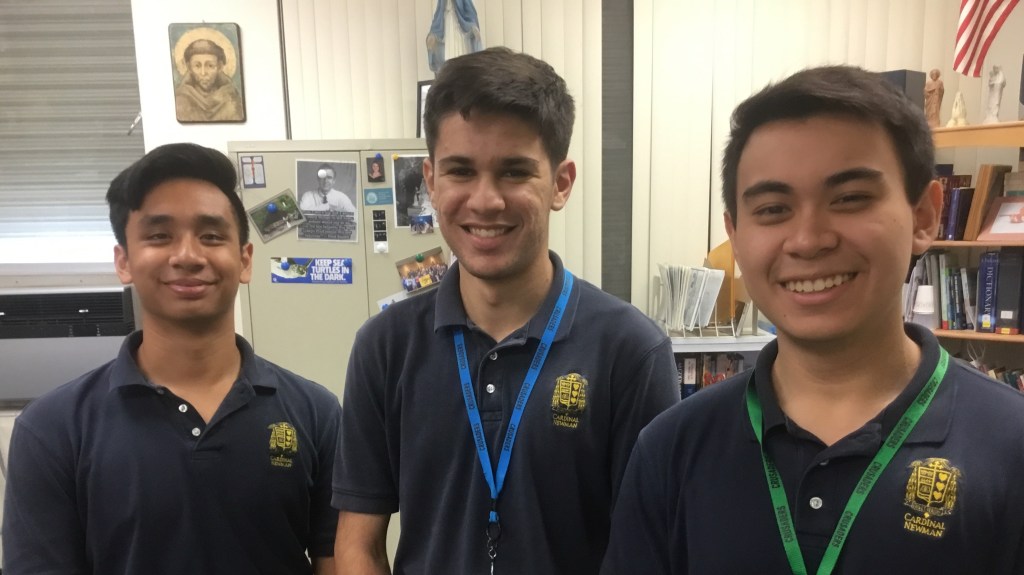
Embracing Jesus is embracing our humanity.
Some people will deny the divinity of Jesus on account of the differences between the synoptic Gospels, Matthew, Mark and Luke, which all follow a similar outline and similar accounting of the life of Jesus, and the Gospel of John, which is very different in regard to how much of the divinity of Jesus is expressed in its theological presentation. Those who would deny the divinity of Jesus following this proposal, state that the author of John is adding to Jesus that which was not there and that in the synoptic Gospels there are no accounts of the divinity of Jesus.
The assumption that there is no accounting of the divinity of Jesus in the synoptic Gospels does not present a true assessment of the these texts. This view is just not supported with a careful reading of the text. The very first line of the Gospel of Mark states: “The beginning of the gospel of Jesus Christ [the Son of God]” (Mk 1:1). This verse may often be read as merely an introductory device, and even if we drop the words the Son of God, bracketed because there are some manuscripts that do not include them, Mark was saying something very clear and very subversive when he used the word gospel. The Greek rendering of the word gospel is, euanggelion, which we interpret as good news. This is still pretty much, “Ho, hum,” unless we understand the context of how euanggleion was used during the time of Jesus.
This word was used by the Roman emperor who would send his emissaries to proclaim the good news throughout the empire announcing his birthday, or an imperial victory. No one else dare to use these words in a public forum as Mark is doing with the very first line of his Gospel, as this was the prerogative of the emperor. Mark was stating that Caesar is not Lord, but Jesus is.
Jesus only fourteen verses later would claim: “This is the time of fulfillment. The kingdom of God is at hand. Repent, and believe in the gospel” (Mk 1:15). The kingdom of God is at hand in the presence of Jesus. This is the euanggelion that we believe. The gospel, the good news, is that the Son of God has become one with us in the flesh, to dwell among us.
In today’s opening verse from Mark, we have read or heard; The disciples were on the way, going up to Jerusalem, and Jesus went ahead of them. They were amazed, and those who followed were afraid (Mk 10:32). Again, this verse may be read over quickly as a literary device so we can get to the good stuff, yet again, Mark is saying a lot. We may miss the context, but the readers and hearers of his audience would not have. They would have known that when the words, amazed and afraid, were used, they were done so to describe the reactions to God, his messengers the angels, or the work of God.
The Good News, proclaimed to us through the tome of salvation history, hidden in the Old and revealed in the New Testament, is that Jesus is the Christ, the Son of God. He is our Lord, he is our Savior and Redeemer. He became a human being, became one with us in all things except sin, and dwelt among us. Jesus did so that we can become divinized, we can become God through our participation in his life. May we too, like the disciples, be amazed and in awe of the magnitude of this reality. How many times have we heard this Good News, yet have just walked along or went about our business, as if nothing significant was said?
May we resist that temptation to do that here. May we meditate on the wonder and glory of this Good News today. We can become so busy, so caught up in just getting through all that we have to do, that we forget what is really important, who is really important. We can take for granted those that are near to us, not out of any malice or lack of care, but just because life happens and we get caught up in doing and getting done. May we stop today, slow down and appreciate our life in communion with God and one another. May we fully appreciate the gift that Jesus has offered us, which is a relationship with him, his Father, and the Holy Spirit, and in so embracing and developing the gift of our relationship with God, we can experience the dignity of our humanity, and recognize the same dignity that is present in each and every other human being.
Photo: Together in embracing human dignity!
Link for the Mass readings for Wednesday, May 30, 2018:
http://www.usccb.org/bible/readings/053018.cfm
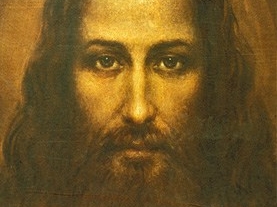
Jesus invites us to be a part of his kingdom. What is your response?
Jesus’ continued his teaching about the entrance into the kingdom of God as the rich man walked away sad by stating, “Children how hard it is to enter the kingdom of God! It is easier for a camel to pass through the eye of a needle, than one who is rich to enter the kingdom of God” (Mk 10:24-25). The disciples are stymied, primarily because present Jewish belief was that those who had amassed wealth and riches did so because they were blessed by God. If someone who had followed the commandments of God, was blessed by God, would not be a part of God’s kingdom, what then was one to do?
Yesterday’s reading ended with Jesus responding to the disciples astonishment. First by stating that “For human beings it is impossible.” Jesus said this because there is nothing that we can do to earn or buy our way into heaven. It is not through perseverance, our dogged determination, or will power that we are saved. Our security also is not to be placed in the things of this world, our happiness and fulfillment is not to be placed in the apparent goods and glitter of the finite things that offer comfort and pleasure. For if we place our hope in the things of this world, in our own belief that we can control our destiny, we will be building our foundation on sand. For human beings, it is impossible, but not for God. All things are possible for God” (Mk 10:27).
There is only one way to enter the kingdom of God. A person is to receive and say yes to his invitation. The rich man refused the invitation, because he chose his possessions over the kingdom. The disciples of Jesus chose differently. The opening line of today’s Gospel reading is given by Peter, speaking up for those, who like him, did what the rich man did not do, when he said “We have given up everything and followed you” (Mk 10:28). Jesus affirmed Peter and the other disciple’s acceptance of the invitation to come and follow him, as well as to assure those who would willingly sacrifice and voluntarily give up, house, family, or land, to follow him. He insists that they would receive back “a hundred times more in this present age… and eternal life to come” (Mk 10:30).
Jesus is not a preaching here a kind of prosperity gospel or free reigning capitalism, nor is he being a proponent of socialism or communism. For each of these are human social constructs. Jesus instead is painting a picture of the reign of God as a new family. One that exists, not of the world, but of God’s design. A kingdom not of this world, but still present in it. Those who are a part of this kingdom are not connected through bloodline, tribe, political party, or nation, but through a transformation of heart and mind and spirit. The followers of Jesus are brothers and sisters to one another. They will provide hospitality, charity, support, and encouragement to one another, as well as to the poor, as they meet the challenges and persecutions that would come from those who oppose the kingdom.
Jesus offers us the same invitation that he offered the rich man and his disciples. He is inviting us to follow him by letting go of that which distracts us, holds us attached, and bound from giving our life more fully over to following Jesus Christ and ourselves promoting his Gospel. The best way we can do this is to make an assessment of our lives, to divest ourselves of those things that are not necessary, to let them go, so as to live more simply. In this way we will be less tempted to look to our material goods for our security and pleasure, thus be less attached to them, and instead build our foundation on the solid rock foundation of our relationship with Jesus, his Father, and the love of the Holy Spirit. Who are you going to follow today, the allure of wealth, power, pleasure, and/or honor, or Jesus?
Painting: Ariel Agemian, “The Face of Christ”
Link for the Mass readings for Tuesday, May 29, 2018:
http://www.usccb.org/bible/readings/052918.cfm
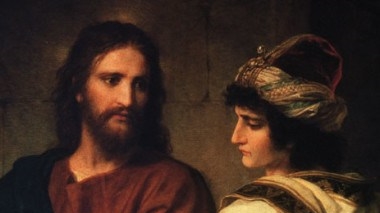
“You are lacking one thing…”
A man approached Jesus seeking to know what he must, “do to inherit eternal life” (Mk 10:17). Jesus shared that following the commandments, such as: do not kill, commit adultery, steal or bear false witness; do not defraud, but do honor his father and mother (cf. Mk 10:19), would be a good place to start. The man affirmed that he had followed them all. I can see the eyebrows of Jesus raise and his mouth curl into a smile as he realizes the sincerity of the man kneeling before him. The disciples recognized that look and held their breath.
Jesus, looking at him, loved him and said, “You are lacking one thing. Go, sell what you have, and give to [the] poor and you will have treasure in heaven; then come and follow me” (Mk 10:21).
The man was crushed. He had followed the prescriptions of Torah all his life, he was blessed by God with the gift of having many material goods, but in the end it was those possessions that had enslaved him. He genuinely came seeking eternal life, and Jesus gave him just what he sought, and more by giving him the opportunity to be one of his disciples, but he could not give up the one thing he was lacking.
The heart of the commandments is to help us to be freed from that which enslaves us, so that we can put God and each other first and foremost in our lives. This is what we all have been created for, “You have made us for yourself, O Lord, and our hearts are restless until they rest in you” (St Augustine, Confessions).
The man in today’s Gospel account knew what he needed to do, but was too attached to his wealth and material things to let them go, so he walked away sad, because he could not let go of the finite things he had that would not ultimately satisfy and turned away from that which would fulfill him and give his life meaning.
When we make some time to be still today and find a quiet space, may we enter a place of stillness. May we then return to the scene in Mark 10:17-31 and recall the image of the disciples and Jesus watching the rich man walk away sad. Slowly, we observe that they turn their eyes of invitation toward us. A bit hesitant, maybe, we too ask Jesus, “What is it that we need to let go of?” What are we holding onto that is keeping us from giving ourselves completely to Jesus, and journeying with him toward eternal life? Jesus looks at us, holds our gaze in his, and as he loves us, he begins, “You are lacking one thing…” What does he say next? What is our response?
————————————
Painting “Jesus and the Rich Young Ruler”,1889, by Heinrich Hofmann
Link for the Mass reading for Monday, May 28, 2018:
http://www.usccb.org/bible/readings/052818.cfm
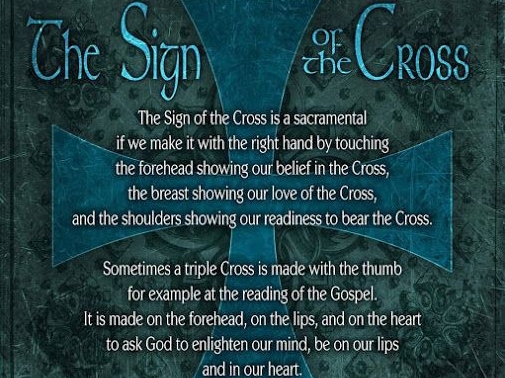
The Sign of the Cross
When we enter a Catholic church to pray or participate in the celebration of the Mass we stop by a holy water font, dip our finger in the holy water and make the sign of the Cross. We may also say the words that go along with the gesture, “In the name of the Father, and of the Son, and of the Holy Spirit.” When we do this mindfully, we are recalling our Baptism, we are recommitting ourselves to our baptismal vows which is to live our lives as followers of the God of Jesus Christ. This God is one God, subsisting in three Persons, God the Father, God the Son, and God the Holy Spirit. We also affirm this reality in the Creed we say each Sunday, where we affirm individually, while at the same time in communion with one another, that I believe in one God the Father Almighty, I believe in one Lord Jesus Christ, the only begotten Son who is consubstantial with the Father, I believe in the Holy Spirit the Lord the giver of life, who proceeds from the Father and the Son.
We also may bring this sacramental practice into our everyday lives. This gesture we can also make when driving past a Catholic church out of reverence for the true presence of Jesus in the tabernacle. We can also make this gesture and say the accompanying words, at the beginning and end of prayers, before and after we eat, in private as well as in public. We can see this movement of crossing one’s self at sporting events, before taking tests, when passing an accident, or when some one cuts us off in traffic. This gesture being a much better choice than a few others we might otherwise be tempted to use.
This hand gesture and accompanying words are one of the most basic prayers we learn and when we practice it consciously, we call to mind the very foundation of our existence. God within himself is a communion of three Persons, Father, Son, and Holy Spirit. God is a reality that always has been, is, and always will be. God the Father loves his Son eternally and fully, he is the Lover; God the Son receives the Love offered from the Father, he is the Beloved, and the Holy Spirit is the infinite breath, expression, and mutual sharing of the infinite love between the Father and the Son. This is why we can say without hesitation that God is Love because of this eternal self giving, receiving, and willing the good of the other.
The Son of God, the Second Person of the Trinity, has entered into our three dimensional realm, our temporal time and reality, to become a human being, while remaining fully divine, so to draw close to us, so we could draw close to him and become partakers in the same communal exchange of love that he shares with his Father. Having spent thirty-three years on earth, before he would Ascend back to the Father, he then commissioned the eleven Apostles: “All power in heaven and earth has been given to me. Go, therefore, and make disciples of all nations, baptizing them in the name of the Father, and of the Son, and of the holy Spirit, teaching them to observe all that I have commanded you” (Mt 28:18-20). The followers of Jesus did just that and we have the invitation and opportunity to continue that rich Tradition today.
We who have been baptized in the name of the Father, and of the Son, and of the Holy Spirit, are called to be partakers in the life of the Trinity. We are to be participants in the love of God through our thoughts, words, and actions. As we have been loved into existence, so we are to love others, “of all nations.” We need to resist the urge to withhold our love from, those closest to us, but also those we consider as other, those we fear, and those we would judge as lesser and label as an enemy.
When we withdraw into our self, keep others outside, when we build up walls, we separate and isolate ourselves from one another. We wound our interconnectedness, we become less than human when we dehumanize, degrade, and belittle. By actually spending time with, by being engaged and interacting with one another, by willing their good, through participation in the corporal and spiritual works of mercy, the external labels, judgments, and prejudices start to fall away. We begin to see each other as human beings again. We can then experience the love of God flowing back and forth between one another and grow to be brothers and sisters.
Pope Francis tweeted on September 12, 2015, that “Every time we make the sign of the Cross, we draw closer to the great mystery of the Trinity.” May we ponder the mystery of God today, ponder and so enter into the mystery of his Trinitarian Love. Each encounter we have is to be a mirroring of Trinitarian communion in that we are to love, be loved and so experience the love that is shared between us. This is when we are at our best as Church. May we be a witness of what we believe today by mindfully making the sacramental sign of the cross, yes, but also living the deep reality of what this gesture means in our lives. If you are not sure where to start, begin with a smile, a hug, a handshake. We are all interconnected to one another with a Trinitarian Love that surpasses all understanding. As we engage in sharing the love of God, we remember who we are and whose we are.
Photo: Image accessed from http://www.schmalen.com
Link for the Mass readings for Sunday, May 27, 2018:
http://www.usccb.org/bible/readings/052718.cfm
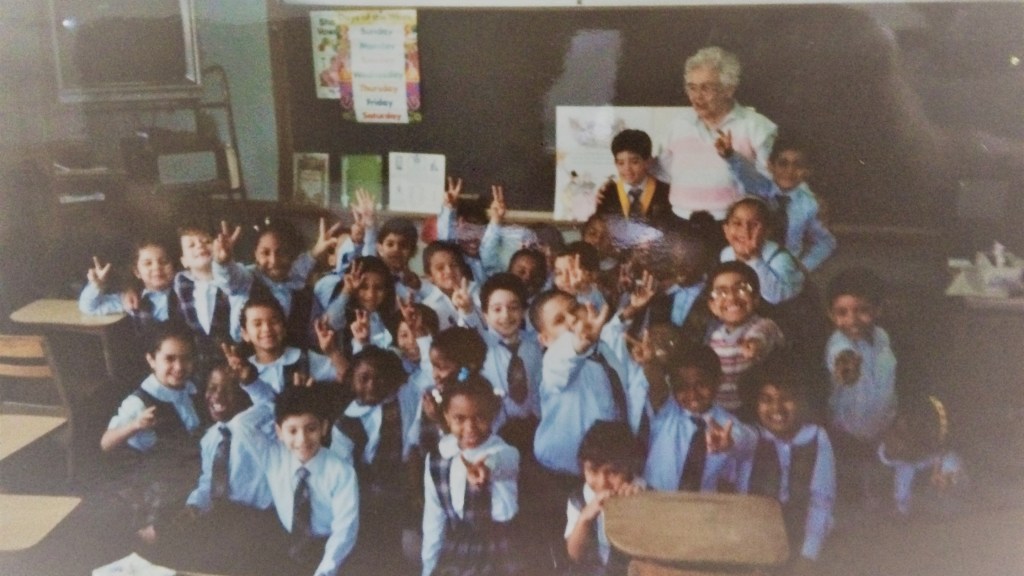
May we accept the divine gift of the kingdom of God like a child.
In today’s Gospel, we read about a short scene, or pericope, in which people are bringing their children to Jesus to receive a blessing. The disciples step in to prevent this process from happening. The reason for their actions is not presented by the author, but what is shared is the indignance and anger of Jesus. Jesus rebuked his disciples by saying, “Let the children come to me; do not prevent them, for the Kingdom of God belongs to such as these. Amen, I say to you, whoever does not accept the Kingdom of God like a child will not enter it.”
Jesus consistently offers grace to those who might otherwise be prevented from receiving it. Jesus provides healings for the possessed, lepers, women, the blind, the lame, tax collectors and sinners. The very fact that this small pericope mentioning children is even included in an ancient near Eastern text says something profound. Jesus is recognizing the dignity of children as is also recorded in Mark 9:36-37 when he states that whoever receives a child in his name, receives him. Children had no recognized social status. Orphans were at risk and needed to be taken care of and especially up to two years old, there was a high infant mortality rate. As a defensive measure, psychologically, many parents may not have become too attached until after two years old. This harsh reality could be a reason why these children were being brought to Jesus for a blessing.
Jesus, in his reaching out to the children, impresses the point that he takes the life of children seriously and by so doing encourages others to do so. There are historical accounts that Christians continued to take this teaching seriously. In ancient Roman society, if parents did not want a child they would just leave them in a local dump to die. Christians would come to retrieve the infants and bring them into their homes as their own.
Jesus also used this opportunity as a teachable moment when shared that “the kingdom of God belongs to such as these.” Jesus is recorded as using the image of God as a Father one hundred seventy five times in the Gospels. Our relationship to God, then, can be seen as being children from the perspective of having total dependence and placing all our trust on God. Also, from this perspective, everything we receive from God, our Father, is as a gift.
Jesus teaches us that the kingdom of God is a pure gift. God has created us to be in relationship with him. God has given us our very existence through participation with our parents, and we need him as an infant does for his or her own very survival. We enter the kingdom of heaven when we recognize our dependence on God. Also, we need to recognize that we do not buy or earn our way into the kingdom because God and his realm is so transcendent, so beyond us, we cannot get there on our own effort and merit. We enter the kingdom of God when we say yes, and accept the invitation he offers.
Just as Jesus opens his arms to embrace the children, to receive and bless them in his arms, so he does so with us. In our willingness to enter into and receive his embrace, we enter into the kingdom of our Father. May we be thankful today for the gift of our lives, the gift that we are loved, the gift that we exist as a person of dignity, value, and worth. As we accept and embrace this gift of seeing God as he sees us, may we see others in the same way, not as other, but as brother and sister in the family of the kingdom of God. May we also work to promote a culture of life that recognizes and acknowledges the dignity and value of each and every person without exception from the moment of their conception, birth, throughout the ups and downs of daily life, up until our elder years and natural death.
Photo: First grade class I assisted with during my time in the pre-novitiate with the Franciscans of Holy Name in the Bronx, around 1990.
Link for the Mass readings for Saturday, May 26, 2018:
http://www.usccb.org/bible/readings/052618.cfm
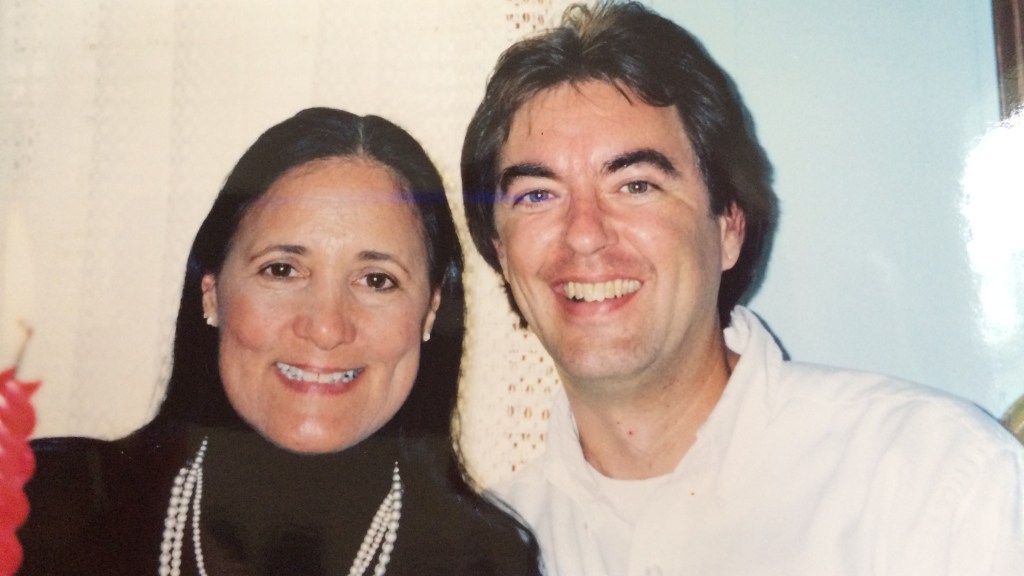
Marriage is a sacred bond.
If you ask many people what the rate of divorce is in the United States most would say that it is at about 50% and most likely increasing. Recent sociological studies however have claimed that there was a dramatic increase in the divorce rate over the 1970’s and 80’s and the projection was that this rate would continue to rise. This time period was most likely actually the peak time, at which it did not reach 50%, and the rate of divorce has been decreasing since the 80’s.
The challenge with figures such as these is that statistical analysis can be shaped and skewed, also, measuring divorce rate is not all that easy. The reason I even address the point is that it is a good thing to be able to read reports that would suggest that the rate of divorce is dropping. The fact that there is still possibly a 30% or higher divorce rate is not something to celebrate, and the fact that Moses was addressing this problem in ancient Israel shows that we have been dealing with this issue for a long time.
Jesus addresses this same challenge of divorce in today’s Gospel as some Pharisees approach him about the issue. Jesus acknowledges the stance of Moses in that he did allow for “the husband to write a bill of divorce” because the people were not able to live up to the prescriptions of the Torah. Jesus then sites Genesis, stating that, “from the beginning of creation, God made them male and female. For this reason a man shall leave his father and mother and be joined to his wife, and the two shall become one flesh. So they are no longer two but one flesh. Therefore what God has joined together, no human being must separate“ (Mk 10:6-9).
Jesus, in quoting from Genesis 1:27 and 2:24, reaffirmed God’s intent, that marriage is to be a union that is to be indissoluble. The reason for this is that God intended marriage to be a covenant, not a contract. Contracts can be signed or broken. Covenants are sacred bonds for life. Marriage is also a natural ordering that mirrors on earth the reality of God who is a communion of Three Persons in heaven. Jesus building on this natural ordering bestowed his grace upon marriage thus elevating it to a sacrament in which there is a sacred bond between the husband, the wife and Jesus himself: “Therefore what God has joined together, no human being must separate” is interpreted by the Church to mean that a valid, sacramental marriage cannot be undone.
The unfortunate reality is that many who marry in the Catholic Church have not been thoroughly catechized to understand the reality of the sacrament of marriage, and Pope Francis acknowledged this in June of 2016 when he stated that, “the great majority of our sacramental marriages are null”. The Pope was referring to those who are entering into and have celebrated the Sacrament of Matrimony are doing so invalidly, meaning that the marriage certainly did happen, but it has not been elevated to the sacramental bond of a covenant.
Pope Francis recognized two things with this statement, that those who seek to marry in the Church do so with a good intent, but are grounded in a culture that is more provisional than seeking permanence. We are losing our sense of indissolubility. We live in a culture in which the acquisition of material goods that are produced and purchased are done so with the understanding that our economy has been built to thrive, not on what will last, but that which will be quickly replaced through innovation, updates, and newer models. What has been happening is that our consumer culture is being translated to the person and to our relationships with horrific consequences.
Jesus has set the bar and ideal for marriage high for the reason that marriage and the family is the closest mirroring on earth to the divine communion in heaven of the Father, and the Son, and the Holy Spirit. The infinite outpouring of love, of sacrifice and willing the good of the other is the foundation for any relationship, but even more so for marriage. For this union is meant to be open to a third, the child. For the family to be stable, they must be present to one another, to sacrifice, to give of themselves to each other, and to encourage and support one another on their mutual path to heaven.
Sadly, there are those who enter marriage with good intentions, but not fully aware of what they are getting into, not fully aware of the truth of love being more of a sacrifice and less of a feeling, and not fully comprehending that marriage is not a trial process but a sacred bond. In addition there are many factors that work against the couple such as, the relationship meets a crossroad, a better model comes along, there is a lack of the proper social and conflict resolution skills, the realization of a false premise unknown before the marriage surfaces, domestic abuse, and then what can arise is the choice for separation, and regrettably an ending. From this choice there is deep pain, trauma and wounds that need to be healed. Jesus does not seek disunity but unity. He does not lessen the bar as did Moses, but is present to those affected by the wounds of the separation and dissolution of the union. He is and calls us to be willing to accompany our brothers and sisters who are in need of healing from the trauma of the ending of a relationship for those involved.
Marriage is a wonderful gift, and as with anything that is going to last, those seeking to be married need to be prepared. Certainly, no one can prepare for everything, nor can we foresee the unannounced surprises that life can bring, but there must be at the beginning a willingness to commit to putting in the effort, to sacrifice, to support, and love, not lust for each other. There needs to be an openness to the possibility of children, a genuine caring and commitment to willing each other’s good through the ups and downs of life’s journey together, for better and for worse, as well as a willingness to seek Jesus for help when life gets bumpy.
I would also like to offer six suggestions from Pope Francis regarding marriage advice: the first is to end every day with forgiveness, the second is to ask permission, the third is to show gratitude, the forth is to help your spouse reach his or her highest potential, the fifth is to keep alive the romance, and the sixth is to refuse to give up so easily.
Please, please, please, remember we are not commodities, we are created in the image and likeness of God. We are not to use one another for our own gain or just as a means of pleasure. Each of us are sacred, human beings endowed with dignity, value, and worth that deserve to be loved more than we can imagine by God and one another. A God-incident for the day is that this Gospel reading happens to fall on the same day as JoAnn and my 22nd anniversary 🙂 Please pray for us that we may continue to enjoy 22 more wonderful years together, as we pray for you and your relationships to thrive as well!
Photo: JoAnn and me Thanksgiving 2015
Article with more information on Pope Francis’ six marriage tips:
https://www.liveabout.com/marriage-tips-from-pope-francis-2492126
The link for the Mass readings for Friday, May 25, 2018:
http://www.usccb.org/bible/readings/052518.cfm

