Who is Jesus?

“‘Who then is this about whom I hear such things?'” And he kept trying to see him” (Lk 9:9).

Herod Antipas, ruler over Galilee and Perea, heard stories about Jesus. The range of his thoughts that Luke expressed are confusion to curiosity. Herod may have started to feel concern over the possibility of a growing revolt, some guilt for his execution of John the Baptist, or just curiosity to see what this man was all about and if he could accomplish even half of the things Herod had heard about him. The one question that did not seem to cross Herod’s mind was if he had any interest in changing his life and becoming a follower of Jesus.

Herod is not the only one in Luke’s Gospel who asks questions about who this man Jesus was. Nor did the asking of those questions die with Jesus on the cross. They continued after his resurrection and ascension, they continued into the first centuries of the Church leading to the calling of the first ecumenical councils which dealt directly with who Jesus was, and they continued in each following century and continue today. Even a new perspective has arisen. In some academic circles, the question is not so much who Jesus was or is, but whether Jesus even existed at all. Asking if Jesus existed or who is Jesus, is a question we must ask ourselves from time to time. The answer matters.

One could ask why does this question about Jesus persist? One answer is that we are finite beings seeking to understand an infinite Mystery. The full comprehension of the reality of Jesus existing as fully human and fully divine, dying on the cross, conquering death through his resurrection and ascending to the Father transcends even the wonderful intellect and ability to reason that we have been blessed with. Also, Jesus’ invitation is a universal but personal one. Jesus called the Twelve, Mary Magdalene, St. Irenaeus, St Thomas Aquinas, St Francis and Clare of Assisi, St Catherine of Siena, St Teresa of Avila and St John of the Cross, St Ignatius, St Mother Teresa, Thomas Merton, Dorothy Day, and us to himself. He did not call us to a philosophy, an ethical way of life, or even a religion. Jesus called and calls us to be a part of his Body, the Mystical Body of Christ.

Who is Jesus? Jesus the Christ is the Son of God incarnate. He became one with us in our humanity so we could be one with him in his divinity. I have said yes to his invitation and have been walking along these stepping stones of our journey together, more consciously so, since I was about seventeen. Life hasn’t been perfect, and I have at times mumbled along with St Teresa of Avila, who stated after she was thrown from a carriage into a mud puddle, “If you treat your friends this way, it is no wonder you have so few.” But I have experienced more days of inexpressible joy, such moments of wonder and exhilaration, and felt so blessed to see how Jesus works through me to help others, that I can be nothing but grateful for this journey with Jesus and I continue to look forward to what lies ahead!


Link for today’s Mass readings:

http://www.usccb.org/bible/readings/092817.cfm

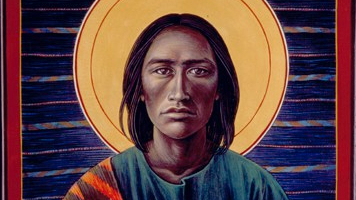
Painting: Fr. John Giuliani – Indigenous Jesus

God Knows what Fulfills and Gives us Joy!

“Jesus summoned the Twelve and gave them power and authority” (Lk 9:1).

Jesus summons us as he did the Twelve and empowers us for ministry in his name. The expression of our service is unique to each of us. Many resist entering into a deeper commitment to their faith because they are anxious or afraid that God may call us to something that we would never want to do and that would make us miserable. Initially, there may be some trepidation if we are clear of the direction God wants us to move in, but that comes more from our hesitancy to change and move out from our comfort zone. Ultimately, God wants for us what we want for ourselves; to live a life of joy, meaning and fulfillment.

God knows clearly what will fulfill us, give us meaning, and bring us joy. The challenge for us is to come to know this for ourselves as well. The work of discipleship begins by accepting the invitation of God to walk with him and trusting that he knows what he is doing! As we journey along the path of discipleship, no matter what our age, we are never too young or old to begin or recommit to the journey. One good practice is to bring our dreams and desires to God in prayer and to imagine ourselves embracing what we desire. When I first joined the Franciscans to study for the priesthood in the early 90’s, I would imagine from time to time my ordination day. A puzzling result consistently arose. I did not imagine myself as feeling any excitement or joy. A year and a half into formation, I decided to take a leave of absence, and three years after I left, I realized why. I met JoAnn. Whenever I envisioned our marriage ceremony I felt, and as I write now, still feel the excitement and joy of our wedding day when we made a commitment to each other to share our journey together!

God has a plan for us, he knows what will fulfill us. We come to align ourselves with his will as we ponder our dreams and desires, and as we investigate, research, explore potential outcomes, and continue to pray with God and discern each step. He will continue to lead us and give us what we need to serve him. There will be fits and starts, mis-steps and gliding, doubts as well as confirmations, desolations and consolations. The key is to remain faithful, to continue to trust in Jesus who called us. He will continue to accompany us along the way, he will give us the resources and strength we need, and he will give us the power to transform our and other’s lives. We are never alone.


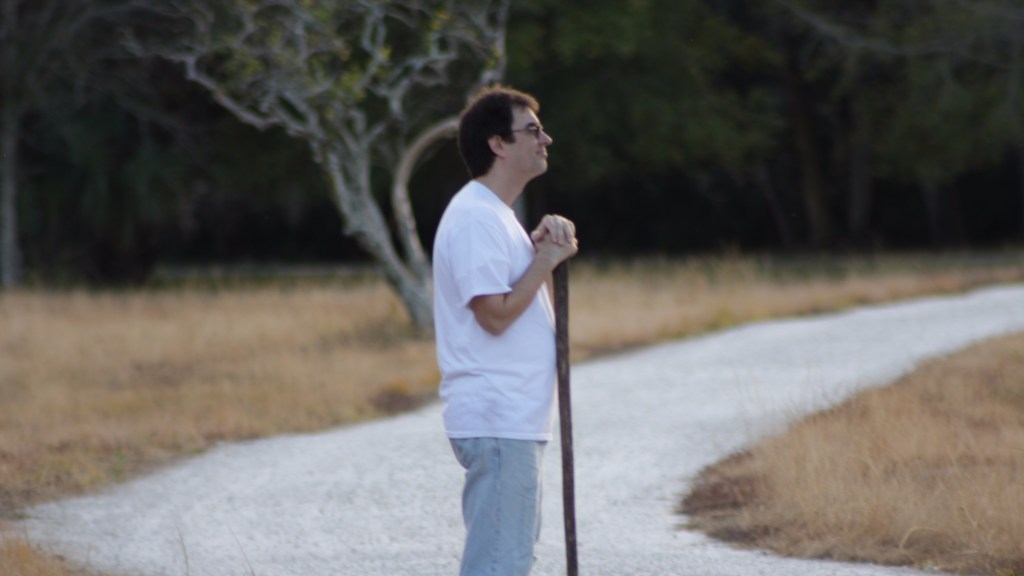
Photo credit: Jack McKee

Link for today’s Mass reading:

http://www.usccb.org/bible/readings/092717.cfm

Brothers and Sisters in Christ not Blood

He said to them in reply, “My mother and my brothers are those who hear the word of God and act on it” (Luke 8:21).

There are many popular genetic testing kits that are advertised on TV and through the internet. People have asked me is it possible to be a blood relation to Jesus. Jesus’ reply today can help you to save some money. What is important is not blood relation, but “those who hear the word of God and act upon it.” We may experience a subtle shudder from this statement, but to those of Jesus’ time it would have been apoplectic. Family meant everything in the Ancient Near East.

Jesus is not making the point that we disregard family. But he is making the point that if we are to be authentically present to our family this will come about best by following the will of God. As we deepen our relationship with Jesus and put his teachings into action, we begin to bear the relational fruits of patience, understanding, kindness, love, joy, and peace. Would not our familial relationships be better if we were more patient, understanding, kind, loving, joyful, and peaceful with one another? Jesus taught and showed from his own life that the path to fulfilling and intimate relationships flourish when we put God first. For as we grow closer in relationship with him we also do so with those in our family.

Jesus’ point goes even deeper in that our “family” is to transcend bloodline, tribe, or nation. Any of “those who hear the word of God and act upon it” are spiritually akin to Christ. The point is not that we may have a genetic lineal relation with Jesus, but that when we live and act according to his Father’s will. In this way we are part of the universal familial line of God’s grace and mercy and our relationship with him and one another grows as we continue to bear the fruits of the spirit. Instead of talking and shouting at one another, let us seek to build bridges of a common accord with one another as brothers and sisters, seeking to be more understanding, to be more willing to walk and accompany one another. Let us love one another as Jesus has loved and loves us!


Link for today’s reading:

http://www.usccb.org/bible/readings/092617.cfm

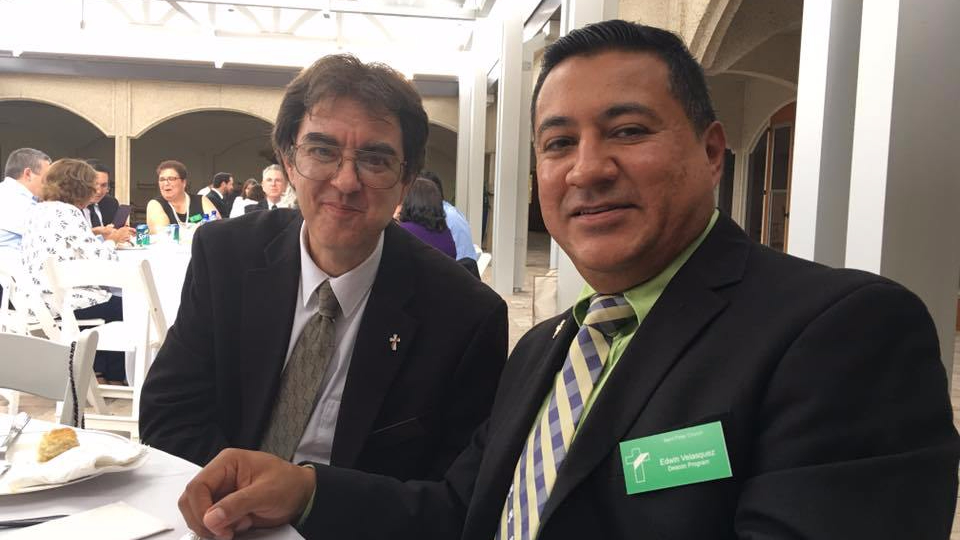
Photo: My brother in Christ, Edwin, at his installation as Lector this past Sunday.

Our Faith in Action, Bearing Christ’s Light

Jesus said to the crowd: “No one who lights a lamp conceals it with a vessel or sets it under a bed; rather, he places it on a lampstand so that those who enter may see the light” (Luke 8:16).

God blesses us freely without cost, he freely gives himself to us. He has done great things for us and he is the source of our joy! We do not earn nor is there anything that we can do to gain God’s grace. But we can lose the gift we have been given. This happens either by not receiving or refusing what has been offered, or once accepting and receiving not doing anything with our gift. If we are people of faith in name only, but not followed by action, we are concealing the light we have been given.

Since our Golden Retrievers have passed away, our last of three, Lexi, just a few months ago, the little exercise I did walking with them is now almost non existent. Premature aging of my heart, weight gain, lower back and body ache, as well as a series of pulled muscles, are all subtle hints that my lack of attention on exercise is exacting a cost on my health.

The same can be said for our faith. If we do not exercise our faith, we will receive signs of atrophy. Not to even acknowledge the presence of God in our life, the free gift of his invitation to be in relationship with him, our life will be limited at best. For whether we believe in God or not we hunger to be in communion with him and one another, so we will be looking for other apparent avenues of happiness that will fall short of fulfilling us. If we do accept that there is a God, yet don’t participate in worship, fellowship, service, and prayer, we are not much better off. I can believe that my car will get me to school in the morning, but if I do not put the key in the ignition, turn on the engine, put the car in drive, I will remain stationary and stay where I am.

If we claim to be people of faith, we need to put our faith in action. We need to daily: spend time in prayer, read Scripture, study our faith through spiritual reading, cd’s, dvd’s (I at first wrote cassettes and videotapes!) and/or podcasts. We need to consistently participate in worship, the sacraments, and serve one another. We need to see God in our everyday experience and see how we can collaborate with him in all we do. We must resist the tendency to privatize our faith, while at the same time resist getting in someone’s face. We are to be present, care, understand, support, and accompany one another, even others of no or different faith traditions.

May we be open to being conformed today and each day to the love and mercy of Jesus, most powerfully shown by his giving his life for us. Let us resist the darkness of our prejudice and fear. Let us instead seek to encounter one another, to realize how much more we have in common than not. May we seek in each interaction to bear the presence of Christ’s light, radiating such joy and hospitality in such a way that anytime we come together, God happens.


Link for today’s readings:

http://www.usccb.org/bible/readings/092517.cfm


May We Be Merciful as God is Merciful.

At dawn, nine, noon, three, and five o’clock the landowner hired day laborers to go into the field to work and bring in the harvest. Many familiar with this parable may side with those working since dawn and may also grumble, “against the landowner, saying, ‘These last ones worked only one hour, and you have made them equal to us, who bore the day’s burden and the heat'” (Mt 20:11-12). Instead of being grateful for the wages they received and had agreed upon before the job began, those grumbling focused on what they perceived as an unfair allocation of payment. The landowner attempted to clarify with one of the obstinate ones: “My friend, I am not cheating you” (Mt 20:13).

In essence, the landowner sought to draw this laborer from his self centered view to the broader context and reality of the situation. Each of the laborers in the parable were day laborers, they did not have a regular stable salary. They worked and received wages and provided for their family only when someone gave them an opportunity. It wasn’t that the landowner was favoring the last over the first, he was just being generous with the opportunity to provide work and pay for those who answered yes to his invitation. And in the end he asked “am I not free to do as I wish with my own money? Are you envious because I am generous” (Mt 20:15)?

Jesus presented the parable of the workers in the vineyard (Mt 20:1-16) as he did with the parable of the prodigal son (Lk 11:15-32) to show his listeners and us the generosity of God’s love and mercy. We must resist the temptation to be envious and begrudge those, who having less, have received from God what is their due. Instead, we who have been blessed, need to be aware of the generosity God has bestowed upon us, to be thankful for the blessings he has given us, and we are also to collaborate with God and share the blessings we have received with others who are less fortunate than ourselves, for “the harvest is abundant, but the laborers are few” (Lk 10:2).

We have been invited to work for the Landowner in his vineyard. We are to be about his work building and restoring relationships and not worrying about seeking his reward. Comparing what we have to what others have will only end in frustration and separation, for as the prophet Isaiah said, “For my thoughts are not your thoughts, nor are your ways my ways, says the LORD. As high as the heavens are above the earth, so high are my ways above your ways and my thoughts above your thoughts” (Isaiah 55: 8-10). The just wage for our work is God’s mercy and we are to not refuse or be jealous of anyone else receiving his mercy either. Instead of judging God’s forgiveness and mercy, may we seek to emulate it!


Link for today’s Mass readings:

http://www.usccb.org/bible/readings/092417.cfm


Bearing Mature Fruit!

“The seed is the word of God” (Lk 8:11).

Jesus expressed in his parable of the sower the ways in which we lose the germination opportunity or coming to bear fruit of the seed that has been sown. The devil “comes and takes away the word from their heart that they may not believe or be saved.” Another way is with those who fixate on mere scientism or empiricism, and so denounce any spiritual or transcendental experience as a coincidence, or dismissed as offering no empirical substance, no proof, thus explaining away any trace of spirit. Others “receive the word with joy but have no root.” Some encounter God, experience deep emotion and connection in the moment, but once the emotion wanes, they move onto other pursuits, other experiences. Still others receive for a time God’s word, come to a place of germination and sprouting, experience new growth, but “are choked by the anxieties and riches and pleasures of life, and they fail to produce mature fruit.”

We still fall prey to each of the above examples Jesus offers in his parable today. Each of them at different times. We are distracted, we are busy, we seek merely accomplishing and moving on to the next activity or item on the list, but if we ever want to experience mature fruit, we must “embrace [the word] with a generous and good heart, and bear fruit through perseverance.”

Do we read a book just to get done, do we go to church just to say we went, do we visit or call relatives, friends, to say we have accomplished our duty, do we go to work or school just to get to Friday? To be fully alive we need to be present in the experience of what we are doing, we need to embrace a mindfulness and deeper experience of what we do, and to do that we need to slow down and breathe. Then maybe we can read to come to understand and put into practice what we may have learned. This is true for good fiction as well as non-fiction, and poetry. This is even truer when we are reading the Bible. We need to meditate and contemplate, not just read a passage, close the cover and move on as if nothing ever happened.

When we go to church, in person or online, may we absorb one or two lessons, from a prayer, a hymn, the word, or preaching, that we can take with us and think about and apply in the coming week. In this way, when we leave we are not just going forth, but going forth to proclaim the Gospel in our lives. When we communicate and visit with friends and family, may we be present, and open to their needs, willing to hear their stories, their experiences. May we also be willing to be present to those friends and family we have not yet met and in the past have just walked by or over. In our work, our dedication to school as a student, our entry into retirement, let us resist the attitude of just getting through the day and instead seek meaning in what we do. Let us embrace the joy of the gift of life we have been given.

I invite you to stop, take some deep breathes, and be present and mindful throughout the course and events of today. Look for the seeds that God has sown, nurture them, be patient with the process of germination and growth, and persevere in your discipline of prayer, worship, service, and relationship to allow good firm roots to take hold. Soon you will begin to experience the harvest of some beautiful fruit from those seeds God has sown!


Link for today’s reading:

http://www.usccb.org/bible/readings/092317.cfm

Photo: Strawberry picking with Christy in California 2014

Journeying With Jesus


“Accompanying him were the Twelve and some women who had been cured of evil spirits and infirmities” (Lk 8:1-2).

As Jesus journeyed, he preached and proclaimed the Gospel of the Kingdom with others by his side, the Twelve and other women. Three women were named: Mary of Magdala, Joanna, and Susanna. Mary is often referred to as a penitent prostitute or the sinful woman of Luke 7:36-50, but there is no Scriptural evidence to support either claim. We do read in today’s account that Jesus had expelled seven demons from Mary. Joanna and Susanna were also healed in some way. Luke reveals that they were also benefactors of the early missionary work of Jesus and the Twelve. Mary was present at Jesus’ crucifixion, and she and Joanna are mentioned again at the empty tomb and are the first to hear about the Resurrection of Jesus.

Part of the preaching and proclamation of the Kingdom was restoring and building relationships, and even in today’s short Gospel passage, we can see the presence of an early community forming around Jesus that will continue to grow and be more fully expressed in the beginning of the Book of Acts, Luke’s second volume.

Where do Jesus’ followers and their early community come from? They come from encountering his preaching and proclamation, healing and exorcisms. We too can encounter Jesus ourselves. For we not only hear or read the Word, we can experience again and anew Jesus each day through a practice called Ignatian contemplation or imaginative prayer in which we can meditate on a particular passage by placing ourselves in the biblical scene.

In today’s Gospel, read again that first vivid line: “Jesus traveled from one town and village to another”. Stop there, close your eyes and imagine what happened as Jesus journeyed. Allow all of your senses to come alive and experience traveling with Jesus. Hear the crunching of stone and sand under your sandalled feet, smell the dust kick up in your nose, feel the sweat build on your brow, and the salt taste from that bead of sweat that just entered your mouth, and look up and see Jesus striding just off to your left!

Resist the temptation of attempting to get all the details historically accurate, just embrace the opportunity to pilgrimage with some premier guides: Jesus, Peter, and Mary Magdalene! Walk with them for a while and observe as Jesus pulls up short, stops, sits, and begins to teach. What does he share with you and the others gathered around him? Embrace the gift of saying yes to Jesus’ invitation to come and follow him. Stay with this verse or phrase for a few days and journey with Jesus, the Twelve, Mary, Joanna, Susanna, and the others. They are beckoning us to join them! Come and see. Hope to see you there!!!


Link for today’s Mass reading:

http://www.usccb.org/bible/readings/092217.cfm

Photo Credit: Jack McKee


We Have Something to Learn From Jesus.

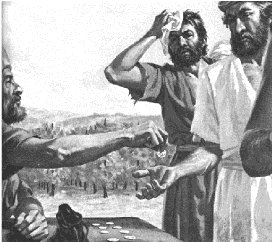
“While he was at table in his house, many tax collectors and sinners came and sat with Jesus and his disciples” (MT 9:10).

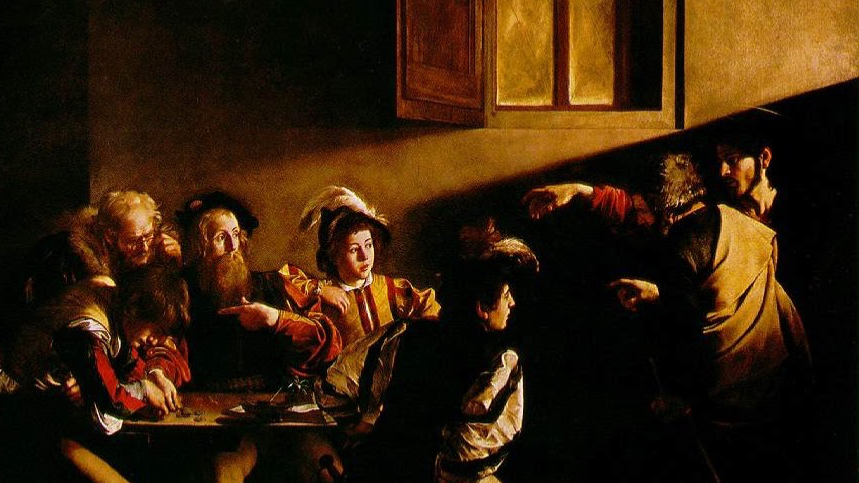
We as the Church, we as followers of Jesus, still have much to learn from Jesus. Today’s reading provides another wonderful example. Once Jesus begins his public ministry he is constantly on the go. Going where? Meeting people where they were in the midst of their daily lives. And what is the response to Jesus calling Matthew a tax collector and then partaking in table fellowship with tax collectors and sinners? The Pharisees question the disciples about his practice. Onlookers follow at a distance with curiosity. But to those who have, maybe for the first time in their lives, been respected as a fellow human beings, feel hope. Hope that there actually may be a path from the peripheries. Hope that they no longer have to be on the outside looking in.

Jesus is shown time and again in the Gospels to be about encountering the person as they are in their present circumstance and chaos of their lives. He welcomes, is present, embraces the person as they are. He invites people to belong, to be part of something greater than their self, to actualize their potential and embrace a life of meaning and purpose. The only requirement is to be willing to be loved, to be willing to be human, to be willing to be free.

Do we: embrace our fear, stoke our pride believing that we can take care of ourself, build walls of attachment and addiction that appear to make us happy. Or are we willing: to be loved by Jesus, to have the humility to recognize our sinfulness, to let go of our bondage to false illusions of security that keep us from actualizing the truth of who we are and so freely acknowledge that we need one another.

If we are willing to risk, to be vulnerable, to open our heart to Jesus we will experience the love and belonging we seek in the very depths of our soul. This is the fulfillment that no other pursuit or person can bring. We do this best as Jesus did, by being willing to enter into the lives of others, by resisting judgment and accepting another as they are for who they are, being present and willing to accompany our fellow brothers and sisters. For as Jesus said, “I desire mercy, not sacrifice.” Mercy is, as I have quoted Fr. James Keenan S.J. before, “is the willingness to enter into the chaos of another.” Jesus is willing to do so for us. Are we willing to do so for him?


Painting:

Michelangelo Merisi da Caravaggio, 1600

Link for today’s Mass readings:

http://www.usccb.org/bible/readings/092117.cfm

Seeing Beyond Our Blinders

“To what shall I compare the people of this generation? What are they like? They are like children who sit in the marketplace and call to one another, ‘We played the flute for you, but you did not dance. We sang a dirge, but you did not weep'” (Lk 7:31-32).

Jesus was convicting those who held a narrow view of who was a true follower of God. He illustrated this by sharing the above example that there was no pleasing the listeners, for when the flute was played no one danced, when times of joy arose, there was no celebration, and when the funeral dirge was sung, they did not weep, they did not mourn. Jesus expanded the analogy to his present condition where there were those who did not accept the ascetical practices of fasting and the call to repentance from John the Baptist, nor did they accept the inclusive table fellowship of Jesus.

We have encountered those that are not pleased beyond their own narrow focus and who suffer from tunnel vision. Anything that hints at even a slight variation of change sends tremors of discontent. And if we are honest, we all have some resistance to change. But if we are to authentically live the Gospel, Blessed John Cardinal Newman’s quote is an apt barometer: “To live is to change, and to be perfect is to have changed often.”

The Church at her best is the balance of the rock foundation of our core beliefs which provides stability, assuredness, and identity, while at the same time being open to the life giving movement of the Holy Spirit. Each generation must make the Gospel relevant in our own time. We must be flexible and resist rigidity so that we are not molding the Church in our image, but being authentic to renewal, integrity, and embracing the Mystery of God’s movement such that we are molded, transformed, and conformed in his image and likeness of love, which is the willing the good of the other.

This means not being threatened by those who are different. The gift of Catholicism is the universal call and invitation of Jesus which is open to all of humanity. Embracing the gift of unity and diversity is messy, but this is what Jesus calls us to. Is this challenging? Yes. Hard? Yes. Impossible? On our own, and from our own egoistic perspective, yes. But with our heart and mind seeking the will and ordering of God, all things are possible!


Link for today’s Mass readings:

http://www.usccb.org/bible/readings/092017.cfm

Photo: Our daughter, Christy, celebrating her move to California and trusting in the guidance of the Holy Spirit!

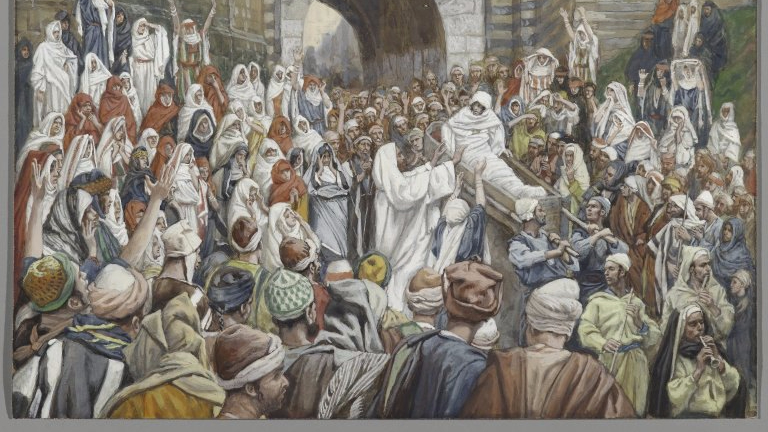
May We Have the Compassion of Jesus.

When the Lord saw her, he was moved with pity for her and said to her, “Do not weep.”
He stepped forward and touched the coffin; at this the bearers halted, and he said, “Young man, I tell you, arise” (Lk 7:13-14).

Jesus saw the woman who was a widow and her only son was now in a casket. In the time of Jesus, this woman would have little means to support or protect herself. Jesus’ immediate response for her was pity or compassion. The original Greek word used was splanchnizomai, meaning that Jesus was moved from the very depths of his bowels. The emotional depths to which Jesus was moved to reach out and help the widow of Nain, shows us his humanity, the healing of the son, bringing him back from the dead shows us his divinity, the entire event shows us the best of who we can be as his followers.

Instead of fear, judgment, prejudice, or indifference, may we seek to understand, to place ourselves in the shoes of those who feel vulnerable, misunderstood, and find themselves on the margins. May we be moved from the very depths of our innards with the same compassion of Jesus toward those, who, like the widow, are vulnerable, at risk, and on the peripheries. We in the Church need to be welcoming, hospitable, willing to walk with others, to share their journeys. We need to be present, be willing to listen to their needs, their pleas, and seek to find options to address those needs that respect their dignity as human beings created in the image and likeness of God.

Does anyone come to mind? Let us take time this day to pray that God may open our hearts and minds to see the vulnerable among us, maybe even in our own families, those who are in need, those needing someone to be present, to be understanding. Especially, those who we may have in the past discounted, or have come up with rationalizations of why they ought not to receive any help, even if not from us. If someone or a group of people come to mind and you are unsure what to do or how you can help, begin by praying for them, and seeing those who come to mind as human beings like the widow that Jesus had compassion for. If we can see others as human beings, with dignity, we will be moving in the direction of being able to act with the compassion of Jesus.


Image: James Tissot

Link for today’s Mass readings:

http://www.usccb.org/bible/readings/091917.cfm