May We Be the Voice of the Voiceless

This pericope, extract or section from the Bible, from Luke 7:1-10 is called The Healing of the Centurion’s Slave. It represents a wonderful picture of collaboration and harmony. The centurion, a gentile – a non-Jew, heard that Jesus was near and appealed to Jewish elders to seek out Jesus to invite him to his home to heal his slave. As Jesus was on the way, the centurion apparently had a change of heart, concerned about his sinfulness and did not want to trouble Jesus. He sent his friends to Jesus with the request to heal his slave with his word. Jesus was amazed: “I tell you, not even in Israel have I found such faith” (Lk 7:9). The slave was then healed.

Aside from the fact that no one seemed to have a problem with slavery, certainly not uncommon in the Ancient Near East, everyone involved, the centurion, his friends, Jewish elders, and Jesus were all working together to make this healing possible. The centurion actually showed concern, not indifference for his slave, Gentiles and Jews collaborated with one another, and Jesus did not hesitate to answer the request of the centurion, a representative of the Roman occupying army.

This Gospel scene is certainly worth meditating on. The centurion gave voice to his slave. Jesus healed the slave with his Word. We need to use our words to speak up for those who do not have a voice. We need to help people to understand that the unborn are human beings, they are just smaller and more vulnerable than us. But we need to be more than pro birth. We need to provide support systems for the parents to care for their children once they are born, and viable alternatives for those that may be contemplating an abortion. We need to learn strategies and teach families how to protect their children from molestation, abuse, and human trafficking. We need to speak up for the children of migrants and immigrants that are, for now, protected by D.A.C.A – Deferred Action for Childhood Arrivals. Pope Francis was recently asked on his flight from Colombia about the president’s recent decision to suspend D.A.C.A. We need to echo his response that, “the family is the cradle of life and that it must be defended as a unit”.

There are so many more on the peripheries, so many more that we need to give voice to. We all fall so short of the wonderful harmony and collaboration of this Gospel scene today. Though we need not lose hope. We need to keep our ears open to hear the cry of their voice. God has a part for us to play, we just need to be open to playing our part. Let us begin in humility as did the Roman centurion: “Lord, I am not worthy to receive you, but only say the word and my soul shall be healed.”


Link for today’s Mass Readings:

http://www.usccb.org/bible/readings/091817.cfm

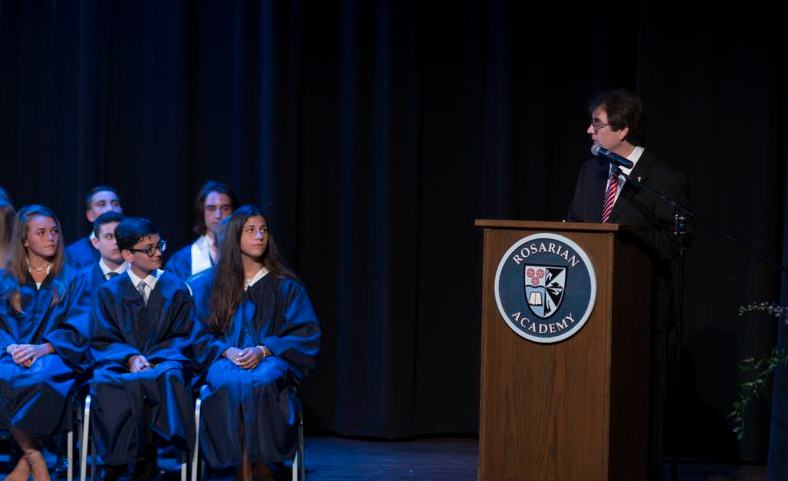
Photo credit: Rosarian Academy, 2016 Rosarian Academy Commencement Address
There is Freedom in Forgiveness

“So will my heavenly Father do to you, unless each of you forgives your brother from your heart” (Mt 18:35)

In my reflection on August 17, I shared that we do not do forgiveness well, yet, Jesus is very clear with this parable that we need to. Our salvation depends on it! Go ahead, click the link below and read the parable. We are to forgive because God has forgiven us, over and over again, and he will continue to over and over again. If we repent and are contrite, showing genuine sorrow for our sin, God will forgive us. As I learned from Pastor Barry Johnson when he was still the pastor at Jupiter First Church: “God loves us more than we can ever mess up.”

Jesus is clear throughout the Gospels and in today’s parable that God will forgive us, the issue at hand though is that we need to also forgive as God has forgiven us. The servant in this parable was forgiven his massive debt by the king. Shortly thereafter this same servant had the opportunity to forgive someone who owed him a much smaller debt, a no brainer that the servant would act in kind, yet, he did no such thing. He strangled his debtor, and when asked to be patient, he offered none and had the man placed in prison.

Our lives are emblematic of this parable. God has not only had compassion on us, and set us free, as does the king, he has forgiven us our debts as sinners. More amazing he paid our debts through offering the death of his Son. Through that payment, we are the recipients of such mercy, grace, and forgiveness that we will never fully grasp and comprehend, and it is in an unlimited, infinite wellspring that we can draw from again and again. Waking up each day with gratitude for the gift of our life is a good start, yet, how many of us actually take the time to be thankful for the life we have? But Jesus reminds us that not only are we to be thankful, but we are also to be forgiving, remembering this forgiveness that we have received. We are to be patient with one another, we are to assume a stance of understanding and support, not one of condemnation and hardness of heart.

We don’t do forgiveness well, but we need to. Maybe we don’t do so well because we do not avail ourselves of this wonderful gift we have been given. We stay mired in our own self-guilt or pity, we stay too busy to be aware, or we compare – I am not as bad as… Make some time daily to examine your conscience, confess those sins to God, and ask for his forgiveness. For those reading this reflection that are Catholic, we have the gift of the Sacrament of Reconciliation – which is a gift, not a dress down! There have been times I have walked out of the confessional feeling as if a massive weight has been lifted. The only comparison I can think of is when I have had an asthma attack in the past, and needed a shot of adrenaline, within minutes there was a feeling of such peace. Yet there have been a few grace-filled confessions that surpassed even that visit to the hospital, and I still stay away from the sacrament for months.

Along with seeking God’s forgiveness, let us start practicing forgiveness with one another. Just as a weight was lifted when I have experienced forgiveness, there is such freedom when we let go of a grudge or hurt we have held onto and forgiven another. When people apologize, change the habit of saying, “That’s alright” to “I forgive you.” Go up to someone and ask them to forgive you for something that you have done. It will make a difference. And if you are asking, as did Peter, how much are we to forgive? This answer is “Seventy-seven times seven”, or every opportunity we can. As we begin to experience forgiveness, maybe we will, not be like the servant in today’s parable, but start to be more patient, understanding, and forgiving of one another. There is freedom in forgiveness!

————————————————————————-

Photo credit: Jack McKee

Link for the Mass readings for the day:

http://www.usccb.org/bible/readings/091717.cfm


Let Us Be the Good that God Created Us to Be!

“A good person out of the store of goodness in his heart produces good, but an evil person out of a store of evil produces evil; for from the fullness of the heart the mouth speaks” (Lk 6:45).

We can experience hardships, trials, and suffering. We may have experienced traumas, and even come face to face with evil. Yet, we are not evil ourselves because of what happens to us, how we are tempted, nor are we defined by any trauma, suffering, or abuse. We have been created good by a loving God.

Negativity, sin, hate, and evil, can be seductive, can lure us to rationalize and come to make a decision for what we may think of as a good in the moment, yet it is just an apparent good. To encounter or experience a word or act of unkindness, negativity, or even violence, we may feel justified in retaliation, yet if we speak or act in this way we become the negativity or evil we seek to stand up against. In The Strength to Love,  a collection of Dr. Martin Luther King’s sermons he wrote:

“Returning hate for hate multiplies hate, adding deeper darkness to a night already devoid of stars. Darkness cannot drive out darkness; only light can do that. Hate cannot drive out hate; only love can do that. Hate multiplies hate, violence multiplies violence, and toughness multiplies toughness in a descending spiral of destruction.”

We need to be aware from the moment we have a thought in our mind as to what we will do with that thought. Not all thoughts come from ourselves, many do, but others come externally from our experiences, our observations, our concupiscence – our tendency to sin, and yes demonic influences. What do we listen to, read, and watch on a regular basis? We need to discipline ourselves so as not to entertain every thought or influence that comes our way, we need to be discerning otherwise once we allow ourselves to meditate on negative ideas, support our fears and anxieties, we will soon begin to speak and act on those ruminations. We who have been created good can be weakened and corrupted by choice and not only act with evil intent, but ourselves become evil.

As followers of Jesus Christ we need to meditate on the things of above (cf. Colossians 3:1) and aspire in our lives to bear the fruits of the Spirit of “love, joy, peace, patience, kindness, generosity, faithfulness, gentleness, self-control” (Galatians 5:22-23). May this list be a barometer for us to utilize to discern the life that we are living. We need to prune any way in which we are bearing the opposite, such as being impatient instead of patient. May we be humble enough to confess our sin and seek God’s strength and support to build up that area of weakness. Let us commit to meeting the darkness we encounter today with light, to meeting hatred with love, and from the fullness of our heart may we only look, speak, and act in ways that convict, heal, understand, empower, and love. Let us be the good God created us to be!


Link for today’s Mass reading:

http://www.usccb.org/bible/readings/091617.cfm

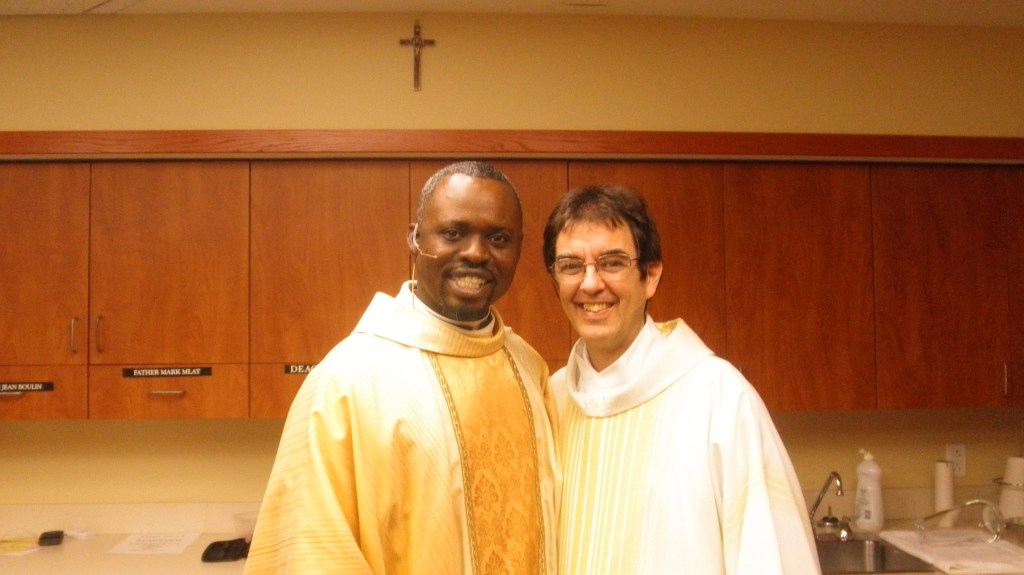
Photo: With Fr. Jean Boulin who is certainly practicing the good he has been created to be here at St Peter Catholic Church!

Our Lady Of Sorrows, Our Lady of Love

When Jesus saw his mother and the disciple there whom he loved he said to his mother, “Woman, behold, your son.” Then he said to the disciple, “Behold, your mother.” And from that hour the disciple took her into his home (Jn 19:26-27).

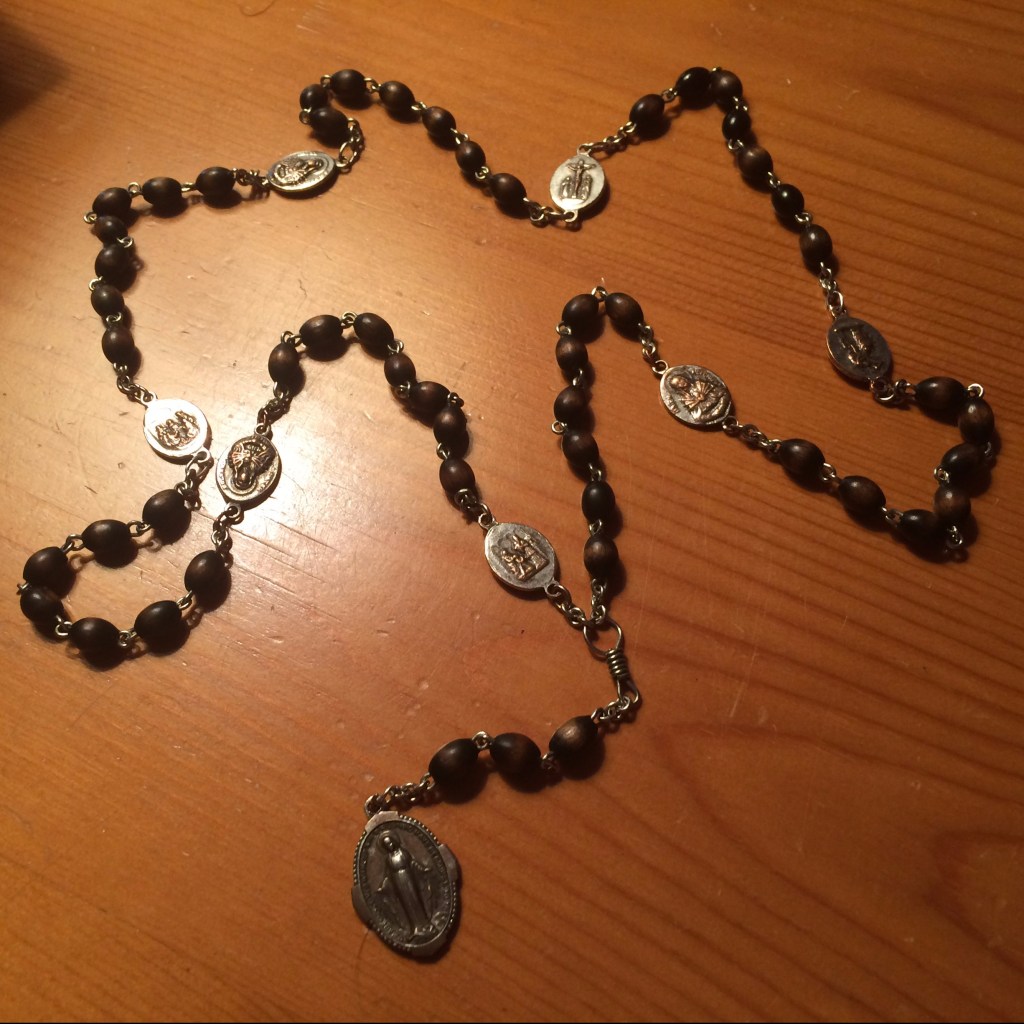
In the summer of 1991 I entered the Franciscans of Holy Name Province as a pre-novitiate and was stationed at Holy Cross Friary in the Bronx. My ministry for that year was working in the friary and the adjoining parish of Holy Cross. Shortly after entering, one of the friars, Br. Paul Goldie, passed away. He had been serving at the friary since 1953 and had been a friar for 54 years. A practice among the friars was to pass on personal items to those in the community when one of their own passed away. I was honored to have been given a picture of St. Francis and Br. Paul’s rosary.

I noticed that the rosary was different from others. Instead of a crucifix it had a Miraculous Medal, instead of five beads there were three beads leading to the decade of beads, and instead of five decades of beads, there were seven groupings of seven beads. In between each of the series of seven beads there was a small medal. On one side was a picture of Mary pierced in the heart seven times, and on the back of each medal was a different scene. I would find out some time later that this was a Rosary of Our Lady of Sorrows. The depictions on the back of the seven medals represented Mary’s seven sorrows: Simeon announces the suffering destiny of Jesus, Mary escapes into Egypt
with Jesus and Joseph, Mary seeks Jesus lost in Jerusalem, Mary meets Jesus as He carries
His Cross to Calvary, Mary stands near the Cross of her Son Jesus,  Mary receives into her arms the body of Jesus taken down from the Cross, and Mary helps place the body of Jesus in the tomb.

The fifth mystery, Mary stands near the Cross of her Son Jesus, is from our Gospel reading today. It must have been the most sorrowful of the seven, for Mary to witness her son dying such an agonizing death as the crucifixion. Yet, Mary did not run from the pain, she embraced his and her own pain, the piercing of the lance, pierced her own heart. Because Mary stayed she received a deeper gift of Jesus’ love. “He shows to the very end his love for his own (xiii 1), for symbolically he now provides a communal context of mutual love in which they shall live after he is gone” (Brown, 926). Mary, “Woman, behold your son” and John, “behold your mother” will live and profess that same love of Jesus they experienced with his other followers.

By being willing to love, we risk experiencing and entering into the pain of those we love. So many times we run from love, because we do not want to experience the pain relationships will entail. We are finite and fragile beings, and so we will let each other down, we will make mistakes, say the wrong things, do the wrong things, we will get sick or deal with chronic illness and need care, we will lose patience, we will sin. Jesus though calls us, like Mary and John to love, to will the good of the other and so to experience the fruit of an authentic relationship which is love.

Love is the bond of communion that gives us the strength to move through the crossroads and upheavals that life brings, love is the bond of commitment that draws us out from our selfish focus on ego to learn from one another, to grow stronger together, to be present to one another. This is true because, where there is an authentic relationship, there is love at its foundation. Love is that communion between the two that is the presence of the Holy Spirit in our life, such that we participate in the very same divine communion of the Father, and the Son, and the Holy Spirit. Is there pain in love, yes, is there conflict in relationship, yes, but when we commit to one another, to be present to one another, through the pain, and are willing to seek reconciliation through the conflict, we form a greater depth, a bond, and experience a fulfillment and joy that words cannot convey.

Mary and John entered into the full encounter of love in their relationship with Jesus when in the climax of the crucifixion they encountered a depth of pain and sorrow at the cross that we cannot imagine, yet they remained, and so they were able to mourn, heal, and experience the full joy of the Resurrection. At the coming of the Holy Spirit at Pentecost, they embraced the divine communion of love between the Father and the Son, and passed on that same love and commitment with the community of Jesus’ followers that they touched. Br. Paul’s rosary, which I still carry with me each day and pray with, was passed on to me. It is a reminder for me of the brotherhood I shared with the friars, the commitment to build relationships in love, in Christ. A reminder that there will be sorrows in this life, but when we enter into them and embrace the sorrows, we will find Jesus present in the midst of them with his arms wide open. May we remember, as did Mary and John, to lean on each other, to be present to one another, to support one another, and to love one another.


Link for today’s readings:

http://www.usccb.org/bible/readings/091517.cfm

Brown, Raymond E. The Gospel According to John XIII-XXI. Anchor Bible. NY: Doubleday, 1970.

The Triumph of the Cross

“No one has gone up to heaven except the one who has come down from heaven, the Son of Man. And just as Moses lifted up the serpent in the desert, so must the Son of Man be lifted up, so that everyone who believes in him may have eternal life” (Jn 3:13-15).

The reference to Moses lifting up the serpent can be found in Numbers 21:4-9. The people, worn out by their journey in the desert began to complain instead of trust in God’s deliverance. The people sought a return to their prior condition of slavery rather than forge ahead and endure the trials of gaining freedom. Venomous snakes came into the camp and began to bite many who then died. The people recognized their sin and implored Moses’ intercession. Moses prayed for the people and lifted up a bronze serpent on a pole and whoever looked upon the serpent was healed.

There is a difference between seeking understanding from God, seeking to understand why something is happening in our lives, and complaining from a posture of self centeredness. The Israelites were looking at their present condition of suffering and missing the point that that they were free from slavery. They were not trusting in God’s providential care and support.

How often do we with our ease of access slip into whining and complaining mode when something doesn’t go quite right. St Paul reminds us through his words to the Corinthians: “Let us not test Christ as some of them did, and suffered death by serpents.” In our most recent exodus heading north to flee Irma, JoAnn and I experienced many hours of travel in bumper to bumper traffic. I had to remind myself often, that at least we had the freedom to leave, while there were many who did not. Again Paul reminds us that no matter what arises, “God is faithful and will not let you be tried beyond your strength; bit with the trial he will also provide a way out, so that you may be able to bear it” (1 Cor 10:9,13).

Today we celebrate the triumph of the cross. It is a good reminder that, when trials and tribulations arise, instead of grumbling, let us look to the crucifix. The sacramental reminder that the Son of God came to be one with us, to experience the fullness of our human experience, even our pain and suffering, to lead us to freedom through his death and resurrection. Jesus is present to us in our struggles and when we turn away from only looking at our own self and limitation, turn instead to him on the cross, seek his guidance, and place our trust in him, we will experience his power and support, we will be able to bear the weight of the struggle, and there will be a way out, through the cross.

What used to be a symbol of oppression, torture, and capital punishment is no more. Let us embrace and “glory in the cross of our Lord Jesus Christ; in him is our salvation, life and resurrection. Through him we are saved and set free” (Gal 6:14). Is the life of the disciple easier? No, but with Christ at our side we will be free.


Link for the Mass readings of the day:

http://www.usccb.org/bible/readings/091417.cfm

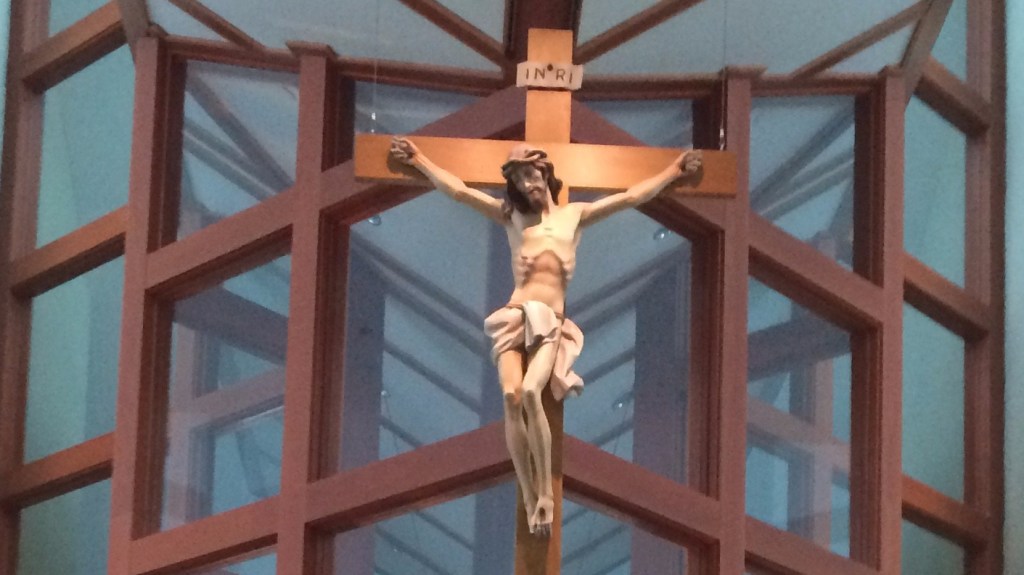
Photo: Crucifix in the sanctuary of St Peter


Rejoice and Leap For Joy!

“Blessed are you when people hate you, and when they exclude and insult you, and denounce your name as evil on account of the Son of Man” (Lk 6:22).

This fourth beatitude shared by Jesus in Luke’s Gospel is so contrary to what much of secular America aspires to: seeking power, fame, wealth, pleasure, and celebrity. What is more, how many of us who proclaim to be people of faith resist the Gospel Message for our own anxieties, fears, and self centered reasons?

Jesus spent the night in prayer, called his Apostles, and as we read or hear in today’s account, taught them and his disciples how to attain the kingdom through five blessings and four woes. Jesus’ message is a universal message, it is an invitation for all as I have commented often in these reflections. Yet, his teachings challenge us to place our trust in him and not the things of the world. For that which is finite and material is fleeting and passing. By placing our trust in him we will truly be happy and fulfilled, but to live out our trust in him means we will receive opposition from those who will be challenged by the Gospel.

To live the in accord with Jesus is to identify as he said today with the poor, the hungry, those who mourn, and to speak the truth even when we risk being hated, excluded, insulted, and denounced as evil. We are to resist the lure and attachment to the false promise of security believed to be found in material wealth, thinking that we can have all the food, drink, clothes, friends,and joys that money can buy. Access to these are only limited and apparent goods, that if we seek to be fulfilled in and by, we will be left empty and wanting for more. In the pursuit of the material we can also become ensnared by attachment and addiction.

To be blessed, to be happy, to be fulfilled, is to anchor our life in building a relationship with Jesus. To look seriously at what he taught, to face within ourselves those areas in which we believe and act contrary to his teachings, to be open to God’s work of transformation, to apply his teachings to our lives, to commit to living as his apostle, and to proclaim the Gospel in our day and time, “we will rejoice and leap for joy” (Lk 6:23)! The key distinction is to realize that Jesus was not only an amazing teacher, he is the Son of God. The same “power that came forth from him” (Lk 6:19) to heal, to cast out demons, to teach truth, is still active in our lives today.  May we have the courage to, “Go and announce the Gospel of the Lord.”


Link for today’s Mass readings:

http://www.usccb.org/bible/readings/091317.cfm

Photo credit

http://www.adventunwrapped.ca/2016/12/11/finding-joy/

Let Us Spend Time in Prayer

Jesus departed to the mountain to pray, and he spent the night in prayer to God (Lk 6:12).

In the midst of a busy ministry, Jesus spent time alone with God in prayer. In Luke’s Gospel, Jesus often did so before making important decisions, as in today’s reading that recorded the choosing of his Apostles. Prayer is an important, foundational principle to experiencing and knowing God as well as discerning his will for living a fully human life.

The Mystery of God is not a problem to be solved. In our language today, we often use mystery and problem interchangeably, as, “I lost my keys, it is such a mystery.” Strictly speaking, the loss of keys is a problem that can be solved. We can back track our steps, and through a process of elimination the problem becomes smaller until we solve the whereabouts of the missing keys. We cannot solve or prove God exists as if he is a problem to be solved. This is because God is not a being, not even the supreme being. God is a mystery that transcends any finite dimension of reality. We have nothing to measure him by, we cannot prove his existence, nor can we solve him as we would a problem.

Yet we can come to know God intimately just as Jesus did. Even though he is transcendent, beyond our reach and comprehension, he is at the same time closer to us than we are to our self. We come to know God through his invitation, and as we enter into the mystery of his reality through developing a relationship with him, we come to know him. He does not become smaller, but more vast, beyond our comprehension. His mystery is luminous, as if we were in a completely dark room and someone turned on and shined a flashlight into our eyes. We wince from its brightness, yet in time, our eyes adjust and we eventually are able to see what was beyond our ability apart from the light. Jesus wants us to experience and embrace the mystery of the radiance and warmth of his Father’s light and love.

Jesus called each apostle by name. He calls us by name too. We can come to know God, though we will never fully comprehend him because we are finite beings. Our lives are busy and full, even with good things, yet, if we are not making time to spend with God alone as Jesus did, we will run out of gas, we will make decisions that may appear to be good, but will lead us astray and away from the fulfillment of our vocation and experience of God. Through making time for prayer with him, meditating on his word, learning from those who experienced God in their prayer lives, worshipping him, serving him through our service to others, we will discern his will for our lives, be drawn ever deeper into his mystery to experience the intimacy of communion and relationship we have been created for.

Please pray for all of us making the trek back home from our exodus today and this week, and those recovering from the effects of Harvey and Irma.

————————————

Link for Mass readings for the day:

http://www.usccb.org/bible/readings/091217.cfm

Photo:

Great location I spent time in prayer at Hidden Treasure Airbnb in Panama City Florida before the winds and rain tracked us down.


9/11 Let us Forgive

Then Jesus said to them, “I ask you, is it lawful to do good on the sabbath rather than to do evil, to save life rather than to destroy it” (Lk 6:9)?

On this day we remember those who lost their lives on 9/11. We recognize those who gave their lives to save lives and the many who chose good over evil. To honor each of them we are called to be people of forgiveness, forgiving even those attackers who committed the unconscionable acts of terror, to choose good rather than evil. As Matt Malone, S.J. wrote: “The Gospel is clear: If we believe that we will escape this vicious cycle of violence without radical acts of love and forgiveness to which the Gospel testifies and Christ commands us, then we are simply fooling ourselves” (3).

If we are to heal, we must forgive, otherwise we contribute to perpetuating the violence inflicted upon us and spread it through our realm of influence. We also need to resist the temptation of judging a people and a faith tradition based on the acts of terrorists. To treat Muslims and people of Arab descent as anything other than our brothers and sisters only fuels the terrorist’s agenda. We begin to counter the cycle of violence by addressing the wounds of fear, unforgiveness, hate, prejudice, and racism present within us. We also need to recognize the destructive force that our own words inflict, seek forgiveness for the evil we have loosed, and choose instead to invoke words that soothe, empower, and encourage. Each step of the way we need to seek the aid of Jesus for we cannot forgive on our own merit or will alone.

If we struggle with unforgiveness, we can be honest with Jesus and say that we need him to forgive for us, as he himself said on the cross, “Father forgive them for they know not what they do” (Lk 23:34). Over time, if we are willing, he will lead us to a place where we too may forgive. As we seek healing and forgiveness, we also need to be willing to reach out beyond our own comfort zones, our own nationality, race, ethnicity, and religion or no faith, to engage with others that we may see as different. Our starting point of interaction needs to be to recognize each other as human beings. Then we are better able to take steps to being open to learn and come to understand another’s belief, culture, and practice. There is so much more we can do together, so much farther we can grow when we embrace the diversity within our communities, instead of walling ourselves off from each other.

Today we pray for, remember, and honor our fallen on 9/11 by seeking healing and forgiveness. I invite you to join with me in praying for those families and friends who have lost loved ones and are still in need of healing. May we also join in prayers of forgiveness for the attackers of 9/11, and for the many who still contemplate, participate, and perpetuate violence in our country and world, that we may come to a place of healing and forgiveness and instead channel our energies toward working for justice with charity and reconciliation. May we seek each day to resist evil and choose good, to resist destroying life and instead commit to saving life with our words, faces, and actions. Lord forgive us our trespasses as we forgive those who trespass against us!


Link for today’s Mass readings:

http://www.usccb.org/bible/readings/091117.cfm

Malone, S.J., Matt. Remembering 9/11. America, Aug 21, 2017.

Photo credit: Marley White, NYCgo.com

Resist Dehumanization, Choose Instead Reconciliation

As Irma begins to send her winds and feeder bands through southern Florida, and as we start to feel the winds pick up and storm clouds gather in Panama City, where JoAnn and I were kindly taken in from our exodus, I felt a quiet assurance. Texans and Floridians, with the support of one another, with the aid of many from many corners of the region and nation will work together. Even in the utter devastation experienced by the Caribbean islands of Barbuda and St Martin, there will be recovery.

The larger concern I have is the continued gathering of the oppressive clouds and destructive winds of division, polarization, tribalism, nationalism, violence, and war that is wearing down our country and world. We can come together in a time of natural disaster, but we are ripping ourselves apart with the lack of respect and unwillingness to acknowledge the dignity of one another. Our Gospel today offers some hope.

The opening and close of today’s Gospel reading is very telling: “Jesus said to his disciples: ‘If your brother sins against you, go and tell him his fault between you and him alone’ ” (Mt 18:15) and “For where two or three are gathered together in my name,
there am I in the midst of them” (Mt 18:20). Jesus provides for us a model and he himself is the source for dealing with conflict.

Jesus offered the steps for coming together to resolve disharmony. First one to one, then three two one, then if the person still does not see their error, bringing in the elders and leaders of the Church. Each is an appeal to the conscience of the individual who has offended, who has sinned, who has caused harm, and at the foundation of each attempt is the intent not bring down condemnation but conviction. Jesus insists that we resist the temptations of gossip, character assassination, and dehumanization. In this way, we can work to hold each other accountable in love, moving toward reconciliation and mutual respect, to win over our brother or sister.

We are called to embrace the gift and grace of our own God given dignity and diversity. Each one of us who are a unique gift and expression of our loving Abba that no one has nor ever will again express, as each of us can, in our own original way. But we will not attain the harmony and peace of Jesus’ call for unity if we keep making decisions rooted in our fear and prejudices, if we continue to crouch and operate from a defensive posture.

On our own initiative, from a posture of I am right and you are wrong, and even with the best of intentions, we will fall short, for “with human beings this is impossible, but for God all things are possible” (Mt. 19:26). As we deal with conflict, with division, we need to be willing to come together, to see each other as human beings first and foremost, and with two or more, be willing to pray with and for one another, knowing and trusting that Jesus will be with us. Jesus who spoke to the storm and stilled the storm.

Let us continue to unite in prayer for those who are recovering from Harvey and Irma as well as those who are experiencing Irma right now and those who are in her path to come. Let us be there for one another as best we can when the storm passes, to assist in recovery. May we also be willing to put Jesus’ teaching today into practice: to seek reconciliation, to pray together for one another, to be willing to work together to resolve our conflicts, to act with St Paul to love our neighbor as ourself, for “Love does no evil to the neighbor; hence, love is the fulfillment of the law” (Romans 13:9-10). In this way, we can be bearers of light in the darkness and gathering gloom of division, polarization, and prejudice that still covers our land.


Link for today’s reading:

http://www.usccb.org/bible/readings/091017.cfm

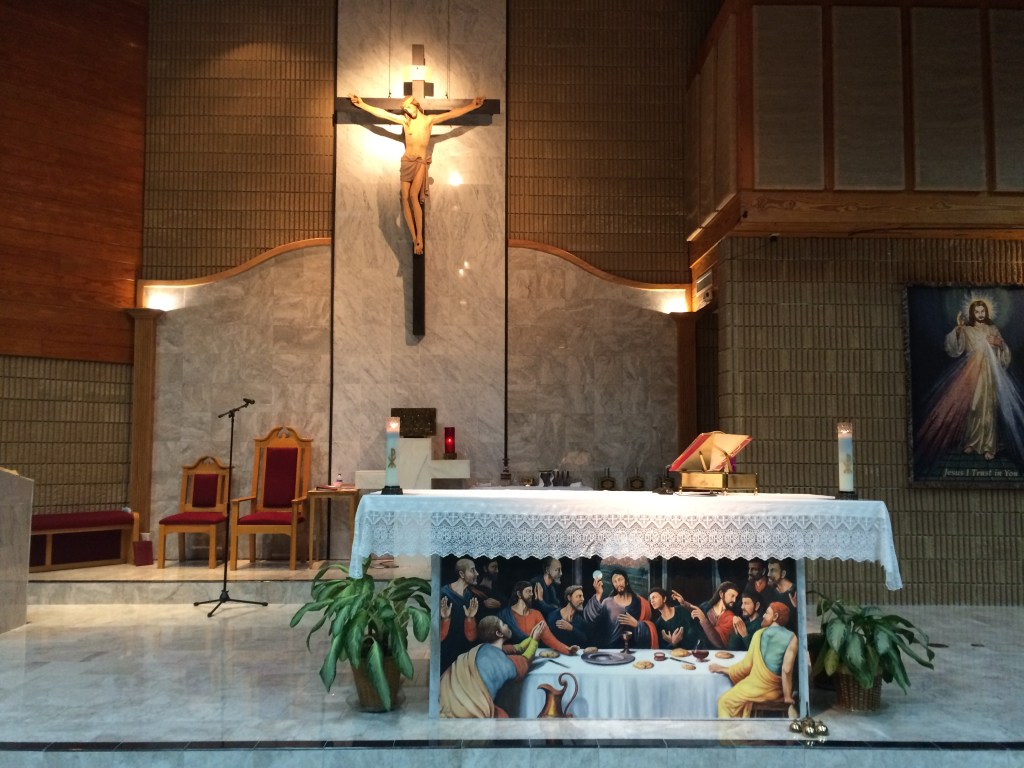
Photo from the sanctuary of St Bernadette Catholic Church in Palm City Florida where JoAnn and I offered prayers of intention during the Saturday Vigil Mass last night for our brothers and sisters who have been affected by and will be in Irma’s path.


The Lord of the Sabbath, the Lord of Our Lives!

Then he said to them, “The Son of Man is lord of the sabbath” (Lk 6:5).

The disciples were traveling with Jesus, they gathered food where they could. In today’s reading they picked heads of grain and rubbed them in their hands to make them easier to chew. The critique of those Pharisees, presumably, walking along with Jesus, was that his disciples were breaking the sabbath law by working and thus not keeping it holy.

The reason for this was that pious Jews would often practice what is called, building a hedge around the Torah, meaning that they would institute practices beyond the original law so that there would be no way of breaking it. Fr. Bill Burton, ofm, shared an example that has stuck with me since my Scripture studies in seminary. There is a prescription in Exodus 23:19, that states that you should not cook a kid (baby goat) in its mother’s milk. So as not to even come close to breaking this law, pious Jews developed the practice, which continues today, to not cook any meat and dairy together; thus the idea of building a hedge around the Torah. The hedge in today’s reading had to do with what constituted work and what did not, so as to keep the sabbath rest intact and keep the Sabbath holy. Jesus settled the debate by claiming that he was the Lord of the Sabbath.

The Lord of the Sabbath, needs to be the Lord of our lives. We live in a fallen world, but even at its best, we live in a finite and fragile world. We as human beings can only do so much. The best we can do is to use our intellect and ability to reason while at the same time seeking to discern God’s will and direction in our life, in the everyday affairs and matters of our life.

JoAnn and I, as well as many Floridians, are in the process of doing just that. JoAnn and I, having boarded up our home, made the determination, based on the Thursday tracking projections of Irma, to leave at 3:00 pm and head to the panhandle of Florida, outside of the cone of error. Driving through stop and go traffic until 1 am Thursday night, we stopped and slept in the car at a rest stop. We left at 7am and and made it to Panama City Beach about 5 pm last night. As we sat down for the tracking update we heard how the storm was no longer tracking east, but west. Here we are to stay, come what may. We trust in Jesus the Lord of our lives!

We continue to pray for those affected already and those who will be. May all our sisters and brothers in Florida be safe. May Jesus be with us to calm the storm without and within. In Jesus’ name, “Peace be still!”


Link for today’s Mass reading:

http://www.usccb.org/bible/readings/090917.cfm

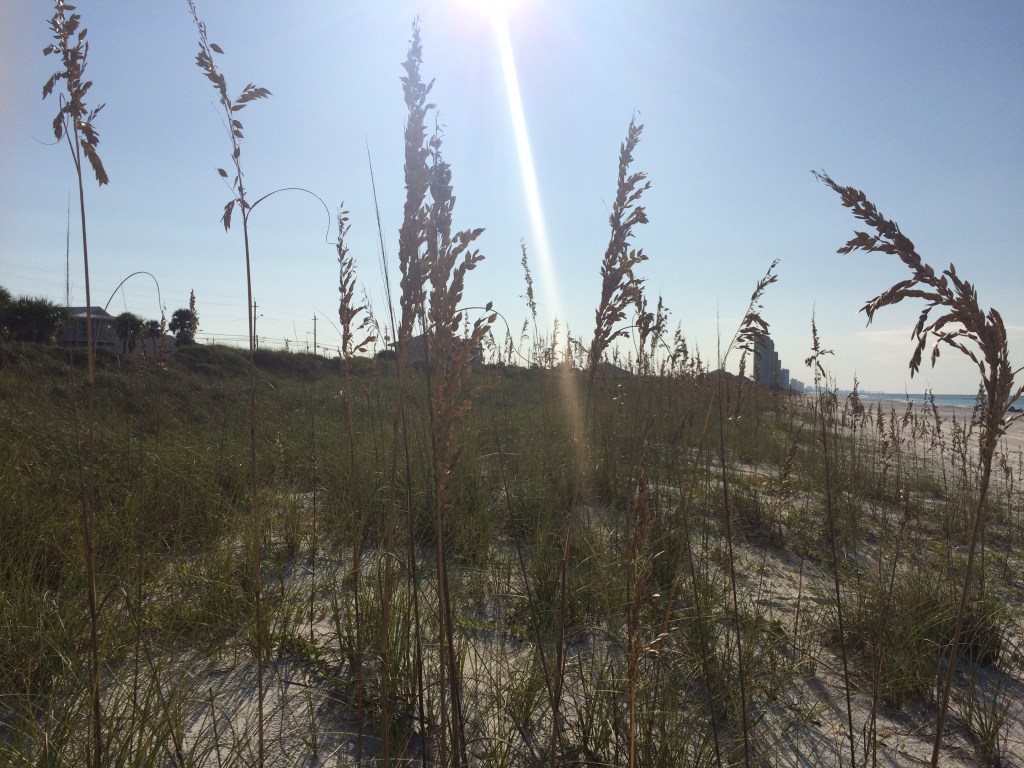
Picture I took on Panama City Beach. May the sun rays shining down on us represent the Son’s rays of support that is present with us!