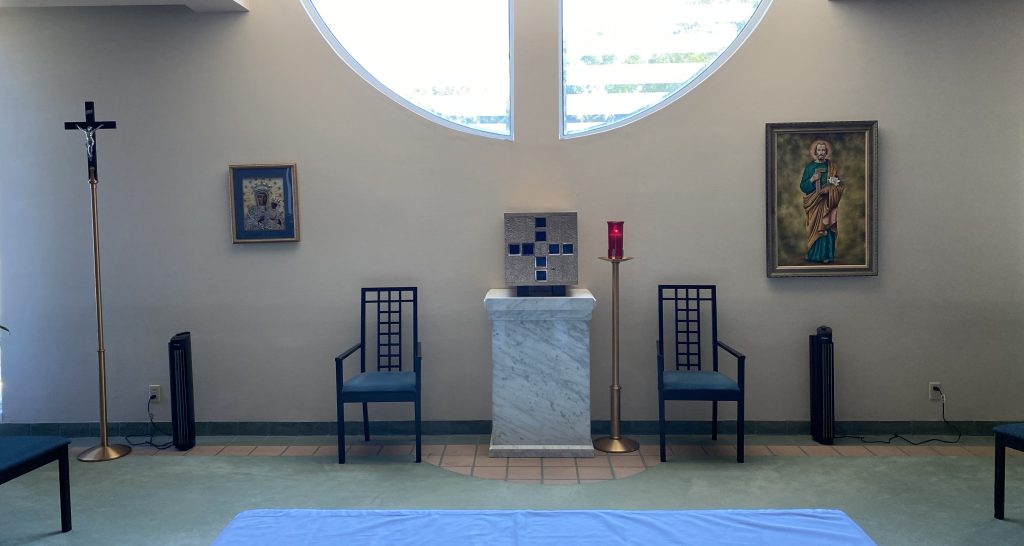
Making time to be still and listen, can help us to correct an ill advised course.

As Jesus and his companions shared the Passover, Jesus offered this morsel, “One of you will betray me” (Mt 26:21). I am sure that this bitter herb shifted the mood of the meal and fellowship. Each apostle asked if they were the one to betray him. There is no recorded response, though the assumption is that Jesus says no to each, except for one.

A unique feature about this exchange was that each of the disciples in asking Jesus if they would betray him prefaced their request by calling him, Lord. In doing so, they acknowledged that Jesus was the Messiah. When Judas addressed Jesus he called him, Rabbi. He did not acknowledge Jesus as his Lord. Could this be a tell regarding why Judas was willing to turn Jesus over because he did not believe Jesus to be the Messiah, that he too believed Jesus to be a blasphemer?

Jesus’ response to Judas was an affirmation of truth: “You have said so” (Mt 26:25).

Jesus offered this affirmative response two other times, confirming each time the truth presented to him. When Caiaphas asked if he was the Messiah and then later with Pilate when he asked Jesus if he was the king of the Jews. In answering in the affirmative to Judas, was Jesus giving him the opportunity to look at himself in the mirror? Jesus knew that Judas would betray him, he did not have to make this point known. Judas could have remained silent, yet he asked, as did the others who went before him. Could he have been contemplating shifting his prior determination of betrayal? Was Jesus inviting Judas to acknowledge what he had agreed to do, confess, change course, and ask for forgiveness?

Judas chose his course of action to betray Jesus, and unfortunately, even with Jesus’ intervention, Judas was not able or willing to stop or change course. Judas fulfilled his agreement with the chief priests to turn Jesus over. Often we set a similar course of action and even when Jesus makes an attempt to intercede on our behalf, we do not slow down enough to hear.

God speaks to us in the silence of our hearts but too often we are focused on or diverted by other things and we do not hear. We can instead allow fear, anxiety, pride, prejudice, or anger to be our guide. We can be too blind to see or too determined to do it our own way, regardless of the consequences. Our interpretation of our experience may be that the momentum is already too strong to turn around. That it is too late to change course.

We need to know in the depth of our being, that it is never too late to change course, to make amends, to repent, and to turn back to God. The first step is being willing to be still or aware enough to hear or see his guidance. The second step is to be willing to look in the mirror and see what Jesus presents to us, accept what we see, and then seek his forgiveness. Yet, sometimes we feel we are digging ourselves into a hole that we can’t escape from. The answer is that we need to just stop digging and put the shovel down. Jesus will meet us in the deepest of the holes we have dug for ourselves and when we are willing lift us out.

————————————————————–

Photo: Blessed to have some time to be still and pray a holy hour in the chapel at the cathedral of St. Ignatius of Loyola.

Link for the Mass readings for Wednesday, April 16, 2025

Will we follow the path of Judas or Peter?

The Gospel reading for today from John is painful on two fronts. First, Jesus said to Judas, “What you are going to do, do quickly” (Jn 13:27). Did their eyes meet at that moment, was there an unspoken appeal from Jesus to Judas, or had that already been settled? Judas aligned himself with Satan and set his course. Worse, he removed himself from Jesus and his companions and it was night.

Reference to night in the Bible is typically not a good sign. This is not only the time of day, it is also the spiritual absence of the light in which Judas has now entered. This night has also begun its descent upon Peter as well, although he is not yet fully conscious of it creeping.

The second front appears at the end of today’s reading. Despite Peter’s apparent full endorsement of Jesus and promise to even lay his life down for him, Jesus predicted that “the cock will not crow until” Peter will deny him “three times” (Jn 13:38). The momentum of utter betrayal builds. Judas will agree to turn Jesus over for thirty pieces of silver. He will betray the Son of God, yet in so doing, Judas will play his part in salvation history.

Judas will set in motion Jesus’ arrest that will culminate in his crucifixion. Peter will come to deny Jesus three times as Jesus predicted. I cannot think of any experience worse than the pain of betrayal. Yet, how is it that we betray Jesus each day? Remember what he taught us, “What you did not do for one of these least ones, you did not do for me” (Mt 25:45). Who and how have we betrayed Jesus in our lives? This is an important question to ask, and what is even more important is that we not only answer it honestly but seek forgiveness and resist the temptation of isolating ourselves in our sin and pride.

Judas separated himself, cut himself off from Jesus and his companions. He came to realize his sin, though he did not seek forgiveness, but isolated himself further and in his despair took his life. Peter, also regretted his sin, his cowardice, he wept when he heard the cock crow, but he also trusted, and later affirmed his love for Jesus three times, atoning for his three denials and was forgiven.

This Holy Week we can choose to walk the path of Judas or Peter. With each humble step may we come to see how our spirits are often willing but our bodies are weak, that we have been wounded by others and acted in kind, so falling short of who God has called us to be in what we have done and what we have failed to do.

Through our awareness of our unworthiness though, we must resist isolating and beating ourselves up, but instead recognize that Jesus has not come for those who are worthy, but for those who are willing to be forgiven and to be healed. In this way, we can learn from Peter, that we have betrayed Jesus also, but he is willing to forgive us too so that we will become wounded healers as well!

——————————————————————-

Painting: A path I am blessed to take often, to serve at the altar of our Lord.

Link for the Mass readings for Tuesday, April 15, 2025

Being still before making a decision and even after can make a big difference.

As Jesus and his companions shared the Passover, Jesus offered this morsel, “One of you will betray me” (Mt 26:21). I am sure that this bitter herb shifted the mood. Each apostle asked if they were the one to betray him. There is no recorded response, though the assumption is that Jesus says no to each, except for one.

A unique feature about this exchange was that each of the disciples in asking Jesus if they would betray him prefaced their request by calling Jesus, Lord. In doing so, they acknowledged that Jesus was the Messiah. When Judas addressed Jesus, he called him Rabbi. He did not acknowledge Jesus as his Lord. Could this be a tell regarding why Judas was willing to turn Jesus over because he did not believe Jesus to be the Messiah, that he too believed Jesus to be a blasphemer? Jesus’ response to Judas was an affirmation of truth:“You have said so” (Mt 26:25).

Jesus offered this affirmative response two other times, confirming each time the truth presented to him by Caiaphas that he was the Messiah and then later with Pilate when he asked Jesus if he was the king of the Jews. In answering in the affirmative to Judas, was Jesus giving him the opportunity to look at himself in the mirror? Jesus knew that Judas would betray him, he did not have to make this point known. Judas could have remained silent, yet he asked, as did the others who went before him. Could he have been contemplating shifting his prior determination of betrayal? Was Jesus inviting Judas to acknowledge what he had agreed to do, confess, change course, and ask for forgiveness?

Judas chose to betray Jesus, and unfortunately, even with Jesus’ intervention, he was not able or willing to stop what he had started. Often, we set ourselves on a course of action, and even when we get the sense that this is not a good idea, and even when Jesus nudges us to make an adjustment, we do not slow down enough to hear. That is one of the dangers of not making time regularly to be still, to pray for God’s discernment and/or making decisions impulsively. We can often go from our desires and passions, temptations and diversions, without stopping to reflect reasonably upon the consequences.

God speaks to us in the silence of our hearts but too often we are focused on other things and are not able to hear. We can allow fear, anxiety, pride, apparent goods, prejudice, or anger to be our guide. We can be blinded by our determination to do it our own way, regardless of the consequences. Our interpretation of our experience may be that the momentum is already too strong to turn around. That it is too late to change course.

We need to know in the depth of our being, that it is never too late to change course, to make amends, to repent, and to turn back to God. The first step is being willing to be still and stop. Just catching a breath can shift the momentum and then we might be willing to look in the mirror and see what Jesus presents to us, accept what we see, and then seek his forgiveness and his guidance to change course. Sometimes we feel we are digging ourselves into a hole that we can’t escape from. Stop digging and put the shovel down. Jesus will meet us in the deepest of holes and lift us out.

————————————————————–

Photo: Making some quiet time to pray in the chapel at Our Lady of Florida Spiritual Center, North Palm Beach Gardens, FL.

Link for the Mass readings for Wednesday, March 27, 2024

Which path will we follow? Judas’s or Peter’s?

The Gospel reading for today from John is painful on two fronts. First, Jesus said to Judas, “What you are going to do, do quickly” (Jn 13:27). Did their eyes meet at that moment, was there an unspoken appeal from Jesus to Judas, or had that already been settled in Jesus’ full surrender in the Garden of Gethsemane? Judas aligned himself with Satan and set his course, and removed himself from Jesus and his companions and it was night.

The second front appears at the end of today’s reading. Despite Peter’s apparent full endorsement of Jesus and promise to even lay his life down for him, Jesus predicted that “the cock will not crow until” Peter will deny him “three times” (Jn 13:38). The momentum of utter betrayal builds. Judas will agree to turn Jesus over for thirty pieces of silver. He will betray the Son of God, yet in so doing, Judas will play his part in salvation history.

Judas will set in motion Jesus’ arrest that will culminate in his crucifixion. Peter will come to deny Jesus three times as Jesus predicted. I cannot think of any experience worse than the pain of betrayal. And yet, if we read these passages closely, they ought to convict us to the heart. How have we betrayed Jesus? This is an important question to ask, and what is even more important is that we not only answer it honestly but seek forgiveness and resist the temptation of isolating ourselves in our sin and pride when we come to admit where we fall short.

Judas separated himself, cut himself off from Jesus and his companions. He came to realize his sin, though he did not seek forgiveness, but isolated himself further and in his despair took his life. Peter, also regretted his sin, his cowardice, he wept when he heard the cock crow, but he also trusted, and later affirmed his love for Jesus three times, atoning for his three denials and was forgiven.

This Holy Week we can choose to walk the path of Judas or Peter. With each humble step, may we come to see how our spirits are often willing but our bodies are weak, that we have been wounded by others and acted in kind. We have also fallen short of who God has called us to be in what we have done and what we have failed to do.

Awareness of our unworthiness is a good thing. We must resist isolating and beating ourselves up though. The confessional is not a place of condemnation but a place of healing. With each confession, we don’t go back to the beginning and start all over, the grace of each confession builds on the past one, and strengthens us to resist temptations going forward.

Jesus has not come for those who are worthy, he has not come to call the righteous, but he has come to call us sinners to repentance (cf. Luke 5:32), and this is good news! Jesus will receive us when we are humble enough to admit our sins and willing to be forgiven and so healed. In this way, we can learn from Peter. Even if we have betrayed Jesus and each other, Jesus is willing to forgive us too so that we will become wounded healers as well!

——————————————————————-

Painting: I have experienced many blessings these past two years, one being walking down this ramp each evening for a Rosary walk! St. Vincent de Paul Regional Seminary, Boynton Beach, FL.

Link for the Mass reading for Tuesday, March 26, 2024