Today we celebrate the feast of the Baptism of the Lord and the ending of the Christmas Season. From the timeline of each of the Gospels, even though they emphasize different points, Jesus’ baptism is a significant step in the life of Jesus.
It is good to occasionally reflect on our own baptism and the vows made on our behalf if we were baptized during our infancy or we actually remember if we were baptized older. Each time Catholics enter church, we dip our fingers into the Holy Water. We then bless ourselves with the signing of the Cross. We participate in this act to affirm that we choose again to live by the baptismal vows we or others made on our behalf.
Reflecting in this way, we may see this feast as important to us as well. But we might ask, why is Jesus being baptized? Wasn’t he the Son of God and haven’t we been taught that Jesus is like us in all things but sin? Yes and yes. And this is the wonderful gift of the Bible that the words of Scripture invites us to enter into the tension of humanity and spirit.
Jesus was not participating in baptism as an act of repentance, he was joining in solidarity with us in our fallen and sinful nature, while at the same time affirming that we are not destroyed by sin but only wounded by it. Jesus came to redeem us, to save us, to help to reconcile our fractured relationship with his Father. In the words of St. Irenaeus, “Jesus opened up heaven for us in the humanity he assumed.”
We recall and celebrate this reality that the Son of God, non-being, Infinite Act of Existence, became a finite, human being and then even assumed our sinfulness, while remaining sinless himself. The pure, unblemished, Lamb of God would be the sacrificial offering on the cross. Just as in his birth there were images of his death; the cave foreshadowed his tomb, the swaddling cloths his shroud, and being laid in a trough that was to feed animals, by his death he would become the bread of life to feed us. His baptism also reveals signs of his death.
Jesus was willing to participate in John’s baptism, which was a foreshadowing of his crucifixion, because he loved his Father and was willing to follow his Father’s will all the way. He was willing to show unconditional love for us, by his willingness to walk among sinners coming to John for a baptism of repentance, he his solidarity with fallen humanity. He was showing that not only in his baptism but also in willing to die for us, he would take upon the sins of the world on the Cross. He came among us as human being so that what he assumed, he would redeem. The muddy waters of the Jordan he would be baptized in would also be made pure such that in our baptism we would be made clean, we would be cleansed of all stain of sin.
We have choices each and every day, each and every moment to make. We can turn our back on our God and Father and his love for us, and instead listen to false promises, seek after apparent goods, and give in to temptations and diversions that may satisfy for the moment but leave us empty in the end. Even if they do satisfy for the moment, we will not only be hungry and thirst again, we will never be satisfied and only want more. We can live a life for our selves alone working toward an eternity of eternal separation from the one who loves us more than we can ever know.
We can also choose another path, to allow God to love us, to receive his love and his guidance, to accept his invitation to be in relationship with him, to participate in the plan that God has for us, and to follow his beloved Son. By our baptism into the life of Jesus, we become adopted children of the Father so that we can hear each day, “You are my beloved daughter, you are my beloved son, with whom I am well pleased.” We can actualize our potential and experience the joy and meaning of a life of fulfillment as we collaborate with God and strive to live out the grace he has given us toward a life of eternity with God while at the same time helping others to do the same.
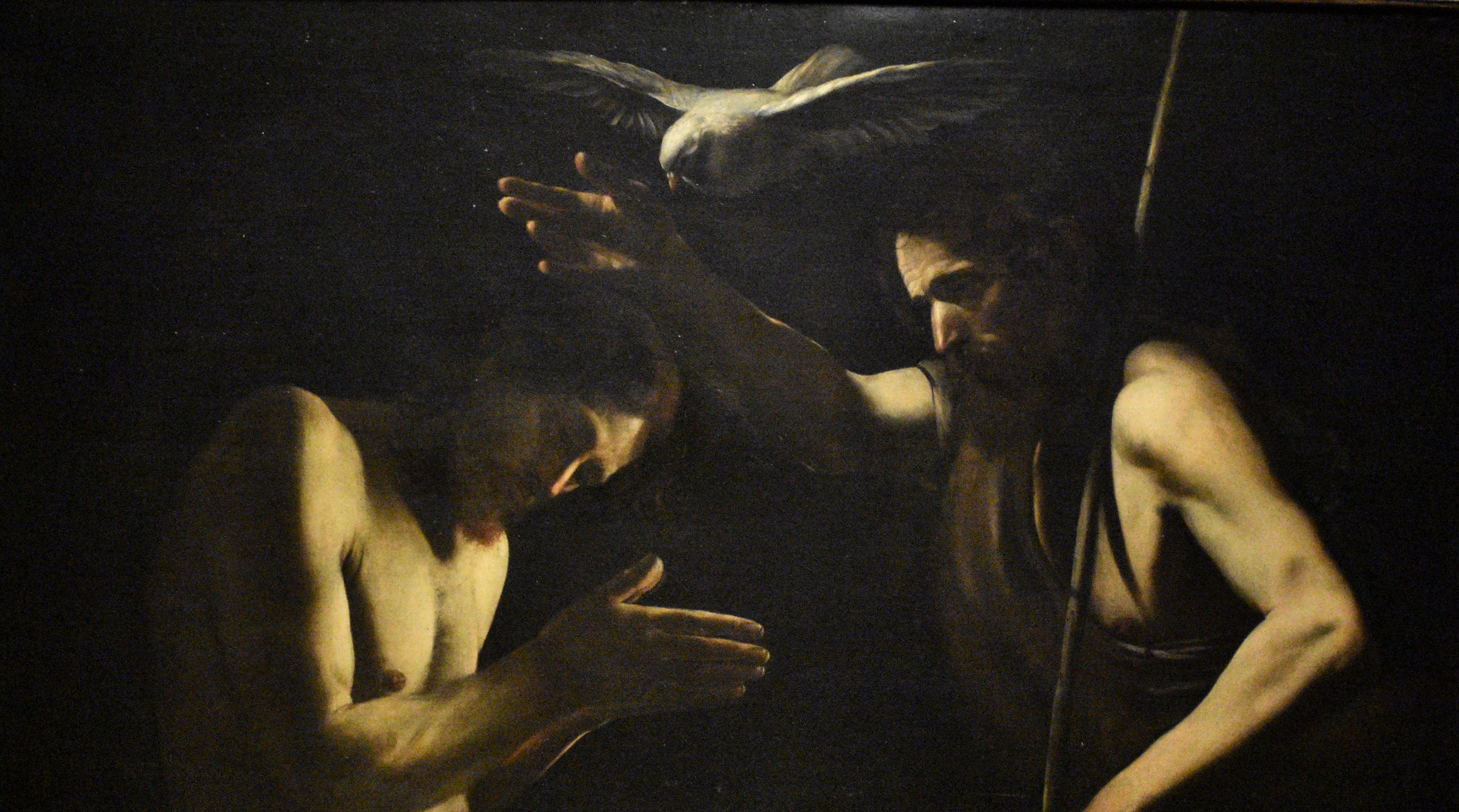
How come Jesus never sinned? Because he never said no to his Father. Jesus always said, “yes.” Jesus’ baptism also revealed the Trinity into whom we are baptized in. When Jesus prayed after his baptism, he did so as the Son of God, fully human and fully divine. As he was praying the Holy Spirit came down upon him like a dove and the Father spoke of him saying, “You are my beloved Son with whom I am well pleased.”
During our Baptism we were indelibly marked, eternally conformed to Jesus and became adopted daughters and sons of the Father, with whom he is well pleased! Such that our Baptism, our being born again, born from above, is just the beginning. God the Father has a part for us to play in bringing about his kingdom. It does not matter how small. We are called to be holy, we are called to be saints. Each and every one of us, each and every day, are invited to say, “yes” to God’s will, to live out our baptismal vows to commit to playing our part in salvation history.
We are not alone in this endeavor. The saints represented in stained glassed windows, with the light shining through, are not just there for adornment. They are examples and reminders of those, who though sinners, and imperfect like us, made a decision one day that their baptism mattered, that they were going to say, “yes” to God. That day, and each day that followed, they allowed the light of Christ to shine through them to others. We can do the same, as the saints cheer us on. The Father and the Son have also sent the Comforter, the Holy Spirit, to empower us through his love, to give us the guidance, the ears to hear, and the courage to act. All that needs to happen for us to begin and continue to live out our baptismal call is to say, “yes,” as Mary did today, tomorrow, and the next day, and in each moment to the will of our Loving God and Father.
Painting: Baptism of Christ by Battistello Caracciollo

 Spiritual Stepping Stones