“Get behind me, Satan. You are thinking not as God does, but as human beings do” (Mk 8:33).
Peter received this rebuke from Jesus only moments after he recognized Jesus as the Messiah, the Christ. Acknowledging Jesus as the Anointed One was a significant insight inspired by God, but Peter still saw Jesus from his limited perspective, his preconceived notion of who the Messiah was to be. Peter was not alone in this presumption. For some five hundred years the chosen people were awaiting the promise and coming of the Messiah. The greater majority sought a Messiah in the mold of a new King David. One who politically and militarily would liberate the people from their Roman oppression. As was also echoed by the disciples, they offered that Jesus was the return of Elijah or John the Baptist, maybe one of the prophets like Jeremiah, although they do not ascribe to Jesus as being the one whom Moses promised would be sent “who would speak God’s definitive word” (Deuteronomy 18:15-18) (Healy, 161).
The Messiah would set things right. The Messiah would restore proper order politically as well as spiritually. Many of the Jews were not happy with the alliance that the Sadducees, who held control over the Temple, had with Rome. The Messiah would do just that but not in the way anyone would ever conceive of, except maybe for Elijah.
Peter got the first part right when he answered the question that Jesus asked, “Who do people say that I am” (Mk 8:27), but he saw not the suffering servant of Isaiah 53 but most likely some other view of the Messianic hope of Israel. Jesus makes a shift building on Peter’s first insight. He for the first time is speaking more openly by sharing how he would suffer, be rejected, and killed. Peter probably did not even hear anything about Jesus rising on the third day. He pulled Jesus aside and began to rebuke him!
We can learn from Peter’s boldness and misstep. In both instances, Peter confidently shared what he believed. In the first insight, that Jesus is the Christ, he was on target. In the second, he was off the mark by not understanding the reality of Jesus’ impending suffering and death and was corrected. Peter stated what he believed, sometimes insightful, sometimes shortsighted, yet through each experience, he learned. He came to learn when he was led by the Holy Spirit and when he was led by the enemy.
Sometimes they were hard lessons, such as when Peter rejected Jesus three times. Yet Peter kept coming back to Jesus. Peter was not lukewarm nor indecisive. Jesus’ reminder to Peter is a good one for us as well. That we are followers of Jesus as his disciples. We are not to attempt to lead Jesus as we believe to be correct but to be willing to be lead along his way as he directs.
I could use more of Peter’s boldness. What doesn’t work is being afraid of making mistakes. Jesus shared a key lesson with Peter that we need to fully appreciate, and that is, we need to understand things from God’s perspective instead of our own. Our discernment in this area will improve, as did Peter’s, when we build our relationship with God and trust in his will for our lives.
Making mistakes, sinning, and being tripped up by our temptations is not so much the problem as much as trying to rationalize or justify them, and staying in a state of self-justification and hardness of heart when we become aware of them. We need to instead face them with contrition, seek forgiveness, and learn from them if we are to mature in our relationship with God and no longer be enslaved. The good news is that we are not alone. Jesus walks with us each step of the way. Will he convict us and rebuke us as he did with Peter? Absolutely, and thank God. Because he loves us and seeks the best for us. In his conviction and through our willingness to be corrected, Jesus will provide the support, strength, and courage we need to get the most effective balance of boldness and humility as we put his guidance into action.
——————————————————————-
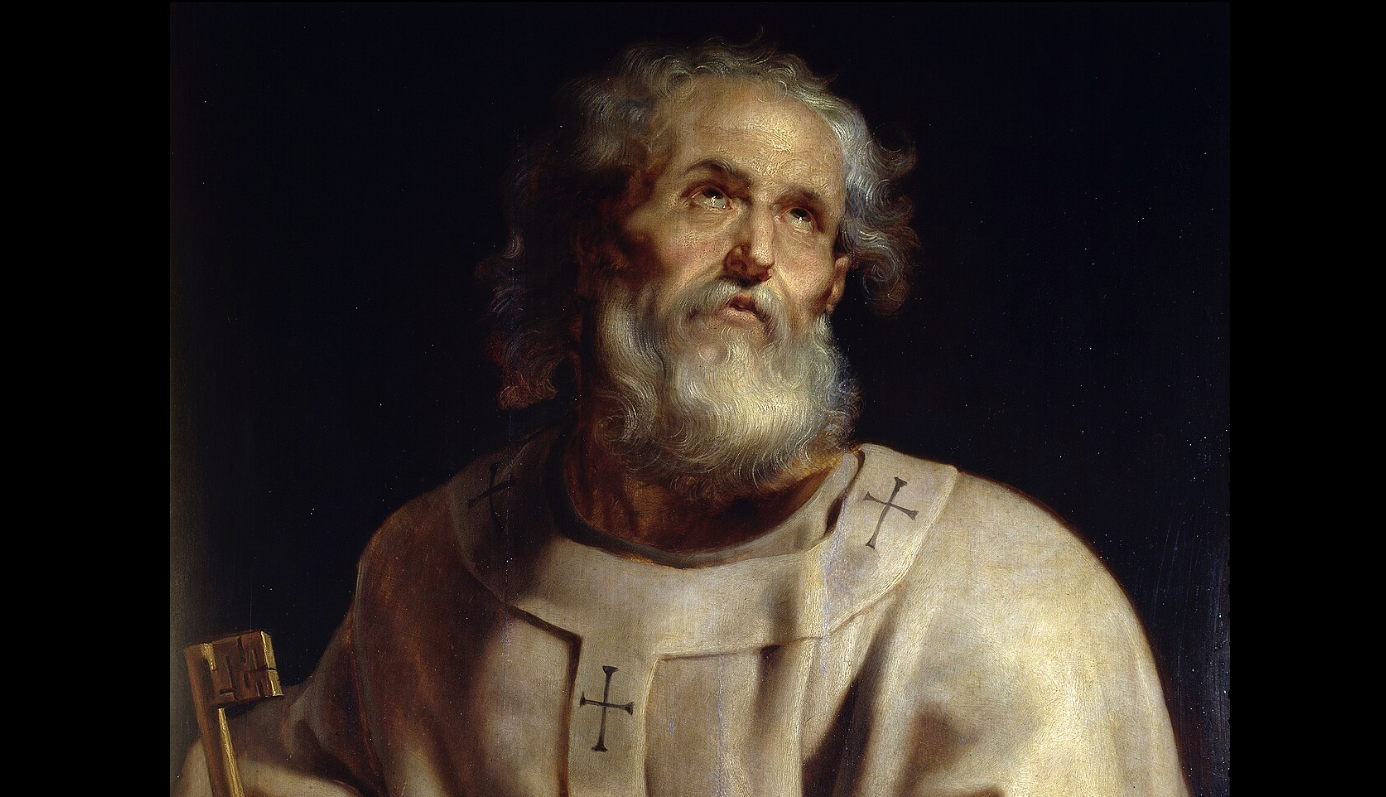
Painting: The Apostle Saint Peter by Peter Paul Reubens
Healy, Mary. The Gospel of Mark. Grand Rapids, MI: Baker Academic, 2008.
 Spiritual Stepping Stones
I really appreciated this. Thank you.
LikeLiked by 1 person
You are very welcome. 🙏🏼
LikeLiked by 1 person