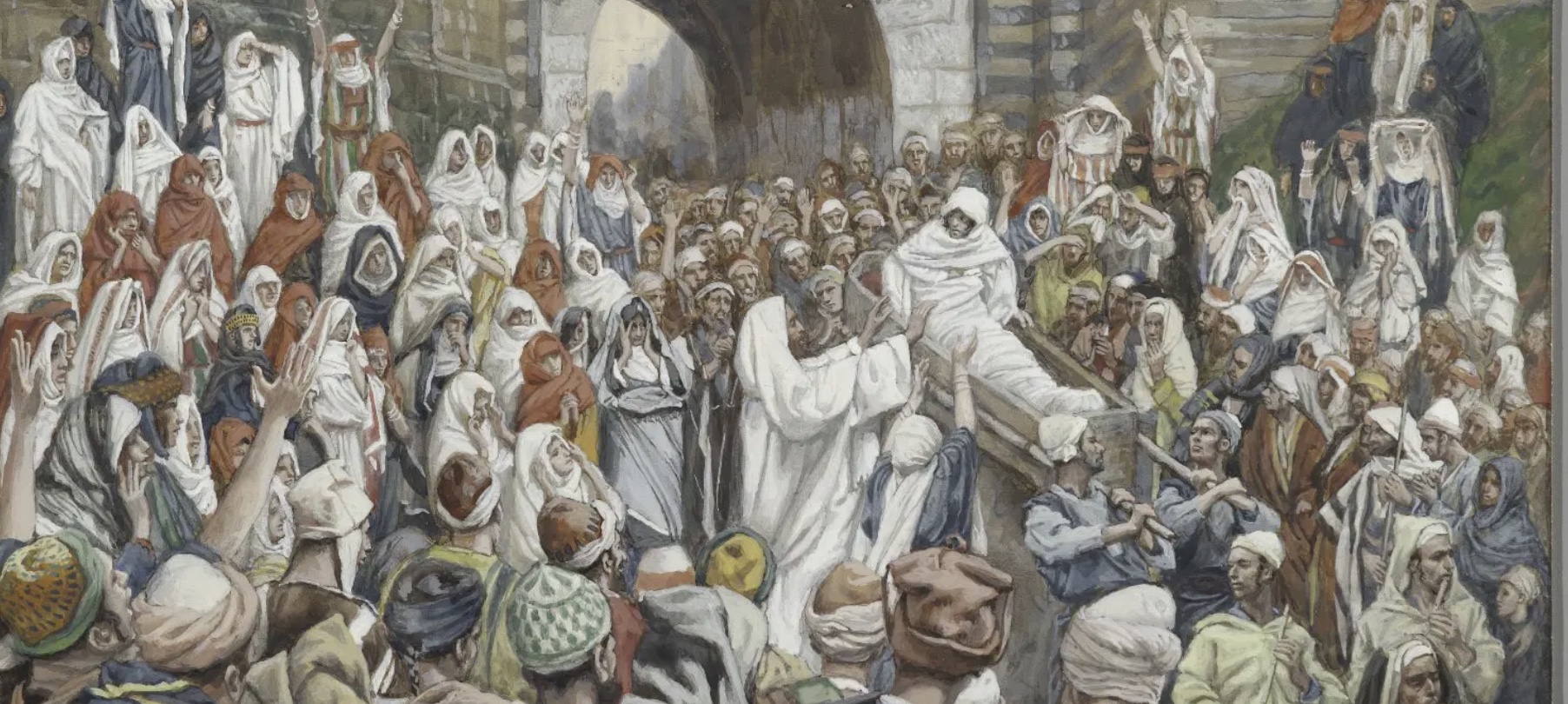
When the Lord saw her, he was moved with pity for her and said to her, “Do not weep.” He stepped forward and touched the coffin; at this the bearers halted, and he said, “Young man, I tell you, arise” (Lk 7:13-14).
Jesus’ immediate response to this woman was pity or compassion. The original Greek word used was splanchnizomai, meaning that Jesus was moved from the very depths of his bowels. The emotional depths to which Jesus was moved to reach out and help the widow of Nain, shows us his humanity. Jesus’ healing of the widow’s son, bringing him back from the dead, shows us his divinity. The entire event shows us the best of who we ought to aspire to be as his followers.
Instead of fear, judgment, prejudice, or indifference, may we instead follow the lead of Jesus and seek to understand, to place ourselves in the shoes of the vulnerable, misunderstood, and on the margins. May we start with those we interact with everyday in our families, our school and workplaces, our communities and places of worship. May our hearts, not be hearts of stone, but hearts of flesh so to be moved from the very depths with the same compassion and love of Jesus toward those, who, like the widow, are vulnerable and at risk.
We can all be more welcoming, hospitable, willing to walk with others and to share in their journeys. We can do this simply in our day-to-day interactions. Whenever we encounter another, may we resist that reactions of judgment, prejudice, or indifference that arise and instead be willing to be moved by compassion and concern and be present.
Listening and hearing each other’s stories, needs, and engaging in conversation are helpful in opening up relationships. Taking the time to smile, to listen, to respect one another even when disagree and being willing to work through conflicts, as well as giving others the benefit of the doubt, helps us to build and strengthen relationships.
Jesus looked upon those he interacted with as family. This widow who was weeping as she looked upon the dead body of her son was not a stranger to Jesus, but a sister in pain. Jesus was moved with compassion and immediately came close to help. He met and engaged with each person and treated everyone he came in contact with in the same way, as human beings. This was true with even those he was in conflict with like many of the Pharisees.
Jesus loved and showed people compassion and invited them to be free from that which bound them to their slavery to sin. He came to remind all of us of who and whose we are as his Father’s beloved children. “For whoever does the will of my Father in heaven is my brother, and sister and mother” (Mt 12:50).
JoAnn often prayed for God to reveal to her one person that she could help each day. When we ask, God will guide us and grant us greater awareness regarding those we can help. Our Father will also give us the means to be present and to assist. We may or may not be called to raise the dead, but we can all lift each other’s spirits, have compassion for one another, and see each other more as Jesus sees us, as brothers and sisters, not as somehow less or other, but each with dignity.
Come Holy Spirit, please stretch us beyond our comfort zones, beyond our limitations, and soften our hearts so that we too, like Jesus, may allow ourselves to be moved by compassion. Please help us to regularly and with more intention stop, breathe, and be more patient, understanding, and kind. Help us to love more, and with each person we interact with, to will each other’s good so that each of us are better for having met.
———————————————————-
Painting: “The Resurrection of the Widow’s Son at Nain” by James Tissot, 1890, online collection from the Brooklyn Museum
Link for the Mass readings for Tuesday, September 16, 2025
 Spiritual Stepping Stones