In a time when word of mouth is the way to get news out, the momentum still moved quickly. Jesus has preached with authority and moved people with his words, he has healed people and exorcised unclean spirits. So when it was known that Jesus was in the vicinity, in his present home of Caparnaum, people came. Jesus came not to abolish the law but to fulfill it. That meant that he did not water down the message of God, but raised the standards even higher than they had been under the leadership and legacy of Moses. Unlike some of the Pharisees though, Jesus did not just add heavy burdens to leave the people to carry on their own, Jesus accompanied those he challenged, he carried the weight of their sin, all the way to Calvary.
If Jesus had a business card to hand out as people gathered around him, it may have had written on it his first words recorded by Mark in his Gospel: “This is the time of fulfillment. The kingdom of God is at hand. Repent, and believe in the gospel” (Mk 1:15). The time of fulfillment is indeed at hand in the presence of the Son of God made flesh. The entrance to that kingdom is measured by a willingness to turn away from sin and turn back to God. Those who are open to the love of God, willing to be shaped and transformed by his love, who are in touch with their hunger and yearning to be one with the Father, recognizing that there is more to life than the false promises, apparent goods, and even the finite goods of this world, are drawn to Jesus.
When Jesus returned to Capernaum after some days, it became known that he was at home. Many gathered together so that there was no longer room for them, not even around the door, and he preached the word to them (Mk 2:1-2).
It is clear that there is a movement afoot in just these first two chapters of Mark. Another key verse from Mark is the very first line of his Gospel: “The beginning of the gospel of Jesus Christ [the Son of God]” (Mk 1:1). This is an amazing line, unless we read the words only, missing its proper contextual background. Those reading or hearing these words in the first and early second century would have grasped Mark’s intent immediately. There are two words in that verse that would have leapt off the pages or the lips of the reader; gospel and Christ.
The geopolitical powerhouse lording over Israel at the time of the life of Jesus was Rome. The house of Caesar was its head. Augustus Caesar was emperor at the time of the birth of Jesus. Tiberius Caesar reigned during most of the adolescence and adult life of Jesus. The term gospel, euangelion in Greek, meant good news. This gospel was spread throughout the Roman empire by messengers especially on two occasions, at the behest of the emperor; on his birthday and after great military victories. Christ, or Christos in Greek, meant the anointed one. The only ones who were anointed were emperors, kings, and priests.
Mark was making a vivid point with this opening verse, the proclamation of the good news: Jesus is the Christ, the anointed one, not Caesar. It is not Kaiser Kyrios, Caesar is Lord, but Iēsous Kyrios, Jesus is Lord! This verse is treasonous in the face of Caesar and a subversive rallying cry for the followers of Jesus then and today. Yet Mark was not calling for a military coup, or a power play, but inner transformation.
Mark revealed that the first opposition against Jesus was not by the Roman occupiers. The push back arose from the scribes of his own people. Instead of being amazed that Jesus had forgiven the man’s sins and was about to heal him of his paralysis, they seek to label him as a blasphemer.
Imagine what the paralyzed man felt. His friends were not swayed by the unyielding crowd that was unwilling to let them in, they tore through Peter’s roof to let him down, all eyes had been on him until Jesus began to speak, and in this moment when he was so close, would he be denied by the scribes, could they sway Jesus? Before these doubts could take hold, Jesus spoke: “I say to you rise, pick up your mat and go home” (Mark 2:11).
Jesus freed this man from his sin and paralysis. Not all suffering is caused by our sins, but in this case it was and the man was freed because of the faith of his friends. Unfortunately, the scribes remained paralyzed. How about us? Do we believe that Jesus is a blasphemer or Iēsous Kyrios? The Son of Man is the Christ, the Son of the living God, our healer, and Lord. He will free us and heal us when we are willing to surrender our ego, our self sufficiency, our imposed limitations, and sins. There is no obstacle that can prevent us from getting to Jesus as long as we believe and trust in him. Let us have the courage to encounter Jesus and invite others to join us.
________________________________________
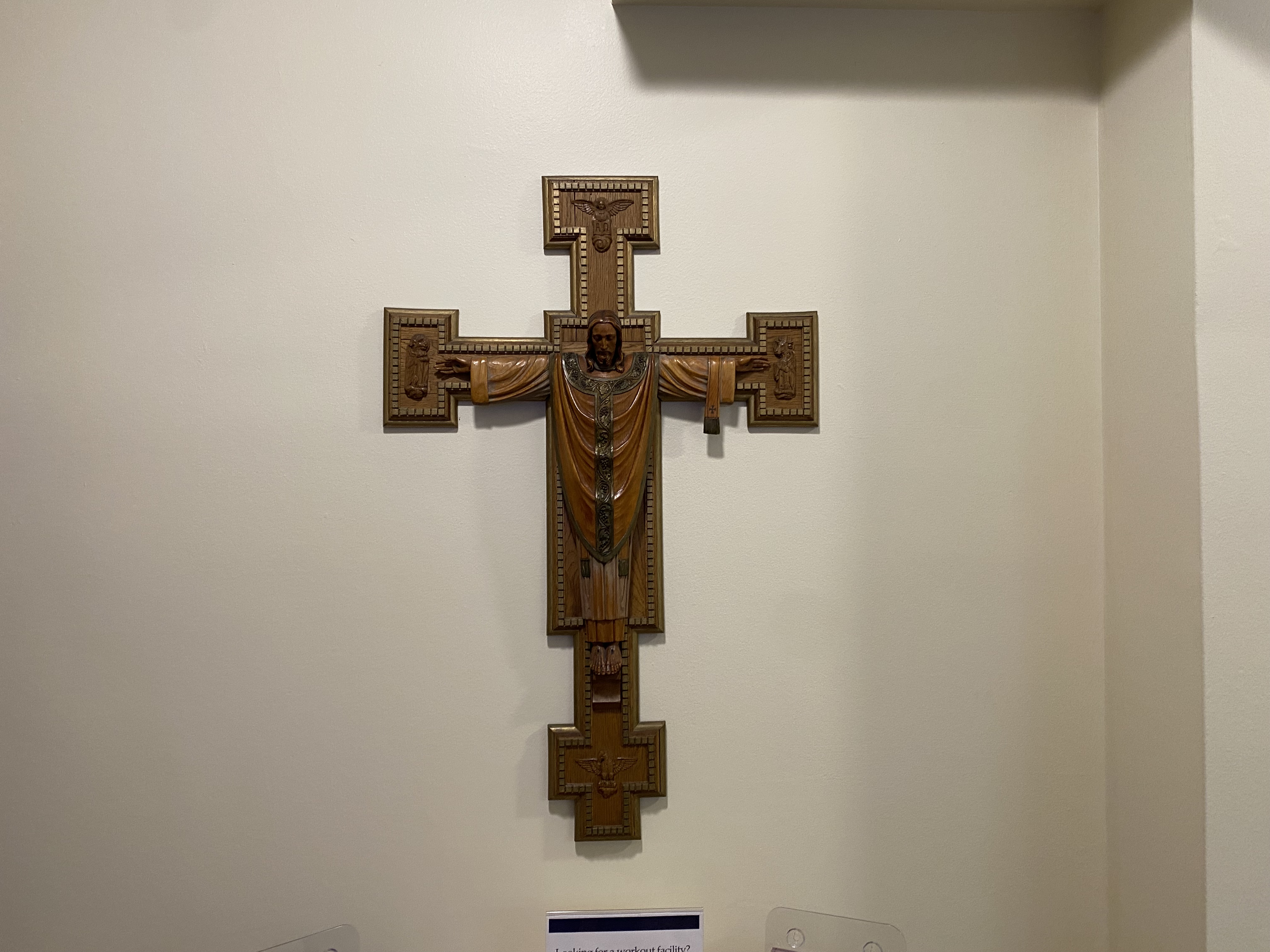
Photo: Jesus the High Priest, Iēsous Kyrios.
 Spiritual Stepping Stones