Jesus’ listeners “picked up stones to throw at him” (Jn 8:59). This interaction has some similarities found in Jesus’ Bread of Life discourse (cf. John chapter 6), though less of a violent reaction, where Jesus made the statement, that, “I am the bread of life” (Jn 6:48). In both cases, the people do not understand what Jesus is sharing about his identity, and yet, in both cases, Jesus doubles down on the points he had made.
In John 6, Jesus holds firm to the truth that his followers will consume him and in today’s Gospel Jesus does not equate himself as being just a representative of God, a prophet or a rabbi, but that he, in fact, is God when he states: “Amen, amen, I say to you, before Abraham came to be, I AM” (Jn 58). With these words, Jesus has just done the unthinkable, he not only has spoken God’s sacred name, which is not to be uttered because it is considered too holy to do so, he equates this sacred name, “I AM”, with himself.
Jesus is making his point very clear, that he is God. During the Bread of Life discourse, people walked away from him because they were repulsed and most likely considered him mad, when he stated that they were to eat his flesh and drink his blood. Here they believe he is speaking blasphemy of the highest order. The reactions would be appropriate in both cases, unless of course, Jesus is who he said he is.
As his listeners then, we too have a choice to disbelieve or believe in Jesus. One option that is off the table, if we give the Gospel accounts any rational reading, is that Jesus presented himself as just another teacher, philosopher, prophet, or guru. Jesus, during his public ministry, is consistently embroiled in conflict, which is evident in all four Gospels, because Jesus presents himself as God incarnate. Jesus heals on the Sabbath because he is the Lord of the Sabbath, Jesus is the Bread of Life, Jesus is: “I AM.”
The Apostles struggle to make sense of the words and actions of Jesus and we may also struggle with our understanding of who God is and who Jesus is. We may have doubts, concerns, and unanswered prayers and/or questions. To walk the path of discipleship is not to walk with constant assurance, for we walk by faith and not by sight (cf. 2 Corinthians 5:7). Walking by faith does not mean we throw up our hands, toss out all reason, and believe blindly. Dr. Holly Ordway defined faith as “trust based on a reasoned knowledge of the evidence.”
Faith means that we trust that Jesus is who he claimed himself to be, who he still claims himself to be, based on the scriptural evidence, our own experiments with the truth based on these claims, and our experiences of him in our time of prayer, meditation, contemplation, and everyday actions and engagements with others.
Jesus calls and we are to follow. He does not give us the full picture, but as we step out trusting in his call, he will reveal to us each step of the way what we need to know and do. He will be present and work through us as we continue to turn our life over to him and one another more and more each day. When we begin to doubt, we can lean on Peter’s claim, “Master, to whom shall we go? You have the words of eternal life. We have come to believe and are convinced that you are the Holy One of God” (Jn 6:68-69). Peter made this claim based on his experience and trust in his relationship with Jesus. Our relationship and belief in Jesus will also grow to the same depth, moment by moment, with each, “Yes” to the invitation of Jesus, the Holy One of God.
———————————————————————————-
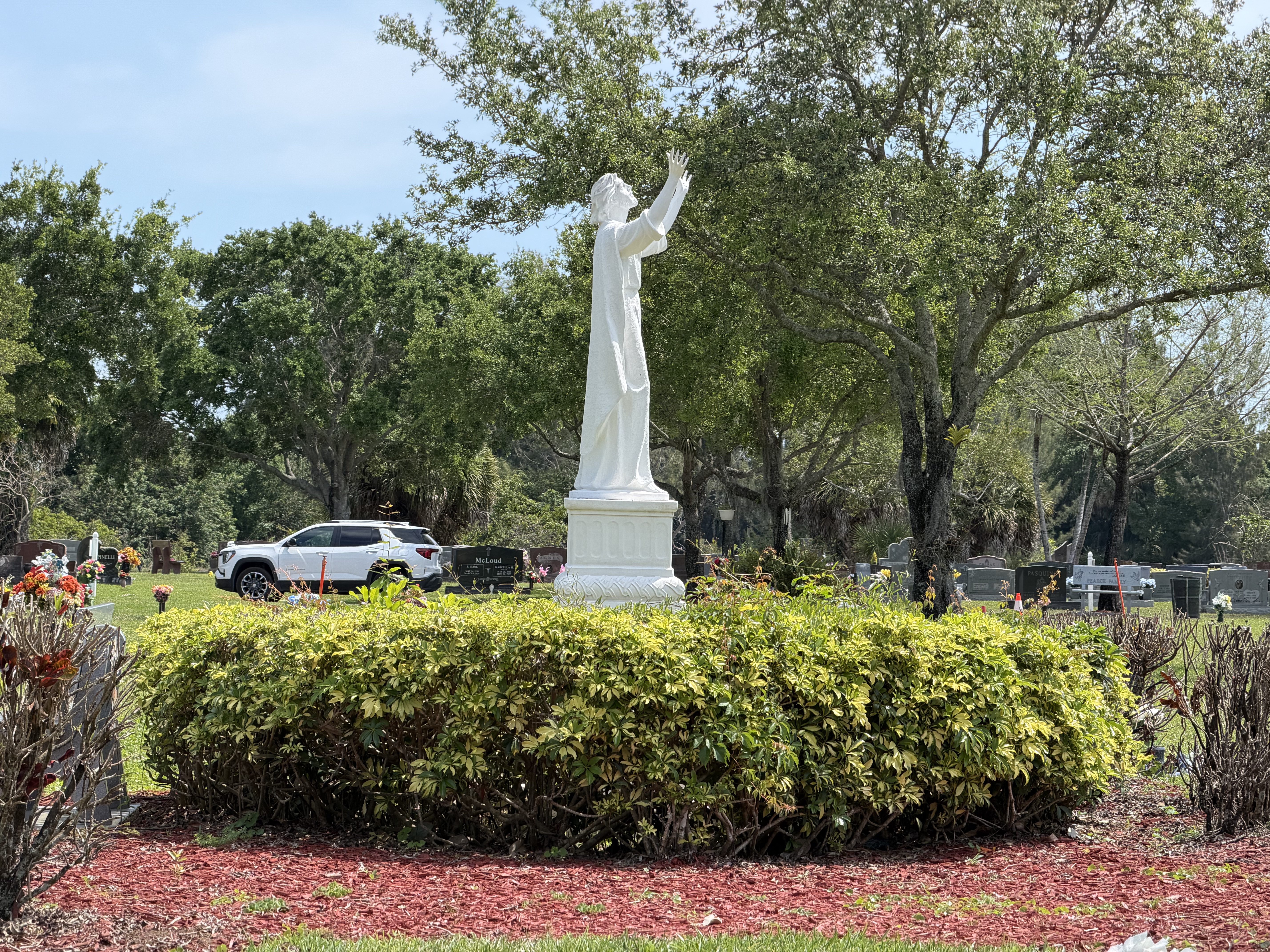
Photo: At Our Lady Queen of Peace, spending some time with Jesus and JoAnn.
Holly Ordway’s quote comes from Lesson 2: Bridging the Meaning Gap in her course: Imaginative Apologetics which can be accessed by registering for the Word on Fire Institute, the home page of which can be accessed: https://wordonfire.institute/

 Spiritual Stepping Stones