At the sight of the crowds, Jesus’ heart was moved with pity for them because they were troubled and abandoned, like sheep without a shepherd (Mt. 9:36).
This movement of compassion is for the people who are not being led by the religious leadership of this time. This also echoes periods of time in Israel’s history when they were not properly led or led astray by insufficient and/or corrupt leadership. The imagery of the shepherd and tending of the sheep is present in the Old Testament as well. There is a wonderful example where Ezekiel hears the Lord speak to him: “To the shepherds, thus says the LORD GOD: woe to the shepherds of Israel who have been pasturing themselves! Should not shepherds pastor the flock?… You did not strengthen the weak nor heal the sick nor bind up the injured… but rule harshly and brutally…”
One of the reasons the prophets arose, was at the calling of God, to speak judgment against the corrupt leadership of Israel. God has always heard the cry of the poor and when the people were left to fend for themselves and “were scattered and wandered”, God spoke through Ezekiel saying that: “I myself will pasture my sheep; I myself will give them rest – oracle of the Lord GOD. The lost I will search out, the strays I will bring back, the injured I will bind up, and the sick I will heal…” (cf. Ezekiel 34).
Jesus has been doing just as Ezekiel outlines in 34:15-16. And even though Jesus is “proclaiming the gospel of the kingdom, and curing every disease and illness” (Mt. 9:35), the sheep are gathering but most of the shepherds and condemning. Neither his teaching nor his healing is being acknowledged or accepted by the leaders. Instead, there is a growing animosity.
Even though many of the shepherds are gathering like a coming storm, Jesus continues his Father’s mission without any concern. He calls twelve to assist him. This is no random number. Jesus is presenting himself as the new Moses, who called twelve to assist him in leading the freed slaves from Egypt in their journey through the wilderness to the promised land. Jesus is the new David who unified the twelve tribes as a nation of Israel. Jesus is calling a new leadership to begin a new age, a new kingdom, and a new Israel.
And a cast of characters it was. Especially through the Gospel of Mark, the apostles have many fits and starts and sputters and seem to never be firing on all cylinders. And yet Jesus saw something in them that they did not see in themselves. Jesus never gave up on any one of them. He taught, guided, corrected, modeled and prayed for them, and when the time came, prepared them for his greatest act of love and sacrifice, his crucifixion.
The apostles were rocked to their core, they failed in every respect. Jesus still did not give up on them. He conquered death and rose again. Jesus came back to them and did not punish them but breathed life, breathed the love of Holy Spirit into them, forgave, and showed them a better way. Just as Jesus gave them the authority in today’s account to teach, heal, and cast out demons, he gave to them again in that upper room after his return. And as we remembered and celebrated again only a few weeks ago, after the Annunciation, the Holy Spirit came upon them at Pentecost, and all that Jesus prepared them for, they assumed in receiving the mantle of Apostles and the Church was born.
We gather around these wonderful accounts each day or each week at each Mass as well as in our own private reading, prayer and meditation. We read or hear again what has been preserved and transmitted generation after generation, the stories of Abraham, Isaac, Jacob, Moses, David, the judges, prophets, and how the faithful remnant passed what they received to Joseph, Mary, John the Baptist and Jesus, and he passed on a deeper and richer deposit of faith to the Apostles, not just to remember our history, but to remember who and whose we are.
The word exists only when there is one to speak or write it AND one to hear it. The Apostles heard the word of Jesus, were empowered by him, and in the end, did what he told them to do. We now stand in that same wonderful line of succession. Jesus, is not only our Shepherd, but also the Word who became flesh, one with us in our humanity, was spoken into the world by his Father and was heard. So the Word continues to be spoken because the Father sees in us what he saw in those he has called in every generation so that we can become one with his Son in his divinity. The Holy Spirit is also present to love and guide us to accept the truth of the word that he speaks, that he wants us to breathe in, receive, find our rest, and abide in: we are the beloved daughters and sons of our loving God and Father. May we hear and savor that truth today.
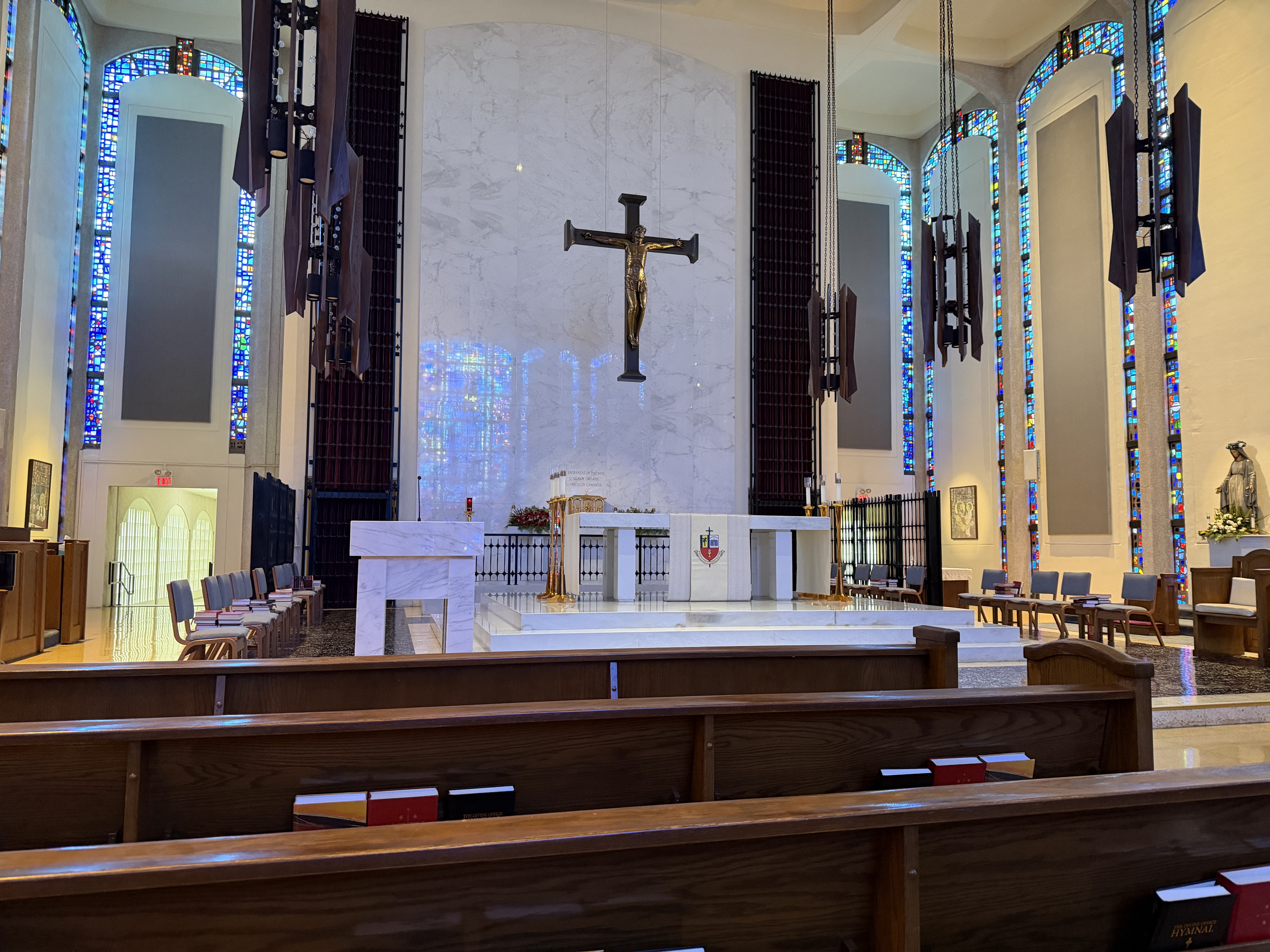
Photo: May you give yourself a place to be still and quiet and savor the truth of who and whose you are.

