
We are at our best when we care for one another.
This pericope, extract or section from, Luke 7:1-10, is called The Healing of the Centurion’s Slave. It represents a wonderful picture of collaboration and harmony. The centurion, a gentile – non-Jew, heard that Jesus was near and appealed to Jewish elders to seek out Jesus to invite him to his home to heal his slave. As Jesus was on the way, the centurion apparently had a change of heart, concerned about his sinfulness and did not want to trouble Jesus. He sent his friends to Jesus with the request to heal his slave with his word. Jesus was amazed: “I tell you, not even in Israel have I found such faith” (Lk 7:9). The slave was then healed.
Aside from the fact that no one seemed to have a problem with slavery, certainly not uncommon in the Ancient Near East, everyone involved, the centurion, his friends, Jewish elders, and Jesus were all working together to make this healing possible. The centurion actually showed concern, not indifference for his slave, Gentiles and Jews collaborated with one another, and Jesus did not hesitate to answer the request of the centurion, a representative of the Roman occupying army.
This Gospel scene is certainly worth meditating upon. The centurion gave voice, spoke on behalf of his slave. Jesus healed the slave with his Word. We need to use our words to speak up for those who do not have a voice. We need to help people to understand that the unborn are human beings, they are just smaller and more vulnerable than us. But we also need to be more than pro-birth advocates. We need to provide support systems for the parents to care for their children once they are born, and viable alternatives for those that may be contemplating an abortion.
We need to write our bishops and demand that there be accountability and transparency regarding past abuses of children and we need to learn strategies and teach parents and all who volunteer and work with our youth, children, and at-risk adults, how to be empowered so as to be clear with their boundaries and know the warning signs, to protect themselves from predators, within and without of the Church. Those who seek to molest, abuse, and/or lure our youth into human trafficking must no longer have access.
We need to speak up for migrants and immigrants, as well as their children, too many of whom are still separated from their parents. We need to write our congressional representatives to not only protect D.A.C.A – Deferred Action for Childhood Arrivals – recipients, but provide the means and pathways provided such that they may become citizens. People who are fleeing their homes because of war, terrorism, natural disasters, and seeking a better life, need to be welcomed, provided care and support. We can effectively screen people who would seek to cause harm and provide hospitality for those needing refuge and a new life. Our legal system needs to be reformed such that it no longer disproportionally targets people of color, even to the point of innocent people losing their lives, whether on the street or through capital punishment.
As the centurion spoke up for his servant who was ill and in need of healing, we need to be aware of those in need, hear their stories, and speak up for those who have been abused within and without of the Church, those who have suffered the indignity of physical, sexual, emotional, and psychological abuse. We need to hold those accountable who have misused their power, as well as those who have manipulated the gift of trust misplaced.
There are so many people that are not treated with dignity, the unborn as well as born. So many people who are treated less than human because of race, creed, ethnicity, gender, sexual orientation, political affiliation, and/or land of birth. We all fall woefully short of the harmony and collaboration witnessed in today’s Gospel account. Yet, we need not lose hope.
We need to resist despair, apathy, and indifference, and instead, keep our ears, eyes, and hearts open to hear the cry of the vulnerable among us. We must be willing to see each other as people created in the image and likeness of God, treat those we encounter with dignity and respect that each of us deserve and be willing to collaborate and work together for the good of all people in little ways with great love today as Jesus did, one person at a time.
—————————————————————————————–
Photo by Min An from Pexels
Link for the Mass readings for Monday, September 16, 2019
“Who do you say that I am?”
“But who do you say that I am” (Mk 8:29)?
This question is just as important to us today as it was when Jesus asked his disciples the same question some two thousand years ago. The disciples response all those many years ago, of John the Baptist, Elijah or one of the prophets, has multiplied and become more varied as is recorded in the many books written about Jesus and the 30,000 plus denominations who claim to follow him. There is also a vast array of pictures, paintings, documentaries, and movies. Through each medium, we are given a view of the Jesus of history or the Christ of faith, some emphasizing more the humanity of Jesus and others more the divinity of Jesus, and some a balance of both the human and the divine. Debate has continued as to whether Jesus was God or only human, or even has come to question if he ever really existed at all.
When I taught fifth and sixth grade students at Rosarian Academy, each Easter Season, I assigned my students the task of drawing a picture of the Resurrected Jesus. I quickly noticed a common characteristic of their artistic renditions: Jesus consistently did not have a beard. At first, I started to hand back the pictures to say they needed to add a mustache and beard, but quickly stopped myself. I realized I had made a mistake. This is how they saw Jesus from their perspective at their age.
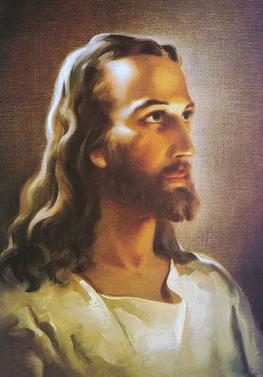
The way we talk about and express Jesus may actually say a lot more about us than Jesus. The portrait I posted above is the Warner Sallman painting he titled, “Head of Christ”. I chose it because this was the portrait of Jesus I grew up and identify most with.
How can we come to, not know so much about Jesus, but actually know him? We need to do the same as Peter and the disciples did. We need to spend time with him. How do we do that today in 2021? We need to spend time daily in meditation and prayer with Jesus. We also need to be aware of his presence in our daily experiences. Jesus is with us in all we do, we just need to be recognize hiim with us. Jesus is present in our encounters with each other, for what you do to the least of my brethren, you did it to me (cf. Mt 25:40). We come to know Jesus by reading and meditating on the Gospels, the primary sources of the life and teachings of Jesus. Go back and read today’s account from Mark, and imagine yourself in the scene. Allow your senses to come alive.
We also come to know Jesus by going to Mass. His Word is proclaimed and if we go with hearts and minds open to encountering him, he will speak to us beyond the written word on the page but in the Word proclaimed by the minister of the Word. The Holy Spirit will reveal to us that which is hidden within his word, as he did with Peter who proclaimed that Jesus is the Christ, the Messiah. Jesus is present in the assembly gathered, in our prayers of petition and in his real presence, Body, Soul, and Divinity, in the Eucharist that we receive. We have direct encounters with Jesus when we participate in the other sacraments as well. In our Baptism and Confirmation we have been conformed to the very being of Jesus such that we become an integral part of the Body of Christ. In Reconciliation, Jesus hears our confession, heals and absolves us of our sins through the priest. We also receive his healing touch in the Anointing of the Sick. Our acts of service are defined for those participating in Matrimony or Holy Orders.
We come to know Jesus in our service, in engaging ourselves in the corporal and spiritual works of mercy. We come to know Jesus through those who knew him by reading the lives of the saints and spiritual writings. Jesus is also present to us in our sorrows and joy, our defeats and our triumphs, and we experience him more deeply when we enter into, instead of running from, our conflict and pain, ask him for help and guidance, as well as, thank him for our triumphs. Our deepest encounter with Jesus is in our openness to receive and share his love.
Jesus is already with us, he loves us more than we can ever imagine. We just need to open the door in all experiences of our lives and let him in. As we do so we will come to develop a relationship with Jesus, know him, his will for our life, and experience joy and fulfillment in our life. For our relationship with Jesus will lead us to the relationship we have been created for, to be one with God and one another.
Place yourself in today’s Gospel. Feel the heat of the day, feel the rough material on your skin, allow your senses to come alive as you see the disciples gathered around you, and then turn your head as you hear the question, “But who do you say that I am?” You hear some say John, Elijah, or a prophet. Then Peter proclaims, “You are the Christ” (Mk 8:29). Do you agree with Peter? Who do you say that Jesus is? This is an important question to meditate upon this Lord’s Day and through the week.
Painting: “Head of Christ” by Warner Sallman, 1940
Mass readings for Sunday, September 12, 2021
We need to decide whether we will produce evil or good fruit.
“A good person out of the store of goodness in his heart produces good, but an evil person out of a store of evil produces evil; for from the fullness of the heart the mouth speaks” (Lk 6:45).
We can experience hardships, trials, and suffering. We may have experienced traumas, and even come face to face with evil. Yet, we are not evil because of what happens to us, how we are tempted. Neither are we defined by any trauma, suffering, or abuse. We have been created good by a loving God.
Negativity, sin, hate, and evil, can be seductive, can lure us to rationalize and decide that what we may think of as good in the moment is just an apparent good. To encounter or experience a word or act of unkindness, negativity, or even violence, we may feel justified in retaliation, yet if we speak or act in this way, we perpetuate the negativity or evil we seek to stand up against. In The Strength to Love, a collection of Dr. Martin Luther King’s sermons he wrote:
“Returning hate for hate multiplies hate, adding deeper darkness to a night already devoid of stars. Darkness cannot drive out darkness; only light can do that. Hate cannot drive out hate; only love can do that. Hate multiplies hate, violence multiplies violence, and toughness multiplies toughness in a descending spiral of destruction.”
At the moment we have a thought in our mind, we want to be aware of it and decide what to do with that thought. Many thoughts come from ourselves, others come externally from our experiences, our observations, our concupiscence – our tendency to sin, and yes even some from demonic influences.
What we listen to, read, and/or watch on a regular basis matter. We need to discipline ourselves so as not to entertain every thought or influence that comes our way. We need to be discerning, otherwise once we allow ourselves to regularly consume negative, harmful, and unhealthy thoughts we will soon begin to speak and act on them.
May we instead meditate on the things from above (cf. Colossians 3:1) and aspire in our lives to bear the fruits of the Spirit of “love, joy, peace, patience, kindness, generosity, faithfulness, gentleness, self-control”(Galatians 5:22-23). We need to prune that which is deadening and nourish that which gives life. Examining our conscience with honesty daily will help the pruning process.
As we remember those who died on 9/11, twenty years ago today, may we see that seeking revenge and feeding hatred is not the way to honor them. Instead, with humility, we are invited to allow the light of God’s truth to shine within our own darkness so as to better be able to see clearly to root out any pride, prejudice, hatred, and/or tendencies to think and act in any dehumanizing way. With a heart that is filled with the love of the Holy Spirit we can better listen, think, speak, and act in ways that provide healing, understanding, empowerment, reconciliation, and love to make our corner of the world a little bit better than we found it.
——————————
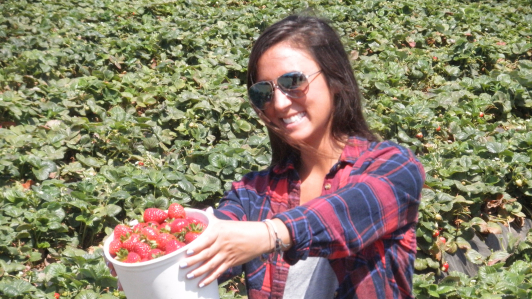
Photo: Picking strawberries with Christy in San Diego some years ago now.
Link for the Mass reading for Saturday, September 11, 2021
Are we humble enough and willing to hear the truth?
“Can a blind person guide a blind person? Will not both fall into a pit” (Lk 6:39)?
This phrase from today’s Gospel appears to be one of Jesus’ simple teachings. It seems to be straightforward, practical and makes sense. Yet, as with much of what Jesus teaches, there is a deeper level. There are many degrees of spiritual blindness that we can succumb to. We can follow others, thinking we are improving, yet allowing them to lead us to fall into a pit.
Succumbing to a cult of personality is very tempting. Who are our models, our heroes? Who is it that we seek to emulate? Are they people who are seeking all that is good, true, and beautiful? Are they people who are guiding us to our highest hope and good to actualize our potential, or do they constantly lead us astray?
We need people in our lives that are not afraid to tell us the truth, or who respect us enough to guide us in such a way that they do not manipulate and take advantage of our blind spots but instead, help reveal to us our shortsightedness and give us the light to see a clearer path to avoid the pitfalls along the way.
My wife, JoAnn, was a person who did just that. She spoke openly and freely about what was on her mind. She was open to hear about her own weaknesses and faults and was willing to help me see mine as well. Though at times I needed time to digest her insights, I agreed with her assessments more often than not. JoAnn helped me to move beyond my comfort zones as well as pull me back when I would overextend myself by helping me to learn to say, “No”.
As I shared a few days ago, my heart continues to be heavy with JoAnn no longer in my life, while at the same time, I still draw on her guidance and now ask for her intercession that I may daily understand God’s will and direction. I became a much better person with JoAnn in my life and I appreciate even more now our time together.
————
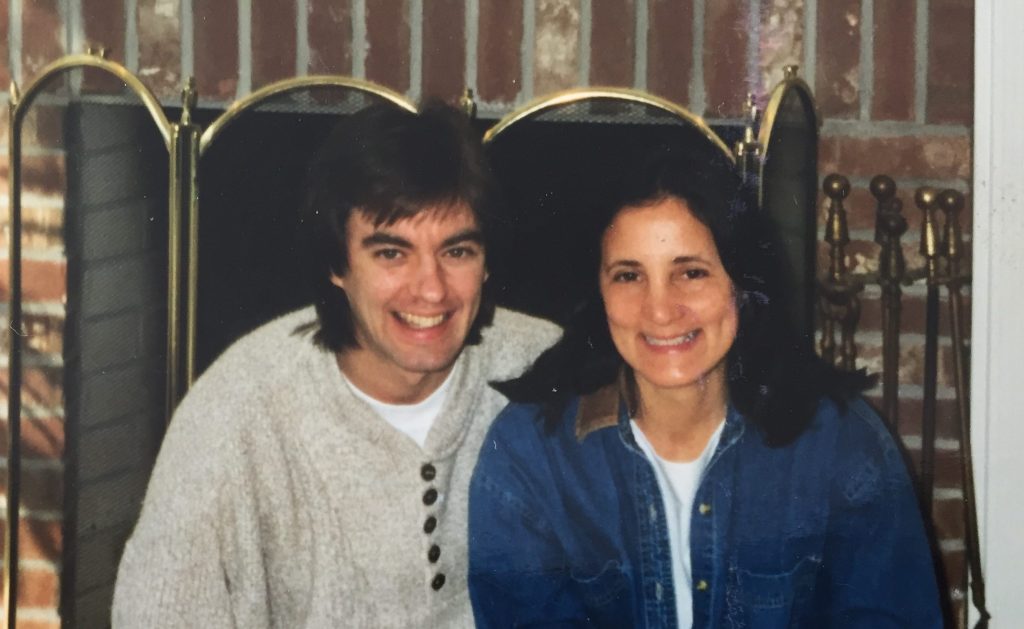
Photo: One of the earliest pictures from when JoAnn and I began dating.

Love is the bridge that will span our present chasm and bring us back together.
Jesus said to his disciples: “To you who hear I say, love your enemies, do good to those who hate you, bless those who curse you, pray for those who mistreat you” (Luke 6:27-28).
Certainly, this is as hard of a teaching as any of us have ever heard, yet this is the path to peace. Peace that is not just an absence of violence but a peace that is grounded in mutual respect and unity. No matter where we might look, there are very few examples or models for us to see this Gospel being put into practice. We instead see a consistent engagement in rhetoric, language, and outright hostility that promotes dehumanization, division, contempt, hatred, and vileness. These voices not only rise in our secular and political discourse but also there is a growing din within the Church as well.
Nor do I believe in the temptation of the pendulum swing that would threaten to counter and go the other way, where what we think and say has the substance of milk toast, meaning, that we are so careful not to offend that we don’t share our ideas or what we truly believe to avoid conflict. Staying away from hot button issues and the taboos of talking religion and politics is not a way to bring about peaceful coexistence nor solve important issues. Neither approach is helpful to mature growth.
Neither an overly aggressive nor a bland tolerance of engagement is what Jesus is presenting in today’s Gospel. Jesus is inviting us to proclaim what we think and believe but in our interactions with one another, the primary starting point is respecting the dignity of the other person. We can have a dialogue and disagree without it devolving into disparaging, demeaning, belittling attacks, and shouting at and over people. We can agree to disagree, while still stating clearly what we believe, even boldly and passionately doing so, while at the same time being willing to listen and allow others do the same. In this way, we each can be heard, we can exchange ideas, and quite possibly learn and grow from our encounter with one another.
We need to learn again that it is truly possible to engage in a constructive argument. We begin to do so when we are willing to recognize our interconnectedness and our common dignity. We can love our “enemy” by choosing no longer to make another person into a monster.
We can clearly point out the actions of others that are abhorrent and unconscionable, hold them accountable, yet without disparaging the person. Otherwise, if we meet hate with hate, violence with violence, darkness with darkness, we will only beget and increase that which we denounce.
Jesus offers a different way in today’s Gospel and one not many of us are willing to follow. Jesus is calling us to love one another as he loves each and every one of us. Love is no mere emotion or sentiment but an intent to will the good of each other, even and especially when there is some attribute that we do not like about a person.
If we want to see a change in our divisive and polarized time, we need to be willing to encounter one another, one person at a time, sit down, talk, and listen, and love one another. Easy, no, possible, yes, when we are willing to allow God to open our hearts and minds to see each other as he sees us.
——————
Photo from pexels.com
Mass readings for Thursday, September 9, 2021
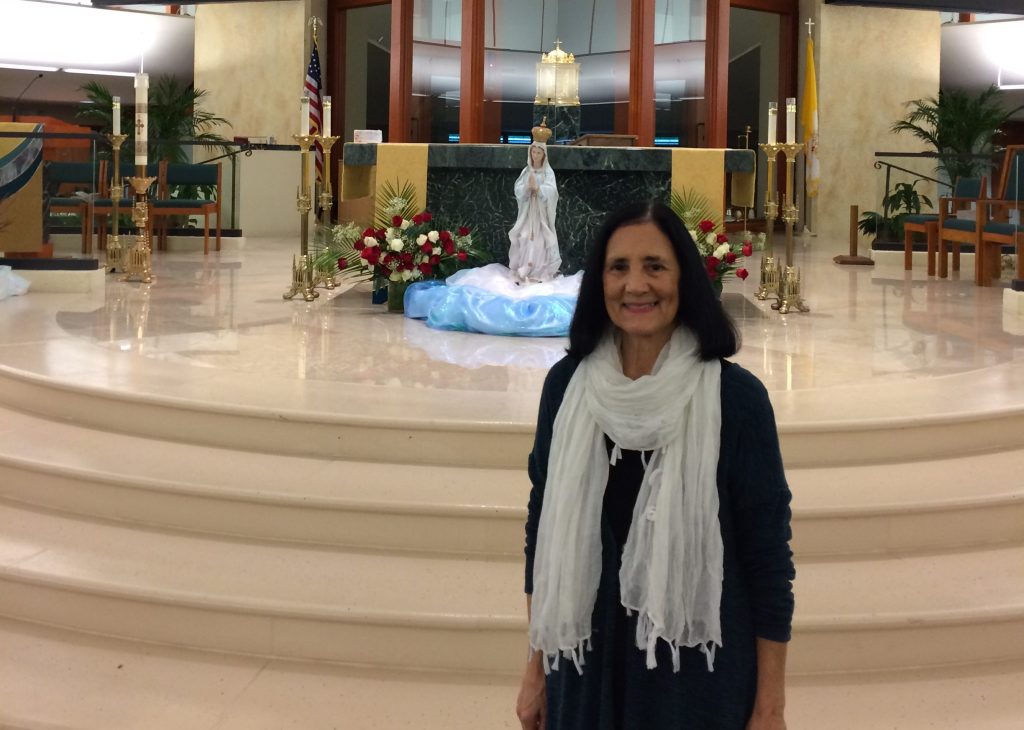
We honor Mary on her birthday by living like her Son.
The Book of the genealogy of Jesus Christ, the son of David, the son of Abraham (Mt 1:1).
Many may gloss over the long genealogy of names that follows verse one. Matthew certainly had a reason, Luke also had his, as did other ancient writers for compiling genealogical lists. Those reasons are interesting in and of themselves, but I wanted to key in on something basic we may miss if we quickly pass over Jesus’ bloodline.
Matthew placed the context of the incarnation of the Son of God in history, in time, and in a place. Jesus belonged to a people. All of us, as human beings, have the same desire and yearning for belonging. Knowing where we come from, sharing stories of our families, of our culture, ethnicity, race, language, customs, celebrations, rituals, and religion, provide a place for us, provide stability and security. On the flip side, the more we lose the connectedness to our roots, the more we may feel adrift. The need to belong is primal.
Matthew penned for his community the roots of Jesus’ genealogy. Matthew invites us to hear them again, to recognize our place in the same saga of salvation history, for this is our genealogy also. The Church chose this Gospel today as we remember and celebrate the nativity of Mary. The whole of the Bible is a rich library of faith and a part of not separate from but an integral part of sacred Tradition. The Bible, from Genesis to Revelation, is a compilation from Mary and our ancestors who encountered God and shared their stories. They passed them on, generation after generation, to provide for us a foundation, so we can know that we are never alone, that we have a place, that we are a people, we stand in solidarity with one another, that we belong. We are a part of something greater than ourselves.
One thing that can weaken the richness of the foundation of our roots and identity is when it is corrupted by a lack of integrity. We see this time and again in the pages of the Bible continuing up to our present day. Those who not only turn their back on but usurp their faith, tradition, and God’s message for their own selfish means and purposes. Yet, even in the darkest of times, in those same pages there have been those judges, prophets, and people of integrity who have stood up to speak truth to power, to give voice and access to those on the peripheries.
Even today when we may feel like our country, church, or even our own lives are spinning out of control, let us remain faithful, seek courage and strength from our ancestors in the faith, those people of integrity who remained true, remained faithful, and did not turn and flee, but drew closer to God through Mary, Joseph and Jesus.
We can be rooted amidst the swirling clouds of darkness, dehumanization and division when we draw strength from the Son of Mary and conform ourselves to his life and teaching. We too can engage in dialogue, foster relationships, serve one another when needs arise, as well as seek reconciliation and unity while respecting God’s gift of diversity. By tapping into the eternal spring of the Holy Spirit through dedicated daily time in meditation and prayer we can be reservoirs that overflow to cleanse and purify the poison of polarization, hatred, and violence with God’s love and peace that surpasses all understanding.
—————-
Photo: Mary, Mother of God, on this your birthday, please pray for us!
Readings of the Mass for Wednesday, September 8, 2021
Bring and experience your pain with God in prayer.
Jesus departed to the mountain to pray, and he spent the night in prayer to God (Lk 6:12).
In the midst of a busy ministry, Jesus spent time alone with God in prayer. In Luke’s Gospel, Jesus often did so before making important decisions, as in today’s reading that recorded the choosing of his Apostles. Prayer is an important, foundational principle to experiencing and knowing God as well as discerning his will for living a fully human life.
The Mystery of God is not a problem to be solved. In our language today, we often use mystery and problem interchangeably, as, “I lost my keys, it is such a mystery.” Strictly speaking, the loss of keys is a problem that can be solved. We can backtrack our steps, and through a process of elimination, the problem becomes smaller until we solve the whereabouts of the missing keys. We cannot solve or prove God exists as if he is a problem to be solved. This is because God is not a being, not even the supreme being. God is a mystery that transcends any finite dimension of reality. We have nothing to measure him by, we cannot prove his existence, nor can we solve him as we would a problem.
Yet we can come to know God intimately just as Jesus did. Even though he is transcendent, beyond our reach and comprehension, he is at the same time closer to us than we are to ourselves. We come to know God through his invitation, and as we enter into the mystery of his reality through developing a relationship with him, we come to know him. He does not become smaller, but more vast, always beyond our comprehension. His mystery is luminous as if we were in a completely dark room and someone turned on and shined a flashlight into our eyes. We wince from its brightness, yet in time, our eyes adjust and we eventually are able to see what was beyond our ability apart from the light. Jesus wants us to experience and embrace the mystery of the radiance and warmth of his Father’s light and love.
Jesus called each apostle by name. He calls us by name too and invites us to pray with him as he prayed when he walked this earth. Since JoAnn’s death, now already two years ago, I have been spending more time in meditation and prayer.
I have not gained any insight as to why JoAnn suffered and lost her life to pancreatic cancer nor do I believe I will get an answer on this side of heaven. Over this past week of the anniversary of her death, I have experienced more sorrow regarding the pain of her loss and I believe that is a continuation of the healing of the grief and that is good. At the same time, I feel a peace that she is with God now. For me the process is like suffering an amputation, I will continue to heal but my life will not be the same. At the same time, I am more confident and aware that God is walking with me, leading and guiding me, and will bring about a greater good.
Sometimes we resist being still and spending quiet time with God because we are afraid to face the pain or aspects of ourselves that we would rather not see or admit. God sees the fullness of who we are and can be. God loves us as we are. We can be confident that as we embrace those aspects of our lives that we keep at arm’s length, we will indeed experience our suffering and pain, but we will also find healing, consolation, and reconciliation. Jesus meets us in the midst of the chaos of our lives and loves us through to the other side no matter how long the healing takes. Continuing to turn to God in prayer, we will be drawn ever deeper into the mystery of the Trinity and experience the intimacy of communion and relationship we have been created for.
————————————
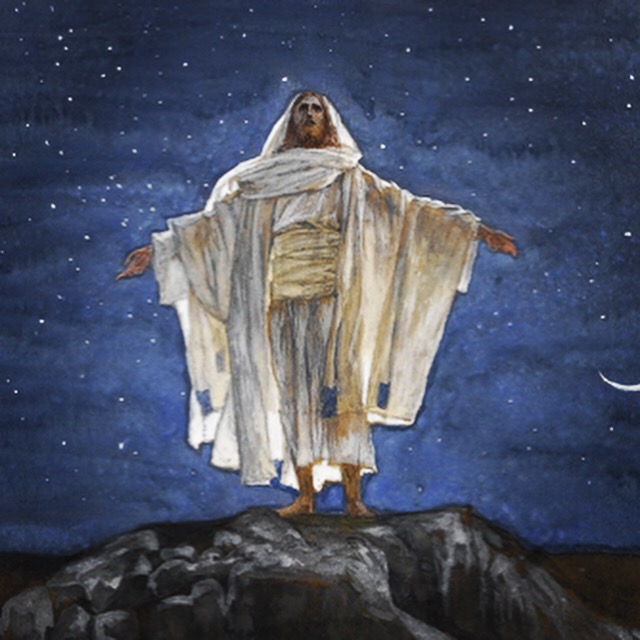
Painting: James Tissot – Jesus Goes Up Alone on a Mountain to Pray, 1886-1894
Link for the Mass readings for Tuesday, September 7, 2021
“We must stretch out our hands as Jesus does with us.”
The scribes and the Pharisees watched him closely to see if he would cure on the sabbath so that they might discover a reason to accuse him (Lk 6:7).
This is an unfortunate and sad scene in the Gospel. What is even worse is that this is not an isolated incident for some of the scribes and Pharisees. They are often watching him closely to accuse him. Accuse Jesus of what? Of not honoring the sabbath and breaking the law of God. There is quiet anticipation as Jesus calls a man with a withered hand up to him.\
Jesus knows the hearts and minds of his would-be accusers, he also knows what is at stake regarding what he is about to do but because he is more concerned with the condition of the man and not his standing in the community, because Jesus seeks to express the will of God and not impress those in his midst he asks aloud: “I ask you, is it lawful to do good on the sabbath rather than to do evil, to save life rather than to destroy it” (Lk 6:9)? Jesus did not wait for an answer but told the man to stretch out his hand. The man did so and was healed.
These two phrases coming from Jesus in today’s Gospel are not only good to commit to memory and meditation but to also put into practice, for they are foundational principles regarding how we ought to interact with one another. First, whenever we wonder whether or not we ought to help someone, we need to ask ourselves, “Is it lawful to do good or evil, to save life or destroy it?” If more of us ask this question, we will be more ready, willing, and available to help those in need. If a law promotes evil, demeans the dignity of another in inhumane ways, we are to speak out against it and provide help to those oppressed by it.
Second, “Stretch out your hand”, is another phrase we can take to heart. We can address the need of a person by providing what understanding and assistance we can. Are we the Son of God? No, but we can access the power of God through calling on the name of Jesus. Maybe we will not heal a man’s withered hand, but we can provide a smile, a cup of water, food, some money, our presence, volunteer with groups who are already engaged, and we can write to and impress upon our congressional leaders the importance of supporting the dignity of the people they represent, at every stage of development from conception until natural death. Ultimately, we just need to be open to where and to whom God sends us.
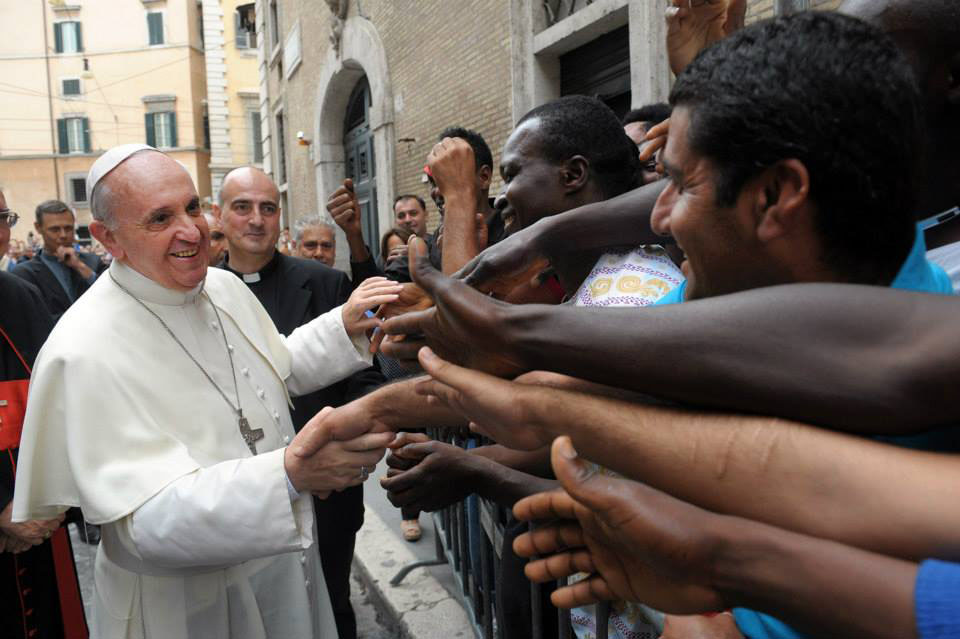
Pope Francis shared in his homily September 8, 2019, that “we Christians cannot stand with arms folded in indifference, or with arms outstretched in helplessness. No. As believers, we must stretch out our hands, as Jesus does with us.” To be a Christian is to be willing to serve as Jesus did. That means being willing; to encounter one another, to respect the dignity of each person we meet, to provide a human hand and human presence to those in need and to assist them the best we can, one person at a time.
———–
Photo credit: Australian Jesuits
Mass readings of the day for Monday, September 6, 2021
 Spiritual Stepping Stones