
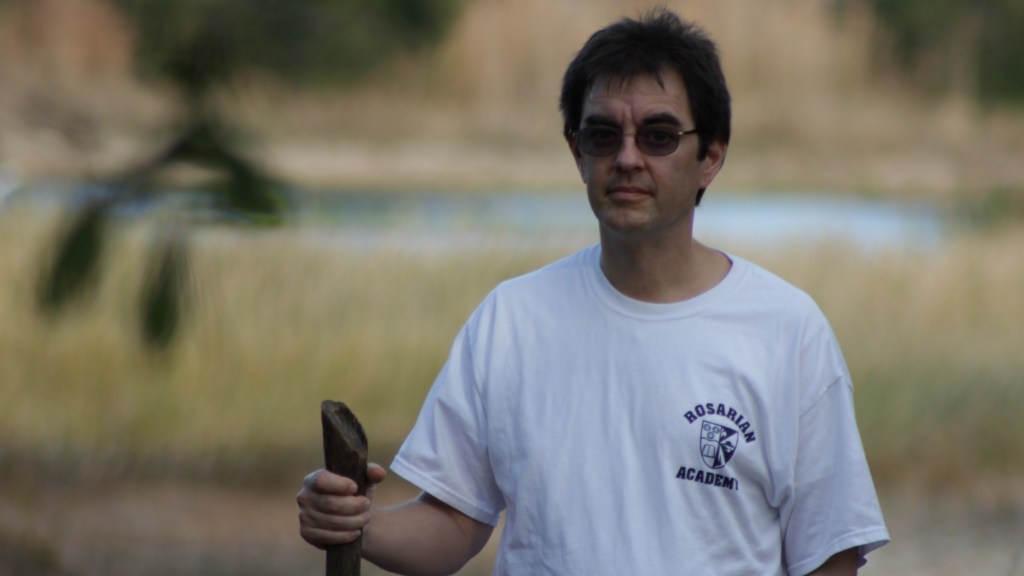
We are loved by God and sent to love others in return.
“I came from the Father and have come into the world. Now I am leaving the world and going back to the Father” (Jn 16:28). This phrase, in one form or another, has been a consistent message in John’s recording of Jesus’ farewell discourse. These words not only show his connection to the Father through his coming from and returning to the Father and then his sending of the Holy Spirit, but these statements help to prepare the way for our understanding of the Trinitarian Communion.
What theologians have termed as the Immanent Trinity, as God within himself, is expressed by the divine communion of God the Father, God the Son, and God the Holy Spirit. All that God the Father is, he gives all, holding nothing back, to God the Son perfectly. God the Son receives all that God the Father has given perfectly, and returns all that he has received, holding nothing back, perfectly to God the Father. This giving and receiving, this going out from and returning to, this perfect willing of each other’s good, is the purest expression of Love. This Love shared infinitely and perfectly between God the Father and God the Son, is God the Holy Spirit.
The Son of God became one with us, sharing in our humanity, so we can also share in his divinity. His ascent and return back to the Father makes this even more possible. Now his divine nature, as the Son, always remained in full communion with the Father. Jesus is one divine Person as the Son, yet he subsists in two natures the divine and the human. The Ascension of Jesus was a point in salvation history, in which the human nature of Jesus transcended our three-dimensional reality to enter the eternal present, the immanence, of the Trinitarian communion, and because God created all humanity and creation as interconnected with one another, we are now able to share in the intimate, divine dance, perichoresis, of the Love, shared between God the Father, God the Son, and God the Holy Spirit.
We are all invited, 24/7/365, with every breath, thought, word, and action, to experience the Holy Spirit, the communion of Trinitarian Love. But this is not an imposition, it is an invitation, meaning no matter how wonderful, no matter that this is what we have been created for and will bring us fulfillment and joy, we can reject or accept this offer.
Thankfully, because of the Divine Mercy of God this is an open invitation. Even if we had said no for years, we can say yes at this moment. Once we say yes, even just a little, the love of God grows within us, just like the image of the mustard seed. As we experience the love of God in our own lives, we begin to realize how God is the foundation of our being and all creation.
We come to see how God is the foundation of all things, how he is present to us in our everyday actions when we participate in the very being and life of Jesus. We do so when we participate in the sacraments. Jesus is even more present to us in the sacraments than when he was present to the Apostles. We also experience and encounter God through our participation in the three transcendentals, the ways of our being that God has imparted to us to experience him, which are the Good, the True, and the Beautiful. It is through the expression of our creativity in music, dance, and the arts that we come to experience the Beautiful. By embracing our gift of reason and intellect, through prayer, study, and sharing of ideas, we come to know the True. In recognizing the gift of others as human, through our fellowship, loving and engaging one another in the corporeal and spiritual works of mercy we come to experience Love which leads us to the Good.
God has given us the wonderful gift of life to experience not just to endure, even in the midst of our trials, tribulations, and sufferings. We just need to remember to open our hearts, minds, and souls to receive the gift of God working in and through us. Just as the Son is, we are sent to risk, to give our love away, by sharing his love with others. Our offer can be turned down or rejected. Even so, we must resist the temptation to judge or to take offense, but instead assume a posture of understanding, of being present, and being available to witness and allow God to reach others through us. We never truly know the pain and suffering of another, nor what they may be dealing with.
Each of us is on a journey of growing in faith. We are invited to open ourselves to the will of God, so we can experience the Good, the True, and the Beautiful so that we too can experience, perichoresis, the infinite dance of the Love shared between God the Father, God the Son, and God the Holy Spirit. This is our fundamental option, our end goal, heaven, which is to enter into the fullness of the divine dance and communion of the Trinity. What Jesus has brought to us through his Paschal Mystery; his life, suffering, death, resurrection, and ascension into heaven, is the reality of how we can experience heaven on earth right now. Our vocation is to say yes to God’s invitation to embrace the love of the Trinity so to love others as we have been loved, for: “This is the time of fulfillment. The kingdom of God is at hand. Repent and believe in the Gospel” (Mk 1:15).
————————————————————————
Photo: Christmas hike 2010 – photo credit Jack McKee
Link for the Mass readings for Saturday, May 23, 2020
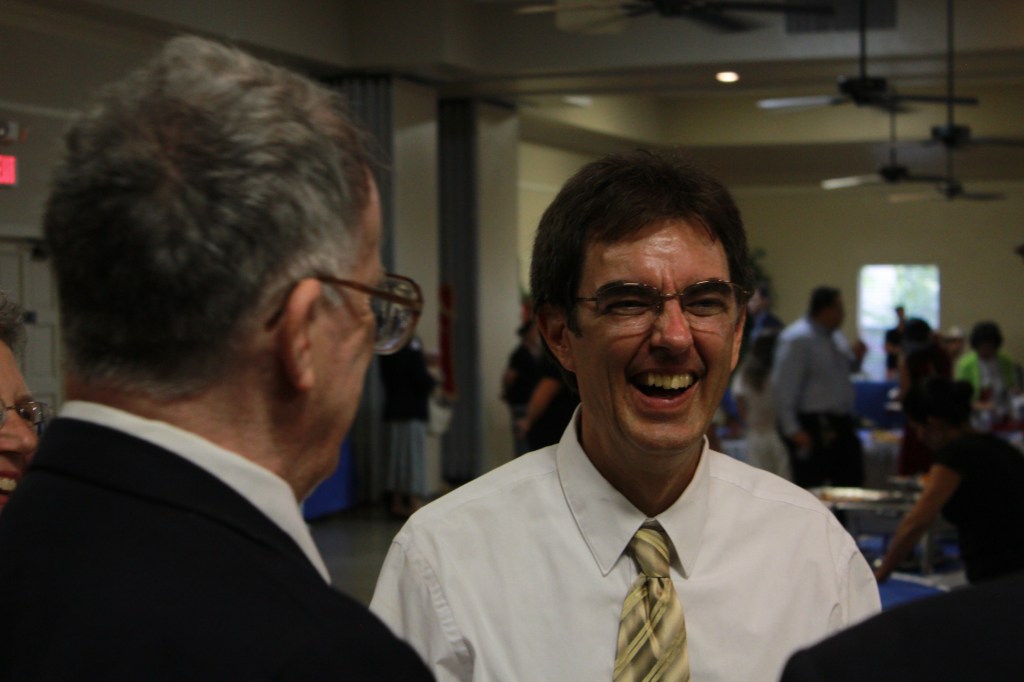
Sharing the joy of Jesus, we become bearers of his light in the darkness.
“But I will see you again, and your hearts will rejoice, and no one will take your joy away from you” (Jn 16:22). Jesus continues to prepare his disciples for his horrific death by offering hope that he will see them again. That he will see them again is not a typo. We can read about the exchanges between Jesus and his risen disciples. Jesus appeared to Mary of Magdalene at the tomb, he appeared to Cleopas and his companion on the road to Emmaus, and he appeared to the ten and then the eleven with Thomas. Jesus sought out those he commissioned to proclaim his Gospel message after his Resurrection, just as he had done during his ministry before his crucifixion.
When Jesus did appear to them again, at the moment of recognition, there was wonder and great joy! It is hard for us to even imagine these early Resurrection accounts. The disciples witnessed his brutal death, lived in fear because of the very real possibility of their own persecution and similar death, and then, they encountered the risen Jesus. St Paul would also shortly thereafter encounter Jesus on a different road, the one to Damascus en route to continue his persecution of the followers of Jesus. All of their hearts rejoiced and it was this joy that they proclaimed with boldness. The Apostles, like Jesus, led with joy and love to embark on their evangelical mission. They lived a difficult and challenging life that for many ended in their own brutal deaths, yet their joy carried them through and into eternity.
Life is hard, even in the best of circumstances. There is evil present in this world, not of God’s creation, because all that he has created is good. Through the corruption of the good that he has created bad things happen to good people, and good people do bad things. Suffering, disease, violence, natural disasters, division, corruption, hatred, and dehumanization abound. It can be easy to succumb to the overwhelming tide of negativity and assume a stance of cynicism, detachment, denial, defensiveness, and/or indifference. Yet this is not the response Jesus modeled nor has infused his followers through the ages with.
Our response to the evil and darkness of this world is to be bearers of the joy of Jesus! We are to be as lights shining in the darkness, providing hope for those in despair, accompanying those in their struggles, and being willing to receive help when we are ourselves are in need. We cannot do any of this alone and on our own but it can be done in participation with Jesus and each other. The Apostles, disciples, and saints, those who have gone before us, have shown us that it is possible to be beacons of hope in very dark places.
Pope Francis reminds us about our mission in The Joy of the Gospel (276): “However dark things are, goodness always re-emerges and spreads. Each day in our world beauty is born anew, it rises transformed through the storms of history. Values always tend to reappear under new guises, and human beings have arisen time after time from situations that seemed doomed. Such is the power of the resurrection, and all who evangelize are instruments of that power.”
Even during this pandemic, we can and need to trust that Jesus is with us, closer than we can ever imagine, filling us with his love and joy. No one can take this joy away from us except us if we are unwilling to share it. We can and must choose to allow the light of his joy and love to radiate through us, no matter how small or insignificant an act of kindness may seem. When we do so the darkness in our realm of influence will begin to fade away.
Photo credit, Jack McKee: September 2013, ordained to share the joy of Jesus!
Link for the Mass readings for Friday, May 22, 2020
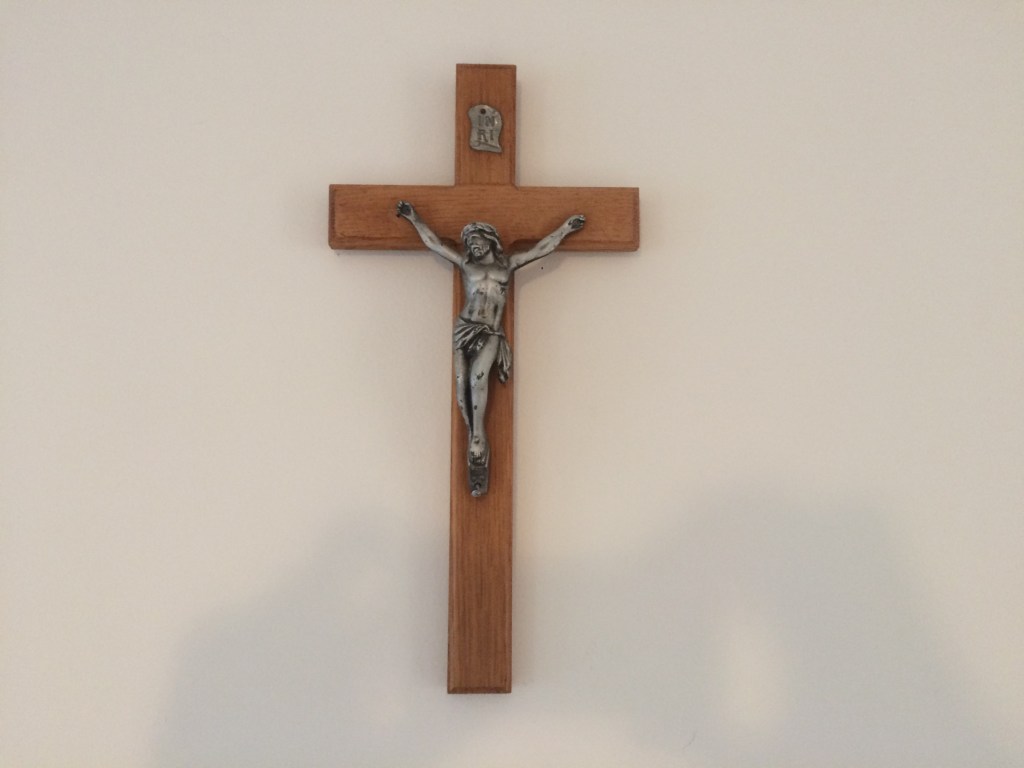
Our sign of victory over death and the grave!
Jesus continues his farewell discourse and appears to be speaking in riddles to his disciples saying that “A little while and you will no longer see me, and again a little while later and you will see me” (Jn 16:16). We who know what is coming for Jesus understand what Jesus is talking about, but for the disciples, not so much. Jesus will be crucified and rise again from the dead. Jesus then goes on to explain further that: “Amen, amen, I say to you, you will weep and mourn, while the world rejoices; you will grieve, but your grief will become joy” (Jn 16:20). Jesus is speaking about the same two points of reference, his Crucifixion and Resurrection.
The most brutal sign of oppression during the reign of the Roman Empire was the cross. It was a weapon of terror, torture, an extreme case of punitive justice or capital punishment, and in actuality state-sanctioned terrorism. The person would be stripped of all their clothing, would be nailed by the wrists, or palms and wrists tied, nailed by the feet, and then lifted up for public display. Then would begin their humiliation, dehumanization, and long agonizing death; a sign for anyone to think twice about challenging the authority of Rome.
The disciples wept and mourned, their hopes dashed, they were stunned, ashamed, and demoralized, while others rejoiced as Jesus and the two others beside him were lifted up. The centurions flaunted their authority and prowess. Others gathered around and jeered at the false prophet dying on Golgotha, the hill of the skull, where so many had gone before. Where other hopes and dreams had been crushed under Roman dominance and oppression.
Jesus was sometimes described as being hung on a tree in some letters of the Bible because writing the word cross was still too raw and vivid in people’s minds. Yet, this was not the final chapter. The grief of the Apostles would turn to joy because of the Resurrection. The cross, this symbol of torture, would become a sign of victory over death and the grave.
Yet, one centurion got it right: “Truly this man was the Son of God” (Mk 15:39)! For many Christians today, the Crucifix and Cross are no longer a sign of oppression and fear but are displayed as a sign of the triumph and victory that Jesus has won for us. They are not magic talismans, but they are sacramental signs, concrete objects that are tangible, that we can see, wear, and hold on to, for the purpose of reminding us that we have a God who understands our humanity because he lived life as we do.
Jesus cried as we cry, he laughed as we laugh. His family thought he was crazy and he enjoyed table fellowship with those on the peripheries. Jesus faced rejection, misunderstanding, trials, and tribulations, he overcame conflict and rejection, he died as we will die, and he ultimately conquered death, so that through our participation in his Life and Resurrection we will rise again in Christ as well.
I invite you to spend some time meditating in front of a crucifix or cross today. If you are going through a particularly rough patch, hold it in your hand, feel the wood, allow your gaze to fall upon the face and wounded body of Jesus to remind you that he understands because he experienced what we experience, and that means God experiences what we experience. When we allow him, Jesus will also embrace us with those arms outstretched to ease our suffering and pain.
Jesus is and will continue to be present with us, closer even than the crucifix we hold or look upon. If all is going well, or you just received some great news, do the same! We don’t only go to Jesus with our trials and tribulations, but our joys and celebrations as well. Simply share with him your heart and allow him to share his with you.
——————————————————————–
Photo: My grandparent’s crucifix that hung over their bed hangs now over JoAnn and my bed.
Link for the Mass readings for Thursday, May 21, 2020

May we continue to allow our hearts and minds to be led by the Holy Spirit.
Benjamin Franklin is quoted as saying, “Wise men don’t need advice. Fools won’t take it.” I think most of us fall somewhere in the middle. Hopefully, we are less foolish and moving more along to path of gaining wisdom. Jesus continues his best efforts in today’s Gospel to offer guidance and assurance to his disciples that the Holy Spirit will continue to be their guide. “I have much more to tell you, but you cannot bear it now. But when he comes, the Spirit of truth, he will guide you to all truth” (Jn 16:12-13a).
Surely, Jesus could see the lamps turning off in the eyes of his disciples. As discussed yesterday, comprehending the death of the Messiah, his Resurrection, and return to the Father was a bit much to digest. Jesus, though, still needed to share what his Father gave him to share, and the disciples were to take in what they could. Jesus’ death and Ascension were not to put an end to their learning, deepening of their understanding, or further developing their relationship with Jesus and his Father. The Holy Spirit would continue what Jesus started, to lead them to all truth, the fullness of the foundational relationship that is the source of all, the Holy Trinity.
Anyone involved in teaching anyone anything or regarding learning something ourselves will know, that just telling someone something does not mean that learning has happened. There is a process of introduction, integration, practice, review, mistakes, corrections, and adjustments until mastery is achieved. With the disciples, this is the same. Jesus did not just present things once and move on to the next order of business. That is why John declared at the end of his Gospel that: “There are also many other things that Jesus did, but if these were to be described individually, I do not think the whole world would contain the books that would be written” (Jn 21:25).
I am sure a part of what John was talking about here were the lessons, corrections, and guidance Jesus offered. Just as Joseph modeled for and guided Jesus in his trade in carpentry, so Jesus learned from him through observation, practice, mistakes, adjustments, and corrections. Jesus guided his disciples in the same way, as a mentor with his apprentices. He was now assuring them that even though he would be leaving them, the guidance and leading would continue with the support of the Holy Spirit.
The lessons about the immanence of God, God within himself as a Trinitarian communion, that Jesus taught were not as concrete a sawing, hammering, and planing boards though. God is not a being, not even a supreme being, meaning that he transcends our ability to comprehend the fullness of his reality. We will never fully comprehend God or exhaust the richness and the depth of our relationship with God.
On the human level, we are guilty of malpractice in our relationships when we assume that we know everything there is to know about someone else. The gift of the person, the human being, is that we are ever-developing and growing in the mystery and wonder of who we are and who we are called to be. We can always surprise each other. If this is true for us in our relationships with each other, it is much more so in our relationship with God. Once we get to one level of understanding, we plateau for a time, but that is not the end of the journey, that is only a time to savor, to ponder, and contemplate until we are ready to go ever deeper into the truth that the Holy Spirit will reveal to us.
Our tradition teaches us that the fullness of God has been revealed in Jesus Christ, which is true, yet to comprehend that revelation will take a lifetime and continue on into eternity just to scratch the surface. St Thomas Aquinas (1225-1274), a Dominican Friar, who is considered the Angelic Doctor of the Church, was one of the top theological influences during the Scholastic Period, yet close to the end of his life he had a mystical encounter with God in which he came to realize that all of his intellectual achievement, all that he had written, mattered no more than a pile of straw compared to that which God had revealed to him.
Arguably one of the wisest persons of his time, and some would say one of the most brilliant minds ever, was also one who was steeped in daily prayer and continued to be open to the majestic wonder of the glory of God. May we too continue to embrace the gift of wonder, the gift of learning, and never settle, rest and savor yes, but continue to learn and grow, to seek and hunger for the Good, the True, and the Beautiful, to continually have our hearts and minds open to allow the Holy Spirit to guide us “to all truth”!
Photo by Ray Bilcliff from Pexels
Link for the Mass readings for Wednesday, May 20, 2020

The love of the Holy Spirit can help us to heal from and soar above our grief.
If we live long enough, we will experience the death of someone we have loved. If we live a long life, we will experience even more of the pain of losing those close to us. I remember my maternal grandfather sharing with me when he was around ninety that he had outlived most of his siblings and friends. Unfortunately, for too many death is a daily event through violence in all its forms. Grief during this time of loss is a natural human response. It is certainly not an emotion to be suppressed.
In today’s Gospel, Jesus shared: “But because I told you this, grief has filled your hearts” (Jn 16:6). Jesus was preparing them for his suffering and death, but also letting them know that they would not be left alone. He would send the Holy Spirit to be with them. The Apostles were not able to understand what Jesus was talking about. Who can blame them? They had no point of reference for someone dying and rising again, let alone that he would ascend and send the Third Person of the Trinity to be with them.
The Apostles would not only feel the grief of the loss of Jesus they would also experience the fear of the same persecution that took him and experience the fear of their own death. They betrayed Jesus, abandoned him, yet, except for Judas, because he had taken his own life, Jesus came to them again after his Resurrection and forgave them. Jesus would in a short time ascend, and the disciples, with Mary, would experience the love and grace of the outpouring of the Holy Spirit at Pentecost.
Empowered by the Holy Spirit, they faced what was before them head-on, even to experience their own violent deaths, except for John. The fear of death had no more power over them, their grief and their fear were turned into joy from their encounter with the Risen Jesus and the Love of the Holy Spirit they experienced first hand.
For us, as with the Apostles, grief is real, because death is a loss, it is a change in our present reality. Yet, we celebrate this Easter Season for fifty days for a reason. Death has lost its sting. Jesus has died, entered into the fullness of everything that death threw at him, and he conquered it. Jesus died for each one of us so that we can also rise with him, and be with him and our loved ones again for all eternity.
We can believe in our minds that death does not have the final answer, yet we may still feel the grief, the pain of loss, or the fear of the unknown as we or someone we love prepares for death. We need to be honest with our emotions, and not stifle them, thinking by showing grief that we are in some way less a person of faith. In allowing ourselves to enter into our pain, we will experience the Risen Christ who is waiting to embrace us in the reality of the truth that he has conquered death. I have taken much comfort in his presence over these past seven months since JoAnn died.
To experience our grief is healthy, but we do need to be careful it does not overwhelm us. I had a two day period after returning back home where the weight of my grief hit pretty hard, and fortunately received a phone call from my VP Theresa Frettered inviting me to a diocesan event. I hesitated but said yes. Terry that day was a messenger of the Holy Spirit inviting me to come out for some air.
The time of grief is different for each person. “There is a time to weep, and a time to laugh; A time to mourn, and a time to dance” (Ecclesiastes 3:4). Jesus has welcomed JoAnn and our loved ones home with him and is preparing to welcome us home when it is our time as well. We can experience the foretaste of heaven, the love of God the Father, now when we pray for the presence of the Holy Spirit to be with us in our daily experiences so that we can come to know him, to believe and trust that death does not have the final answer. The love of Jesus does. Because of this truth, we can live our lives each day as Alleluia people!
Photo credit: Flo Maderebner from Pexels
Link for the Mass readings for Tuesday, May 19, 2020

Jesus has not left us as orphans to fend for ourselves.
What is common to all of us is that we experience some expression of loneliness to varying degrees consciously, or mostly unconsciously. We are social beings, we want to belong, to be part of, and this is why we are communal. We may do, say, or turn a blind eye to behaviors that go against our conscience just to be accepted, acknowledged, or noticed. This behavior further feeds our loneliness, because though we may be accepted, we become more alienated from our true self.
At the core of our being, what we all seek is to be loved, and to love. We strive from the moment of our conception not only to exist but to actualize the fullness of our potential. Through our time of gestation, we are not potential human beings, we are human beings actualizing out potential. A difference between me typing this now and when I was in my mother’s womb is that before and after my birth, I was smaller and more vulnerable.
We as human beings are a living, craving hunger and desire to be in communion with God and one another from the moment of our conception until our natural death and continuing on into eternity. This is true to the believer and the atheist alike. Until we embrace this deepest of needs and desires, we will be restless, anxious, and unfulfilled. We can feel isolated and alone, even in the midst of a hundred people or daily likes on social media.
God has made us for himself and constantly invites us to be in a relationship with him and with each other because he is the foundation and source of our being. Sin is the turning away from that invitation, a curving, or caving in upon oneself away from God and others. It is also the unwillingness to bother or care, to reach out toward another in need. For what we do to the least of our brothers and sisters, we do to God. We are not just to be pro-birth, we are to be pro-life, and we are invited to promote a consistent ethic of life.
Jesus became human in his Incarnation to show the importance of the dignity of the person and that it is grounded in our relationship with God our Father, meaning we are all brothers and sisters. Jesus was not a plan B, but he was always the primary plan. In the fullness of time, when God so willed, he sent his Son to become one with us so that we can become one with him. Jesus is the face, hands, and body of God. He came that we might see and experience God. Jesus experienced all we experience except for sin because he never in any act rejected or said no to his Father. His whole life was a yes to the will of God. Jesus is the bridge, the way to love and be loved, authentically.
In today’s Gospel, Jesus continues his farewell discourse. He prepares his disciples for the reality that he will be returning to the Father, and yet at the same time, he will not leave us alone. He will be with us for all ages. This is so because as the Son of God made man, in his Ascension, he returned to the Father not just in his divinity as the Son, but also in his humanity. God created all of humanity and his creation as interconnected, and because of that, we all experience this transcendent act of the Ascension.
Jesus shared with his disciples: “When the Advocate comes whom I will send you from the Father, the Spirit of truth who proceeds from the Father, he will testify to me. And you also testify, because you have been with me from the beginning” (Jn 15:26-27). Jesus is talking about the Holy Spirit, the third person of the Trinity, the infinite Love experienced and shared between the Father and the Son. We become sharers in this divine love and communion of the Holy Trinity through our participation in the life of Jesus.
As we experience and enter into the love of God and develop a relationship with him we begin to feel alive, we begin to heal and to feel whole, because we have experienced the love we have been made for. We have experienced being loved for who we are and as we are. We no longer have to say, do, or accept those actions that we don’t agree with that go against our conscience, to belong. St. John Cardinal Newman has stated that our conscience is the “Aboriginal Vicar of Christ”. Jesus dwells within us, to guide and lead us. He encourages us to say yes to his Father as he has and continues to do.
This Trinitarian love that we share because of our participation in the life of Jesus, this great gift, will continue to grow as we testify to this love and share it with others, give it away. The more we give, the more we will receive. We share the love of God by being willing to accompany one another. That does not mean fixing others or their problems. We are called to be present, to accompany, and journey with others, meeting them as Jesus met others and meets us, as and where we are. We are to laugh with, to cry along, to encourage, empower, and support, but above all to be present, to allow God to happen through us.
Jesus has not left us as orphans. His return to the Father through his Ascension has given us a greater and more intimate access to the Holy Spirit, the love shared between the Father and the Son. By saying yes to and trusting in his love, we free ourselves from the tendrils of fear and anxiety. We are not alone when we say yes to God and develop our relationship with him. As we do so, we continue to actualize the fullness of our potential, we become who we were created to be, and we become truer to ourselves. We experience that peace that surpasses all understanding and develop relationships with others based on authenticity and integrity, regardless of external pressures and experiences. We are loved and we love in return, which is what we all seek, which is who we are called to be.
——————————————————————————–
Photo credit: luizclas from Pexels
Link for the Mass readings for Monday, May 18, 2020

Jesus is our guiding light through any darkness or storm.
We are living in such uncertain times in so many areas of our lives that we may be experiencing a mix of emotions such as feeling uneasy or unsure, unsettled or upended, fretting or fearful, anxious or angry and that is ok. These are human emotions that arise from our perceptions that all is not well and that there is real instability in our society and world right now.
We don’t want to deny our emotions but we do want to be aware and mindful of them such that they do not overwhelm us or take control such that they dictate how we choose to live our lives. We also want to resist the temptation to shut down and adopt a posture of cynicism, defeatism, or despair.
I have always been drawn to lighthouses. These buildings set on the shore emit a penetrating light to guide sailors to a safe haven, especially during times of darkness and stormy seas.
The Bible very much operates as a lighthouse for us, to help to guide us home to a safe haven, to our final destination. When we avail ourselves of the gift of God’s word we are never lost or alone no matter how strong the winds of unpredictability blow or how unstable and turbulent the waters are. No matter the external circumstances, what remains a constant source of direction and support is the light of God’s presence in our lives.
Each of our readings today offers us some illumination to ponder today and through the week.
In the Gospel, Jesus said to his disciples: “If you love me, you will keep my commandments. (Jn 14:15)”.
Upon first reading, a cynical view might be, “Well that is a pretty conceited thing to say. There goes the Church again telling me what to do. There’s unconditional love for you.” And that is the view many people take regarding authority because many view institutions, the Bible, the Church, Jesus, and God from the view of our woundedness, sins, and failures. We are a culture of celebrity and we place our sports figures, entertainers, political and religious leaders on pedestals where they don’t belong, and when they fall we find ourselves in a crisis of leadership.
Jesus is not them and he speaks consistently as the way, the truth, and the life. He is that lighthouse guiding us to a safe haven. To say that we do not need the commandments is like telling the lighthouse keeper as we head off into the calm ocean to shut the light off, we will be able to find our own way back home. Yet when a sudden storm rises, or darkness falls sooner than we expect, will we be able to find our way back?
Too many of us do the same when being offered God’s commandments as a guide. We fail to do so, for the same reason that we fail at most of our New Year’s resolutions. If we set a goal at all we often do so without placing a system in place to attain it. We also determine too often that we can go it alone on our own will power and determination. Yet as many diversions and distractions arise, we choose apparent goods over and above our highest hope and good and find ourselves adrift without direction.
In our first reading from the Book of Acts, we see how “Peter and John ‘laid hands on them and they received the Holy Spirit’” (Acts8:17).
The early Church took root and thrived even while under heavy persecution because they encountered Jesus and followed the principles he set forth, yet not on their willpower alone. For left, to themselves, they were all utter failures. It was not until the coming of the Holy Spirit at Pentecost that they were empowered by the love of God to now put into action what Jesus had prepared them to do.
The gifts of the sacraments are the means by which we are empowered by the Holy Spirit today. These are direct encounters with Jesus in which we are transformed by the fire of his love, die to our self-centered focus, and are reborn in him as a part of his body and life.
There is no secret to living as a Christian. Each day we must set aside time to pray and meditate, spend time in the Bible, go out from ourselves to serve others, all the while being attentive to our families, school, or work responsibilities. This balancing act will ultimately play out depending on our station and demands in life and this is why we need a savior to guide us and lead us with his light.
Our final point comes from our second reading from St Peter.
Always be ready to give an explanation to anyone who asks you for a reason for your hope, but do it with gentleness and reverence, (1 Peter 3:15-16).
As Christians, we are to be in relationship with God and one another. This is who we are created to be. We are to share our faith, we are sent on mission to share our relationship with Jesus. That does not mean imposing our views on others or assuming we are right and others are wrong, or that we are charged with saving those in our midst. It means that we are to share our stories, our encounters, our experiences with the living God. This means we need to know God.
We do so when we know and put into practice the commandments, especially to love God, place him first in our lives and to love our neighbors as ourselves. We are to continually open our hearts and minds to accept the power of the Holy Spirit in the sacraments as well as in our daily spiritual disciplines and in our willingness to love, serve, and suffer with others.
When we live a life governed by the commandments and are continually open to being transformed by the Spirit, when we bring our trials and tribulations to Jesus and we put into practice his guidance, and experience his presence through each challenge, we will be people of hope and joy. This is what will draw others to God. When they ask us the reason for our joyful disposition, we will have some stories to share.
Because ultimately, no matter what challenges we are experiencing now, or those that will rise before us, no matter how dark the night or how violent the storms, we know that God is our light, that he is with us, and that he will guide and provide for us in each of the ups and downs of our lives. We are not alone.
Photo by Skitterphoto from Pexels
Mass readings for Sunday, May 17, 2020
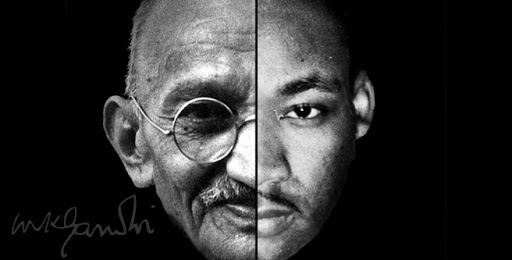
We are to counter hate with love.
When Jesus said to his disciples: “If the world hates you, realize that it hated me first”, Jesus was not proposing an-us-verses them mentality. It can be easily taken that way and certainly has been lived out in many ways in our society and world. Yet, an-us-verses them mentality is usually a defensive posture assumed by those who feel or are actuality being persecuted. It is an understandable posture. It is just not the stance that Jesus proposes us to take. We are to love our enemies, we are to love those who hate us. Impossible? Only on our own will power alone, for apart from Jesus we can do nothing, but with him all things are possible.
Jesus is making it plain to his disciples that they need to be prepared, that what is coming is the same that has been happening to him. They will be persecuted, mocked, imprisoned, and give their lives just as Jesus did. The gospel message is a challenge. We are challenged to have a change of mind and heart, to be conformed to the love of Jesus the Christ. This means that our focus must shift from that of self first and foremost to God who is to have the primary sense of place in our lives.
We know we are putting God first instead of our fallen nature when we react less and love more. Reactions are based on an-us-verses them mentality. They are responsible for the state I am in, they are taking my jobs, they are not allowing me to worship or speak in the way I want to, it is all their fault, they made me do it, are all reactive thoughts that lead to uglier statements and actions. Jesus invites us to assume the disposition of mindful action not reaction.
The way we can be more mindful and less reactive is to be people of prayer and meditation. Much of our reaction comes from our harried pace, keeping us from being in touch with our deep-seated fears and prejudices. We run from the mirror Jesus holds up to us. We need to stop and pray regularly. See the sin in our hearts so we can admit it and let it go or going to Jesus for healing or confession. We begin by taking some deep breaths, asking Jesus to be present in our lives, asking him to shine the light of his love so to see what we have hidden, so we can bring the hate to the surface, let is go, be forgiven, and be set free.
We can then be in a better place to ask for the healing to continue, for Jesus to help us to be more patient, understanding, truer to who he calls us to be, which is people of love, willing the other’s good, accepting and encountering each other as fellow brothers and sisters on our journey together, recognizing that the common denominator for each of us is that we are wounded, lonely, and just want to belong.
During this pandemic, may we have the eyes to see the light that truly reveals to us how interconnected we are between all peoples of the world. Let us continue to follow the encouragement of Pope Francis and pray with people of all faith traditions and people of good-will, to renew and continue to conform our lives to the One who gave his life that we might be free from our own sins, prejudices, and darkness. May we allow the flow of the love of the Holy Spirit to guide us, so to tear down walls of hate and division, and instead build bridges of love and reconciliation.
In this way, when we experience hate, dehumanization, and defamation, indirectly through multiple media platforms and directly in our own lives, let us greet each with a breath, a pause, and a turning again and again to Jesus for the strength to resist the easy and impulsive reaction, and respond instead with mindful thoughts, words, and actions of understanding, faith, hope, and love.
We are to hold people accountable, but not by reacting in the same negative manner. In a world filled with darkness, hate, and violence, let us instead be bearers of light and love, and advocates of reconciliation. I will leave you today with two quotes from those who lived this truth not only between individuals but spurred on social movements that still inspire us today.
“Darkness cannot drive out darkness; only light can do that. Hate cannot drive out hate; only love can do that.” – Dr. Martin Luther King, Jr.
“The nectar of Love alone can destroy the poison of hate.” – Mohandas K. Gandhi
———————————————————————————-
Photo: accessed from Metrospirit.com
Link for the Mass readings for Saturday, May 16, 2020

 Spiritual Stepping Stones