May we love our enemies, pray for those who persecute us, and be children of our heavenly Father.

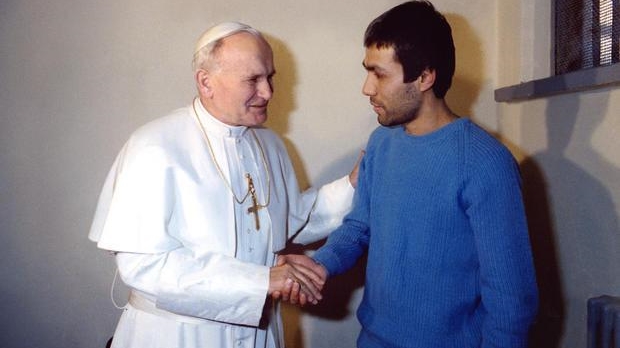
The sixth antithesis may be the most challenging of them all. “You have heard that it was said, You shall love your neighbor and hate your enemy. But I say to you, love your enemies and pray for those who persecute you, that you may be children of your heavenly Father” (Mt 5:43-45). The parable of the Good Samaritan provides a nice parallel to this verse. It can be found in Luke 10:25-37. For in that parable Jesus shows our enemy and our neighbor to be one and the same.

A good examination of conscience would be to read the above verse, ponder who would come up for you as an enemy, and then read the Parable of the Good Samaritan. Whenever the word Samaritan comes up, drop the word Samaritan and insert the person or persons who came up for you in reading the first verse. When we have finished this exercise, then, may we pray for the person or persons defined by us as our enemy, for if we only love those who love us, what makes us any different than anyone else? If we are to be disciples of Jesus, if we are to be children of our heavenly Father, we are not only to love those who love us, but we are to also love our enemies. We are to love those for whom there is little chance of being loved in return.

Jesus offers us the way to be able to accomplish this seemingly impossible feat of loving our enemies as follows: “So be perfect, just as your heavenly Father is perfect” (Mt 5:48). We are able to love our enemy as ourselves by being perfect. This is not much help unless we understand that the English word used here is translated from the Greek word telios, which means complete, whole, to reach one’s goal or purpose in life. As a Christian our end goal, our purpose, our fundamental option, is to be in full communion with God our Father, who is Love. God the Father is not just loving, not just a lover, but the very embodiment of Love.

God as the embodiment of Love, “makes his sun rise on the bad and the good, and causes rain to fall on the just and the unjust” (Mt 5:45). We strive in our life to attain the end goal of being perfected by Jesus the Christ, when we, through an act of our will, allow ourselves to become transformed into becoming agents of his love. The most challenging of enemies is facing the enemy within. To love as God loves, we are to follow the words and actions of Jesus and the prophets. This means speaking truth to power, using our access and means to advocate for the voiceless, or comforting the afflicted and afflicting the comfortable. This means calling sin, sin, but doing so without falling into sinning ourselves. Calling out hate, with hate, we will only contribute to more hate.

Each day we are given a choice to make. We can choose to strive to be children of God, or choose to embrace our fear, seek revenge, dig in our heels and embrace our ego, react in kind and/or remain indifferent to the suffering in our midst. We may refuse to love our enemies, we may withdraw our love from anyone, but know when we do so, we contribute to the condition of sin, polarization, violence, and dehumanization that plagues our culture, nation, and our world. May we choose instead to assist Jesus in ushering in the reign of his Father’s kingdom. To do so, we must acknowledge that our telios, our completion, the end goal of that which we seek, is to embody the love of God in our thoughts, words, and interactions with others even those we would consider our enemies.

May we choose today to live the Gospel that we read and so be open to being perfected in Jesus the Christ. May we choose to align ourselves with the will of his Father and collaborate with the Holy Spirit to be agents and models of love and forgiveness in our realm of influence. May we choose to love today, person to person, brother to brother, sister to sister, enemy to enemy. May we pray, provide support and understanding, while at the same time hold up mirrors to appeal to the consciences of those who would seek us harm, those who persecute, demean and dehumanize us and others. We do so by resisting to lower ourselves into the same darkness of fear and hate, and instead radiating the light of his love as we pray for those who contemplate, participate, and perpetuate violence, that we all may be transformed and healed, and so channel their energies instead to also work for justice and peace.


Photo: Pope St. John Paul II met, prayed with, and forgave Mehmet Ali Agca at Rebibbia prison on December 27, 1983 for shooting him and attempting to kill him on May 13, 1981. ARTURO MARI/AFP/Getty Images

Link for the Mass readings for Tuesday, June 19, 2018:

http://www.usccb.org/bible/readings/061918.cfm



Forgiveness instead of Revenge

Today we receive the fifth antithesis, in which, Jesus said to his disciples: “You have heard that it was said, (An eye for an eye and a tooth for a tooth.) But I say to you, offer no resistance to one who is evil” (Mk 5:38-39). The Mosaic law, an eye for an eye, that Jesus first addressed is an attempt to curb the emotive response of revenge. If someone had killed a clan or tribal member, there would have been those who would choose to retaliate by inflicting as much carnage as possible to the people responsible, even up to and including the death of the whole clan or tribe, even the women and children. The rationale behind this was that there would then be no one to come back for revenge. The idea of seeking instead an eye for an eye, was to temper the retribution to a more measured response.

Jesus again is raising being a follower of God to a higher level, being that even the thought of revenge is not to be considered. Jesus is not seeking to lessen the cycle of violence, he is giving us a means to end it. Forgiveness is the cornerstone of the teachings of Jesus. Instead of seeking revenge, Jesus is commanding that we seek to forgive those who have harmed us. We who pray the Our Father or the Lord’s prayer, are to take to heart, we are to be mindful of the words we pray when we say, “forgive us our trespasses as we forgive those who trespass against us.”

The urge for revenge is powerful and primal. Revenge is wired into our survival instinct to protect ourselves. Jesus invites us to grow beyond our mere instinctual responses and survival instincts. He is calling us to be a people who do not merely survive, but thrive. Jesus is seeking to infuse us with his divine life so that we will be transformed. This is true not only for ourselves, but for those who would seek to do us harm. Instead of striking back with revenge, we are to be flexible and adept enough to instead appeal to their conscience. We are to take all that others throw at us, and meet them with the courage to stand and receive their worst, and disarm them with the blinding light of the love and forgiveness of Jesus.

This is no easy task. To put into practice the turning of the other cheek, we need to start small. We need to resist the immediate thoughts of revenge that arise for the smallest of offenses. When someone makes a snarky comment, and/or offers demeaning or dehumanizing comments directed at us or others, we resist retaliating in kind, but instead appeal to their conscience, hold them accountable, and remind the person of our dignity and/or the dignity of the person they seek to demean. In this way, we seek to lead them away from the perception of another person as being somehow other, to one of being a brother or sister.

To be a disciple of Jesus, to be a peacemaker, we need to be contemplatives in action. We need to be people of prayer who come to know Jesus, to return to these hard teachings of the Beatitudes and antitheses often, to meditate on them, keep them at the forefront of our mind and then pray for the courage and guidance of the Holy Spirit to put these teachings into action. We cannot resist thoughts and acts of revenge and walk the path of forgiveness on our own will power. We need Jesus, who as the Son of God became one with us so that we can be one with him, so that he may transform us as he works through us, forgives through us, and loves through us. This path starts with our surrendering our ego to Jesus, and allowing ourselves to be a pencil in his hand.


Photo: An embrace and a smile is one of the most disarming acts we can use to foster and model forgiveness.

Link for the Mass readings for Monday, June 17, 2018:

http://www.usccb.org/bible/readings/061818.cfm

“O what a tangled web we weave… when first we practice to deceive.” – Walter Scott

In today’s Gospel, we read about the fourth antithesis where, Jesus said to his disciples: “You have heard that it was said to your ancestors, Do not take a false oath, but make good to the Lord all that you vow. But I say to you, do not swear at all (Mt 5:33-34). The foundational principle is that we are not to make a false oath, we are not to take the Lord’s name in vain. This means that someone would tell a lie, and justify it by invoking an oath to make it more believable. “I swear on my mother’s grave that I did not…, I swear to God as my witness that I did not…, I swear on our friendship that I did not…”

Jesus is stating that we are to resist the temptation to swear an oath at all. We are to just tell the truth in all circumstances. We are to be people of integrity and stand on what we say as the truth on its own merits. We are definitely living in a time period in our country where the ability to tell the truth is certainly being called into question, where lies are becoming common place. This is one of the reasons why so many people have such a low opinion of secular as well as religious leadership. But it is also present in our day to day interactions with one another.

In a 2014 episode of Dr. Phil, he gave a list of reasons researchers gave for why people lie:

People lie to take what is not rightfully theirs, to escape accountability, to create a fantasy/false self-esteem to escape their mundane life, to avoid punishment (to which I would add – to avoid facing accountability), to inflict pain, to feel better in the moment; steal admiration, and to gain advantage to exploit others.

This is not an exhaustive list, but it is a very good place to start. Lying destroys the very foundation of relationships which is trust. Once trust has been broken it is very hard to come back from and rebuild that trust. Lying also supports our false self of the ego, so even if we do not get caught in a lie, we know, and our conscience convicts us of that fact. Their is an ache in our soul because we are not being true to who we really are. Covering up lies also expends a lot of energy because we have to remember what we said in the first place and then one lie often leads to another, and we string together a web of lies and we continue to feel sick inside, because we have not been created to be deceitful and dishonest, but we have been created good, to be people of integrity.

May we take time to meditate on the list above today, to examine our conscience, and be humble to admit where we have lied. May we then visualize ourselves apologizing to the person we have lied to. If possible, may we actually reach out to the person and apologize. If we see there is a deep seated pattern or area in which we habitually lie, then may we seek the Sacrament of Reconciliation for healing and strength to confess that pattern and habit of sin. May we seek strength from Jesus to catch ourselves at the instant we begin to form the lie in our mind, so to transform our habits of deceit into new habits of honesty.

May we strive to live by Jesus’ command to make our, “‘Yes’ mean ‘Yes,’ and [our] ‘No’ mean ‘No.’ Anything more is from the evil one” (Mt 5:37).


Photo: Mask of our deceit – old Halloween mask on fence line of my parent’s property in CT.

Link for the clip of the Dr. Phil list for why we lie:

Link for the Mass reading for Saturday, June 16, 2018:

http://www.usccb.org/bible/readings/061618.cfm

Living chastely in a hypersexualized world is possible!

Jesus continues to speak up for the dignity of human beings in today’s Gospel as he continues with his second and third antithesis. The third regarding, Jesus’ teaching on divorce, I reflected upon in my May 25th entry and refer you to that post, Marriage is a Sacred Bond, if you would like to read it. I will focus today on the second antitheses: “Jesus said to his disciples: “You have heard that it was said, You shall not commit adultery. But I say to you, everyone who looks at a woman with lust has already committed adultery with her in his heart (Mt 5:27-28). Again, by disciplining our mind we can have more control over our actions.

Too many people today believe that our sexual urge is too powerful to channel and direct in chaste ways. In fact, to even attempt to do so, some would say is damaging to our development. The Church has lost some credibility in this area in directing and guiding us because of those within her number who have not only abused children sexually, but those who have turned a blind eye to warning signs, as well as those bishops who have covered up the abuse. Each of these points do not change the fact that Jesus still calls us to embrace our sexuality, yet channel it positively through the respecting of others as people endowed with dignity. Our sexuality is a powerful gift that has the potential to participate in creating new life, and it is not to be misused to objectify women, children, or men, as has been done throughout the ages and into our own day.

To be able to discipline and channel our sexual desire in healthy ways, we have to begin by choosing better what we put into our mind. If the majority of our reading, music, what we watch, what we think and fantasize about, are erotic and evocative, then yes, being chaste is not a realistic goal. In a culture that is hyper sexualized, through its normalizing of acting out sexually and enticing advertisements on TV, the computer, billboards, every day shows, movies, and music, this is no easy task. I am not suggesting that we have to tear out an eye as Jesus offers in a hyperbolic word display. Jesus does so to help us recognize the seriousness of an undisciplined approach to our sexuality.

We need to realize that we can be disciplined with our thoughts and actions. If Jesus’ starting point is that we are not to look at another with lustful thoughts, then that is where we ought to begin and realize that this is possible with his help and a change of lifestyle. We need to resist seeing each other as objects for our own fantasy and pleasure, and instead look to one another as people endowed with dignity so as to be respected and not objectified. If we do not want to support another generation of men who abuse their position of power to abuse and objectify those within their realm of influence, then we need to practice ourselves, and teach those in our realm of influence to be clear on how best to establish and stand up for their boundaries, to model healthy expressions of loving relationships, and to learn about and show a more balanced way of living that embraces the physical as well as the spiritual.

The normalization of lust, pornography, objectification of another must be countered with healthier and chaste ways of living our lives. We figuratively tear out an eye or cut off a hand that leads us to sin by recognizing that any of these three or any variation of them are not acceptable thoughts or actions to entertain. Nor are we to fall into the opposite extreme, that our sexuality and all things human are bad. Suppressing our sexuality is not a helpful practice either. God created us good, and our sexuality is good when we integrate it into the wholeness of the physical and spiritual aspects of our humanness.

Living a chaste life is possible by recognizing that we and other people deserve to be treated with respect and dignity. Following the cardinal virtue of temperance, which is the disciplining of our mind such that we weed out at the roots those thoughts and actions that will lead us to sinful actions. While at the same time we replace them by making a firm decision to live chastely. We then communicate that decision with friends and family, we surround ourselves with those people who will support our decisions and respect our boundaries, we need to establish a healthy and moderate diet, and be engaged in an exercise program that will help us on the physical level. We also need to seek the help of Jesus, especially through the sacraments of the Eucharist and Reconciliation, develop a consistent prayer life and participate regularly in worship in a community. It is also helpful to be engaged in acts of service, in healthy activities through work, hobbies, and interests.

In these ways, we will be better able to build chaste relationships that are more stable, have more meaning, and are mutually encouraging as we support one another to live lives of holiness and participate with Jesus in guiding one another to actualize the fullness of who God is calling us to be.


Photo: Happy together, mutually supporting each other on our journey to heaven!

Link for the Mass readings for Friday, June 15, 2018:

http://www.usccb.org/bible/readings/061518.cfm


Our thoughts, words, and actions matter if we are to respect the dignity of each person.

The Sermon on the Mount was most likely not one long discourse, but a gathering together of Jesus’ teachings. I am sure that, just as with itinerant preachers, speakers, and lecturers of today, this material recorded in Matthew was not only shared one time. Jesus probably shared different segments of these teachings at different locations throughout his ministry, and in slightly different ways depending on the group he was speaking with. Also, the Gospel writers would want to highlight different aspects of his teachings for their audiences.

As was presented yesterday, Jesus made it clear that he did not come to abolish the law or the prophets but he came to fulfill them. With the beatitudes Jesus offered practical ways in which we can find fulfillment and happiness. In today’s account he introduces the first of six antithesis. With these apparent contrasting statements, Jesus is providing for his disciples the way to avoid the trap that some of the religious leadership of his time fell into: “I tell you, unless your righteousness surpasses that of the scribes and Pharisees, you will not enter into the Kingdom of heaven” (Mt 5:20).

Those scribes and Pharisees that Jesus was talking about were those who believed that they were following the letter of the law, but their hearts were not changed. They may have been adhering to the external provisions of the law, but were not changed themselves, their hearts were hardened, they were focused more on their own honor and power. They were also imposing strict adherence to the law without providing the support or means for others to achieve what the law imposed. The law became more important than the dignity or value of the person. Jesus recognized the law, but also realized that it was in place to help to provide guidance and discipline to resist the temptations of our fallen nature, but it was to be a foundation to be built upon, not the end goal in and of itself.

Just as children need clear boundaries and structures in place to provide a clear path toward healthy development, so this is true for those growing and maturing in their faith. We need to learn to crawl, to build strength and balance, before we can take those first wobbly steps. With continued support we are then able to walk and soon run. Jesus is not only providing the means to go through each of these stages in our faith life, figuratively teaching each of his disciples and us today to not only crawl, walk, and run, but to also be able to fly!

The Beatitudes and six antithesis are challenging, because each of them are counter to much of the way the structure of our fallen world has been governed for centuries. If we are to catch the fire that Jesus has come to set, we need not only to read, pray, meditate and contemplate on the teachings of the Sermon on the Mount, we need to see their relevance and practicality to our time and place today, and begin to put them into practice. As Christians our faith ought not to be shaped and informed by our culture, but we are to be shaped and conformed to the Gospel of Jesus the Christ, so to shape and inform our culture.

Today we start with the first antithesis: “You have heard that it was said to your ancestors, You shall not kill; and whoever kills will be liable to judgment. But I say to you, whoever is angry with his brother will be liable to judgment, and whoever says to his brother, Raqa, will be answerable to the Sanhedrin, and whoever says, ‘You fool,’ will be liable to fiery Gehenna (Mt 5:21-22). Anger begins in our mind from our knee jerk reaction to a perceived or actual threat, from our hearts hardened by prejudgments, prejudices, and/or a reflection of our level of spiritual immaturity.

Jesus addresses the known provision against murder. He then builds a hedge around the Torah. If one does not want to break the law, another is imposed so as to protect one from even getting close to breaking the first. If we can resist the temptations of our reactions and instead make decisions based on mindfulness and loving one another, resisting the temptation to criticize, judge, demean or dehumanize another, then we will most likely not rise to the level of murdering someone.

Jesus is saying that our words matter, they have the power to destroy or to create. Look at the example Jesus gives. He says that calling someone Raqa, Aramaic for a block head or idiot, and then calling someone a fool, would “be liable to fiery Gehenna” (Mt 5:22). Just think of how far from those two words we have fallen with the use of our language with one another. How polarized we have become as a country, the level of demeaning words, tone, and language that is condoned, supported and justified is unacceptable. This has a ripple affect that poisons our culture and society.

We then wonder why we have so much violence in our country. The vast majority of law enforcement officers put their own lives at risk every day to keep us safe, while at the same time there are those who through their own lack of effective training, fear, or prejudice have taken innocent lives, an alarming number of which are people of color. We have people that are demeaned and dehumanized for seeking asylum, they are called illegal, or worse. No person is illegal, they are our brothers and sisters created in the image and likeness of God, and they may be breaking unjust laws to get here because they feel they have no other option, but if we are to follow the Gospel we are to provide aid and support to those in dire need and work to change laws that respect the dignity of persons from the womb, birth through their lives until natural death.

Our words and our actions matter. Jesus is challenging us in today’s Gospel to encourage, empower, and to respect the dignity of each person first and foremost. When we resist a pharisaical approach to the law and instead recognized the value and dignity of each person, we will have a better starting point to enact laws that are truly just. I agree with the June 13 statement of Daniel Cardinal DiNardo that: “At its core, asylum is an instrument to preserve the right to life. The Attorney General’s recent decision elicits deep concern because it potentially strips asylum from many women who lack adequate protection.” Using a strategy of taking away children from their parents as a deterrent is not a humane approach to immigration reform.

May we all take some time today to reflect on Jesus’ teaching about how we think, speak to and about one another, and act toward one another. May we examine our conscience and seek forgiveness for those times we have thought, condoned, or justified thoughts, words, and/or actions that have been demeaning, dehumanizing, and belittling of one another. May we ask for the support of Jesus and the infusing power of his love and mercy to live his teachings, to strive to support, empower, and accompany our brothers and sisters, and to strive to build a culture of life and dignity for all, one person and encounter at a time. May we not so much change our behavior to avoid the fire of Gehenna, but may we work toward a mature faith such that glorifies the Lord by our life, such that our hearts are burning within, moving us to stand up for one another. Come Holy Spirit, fill the hearts of your faithful and kindle in them the fire of your love. Send forth your Spirit and we shall be created and you shall renew the face of the earth.


Photo: Sun shining through the clouds of a day of overcast and rain. May the Son of God radiate from our hearts so we are a light to others today.

Thank you Jill Hanson and Fr Jim Martin for sharing Cardinal DiNardo’s statement. Full statement of Daniel Cardinal DiNardo can be found at this link:

http://www.usccb.org/news/2018/18-098.cfm

Link for the Mass readings for Thursday, June 14, 2018:

http://www.usccb.org/bible/readings/061418.cfm


Aligning ourselves with the One who fulfilled the law and the prophets.

Jesus said to his disciples: “Do not think that I have come to abolish the law or the prophets. I have come not to abolish but to fulfill” (Mt 5:17). Jesus was a devout Jew, he grew up practicing and understanding the law and the prophetic tradition. We see evidence of that when, at twelve, he is found by his parents among the teachers and scholars discussing, with understanding and wisdom, the law. Jesus in his public ministry very much stands on the shoulders of the prophets, for he speaks on behalf of God, calling the people of Israel back to the law, both those who have turned away from God as well as those who used the law as a bludgeon and for building a wall to keep others out.

Jesus shows time and again that being true to Torah, is about building relationships with God. He extends his hand, person to person as a bridge for people to come to God, and he calls out the religious leadership who have utilized the law to build walls, to keep people out. Jesus healed on the Sabbath, Jesus forgave sins, Jesus touched lepers, and ate with tax collectors, prostitutes, and sinners, those on the peripheries, not because he was being willy-nilly with the law, but because he was showing by his lived example that the greatest commandment of the law was to love God with all his mind, heart, and strength and to love his neighbor as himself.

This practice goes right to the foundation of our creation. All of humanity has been created in God’s image and likeness. By that very fact, each of us are endowed with dignity. In Jesus, we see that the highest call to the law of God is to love. Jesus met each person where they were and accompanied them. That also meant calling out those who misused the law by keeping others at arm’s length. Jesus did the opposite. As the Son of God, Jesus became one with us in our humanity, so that we could become one with him in his divinity. Jesus offered others his arms extended outward, inviting others to enter into his loving embrace. He would show this fully on the cross, where he opened his arms wide to embrace all peoples and nations.

Jesus built on the law and the prophets, because he was the fulfillment of them, and in doing so, he gave the law its greater context. The foundation of the law and the prophets were founded in Love, meaning its highest expression, which is to will the good of the other as other. This means that the law is not like a stagnant pool, where we grasp onto the law and tradition for its own sake, but the divine law of God is rather like a running stream, it is always fresh and renewing.

What Jesus ushered in, was the reign of God, which was possible through the foundations laid by those who had gone before him: Abraham, Isaac, Jacob, Joseph, the judges and prophets, David, those who answered the call of God to serve in his name. From a person, Abraham, to a clan and a nation, Israel, God called a people to himself. Then at the appointed time, he sent his Son, to be one with the people he called to draw all nations to himself so that all of the peoples, created in his image and likeness, could be invited to come to be one with the God of all creation.

Our joy and fulfillment will be experienced as we are transformed by the love of God. As we build on the traditions of our faith that give us a solid foundation, but not to hold on to them so tightly that they strangle us and suck the life out of us. That which leads us to encounter and renew our relationship with Jesus in love is what we are to embrace and preach. That which has become stagnant and no longer is an avenue for affirming life must be pruned.

The love and mercy of God extended to us by the presence of Jesus among us is not a watering down of the law and the prophets. I would argue that it is not only the fulfillment of them, but they are harder to put into practice and demand a closer walk with Jesus. This is so because we cannot fulfill a life of love and mercy on our own. We can only fulfill Jesus’ invitation to love and be able to enter into the chaos of another if we are transformed ourselves by his love and continue to allow Jesus to be present to others and love them through us.

God’s love invites us out of the darkness of our own sin and withdrawing into our own false sense of control. We become healed when we are humble enough to trust God, are willing to confess how we put our own self interests first, are contrite – enter into the sorrow of the hurt we have caused others, and become less drawn to making excuses and protecting the false self of the ego. Through participating in the life that Jesus invites us to, we drink from the living stream of his love, we come to experience the freedom of being true to ourselves and who God calls us to be and we can then become light for others who are experiencing the shadows of a life of half truths and/or immersed in the darkness of a false and empty life.


Painting:  Painted by Melody Owens – The original painting is 11″x14″ gouache.

Link for the Mass readings for Wednesday, June 13, 2018:

http://www.usccb.org/bible/readings/061318.cfm

How to be salt and light? Share a smile.

One of the key focal points of the season of Ordinary Time is that the liturgical readings from the Gospels will focus on the life and teachings of Jesus. Our series of readings for the next few weeks will continue with Jesus’ Sermon on the Mount that we began to reflect upon in yesterday’s reading from the Gospel of Matthew. Jesus began with the Beatitudes and today he encourages his disciples to be “the salt of the earth” and “the light of the world” (cf. Mt 5:13-16).
This call continues to ring true for us today as his disciples. We too are to be “salt” and “light”. Salt has two major properties, preservation and flavor. Jesus emphasizes the aspect of salt being seasoning that one puts on food, which enhances its flavor. Light allows those to see in the darkness. How then can we be salt and light?
We begin by remembering that we are an Alleluia people, meaning that we are a people grounded in hope and joy because we who die with Christ will rise with him. Also, our faith is not just for us alone, we are to go out and share it with others, we are to bring Jesus to others. Pope Francis, in the very first line of his apostolic exhortation, Evangelii Gaudium, writes: “The joy of the gospel fills the hearts and lives of all who encounter Jesus. Those who accept his offer of salvation are set free from sin, sorrow, emptiness, and loneliness.” The Pope is not saying that when we accept Jesus into our life and develop a relationship with him that all will go our way, their will no longer be conflict or pain, and that our life will now be perfect. What he does mean is that Jesus is the very embodiment of love, and a light that leads away from the darkness of our sin. Jesus is present and accompanies us in our pain and sorrow, and assures us that we are not alone. Jesus is the one who fulfills the longing of our heart’s deepest desire, he reveals to meaning and vocation in life. Jesus brings us hope and offers his hand to lead us through our darkest nights of despair and trauma.
We who have experienced the healing balm of the presence of Jesus in our life, have grasped his hand for strength, have leaned on his shoulder to cry on, and experienced the joy of our encounter with him, are then to be present to others in the same way. We are to be salt by bringing the joy of Jesus to all those we encounter. Too many who claim to be Christian, walk with a cloud of gloom around them, they have become salt that has lost their flavor. Instead of drawing others to the gospel, they withdrawn within themselves and push people away.
A simple, yet genuine smile can work wonders for someone who begins to believe that no one cares or has the time of day for them. This is true for the recipient as well as the giver. If you have felt like you have lost some of your flavor, or if you are not sure how to be a light for others, next time you catch the eye of another, smile.
I am not the most extroverted of persons, and was more introverted in my youth. In my freshman or sophomore year of college, I heard a talk on cassette given by St Mother Theresa. She had mentioned reaching out to others with a smile. I still remember the first time of risking to smile at someone after hearing Mother’s encouraging words. I was walking up the side walk toward the parking garage on campus. I do not even remember the person I smiled at or if the person smiled back, but I do remember the feeling of joy that filled me. Having heard of how to share the light of God’s love with another, and then to follow through with the courage to do so, filled me with the joy of Jesus.
How can we be salt and light? I would recommend beginning by smiling at those we encounter. May it not only be limited to those we feel comfortable with or like. May we also smile with those we may have had conflicts with, those we may feel a prejudice toward. This is only a small beginning, but it draws us out of our own self centered focus and out toward another. In this small act we also say to another that we care enough to notice them, that they are loved and cared for, that they have worth and dignity just as they are in that moment. Just that simple smile can bring a little flavor to someone in a sour mood, as well as a little light to someone in a very dark place.

Photo: A smile for your day, may you receive it and pass it on!
Mass readings for Tuesday, June 12, 2018:
http://www.usccb.org/bible/readings/061218.cfm

Wanting to enter the kingdom? Let us not be attached to our possessions!

All of us seek to be happy. Even if we do things that are not exactly the healthiest or best choice for our lives, they are still committed as apparent goods with the intent that the action will make us happy, although the after effects or results may not be so. Eating salty or sweet foods have this element of seeking pleasure attached. A consistent diet on these foods alone will keep the manufacturers of these products in business and our doctors well paid, but we will not find ultimate fulfillment and happiness in our consumption of potato chips and ice cream. This is true for the many decisions and actions we make about our life as well. If we want to be really happy, find meaning and fulfillment in our lives, Jesus shows us the way.
In the Gospel Reading today from Matthew, Jesus begins his Sermon on the Mount, the beginning of which is his sharing of the Beatitudes. Beatitude can mean blessing. For the people of Jesus’ time, an example of a solemn blessing that was invoked was when the father bestowed a blessing on the first born son. This meant that he inherited all that the Father had. The gift of these beatitudes is that all of us who follow them will receive the blessing from our Father in heaven. This blessing goes beyond just the first born, to all those who follow the teachings of Jesus.
Beatitude also means happy. As we read through the beatitudes we can look at them as an outline of how we can be truly happy. The Beatitudes build on the foundational stones of the Ten Commandments given to Moses by God. Our freedom, which we so hunger for and aspire to actualize, is not summed up by being able to do anything we want, whenever and however we want to, this is a freedom from indifference, that will lead us to a series of apparent goods that will leave us still wanting.
The Beatitudes, like the Ten Commandments, are boundaries that define us as children, inheritors of God’s will and blessing. We have been created to be disciplined, so to strive for a freedom of excellence. Those who are disciplined to practice and train for hours have the freedom, are blessed, to play a violin, a guitar, a French horn. I still possess the same guitar my father gave me when I was seven. I can pick it up and play some notes, but because of my lack of discipline in practicing daily, I do not have the freedom nor am I able to experience the joy my father does when he plays his guitar.
This holds true for any endeavor in the arts, sports, business, family, or our spiritual life. We become truly happy when we are blessed by God, when we actualize our gifts, discipline ourselves so have the freedom to put them into action, and seek these pursuits and desires when a relationship with God as the foundation of our life.
The Beatitudes that Jesus presents to us today as recorded by Matthew in his Gospel offer us then opportunities to experience meaning, fulfillment, and joy. Each of them are worthy of a reflection in their own right, but for today, let us look at the first Beatitude which will help us to understand that joy is not merely the seeking of pleasure, because when the external stimulus that creates the pleasure stops, so does the feeling involved.
“Blessed are the poor in spirit, for theirs is the kingdom of heaven” helps us to find happiness in the fact that we have been created to be members of God’s kingdom. What keeps us outside of this wonderful relationship of participating in God’s reign is our attachment to possessions, to the material and finite things of the world. Just remember the exchange between Jesus and the rich man. The man had followed all the commandments, was blessed with wealth, but when Jesus showed him that the one thing he lacked to enter the kingdom was to sell all his possessions and follow him, the man could or would not do so, and so he walked away sad (cf. Mk 10:17-25). Jesus is inviting us to recognize that all that we have is a gift from God, and we are to be good stewards of them.
A greater temptation we can fall for when are attached to our possessions, is that we begin to treat each other as possessions. We begin to dehumanize one another. Jesus is inviting us to realize that, what is finite and material will not fill us, satisfy us, because we have been created for more. We have been created as a living, craving, hunger and desire to be one with God and each other. What will fulfill us, make us truly happy and experience the joy such that no external experience can touch, or tamp down, is saying yes to God’s love and experiencing a relationship with him and sharing it with others. We are created to be loved and to love.
Looks like I will need to do some purging of books this summer to embrace this beatitude 😉 Pray for me.

Photo: Just one of the many piles of books to sort through!
Link for the Mass readings for Monday, June 11, 2018:
http://www.usccb.org/bible/readings/061118.cfm

Whoever does the will of God is my brother and sister.

Confrontations continue for Jesus in today’s Gospel from Mark. There are two main groups that are highlighted, the scribes as well as his relatives. These are not just any two groups. If we think about the foundational support network for people of ancient Israel and many of us today, would it not be the family and the faith community? Yet, both are challenging Jesus today.
Jesus has returned home, and word of his preaching, teaching, exorcisms, and miracles has preceded him and reached the ears of the hometown faithful. The rumors have also sparked the attention of the religious leaders in Jerusalem who sent some of their emissaries, the scribes, to come and check out the matter. The reaction from the clan of Jesus is that, “He is out of his mind” (Mk 3:21). The scribes say that Jesus has performed such miracles because: “He is possessed by Beelzebul,” and “By the prince of demons he drives out demons” (Mk 3:22).
Yet in both cases, Jesus does not cave, even to the most powerful of peer pressures: family and faith tradition. Jesus schools first the scribes on the basis of simple logic, stating that, “How can Satan drive out Satan? If a kingdom is divided against itself, that kingdom cannot stand” (Mk 3:23-24). This statement is rich in the historical mind of Israel, in that under the unification of the Twelve Tribes of Israel, the Chosen People were free of oppression, but once they became divided they fell. Beginning with David’s own unfaithfulness and treachery, the excesses and unfaithfulness of Solomon in the latter part of his life, and the continuing decline and steady slide into corruption of successive kings, the gap between the rich and the poor increased, unfaithfulness to the God of Israel grew, and further polarization and division spread between the ten tribes of the north and the two to the south. The Assyrians would destroy the northern tribes around 721 BC and the Babylonians would finish the job in 587 BC and decimate, not only the final two tribes of Judah and Benjamin, but destroy the Temple as well.
This was a lasting wound that had deep seeded roots in the people. Jesus came to restore that which has been lost. He had called the Twelve to himself. This is not an insignificant number. Jesus is restoring Israel, and through Israel the world. Jesus is also showing that entrance into the restored kingdom of Israel is not through bloodline, political, or religious position: “Who are my mother and my brothers?” And looking around at those seated in the circle he said, “Here are my mother and my brothers. For whoever does the will of God is my brother and sister and mother” (Mk 3:33-35). The entrance into the new kingdom is through faithfulness to the God of Israel, the God of Jesus the Christ.
We see a clear demarcation point in today’s Gospel. There are those that are aligning themselves with Jesus and the reign he is ushering in. There are others who feel threated, do not understand, and/or are challenged by it. How can a mere carpenter say and do such things? To become a part of God’s kingdom, to be a part of God’s reign is to believe in the one whom God had sent, his Son and the love of the Holy Spirit.
To be followers of Jesus, we will face the same challenges that those people who witnessed Jesus faced. We will face the religious established order that have chosen pride of position over the guidance of the Holy Spirit. We will face family members who see the abuses of the Church, and rightly critique them, but unfortunately, walk away from the Truth, the Way, and the Life, because of the hypocrisy they witness, and think us mad for staying. We will also face the challenge that Jesus poses to us as well, to build on our identity, to go further, to be people of integrity.
We are to stand up for what is the Good, the True, and the Beautiful in God’s creation and the beginning place is with the dignity of the person. We are to resist the temptation to slip into gossip, dehumanization, and belittling of others, when we do not understand or agree with another, even those who are actively engaged in these actions, directing them at us or others. Instead we are to follow the will of God in and out of season, even when that means conflict within our families. We are to be people of prayer and worship, we are to serve one another through the corporal and spiritual works of mercy.
We follow Jesus as was recorded in today’s Gospel. We do not reject those who do not believe as we do, and who may even openly reject and attack us. Instead we continue to love God and place him first. As we do, we will grow, mature to be more patient, more present, more understanding and loving even when facing challenges from our own. As we grow closer to God we will face our conflicts with love and truth, so to grow closer to those in our realm of influence. Our task as disciples of Jesus is to follow the will of his Father, invite others to do the same, and allow God to happen.

Photo: Aspiring disciples of Jesus!
Link for the Mass readings for Sunday, June 10, 2018:
http://www.usccb.org/bible/readings/061018.cfm

May we embrace the questions of others, ponder more, and react less.

There are two points that struck me in today’s Gospel from Luke. The first is what Jesus was doing when Mary and Joseph found him. After three days they found him in the temple, sitting in the midst of the teachers, listening to them and asking them questions, and all who heard him were astounded at his understanding and his answers (Lk 2:46-47). Other than his infancy, this is the only other account we have of Jesus in his youth. Jesus was listening to his teachers and asking them questions.
One of the greatest joys that I experience is when I am teaching. There are times, when I actually feel like I step out of my body and I am watching the exchange along with the students. These are times when the students are asking questions, they are listening and engaged, and I believe that in that exchange the Holy Spirit is present.
The second point was Mary’s response to the whole affair. After three days of anxiety trying to find Jesus, Jesus’ response that they ought to have known where he was, that he was about his Father’s business, and their lack of understanding of what Jesus said, Mary did not meet Jesus with a head slap to the back of the head, instead she “kept all these things in her heart” (Lk 2:51). As Mary did with the news of the shepherds at the birth of Jesus, Mary’s response was ponder.
We learn best when we enter into an exchange of dialogue where we listen to each other and ask each other questions. We commit an egregious sin when we stifle questions, inquiry, critical thought, and dialogue and slip into monologue and demagoguery. This is especially true in the realm of religious pursuits when we are talking about transcendental realities. None of us will ever fully comprehend God and if we say we do we are fooling ourselves.
We are wired to wonder from a very young age. If you have been around a three or four year old for any length of time, the question of, “Why?” will come up. Unfortunately, this natural curiosity is often tamped down, because answering questions takes time. Questions can challenge our own beliefs, they also help us to recognize what we know and do not know. It is one thing to think we understand something, and it is another to articulate it.
When we do not understand, when we are challenged, when we are presented with a response that we do not expect or agree with, may we resist the temptation to react and strike out. Instead may we assume the posture of Mary and instead ponder, to keep things in our heart. May we actually listen to the question, may we pray for discernment, may we seek to understand the words of the question, and then honestly answer the question from what we know and be willing to say that we do not have an answer when we do not know. Our part as people of faith is to know our faith tradition and share it the best we are able and then allow the person we are in dialogue with to accept or walk away. As St Peter guides us may we “be ready to give an explanation to anyone who asks you for a reason for your hope, but do it with gentleness and reverence, keeping your conscience clear” (1 Peter 3 15-16).

Photo: As we celebrate Mary’s memorial today, let us call out, “Immaculate Heart of Mary, pray for us!”
Readings for the Mass for June 9, 2018:
http://www.usccb.org/bible/readings/060918.cfm