Reflections on the Gospel Reading for the Day
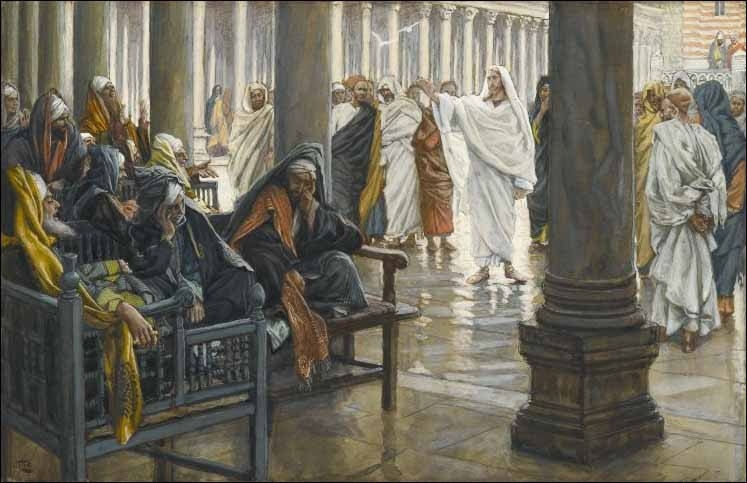
Woe to you hypocrites.
The Gospel readings from the past week have been a ringing denouncement by Jesus regarding the abuse of the leadership and religious authority of his day. This is true especially today, more overtly, as we witness Jesus calling out those scribes and Pharisees who have abused their power and positions: “Woe to you, scribes and Pharisees, you hypocrites. You cleanse the outside of cup and dish, but inside they are full of plunder and self-indulgence” (Mt 23:25).
The most unfortunate part of this Gospel is that the Church today is still not immune from these indictments. Continued reports in the US and worldwide regarding the worst kind of self-indulgence and that is the abuse of children by clergy and cover-ups from those who were placed in positions as shepherds to protect their flocks. This has left a gaping wound in the Body of Christ because of the devastation, first and foremost, to those who have been gravely wounded physically, emotionally, and spiritually, as well as for those families who have accompanied their loved ones through these years of trauma.
Jesus bestowed dignity on the vulnerable youth of his day when he chided his disciples for not allowing the children to be brought to him for a blessing (cf. Mt 19:13-15). Jesus modeled the proper treatment of children and at-risk adults time and again throughout his ministry, and as disciples of Christ, first and foremost, we too are to stand up for and protect the dignity of each person, but especially the most vulnerable among us. There is no defense for these horrific actions, nor the egregious coverups.
The majority of the reports revealed abuses that happened prior to the first significant waves of revelations of 2002. Since that time, many dedicated laity and clergy have been diligently working together, to protect at-risk adults and children, to implement strategies and programs of awareness, to educate parents, children, and all who work with children and at-risk adults in our dioceses across the country.
Yet, as investigations such as the Pennsylvania Grand Jury report unearthed systemic abuse, the greater majority of which happened again prior to 2002, each of us is reminded that each diocese needs to bring to light, be transparent, and open records of abuse as far back as they have them and not wait for others to go digging. Those who have been responsible for acts of abuse, those who have been complicit in covering up their actions or shuffling priests around, no matter their level within the hierarchy, need to step down from public ministry. To those who are still hiding in the shadows, they need to remember that Jesus said, “There is nothing hidden that will not become visible, and nothing secret that will not be known and come to light” (Lk 8:17).
There can no longer be a practice of covering up heinous crimes and abusers to protect the identity of the institution of the Church. We are the Body of Christ, and where one suffers, we all suffer. Jesus Christ promoted integrity over identity. The dignity of the person is to be placed before any institution. We need to pray for, while at the same time provide full access to those who have been abused. This means that they are to be heard, that their claims will be fully investigated, and they will have access to resources for healing, mentally, physically, spiritually, and socially. Part of that process is to allow them to share their stories that need to be told and heard. We also need to continue to be vigilant in protecting settings that provide access to children and at-risk adults from predators.
We need not leave the Church because of those who sin, we all fall short of the glory of God. We need not be paranoid either, but we do need to be clear to put boundaries and proven protective practices in place, we need to be alert and vigilant to the warning signs regarding those who do not respect boundaries, as well as be fully open and cooperative with revealing the abuses enacted in the past.
We also need to be authentic people of prayer, because this is also a spiritual problem. Let us pray for those who have been abused, for their healing, for accountability of abusers, for this darkness to be revealed by the light, and for those who have lost their faith because of the stain of hypocrisy that has tainted the Church. Let us strive to be people of integrity, building a true culture of life, that respects, protects, empowers, and stands up for the dignity of all.
Photo: “Woe to you Scribes and Pharisees” – James Tissot, late 19th century
Link for the Mass reading for Tuesday, August 25, 2020
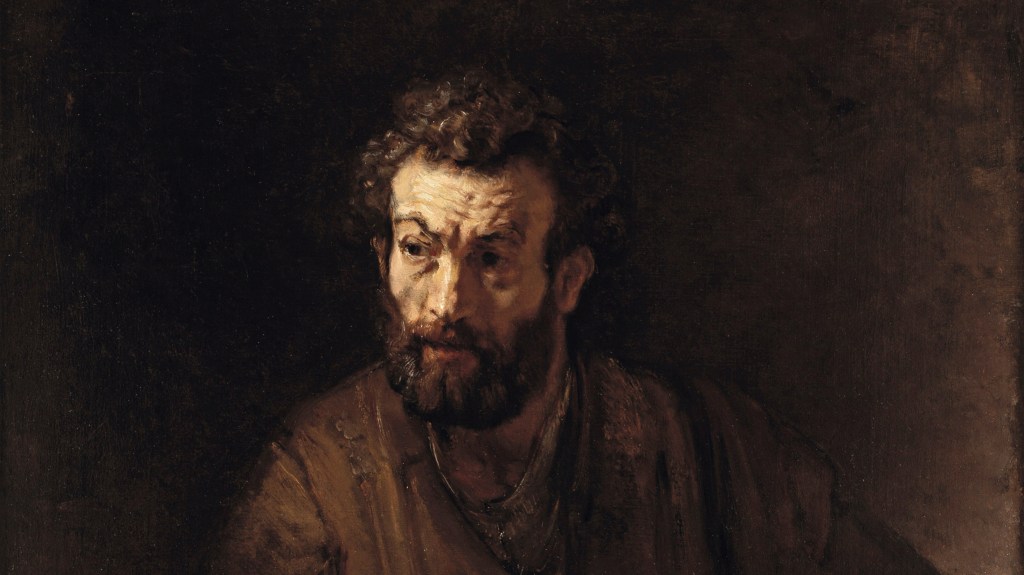
May we like St Bartholomew be able to see beyond our prejudice and bias.
But Nathanael said to him, “Can anything good come from Nazareth?” Philip said to him, “Come and see” (Jn 1:46).
Many biblical scholars believe that Nathanael is the same man as the Apostle Bartholomew, who is mentioned in Matthew, Mark, Luke, and Acts. We see in today’s Gospel from John that his initial reaction to Philip’s invitation is doubt. Why? Because of where Jesus came from. Nazareth was a small peasant village with a population of about 1,600 people (Meier, 317). I don’t think its small size would be the main reason for Nathanael’s offering a bit of humor at the expense of Jesus’ hometown, though he must have had some reason to believe that nothing good could come from Nazareth. The more important point is that Nathanael did not allow his preconceived opinions of Nazareth to keep him from following Philip’s invitation to “Come and see.”
Nathanael would not only “come and see”, but after Jesus shared how he first saw Nathanael under the fig tree, Nathanael claimed that Jesus was “the Son of God… the King of Israel” (Jn 1:49). What he was able to see in Jesus, Jesus’ own townsfolk of Nazareth were not able or willing to see. Though, like the other Apostles, Nathanael was off the mark regarding the kind of messiah Jesus would be. Jesus would not be the warrior king, but the suffering servant of Isaiah. Jesus also told Nathanael that he would “see greater things than this” (Jn 1:50). Francis Moloney articulated that: “Faith based on miracles will not suffice; something more is needed. This greater faith will enable all disciples to see the revelation of the heavenly in Jesus, the Son of Man” (Harrington, 57).
Though we do not know much about Nathanael other than the encounter described in today’s gospel, we know that he was willing to set aside his initial doubt and prejudice of Jesus’ hometown. He was willing to encounter, follow, and remain with Jesus to become one of the Twelve. There is speculation that he traveled to India to spread the Gospel he received. Most likely he encountered those who had the same doubt that anything good could come from the One from Nazareth. There would be those who refused to believe and so he was killed. Yet, before and after his martyrdom, some, though initially doubtful, some like Nathanael, came and saw and believed.
St Bartholomew, son of Tholami; Nathanael, gift of God, pray for us that we may resist the temptations of our own biases, doubts, and prejudices, so to open our hearts and minds to “come and see” Jesus in those we meet today, especially in the distressing disguise of the poor. Help us not only to resist judging others because of where they come from, the color of their skin, or their beliefs but instead grow in our faith so that we come to see in each encounter a person, a child of God, a brother or a sister journeying with us along the way.
Painting: The Apostle Bartholomew by Rembrandt, 1657
Meier, John P. A Marginal Jew, vol. 1 : The Roots of the Problem and the Person. New York: Yale University Press, 1991.
Moloney, S.D.B., Francis J. “The Gospel of John, vol.4.” In Sacra Pagina, edited by Daniel J. Harrington, S.J. Collegeville, MN: Liturgical Press, 1998.
Link for today’s Mass readings for Monday, August 24, 2020
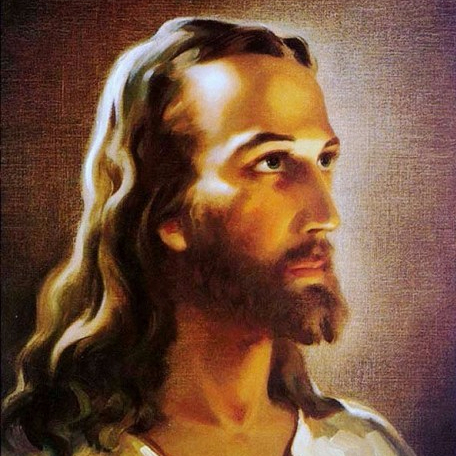
“Who do you say that I am?”
“But who do you say that I am” (Mt 16:15)?
This question is just as important to us today as it was when Jesus asked his disciples the same question some two thousand years ago. The answer is wide and varied as attested to in the many books written about Jesus and the many denominations who claim to follow him. There is also a vast array of pictures, paintings, documentaries, and movies. Through each medium, we are given a view of the Jesus of history or the Christ of faith, some emphasizing more the humanity of Jesus and others more the divinity of Jesus, and some a balance of both the human and the divine. Debate has continued from whether Jesus was God or only human to did he ever really exist at all?
When I taught fifth and sixth-grade students at Rosarian Academy, each Easter Season, I assigned my students the task of drawing a picture of the Resurrected Jesus. I quickly noticed a common characteristic of their artistic renditions: Jesus consistently did not have a beard. At first, I started to hand back the pictures to say they needed to add a mustache and beard but I quickly stopped myself. I realized I had made a mistake. This is how they saw Jesus from their perspective at their age.
The way we talk about and express Jesus may actually say a lot more about us than Jesus. The portrait I posted above is the Warner Sallman painting he titled, “Head of Christ”. I chose it because this was the portrait of Jesus I grew up seeing in our home and when I close my eyes and talk to Jesus this is often the image that most comes to mind for me.
Seeking to know Jesus better, I have two bookshelves with books just on Jesus, though for the writing of this blog I have gone back to the earliest, primary sources, the Gospels. I read the daily Mass readings each evening the evening before, pray with them, and have shared some of my reflections with you. Hopefully, they have provided some food for prayer, reflection, and practice.
“But who do you say that I am?” Jesus asks his disciples. It is an important question to meditate on, especially in our time of uncertainty and unrest. I invite you to do so this Lord’s Day and through the week. Please feel free to post your response whether positive or negative. I would be interested to read how you answer Jesus’ question.
Painting: Warner Sallman’s “Head of Christ”
Link for the Mass readings for Sunday, August 23, 2020
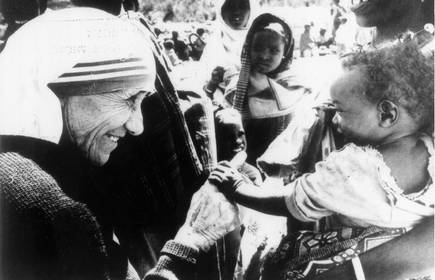
“Love only can become our light and joy in cheerful service of each other.”
“The greatest among you must be your servant. Whoever exalts himself will be humbled; but whoever humbles himself will be exalted” (Mt 23:11-12).
Jesus warns us to resist the sin of pride, where we place ourselves as the focal point instead of God. This happens when we seek to be the center of the gravitational pull within our realm of influence. Through our subtle and not so subtle actions, we can embrace this temptation to live a life of, “Look at me, look at me!” Desiring to be affirmed is not a bad thing but that ought not to be our primary motivation for our actions. Ultimately, we will be better served when we seek our affirmation from God.
Choosing our own self-determination free of God’s guidance is the height of pride. God does not seek to limit us but to inspire us so that we may actualize the fullness of who he has created us to be. St Mother Teresa often guided her sisters not to seek to do great things but to do little things with great love. I came across a cassette tape of one of her talks during my freshman year of college. Her words started to plant a seed in my soul that urged me to look out beyond myself toward others.
Growing up with an introverted and shy nature, I spent much of my youth in my own world. In my second semester of that same year, I took a psychology course and thought it would be interesting to work in a hospital. A close friend of mine, Steve, shared with me that his mother was a nurse in a nursing home in our hometown. That summer, when the semester ended, I applied for the job as a certified nursing assistant and was hired.
The first resident I assisted was named Margaret. She rolled passed me in her wheelchair and a particular odor followed. The aide I was training with caught my eye and I realized this would be my first solo attempt of service. I redirected and guided her to the toilet, which was in a small closet-sized area in between two adjoining bedrooms. It was a particularly hot day, and as I removed Margaret’s depends, I found quite the surprise. For the next fifteen minutes as I washed her midsection and perineal area, I sweat, teared up, and repeatedly fought back the urge to gag, all the while Margaret sang. Once cleaned up and in a fresh nightgown, I helped her into her bed, tucked her in, and then Margaret said, “Give me a kiss lover.”
Others may have run for the door and never looked back. I stayed, and for the next four or five years, I experienced the wonderful gift of building relationships with the many residents and coworkers who drew me out of myself and into their worlds. What started out as a job became an extended family.
God presents us with opportunities daily. Often moment by moment, we are faced with a decision to choose to keep the focus on ourselves or to be present for and give of ourselves to others. May we resist the urge to turn within ourselves out of anxiety or fear of risking to love and instead pray for the courage to be open to the opportunities of grace God gifts us with. May we be willing to serve in little ways with great love, one person, one encounter at a time. I pray that you may encounter your Margaret! For Margaret helped me to live what St Mother Teresa taught me: “Love only can become our light and joy in cheerful service of each other” (Teresa 2010, 355).
Link for the photo of Mother Teresa
Mother Teresa. Where There Is Love, There is God. Edited by Brian Kolodiejchuck, M.C. NY: Doubleday, 2010.
Link for the Mass readings for Saturday, August 22, 2020
Let someone know that you love them today.
When the Pharisees heard that Jesus had silenced the Sadducees, they gathered together, and one of them, a scholar of the law, tested him by asking, “Teacher, which commandment in the law is the greatest?” He said to him, “You shall love the Lord, your God, with all your heart, with all your soul, and with all your mind. This is the greatest and the first commandment. The second is like it: You shall love your neighbor as yourself. The whole law and the prophets depend on these two commandments.” (Mt 22:34-40).
Jesus, in response, was not just throwing up a cloud of theological dust into the eyes of the Pharisees. His answer to, “which commandment in the law is the greatest?” was drawn directly from the Torah. Jesus quoted from Deuteronomy 6:5 and Leviticus 19:18 and merged the two verses together as one unit. His purpose was to emphasize the point that what was to be the greatest aspiration for humanity was to love God and to love our neighbor as ourselves, not either/or. Jesus again was showing that he did not come to abolish the law and the prophets, but that he came to fulfill them (cf. Mt 5:17).
In this statement, Jesus also revealed the foundation of reality, the Trinitarian communion of love. For the immanence of God – God within himself – has always been, always is, and always will be a communion of love. God the Father loves the Son, God the Son receives the Father’s love and in return loves God the Father, and God the Holy Spirit is the love expressed and shared between God the Father and God the Son. The overflow and abundance of this perichoresis, or divine dance of trinitarian communion, has loved creation into existence.
This means that we as his created beings have been loved us into existence too! Created in his image and likeness means we are capable of loving him, and one another. Thus, as God has loved us so we are invited to mirror on earth the love that is shared in Heaven. It is through our participation in the love of Jesus that we can live up to his command to love our enemies, best expressed in the parable of the Good Samaritan (Lk 10:29-37).
Even in the midst of pandemic, polarization, and division, we can rejoice in the love of God, who is Love, today. We can thank him for giving us the gift of life. We can refuse to contribute to the chaos, we can take care of ourselves and each other by resisting the temptation of complacency and taking each other for granted. Life, even at its best, is fragile and can slip away from us in the blink of an eye. With each opportunity that arises, say yes to sharing the love with which we have received from God with each person we encounter.
If we catch the eye of another smile. Even behind masks, our eyes can still smile. If someone says, “How are you today?” say, “Better that you asked.” If someone interrupts you, let everything go for that moment and be really present to that invitation to engage with another. Go out of your way to do some random acts of kindness, especially for that someone who ordinarily and regularly gets under your skin. We need never fear that God’s supply will ever run out, so today, go for it! Perichoresis! Participate in the dance of God’s trinitarian Love and let his Love reign free.
“Dance, dance, wherever you may be
I am the lord of the dance, said he
And I lead you all, wherever you may be
And I lead you all in the dance, said he.”
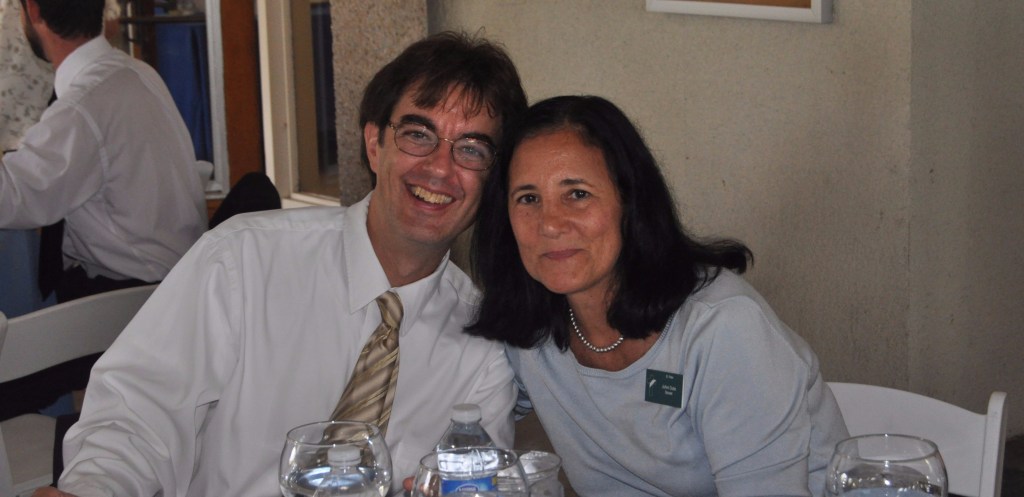
Picture: Sharing our smiles with you. JoAnn and I at the reception following our class’s installation as a lector during formation for the permanent diaconate about nine years ago.
Chorus from the hymn: Lord of the Dance by Sydney Bertram Carter
Link for today’s Mass readings for Friday, August 21, 2020
The banquet is ready. Are we willing to accept the invitation to attend?
“The Kingdom of heaven may be likened to a king who gave a wedding feast for his son” (Mt 22:2).
Throughout the Gospels, Jesus not only talked about feasts but he is recorded as often celebrating table fellowship with others. Those he ate with ranged from people who were considered sinners to the religious elite among the Pharisees.
In the parable from today’s Gospel, Jesus presented a wide range of reactions to the invitation offered by the king through his servants. Some are so caught up in their own lives, that they are not able or willing to break away and others reject the invitation outright and do so violently, by mistreating and even killing the servants of the king. Then others, the good and bad alike, welcome and say yes to the invitation.
God invites, but we must be willing to change our hearts and minds to see the invitation for what it is, an eternal gift. Those who refused were unwilling to change their plans, as well as others who, with hearts of stone, were outright hostile, willing to abuse and even kill the servants.
Near the end of the parable, Jesus presents a curious fellow that the king found present at the banquet without the proper attire. This is not a literal indictment of not having the proper clothes, but the wedding garment imagery may be a recognition of a willingness to receive the benefits of the invitation without a yes to the responsibility involved with the invitation of transformation.
In our first reading from the prophet Ezekiel, God speaks to his people through his prophet stating that “I will give you a new heart and place a new spirit within you, taking from your bodies your stony hearts and giving you natural hearts” (Ez 36:25). We are invited to participate in the banquet of eternal life with God. The invitation is freely given, yet it requires that we dress for the occasion of participating in the banquet of a king. This dress is no material garment of fine linen and gold embroidery, but our willingness to repent, to turn away from those idols, that which we have placed or put before God, to have our heart and spirit renewed. We are invited to be a part of God’s new creation by participating in the life of his Son, the firstborn of the new creation.
God the Father offered an invitation to an eternal banquet to the judges, the prophets, the people of Israel, to be one with him that they might shine brightly before all so to make his will and glory known to the world. In God’s timing, he sent his Son to fulfill that mission of invitation and to be with us in our present moment and in our present condition in life. Jesus meets us where we are right now in our everyday experiences and tells us that “the feast is ready.”
This is an invitation to begin again, to turn away from our selfish ways, to receive a new heart and a renewed spirit. God invites us too but we need to be willing to let go, to change our hearts and minds, to be transformed and perfected through our participation in the life of Jesus and through the purifying fire of the Holy Spirit.
Our yes demands accountability, we can’t just show up dressed for the part and take up space. Our ultimate attire is the transformation from within in which our posture changes from a curving in upon ourselves to an opening and willingness to devote our time, discipline, talent, and treasure to serving at the banquet and inviting others to attend.
“Many are invited, but few are chosen” (Mt 22:14). The first step is saying yes to the invitation. The second step is being willing to move beyond our comfort zones so to embrace the change we are invited to. We need to be willing to allow God to renew our hearts and minds, which is not easy, but we can also take comfort that we are not alone. Jesus invites us, as well as guides us, and empowers us all the while as he accompanies us.
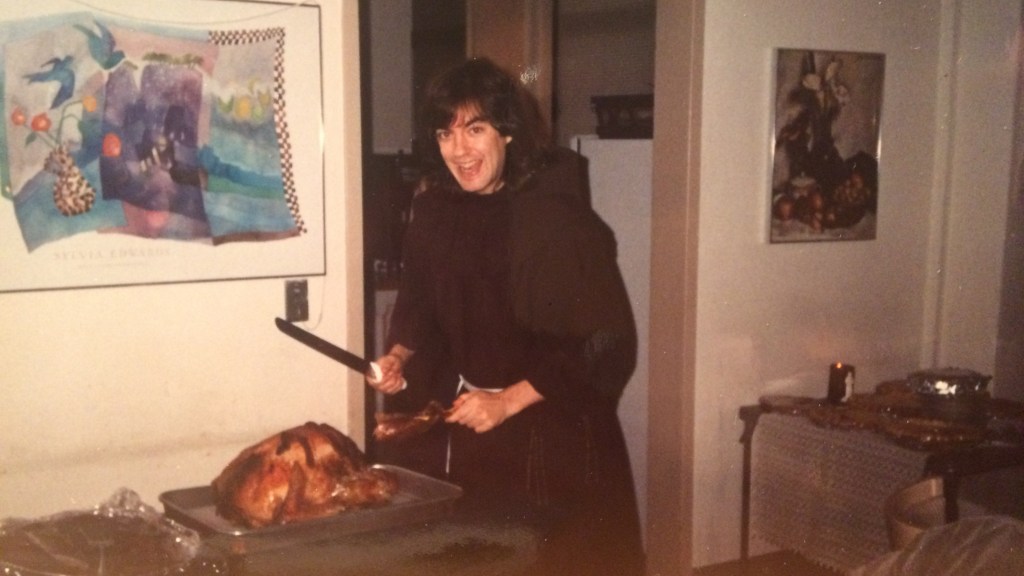
Photo: Serving Thanksgiving dinner at Seton Manor, my novitiate year (about 1992) with the Franciscans. Seton Manor was one of the ministries in which I was blessed to serve people living with HIV.
Link for the Mass readings for Thursday, August 20, 2020

God offers us his grace that we may share it with others.
Jesus told his disciples this parable: “The Kingdom of heaven is like a landowner who went out at dawn to hire laborers for his vineyard…” (Mt 20:1).
At dawn, nine, noon, three, and five o’clock the landowner hired day laborers to go into the field to bring in the harvest. Many, familiar with this parable, find themselves a bit bemused, bewildered, or even angry at the ending when they read or hear that the landowner had his foreman pay everyone the same pay. The immediate cry is, “That is not fair!” Those, more often than not, who respond this way are focused on the hired hands who started at dawn, worked all day, and were paid the same as the laborers who started at five o’clock.
The workers who started at dawn agreed to a certain wage and the owner paid that agreed amount. The landowner explained, “to one of them in reply, ‘My friend, I am not cheating you. Did you not agree with me for the usual daily wage” (Mt 20:13)? What is missed, if someone is feeling as perplexed as were some of the dawn laborers, is the generosity of the landowner.
We see this similar scene of generosity given and played out in some of Jesus’ other parables. The older son who refused to listen to his father’s invitation to come in to share in the celebration of the feast when his wayward brother had been lost but now was found (Lk 15:11-32); the man who was forgiven his entire debt from the king and then when he had the same opportunity to forgive one who owed him, did not (Mt. 23-35), and in the parable of the Good Samaritan the priest and Pharisee left the man on the side of the road yet the Samaritan the despised one was the one to provide aid (Lk 10:25-37). Each of these parables represents the generosity and mercy of God.
There is a reason Jesus shared the parable of the workers in the vineyard after warning about the dangers of riches. Jesus is inviting the disciples and us to be generous with our time, talent, and treasure. He is also calling us out of our group think or tribal mentality. He is showing us that God’s invitation is for all and he is free to bestow his mercy, grace, and forgiveness on those for whom he chooses, whether we approve or not. Ideally, he seeks to bestow his mercy on others through us.
Are we aware of how generous and merciful God has been with us? If not, may we give some thought to the blessings we do have in our life, instead of focusing on what we do not have, otherwise, we will envy the generosity he shows others. Do we fall into the camp of the laborers who worked all day for their fair share but were begrudging those who received the same pay for an hour’s work, the older brother unwilling to be grateful for the return of his brother, the servant unwilling to show mercy to a debtor, and/or the priest and Pharisee that took the long way around the wounded man on the Jericho Road? Or will we rejoice today in the glory our Father shines upon us, seek opportunities to share our joy, fruit, and gifts with others, and be thankful when God bestows his generosity and grace upon others, even at the eleventh hour?
Photo: from pexels.com
The link for the Mass reading for Wednesday, August 19, 2020

Our life, all that we have, is a gift from God.
“Who then can be saved?” Jesus looked at them and said, “For men this is impossible, but for God all things are possible” (Mt 19:25-26).
The disciples are “greatly astonished” about Jesus’ comments about how difficult it would be for the rich to enter heaven. Their astonishment came from the belief system that those who had wealth did so because they had been blessed by God for following his commandments. Just remember the rich young man’s attitude from yesterday. He had followed God’s commands and was blessed with riches, but Jesus turned his world upside down when he asked the man to give up all he had to follow him.
Jesus attempted to help the man and his disciples to understand that what we have, all that we have, is a gift from God, starting with our very existence. He is the ground, the source, and sustenance of our life as well as our ultimate fulfillment. A problem arises when we place our security in material things instead of God who provides them for us. If our security is dependent on that which is finite, we are always going to be left unfulfilled, attached, and/or at worst addicted, and so like the rich man, unwilling to give of ourselves to those in need, because we are afraid we won’t have enough. Also, when we look to our own effort and work ethic, we can build a reliance on our self alone. We can place ourselves as the supplier of our security instead of God. Pride then becomes a dangerous idol. We think and start to believe that we don’t need God because we can do well enough on our own thank you very much.
“Who then can be saved?” The disciple’s question can then very easily be our own. If we can’t buy, earn, or achieve our way into heaven, how will we get there? Jesus is clear. For men, this is impossible because there is no means for us to get there on our own merit. But for God, all things are possible because our salvation is a gift freely given by him.
As with any gift though, we need to be willing to receive it and accept it. One way is to be grateful for what we have and recognize that the source of this gift is God. In this way, we can share freely from what we have, because God, who is our source, is unlimited. As we give from what God has given, God will continue to supply. What is primary then is deepening our relationship with him and collaborating with him. As we do so, we will have the proper orientation to encounter one another in love.
What is essential in our life is not what we have, but that we recognize that God is the source of what we have, that he will provide for us and be present with us. Time goes fast. This life we have been given is good, but it is also finite, and fragile. Let us not take each other for granted, let us take the time to love God and each other as he loves us. “Let us encourage one another while it is still today” (Hebrews 3:13).
—————————————————————
Photo: One of the gifts from God that I have been most thankful for was the times when JoAnn and I went for walks and enjoyed God’s creation. This Red Shoulder Hawk came to say hello a few weeks ago when I just happened to take another route than my usual. What are you thankful to God for?
Link to the Mass Readings for Tuesday, August 18, 2020
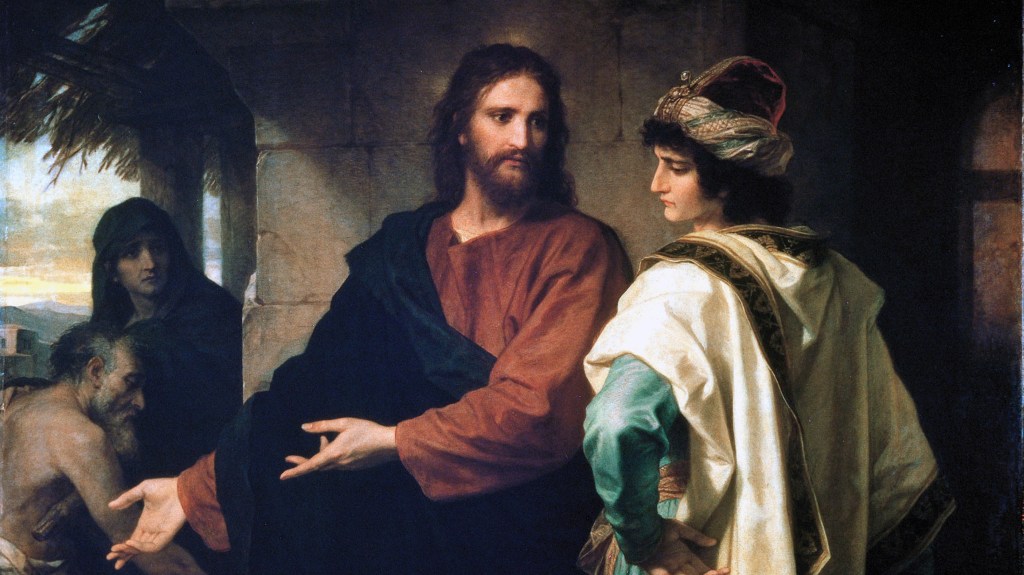
 Spiritual Stepping Stones