Jesus, the Lord of the Sabbath, calls us to a greater good.

Then he said to them, “The Son of Man is lord of the sabbath” (Lk 6:5).

The disciples were traveling with Jesus, they gathered food where they could. In today’s Gospel, they picked heads of grain and rubbed them in their hands to make them easier to chew. The critique of those Pharisees, presumably, walking along with or close by to Jesus, was that his disciples were breaking the sabbath law by working and thus not keeping it holy.

The reason for this was that pious Jews would often practice what is called, building a hedge around the Torah, meaning that they would institute practices beyond the original law so that there would be no way of breaking it. Fr. Bill Burton, ofm, shared an example that has stuck with me since my Scripture studies in seminary.

There is a prescription in Exodus 23:19, that states that you should not cook a kid (baby goat) in its mother’s milk. So as not to even come close to breaking this law, observant Jews developed the practice, which continues today, to not cook any meat and dairy together; thus the idea of building a hedge around the Torah.

The hedge in today’s reading had to do with what constituted work and what did not, so as to keep the sabbath rest intact and keep the Sabbath holy. Jesus settled the debate by claiming that he was the Lord of the Sabbath.

The Lord of the Sabbath needs to be the Lord of our lives. We live in a fallen world, but even at its best, we live in a finite and fragile world. We as human beings can only do so much. The best we can do is to use our intellect and ability to reason while at the same time seek to discern God’s will and direction so to have access to the spiritual resources that he offers to us in our everyday affairs, especially when tragedy strikes.

Tragedy, pain, and suffering happen in our independent lives directly and in our world collectively. Yet, in each instance, we are not abandoned, we are not alone. God works with and through us and others who allow their hearts and minds to be open to his love working through them.

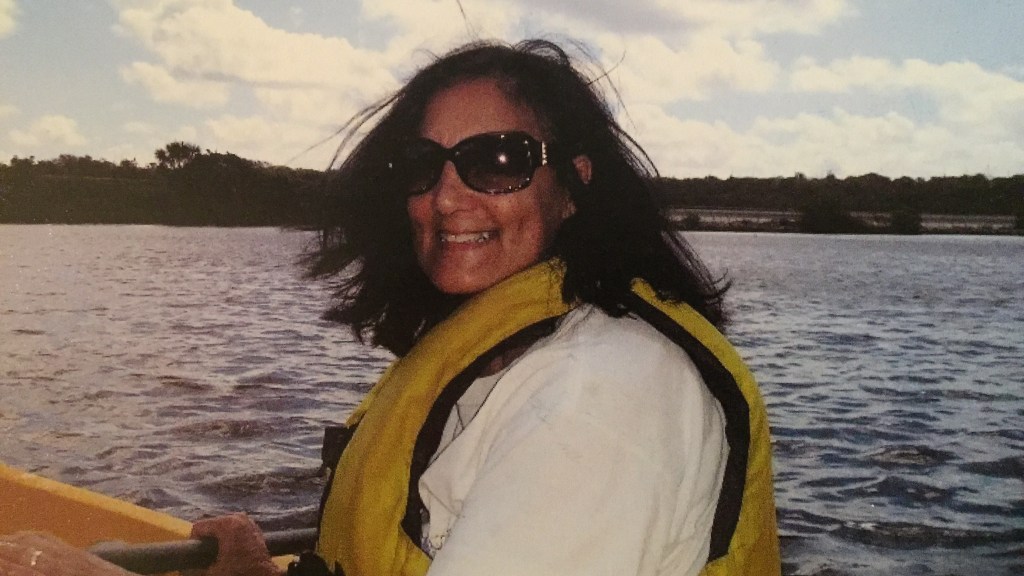
I cannot answer why these things happen. I cannot answer why JoAnn had pancreatic cancer. But I do know God was with us every step of the way and as JoAnn physically decreased she allowed her mind and heart to be open, such that Jesus increased in her life and she shared his love with others.

Jesus needs to be the Lord of our lives, in and out of season, in the midst of our trials as well as our joys and celebrations. As we lean on him and each other all things are possible and what may seem incomprehensible or hopeless at the moment, God will bring about a greater good through his will and timing.

———————————————————–

Photo: Sunset at Santa Monica Beach about this time last year with Jack and Christy watching the sunset.

Link for today’s Mass readings for Saturday, September 5, 2020
We can be blessed when we are willing to risk going beyond our comfort zones.

And no one who has been drinking old wine desires new, for he says, ‘The old is good'” (Lk 5:39).
Many of us can relate to holding on to the old. It is more comfortable, it is proven to be good and true. A favorite wine, a pair of broken-in jeans or shoes, a favorite book read time and again, these are all part of the simple pleasures of life. In Jesus’ parable, he is challenging us to go deeper. He is inviting us to recognize those things that we are holding onto that may be preventing us from more than just a mere existence or minimalist mode of living to instead actualizing the fullness of the potential for ourselves and others. He is also challenging us to discern the difference between apparent goods and the real good.
We have created patterns in our life that may appear and feel safe, but in actuality may be holding us back from a deeper and fuller experience in life. We may be influenced by cultural or social tremors that may dictate to us that we are too old, that we are too young, that to do this or that is too much of a risk… Each of these examples can be challenging on the material plane of existence, yet while Jesus seeks the best for us in our every day, at the same time, he is calling us to go even deeper spiritually.
God the Father is infinite and inexhaustible. Though the Gospel remains the same, there are always new ways, new means to hear the message, to go deeper, so to better be able to practice and share what we have learned. Each generation has to claim the deposit of faith passed on for generations as its own. Our faith is not some inanimate artifact passed on but an organic relationship that matures and deepens age after age.
I had heard of social media and its handful of platforms for some time but had not experienced any of it myself until a few years ago. For just over three years now, I have been sharing these reflections as a way to share my thoughts on the Gospels and journey with Jesus.
I was quite happy reading, learning, and sharing within the four walls of my classroom, but I felt Jesus urging me to reach out a bit more, to go beyond those four walls, to take a risk and try some new wine. I wasn’t sure how to begin but took a few steps and I have been typing away each day to share a reflection like this one that you are reading now ever since.
There was an initial risk in adding one more thing to my schedule in that there would be less time during the school year to be with JoAnn but it helped to open up time in the evening where we would pray together, read the daily Mass readings, and I would then share my reflection. JoAnn critiqued them and we would discuss what we learned together. So my initial concern was unfounded and in trusting the lead of Jesus, we had more intimate time together immersed in the Word that became even more precious than I would have ever imagined because now that time together is no more.
In what way is God calling you to take a step out of your comfort zone? In what way can you share your faith journey with others? As you take a look at the horizon this morning, take some deep breaths as the sun rises, realize that you have a unique gift or talent to share, a way that Jesus is inviting you to participate in building up his kingdom. A life surrendered to Jesus, lived in collaboration with him, is ever new, ever better. Let us be open to hearing his guidance and be willing to be led by him, to be engaged in a new way we haven’t experienced before, to taste some new wine in a new wineskin!

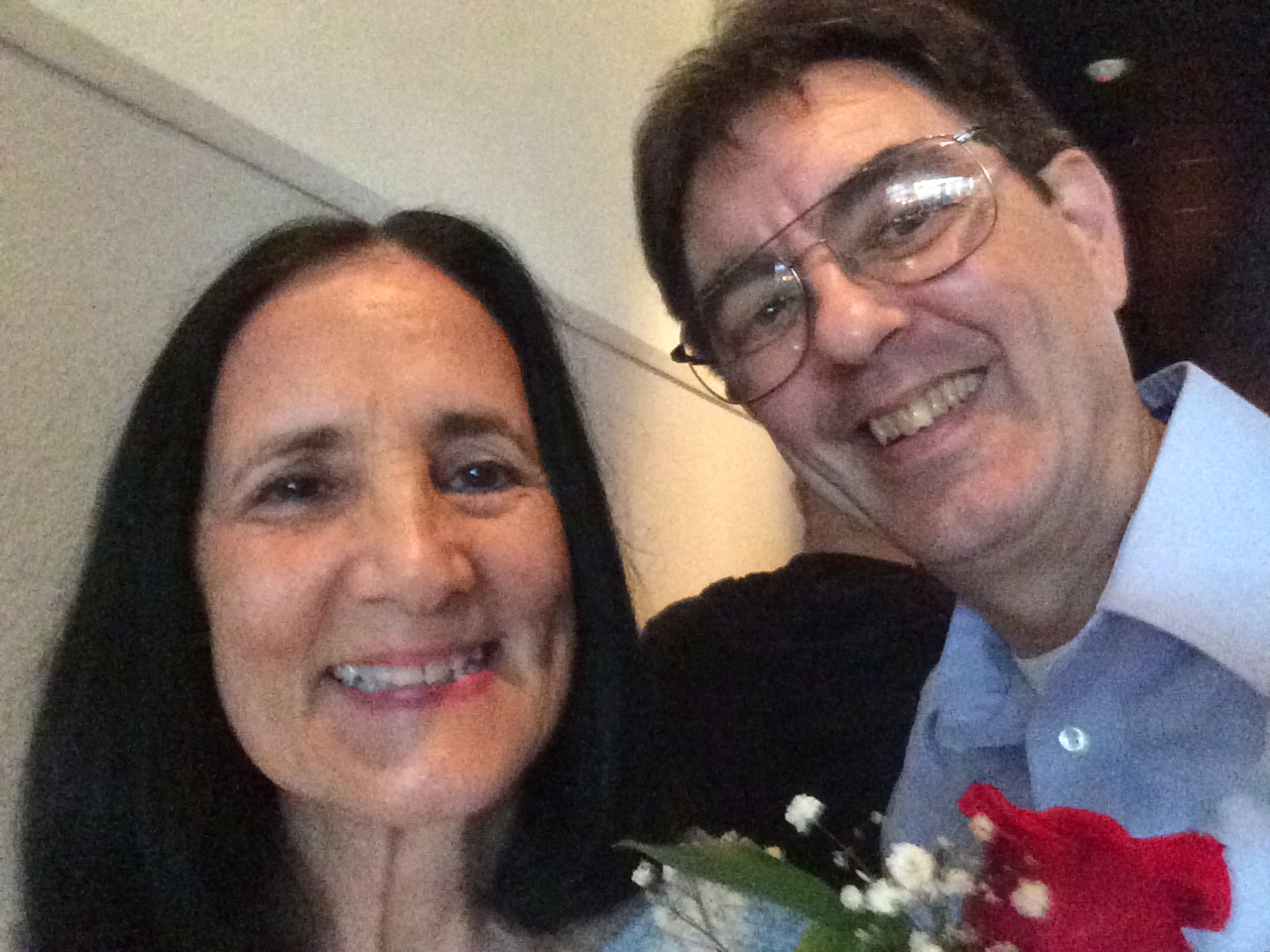
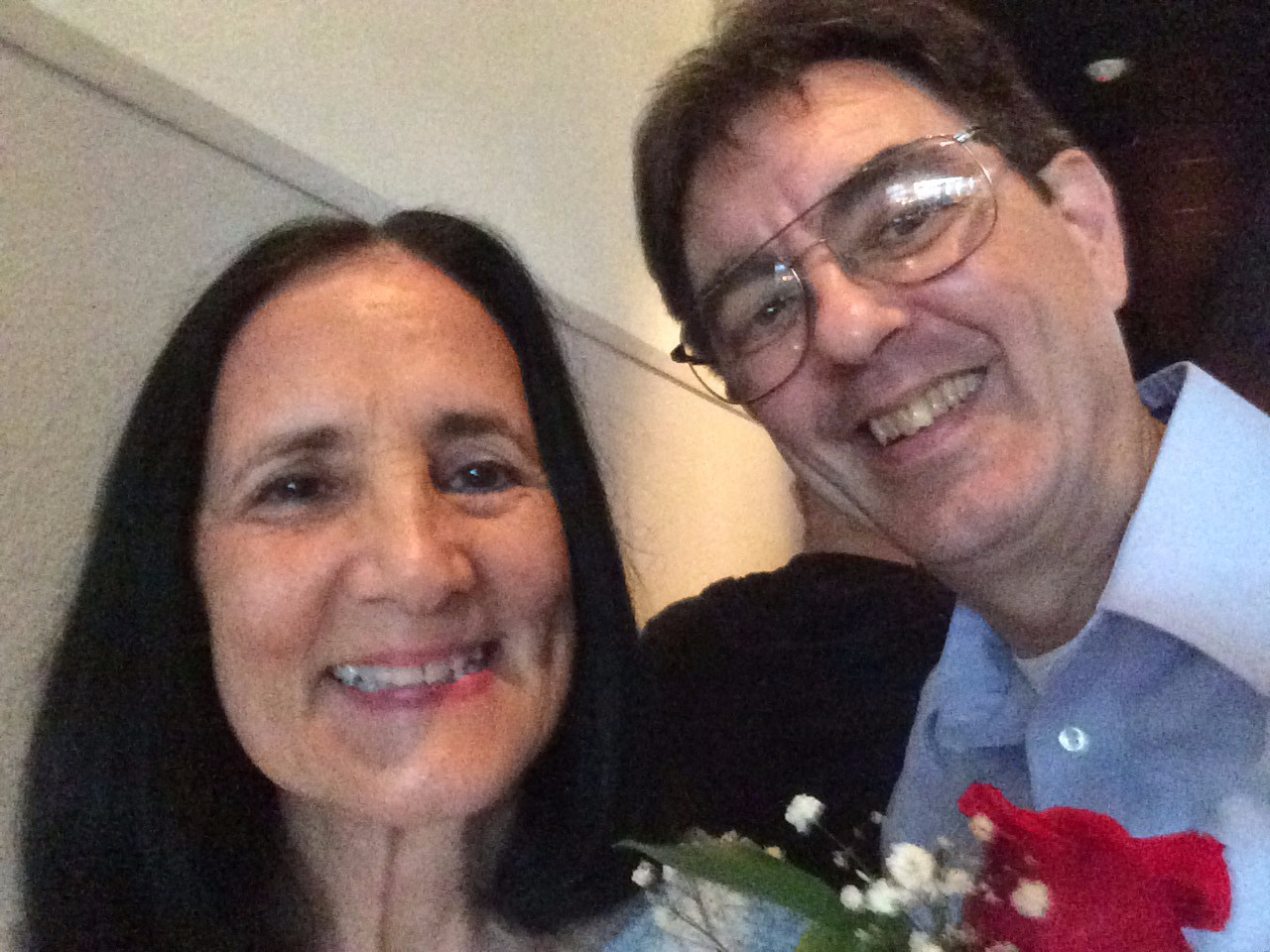
Photo: Valentine’s Day together 2019. Blessed that we continued to grow closer together each year.
Link for the Mass readings for Friday, September 4, 2020

Trust in Jesus, even when his guidance may not appear to make sense.

After he had finished speaking, he said to Simon, “Put out into deep water and lower your nets for a catch.” Simon said in reply,” Master, we have worked hard all night and have caught nothing, but at your command I will lower the nets” (Lk 5:4-5).
Faith is to trust in God and believe that what he tells us is true. On our own initiative and will power we are limited as finite beings as to what we can understand and do. Today’s Gospel reading provides an example of this. Simon had been fishing all night with no results. Simon Peter follows Jesus’ command to go back out and put into the deep, and Simon not only accomplishes what he originally set out to do, but he also did so beyond anything he had ever imagined! When we follow God’s direction and initiative all things are possible for us as well.
God’s initiative and grace enter our lives daily as Jesus entered Simon’s boat. Do we have eyes to see, ears to hear, and a willingness to listen and follow the initiative of Jesus? Remember the rich man who had followed all the commandments, but when Jesus invited him to sell all and come and follow him, he could not do it? Simon the magician saw the works of Philip, Peter, and John and wanted to buy the power of the Holy Spirit to heal but was rebuked. Turning away from Jesus’ invitation or seeking to manipulate Jesus for our own personal gain will not bring us the fulfillment that we seek.
We need to follow the example of Mary, who when the archangel Gabriel shared God’s message with her that she was to bear a child, even though she did not understand how this could be, Mary trusted. She conceived in her womb, through the overshadowing of the Holy Spirit, the God-Man, the incarnate Son of God, Jesus the Christ. May we also follow such examples as Peter, James, and John, who said yes to lowering their nets, even though they did not see the point, yet they followed and were amazed. Then led by Peter’s humility and contrition, they “left everything” and followed Jesus. They went on to announce the Gospel of the Lord and caught people for the Kingdom of heaven.
Do we have the humility to follow Jesus, even when we may feel or see no point in his request? Jesus has a plan for us, as he did for Mary and the Apostles. He will give us the means to accomplish what he calls us to do. In that quiet place in our soul, in the stillness of our hearts, Jesus is inviting us to follow him, to put out into the deep water. What we may hear may seem unbelievable, or insignificant, we may experience anxiety or fear. Yet, let us take the risk and follow Jesus where he leads, where he would have us go, and what he would have us do.
About fifteen years ago, I remember taking a leave of absence after teaching in public school for five years. After time away from teaching, I thought about returning to the classroom. Instead of returning to the public school system, I wanted to explore the idea of teaching in a Catholic school. It was mid-year, so I was just looking for a substitute teaching position. After a few initial inquiries, I received no bites, then JoAnn recommended me reaching out to Rosarian Academy a school about 25 miles from us, my initial reaction was like Peter. I resisted because of the potential drive, but JoAnn persisted and I followed her lead and made an initial call, received an interview, and not only ended up getting a full-time substitute position for the remainder of the year, I was hired back full time at the middle school level for the following school year and taught at Rosarian for another wonderful eight years.
Jesus can guide us directly as he did with Peter or he can guide us through others as he did with me through JoAnn. We need to allow our hearts and minds to be open to where God is leading us and when we do so, we will not only be happy, but we will find fulfillment and meaning in our lives, such that it overflows to others. I thank JoAnn for her years of support of me and my vocational path. Her guidance and love have been an instrumental and integral part of helping me to be who I am today.

Photo: My first class teaching at Rosarian Academy!
Link for the Mass readings for September 3, 2020

How will you bring the joy of the Gospel to others?

But he said to them, “To the other towns also I must proclaim the good news of the Kingdom of God, because for this purpose I have been sent” (Lk 4:43).
Jesus himself, the Son of God incarnate, fully divine and fully human, is the foretaste of heaven in the midst of those he encountered then and continues to be today, as he works through us, his Church. His work of preaching, teaching, healing, and casting out demons, shows that the divine flow of the Father’s Love is infused into our fallen human condition. Jesus came to restore unity to that which had been lost and once he began his public ministry he was ever on the go.
Through our Baptism, we have been conformed to and indelibly marked by Christ, and for Christ. We are nourished by his Body and Blood in the Eucharist and were empowered through the laying on of hands by the bishop at our Confirmation. We have been divinized, grafted into the life of God through our participation in the life of Jesus the Christ. We too then are priests, prophets, and kings in his name. We also are, to preach and teach the same Gospel, to be his healing and comforting presence, to make Jesus present to those in our midst, and yes we too are called to cast out all demons, and to shine the light on negativity, fear, dehumanization, and division in his name. As James teaches, we are to “submit [our]selves to God. Resist the devil, and he will flee” (James 4:7).
Jesus did not travel very far during his three and a half year public ministry, yet his Word has touched all the corners of the world. That is because of those who have encountered him, said yes to his invitation, submitted to the will of his Father, so to be transformed into his saints, and they continued to spread his teachings and life.
We are also called to surrender our life to Jesus moment by moment, in each circumstance and situation so to build up our relationship with him, and embrace the gift of the unique vocation we have been called to do, to be holy, to be his saints. Let us ponder what Jesus’ inaugural message means to us: “This is the time of fulfillment. The kingdom of God is at hand. Repent and believe in the Gospel” (Mk 1:15). Then, filled with the Holy Spirit, proclaim with joy, in word and deed, this Good News through our everyday experience. Let us rise this day (or tomorrow morning) to follow Jesus and be on our way!
In our surrender, we become who we truly are meant to be. In losing our life we actually find it. Part of me would rather not go into work today (or tomorrow for those of you reading tomorrow’s reflection tonight). Today (or tomorrow, September 2) is the first anniversary of JoAnn’s death. JoAnn shared with me, Mia, Jack, and Christy that she would be closest to us when we were doing what made us happy. Even when life seems to be coming apart at the seams, when I am teaching or serving at Mass, there is a light of joy that stitches those tears back together. I feel joy because I am not thinking about my small ego-self but I am focused on those who, I hope, are touched by God working through me. In doing so, I believe I will feel closer to JoAnn as well.
Proclaim the Good News today in your own unique way!

Photo: Happy anniversary my heart and my love. Pray for us!
Link for the Mass readings for Wednesday, September 2, 2020

No darkness can prevail over the light of Jesus the Christ.

Jesus returned to his hometown of Nazareth, as we saw in yesterday’s reading, and that did not end so well, with his fellow Nazoreans running him out of town (Lk 4:29). In today’s reading, Jesus was teaching in the synagogue at Capernaum. The initial reaction to Jesus’ teaching was similar in both accounts; the people were “amazed” and “astonished” with his teaching. But no one in either group makes the bold statement that arises today: “I know who you are – the Holy One of God” (Lk 4:34)! This phrase was professed by a demon. He who taunted Jesus.
From the very beginning of Jesus’ ministry opposition was present. In Nazareth, the fallen nature of our humanity reared its head. The people he grew up with were unwilling to see beyond the ordinary Jesus they always knew. Wasn’t he just the son of Joseph, just the carpenter? Jesus was safe when he merely worked a quiet life, participated in the life of the synagogue, even when he returned from surrounding territories amidst words of praise, and even stepping up to read in the synagogue from the words of Elijah: he was the hometown boy making good. But once Jesus began to equate himself in the line of the prophets and share how God was working beyond the people of Israel, with his accounts of Elijah going to the Gentile widow, and Naaman, another Gentile, going to Elisha, highlighting that God worked beyond the people of Israel, even his own had enough. Jesus had to go (Lk 4:29).
In today’s account, another source of opposition is the taunting demon. Jesus rebuked the demon immediately and called him out of the man. Jesus faced time and again the fallen nature of humanity, disbelief, lack of faith, as well as the opposition of demons, and soon the failure of religious and civic leadership. Sound familiar?
Where do we find our self in the scenes of Jesus’ ministry and teaching, in our own time today? Following Jesus is a day to day commitment and we must be willing to face the same challenges that his disciples did. We need to be willing to face our weaknesses, our woundedness, and our own shortcomings and conform our lives to the will of Jesus. By doing so we will be confronted with the darkness and sin within ourselves. With true humility, we will be better able to resist defending and rationalizing where we fall short of the glory of God and instead be willing to repent, to turn away from our sin, to turn back to God, and be willing to be healed.
We also need to resist dismissing Jesus’ encounter with the demon in today’s Gospel too quickly. Demons do exist and play a role in the principalities and powers that influence us and our world. We ignore this reality to our own peril, for they will tempt and subtly attack us at our weakest and most vulnerable points. This is not a cause for anxiety and fear. The weakest Christian is stronger than the devil himself but we must be aware and vigilant. When faced with temptation by Satan or his demons, we just call on the name of Jesus and those of the dark will flee from the radiant light of Christ. This is why it is so important to regularly examine our conscience, to be aware of, and to confess our sin. In doing so, we will be free, otherwise, they can and will be used against us.
The closer we draw to Jesus, the more we experience his light, the more of our own sin we will see. This is not a cause to run and hide but to humbly embrace the truth so that healing will be possible. This also means that we will see more clearly the dark influences that plague us and our world which we are blinded to when we turn in upon ourselves and our feed our own selfishness, embrace our own pride, and turn away from God.
May we instead place our trust and belief in Jesus today and each day, spend time in prayer, in his word, examine our conscience, and be willing to be led by him to serve one another, speak up for one another, and stand strong against the temptations and darkness of this world. When we fall short, fail, as we will, as did the apostles, we need to follow, not Judas, but Peter: repent, confess our love for Jesus, and begin again. Together, with our Loving God and Father, may we hold one another accountable, support, and lift one another up in love, for Jesus is at our right hand, and, even in the darkest moments, with Jesus, we will stand firm!

Solar Eclipse: Photo Credit: Reuters Daniel Chan
Link for the readings for Tuesday, September 1, 2020

What can we do to make today and each day acceptable to the Lord?

He said to them, “Today this Scripture passage is fulfilled in your hearing” (Lk 4:21).
Jesus sat down after speaking these words to his hometown congregation in Nazareth who had just heard him read the passage from the prophet Isaiah. Jesus proclaimed that he was the one to whom Isaiah was talking about. Luke chose to place this event as the starting point of Jesus’ public ministry, of bringing glad tidings to the poor, proclaiming liberty to the captives, recovering sight to the blind, letting the oppressed go free, and proclaiming a year acceptable to the Lord (cf. Lk 4:18-19).
This is a message of universal healing for all of humanity, that restoration and reconciliation would come and Jesus would be the vehicle to bring all the nations, all people, back into communion and relationship with his Father. The poor mentioned were not just in reference to those experiencing material poverty but to those finding themselves on the margins of society, the outcasts, those on the peripheries. The captives were not only those imprisoned for debts or crimes but those bound in the chains of their own sin and addiction. The blind were not only those who could not physically see but those who experienced the spiritual blindness of pride and arrogance. The oppressed were not just those under the iron fist of totalitarian and dictatorial regimes but those pressed down through their own self imposed anxieties and fears.
In what ways are we in need of Jesus’ healing and restorative power? What is keeping us on the peripheries, apart from communion and fellowship? What sins and addictions keep us bound, what fears and anxieties keep us oppressed? Jesus invites us in today’s Gospel to be healed and to align ourselves with his will and ministry of loving service to others. The same words he spoke to his own hometown he is speaking to each one of us today. Will we hold on to our biases and prejudices and run Jesus out from our midst to hurl him over a cliff because he is not only offering his healing hand to us but also to others outside our racial or ethnic makeup, our nation, or our political party? Or will we come to Jesus, kneel before him, acknowledge our need for his healing and make him the Lord of our life?
JoAnn recognized her need for Jesus in her life and she accepted the invitation of his love and relationship. She often said that she found rote prayers hard to do. She was much more comfortable speaking with Jesus as she spoke with our kids and me. JoAnn was also willing to admit her mistakes and confess her sins, which she was blessed to have had the opportunity to do twice in the final month prior to her death. JoAnn often told us as her condition declined further that her death would not be an end but just a change of address and that she would be close to us, with us, and that she would love us forever and ever.
Let us take some time today to examine our conscience. Then come to Jesus with a contrite, sorrowful heart for what we have done and what we have failed to do. May we feel his healing hands on our bowed heads and the warmth of his love pouring through us to purge us of our sin and pride and heal us from that which keeps us bound. JoAnn has been at her new address for what will be a year this Wednesday, September 2. She intercedes for us now such that Jesus may guide us as he guided her on how and where we can participate with him in bringing healing, reconciliation, and love to others in our midst, to bring about an “acceptable year of the Lord” (Lk 4:19).
—————————————————-
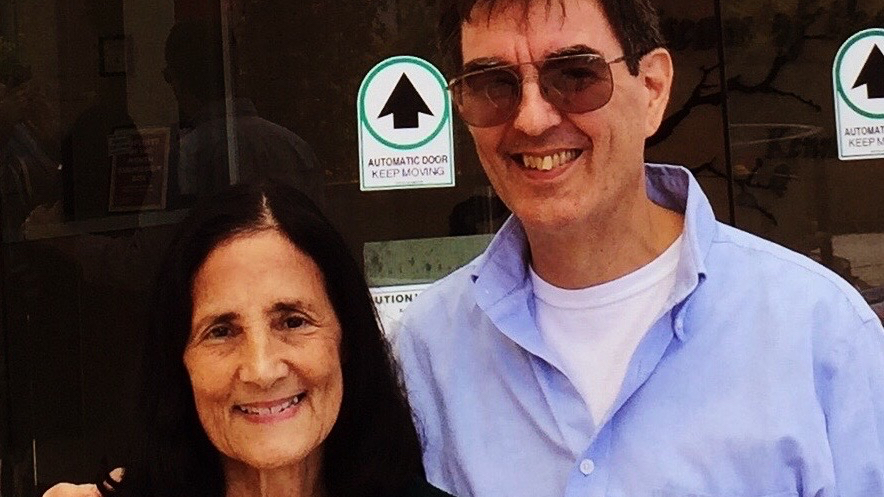
Photo: Just noticed the sign behind us saying “Keep Moving”. No matter what life throws at us, take the hand of Jesus and keep moving and share the love of God with each other!
Link for the Mass readings for Monday, August 31, 2020

Taking up our cross like Jesus will lead us to experience the freedom for excellence,

There is a difference between the freedom of indifference, doing what we want when we want, how and whenever we want and the freedom for excellence which gives us the freedom to excel at some particular endeavor. I have a guitar in my closet that I have had since I was seven. I cannot play it like George Harrison, Eric Clapton, or Jimmy Page. I do not have the freedom to play it because I have only picked it up in spurts over the years.
I do have the freedom to be sharing these words with you as a deacon because I have invested daily the time and energy, required disciplines and sacrifices to be ordained and to continue my practices as a disciple of Jesus beyond ordination.
If we seek the freedom of excellence to be proficient in anything, playing a sport, an instrument, singing, dancing, acting, writing, drawing, pursuing a career, having healthy relationships, being married and a parent, we are required to make a commitment of time, discipline, and sacrifice. We will also be required to take risks, make mistakes, and to embrace the reality that we can continue to grow.
In any of the above examples and any you may think of, consistent time is needed each day. The most challenging part of any endeavor is to begin. Once we actually start, the next challenge is the discipline to stick to the system we have put in place to move toward our goal, no matter the distractions and temptations that may dissuade us. Attaining the freedom of excellence also takes sacrifice because to do anything means we are not able to do something else. During each step of the process, we risk making mistakes, not doing it right, looking foolish. We experience frustration and impatience as we see ahead of us what we seek to accomplish, but the freedom to do just that seems so far out of reach.
Yet, with persistence and consistent effort, we will begin to have brief experiences, breakthroughs in our area of pursuit. We will at times lose ourselves in the moment where we are not only able to play a series of chords, hit that note, make a move, nail a precision shot, or are involved in the joyful experience of engaged communication of mutual understanding, we become one with those actions. From this context from our personal experience of life, we might have a better understanding of the demands of discipleship.
Then Jesus said to his disciples, “Whoever wishes to come after me must deny himself, take up his cross, and follow me. For whoever wishes to save his life will lose it, but whoever loses his life for my sake will find it. What profit would there be for one to gain the whole world and forfeit his life” (Mt 16:24-26)?
Those of us who seek to be disciples of Jesus will need to invest our time daily, be willing to be disciplined and to sacrifice. This is the same as any other endeavor we seek to be free to pursue. Developing our relationship with Jesus is to be our first priority. All else flows from our losing our life in Jesus, mind, body, and soul. We can have all the power, prestige, fame, material gain, pleasure at the tips of our fingers, we may have gained the whole world, but if our fundamental option is our self and our own pride, we will have in actuality forfeited our life. God is our fulfillment; nothing else can satisfy the deep yearning for communion with him that we experience in the depths of our soul, whether we are consciously aware of that truth or not.
Finding our life, being true to who we are, free of that which is imposed on us from without and within, is what Jesus means by taking up our cross. We are to let go of our identity, our masks of who we pretend to be if we are to be free to live a life of integrity and authenticity. Jesus refused the identity of the messiah that others projected upon him. He was not to be a leader of power in the worldly sense, not a warrior king, but a suffering servant, a king of peace.
Jesus would go to the cross and take upon himself the pain, suffering, and sin of the world, and face death head-on, and conquer all even death itself. He did so that we might have life and have it to the full. As St Irenaeus is believed to have written, “The glory of God is the human being fully alive.” What God wants for us is what we want for ourselves deep down. We just need to have the ears to hear, the eyes to see, and the will to risk embracing the wonderful depth of God’s love and put that gift of love into practice in our everyday lives by dying to ourselves and living for others. By doing so we will experience the freedom for excellence to be who we are called to be and experience the joy and fulfillment of being fully alive!
—————————————
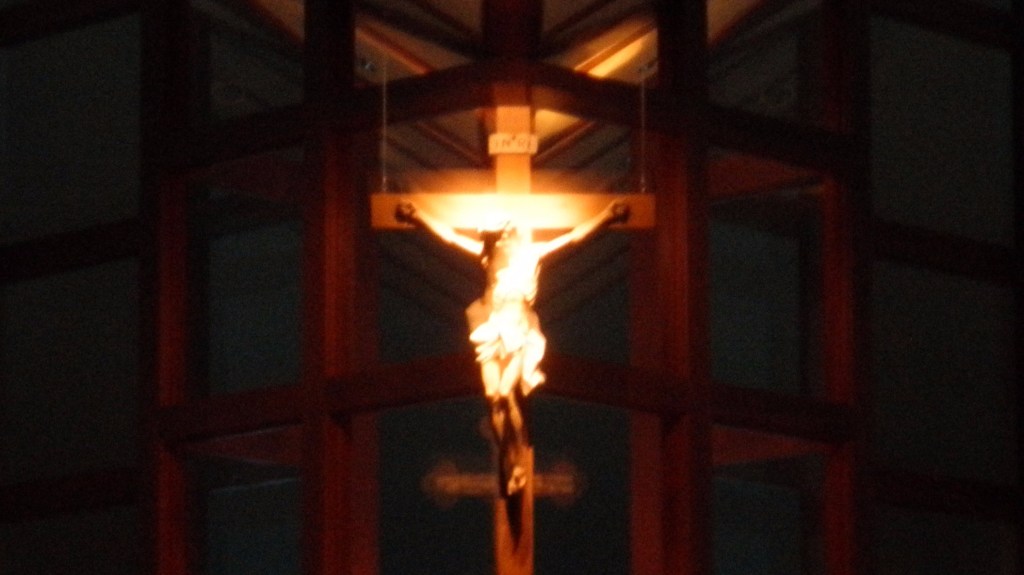
Photo: Crucifix in the sanctuary at St Peter Catholic Church, Jupiter, FL
Link for the Mass readings for Sunday, August 30, 2020

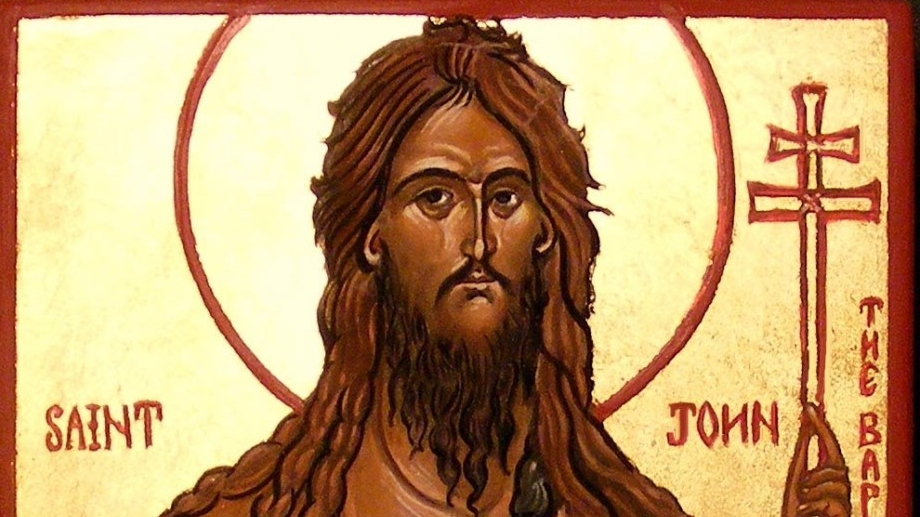
St John, guide us to follow the will of God with integrity as you did.

Herodias’ own daughter came in and performed a dance that delighted Herod and his guests (Mk 6:22).
Mark paints a word picture of a family: Herod, Herodias, and their daughter: ancient manuscripts differ as to whether she was Herod’s or Herodias’ daughter. Also, two times, in Mk 6:22 and 6:28, she is referred to in the Greek as korasion, meaning a young woman, as young as twelve years old (Donahue 2002, 198). The setting is the banquet hall of Herod, the tetrarch or prince of Galilee. His high officials, military commanders, and the elites of Galilee were all gathered to celebrate Herod’s birthday. This is a royal, opulent family.
The daughter comes out to dance for Herod. Her dance delights Herod and he grants her anything she wants. Following the counsel of Herodias, she asks for the head of John the Baptist on a platter. The reason for this request was because Herodias held a grudge toward John because he stated to Herod that it “is illegal for you to be married to your brother’s wife” (Mk 6:18). Herod was distressed at the daughter’s request but granted John’s death sentence to save face before his honored guests. The execution was swift, the head of John was brought on a platter, given to the girl, who then brought it to her mother.
This is not the ideal image of the family that we hopefully aspire to. John’s upbringing as we learn from Luke had a different experience. His mother, Elizabeth, and father, Zechariah, were devout Jews. They raised their son as a person of integrity and we can see from today’s reading of Mark the extent to which he would do so. John was willing to give his life, rather than compromise his principles. This stands in stark contrast to Herod Antipas who, with little contemplation about what he was doing, acted pretty quickly in giving the order to end the life of John in such a brutal fashion.
Could there be any two starker images of family life than in today’s Gospel? One family as corrupt, conniving, and malicious as can hardly be imagined and another as faithful, pure, and holy as can be hoped for. Families are not perfect, but most, if not all are a bit messy. We do the best we can to support and love one another. Hopefully, most of our families fall somewhere in between, and hopefully closer to, John’s family than to the Herod’s.
Even when life goes well, it can be difficult and challenging. The best we can do as a family is strive to accept and support each member for the unique gift and person we are, make it known that we are praying and thinking about one another, commit to be present and encourage one another, be willing to forgive one another, continue to communicate with one another, and even when we disagree, may we agree to respect one another.
No matter how bumpy the road of life gets or how high the waves of trials and tribulations toss us about, may we support each other to follow in the line of St John the Baptist to strive to be people of integrity. May we stand up for the dignity of ourselves and others no matter what. Even when we mess up, may we commit to accompany, love, and be there for one another.
For all families, and especially those who are suffering from abuse in any and all of its forms, on this his memorial day, we ask St. John the Baptist to pray for us.

Photo: Icon of John the Baptist accessed from: https://thejoecatholic.org/?p=3700
Donahue SJ, John R. and Daniel J. Harrington SJ. The Gospel of Matthew, in Sacra Pagina Series, vol. 1. Ed. Daniel J. Harrington. Minnesota: Liturgical Press, 2002.
Link for the Mass reading for Saturday, August 29, 2020

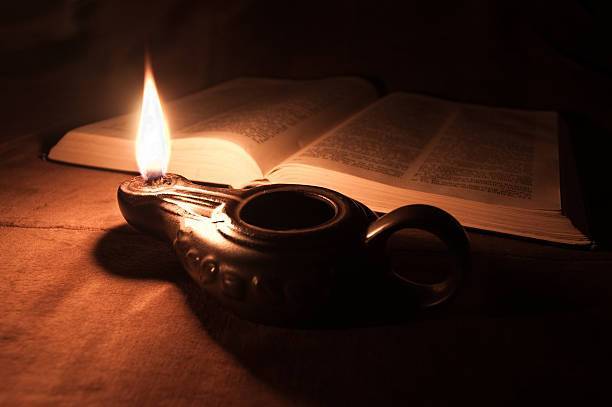
What is the level of oil in our lamps?

“The foolish ones said to the wise, ‘Give us some of your oil, for our lamps are going out.’But the wise ones replied, ‘No, for there may not be enough for us and you. Go instead to the merchants and buy some for yourselves'” (Mt 25: 8-9).
The above verse comes in the midst of Jesus’ Parable of the Ten Virgins. The bridegroom has been delayed in his coming so the virgins fall asleep. When they awake, five are prepared with oil for their lamps and five are not. From the first reading of this verse, we can be struck by the unwillingness of the wise not wanting to share their oil with the foolish.
The key to the lanterns being full or empty of oil had to do with the effort or lack thereof regarding those involved. All have been invited to the wedding feast, some are prepared and some are not. The oil in the parable may represent the invitation to relationship and discipleship with Jesus.
We cannot build a relationship with Jesus for others nor can others build a relationship with Jesus for us. No matter how full our lamps are, no matter how much of a blessing we find in our relationship with Jesus and our faith community, and no matter how we desire Jesus to have a relationship with our family members, friends, and colleagues, we cannot build that relationship for them. We cannot share our oil with them.
Also, if we do not have a relationship, or are resisting going deeper in discipleship, and we see others experiencing the joy, fulfillment, and fruits of a relationship with Jesus, and would like to have what others have, in the same vein, they can’t give us their relationship either. They cannot give us their oil. We need to be open to the invitation of the bridegroom, we need to be willing to develop a relationship, to do our part. Jesus knocks on our door, but if we do not open it and let him in, he will not impose upon our free will.
Two examples may help to bring the point home. In Acts 8:9-24 there is the account of Simon the magician and in Acts 3:6 there is an example from Simon Peter. Simon the magician witnesses the works of the Holy Spirit moving through Philip, Peter, and John. He offers Peter money to be able to do what they did and Peter strongly rebukes Simon. Money can’t buy love, nor can it buy the fruits of the Spirit experienced by those who have developed an intimate relationship with Jesus. Regarding Simon Peter, in the account from Acts 3:6, Peter comes upon a crippled beggar and states that he has neither gold nor silver, but what he did have he would give him: “In the name of Jesus Christ the Nazorean, [rise and] walk.” The man was healed and walked.
Simon the magician’s lamp was empty, because he spent years building himself up, putting himself first, and saw God’s grace as a means for his own self-aggrandizement. Simon Peter’s lamp had been filled with oil from having learned at the Master’s feet, having gone with him through the crossroads, the storms, his own failures, betrayals and humility, and repentance, so to be empowered by the Holy Spirit at Pentecost, and willing to give what he had received to others.
The bridegroom has invited us to participate in the wedding, the union of Jesus and his Church. The time of his return is not yet, but we need to be prepared. May we resist sloth and self-interest, and be willing to fill our lamps by being about the work of developing our relationship with Jesus and in the words of Mary, doing what he tells us!
We can’t fill other’s lamps, but we can invite, pray for, and model for others how to fill their own. We can do this by being present to those in our realm of influence where they are, assist them in their need, share our faith, offer to pray with and for them, invite them to fellowship, study, and worship, be a living witness, and offer the same invitation we have received to fill our lamps to be ready for the bridegroom’s return.
————————————————————
Photo: “Thy word is a lamp unto my feet and a light unto my path” (cf. Psalm 119:105).
Link for the Mass readings for Friday, August 28, 2020

The master has put us in charge to be faithful and prudent stewards.

“Who, then, is the faithful and prudent servant, whom the master has put in charge of his household to distribute to them their food at the proper time” (Mt 24:45)?
Jesus is calling us to be that “faithful and prudent steward” and the household we are to serve is our own homes, churches, communities, states, countries, and world. For the world is our home and those we serve are our brothers and sisters. Jesus’ call is a universal call to solidarity. We are all invited to be united in this effort for and with one another because we are all created in the same image and likeness of our loving God and Father.
God has created us, not as automatons or robots, or drone worker bees. He has created us as unique persons, one of a kind, distinct wonders that have never been nor will ever be again. Within our uniqueness, there is also the gift of diversity. We are not intended to be separate from one another, for God has created all of us to be interconnected, to be loved, and to love. What affects one, affects all.
Jesus clearly emphasizes this distinction in his parable, often called the Judgment of the Nations, when he stated: “Lord, when did we see you hungry and feed you, or thirsty and give you drink? When did we see you a stranger and welcome you, or naked and clothe you? When did we see you ill or in prison, and visit you?” And the king will say to them in reply, “Amen, I say to you, whatever you did for one of these least brothers of mine, you did for me” (Mt 25: 37-40).
Being faithful and prudent stewards means being aware of and willing to attend to the needs of the hungry, the thirsty, the stranger, the naked, those ill, and/or imprisoned, as well as so many others in need. How do we even begin to address the tremendous number of people who are hurting especially during this time of pandemic? First and foremost, we need to resist being limited by numbers, but instead meet and engage with one person at a time. We are to resist judging someone as other but instead see a brother or sister. It is helpful to also resist tribalism and nationalism, and reach out to fellow human beings in Jesus’ distressing disguises. We also need to be more aware of our prejudices regarding ethnicity, race, gender, and/or religion and instead see people in need.
Not all of us will be moved in the same way or for the same cause, but let us be open to God who will guide us regarding how and who best we can serve, help, reach out, and give of ourselves to others. When we have the humility to admit to and confess our prejudices, intolerance, or biases, where we have been unaware or indifferent, God can heal and transform our hearts of stone into hearts of flesh.
As we are forgiven and begin to heal, as we experience the love and mercy of Jesus, we can draw strength from him, begin to see the dignity present in one another, begin to see each person we encounter as God sees them and begin to take steps to accompany and love one another. We will be faithful and prudent stewards when we are willing to respect the dignity of each person we meet, in thought, word, and deed.

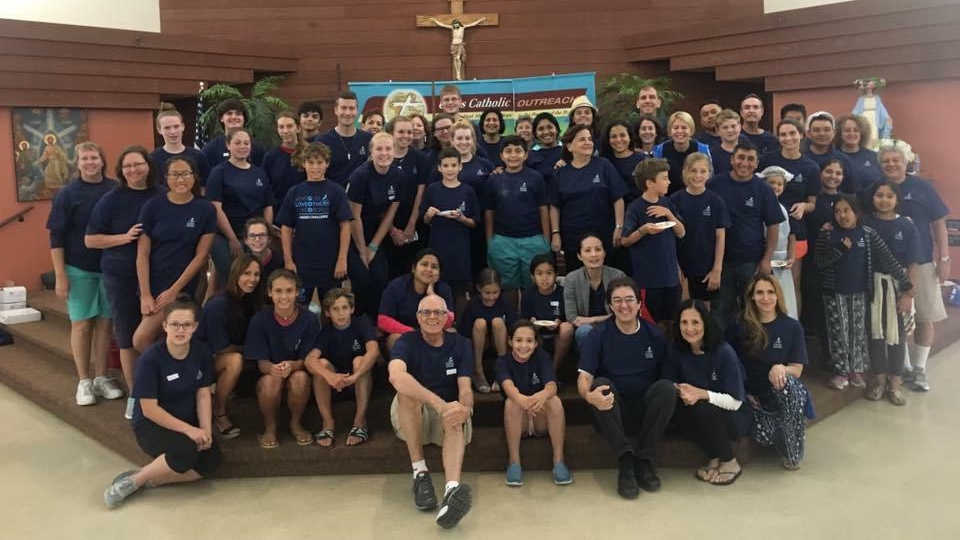
Photo: Participating in our first Hunger Challenge collaborative with St Peter and Cross Catholic Outreach a few years ago.
Link for the Mass reading for Thursday, August 27, 2020