holy-saturday
Ponder death this Holy Saturday, so that we may better appreciate life.
“So they laid Jesus there because of the Jewish preparation day; for the tomb was close by” (John 19:42).
“They” is a reference to Joseph of Arimathea and Nicodemus. Joseph appealed to Pontius Pilate seeking to receive his body for burial. The common Roman practice would be to leave the dead bodies of those who died on their crosses to be picked at and eaten by animals. This display further emphasized that if one decided to go against the Roman leadership, this would also happen to them. Joseph and Nicodemus were able to give him a proper resting place in an unused tomb near the place where he died. Up to this point, these disciples in secret now have come forward publicly to show their alliance with Jesus.
The place of Jesus’ burial, though at first glance was opportune because it was close to Golgotha, has deeper significance as does all of Scripture. For Jesus was buried in a tomb in a garden (see John 19:41). The image of Jesus being buried in a garden echoes the idea of Adam being cast out of the garden he was first created in. The image of Jesus as the new Adam, being buried in a new tomb, is not the end of the story but only the beginning.
This moment of Holy Saturday was the in between time of the death of Jesus until his resurrection. Death appeared to have the final word but as we know, Jesus experienced death, just as he was laid in the tomb, but he conquered death and rise again. The reality of this fact we will celebrate beginning tomorrow night as we celebrate the Easter Vigil and then Easter Sunday when Jesus indeed did conquer death and become the first born of the new creation!
May we give ourselves some time this Holy Saturday to be simple, to be still, to ponder the mystery of this moment in Jesus’ life as he experienced death and slept in that state of death, alone in a tomb. May this pondering of Jesus’ death help us to also reflect upon our own death. Doing so is not a morbid practice, but instead helps us to appreciate the gift of life that God has given us. Pondering our mortality helps us to acknowledge that our time is limited and that we are only passing through this life.
All of us will die. That is the truth. Facing and pondering that truth will help us to decide more intentionally how we want to live our lives, now and in the life to come. Instead of being governed by reactive thoughts, words, and actions, we can come to a place of peace and stillness, breathing, resting, receiving, and abiding in God’s love. From that place of experiencing and resting in God’s love, we can open our hearts and minds to the guidance of the Holy Spirit.
Through following the lead of the Holy Spirit, we are granted a path that will lead us to heal, be forgiven, and be restored to the original glory, to be transformed into the image and likeness of God that was intended from the beginning of creation. Jesus has opened up to us the possibility of returning to the new garden by undoing the sin of Adam that cast us out in the first place. Jesus’ obedience to and love of the Father we are invited to participate and share in. Are we willing to take his hand and follow him to where he will lead? This question as well as a few of the other points above are good to ponder this Holy Saturday.
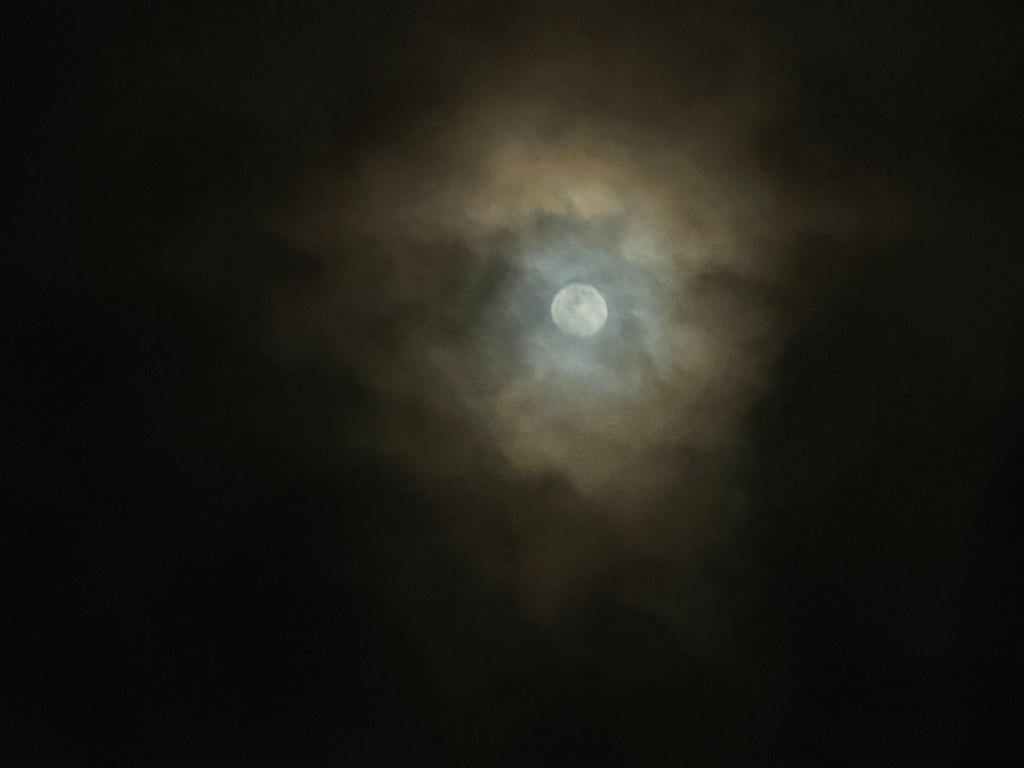
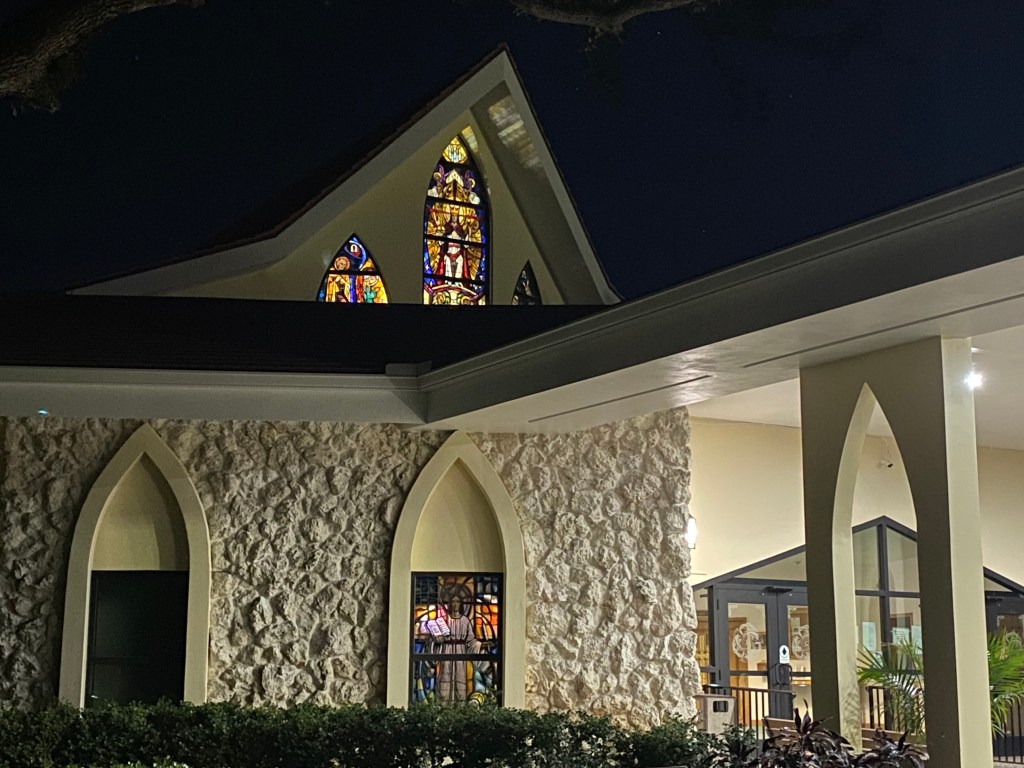
Photo: Even in the darkness of Holy Saturday, even in our darkest moments, the light of Jesus is present.
Link to the Mass readings for Good Friday to ponder on Holy Saturday
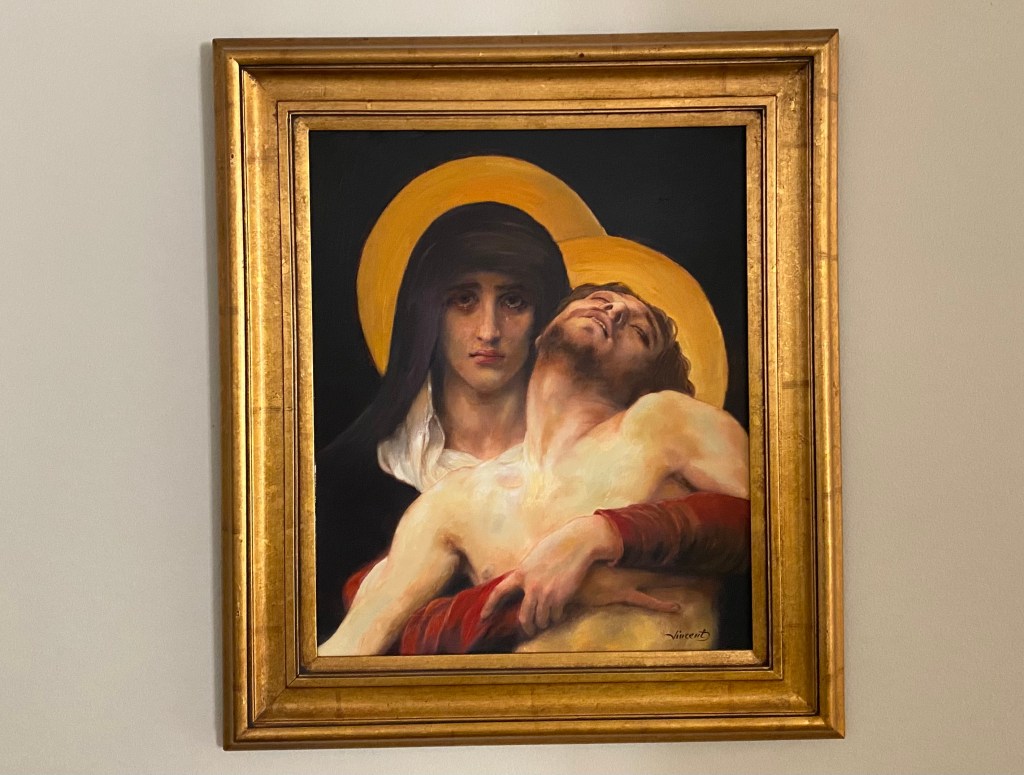
Jesus and Mary are with us in our experiences of Holy Saturday.
This is Holy Saturday. We remember how Jesus was in the tomb and wonder how the disciples of Jesus feel. Were their hopes dashed by the death of their teacher as they hid in fear that they might be next. Could he really have been the Messiah if he has died? Anguish, fear, doubts, and despair are heavy weights.
Some glimmer of hope though may come as they gathered and recalled what Jesus had said and taught. Peter, James, and John were especially privileged to have seen the transfiguration of Jesus. Jesus had raised Jairus’ daughter, the widow’s son, and Lazarus from the dead. Was Lazarus with them now? Could he have provided some possible hope that since he was raised, that Jesus may indeed rise again as he promised?
A powerful claim. But could it really happen?
Holy Saturday is that in between time. In between the death of Jesus and his resurrection. A place between despair and hope. All may appear to be lost, but then again there is the promise of Jesus. Did Mary and the Apostles trust him? Do we? As I shared yesterday, it is our pain and suffering that we carry into our Holy Saturdays. To heal, we need to be willing to carry those emotions that we would rather not experience and not deal with, because we might fear that if we do, we will be undone or that they will be too overwhelming. And yet, it is in taking that risk, entering into and experiencing our pain that we experience the comforting presence and love of Jesus. Jesus who experiences our pain with us as well as his Mother, whose heart was pierced when the centurion’s lance pierced her Son’s heart. And it is in experiencing our suffering with them that there can be a path to healing.
We often find ourselves in the same emotional maelstrom as did the disciples. We have heard that he is with us and that he loves us no matter what, but there is this period of dead silence. Holy Saturday is that time of waiting, that time of silence, and that time to draw deeper into believing even when we cannot see or experience with our senses. Holy Saturday is also a time to ponder and embrace the truth that it is not all about us. In looking beyond ourselves to the Passion of Jesus: his suffering, crucifixion, and death, our problems and sufferings may be adjusted with our focus and perspective on him instead of us.
Too often our minds tend to focus on the worst case scenario, and in times when we don’t feel or experience Jesus’ presence, we need to trust that he is not absent and that he has not abandoned us. Jesus is right by our side. We may not be aware because of our focus or he just might be challenging us to go deeper in our trust and faith in him. When we do, instead of feeling like we are sinking in the mud, we will come to find that our feet are set on solid rock, the Christ the Son of the living God.
Photo of a closeup painting of William Bouguereau’s, Pieta, hanging in the main conference room at the Our Lady of Florida Retreat Center, North Palm Beach, FL.
 Spiritual Stepping Stones