Will we resist doing evil and instead do good and save lives?

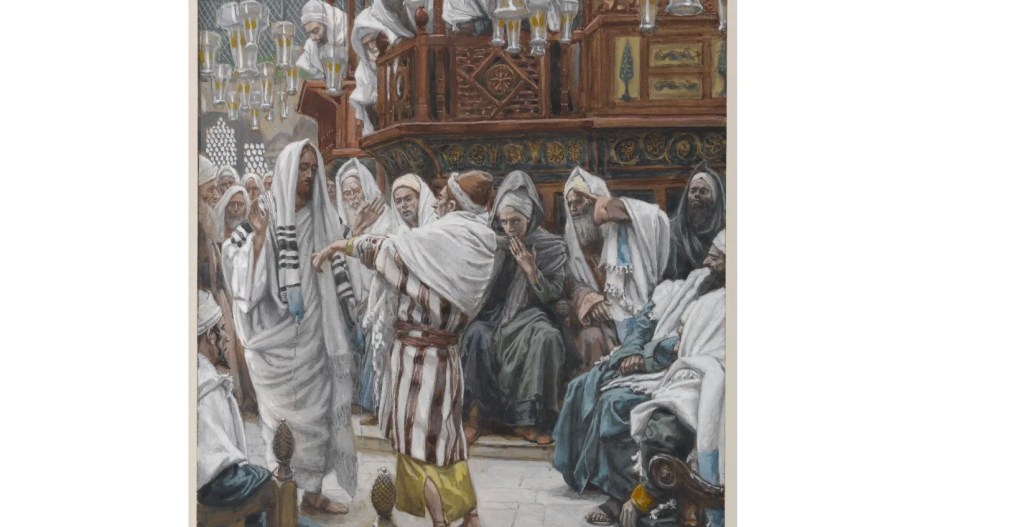
The scribes and the Pharisees watched him closely to see if he would cure on the sabbath so that they might discover a reason to accuse him (Lk 6:7).

This is an unfortunate and sad scene in the Gospel. What is even worse is that this is not an isolated incident for some of the scribes and Pharisees. They are often watching him closely not so that they may learn and come to know how to live their lives better, but to accuse him. Accuse Jesus of what? Of not honoring the sabbath and breaking the law of God. Yet Jesus has not come to dishonor the sabbath, he came to save.

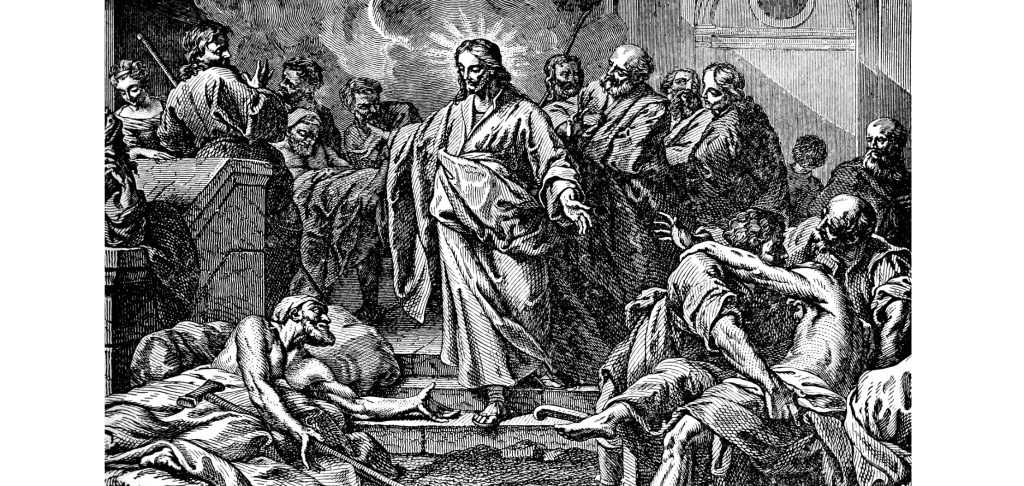
“Jesus the Savior (2:11) has clearly come to do good and save life. His opponents, however, have come to do evil and destroy life, hardly a fitting way to observe the sabbath” (Gadenz, 124))! There is quiet anticipation as Jesus calls a man with a withered hand to stand before him.

Jesus knows the hearts and minds of his would-be accusers, he also knows what is at stake regarding what he is about to do but because he is more concerned with the condition of the man and not his standing in the community. Jesus seeks to not to impress the crowd with this miracle, he seeks to express the will of God: “I ask you, is it lawful to do good on the sabbath rather than to do evil, to save life rather than to destroy it” (Lk 6:9)? Jesus did not wait too long for an answer but told the man to stretch out his hand. The man was obedient, did so, and was healed.

These two phrases coming from Jesus in today’s Gospel are not only good to commit to memory and meditation but to also put into practice, for they are foundational principles regarding how we ought to interact with one another. First, whenever we wonder whether we ought to help someone, we need to ask ourselves, “Is it lawful to do good or evil, to save life or destroy it?” If more of us ask this question, we might be more ready, willing, and available to help those in need. Would that our law makers ask this question as they are enacting laws.

Second, “Stretch out your hand”, is another phrase we can take to heart. Maybe we will not heal a man’s withered hand, but we can provide a smile, a cup of water, food, some money, our presence, volunteer in our places of worship and/or with groups who are already engaged in causes that we believe in. We can write to and impress upon our congressional leaders the importance of supporting the dignity of the people they represent, at every stage of development from conception until natural death.

We can learn a lot from St. Peter Claver, who left his home country of Spain to settle in Cartagena, one of the chief centers for the slave trade in the sixteen hundreds. He arrived with the sole purpose of taking care of the slaves from the moment they arrived in the port city under horrific conditions. He would immediately board and minister to those who survived the trip. Then as the West Africans were herded into nearby yards, he would walk among them and provide them with food, medicine, and the most calming salve of all, he assured and reminded them of their human dignity and God’s love for them.

We may not heal as Jesus did. We may not be called to leave our country to serve as St. Peter did. But we can do as St. Mother Teresa recommended for those people who appeared at the Mother House door in Calcutta. She encouraged them to go back home and begin with those closest to them. We can begin with our family and friends, in our work places and our schools, our places of worship and our communities. When we are willing to be still, to breathe, receive, rest, and abide in the love of God, we can share love we have received in the unique way that God calls us to do good and not evil.

We may not always be able to cure a withered hand, but we can certainly reach out a helping hand.

———–

Painting: “The Man with the Withered Hand” by James Tissot

Gadenz, Pablo T. The Gospel of Luke. Grand Rapids, MI: Baker Academic, 2018.

Link for the Mass readings for Monday, September 7, 2026

“You have to let her go.”

Sometime in mid-December of 2022 in the chapel of St. Vincent de Paul Regional Seminary, I knelt in the pew during my holy hour. I asked Jesus why I could not feel the love toward him that I felt for JoAnn. He said gently, “You have to let her go.” Then I sobbed.

Jesus was not saying I needed to forget JoAnn, or the memories of our twenty-three years together. I needed to let go of my attachment, of holding on to who she was, so that I could experience her as she is now with Jesus. She had died September 2, 2019, so just three years and a few months before that moment. As I type these words, it has been seven years since JoAnn’s death. In following the guidance of Jesus, slowly, I have been letting her go.

What has been priceless is that I still have the gift of wonderful memories, but also now the gift of short, but grace filled moments where she feels close. As I have grown closer to Jesus since then, as he becomes more primary in my life, I have experienced more of his love, and I have also felt closer to JoAnn as she is now.

To honor JoAnn’s seventh anniversary in heaven (I hope), I offer the words of Pope Benedict XVI that have provided me comfort. May they provide comfort for you too.

“Dear friends, the Solemnity of All Saints and the Commemoration of all the faithful departed tells us that only those who can recognize a great hope in death, can live a life based on hope. If we reduce man exclusively to his horizontal dimension, to that which can be perceived empirically, life itself loses its profound meaning. Man needs eternity for every other hope is too brief, too limited for him. Man can be explained only if there is a Love which overcomes every isolation, even that of death, in a totality which also transcends time and space. Man can be explained, he finds his deepest meaning, only if there is God. And we know that God left his distance for us and made himself close. He entered into our life and tells us: “I am the resurrection and the life; he who believes in me, though he die, yet shall he live, and whoever lives and believes in me shall never die” (Jn 11:25-26).”


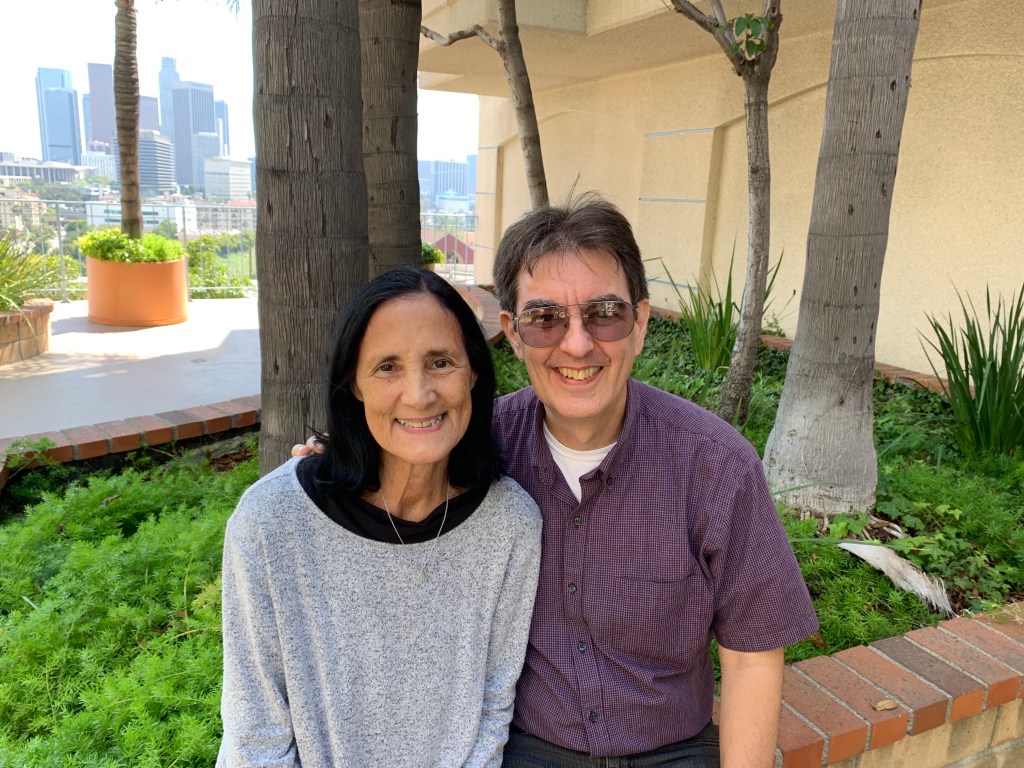
Photo: My heart still soars when I see your smile! Happy anniversary, my heart and my love!!!

Full address of Pope Benedict XVI General Audience Wednesday, 2 November 2011

Are we seeking to gain the whole world or eternal life?

There is a difference between the freedom of indifference, doing what we want when we want, how and whenever we want and the freedom for excellence which gives us the freedom to excel at some particular endeavor. I have a guitar in my closet that I have had since I was seven. I cannot play it like George Harrison, Eric Clapton, or Jimmy Page. I do not have the freedom to play it because I have only picked it up in spurts over the years.

I do have the freedom to be sharing these words with you as a priest because I have invested daily the time and energy, required disciplines and sacrifices to be ordained and to continue my practices as a disciple of Jesus beyond ordination.

If we seek the freedom of excellence to be proficient in anything, playing a sport, an instrument, singing, dancing, acting, writing, drawing, pursuing a career, having healthy relationships, being married and a parent, clergy, religious, consecrated virgin, disciple of Christ, we are required to make a commitment of time, discipline, and sacrifice. We will also be required to take risks, make mistakes, and to embrace the reality that we can continue to grow.

In any of the above examples and any you may think of, consistent time is needed each day. The most challenging part of any endeavor is to begin. Once we actually start, the next challenge is the discipline to stick to the system we have put in place to move toward our goal, no matter the distractions and temptations that may dissuade us. Attaining the freedom of excellence also takes sacrifice because to do anything means we are not able to do something else. During each step of the process, we risk making mistakes, not doing it right, and looking foolish. We experience frustration and impatience as we see ahead of us what we seek to accomplish, but the freedom to do just that seems so far out of reach.

Yet, with persistence and consistent effort, and asking for God’s help, we will begin to have brief experiences, breakthroughs in our area of pursuit. We will at times lose ourselves in the moment where we are not only able to play a series of chords, hit that note, make a move, nail a precision shot, or are involved in the joyful experience of engaged communication of mutual understanding, enter into moments of grace and consolation in prayer, we become one with those actions.

A key additional piece is that discipline on our own effort is not sufficient. We need God’s help in everything we do, and if following him, seek his will before we engage in what we seek to do. What may appear to be good may in fact not be. What God offers for us, he will give us the strength to complete. He will strengthen us with the discipline requires. For apart from him our efforts are in vain, and we cannot do anything. With God all things are possible. From this context from our personal experience of life, we might have a better understanding of the demands of discipleship.

Then Jesus said to his disciples, “Whoever wishes to come after me must deny himself, take up his cross, and follow me. For whoever wishes to save his life will lose it, but whoever loses his life for my sake will find it. What profit would there be for one to gain the whole world and forfeit his life” (Mt 16:24-26)?

Those of us who seek to be disciples of Jesus will need to invest our time daily, be willing to be disciplined and to sacrifice. This is the same as any other endeavor we seek to be free to pursue. Developing our relationship with Jesus is to be our first priority. All else flows from our losing our life in Jesus, mind, body, and soul. We can have all the power, prestige, fame, material gain, pleasure at the tips of our fingers, we may have gained the whole world, but if our fundamental option is our self and our own pride, we will have in actuality forfeited our life, those pursuits will be disordered. God is our fulfillment; nothing else can satisfy the deep yearning for communion with him that we experience in the depths of our soul, whether we are consciously aware of that truth or not.

Finding our life, being true to who we are, free of that which is imposed on us from without and within, is what Jesus means by taking up our cross. We are to let go of our identity, our masks of who we pretend to be if we are to be free to live a life of integrity and authenticity. Jesus refused the identity of the messiah that others projected upon him. He was not to be a leader of power in the worldly sense, not a warrior king, but a suffering servant, a king of peace.

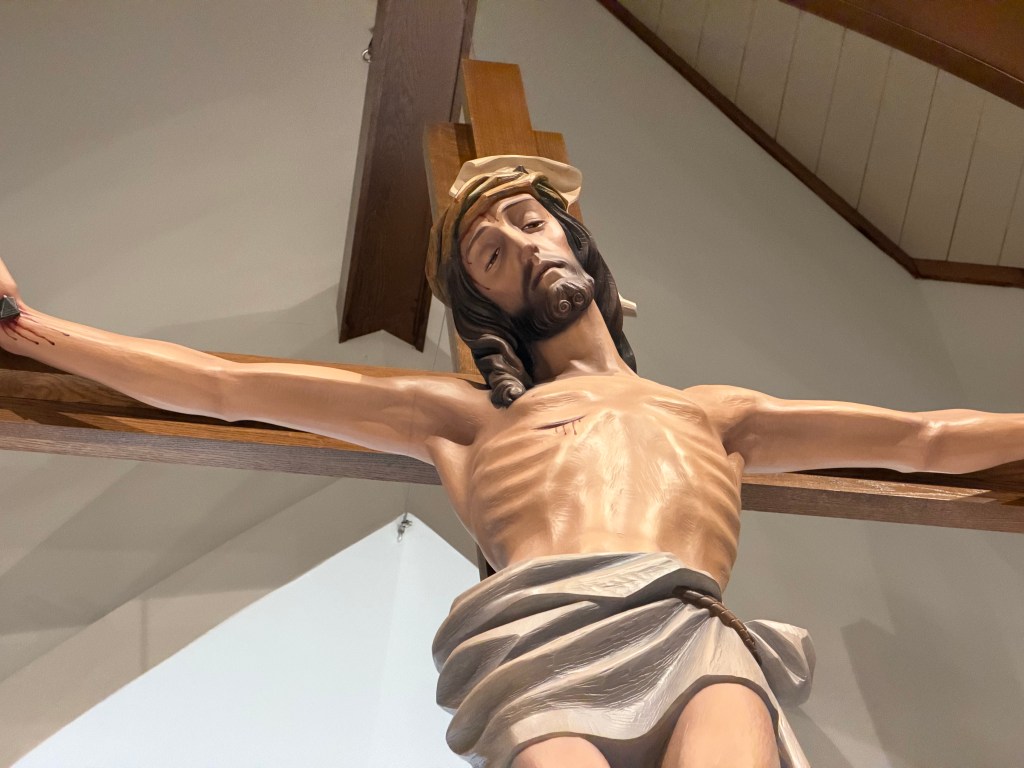
Jesus was nailed to the cross, lifted up, and experienced the pain, suffering, and sin of the world, and face death head-on, and conquered even death itself. He did so that we might have life and have it to the full. As St Irenaeus is believed to have written, “The glory of God is the human being fully alive.” What God wants for us is what we want for ourselves deep down. We just need to have the ears to hear, the eyes to see, and the will to risk embracing the wonderful depth of God’s love, resting and abiding in his love, so that we may love others as we love ourselves. By doing so we will experience the freedom for excellence to be who we are called to be and experience the joy and fulfillment of being fully alive!

—————————————

Photo: Turning away from the things of this world and to the things of heaven will lead us to our freedom.

Link for the Mass readings for Sunday, August 30, 2026

“Where your treasure is, your heart will be.”

Jesus said to his disciples: “Do not store up for yourselves treasures on earth, where moth and decay destroy, and thieves break in and steal. But store up treasures in heaven, where neither moth nor decay destroys, nor thieves break in and steal. For where your treasure is, there also will your heart be” (Mt 6:19-21). Jesus helped his disciples then and is helping us today to be aware of the reality of our world. All that exists is finite and material. Each thing, each being, has a beginning and an end. We need to resist the temptation to be attached to anything, even to our family and friends, because in this life and this side of heaven, nothing and no one lasts forever.

Adopting an attitude of non-attachment to material things can be freeing as long as we do not embrace the opposite extreme of placing no value in created things, thinking that we can destroy and abuse the environment, exploit or objectify each other for our own ends. We can also be tempted to see all things that are not spiritual as corrupt and bad, even our material reality as human beings. The idea that our soul is imprisoned until we die. This extreme will not bring us happiness, joy, or fulfillment either.

Living a life directed by Jesus’ teachings will help us to embrace a more balanced life of recognizing that much of what is material and finite is good, as well as very good, and yet each has a time and a season. We have the opportunity and invitation to be participants in God’s eternal plan of salvation, and we can embrace and enjoy the wonders and gifts of his creation when we don’t hold onto the things of this world too tightly and allow our relationships and activities to be properly ordered by God’s will.

We need to resist grasping for and clutching anything material and finite. We will then be freer to embrace and follow the steady movement of the Holy Spirit, which is ever fresh and new. The Holy Spirit invites us to deepen and grow in our relationship with our loving God and Father and one another. Refusing to fill the deepest core of our being with the things of this world will help us to be less distracted and diverted from placing God as primary.

When we embrace the reality that our time here on this earth is limited, we will be less apt to take each other and each moment for granted. We will realize how precious life is, show greater appreciation for, as well as be more present, understanding, kinder, supportive, and patient with one another. We will be freer to let the petty things go and embrace the love that Jesus offers us, so that we will have more love to share with one another through thick and thin.

An imminent death helps this reality to become front and center. Knowing that JoAnn only had months to live – at best, was a gift. We embraced a greater appreciation for each moment we had together. What was even more foundational was that even before her diagnosis, we had already begun a journey together of deepening our relationship with Jesus. He helped us through the bumpy beginning years of adjusting and adapting our lives, through learning balance in the busy years, the financial challenges, life with kids and then teenagers, empty nesting, diaconate formation, and everything in between. Each year was a gift of growing closer to God and each other. A lot of the material things of this world became less important and time together became more important.

Dealing with death is never easy. Trusting that Jesus opened up heaven for us in the humanity he assumed and that he conquered death in his resurrection, helps when that reality moves from the head to the heart. Instead of denying or keeping death at a distance until faced with our own or another, we will be better off by engaging the reality of death more intentionally. Doing so is not a dive into morbidity but an invitation to define who and what is truly important in this life. Pondering death with God helps to live life more fully with the time we have left. Storing “up treasures in heaven where neither moth nor decay destroys, nor thieves break in and steal” (Mt 6:20), helps us to be free of holding too tightly to the things here below and to come to a greater appreciation of what is truly important.

———————————————————————–

Photo: Not clinging to JoAnn as she was dying, nor after she had died has helped me to experience her love in a deeper way that has never died. Happened to check and this picture was taken exactly 7 years ago today! Little did we know we had 93 days left together this side of heaven.

Link for the Mass readings for Friday, June 19, 2026

Jesus does not ration his gift of the Spirit.

The question that arises and is foremost regarding Christianity above all else is, “Who is Jesus?” How this is answered has a lot to do with what we believe. Biblical scholars debate whether today’s passage, John 3:31-36 is a continuation of John the Baptist talking with his disciples or these are an insertion by John the author. No matter who is the source of these points of concern, the goal is coming to understand and to believe that Jesus is the one who “comes from above” and the one who “comes from heaven is above all”; he “testifies to what he has seen and heard” and he is sent by God to speak “the words of God”; he is also generous in that he “does not ration the gift of the Spirit”; and the Son is loved by the Father and God “has given everything over to him”.
Each of these phrases are revealing the truth that Jesus is the Son of God who has come from above to reveal the truth about his Father and that he is able to do so because he has seen and has an infinite relationship with his Father. Jesus preaches the Gospel, the Good News, that God loves us, that he seeks and has always sought, to be in communion with us, his created beings. Jesus has come to reveal the love of the Father and that his love is unlimited.
The proclamation that Jesus is the Messiah, is not just revealed in the Gospel of John, but each of the three other Gospels, Matthew, Mark, and Luke, as well as the other epistles of the New Testament. Jesus, as the Son of God, is also the key to unlocking the Hebrew Scriptures, and we can see how the Torah, the Prophets, and the Writings all point to Jesus as well. Jesus shared this outline of salvation history with Cleopas and the other disciple on the road to Emmaus, such that their hearts were burning within them while Jesus opened the scriptures to them (cf. Lk 24:32).
John the Baptist got it and the Apostle John and the other apostles eventually got it. They came to understand that Jesus is the Son of the Living God and that he offers a model for us to follow, but more than that, Jesus empowers us with his very life. This was a key point of surrender for John the Baptist when he shared with his disciples, the truth that, he, they and we are all called to ascribe to if we are to grow in our faith: “He must increase; I must decrease” (Jn 3:30). May we spend some time in quiet reflection today by pondering the phrases offered to us regarding who Jesus is. Which one, two, or do all of them call to you?
“The one who comes from above is above all.”
“The one who comes from heaven is above all.”
“He testifies to what he has seen and heard.”
“For the one whom God sent speaks the words of God.”
“He does not ration his gift of the Spirit.”
“The Father loves the Son and has given everything over to him.”
When we have finished, what is our response? Do we disobey or discount that Jesus is who he says he is or do we “accept his testimony” and “certify that God is trustworthy”? If we “accept his testimony”, are we willing to decrease, such that he will increase his influence in our lives? Do we believe that Jesus is the Christ, the Son of the Living God?
Reading, meditating, praying with and listening to the Gospel readings, helps us to encounter, sit at the feet of, and be in the presence of Jesus who teaches us in our time as he did with each generation of believers from the time of the apostles to our present age. Are we willing to be still, listen, and come to him daily? If yes, then in the words of Pope Benedict XVI, we will meet the Risen Christ and “know him intimately by the power of the Holy Spirit…” and have “actually touched him” so that we “can witness to him” (Martin and Wright, 79).
Let us not follow the lead of the rich man who walked away sad from his encounter with Jesus. May we instead follow the lead of the Apostles, Mary Magdalene, the woman at the well, Cleopas and his companion, surrender our lives to him, and so be loved, forgiven, healed, transformed, that we may be witnesses of Jesus’ joy.

Photo: Jesus did not ration his love, he gave all of himself, holding nothing back, not even his life, so that we may know him and his Father intimately and so experience the outpouring of their love shared between them, the Holy Spirit.
Pope Benedict XVI, “Homily,” May 7, 2005 found in: Martin, Francis and Wright IV, William M. The Gospel of John. Grand Rapids, MI: Baker Academic, 2015.
Link for the Mass readings for Thursday, April 16, 2026

Are we willing to allow Jesus to reveal to us our darkness and sin?

“[Y]ou will die in your sin” (John 8:21).
Jesus continued his discussion with the Pharisees but they still remained on different planes of understanding. Jesus coming from above and the Pharisees remaining below. Jesus came to meet us in our humanity to free us from what binds us to the physical realm alone. For God created man in his image and likeness and although we retain our image, we lost our likeness when Adam and Eve disobeyed God’s command: “And the LORD God commanded the man, saying, ‘You may freely eat of every tree of the garden; but of the tree of good and evil, you shall not eat, for in the day you eat of it you shall die'” (Genesis 2:16-17).
In establishing this first covenant with Adam, God sought to invite him to not only participate in a relationship with his very own creation, he sought to have man perfected through obedience and participation in God’s life. When Adam and Eve disobeyed God, through their sin, suffering and death entered the world and was made worse in their lack of willingness to repent. The separation from the source of any living, mortal being leads to death. Separation from God means death.
God did not give up. He continued to seek to re-establish a relationship and covenants with his children, seeking to do so through Noah, Abraham, Moses, and David, until the appointed time when he sent his Son to help to shine the light on our fallen world. The light to reveal the way back to and restore the glory and likeness to the Father that all of humanity was created to participate in.
Some of the Pharisees still did not understand what Jesus was telling in being the Son of God whom the Father has sent. He continued to reveal his intimate knowledge of the Father so that they could see, believe, and come to know the Father as he does. Jesus also gave them a clear choice that those who continued to reject him were choosing darkness and sin over the light and life of Christ and so would die in their sin, by their own choice. Those who believe in Jesus will become one with him in his divinity. They will not only continue to share in the image of the Father, but they will also be restored to experience their likeness of him.
This is the holiness we are all called to participate in. We are called to repent and renounce the attachments to the things of this world. Jesus shows us our deepest hunger, which is to grow in our relationship with him and his Father and experience the love of the Holy Spirit. Jesus’ consistent obedience, doing nothing on his own, saying only what the Father taught him, and always doing what was pleasing to his Father was a constant untying of the knots of Adam’s disobedience and a constant growing in intimacy that we are invited to participate in.
Jesus’ sharing of this intimacy with his Father started to shine through the darkness. The beautiful ending line of today’s gospel account is that while at the beginning some of the Pharisees were still struggling to understand him, some now began “to believe in him” (John 8:30). The question for us to ponder is, are we beginning to see and believe, so we can repent from our sin, and live with God now and into eternal life?

Photo: Slowing down helps us to see our dark sides as well as the light within us.
Link for the Mass readings for Tuesday, March 24, 2026

With Jesus no one is last.

Has there ever been a time when you were picked last for the team, whether on the playground, P.E., or gym class? I remember being on both sides, being picked last, and picking others to join and having to pick someone last. I preferred being chosen last rather than having to be in the situation to choose a classmate last. In our Gospel reading today, Jesus comes upon a man who has experienced an even worse situation.

This man had been in need of healing for thirty-eight years. Apparently, there was a limited time to get into the waters of the pool at Bethesda to experience the healing properties that it afforded, for each time the water stirred, while the man moved to get closer to and enter the water, “someone else [got] down there before” him. This is worse than getting picked last, as he doesn’t in a sense even make the team!

But with Jesus, the last shall become first. Key ingredients are belief, faith, as we heard in yesterday’s account and also along with belief and faith, is there a willingness to be healed. Jesus asks the sick man, “Do you want to be well?” When the man in need of healing explains the limitations he has experienced in the past regarding getting to the pool, Jesus does not hesitate. Jesus commands him to rise, pick up his mat and walk. The man is no longer the one picked over, the one ignored, the one unseen. The sick man encounters Jesus and is healed by his word.

Jesus approaches us in the same way that he encountered the sick man by the pool of Bethesda in today’s Gospel. He meets us in our need, where we are, no matter our station in life. He does not leave us on the outside looking in, he does not leave us wondering if we are loved or if we belong. He comes close and if we are willing, to forgive, heal, and empower us to be about the mission given to us by his Father. Jesus gives meaning and purpose to our lives. Each and every one of us is a gift from God, a beloved daughter or son, and we have been graced with something to contribute, something unique to help make the kingdom of God a reality.

May we enter a place of silence and stillness, without and within. Breathe intentional and slow, settle into a rhytm with no or little distractions, breathe in deep and exhale a few times more, one deep breath for each person of the Trinity, and then close our eyes. How do we see ourselves in our present moment, what is happening, what are we experiencing? As we take a few more breathes, notice Jesus walking toward us.

Jesus is present, right here and right now, for each of us if we are willing to be still long enough to engage with him. There are no boundaries, no limitations, only those we impose on ourselves. We are no longer misunderstood, left out, or picked last. Jesus has come close to be with us in this moment, to embrace us, and help us to really know that we are loved, heard, and we belong in the kingdom of God.

————————————————————————-

Painting:”Do you want to be well?” If yes, then continue to breathe, receive, rest, and abide in God’s love.

Link for the Mass readings for Tuesday, March 17, 2026

Jesus challenges us to follow him, will we follow?

Jesus has been on a whirlwind tour since beginning his public ministry. Daily he has been healing the sick, casting out demons, teaching with authority, and the number of people continue to gather and press in around him. The authorities have also taken notice are most of the scribes and Pharisees are not pleased with this new upstart rabbi, claiming to preach not from the authority of any rabbi he may have studied with, but on his own. Not only that he is making covert claims and practices that place him on equal ground with God. Not only has the leadership of Jerusalem taken notice, his family from Nazareth have as well.

Jesus has also just called the twelve, representatives of the new Israel. He has returned to the house of Peter and Andrew for a respite. As has been happening, people flock to the home because of their unique needs. The numbers press in with such demand that they made it impossible for Jesus and his disciples “even to eat” (Mark 3:20).

When his relatives heard of this they set out to seize him, for they said, “He is out of his mind” (Mark 3:21). What exactly causes his family to think that he is out of his mind? Is it that Jesus has called Apostles, is it that people are following him in such great numbers to come to be healed, is it that they hear of the growing threat from leadership? Now seeing for themselves the numbers gathering, they don’t get it.

There are many speculations about the “hidden years” of Jesus referring to the fact that there is no mention of Jesus in the gospels from the moment he is twelve years old when Joseph and Mary lose him, until he is about thirty and beginning his public ministry. There are wild speculations about what happened in those unrecorded years, but accounts such as this one support the idea that nothing special happened during that time. Jesus led an ordinary and very simple life and that is why nothing is written.

This could be the reason why his relatives are thinking that he is “out of his mind.” How can this simple carpenter all of a sudden be getting all of this attention? Who does he think he is? Does he think he is better than us?

It also reveals, as we have been seeing with the scribes and Pharisees, and possibly now with Jesus’ relatives, that when we get stuck in our routines, grind ourselves into a rut, and find our definition and security there, we feel safe only in our comfort zones, and that stunts our growth and maturation.

Jesus is a challenge. One of the biggest challenges that he offers is to step out of our comfort zones. We can dig in our heals or trust him and take a risk. Many of Jesus’ relatives as well as the scribes and Pharisees, unfortunately dug in their heels. They were not only unwilling to see who Jesus was, they were not willing to answer his call to follow him as the apostles did.

Jesus, as he shared when he offered the image of the new wine skins, challenges us as well, to be open to the leading of the Holy Spirit. He challenges us not to settle, and he offers to reveal to us the reality that many of us are existing in a chronic state of fight or flight and in perpetual reactive mode. We have not been created to merely survive. God created us to thrive and embrace the gift of our human existence with consolation and joy.

Jesus is inviting us in this moment to breathe, slow and deep. He is inviting us to stretch a bit and to take a risk, to take a step or two out of our comfort zones. Where might that lead? Will we follow Jesus’ call to come and follow him or dig in our heals as well? When we follow Jesus, it will get bumpy, we will be challenged, but following Jesus will lead to our freedom.


Photo: Sitting at the feet of the master USML, Mundeleine, IL.

Link for the Mass readings for Saturday, January 24, 2025

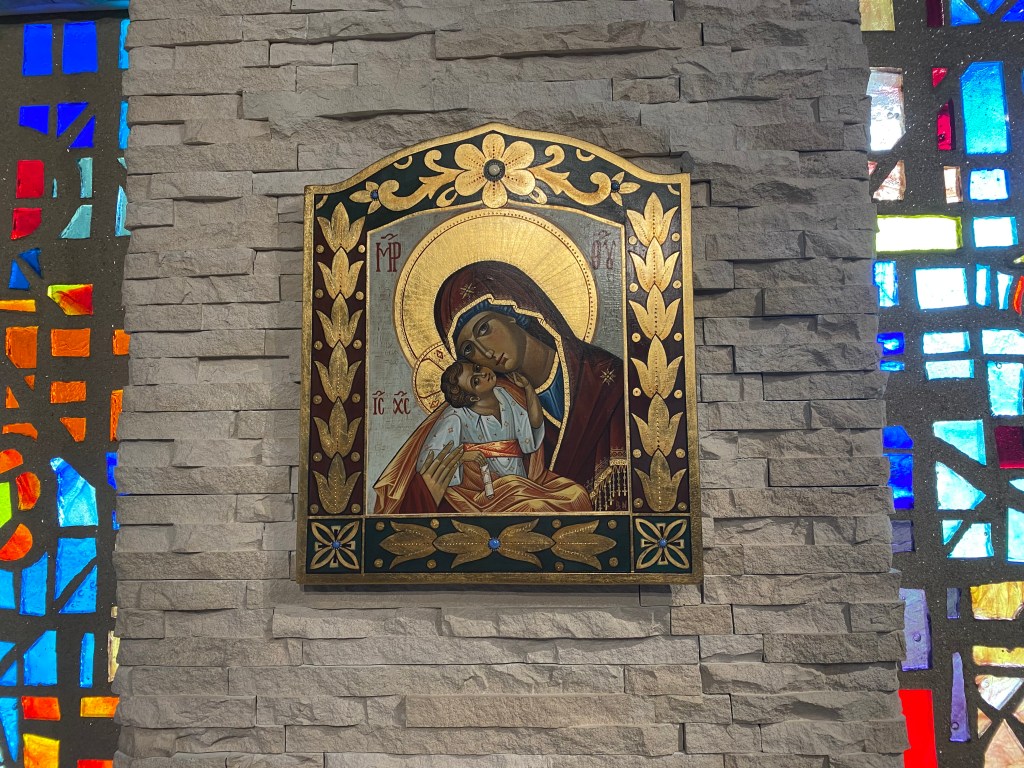
Theotokos! – We are invited to ponder.

Mary offers us a wonderful gift through the words of Luke as we begin the new year together. “Mary kept all these things, reflecting on them in her heart” (Lk 2:19). Gabriel shares with Mary that she will conceive a child through the power of the Holy Spirit. Her relative Elizabeth, past childbearing years, is six months pregnant when Mary and Elizabeth meet. In their encounter, John leaps in the womb of Elizabeth. The shepherds convey the message they received from the angels that Mary’s baby is the long-awaited Messiah. Simeon and Anna offer prophetic confirmation that Jesus is the Messiah.

These are the events we have been hearing or reading about again during Advent and this Christmas Octave. May we, like Mary, also ponder them, not to just read or listen and move on. The Church at her best has followed the model of Mary’s reflection, pondering, and meditating upon what these words mean and has come to call this day the Solemnity of the Blessed Virgin Mary, the Mother of God. This title says more about Jesus than it does about Mary. This is the teaching that the Church Fathers confirmed during the council of Ephesus in 431 AD:

Mary is the Mother of God, in Greek – Theotokos – the God-bearer.

From the pondering of Paul we receive his words, “God sent forth his Son, born of a woman” (Galatians 4:4). Paul did not say, born of man and woman but of a woman. The second Person of the Trinity was sent by his Father through the overshadowing of the Holy Spirit and was conceived in the womb of Mary. Jesus is the Son of God in his divinity and the son of Mary in his humanity. He remained fully divine as the second Person of the Trinity and the Holy Trinity was not diminished in any way as he developed as a human being in the womb and was born of Mary. This truth and reality is the Mystery of the hypostatic union: Jesus is one divine person subsisting in two natures the human and divine.

Theological insights such as Mary being the Mother of God and the hypostatic union of Jesus, are easily missed or worse dismissed if we conform ourselves to the present age of instant gratification, instant access, surfing, swiping, absorbing sound bites from social media platforms and amassing information overload. These technological avenues along with the growing influence of AI can be one more distraction, diversion, and temptation that can lead to horrific outcomes or if we slow down, discern well and allow ourselves to think critically and prudently, we can experience some benefits.

If we still read books, do we do so with pencil and highlighter in hand, take notes and go back to those points underlined, highlighted, and/or annotated and ponder the insights we have received, and then put them into practice? Or do we just have a moment of pause and say hmm, interesting, and then move on to the next page, paragraph, and book, seeking more?

Let us begin the first day of the new year by taking a few deep breaths, allow ourselves to stop before getting back on the roller coaster of chaos and chronic stress, and allow ourselves to follow Mary’s guidance, and ponder. We can reflect on a word, a phrase, or a short statement that we write down and return to it often. The phrase could be as simple as a paraphrase from today’s reading: Mary pondered these things in her heart.

We can ponder a mystery of Scripture that touched us at some point in our lives and see what the deeper relevance to our lives God has invited us to experience when he moved our hearts and minds to carry this memory. We can go to today’s reading, read it again a few times and allow the Holy Spirit to overshadow us so that Jesus made be revealed present and comfortable awaiting our waking to his presence.

This reality can be deepened by meditating on one word such as: Theotokos, expressing the truth that Mary is the God-bearer, the Mother of God, and what that means to us. How can we be Theotokos? We can meditate on a picture like the one I posted with this reflection, one you may have on the wall or a precious moment on your phone or a dusty untouched photo album.

If we seek to live a life of joy, fulfillment, and meaning in 2026, we would do well to follow Mary. Following her lead would entail pondering more, slowing down, and reflecting on life, on what is important, what has value, where we are putting our time, energy, and effort, and recognizing where we do not follow God and where we do welcome God into our lives. We can reflect upon where we resist and where we follow his will.

Reflecting upon our lives helps us to move away from the automatic pilot of survival mode and experience more intention and agency. Otherwise, we may allow ourselves to float along through another year indecisively or stagnantly with indifference or cynicism, merely reacting to situations that arise, or just plodding along in survival mode or merely bored and listless. Being still can be scary because as we do so, our fears, our past hurts, and our loneliness can come to the surface.

If so, that is a gift. We are human and in experiencing our emotions, we can heal. When we experience them with Jesus whose celebration of his incarnation we have been experiencing, then there is a path lit by the light of his love that reveals a way where in the past we thought there was no way, no hope. In an intentional act of slowing down and even coming to a complete stop, the Holy Spirit can overshadow us in these very real emotions with his love, so we can begin to heal and transform beyond merely existing and set a healthier course of being more alive and grateful for the gift of our lives.

Hand in hand with Jesus and Mary, we can face and embrace our fears, and heal from our wounds. Surrendering and conforming our lives more to the life and love of Jesus, we will realize that we are not alone, and so can build more authentic and intimate relationships. We can act more decisively and with greater clarity, and experience more fully what we are here for, to bring a little more tenderness, mercy, understanding, forgiveness, and love to the many others around us who are also wounded.

May 2026 be a wonderful new year of healing, joy, and fulfillment, as we, like Mary, come to experience God’s presence in the silence of our hearts, his love that he seeks to embrace us with, so that we may become a people of faith, hope, and love in contemplation and action. Mary Mother of God, pray for us.

Here is a blessing to receive and ponder for us all for today and each day of this year. May “the LORD bless you and keep you! The LORD let his face shine upon you, and be gracious to you! The LORD look upon you kindly and give you peace!” (See Numbers 6:24-26)

————————————————————————————

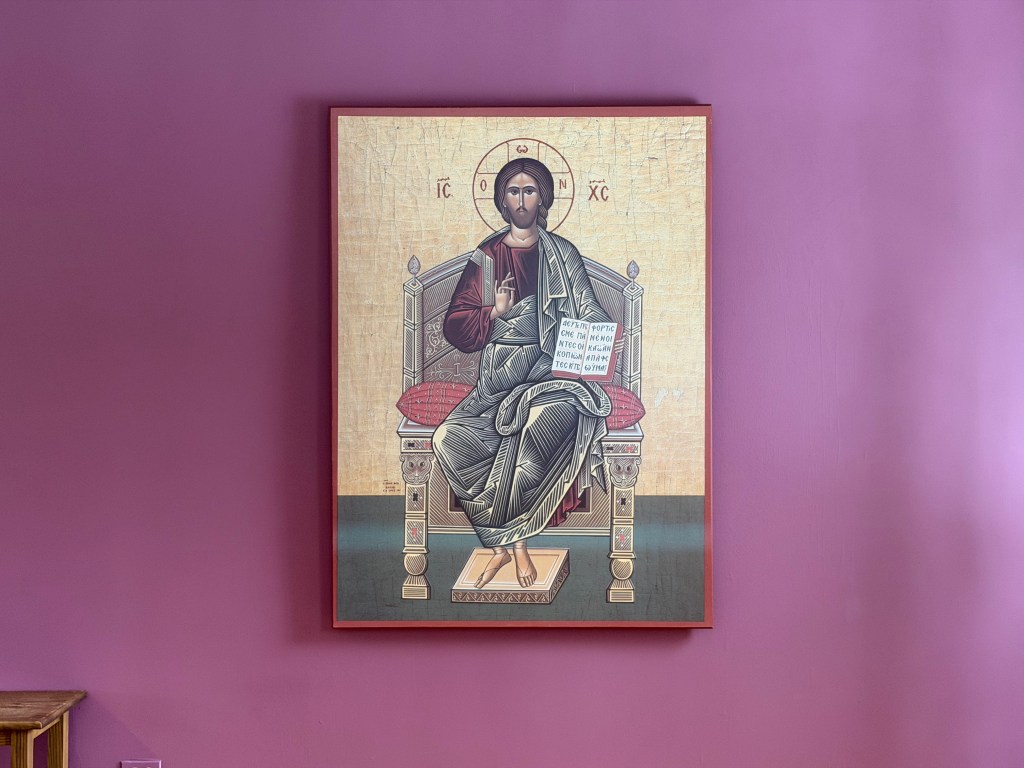
Photo: My favorite icon of Jesus and Mary, St. Mary’s Chapel, St Vincent DePaul Regional Seminary, Boynton Beach, where I was blessed to spend many hours reading, pondering, mediating, praying, and healing.

Link for the Mass readings for January 1, 2026

With Jesus we can live more fully now and better prepare for eternity to come.

“Heaven and earth will pass away, but my words will not pass away” (Lk 21:33).

Jesus is emphasizing here the soundness of his parable of the fig tree and its allusion to the fall of Jerusalem which would happen within this generation or forty years. The fall of Jerusalem would indeed come in 70 AD. The great temple in Jerusalem would come down and this time not be rebuilt.

All that exists and that we know will pass away eventually because all things are finite, they are limited and material. The readings of this week repeat the same theme that we are not to place our hope and trust ultimately in the things of this world. The longer we live, the more we will experience loss, even the death of those closest to us. I remember my maternal grandfather share with me when he was around ninety years old that most of the people he grew up with were no longer alive.

All that which is physical and finite will pass away, but the words of Jesus will not pass away. Jesus’ words are life. He is God, the second Person of the Holy Trinity. He is the Logos, the Word, the very reality of God. Hearing his word is not enough though. Once we hear his word, we are to then mediate, pray with, and ponder his words, put his words into action and practice them in our lives. In doing so, Jesus becomes one with us in our humanity and we, one with him in his divinity. In God’s time, we will begin to bear fruit. We will become like the fig trees when their buds burst open.

Momento Mori is the Latin phrase that means, remember you will die. Accepting the reality of death and contemplating on our own deaths is not a morbid exercise when we enter this pondering with the end goal in mind that we will be one day be with God for all eternity. Also, those who contemplate their deaths more regularly live their lives more fully now. When we practice our awareness of death, we better appreciate our and the lives of others  more because we come to see the fragile nature of our human condition.

Contemplating our death from time to time, also helps us to determine who and what is important to us. Dr. Leo Buscaglia, a professor at USC, while he was still alive had assigned his students an invitation to imagine that they had one week to live. They were to come up with a list of what they would want to do for that week and with whom they would want to spend it. After they turned in their assignments, Dr. Buscaglia then returned the papers and said, “Why not live this way now? Why do you have to wait until you are dying to start living your life more fully?”

Jesus invites us to resist the temptation to avoid uncomfortable situations as well as to resist clinging to wonderful experiences once they are gone. This healthy indifference helps us to experience the present gift of the moment where we will experience God and hear his guidance more clearly. Jesus helps us to live in this way because he lives in the eternal present. We are going to die someday, putting off until another day may be too late, so let us start living now.

Jesus, please help us to acknowledge that not only are we going to die, but that we need to die each day, and be free of curving in upon ourselves. Help us to open ourselves up to your promise of eternal life. Help us to discern the path you would have us to walk, guide us through our challenges and trials, and help us to bloom where we have been planted. When we listen to, meditate and pray upon, and put your words into practice, we will live more fully and experience your peace, joy, and love more deeply.


Photo: Slowing down to God’s pace helps us to hear and follow his direction, for his words will never pass away.

Link for the Mass readings for Friday, November 28, 2025