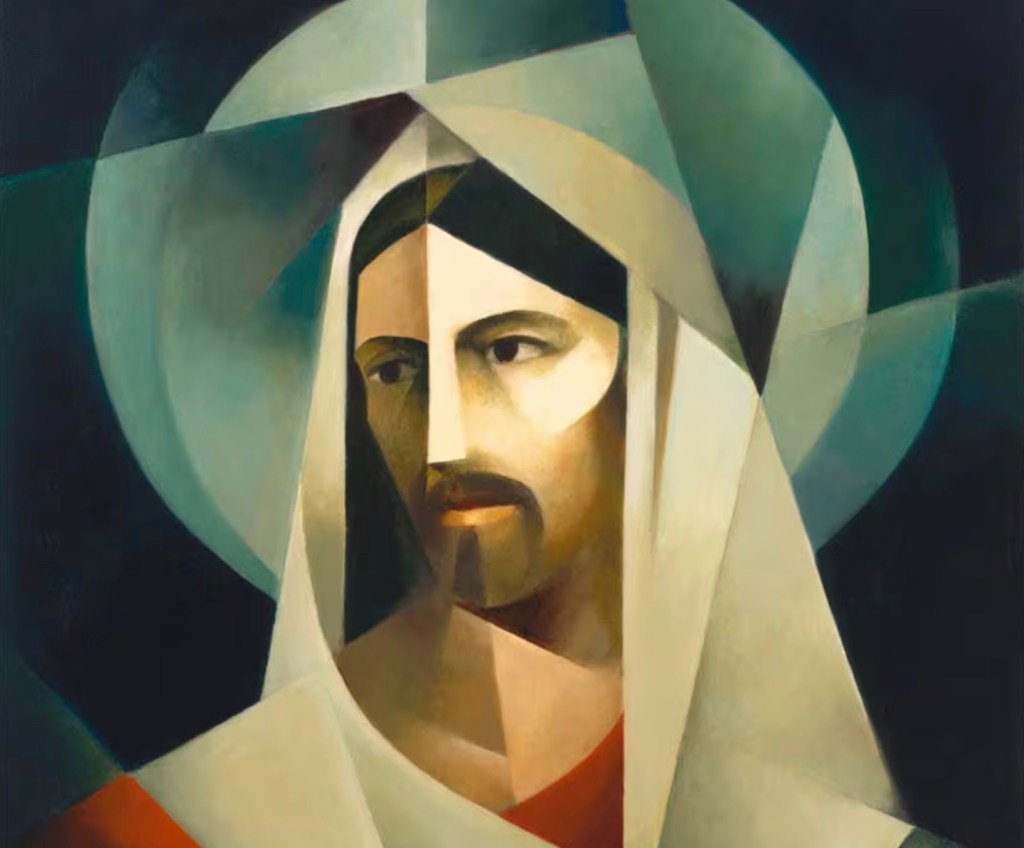
Philip said to him, “Master, show us the Father, and that will be enough for us.” Jesus said to him, “Have I been with you for so long a time and you still do not know me, Philip? Whoever has seen me has seen the Father” (John 14:8-9).
Philip was one of the first of the apostles called by Jesus in Galilee (see John 1:43), and so had been with Jesus from the very beginning of his public ministry. He lived, learned, and traveled with Jesus. He experienced the power of his teaching with authority, the exorcisms, healings, and ways that Jesus interacted with him, the apostles, and others. Yet, he still had much to learn, as do we all about the core reality of who Jesus is.
Jesus, fully human, is also at the same time, fully divine. The struggle to understand this truth is on full display throughout the gospels. Those who believe in Jesus and have followed him, like Andrew and Philip, as well as the other disciples, are seeking to understand, but as we see with Philip in today’s account, they still fall short of the height of the truth regarding who Jesus really is. Which is understandable, because to understand that Jesus is who he says he is, “I and the Father are one” (See John 10:30), is beyond our rational comprehension.
This is why so many within the leadership of the scribes, Pharisees, Sadducees, and the Sanhedrin (The Jewish High Council) are so vehement about crushing the rise of Jesus and his popularity. They understand Jesus very clearly, that by his very words and actions, he is declaring himself to be God. To them, that a human being could be God is blasphemous. So they seek to crush this heresy.
like the apostles, there are others who saw Jesus differently. They expressed faith and trust in Jesus. Their hearts and minds were open that there was something about Jesus. They did not feel threatened, but something in the depths of their souls was moved to follow and stay close. Peter and Martha remained close and in time experienced deeper, spiritual insights. Peter, when Jesus asked the apostles, “Who do you say that I am?” replied, “You are the Christ, the Son of the living God” (see Mt. 16:15). During the exchange between Martha and Jesus regarding her brother Lazarus’ death, when Jesus asked her if she believed that he was “the resurrection and the life; whoever believes in me, even if he dies, will live… Do you believe this?” Martha said, “Yes, Lord. I have come to believe that you are the Messiah, the Son of God” (see John 11:17-27).
Even with these insights, Peter and Martha, still did not comprehend the fullness of who Jesus taught and revealed himself to be. As the apostles and other disciples would trust and grow in their understanding of Jesus so would the Church in the succeeding generations seek to understand and develop the truth of who Jesus is as well. From the Councils of Nicaea (325) and Constantinople (381) we received this line about the identity of Jesus in the Creed that each one of us affirms each Sunday: “I believe in one Lord Jesus Christ, the only Begotten Son of God, born of the Father before all ages. God from God, Light from Light, true God form true God, begotten, not made, consubstantial with the Father”.
This statement clearly affirms Jesus’ teaching that he and the Father are one. One God, while at the same time distinct in person and operation as Father and Son. Who Jesus is in relation to his human nature also was further understood as the hypostatic union. This is the dogmatic teaching that Jesus is one divine person, while experiencing two natures, fully human and fully divine. The incarnation is that historical event in which through the full ascent of Mary’s, “Yes,” the Son of God through the overshadowing of the Holy Spirit, entered the womb of Mary and took on flesh. The Son of God became human.
The Council of Chalcedon (451) helped to clarify this point of the two natures of Jesus subsisting in one divine person. Jesus has “two natures without confusion, without change, without division, without separation – the difference of the natures being by no means taken away because of the union, but rather the distinctive character of each nature being preserved, and [each] combining in one person and hyspostasis – not divided or separated into two persons, but one and the same Son and only begotten God, Logos, Lord Jesus Christ; as the prophets of old and the Lord Jesus Christ himself taught us about him, and the symbol of the fathers has handed down to us” (Pelikan, 264).
Jesus’ characteristics and natures of the divine and human are distinct. There is no co-mingling, no mixing of the divine and human. Jesus is not a stew or smoothie of the divine and the human. Nor are there two distinct persons in Jesus. Jesus is one divine person. He remained the Son, fully divine at the moment he took on flesh, and in that moment became fully human. As St. Irenaeus wrote, “The Word of God, our Lord Jesus Christ, who did through His transcendent love, become what we are, that he might bring us to be even what He is himself” (Against the Heresies).
What God the Father did in time and space, as an outpouring of his love for us, was to send his Son to become one with us in our humanity so that we can become one with him in his divinity. Jesus, fully human and divine, showed the face of his Father to Philip, the apostles, and all those who met him. He still does so with us today. In instituting the sacraments, especially in his Body and Blood, present in the Eucharist, he gave us a way to grow in greater intimacy with himself and his Father so that we can also experience the love they share between them, the Holy Spirit.
This truth, to be affirmed in each of us will not come about through just an intellectual pursuit or exercise. We come to know Jesus as one divine Person subsisting in two natures, the human and divine, not by memorizing this fact. We come to know the fullness and truth of who Jesus is by knowing him. A simple way we can begin, is to begin each day, before doing anything else, by being still and breathing, slowly and deeply. We listen and become a friend with silence for God speaks in the silence of our hearts.
Then think back over the last 24 and recall at least three people or things we are grateful for, no matter how small. Then make an intentional act to dedicate this day to Jesus by asking for his guidance to improve upon one thing in our lives as well as one way that we can help someone in a simple and concrete way. These simple choices of slowing down to be silent, pondering who and by what we have been blessed, and opening ourselves up to Jesus’ guidance and will, will help us to know Jesus a little more today than we did yesterday and our relationship will not only grow with him but as well, with those in our lives.
Painting: “Christ Divine” by Jorge Cocco accessed from Altus Fine Art blog.
Link for the Mass readings for Saturday, May 17, 2025
Pelikan, Jaroslav. The Emergence of the Catholic Tradition (100-600). Chicago and London: University of Chicago, 1971.
 Spiritual Stepping Stones