“God sent his only-begotten Son into the world so that we might have life through him. In this is love: not that we have loved God, but that he loved us and sent his Son as expiation for our sins” ( 1 John 4:9-10).
To understand why Jesus was sent by his Father “as expiation for our sins” it is helpful to take some time to ponder the truth and reality of the Trinity. Beyond all time, “love is of God” or another translation of the same verse: “God is Love” (1 John 4:8). God is, always has been, and always will be. God is a community of three divine Persons, Father, Son, and Holy Spirit. They are distinct by their very nature while at the same time they are one because of their infinite communion.
The Father eternally begets the Son, the Son is eternally begotten, all that the Father is he gives to the Son and the Son receives perfectly all that the Father has given, the Son returns perfectly all that he has received from his Father holding nothing back, and this intimate, infinite, divine eternal sharing between the Father and the Son is the infinite love expressed between them, the Holy Spirit.
All that exists has come into existence because of the outpouring of the love of the communion of the Trinity. At a particular time and place, the Father sent his Son to be conceived in and born of the Virgin Mary and so the Son of God, fully divine, became fully human. He lived a fully human life while remaining fully divine and experienced our humanity with a specific purpose. Jesus was born that he would die for us and restore us to our likeness that was intended from the very beginning.
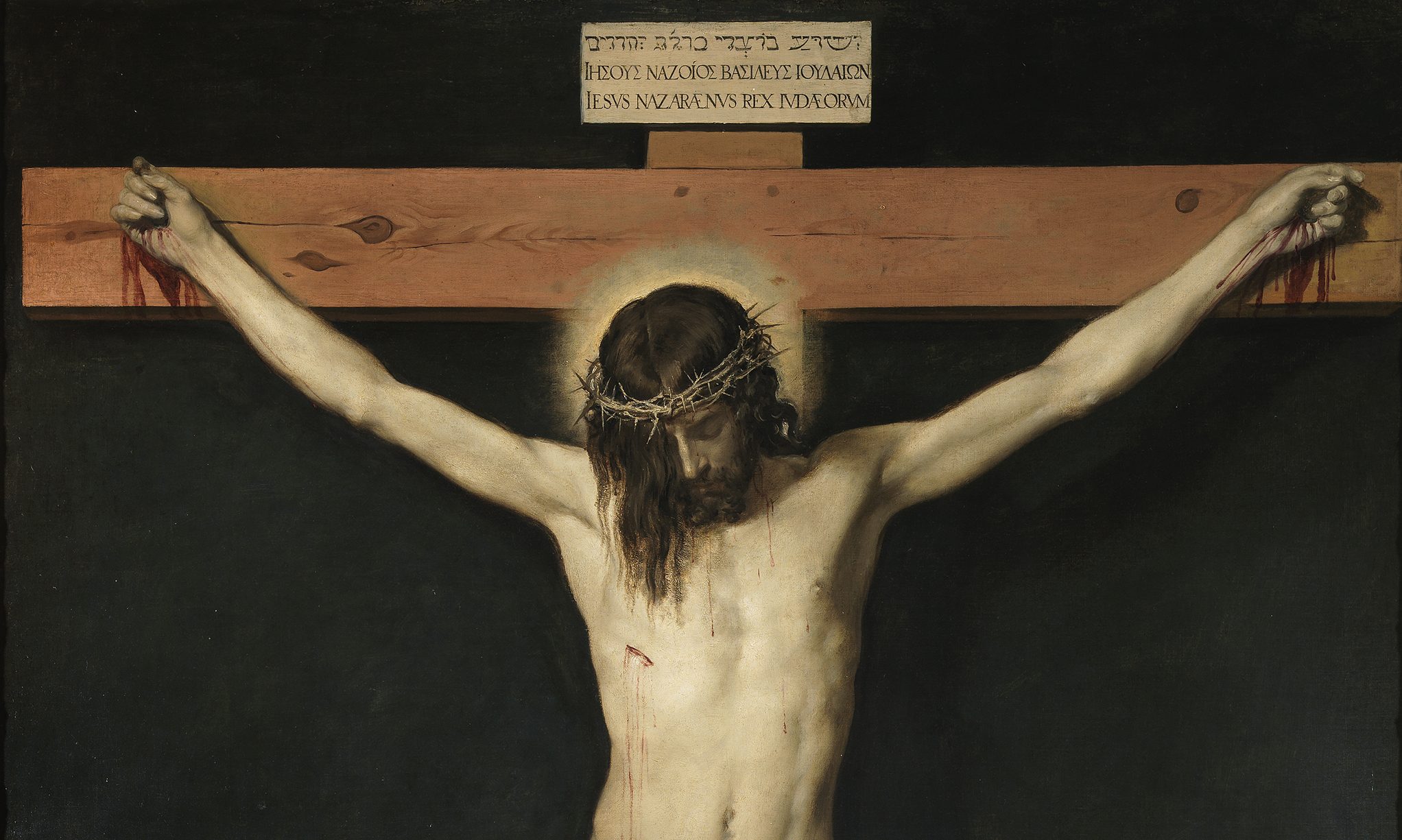
The ultimate expression of the infinite giving of the Son and holding nothing back, returning all to the Father, is Jesus’ death on the Cross. He loved us so much that he was willing to give all of himself, leaving nothing by giving his very life for us, that we might be freed from our sins. He took upon himself the worst of our humanity, injustice, extreme brutality and horrific violence, betrayal, selfishness, and death. He did so by conquering the darkness of our fallen world through this selfless act of love.
The crucifixion shows that the love of God, the love we are to aspire to, is not expressed as a mere emotion, sentiment, or feeling. Love, in St. Thomas Aquinas’ language, is to will to good of the other as other. Jesus loved us not in some abstract, utopian ideal. He loved each and every human being that ever existed, is existing, and will ever exist, by willing our good such that he gave his life “as an expiation for our sins” for each and every one of us. He loved, willed the good, of those who tortured and killed him, as he asked his Father to “forgive them, for they know not what they do.”
Let us accept the life that our loving God and Father wants us to fill us with in this new year. A life of sharing in the love of the Father, and the Son, and the Holy Spirit. We are capable of loving when we are willing to receive this unconditional love of God, when we are willing to repent from our sins, and let go of anything that we hold on to, anything we place before the love that God wants to share with us. As we breathe, receive, rest, and abide in his love, we heal, we are forgiven, we are redeemed, and we can then love others as we have been loved.
Painting: Close up of Christ Crucified by Diego Valasquéz

 Spiritual Stepping Stones