Hospitality was a key virtue for people of the ancient Near East. Martha approached Jesus as he was teaching looking for support from her sister Mary in preparing the meal. Mary was sitting at Jesus’ feet with the male disciples gathered around him while Martha appeared do be doing all the work. Martha was hoping that Jesus would support her in her request. Jesus not only did not, but said that Mary had chosen the better part and that Martha was “anxious and worried about many things” (cf. Luke 10:38-42).
We don’t know how Martha reacted to Jesus. A subtle key in today’s Gospel account from John may shed light on their last encounter and Martha’s reaction. Martha’s boldness was on display again. As soon as she was aware that Jesus was coming near, she did not wait for him to arrive but “went to meet him” (Jn 11:20). Martha’s brother, Lazarus, had now been dead for four days and Jesus, who had the time to arrive before his death, was not present to help his friend, her brother, Lazarus, in his time of need.
How many times have we been in Martha’s position? Felt that Jesus was not there when we needed him most? Why do bad things happen to good people? Part of the answer is that we live in a fallen world of sin and self-centeredness. God does not bring about suffering but he does allow it. God loves us so much that he is willing to give us the free will to reject him. The cost of our freedom to choose means that there are consequences for our choices which can be detrimental or beneficial. We are all interconnected so when we choose to act on our own apart from God’s guidance and the welfare of others, the damage that ensues affects not only those around us but everyone. On the other side of the coin, there is the presence of grace, forgiveness, and love when we choose to draw close to God, especially in challenging times.
When we choose God, we will find out that we are not alone in our suffering, especially, when we do as Martha did and go out to meet Jesus. She most likely did not holding back any of the full range of her hurt and pain. Martha’s words expressed her anguish, “Lord, if you had been here, my brother would not have died” (Jn 11:21). We can only see from our limited point of view, especially with our own experiences of grief. Yet God sees far beyond our finite perspectives and Jesus helps to not only bring about a greater good, though it may take time to come to understand and experience, he accompanies us in each agonizing breath of our suffering.
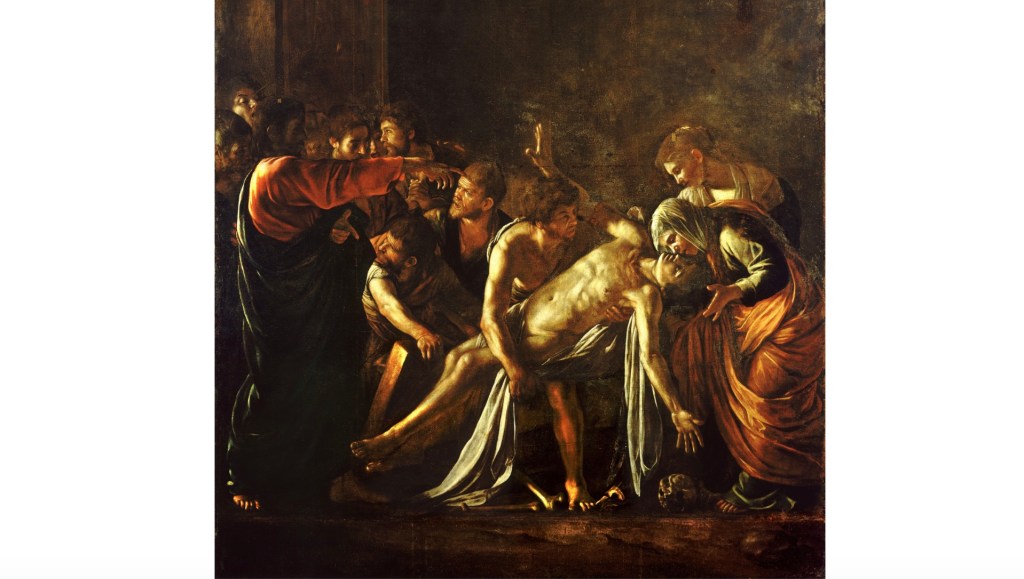
Jesus came too late to heal his friend, which Martha and Mary could not understand. What he came to do, was beyond their wildest imaginings. Jesus came to restore Lazarus to life, which would also be a foreshadowing of his own Resurrection. The difference being that Jesus would not merely be resuscitated as Lazarus was and die again. Jesus would conquer death!
Martha was not holding a grudge from their last exchange. She came directly to him. She knew he could have healed her brother if he had been there, but did not say so accusingly. Martha immediately followed instead with: “But even now I know that whatever you ask of God, God will give you” (John 11:22). Then even before Jesus called Lazarus back to life, Martha showed her faith. Jesus asked if Martha believed. Martha, as did Peter, made the affirmation of our faith: “Yes, Lord. I have come to believe that you are the Messiah, the Son of God” (John 11:27).
We have been blessed by the witnesses of Martha, Mary, and Lazarus. Each show their trust in Jesus in their own unique way and follow his guidance. Those of us who have suffered the loss of a loved one, or more, know something of the pain that Martha and Mary experienced. May we also all trust in Jesus, the Son of God, the “resurrection and the life” who conquered death and became the firstborn of the new creation. We need not fear our time of suffering or death, our own, or for our loved ones as long as we give our lives to him. When we call on Jesus he will give us the strength to endure and overcome, the challenges we face still in this life and he will lead us by his love and grace into the next.
Painting: The Raising of Lazarus – Caravaggio. Martha, Mary, and Lazarus help us to trust and have faith in Jesus as you did. Pray for us!
 Spiritual Stepping Stones