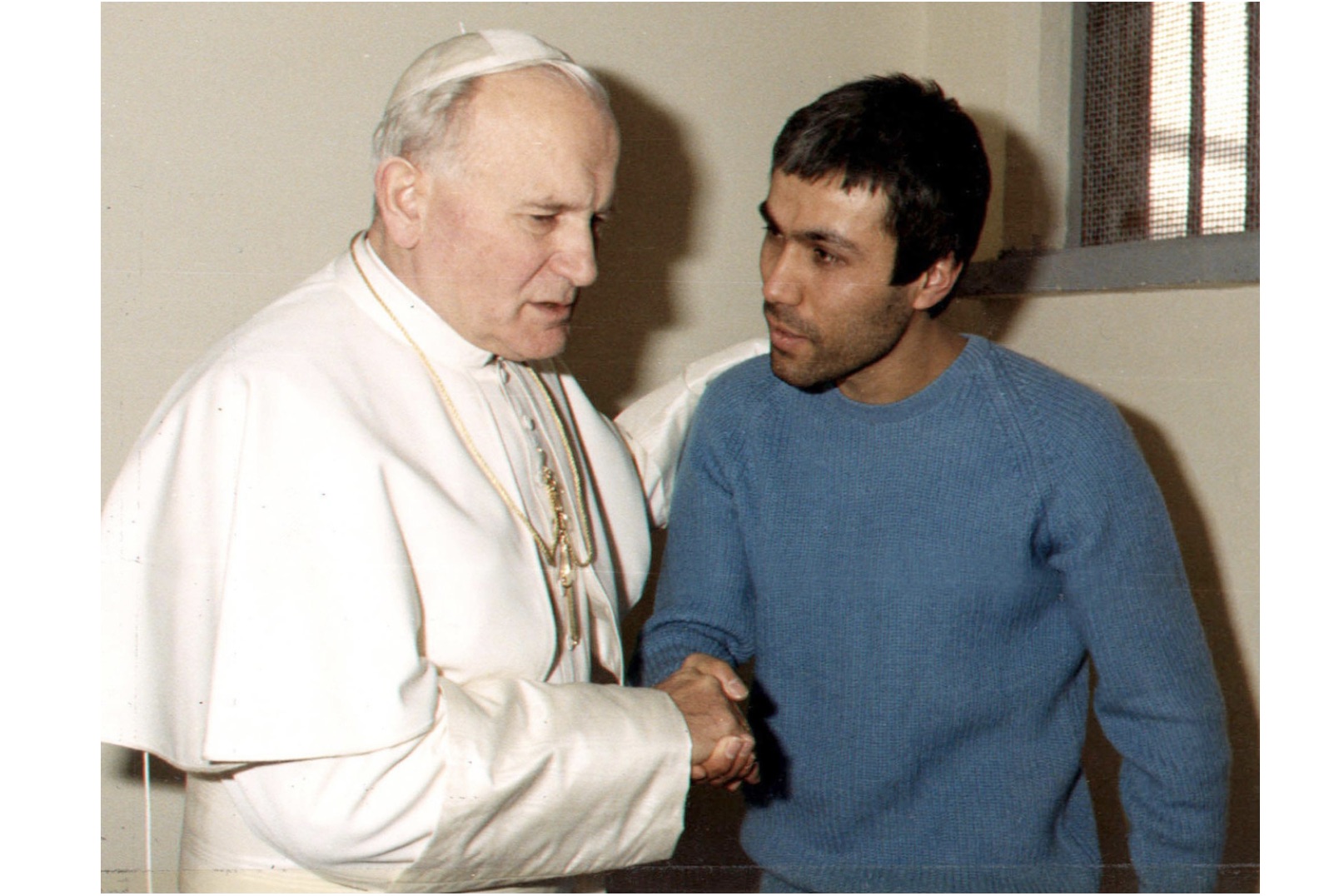
The sixth antithesis may be the most challenging of them all. “You have heard that it was said, You shall love your neighbor and hate your enemy. But I say to you, love your enemies and pray for those who persecute you, that you may be children of your heavenly Father” (Mt 5:43-45). The parable of the Good Samaritan provides a nice parallel to this verse. It can be found in Luke 10:25-37. For in that parable, Jesus shows our enemy and our neighbor to be one and the same.
A good examination of conscience would be to read the above verse, ponder who would come up for us as an enemy, and then read the Parable of the Good Samaritan. Whenever the word Samaritan comes up, we drop the word Samaritan and insert the person or persons who came up for us. When we have finished this exercise, then, may we pray for the person or persons defined by us as our enemy, for if we only love those who love us, what makes us any different than anyone else? If we are to be disciples of Jesus, if we are to be children of our heavenly Father, we are not only to love those who love us, but we are to also love our enemies. We are to love those for whom there is little chance of being loved in return.
Jesus offers us the way to be able to accomplish this seemingly impossible feat: “So be perfect, just as your heavenly Father is perfect” (Mt 5:48). We are able to love our enemy as ourselves by being perfect. This is not much help unless we understand that the English word used here is translated from the Greek word telios, which means complete, whole, to reach one’s goal or purpose in life. As a Christian, our end goal, our purpose, our fundamental option, is to be in full communion with God our Father, who is Love. God the Father is not just loving, not just a lover, but Love. “God is love” (1 John 4:8).
God is love and so, “makes his sun rise on the bad and the good, and causes rain to fall on the just and the unjust” (Mt 5:45). We strive in our life to attain the end goal of being perfected by Jesus the Christ, when we, through an act of our will, allow ourselves to become transformed into becoming agents of his love. The most challenging of enemies is facing the enemy within. To love as God loves, we are to follow the words and actions of Jesus and the prophets.
Each day we are given a choice. We can choose to feed our fears, seek revenge, dig in our heels, embrace our egos, react in kind to negativity, and/or remain indifferent to the suffering around us and in our world. We can refuse to love our enemies, withdraw our love, and so reap what we sow and contribute to the condition of separation, polarization, violence, and dehumanization that plagues our communities, nation, and world.
Or, we can choose instead to resist giving in to all of the above and instead allow ourselves to be perfected by Jesus, brought into alignment with his Father’s will, and collaborate with the love of the Holy Spirit so to be agents and models of love, mercy, forgiveness, and justice in our realm of influence. By loving our enemies, we will help to diffuse the power of hate.
We can only be perfected and transformed by the love of Jesus when we spend time with him in meditation and prayer. We are called to receive his teachings, to resist hearing and letting them go in one ear and out the other, and instead read them again a second, third, and fourth time to allow the light of the Holy Spirit to convict us. Where do we fall short or resist putting into practice the teachings of the Sermon on the Mount? Answering honestly will help us to receive more of the love of God and the strength to put these seemingly impossible commands into practice in our lives with those real people we engage with every day.
—————————————————————-
Photo: Pope St. John Paul II modeled for us this antithesis when he met, prayed with, and forgave Mehmet Ali Agca at Rebibbia prison on December 27, 1983, for shooting and attempting to kill him on May 13, 1981. (CNS photo/L’Osservatore Romano accessed from catholic sun.org)
 Spiritual Stepping Stones