love
Jesus does not ration his gift of the Spirit.
The question that arises and is foremost regarding Christianity above all else is, “Who is Jesus?” How this is answered has a lot to do with what we believe. Biblical scholars debate whether today’s passage, John 3:31-36 is a continuation of John the Baptist talking with his disciples or these are an insertion by John the author. No matter who is the source of these points of concern, the goal is coming to understand and to believe that Jesus is the one who “comes from above” and the one who “comes from heaven is above all”; he “testifies to what he has seen and heard” and he is sent by God to speak “the words of God”; he is also generous in that he “does not ration the gift of the Spirit”; and the Son is loved by the Father and God “has given everything over to him”.
Each of these phrases are revealing the truth that Jesus is the Son of God who has come from above to reveal the truth about his Father and that he is able to do so because he has seen and has an infinite relationship with his Father. Jesus preaches the Gospel, the Good News, that God loves us, that he seeks and has always sought, to be in communion with us, his created beings. Jesus has come to reveal the love of the Father and that his love is unlimited.
The proclamation that Jesus is the Messiah, is not just revealed in the Gospel of John, but each of the three other Gospels, Matthew, Mark, and Luke, as well as the other epistles of the New Testament. Jesus, as the Son of God, is also the key to unlocking the Hebrew Scriptures, and we can see how the Torah, the Prophets, and the Writings all point to Jesus as well. Jesus shared this outline of salvation history with Cleopas and the other disciple on the road to Emmaus, such that their hearts were burning within them while Jesus opened the scriptures to them (cf. Lk 24:32).
John the Baptist got it and the Apostle John and the other apostles eventually got it. They came to understand that Jesus is the Son of the Living God and that he offers a model for us to follow, but more than that, Jesus empowers us with his very life. This was a key point of surrender for John the Baptist when he shared with his disciples, the truth that, he, they and we are all called to ascribe to if we are to grow in our faith: “He must increase; I must decrease” (Jn 3:30). May we spend some time in quiet reflection today by pondering the phrases offered to us regarding who Jesus is. Which one, two, or do all of them call to you?
“The one who comes from above is above all.”
“The one who comes from heaven is above all.”
“He testifies to what he has seen and heard.”
“For the one whom God sent speaks the words of God.”
“He does not ration his gift of the Spirit.”
“The Father loves the Son and has given everything over to him.”
When we have finished, what is our response? Do we disobey or discount that Jesus is who he says he is or do we “accept his testimony” and “certify that God is trustworthy”? If we “accept his testimony”, are we willing to decrease, such that he will increase his influence in our lives? Do we believe that Jesus is the Christ, the Son of the Living God?
Reading, meditating, praying with and listening to the Gospel readings, helps us to encounter, sit at the feet of, and be in the presence of Jesus who teaches us in our time as he did with each generation of believers from the time of the apostles to our present age. Are we willing to be still, listen, and come to him daily? If yes, then in the words of Pope Benedict XVI, we will meet the Risen Christ and “know him intimately by the power of the Holy Spirit…” and have “actually touched him” so that we “can witness to him” (Martin and Wright, 79).
Let us not follow the lead of the rich man who walked away sad from his encounter with Jesus. May we instead follow the lead of the Apostles, Mary Magdalene, the woman at the well, Cleopas and his companion, surrender our lives to him, and so be loved, forgiven, healed, transformed, that we may be witnesses of Jesus’ joy.
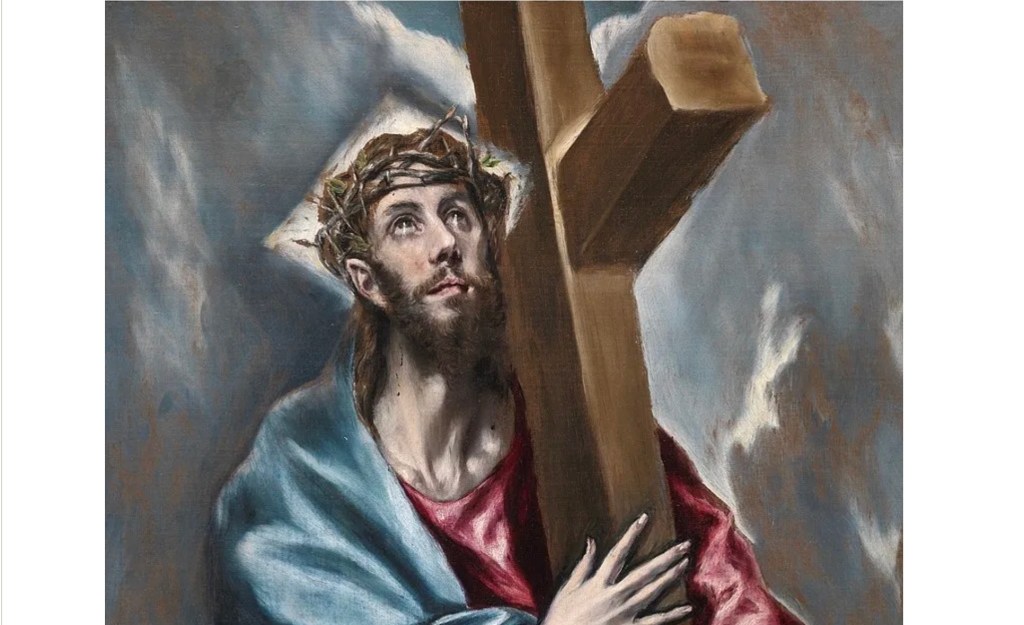
Photo: Jesus did not ration his love, he gave all of himself, holding nothing back, not even his life, so that we may know him and his Father intimately and so experience the outpouring of their love shared between them, the Holy Spirit.
Pope Benedict XVI, “Homily,” May 7, 2005 found in: Martin, Francis and Wright IV, William M. The Gospel of John. Grand Rapids, MI: Baker Academic, 2015.
Link for the Mass readings for Thursday, April 16, 2026
Our path to eternal life begins when we accept the invitation of, then receive and share God’s love.
Jesus continues his conversation with Nicodemus in today’s Gospel from John. In the opening verse, Jesus outlines why he came into the world: “God so loved the world that he gave his only-begotten Son, so that everyone who believes in him might not perish but might have eternal life” (Jn 3:16). God has created us out of love and shepherds us out of love. God loves what he has created, and in his order and timing, he sent his Son to enter humanity to become one with us, to heal us and invite us to come out of the shadows and dark recesses of turning in upon ourselves, from living in fear and sin and sometimes at best survival and to experience peace, forgiveness, healing, and wholeness.
Loving means to risk being rejected. Jesus entered humanity as we all did, in the utter vulnerability of the womb. His very life was at risk from the moment of his conception. Mary, a young woman, betrothed to Joseph, in a time and culture in which a woman found to be with child and not from her husband, could be stoned to death. Mary could have made a different choice, Joseph could have made a different choice, but both chose to follow the will of God. They resisted the temptation to close in upon themselves and make an isolated decision based on their own needs, anxieties, and fears. While all of creation held its collective breath, Mary and Joseph trusted God, they chose the light, they chose to protect life.
“Whoever believes in him will not be condemned, but whoever does not believe has already been condemned, because he has not believed in the name of the only-begotten Son of God” (Jn 3:18). Jesus did not come to condemn, he came to redeem, to save, to love us into eternity. For love to be real, it must be truly free. Free to the full extent that it can be rejected. To love is to risk rejection. Otherwise, what is experienced by the other is coercion, conditional, manipulation, pressure, but not love.
The Son of God entered the womb of Mary risking rejection by her, Joseph, and/or their extended family. The only difference between Jesus in the womb and Jesus who ministered to those on the margins was that he was smaller and more vulnerable. Those who, like Mary and Joseph, believe will come to have eternal life, and those who do not have already been condemned, not by God but by themselves who reject or turn away from the invitation. For they choose to curve in upon themselves and remain in their sin, choose to remain separated from God, choose the darkness instead of embracing the light.
Those rejecting God have been invited to receive his love also, but for reasons they may or may not be aware of say no. They may not even be aware that by some of their choices that they are choosing something other than God. We who choose Jesus are to receive and be his presence of love among those we encounter, even those who shy away or reject him. We may be the only Bible someone ever reads.
We are to protect the the unborn as well as those who have been born. We are not just pro-birth, but we are also pro-life. That means that each of us has a charism of who we are called to reach out to, speak up for, and touch with the love of Jesus, to be present to those who God brings into our lives. We can think, speak, and act by respecting the dignity of each person we encounter, in-person and online, supporting a consistent ethic of life from the moment of conception until natural death and at every stage in between.
“God so loved the world that he gave his only-begotten Son, so that everyone who believes in him might not perish but might have eternal life” (Jn 3:16). We, even in our wounds, imperfections, and sin, are loved by Jesus. We can reject or accept his love. As Pope Francis wrote: “We are called to be holy by living our lives with love and by bearing witness in everything we do, wherever we find ourselves.” As we receive and experience the love of Jesus, may we seek to love every person we encounter as he has loved us. If there are those that we might not necessarily include in every person, may we be willing to allow Jesus to love them through us until we can.
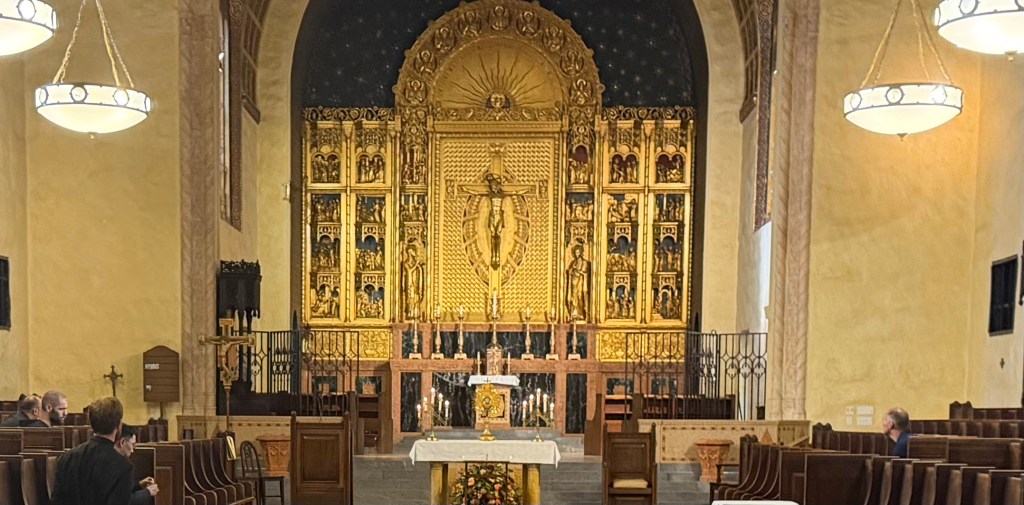
Photo: Quiet time with Jesus is a good way to breathe, receive, rest, and abide in his love.
Link for article on Gaudete et Exultate (“Rejoice and Be Glad”)
Link for the Mass readings for Wednesday, April 15, 2026
When we encounter Jesus for ourselves, we too will have some good news to share!
Today’s reading from the Gospel of Mark, 16:9-16, is commonly called, “The Longer Ending.” Most ancient manuscripts of Mark end at 16:8. Whether this Gospel ended there or the original ending was lost is not definitively known. Many biblical scholars also recognize in these verses a different writing style, so attribute this longer ending to a different author. This ending recounts that Mary Magdalene and two disciples, presumably the same on the road to Emmaus as recorded in Luke, met the risen Jesus. When both Mary and the this pair share their experiences with the eleven, they are not believed, and then, “later, as the eleven were at table, he [Jesus] appeared to them and rebuked them for their unbelief and hardness of heart”
How many times had Jesus rebuked the Pharisees for being hard of heart? Now he is saying the same to the eleven for not believing the accounts of Mary and the two disciples. We do not have a reason for their unbelief and maybe that is well and good because that gives us the opportunity to ponder for ourselves when has someone brought us a message from Jesus and we responded to them with hard hearts and were unbelieving? Are there certain people we would not believe no matter what good news they had to share with us? Have we brought the good news of our encounter with Jesus and it was met with coldness or even disdain?
Mary a woman and a woman that has had seven demons exorcized from her would not have been considered a credible witness in the ancient near East. And yet, Jesus chose her to appear to first and to bring the message of his resurrection to the Apostles. And that such an “unreliable” source, Mary’s witness, has been retained in all four gospels has something to also say – Mary encountered Jesus, believed, and shared what she saw and experienced and although initially not believe, her testimony was preserved.
Jesus does not belabor the point. His conviction helped them to see that as his followers their hearts needed to be open to him working through others, as he told John when someone was casting out demons in Jesus’ name, “whoever is not against us is for us” (cf. Mk 9:40). He was also preparing them for those who would believe their testimonies.
Christianity is not a secret sect, it is a universal call and proclamation to be shared with all. We are celebrating in this Easter Octave, as we continue to do so each year, the fullness of the Paschal Mystery. Not only did the Son of God became incarnate and live the fullness of a human existence, he suffered, died, conquered death, and rose again, for all of humanity and creation.
This was no mere resuscitation like Lazarus who would die again. Jesus conquered death and became the firstborn of the new creation and he invites us to participate in his reign. He invites us to share in his divinity. The resurrection is the Good News he wanted his eleven to proclaim when he said to them, “Go into the whole world and proclaim the gospel to every creature” (Mk 16:15).
Do we believe the apostolic claim that was first shared by Mary Magdalene, the Apostle to the Apostles, and has been passed on generation after generation? Will we, like those who have gone before us, receive, abide in, and share the love of God? Jesus is calling us to do so not for a select few in our pew, but for all in our realm of influence. We are to build relationships by bringing the light, joy, and love of Jesus to each individual that we meet, person to person. Let us also be open to God working through others and receive his message from them as well! Alleluia!!!Alleluia!!!
———————————————————————
Photo: Elizabeth Tabish, playing Mary Magdalene in the series The Chosen.
The closer we are to Jesus the easier it will be to give without counting the cost.
“Mary took a liter of costly perfumed oil made from genuine aromatic nard and anointed the feet of Jesus and dried them with her hair; the house was filled with the fragrance of the oil” (Jn 12:3). This is indeed some gift that Mary shares with Jesus, though Judas’ critical response showed that he missed the point of her offering, which went well beyond the material cost of the perfume. Mary even exceeded the gesture of hospitality by going beyond washing Jesus’ feet and anointing them as well. This act of caring could have been a bestowal of appreciation and gratefulness toward Jesus who brought Lazarus, her brother, back to life, but it was even more than that.
In Jesus’ correction of Judas, “Leave her alone. Let her keep this for the day of my burial” (Jn 12:7), we may intuit the best source for interpreting Mary’s act. Mary comprehended better than any of the Apostles that Jesus’ death was imminent. Mary’s washing the feet of Jesus, anointing them, and drying them with her hair was a gift of love, of giving herself in service to the Son of God. This exchange mirrors the communion between God the Father, God the Son, and the love shared between them, God the Holy Spirit. Mary follows the will of the Father and plays her part in salvation history.
Martha is also present and seemed to have learned from their last encounter. She is again serving the meal, but this time she is not complaining nor anxious and worried about many things. Judas was the one corrected this time when Jesus told him to, “Leave her alone.” Mary has shown her spiritual growth as well. She is no longer sitting at Jesus’ feet but anointing them for his imminent death. Her generosity in pouring out such a large amount of perfumed oil was evident because the fragrance filled the entire house. Mary’s generosity foreshadowed the generosity of Jesus not just in his eventual washing of the feet of his apostles but ultimately, his total self-gift pouring out all of himself and holding nothing back on the cross.
We do not know how Mary came to possess this precious oil, but what we do know is much more important. She did not grasp or cling to the oil, she did not count the cost and just pour out a little bit. Mary was moved with compassion and generosity. The same compassion and generosity she experienced from Jesus, she was now sharing with him. May we be open to receive the compassion and generosity of Jesus and share without hesitation as he guides us.
Is there something or some way that God is calling us to pour out, not just for the sake of doing so, but in service to Jesus? The path to holiness and sanctity becomes smoother and the way clearer when can identify and let go of that which we are attached and clinging to. May we follow the lead of St. Mother Teresa who said that she sought to be just a pencil in God’s hand. The freedom of the pencil is that it moves and writes as the author does. Would that we become so free in the hand of our loving God and Father.
————————————————————————————–
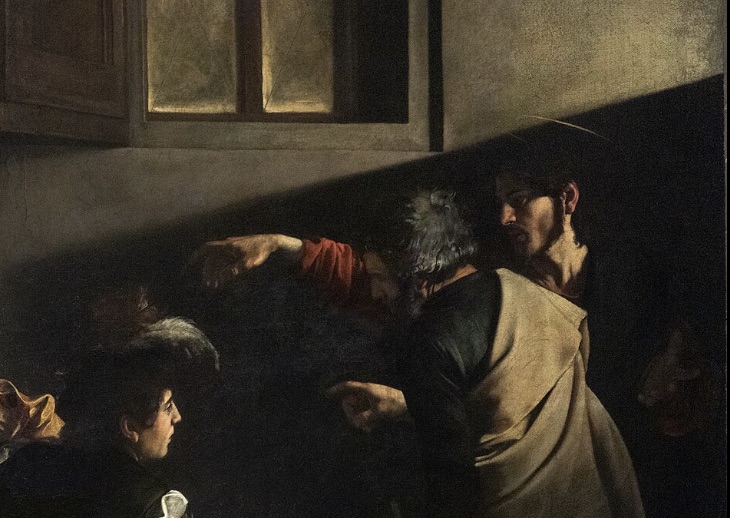
Painting: May we follow Mary’s lead to love as Jesus teaches us to.
“For Jesus, it was more important to conquer death than to cure disease.”
Martha, Mary, Jesus’ disciples, and anyone else who experienced the sickness of Lazarus wondered why Jesus did not go to be with his friend as soon as he received word that he was dying. Jesus had healed and restored so many, why would he delay? Many of us who have experienced the death or in this moment may be accompanying a loved one in their final days and hours, may have asked or may be asking the same thing. Why is Jesus allowing this to happen? Why do so many have to suffer? Why the delay?
Jesus responded to the disciples’ inquiry by saying, “This illness is not to end in death, but is for the glory of God, that the Son of God may be glorified through it” (Jn 11:4). Not sure if Jesus’ response would have helped me if I was among the crowd. Many of us have experienced the death of our family and friends, as did Martha and Mary. What is Jesus up to?
Does Jesus care? Does this Gospel speak to us today? Yes. At the height of the Covid pandemic back in March of 2020, I remember being quarantined at home still on oxygen and watching Pope Francis come out on the steps of St. Peter at the Vatican in the dark and rain and said, Jesus, “more than anyone, cares about us.” Just as Jesus wept when he witnessed the anguish of Martha and Mary, the sisters of Lazarus, he also imagined the anguish of one of his closest friends sick and dying. So he wept and weeps with us in our present challenges, trials, and pain. Still he did not come until four days later. Why?
We may wonder in hearing or reading this account where Jesus is in the midst of our struggles at times, may wonder where he was in past challenges. There is good news here. Jesus had a plan for Lazarus and he has one for us. We need to have the same faith as Martha. Though she did not understand why Jesus had not come sooner, she trusted in him. Martha responded to Jesus when he asked he if she believed that he was the resurrection and the life and she responded: “I have come to believe that you are the Christ, the Son of God” (John 11:27). Just as Jesus was present to Martha, he is present and among us as well. But why the delay?
St. Peter Chrysologos offers a great response to that question, “for Christ, it was more important to conquer death than to cure disease. He showed his love for his friend not by healing him but by calling him back from the grave. Instead of a remedy for his illness, he offered him the glory of rising from the dead.” Jesus followed the lead of his Father to help those who were closest to him to understand that the reign of sin and death was over. Jesus came to usher in a new creation.
I believe Jesus conquered death and it has helped me with my deepest loss. Jesus did not cure my wife, JoAnn, from pancreatic cancer, and yet, it is my hope that he conquered her death, reached out to JoAnn, and led her home to the Father so that she may now be experiencing “the glory of rising from the dead.” But I am getting ahead of myself.
Jesus brought back Jairus’ daughter from the dead as well as the widow of Nain’s only son. The difference between each of them and Lazarus, was they were raised fairly soon after their death within even the same day or days. Lazarus had been dead for four days. Ancient Jews, unlike the ancient Egyptians, did not embalm the dead. By the fourth day, Lazarus’ body would have begun to decompose. In Jesus calling him back to life, and Lazarus rising, the effects of the decomposition were reversed and he walked out of the tomb on his own power, even while still wrapped in his burial cloths.
We need to resist just a complacent passing over of this incredible miracle that Jesus performed. This was beyond anything that anyone had ever experienced, and why, “many of the Jews who had come to Mary and seen what he had done began to believe in him” (John 11:45). Without diminishing the wonder of this event, it was only a forecast of the miracle of miracles to come and why the Church in her wisdom placed this account on the fifth Sunday of Lent. This is but a foreshadowing of the death and resurrection of Jesus.
Lazarus rose in a miraculous way but would die again. Jesus died, conquered death, and rose again never to die again. He was willing to do so for Martha, Mary, and Lazarus, so they could rise with him on the last day and have their souls be reunited with their bodies. The good news for us reading these words at this moment is that Jesus did the same for us today!
The key take away from the story of Lazarus is that no matter how wonderful the raising of Lazarus, a dead man four days in a tomb, was, it was just a foreshadowing of the truly incredible miracle of miracles we are about to celebrate in just a few weeks. The fact that Jesus rose from the dead himself was no mere resuscitation as with Lazarus. Jesus experienced the fullness of death and conquered it becoming the firstborn of the new creation. Jesus would later ascend into heaven and from the right hand of his Father, he would send us the Holy Spirit.
This is why we never need doubt that we are not alone ever, and especially in times of our deepest suffering. Jesus cares and accompanies us in each of our present situations as well as our unhealed traumas of the past. When we weep we can remember, “Jesus wept” also. Why? To teach us that it is ok to weep. Our tears remind us that we are human and that when we have lost a loved one, even if now we know death doesn’t have the final answer, there is a loss none the less.
We will live on, and just as if we experienced an amputation, our living without those that have died will never be the same. As we put our faith in the One who cares for us and loves us more than we can imagine, we will draw closer to him and to each other, we will see the glory of God at work in each of our lives, we will heal, and we will overcome and emerge stronger than before. Our healing happens when we too believe in Jesus the Christ the Son of God.
Our hope in this life is that we are invited to write our final chapter not here but in the new creation to come. “On the last day, Christ will call us forth from our graves as our friend, if we’ve lived in friendship with him. And he will command us as our Lord, the one who made the heavens and the earth, to come out of the tomb and to experience the resurrection of the dead, the new creation, and the life of the world to come” (Dr. Brant Pitre).
Photo: Each time we see the altar, we are reminded that Jesus died for us and conquered death so that death no longer has the final answer, Jesus the first born of the new creation does.
Pitre, Brant. Catholicproductions.com
Link for the Mass readings for Sunday, March 22, 2026
With Jesus no one is last.
Has there ever been a time when you were picked last for the team, whether on the playground, P.E., or gym class? I remember being on both sides, being picked last, and picking others to join and having to pick someone last. I preferred being chosen last rather than having to be in the situation to choose a classmate last. In our Gospel reading today, Jesus comes upon a man who has experienced an even worse situation.
This man had been in need of healing for thirty-eight years. Apparently, there was a limited time to get into the waters of the pool at Bethesda to experience the healing properties that it afforded, for each time the water stirred, while the man moved to get closer to and enter the water, “someone else [got] down there before” him. This is worse than getting picked last, as he doesn’t in a sense even make the team!
But with Jesus, the last shall become first. Key ingredients are belief, faith, as we heard in yesterday’s account and also along with belief and faith, is there a willingness to be healed. Jesus asks the sick man, “Do you want to be well?” When the man in need of healing explains the limitations he has experienced in the past regarding getting to the pool, Jesus does not hesitate. Jesus commands him to rise, pick up his mat and walk. The man is no longer the one picked over, the one ignored, the one unseen. The sick man encounters Jesus and is healed by his word.
Jesus approaches us in the same way that he encountered the sick man by the pool of Bethesda in today’s Gospel. He meets us in our need, where we are, no matter our station in life. He does not leave us on the outside looking in, he does not leave us wondering if we are loved or if we belong. He comes close and if we are willing, to forgive, heal, and empower us to be about the mission given to us by his Father. Jesus gives meaning and purpose to our lives. Each and every one of us is a gift from God, a beloved daughter or son, and we have been graced with something to contribute, something unique to help make the kingdom of God a reality.
May we enter a place of silence and stillness, without and within. Breathe intentional and slow, settle into a rhytm with no or little distractions, breathe in deep and exhale a few times more, one deep breath for each person of the Trinity, and then close our eyes. How do we see ourselves in our present moment, what is happening, what are we experiencing? As we take a few more breathes, notice Jesus walking toward us.
Jesus is present, right here and right now, for each of us if we are willing to be still long enough to engage with him. There are no boundaries, no limitations, only those we impose on ourselves. We are no longer misunderstood, left out, or picked last. Jesus has come close to be with us in this moment, to embrace us, and help us to really know that we are loved, heard, and we belong in the kingdom of God.
————————————————————————-
Painting:”Do you want to be well?” If yes, then continue to breathe, receive, rest, and abide in God’s love.
Are we willing to stay with Jesus as did the woman at the well and the man born blind?
As with last week, when the Samaritan women encounters Jesus, we again see this week an account of a transformation with the man born blind from birth. In both cases, neither are seeking Jesus or a healing, Jesus waits for the woman at the well and sees the man as he “passed by”. Both are open to encounter Jesus and are willing to be led by him. For the man born blind, Jesus, spat on the ground and made clay with the saliva, and smeared the clay on his eyes, and said to him, “Go wash in the Pool of Siloam” (Jn 9:6-7).
To us, this would appear to be a bizarre way to heal. Imagine going into the optometrist and as he is checking an eye ailment and he says wait a minute, I have just what you need. He takes out bowl of dirt, spits profusely and begins to make some mud. How long are you going to remain in the chair?
In Jewish tradition, and found recorded in the Dead Sea Scrolls, the account was that God when forming Adam out of the earth, also spit into the earth. The moisture needed to kneed the dry earth. Those knowing this account would have understood what Jesus was doing here. He was acting as God did in the creation of the first man. He was forming a new man, to be part of a new creation (Pitre).
Jesus also helps our modern sensibilities by asking the man to wash his face in the “Pool of Siloam”, he was healed and his sight was restored. He then returned to his neighbors and they noticed that not only was he no longer begging but that he could see. They then asked him how this came to be and the man shared about his encounter with this man who healed him. Because of this miracle, they then brought him before the Pharisees.
Because this healing happened on the Sabbath, they wanted to understand what had happened with this man and although the man did not name Jesus, because he did not know who he was, the Pharisees suspected if not outright knew. This was not the first healing on the Sabbath. Some were hoping to gather information to make a case against Jesus. Unfortunately for them, this man would only share that Jesus healed him, confirm that he was born blind, and wonderfully the man asked if they would like to be Jesus’ disciples!
When he was thrown out by the Pharisees. Now ostracized for being healed and telling the truth, he was alone. Jesus came to him again, and as the conversation deepened, as with the woman at the well, his faith as with her’s grew. He first believed Jesus to be just a man, then he presented him as a prophet, and came to believe that he was sent by God, he was the Son of Man, and finally proclaimed him as Lord!
Would that we could have the same healing of our spiritual blindness as the man did with his physical that opened him up to his spiritual healing, such that we could see the depth of our own hunger deep within for God and the needs of those around us. Are we able to see Jesus as this man born blind or do we see him as some of the Pharisees, in a distorted way based on our own places within ourselves that are wounded and/or hardened and callused?
Allowing Jesus to come close will help us to regain a greater appreciation for him and each other. We will recognize how fragile our lives really are when we let down our guard, and place our trust not in our own self-reliance, but in Jesus. In facing our fears, even of death, resisting to run away or deny the fear, but instead embrace our feasr with Jesus, we will come out on the other side freed from those feats and appreciating the gift of our humanity.
In allowing ourselves to encounter Jesus, may we be willing to allow him to remind us of who and whose we are. We are beloved daughters and sons, baptized in the name of the Father, and the Son, and the Holy Spirit. We belong to our loving God and Father. This is the foundational truth of our identity. Nothing can shake that truth as long as we allow ourselves to savor and allow that reality to move from our minds, to our hearts, and acknowledge it in the very depth of our souls. This truth helps us to realize that death does not have the final answer and we need not fear even death.
The man born blind was grateful for the gift of receiving his sight, so much so that he came to believe and worship the one who healed him. When we allow ourselves some time with Jesus, may we grow more deeply committed to living as his disciple, be freed from our fears, and experience the love of God in such a way that we know him and breathe, receive, rest, and abide in who we are.
Photo: Jesus is the light of the world and whoever follows him will have the light of life.
Pitre, Brant. Mass Readings Explained Year A, Fourth Sunday of Lent, Year A
Resist justifying or denying and instead confess our sins and we will experience God’s forgiveness, heal, and grow in his love.
It is much easier to find fault in others, and in some cases, the act of doing so has become entertainment in the private as well as the public sector. Gossip has a seductive allure and can be consuming. Judging others is also a way to justify and or project our own inappropriate behavior onto others. We may even place ourselves in a false sense of exalted pride. Have we ever, not just stated, but, thought or prayed something along the same lines as the Pharisee in today’s Gospel? “O God, I thank you that I am not like the rest of humanity — greedy, dishonest, adulterous — or even like this tax collector. I fast twice a week, and I pay tithes on my whole income…” (Lk 18:11-12).
To pray any part of this prayer stunts the growth in our spiritual life because we are focused on ourselves instead of emptying ourselves before God. A hyper sense of self reliance leads us away from the truth they we are dependent on God our Father for anything and everything and apart from him we can do nothing. Anytime we rationalize, cover over, deny, or completely ignore our sinful behavior we create and support habits of selfishness and feed our selfishness. Left unchecked, we can become enslaved to them. Lent is a time to pause and ponder, to be grateful for God’s love and his care, and also to give ourselves time to be aware of where we fall short of the glory of God. When we are willing to identify and confess our sins, we are forgiven and can begin to heal from sinful attitudes and actions that have become habitual vices.
In reading more lives of the saints, I have come to understand that their recognition and their confession of their sinfulness was not just pious platitudes, but true presentations that they were growing closer in their relationship with Jesus. The closer we grow in our relationship with Jesus the more we experience his light and love, which unveils more of our sins.
When we drive our car while it is dark we don’t give much thought to the cleanliness of our windshield because we can see fine. Yet as the headlights from an oncoming car illuminate our windshield we can see how dirty in actuality it is. This can be evident in our spiritual life as well. The more we remain in our own darkness of denial, self righteousness, resist slowing down to examine our conscience, we feel we are fine, all is right with the world. If we experience any problems, it is because of something or someone else, never us. The closer we grow in our relationship with Jesus though, the more his light shines in our darkness, and reveals to us our sin.
Jesus invites us to resist the prayer of the Pharisee who prays comparing himself to someone else, who refuses to acknowledge his own sinful actions and instead emphasizes that we are to follow the honest humility of the tax collector, who did “not even raise his eyes to heaven but beat his breast and prayed, ‘O God, be merciful to me a sinner’” (Lk 18:13). Now, Jesus is not saying this is the only way we pray. We have the opportunity to worship and praise the Lord joyfully, we can seek his help in praying for others through intercessory prayer or for ourselves in petitionary prayer, we can also sit in quiet meditation during adoration or out among God’s wonder of creation and experience deep consolation.
Each prayer has its time and place and each type of experience of prayer helps us to grow and deepen our relationship with Jesus and each other. The key to each of our prayers is our willingness to be the humble children we are and lift up of our hearts and minds to God who is always inviting us to spend time with him.
True humility happens when we are willing to see who we are from God’s loving gaze. If we are to set a standard to live up to and if we are to compare ourselves to anyone, let it be Jesus. A daily examination of conscience of allowing ourselves to rest in our Father’s loving gaze is a healthy practice and discipline. When we invite Jesus to shine his light of love into the darkness of our fear and anxiety, our loneliness and idols, we will see our sins. Jesus does not do so to shame and condemn us, but so that we can experience our sorrow and separation from God that sin causes.
As we experience our loneliness, pain, and wounds, and resist putting anyone or anything else before God to compensate for what we are feeling, we can feel his love and begin to realize that we are not alone, that we never have been alone. And that the only one who can fill our deepest longings is God. With this attitude, temptations and sins became opportunities for God’s grace, because we can now see clearer our life without Jesus and our life with him. Each time we choose Jesus over our temptations, we will experience him more, know him better, grow in our relationship with his Father, and experience the love shared between them, the Holy Spirit.
—————————————————————————————
Photo: Spending time with Jesus, helps us to slow down, then we can follow him as he leads us from the darkness our sins so that we may experience the light of his love.
Jesus shows us the love of his Father so we can receive and love him and each other in return.
Jesus recognized that the scribe, who asked him about which commandment was the greatest, “answered with understanding,” and then he said to him, “You are not far from the Kingdom of God” (Mk 12:34). What is it that the scribe understood?
The scribe understood that God “is One and that there is no other”. God is the true source of our being, the foundation of our very existence. We have been created with an innate desire to be one with him. This is the longing we all feel in the depths of our soul, this is why nothing that is finite or material will ever fully satisfy us, and why we are always wanting more. This is as true for the mystic as well as for the atheist and everyone in between. We hunger and thirst for the living God. And even more wonderful of a truth is that God hungers and thirsts for communion with us!
God is “One and no other” also means that we are not God, we are his created beings. God is not just one being among many, not even the supreme being. This orientation is important and foundational. We can only see from our limited perspective. What we think or believe we might need, may in fact not be truly good or beneficial for us, the shimmer may be just an apparent good, a distraction, a temptation, that will lead us away from the authentic fulfillment and meaning of life that we seek. God will guide us away from any unhealthy want, he will lead us away from temptation when we are willing to seek his guidance over and above our own. God will give us what we truly need, he will lead us to that which is, in reality, true, good, and beautiful – relationship with himself, which when we come to put God first, will help us to properly order everyone and everything else in our lives.
Once we come to believe that God is God and we aren’t. We can experience that we are not just created beings. When we are baptized, we become his beloved daughters and sons. Accepting this filial relationship then we can take the next step: “to love him with all [our] heart, with all [our] soul, with all [our] mind, and with all [our] strength”. God hungers and thirsts for all of us. We are to give all of our lives to him. In our surrender to God and his will, we become capable of receiving his love and so are able to better love him in return. We all long to be loved and to love. Experiencing the love of God helps us to unconditionally love “our neighbor as our self” because through our surrender to his will we allow God to love others through us.
An interesting addition that Jesus adds to his presentation of the great commandment, is that in quoting Deuteronomy 6:4-5, he adds to the original. Along with love God with our whole heart, soul, and strength, he adds to love God with all our mind. This insert helps us to understand how we can live out this commandment. We are to pray, to lift up our hearts and our minds to God and depend upon him as Father. We do this best when we meditate on his living word daily. When we think about and return to his word often, we rest in his presence and in his presence, we experience healing, give of ourselves fully to him, and will be moved to love others.
As we surrender all of ourselves to God and love him in return, we will better love others (see Leviticus 19:18). To do so, we need to spend quality time with God in stillness, be present One on one, as well as come to an awareness of God’s nearness in our daily activities. We are to resist compartmentalizing God and instead seek his presence in every thought, word, action and through everyone we encounter.
Each of us, though prone to sin and wounded by our sin, are still not destroyed by sin. God loves us as we are, and when we are humble enough to be repentant: to be contrite, confess, and follow through on our penance, God forgives our sins, heals our wounds, and transforms us. No need to run away from him. Instead, let us run to him. Loving our neighbor as our self helps us to run to Jesus, for if we cannot love those we can see how can we love his Father, our Father, who we can’t? Going out of ourselves and giving to another helps us to build relationships because time spent with each other breaks down the walls of separation that keep us at a distance.
Jesus’ arms are wide open before us. May we surrender all our heart, soul, mind, and strength into his loving embrace, receive his love and love him in return, and be willing to love our neighbor and our selves in the same way. When we understand and put this commandment into practice, the other commandments will be something we will do naturally. As we enter into this practice, we too will hear Jesus say to us, “You are not far from the kingdom of God.”
—————————————————————————-
Photo: Some quiet time to meditate, pray, and contemplate God’s living word during Morning Prayer.