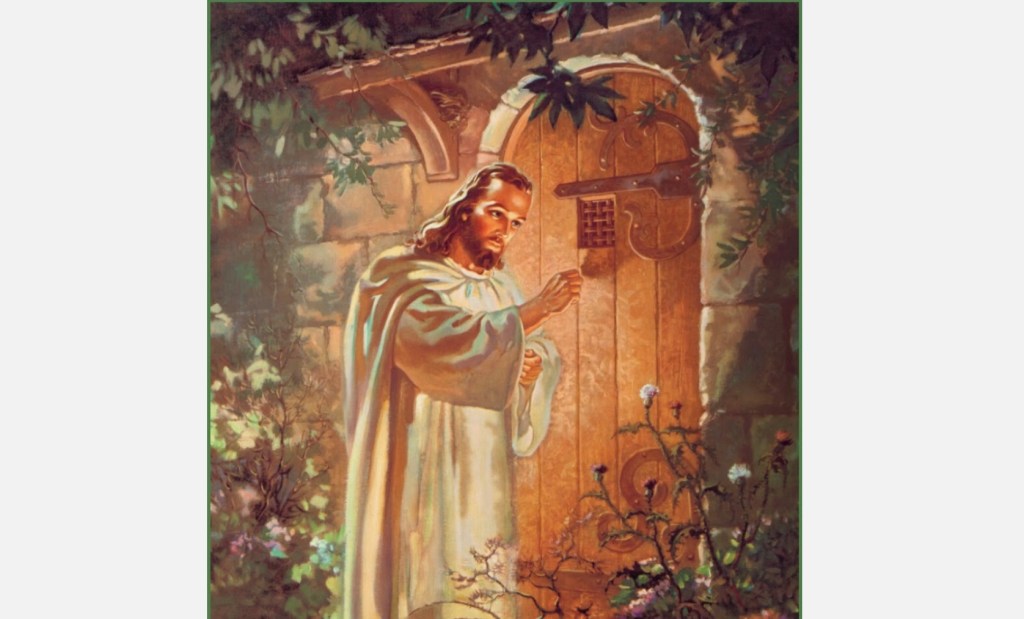
Jesus does not ration his gift of the Spirit.

The question that arises and is foremost regarding Christianity above all else is, “Who is Jesus?” How this is answered has a lot to do with what we believe. Biblical scholars debate whether today’s passage, John 3:31-36 is a continuation of John the Baptist talking with his disciples or these are an insertion by John the author. No matter who is the source of these points of concern, the goal is coming to understand and to believe that Jesus is the one who “comes from above” and the one who “comes from heaven is above all”; he “testifies to what he has seen and heard” and he is sent by God to speak “the words of God”; he is also generous in that he “does not ration the gift of the Spirit”; and the Son is loved by the Father and God “has given everything over to him”.
Each of these phrases are revealing the truth that Jesus is the Son of God who has come from above to reveal the truth about his Father and that he is able to do so because he has seen and has an infinite relationship with his Father. Jesus preaches the Gospel, the Good News, that God loves us, that he seeks and has always sought, to be in communion with us, his created beings. Jesus has come to reveal the love of the Father and that his love is unlimited.
The proclamation that Jesus is the Messiah, is not just revealed in the Gospel of John, but each of the three other Gospels, Matthew, Mark, and Luke, as well as the other epistles of the New Testament. Jesus, as the Son of God, is also the key to unlocking the Hebrew Scriptures, and we can see how the Torah, the Prophets, and the Writings all point to Jesus as well. Jesus shared this outline of salvation history with Cleopas and the other disciple on the road to Emmaus, such that their hearts were burning within them while Jesus opened the scriptures to them (cf. Lk 24:32).
John the Baptist got it and the Apostle John and the other apostles eventually got it. They came to understand that Jesus is the Son of the Living God and that he offers a model for us to follow, but more than that, Jesus empowers us with his very life. This was a key point of surrender for John the Baptist when he shared with his disciples, the truth that, he, they and we are all called to ascribe to if we are to grow in our faith: “He must increase; I must decrease” (Jn 3:30). May we spend some time in quiet reflection today by pondering the phrases offered to us regarding who Jesus is. Which one, two, or do all of them call to you?
“The one who comes from above is above all.”
“The one who comes from heaven is above all.”
“He testifies to what he has seen and heard.”
“For the one whom God sent speaks the words of God.”
“He does not ration his gift of the Spirit.”
“The Father loves the Son and has given everything over to him.”
When we have finished, what is our response? Do we disobey or discount that Jesus is who he says he is or do we “accept his testimony” and “certify that God is trustworthy”? If we “accept his testimony”, are we willing to decrease, such that he will increase his influence in our lives? Do we believe that Jesus is the Christ, the Son of the Living God?
Reading, meditating, praying with and listening to the Gospel readings, helps us to encounter, sit at the feet of, and be in the presence of Jesus who teaches us in our time as he did with each generation of believers from the time of the apostles to our present age. Are we willing to be still, listen, and come to him daily? If yes, then in the words of Pope Benedict XVI, we will meet the Risen Christ and “know him intimately by the power of the Holy Spirit…” and have “actually touched him” so that we “can witness to him” (Martin and Wright, 79).
Let us not follow the lead of the rich man who walked away sad from his encounter with Jesus. May we instead follow the lead of the Apostles, Mary Magdalene, the woman at the well, Cleopas and his companion, surrender our lives to him, and so be loved, forgiven, healed, transformed, that we may be witnesses of Jesus’ joy.

Photo: Jesus did not ration his love, he gave all of himself, holding nothing back, not even his life, so that we may know him and his Father intimately and so experience the outpouring of their love shared between them, the Holy Spirit.
Pope Benedict XVI, “Homily,” May 7, 2005 found in: Martin, Francis and Wright IV, William M. The Gospel of John. Grand Rapids, MI: Baker Academic, 2015.
Link for the Mass readings for Thursday, April 16, 2026

“By means of baptism, we are born into communion with Jesus and the Father through the Holy Spirit”.

Nicodemus came to Jesus in the night. He was a Pharisee, showing that not all Pharisees refused to believe that Jesus was the Messiah. Most likely, Nicodemus was not there alone as he shared, “Rabbi, we know that you are a teacher who has come from God”. Although, Nicodemus did not reject Jesus outright, he did not understand the fullness of who he was either. His heart and mind was open to what Jesus was teaching and he recognized that Jesus was sent by God. His coming at night most likely showed he was also not yet willing to support Jesus publicly and also on the spiritual level conveyed his lack of understanding regarding the message of Jesus.
He was not alone. For throughout the gospels, it is rare that anyone gets Jesus’ teaching on the first presentation, or second or third, if they are willing to stay with him that long. Nor do they get his deeper meanings if they do have some comprehension. Jesus though recognizes the opening that Nicodemus offers and he approaches Nicodemus as he did with his disciples. Where they are willing and open to learn, Jesus met them where were are and sought to stretch and expand there understanding to move from the things of the finite and below to lift them to spiritual insight and the things from above.
Jesus offers the image of being “born from above” to Nicodemus to help him to exercise his spiritual sight and muscles. Nicodemus takes Jesus words on the literal level and asks how someone can be born again and go back into their mother’s womb. Jesus taught Nicodemus that we as human beings are in need of receiving a new life, a life “born of the Spirit.” When we are born from above we are born again a second time. Jesus is speaking of baptism. We are given our life the first time through our parents, being born from below, and through the water and the Spirit are born again and made new. We are baptized into the death of Jesus and born again in the newness of his resurrection.
“This second birth from heaven is baptism. which is an action of the Holy Spirit. Through the water rite, the believer is joined to Jesus’ death and resurrection (Rom 6:4-5) and receives the indwelling Holy Spirit. If the kingdom of God is Jesus himself, then to enter the kingdom is to be given a share in Jesus’ own life. By means of baptism, we are born into communion with Jesus and the Father through the Holy Spirit” (Martin and Wright, 71).
What Jesus has begun to convey to Nicodemus, he will continue. He has done the same with his Apostles, other disciples, as well as anyone with eyes to see and ears to hear. His teachings have continued because there are those who have stuck with even while struggling with his teachings, have been willing to be transformed by them through the Holy Spirit and so have passed Jesus teachings, such as, the life of being born from above through baptism and the other sacraments, on. This continued for generations and in each age up to us our present day.
Christianity is not like Gnosticism, some secret sect of knowledge that is shared with a select, elite few. Neither is Christianity a form of dualism or Manicheism such that our body and all that is material are bad and we need to shed the physical as soon as possible to attain the fullness of our potential through the absolute embrace of the spiritual only. Nor is Christianity Pelagianism, where we just need the proper discipline, will power, and persistence to follow the teachings of Jesus.
Jesus offers us a universal invitation for all to “be born from above”, which means to be baptized in his name, to follow him into his death, to die to our our false sense of self, to our sin, our pride, that attitude and disposition that strives to set apart, diminish, devalue, dehumanize, divide, and polarize, and to rise with him. In being “born from above”, we receive the offer to participate in his divinity through the purifying fire and love of the Holy Spirit and so, instead of rejecting our humanity, embrace the fullness of our humanity, as we are being perfected by our participation in the life of Jesus.
The grace of God builds on our nature, the goodness of the creation he has made and formed into existence through an outpouring of his love. We accomplish this the same way his mother Mary, the Apostles, Mary Magdalene, the disciples, and Nicodemus did. We answer the call to holiness and sanctity. We say, “Yes” to Jesus and give him all we are and recognize all that we have is a gift from God the Father.
Day by day we need to be willing to be lead by the hand of Jesus, the firstborn of the new creation, he will lead us to our healing and guide us to offer our hand to others. May we resist the temptation to put up barriers, to keep others at arm’s length. We are all, every one of us, invited to become saints through our participation in the life of Jesus.
I agree with Pope Francis who in his exhortation, Gaudete et Exsultate (“Rejoice and Be Glad”), wrote that we cannot “claim to say where God is not, because God is mysteriously present in the life of every person, in a way that he himself chooses, and we cannot exclude this by our presumed certainties. Even when someone’s life appears completely wrecked, even when we see it devastated by vices or addictions, God is present there. If we let ourselves be guided by the Spirit rather than our own preconceptions, we can and must try to find the Lord in every human life.”
God is present to us in each of our lives. For those of us who have been, may we embrace the gift of our baptism, so to better understand what Jesus was teaching Nicodemus, that we have been “born from above”. Through our dying and rising in Christ, we have better access and a share in the breath and life of the Holy Spirit. In this way, we are transformed and made new by the Holy Spirit when we believe and follow his guidance. We are invited to share and draw deeply from this spring of living water and lead others to the same source.
————————————————————————–
Photo: My baptism, July 18, 1965 and my journey to the priesthood begins.
Martin, Francis and William M. Wright IV. The Gospel of John. Grand Rapids, MI: Baker Academic, 2015.
Link for the Pope Francis article on “Rejoice and Be Glad”
Link for the Mass readings for Monday, April 13, 2026

When we encounter Jesus for ourselves, we too will have some good news to share!

Today’s reading from the Gospel of Mark, 16:9-16, is commonly called, “The Longer Ending.” Most ancient manuscripts of Mark end at 16:8. Whether this Gospel ended there or the original ending was lost is not definitively known. Many biblical scholars also recognize in these verses a different writing style, so attribute this longer ending to a different author. This ending recounts that Mary Magdalene and two disciples, presumably the same on the road to Emmaus as recorded in Luke, met the risen Jesus. When both Mary and the this pair share their experiences with the eleven, they are not believed, and then, “later, as the eleven were at table, he [Jesus] appeared to them and rebuked them for their unbelief and hardness of heart”

How many times had Jesus rebuked the Pharisees for being hard of heart? Now he is saying the same to the eleven for not believing the accounts of Mary and the two disciples. We do not have a reason for their unbelief and maybe that is well and good because that gives us the opportunity to ponder for ourselves when has someone brought us a message from Jesus and we responded to them with hard hearts and were unbelieving? Are there certain people we would not believe no matter what good news they had to share with us? Have we brought the good news of our encounter with Jesus and it was met with coldness or even disdain?

Mary a woman and a woman that has had seven demons exorcized from her would not have been considered a credible witness in the ancient near East. And yet, Jesus chose her to appear to first and to bring the message of his resurrection to the Apostles. And that such an “unreliable” source, Mary’s witness, has been retained in all four gospels has something to also say – Mary encountered Jesus, believed, and shared what she saw and experienced and although initially not believe, her testimony was preserved.

Jesus does not belabor the point. His conviction helped them to see that as his followers their hearts needed to be open to him working through others, as he told John when someone was casting out demons in Jesus’ name, “whoever is not against us is for us” (cf. Mk 9:40). He was also preparing them for those who would believe their testimonies.

Christianity is not a secret sect, it is a universal call and proclamation to be shared with all. We are celebrating in this Easter Octave, as we continue to do so each year, the fullness of the Paschal Mystery. Not only did the Son of God became incarnate and live the fullness of a human existence, he suffered, died, conquered death, and rose again, for all of humanity and creation.

This was no mere resuscitation like Lazarus who would die again. Jesus conquered death and became the firstborn of the new creation and he invites us to participate in his reign. He invites us to share in his divinity. The resurrection is the Good News he wanted his eleven to proclaim when he said to them, “Go into the whole world and proclaim the gospel to every creature” (Mk 16:15).

Do we believe the apostolic claim that was first shared by Mary Magdalene, the Apostle to the Apostles, and has been passed on generation after generation? Will we, like those who have gone before us, receive, abide in, and share the love of God? Jesus is calling us to do so not for a select few in our pew, but for all in our realm of influence. We are to build relationships by bringing the light, joy, and love of Jesus to each individual that we meet, person to person. Let us also be open to God working through others and receive his message from them as well! Alleluia!!!Alleluia!!!

———————————————————————

Photo: Elizabeth Tabish, playing Mary Magdalene in the series The Chosen.

Link for the Mass readings for April 11, 2025

Jesus will open the Scriptures to us when we make the time to spend with him.

Just as we read yesterday, Jesus came among Cleopas and the other disciple on their road to Emmaus, Jesus does so again as the pair was recounting their encounter with the risen Jesus to the apostles. To assuage the fear brought on by his sudden appearance he said and to assure that he was no ghost, “Look at my hands and my feet, that it is I myself. Touch me and see, because a ghost does not have flesh and bones as you can see I have” (Lk 24:39). He then requested some fish and he ate and talked with his disciples as he had done in their times together before his death and resurrection.

We have heard about the resurrection of Jesus, maybe for years, but it is important not to get complacent with the amazing miracle that this is. Also, we need to resist the temptation to diminish in any way the significance of the transfiguration of Jesus. Jesus was and continues to be a hypostatic union, meaning Jesus is one divine person subsisting in two natures, the human and divine.

The humanity of Jesus through his resurrection was fully actualized and transcended the limitations of the three-dimensional realm that he had experienced in his humanity before. This is how he could disappear after making himself known in the breaking of the bread and how he just came through a locked door to interact with his disciples.

The relevance of the bodily resurrection of Jesus for us is that he, in dying and conquering death, is now the reality of who we will one day be. We will be perfected in Jesus to be as God has created us to be. The good news is that we do not have to wait to go to heaven for this process to begin! The path of becoming fulfilled and whole begins in this life, now, as we accept Jesus as our Lord, Savior, and Redeemer. Jesus in his encounter with his disciples from today’s reading from Luke continues the message he began at the beginning of his ministry, which is one of repentance and forgiveness.

When we were baptized we were born again as an integral part of the new creation given to us by the death and resurrection of Jesus. Through this grace, our humanity has been redeemed. Each day we are to live in humility, calling to mind our sins and repenting daily. God loves us as we are as his beloved daughters and sons, but he does not want us to stay where we are. Jesus will help us to identify that which stunts our growth and healing, that which leads us astray and diverts us from growing in closer relationship with him. Jesus suffered and died for each and every one of us, and he also seeks to live through us. Jesus is the foundation and source of our lives and he is our means to salvation. Jesus has come to show us that we are not in competition with God, but that his Father, our Father, seeks to be in communion and solidarity with us.

One of the best ways to grow in our relationship with God is to rest and renew in God’s word. We are blessed that the Church gives us daily readings at Mass that we can read, meditate, and pray with each day. We can also certainly work through one of the Gospels or any book of the Bible at our own pace. God has a word to communicate with each of us when we make the time to be still, breathe, read, and pray.

Jesus opened up the minds of Clopas, his companion, and the Apostles. Jesus will open our minds as well, help us to understand the Scriptures, and reveal himself to us when we are willing to slow down long enough and are committed to doing so daily. Even when we feel tired, let us resist scrolling through social media or surfing channels, which actually don’t help us renew, but instead continue to overstimulate our nervous system and can get us hyped up on dopamine.

May we instead rest and abide in God’s word which will help our minds to come to rest, renew, and discern better how to resist frittering away the precious time that God gives us each day. In reading the words of the Bible, in meditating and praying with them as well as just resting in God’s presence, we will slow down enough to remember who and whose we are. When we can rest in that truth, healing continues, and wholeness is possible.

——————————————————-

Photo: Where I end that majority of my evenings now. Breathing, reading, meditating and praying with the Bible.

Link for the Mass readings for Thursday, April 9, 2026

We too ought to wash one another’s feet.

A key focal point of the last supper narrative in the Gospel of John is Jesus washing the feet of his disciples. Washing feet was certainly a custom in the ancient Near East, for either people walked barefoot or wore sandals. In either event, people’s feet became quite sore and dirty getting from here to there. What accumulated on a person’s feet was also substantial. Washing of the feet was a hospitable way to welcome guests into one’s home. This action though was the most menial of tasks and often performed by slaves or the lowest of servants.

After washing his disciples’ feet and sitting down, Jesus said to them, “Do you realize what I have done for you? You call me ‘teacher’ and ‘master,’ and rightly so, for indeed I am. If I, therefore, the master and teacher, have washed your feet, you ought to wash one another’s feet” (Jn 13:13-14). Jesus shared with those who were to carry on his message and ministry that they were not to feel so high and mighty in this appointment. The Apostles, those sent by Jesus, were to look at their ministry as seeking how best to serve others, not seeking to be served themselves.

The ultimate service will be displayed in only a few more days. Jesus’ washing of his disciples feet was a foreshadowing of the ultimate act of humility and service that Jesus would show in giving his life for them on the cross. The most degrading, humiliating, and painful of deaths. Jesus gave his life on the cross as did Peter: “Unless I wash you, you will have no inheritance with me” (John 13:8). Peter did not grasp what Jesus was talking about. He followed Jesus on the literal level of the feet washing and much as he did when Jesus told him that he must die, Peter did not understand then either.

Traditionally, this evening at the Mass of the Lord’s Supper, select members of the parish will come to have a foot washed by the priests, following the model set by Jesus washing his disciples’ feet. This would remind all of us, as members of the Church, that we are all an integral part of the Body of Christ. Reenacting the actions of Jesus proclaimed in the Gospel, brings the vivid reality of Jesus’ invitation. We are at our best when we are willing to serve, support, and lift one another up. This is to be true when all is well and rosy, in addition to when conflict and challenges arise in the messiness of our daily lives.

Pope Francis, in his homily on April 5, 2020 highlighted this same point: “Dear brothers and sisters, what can we do in comparison with God, who served us even to the point of being betrayed and abandoned? We can refuse to betray him for whom we were created, and not abandon what really matters in our lives. We were put in this world to love him and our neighbors. Everything else passes away, only this remains. The tragedy we are experiencing summons us to take seriously the things that are serious, and not to be caught up in those that matter less; to rediscover that life is of no use if not used to serve others. For life is measured by love.”

We best exemplify Jesus’ washing of the feet when we resist the allure and temptation of pride because our life is not about us. We are not the center of the universe. Jesus shows us a better way and invites us to walk away from the table presenting a buffet of false substitutes for God: pleasure, wealth, fame and power. We are not to curve in upon ourselves either, afraid that our sins are not forgivable. Jesus has not abandoned us and he never tires of loving, forgiving, and serving us. Jesus gave his life for us, and is with us every step of our journey. As we receive and experience his love and forgiveness, may we be more willing to love and serve one another.

————————————————————

Painting: “Jesus Washing Peter’s Feet” by Ford Madox Brown

Link for the Mass reading for Holy Thursday Evening

When we remember Jesus is with us and for us, we can always change, we can always change course.

As Jesus and his companions shared the Passover, Jesus offered this morsel, “One of you will betray me” (Mt 26:21). I am sure that this bitter herb shifted the mood of the meal and fellowship. Each apostle asked if they were the one to betray him. There is no recorded response, though the assumption is that Jesus says no to each, except for one.

A unique feature about this exchange was that each of the disciples in asking Jesus if they would betray him prefaced their request by calling him, Lord. In doing so, they acknowledged that Jesus was the Messiah. When Judas addressed Jesus he called him, Rabbi. He did not acknowledge Jesus as his Lord. Could this be a tell regarding why Judas was willing to turn Jesus over because he did not believe Jesus to be the Messiah, that he too believed Jesus to be a blasphemer?

Jesus’ response to Judas was an affirmation of truth: “You have said so” (Mt 26:25).

Jesus offered this affirmative response two other times, confirming each time the truth presented to him by another. When Caiaphas asked if he was the Messiah and then later with Pilate when he asked Jesus if he was the king of the Jews. In answering in the affirmative to Judas, was Jesus giving him the opportunity to look at himself in the mirror? Jesus knew that Judas would betray him, he did not have to make this point known. Judas could have remained silent, yet he asked, as did the others who went before him. Could he have been contemplating shifting his prior determination of betrayal? Was Jesus inviting Judas to acknowledge what he had agreed to do, confess, change course, and ask for forgiveness?

Judas chose his course of action to betray Jesus, and unfortunately, even with Jesus’ intervention, Judas was not able or willing to stop or change course. Judas fulfilled his agreement with the chief priests to turn Jesus over. Often we set a similar course of action and even when Jesus makes an attempt to intercede on our behalf, we do not slow down enough to hear.

God speaks to us in the silence of our hearts but too often we are focused on or diverted by other things and we do not hear. We can instead allow fear, anxiety, pride, prejudice, a grudge, or anger to be our guide. We can be too blind to see or too determined to do it our own way, regardless of the consequences. Habitual reactions can also be a big challenge. We can also buy into the lie that the momentum is already too strong to turn around. That it is too late to change course.

We need to know in the depth of our being, that it is never too late to change course, to make amends, to repent, and to turn back to God. The first step is being willing to be still or aware enough to hear or see his guidance. The second step is to be willing to look in the mirror and see what Jesus presents to us, accept what we see, and then seek his forgiveness and repent. Yet, sometimes we feel we are digging ourselves into a hole that we can’t escape from. The answer is that we need to just stop digging and put the shovel down. Jesus will meet us in the deepest of the holes we have dug for ourselves and when we are willing to stop, he will but us on his shoulders and lift us out!

————————————————————–

Photo: One way to remember Jesus is with us, is to breathe, slow down, and look up.

Link for the Mass readings for Wednesday, April 1, 2026

Will we choose to remain in the darkness or come into the light?

The Gospel reading for today from John is painful on two fronts. First, Jesus said to Judas, “What you are going to do, do quickly” (Jn 13:27). Did their eyes meet at that moment, was there an unspoken appeal from Jesus to Judas, or had that already been settled? Judas aligned himself with Satan and set his course. Worse, he removed himself from Jesus and his companions and it was night.

Reference to night in the Bible is typically not a good sign. This is not only the time of day, it is also the spiritual absence of the light in which Judas has now entered. This night has also begun its descent upon Peter as well, although he is not yet fully conscious of the darkness creeping upon him as well.

The second front appears at the end of today’s reading. Despite Peter’s apparent full endorsement of Jesus and promise to even lay his life down for him, Jesus predicted that “the cock will not crow until” Peter will deny him “three times” (Jn 13:38). The momentum of utter betrayal builds. Judas will agree to turn Jesus over for thirty pieces of silver. He will betray the Son of God, yet in so doing, Judas will play his part in salvation history.

Judas will set in motion Jesus’ arrest that will culminate in his crucifixion. Peter will come to deny Jesus three times as Jesus predicted. I cannot think of any experience worse than the pain of betrayal. Yet, how is it that we betray Jesus each day? Remember what he taught us, “What you did not do for one of these least ones, you did not do for me” (Mt 25:45). Who and how have we betrayed Jesus in our lives? This is an important question to ask, and what is even more important is that we not only answer it honestly but seek forgiveness and resist the temptation of isolating ourselves in our sin and pride.

Judas separated himself, cut himself off from Jesus and his companions. As we read or heard this past Sunday, Judas realized his sin, though he did not seek forgiveness. He chose to isolate himself further and in his despair took his life. Peter, also regretted his sin, his cowardice, he wept when he heard the cock crow, but he also trusted, and later affirmed his love for Jesus three times, atoning for his three denials and was forgiven.

This Holy Week we can choose to walk the path of Judas or Peter. With each humble step may we come to see how our spirits are often willing but our bodies are weak, that we have been wounded by others and acted in kind, so falling short of who God has called us to be in what we have done and what we have failed to do.

Through our awareness of our unworthiness though, we must resist isolating and beating ourselves up, but instead recognize that Jesus has come not to call the righteous but sinners. That is Good News! Jesus has come to save us, free us from our sin. We can begin this Holy Week by repenting and seeking forgiveness, and walk out of the darkness, resist the temptation of isolation, and walk into the light. Confessing our sins, we will be forgiven, we will receive the love of Jesus, so that we can rest and abide there, and continue our journey of healing so that we will become wounded healers like Peter and the apostles!

——————————————————————-

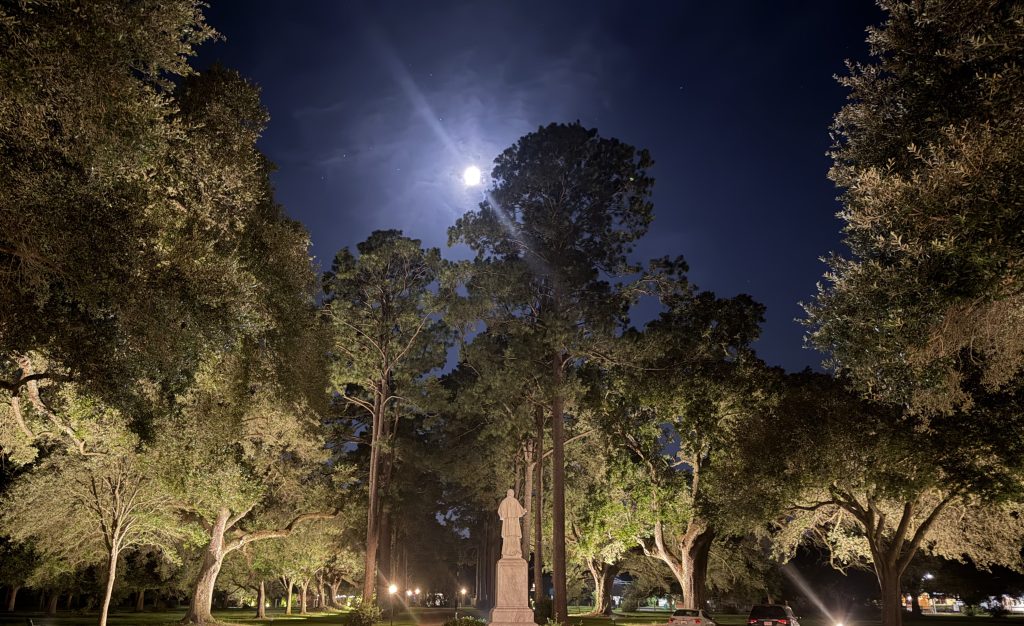
Photo: Looking up and to the things of heaven. A good practice for Holy Week and a good way to breathe deep and allow ourselves to be loved by God and experience some healing.

Link for the Mass readings for Tuesday, March 31, 2026

Are we willing to allow Jesus to reveal to us our darkness and sin?

“[Y]ou will die in your sin” (John 8:21).
Jesus continued his discussion with the Pharisees but they still remained on different planes of understanding. Jesus coming from above and the Pharisees remaining below. Jesus came to meet us in our humanity to free us from what binds us to the physical realm alone. For God created man in his image and likeness and although we retain our image, we lost our likeness when Adam and Eve disobeyed God’s command: “And the LORD God commanded the man, saying, ‘You may freely eat of every tree of the garden; but of the tree of good and evil, you shall not eat, for in the day you eat of it you shall die'” (Genesis 2:16-17).
In establishing this first covenant with Adam, God sought to invite him to not only participate in a relationship with his very own creation, he sought to have man perfected through obedience and participation in God’s life. When Adam and Eve disobeyed God, through their sin, suffering and death entered the world and was made worse in their lack of willingness to repent. The separation from the source of any living, mortal being leads to death. Separation from God means death.
God did not give up. He continued to seek to re-establish a relationship and covenants with his children, seeking to do so through Noah, Abraham, Moses, and David, until the appointed time when he sent his Son to help to shine the light on our fallen world. The light to reveal the way back to and restore the glory and likeness to the Father that all of humanity was created to participate in.
Some of the Pharisees still did not understand what Jesus was telling in being the Son of God whom the Father has sent. He continued to reveal his intimate knowledge of the Father so that they could see, believe, and come to know the Father as he does. Jesus also gave them a clear choice that those who continued to reject him were choosing darkness and sin over the light and life of Christ and so would die in their sin, by their own choice. Those who believe in Jesus will become one with him in his divinity. They will not only continue to share in the image of the Father, but they will also be restored to experience their likeness of him.
This is the holiness we are all called to participate in. We are called to repent and renounce the attachments to the things of this world. Jesus shows us our deepest hunger, which is to grow in our relationship with him and his Father and experience the love of the Holy Spirit. Jesus’ consistent obedience, doing nothing on his own, saying only what the Father taught him, and always doing what was pleasing to his Father was a constant untying of the knots of Adam’s disobedience and a constant growing in intimacy that we are invited to participate in.
Jesus’ sharing of this intimacy with his Father started to shine through the darkness. The beautiful ending line of today’s gospel account is that while at the beginning some of the Pharisees were still struggling to understand him, some now began “to believe in him” (John 8:30). The question for us to ponder is, are we beginning to see and believe, so we can repent from our sin, and live with God now and into eternal life?

Photo: Slowing down helps us to see our dark sides as well as the light within us.
Link for the Mass readings for Tuesday, March 24, 2026

Let not the sins and wounds of our past define us. Let Jesus do something new in us.

In today’s Gospel account from John, many people gathered around Jesus in the temple area and were sitting and listening to him, when a horrific display of human wickedness breaks in as, “the scribes and the Pharisees brought a woman who had been caught in adultery and made her stand in the middle” (Jn 8:3).
This act of depravity is worse if we spend any time thinking about this verse. This was a calculated plan hatched by the scribes and Pharisees. They had been watching this woman for the opportune time to break in and catch her, using their own words of accusation, in “the very act of committing adultery” (Jn 8:4). If they were this calculated and malicious, they would not have probably even given her the opportunity to put her clothes on.
The shame that this woman must have had to endure as she was dragged openly and publicly through the streets was made worse because they brought her to the temple area. The temple was where people came to give sacrifice to atone for their sins and to worship God. What was worse was that the dehumanization of this woman most likely had nothing to do with bringing her to repentance, but had all to do with demeaning her for their own twisted ends to trap Jesus.
The Pharisees and scribes hatched this plot just to trap Jesus in what they believed was a fool proof way to bring charges against him. If Jesus did not follow the law of Moses and condemn her to be stoned, he could be charged for speaking out against the Mosaic law. If he did condemn her, he then could be charged by Roman law. Only the Roman authorities could institute the death penalty.
Jesus bent down and began to write on the ground with his finger (Jn 8:6). With this action, Jesus could have been buying some time to think over his response. He could have just been showing an attitude of indifference toward the charges presented. The truth is, we don’t know what Jesus wrote in the dirt that day. St. Jerome proposed that he was writing the sins of those gathered around him as they were waiting for his judgment. Another interesting speculation is that Jesus was again showing his foundation in the prophetic tradition.
Jesus could have been quoting the prophet Jeremiah: “O LORD… all who forsake you shall be put to shame; those who turn away from you shall be written in the earth, for they have forsaken the LORD, the fountain of living water” (Jeremiah 17:13, RSV). Jesus had just shared a few verses earlier that anyone who believed in him : “Out of his heart shall flow rivers of living water” (John 7:37, RSV). Those who came to trap Jesus could have found themselves getting caught in the trap instead and receiving God’s judgement for their forsaking God present before them in His Son (Pitre).
Whatever Jesus wrote had an effect and allowed for the pregnant pause before Jesus spoke: “Let the one among you who is without sin be the first to throw a stone at her” (Jn 8:7). Jesus returned to writing in the dirt, allowing for another pregnant pause. One by one, starting with the elders, the accusers, and even those who had gathered to listen to Jesus that morning, all walked away.
Jesus stood a second time only to find the woman standing before him. This is the first time he addressed her: “Has no one condemned you?” She replied with three simple words, “No one, sir.” And Jesus replied, “Neither do I condemn you.” Jesus did not seek to inflict any more shame on this woman and forgave her. Nor did he dismiss the sin. In Jewish law, there needed to be two witnesses to condemn someone of a capital crime. There was no witness left to do so. Jesus chose not to condemn her but also stated clearly, “Go, and from now on do not sin any more” (Jn 8:8-11)
Jesus and the woman looked eye to eye in the temple area, a stone’s throw away from the Mercy Seat of God. Jesus met this woman surrounded in her sin, shame, and anguish and met her with mercy and forgiveness. He cleansed the temple precincts of the hypocrisy of the Pharisees and scribes who had darkened the area that day and his forgiveness purified this woman from the stain of her sin. This was no cheap grace. Jesus did convict the woman of her sin, but did so in a way that respected her dignity, unlike those who hauled her out publicly to humiliate her for their own malicious purposes. Jesus convicted her in private, once everyone had gone.
In forgiving her with love and mercy, I can imagine, that she, who had been dragged through the streets, not only experiencing the humiliation, but fearing that her death was imminent, then walked away from her encounter with Jesus crying. Crying not just with tears of relief, but with tears of joy. Could the words of Isaiah have come to her mind then, “Remember not the events of the past, the things of long ago consider not; see I am doing something new” (Isaiah 43: 18-19). This woman having drunk from the “stream of living water” walked away born again, a new creature, transformed by the purifying love of God.
This account embodies the gift of the Sacrament of Reconciliation. We all sin and fall short of the glory of God. We bring our sins, contrition, fears, and are to be met with the loving mercy and forgiveness of Jesus in the priest. Not so that we can then just go out to do whatever we want to again, but with his help, to go and sin no more. To not only be forgiven, but to also receive the grace to help us to resist temptation, to heal, and through participating in the life in Jesus, walk with him along the way to restore the glory we have lost.
————————————————————–
Painting: May we experience and share the same mercy and forgiveness.
Dr. Brant Pitre, Catholic Productions
Link for the Mass readings for Monday, March 23, 2026

“For Jesus, it was more important to conquer death than to cure disease.”

Martha, Mary, Jesus’ disciples, and anyone else who experienced the sickness of Lazarus wondered why Jesus did not go to be with his friend as soon as he received word that he was dying. Jesus had healed and restored so many, why would he delay? Many of us who have experienced the death or in this moment may be accompanying a loved one in their final days and hours, may have asked or may be asking the same thing. Why is Jesus allowing this to happen? Why do so many have to suffer? Why the delay?
Jesus responded to the disciples’ inquiry by saying, “This illness is not to end in death, but is for the glory of God, that the Son of God may be glorified through it” (Jn 11:4). Not sure if Jesus’ response would have helped me if I was among the crowd. Many of us have experienced the death of our family and friends, as did Martha and Mary. What is Jesus up to?
Does Jesus care? Does this Gospel speak to us today? Yes. At the height of the Covid pandemic back in March of 2020, I remember being quarantined at home still on oxygen and watching Pope Francis come out on the steps of St. Peter at the Vatican in the dark and rain and said, Jesus, “more than anyone, cares about us.” Just as Jesus wept when he witnessed the anguish of Martha and Mary, the sisters of Lazarus, he also imagined the anguish of one of his closest friends sick and dying. So he wept and weeps with us in our present challenges, trials, and pain. Still he did not come until four days later. Why?
We may wonder in hearing or reading this account where Jesus is in the midst of our struggles at times, may wonder where he was in past challenges. There is good news here. Jesus had a plan for Lazarus and he has one for us. We need to have the same faith as Martha. Though she did not understand why Jesus had not come sooner, she trusted in him. Martha responded to Jesus when he asked he if she believed that he was the resurrection and the life and she responded: “I have come to believe that you are the Christ, the Son of God” (John 11:27). Just as Jesus was present to Martha, he is present and among us as well. But why the delay?
St. Peter Chrysologos offers a great response to that question, “for Christ, it was more important to conquer death than to cure disease. He showed his love for his friend not by healing him but by calling him back from the grave. Instead of a remedy for his illness, he offered him the glory of rising from the dead.” Jesus followed the lead of his Father to help those who were closest to him to understand that the reign of sin and death was over. Jesus came to usher in a new creation.
I believe Jesus conquered death and it has helped me with my deepest loss. Jesus did not cure my wife, JoAnn, from pancreatic cancer, and yet, it is my hope that he conquered her death, reached out to JoAnn, and led her home to the Father so that she may now be experiencing “the glory of rising from the dead.” But I am getting ahead of myself.
Jesus brought back Jairus’ daughter from the dead as well as the widow of Nain’s only son. The difference between each of them and Lazarus, was they were raised fairly soon after their death within even the same day or days. Lazarus had been dead for four days. Ancient Jews, unlike the ancient Egyptians, did not embalm the dead. By the fourth day, Lazarus’ body would have begun to decompose. In Jesus calling him back to life, and Lazarus rising, the effects of the decomposition were reversed and he walked out of the tomb on his own power, even while still wrapped in his burial cloths.
We need to resist just a complacent passing over of this incredible miracle that Jesus performed. This was beyond anything that anyone had ever experienced, and why, “many of the Jews who had come to Mary and seen what he had done began to believe in him” (John 11:45). Without diminishing the wonder of this event, it was only a forecast of the miracle of miracles to come and why the Church in her wisdom placed this account on the fifth Sunday of Lent. This is but a foreshadowing of the death and resurrection of Jesus.
Lazarus rose in a miraculous way but would die again. Jesus died, conquered death, and rose again never to die again. He was willing to do so for Martha, Mary, and Lazarus, so they could rise with him on the last day and have their souls be reunited with their bodies. The good news for us reading these words at this moment is that Jesus did the same for us today!
The key take away from the story of Lazarus is that no matter how wonderful the raising of Lazarus, a dead man four days in a tomb, was, it was just a foreshadowing of the truly incredible miracle of miracles we are about to celebrate in just a few weeks. The fact that Jesus rose from the dead himself was no mere resuscitation as with Lazarus. Jesus experienced the fullness of death and conquered it becoming the firstborn of the new creation. Jesus would later ascend into heaven and from the right hand of his Father, he would send us the Holy Spirit.
This is why we never need doubt that we are not alone ever, and especially in times of our deepest suffering. Jesus cares and accompanies us in each of our present situations as well as our unhealed traumas of the past. When we weep we can remember, “Jesus wept” also. Why? To teach us that it is ok to weep. Our tears remind us that we are human and that when we have lost a loved one, even if now we know death doesn’t have the final answer, there is a loss none the less.
We will live on, and just as if we experienced an amputation, our living without those that have died will never be the same. As we put our faith in the One who cares for us and loves us more than we can imagine, we will draw closer to him and to each other, we will see the glory of God at work in each of our lives, we will heal, and we will overcome and emerge stronger than before. Our healing happens when we too believe in Jesus the Christ the Son of God.
Our hope in this life is that we are invited to write our final chapter not here but in the new creation to come. “On the last day, Christ will call us forth from our graves as our friend, if we’ve lived in friendship with him. And he will command us as our Lord, the one who made the heavens and the earth, to come out of the tomb and to experience the resurrection of the dead, the new creation, and the life of the world to come” (Dr. Brant Pitre).

Photo: Each time we see the altar, we are reminded that Jesus died for us and conquered death so that death no longer has the final answer, Jesus the first born of the new creation does.
Pitre, Brant. Catholicproductions.com
Link for the Mass readings for Sunday, March 22, 2026