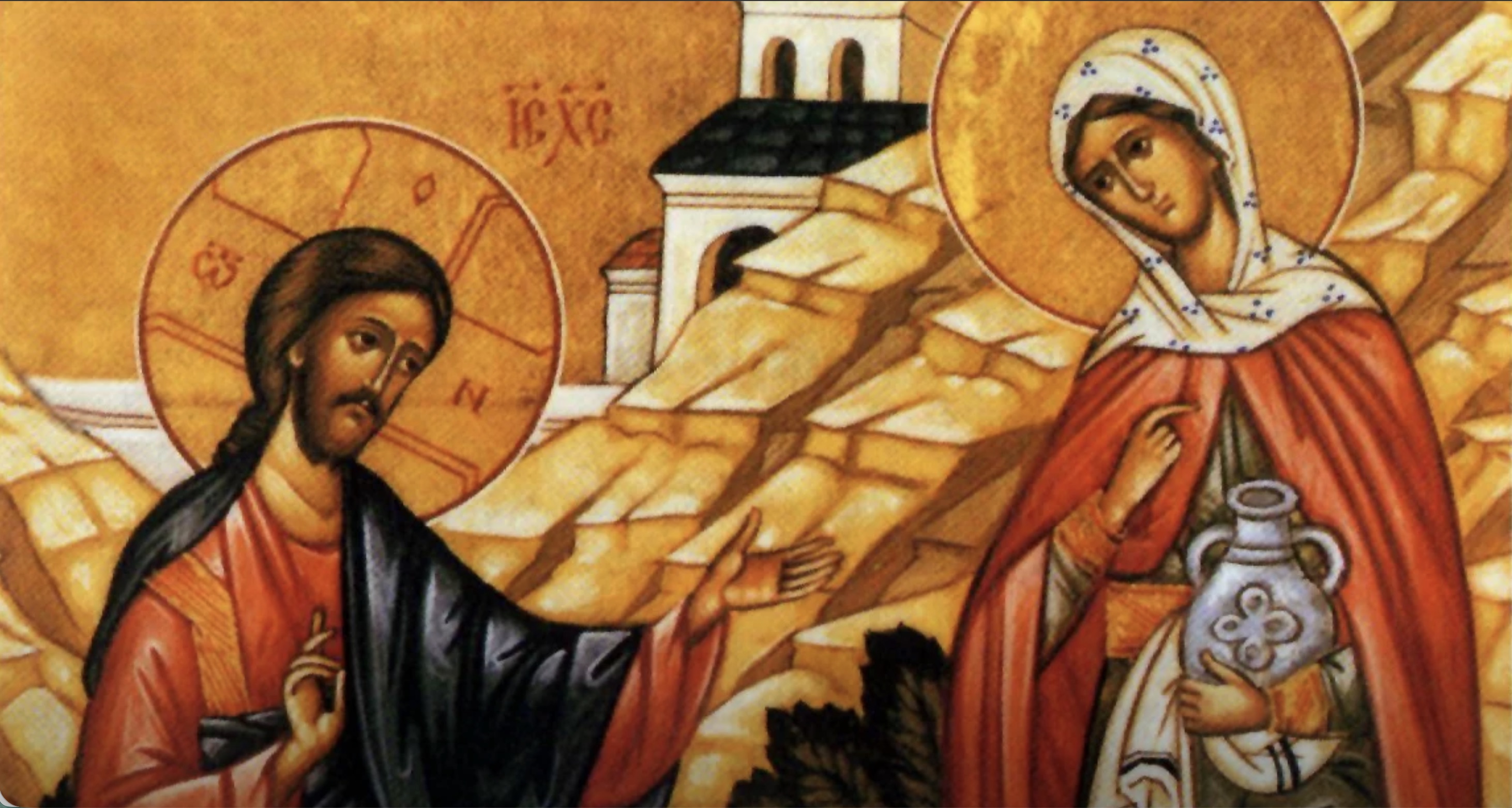
Meanwhile, the disciples urged him, “Rabbi, eat.” But he said to them, “I have food to eat of which you do not know” (Jn 4:31-32).
The disciples of Jesus had just returned with some food, but Jesus was already filled from his encounter with the Samaritan woman at Jacob’s well. Though one of the longest readings we will experience during Mass, save the Passion narrative, it is one of the most powerful.
From the beginning of this retelling, Jesus again does not recognize social taboos. He engages in a dialogue with a woman alone at the well at noon, she, who is also a Samaritan. None of these three details are in any way minor. Devout Jewish men did not speak with women alone in public, and they surely did not engage in discussions with Samaritans male or female. The subtle detail that the woman is by herself at the well around noon, may well be missed by us who do not frequent many wells.
The most common time to gather water would be the early morning or evening when it was cooler. This would also be an opportunity for social interaction with others doing the same. Coming at noon would increase the likelihood that she would be alone.
Jesus picks up on the fact that this woman is alone when he asks her, “Go call your husband and come back” (Jn 4:16). From the beginning of the conversation that Jesus initiates to the time she heads back to her village, Jesus engages her and leads her to a higher level. He does not judge her but loves her. He meets her where she is, engages her as she is, but seeks more. The blessing is that she is willing to follow his lead. By the end of the conversation, she has gone into her town with the courage of any of the earliest martyrs.
This woman, who came to the well at noon to avoid being seen, now left to return to the people of her village to proclaim that she had encountered the Messiah, a Jewish man. Her witness must have been powerful, for the people who most likely had judged her and made certain that she was kept at a distance, listened to her. They came to see Jesus, a Jewish man, because of her testimony, and then they encountered Jesus for themselves and believed.
Jesus entered the Samaritan woman’s life through her door but she went out of his door. That she was living in a state of sin did not prevent Jesus from coming to meet her alone in that very moment. We can see three other encounters of a man and woman meeting at a well in the Old Testament and each encounter ends in marriage: Abraham sent his slave to get his son, Isaac, a wife and he found Rebekah at a spring (Genesis 24), Jacob met Rachel, (Genesis 29:9-14), and Moses met Zipporah (Exodus 2:16-22) at wells.
This betrothal imagery of Jesus alone with the Samaritan woman that John is recording for us reveals the divine wedding of heaven and earth. Jesus is the bridegroom and the Samaritan woman, half Jewish and half Gentile, represents the Church. Jesus came to this woman and met her in her sinfulness, her isolation, and her thirst. He loved her, and led her with his tender chords of love to acknowledge what was preventing her from experiencing the love of God the Father.
Jesus seeks to encounter us in the same way. He doesn’t love us when we become perfect. He loves us as we are right now in our imperfections and sins. The problem with our sin is, not that God does not love us, for he does. The problem is that we are not free to experience his love for us until we, as did this woman, acknowledge where we have fallen short of the glory of God, what and who we are placing before God. When we do that, we open ourselves up to receive the love of the Holy Spirit. Then we, like this woman, can share the love we have received!
Evangelization of the Good News is not about Bible-thumping and condemnation. Proclaiming the Gospel is about engaging in and building relationships, being present, and allowing God to touch others through us. This happens when we too are willing to repent and allow ourselves to be loved by Jesus and allow him to flow through us like a spring of living water. Then we too will be able to experience the satisfaction and fulfillment Jesus experienced with his encounter with the Samaritan woman who was lost but had now been found.
Painting: The sins of the Samaritan woman do not prevent Jesus from loving her, they prevent her from being able to more freely receive and return his love.
 Spiritual Stepping Stones