Forgiveness is a wonderful gift of grace and mercy that our loving God and Father wants to bestow upon us. The reasons is that he seeks a deep and intimate relationship with us. If we asked many people if they would like to receive forgiveness most would say yes. The number would most likely be less if we were to ask them how many would be willing to forgive others. If we were asked to forgive someone seven times, that number would shrink significantly, and if we were invited to forgive someone seventy-seven times, is there any among us who would say yes, any among us willing to consider doing so?
Why is forgiveness so hard for most of us? I do say most because there are those who have healed, forgiven, and see the wonderful gift in forgiving. One reason could be that we have few role models. I would imagine those that are more forgiving have not only experienced positive role models but have received forgiveness themselves.
How often do we seek forgiveness from others when we have done something wrong, inappropriate, or made a mistake? Do we seek to explain first, make excuses, justify, or worse ignore our behavior altogether. When we resist being humble, confronting our offenses, and do not seek reconciliation, we do not experience the healing balm of forgiveness. We are then less likely to be willing to offer forgiveness and more likely to hold a grudge or to seek revenge.
Yet, even if we receive the gifts of mercy and forgiveness, as the servant did in today’s parable (Mt 18:21-35), we may still choose to be unforgiving toward others. We may resist forgiveness because we have already created patterns of distancing ourselves, making someone else as other, somehow justifying the hurt and pain we feel. We think that by holding a grudge, offering another the cold shoulder, and/or keeping them at a distance, that we are giving them just what they deserve.
Unfortunately, patterns of not seeking forgiveness and not being willing to forgive others, allow ourselves to bear grudges, to distance ourselves, or project negative feelings to cover up our own inadequacies, not only perpetuate a climate of isolation and divisiveness, but continues to multiply mistrust and further distance. When allowed to be left unchecked this leads to violence in too many forms that we witness all too often.
Even in a case when someone has truly wronged us in some way, Jesus is guiding us to forgive, to make an attempt to understand why someone might act in such a way, and to shift the momentum away from the perpetual cycle of hurt and to seek to bring about healing and reconciliation.
Jesus is clear that if we are not willing to forgive, we will not be forgiven. This is true because when we are unwilling to forgive, we cut ourselves off from the love of God. We choose to remain steeped in the hurt and pain inflicted upon us over the healing balm that God offers. The Sacrament of Reconciliation is a tremendous sacrament of healing, and a pattern of regular confession helps us to receive not only the healing and forgiveness of our loving God but also his guidance and strength to resist the temptations of the sins we have confessed. As we develop a regular practice of examining our conscience, experiencing contrition – true sorrow for our sins, confess, and are willing to complete our acts of penance, we are absolved and forgiven from our sins, and we will experience healing and freedom.
Forgiveness does not mean we condone another’s inappropriate actions. It means we choose to no longer participate in the cycle of hurt. Even when we feel forgiveness is impossible, are we willing? That is all Jesus requires. We forgive in the beginning when we are willing to ask Jesus to forgive through us until we can learn to forgive ourselves, like Doha Sabah Abdallah.
Doha lost her son during the bombing of her city in 2014. Doha shared her story with Pope Francis while he visited Iraq back in 2021. She said: “By imitating him [Jesus] in our sufferings, we testify that love is stronger than everything,”
Pope Francis shared how touched he was by Doha’s story of forgiveness. On his plane trip back home, Pope Francis said, “I forgive. This is a word we have lost. We know how to insult big time. We know how to condemn in a big way… But to forgive, to forgive one’s enemies. This is the pure Gospel. This hit me in Qaraqosh.”
Let us take up the mantle that Jesus holds out to us today and this Lent, to seek forgiveness, healing and reconciliation, and so receiving the forgiveness and love of God, may we then be more willing to forgive or to ask God to forgive through us until we can.
————————————————————————-
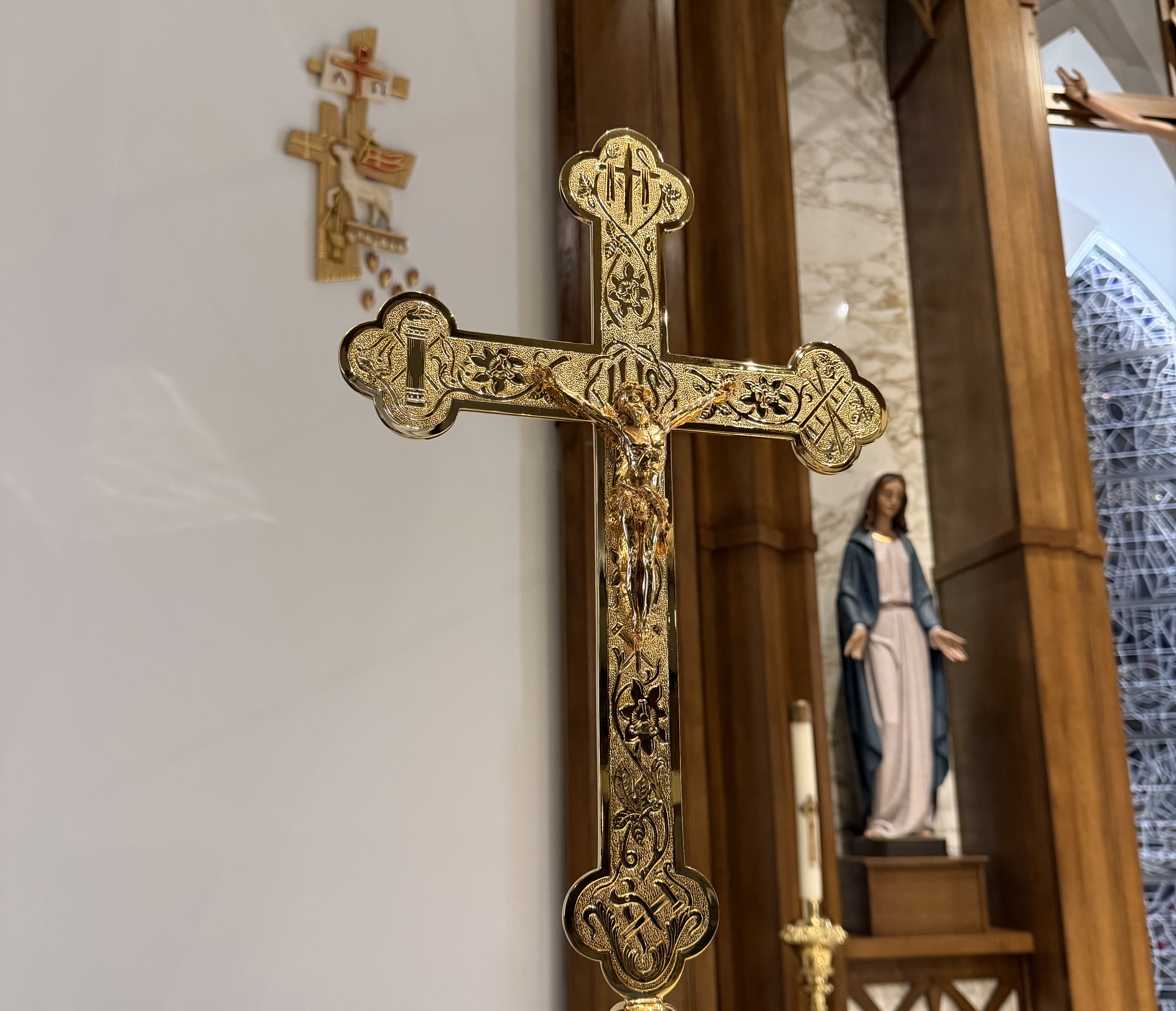
Photo: Need a model to learn how to forgive? Look to and ask Jesus and Mary to help.
 Spiritual Stepping Stones