

When we are willing to spend time with and get to know one another, relationships happen.
The Sermon on the Mount was most likely not one long discourse, but a gathering together of Jesus’ teachings. Just as with itinerant preachers, speakers, and lecturers of today, this material recorded in Matthew was not only shared one time. Jesus probably shared different segments of these teachings at different locations throughout his ministry, and in slightly different ways depending on the group he was speaking with. Also, the Gospel writers would want to highlight different aspects of his teachings for their audiences.
As was presented yesterday, Jesus made it clear that he did not come to abolish the law or the prophets but he came to fulfill them. With the beatitudes, Jesus offered practical ways in which we can find fulfillment and happiness. In today’s account, he introduces the first of six antitheses. With these apparent contrasting statements, Jesus is providing for his disciples the way to avoid the trap that some of the religious leaders of his time fell into: “I tell you, unless your righteousness surpasses that of the scribes and Pharisees, you will not enter into the Kingdom of heaven” (Mt 5:20).
Those scribes and Pharisees that Jesus was talking about were those who believed that they were following the letter of the law, but their hearts were not changed. They may have been adhering to the external provisions of the law, but were not changed themselves, their hearts were hardened, they were focused more on their own access to honor and power. They were also imposing strict adherence to the law without providing the support or means for others to achieve what the law imposed. The law became more important than the dignity or value of the person. Jesus recognized the law, but also realized that it was in place to help to provide guidance and discipline so one could better resist the temptations of our fallen nature. The law was to be a foundation to be built upon, not the end goal in and of itself.
Just as children need clear boundaries and structures in place to provide a clear path toward healthy development, so this is true for those of us growing and maturing in our faith. We need to learn to crawl, to build strength and balance before we can take those first wobbly steps. With continued support, we are then able to walk and soon run. Jesus is not only providing the means to go through each of these stages in our faith life, figuratively teaching each of his disciples and us today to not only crawl, walk, and run but also to also be able to fly!
The Beatitudes and six antitheses are challenging because each one of them goes counter to much of the way the structure of our fallen world has been governed for centuries. If we are to catch the fire that Jesus has come to set, we need not only to read, pray, meditate, and contemplate upon on the teachings of the Sermon on the Mount, we need to also see their relevance and practicality to our time and place today, and begin to put them into practice. As Christians, our faith ought not to be shaped and informed by our culture, but we are to be shaped and conformed by the Gospel of Jesus the Christ, so to shape and inform our culture.
Today we start with the first antithesis: “You have heard that it was said to your ancestors, You shall not kill; and whoever kills will be liable to judgment. But I say to you, whoever is angry with his brother will be liable to judgment, and whoever says to his brother, Raqa, will be answerable to the Sanhedrin, and whoever says, ‘You fool,’ will be liable to fiery Gehenna (Mt 5:21-22). The seeds of anger begin to sprout in our mind from our knee jerk reaction to a perceived or actual threat, from our hearts hardened by prejudgments, prejudices, and/or a reflection of our level of spiritual immaturity.
Jesus addresses the known provision against murder. He then builds a hedge around the Torah. If one does not want to break the law, another is imposed so as to protect one from even getting close to breaking the first. If we can resist the temptations of our reactions and instead make decisions based on mindfulness and loving one another, such that we resist the temptation to criticize, judge, demean or dehumanize another, then there is little chance for our anger to grow into wrath, that left unbridled could lead to murdering someone.
Jesus is saying that our words matter, that they have the power to destroy or to create. Look at the example Jesus gives. He says that calling someone Raqa, Aramaic for a block-head or idiot, and then calling someone a fool, would “be liable to fiery Gehenna” (Mt 5:22). Just think of how far from those two words we have fallen with the use of our language directed toward one another. How polarized we have become as a country, the level of demeaning words, tone, and language that is condoned, supported, and justified are unacceptable. This has a ripple effect that poisons our culture and society. We then wonder why we have so much violence, hateful rhetoric, and prejudice in our country.
We can change for the better when we are willing to spend time with and get to know each other. Our first step is to recognize that our words and our actions matter. Jesus still challenges us in today’s Gospel to encourage, empower, and respect the dignity of each person. When we resist a pharisaical approach to the law and instead recognize the value and dignity of each person, we will have a better chance of building relationships and so be more willing to serve, support, and empower one another. We will also be more apt to reform policies and structures that are not just for a select few but that respect the dignity of each person in the womb, after birth, and at each stage and condition of life until natural death.
May we all take some time today to reflect on Jesus’ teaching about how we think, speak to and about, and act toward one another. May we examine our conscience and seek forgiveness for those times we have thought, condoned, or justified thoughts, words, and/or actions that have been belittling, dehumanizing, and demeaning that have come directly from us or others and we said nothing to hold others accountable.
Jesus, please impart within us your infusing power of justice, love, and mercy so that we will be more inspired to live out your teachings in our daily lives. Help us to strive to build bridges of relationships grounded in mutual respect, support, empowerment, and accompaniment with our brothers and sisters, no matter our race, ethnicity, creed, or gender, and to commit to building a culture of life and dignity for all, not in some abstract utopian way, but in the concrete moments of our everyday experiences, one person and encounter at a time.
——————————————————————–
Photo: Living the Gospel by building a bridge of friendship
Link for the Mass readings for Thursday, June 11, 2020
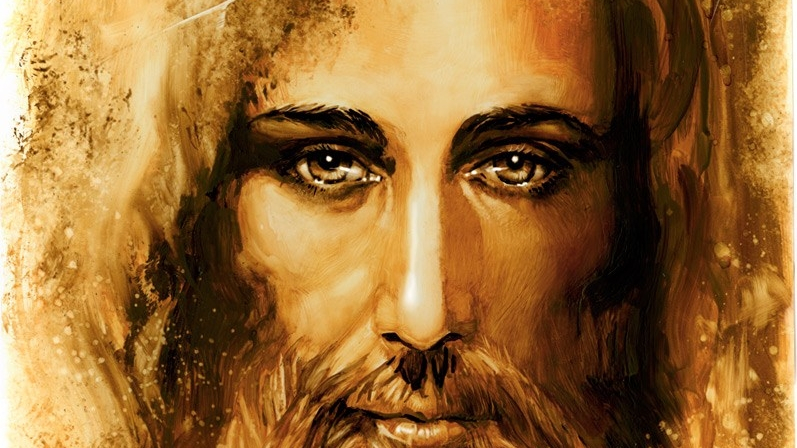
Jesus invites us to repent from our fear, selfishness, and prejudices and to love others as he loves us.
Jesus said to his disciples: “Do not think that I have come to abolish the law or the prophets. I have come not to abolish but to fulfill” (Mt 5:17). Jesus was a devout Jew, he grew up practicing and understanding the law and the prophetic tradition. We see evidence of that when, at twelve, he is found by his parents among the teachers and scholars discussing, with understanding and wisdom, the law. Jesus in his public ministry very much speaks on behalf of God, calling the people of Israel back to the law, both those who have turned away from God as well as those who used the law as a bludgeon and for building a wall to keep others out.
Jesus shows time and again that being true to Torah is about building relationships with God and others. He extends his hand, person to person, as a bridge for people to come to God, and he calls out the religious leaders who have utilized the law to build walls, to keep people out. Jesus healed on the Sabbath, Jesus forgave sins, Jesus touched lepers and he ate with tax collectors, prostitutes, and sinners, those on the peripheries, not because he was being willy-nilly with the law, but because he was showing by his lived example that the greatest commandment of the law was to love God with all his mind, heart, and strength and to love his neighbor as himself.
This practice goes right to the foundation of who God created us to be. All of humanity has been created in God’s image and likeness. By that very fact, each of us is endowed with dignity by the very fact that we exist as a son and daughter of God. In Jesus, we see that the highest observance of the law of God is to love. Jesus met each person where they were and accompanied them. That also meant calling out those who misused the law by keeping others at arm’s length. Jesus did the opposite. As the Son of God, Jesus became one with us in our humanity, so that we could become one with him in his divinity. Jesus offered others his arms extended outward, inviting others to enter into his loving embrace. He would show this fully on the cross, where he opened his arms wide to embrace all peoples of every race, ethnicity, and gender.
Jesus built on the law and the prophets, because he was the fulfillment of them, and in doing so, he gave the law its greater context. The foundation of the law and the prophets were founded in Love, meaning its highest expression, which is to will the good of the other as other. This means that the law is not like a stagnant pool, where we grasp onto the law and tradition for its own sake, but the divine law of God is rather like a running stream, it is always fresh and being renewed by the Holy Spirit.
What Jesus ushered in, was the reign of God, which was possible through the foundations laid by those who had gone before him: Abraham, Isaac, Jacob, Joseph, the judges and prophets, David, and those who answered the call of God to serve in his name. From a person, Abraham, to a clan, a loose gathering of twelve tribes and then a nation, Israel, God called a people to himself to shine the light of his will to others. Then at the appointed time, he sent his Son, to be one with the people he called to draw all nations to himself so that all created in his image and likeness were invited to come to be one with him, the God of all creation.
Our joy and fulfillment take shape as we are transformed by the love of God. As we build on the traditions of our faith that give us a solid foundation, we must resist holding on to them so tightly that they strangle us and suck the life out of us. That which leads us to encounter and renew our relationship with Jesus in love is what we are to embrace and preach. That which has become stagnant and no longer is an avenue for affirming life must be pruned.
The love and mercy of God extended to us by the presence of Jesus among us is not a watering down of the law and the prophets. I would argue that it is not only the fulfillment of them, but they are harder to put into practice and demand a closer walk with Jesus. This is so because we cannot fulfill a life of love and mercy on our own. We can only fulfill Jesus’ invitation to love and be able to enter into the chaos of another if we are transformed by his love and continue to allow Jesus to be present to others and love them through us.
God’s love invites us out of the darkness of our own sin and withdrawing into our own false sense of self-control. We become healed when we are humble enough to trust the movement of the Holy Spirit in our lives, are willing to confess how we put our own self-interests, fears, and prejudices first and become contrite – to acknowledge the sorrow of the hurt we have caused others, and become less drawn to making excuses and protecting the false self of the ego. Through participating in the life that Jesus invites us to, we drink from the living stream of his love, we come to grow into the freedom of being true to ourselves and who God calls us to be. This is not for ourselves alone. Jesus calls us to be a light for others who are experiencing the shadows of a life of half-truths and/or are immersed in the darkness of a false and/or empty life that we ourselves are emerging from.
——————————————————————————–
Painting: by Melody Owens – The original painting is 11″x14″ gouache.
Link for the Mass readings for Wednesday, June 10, 2020
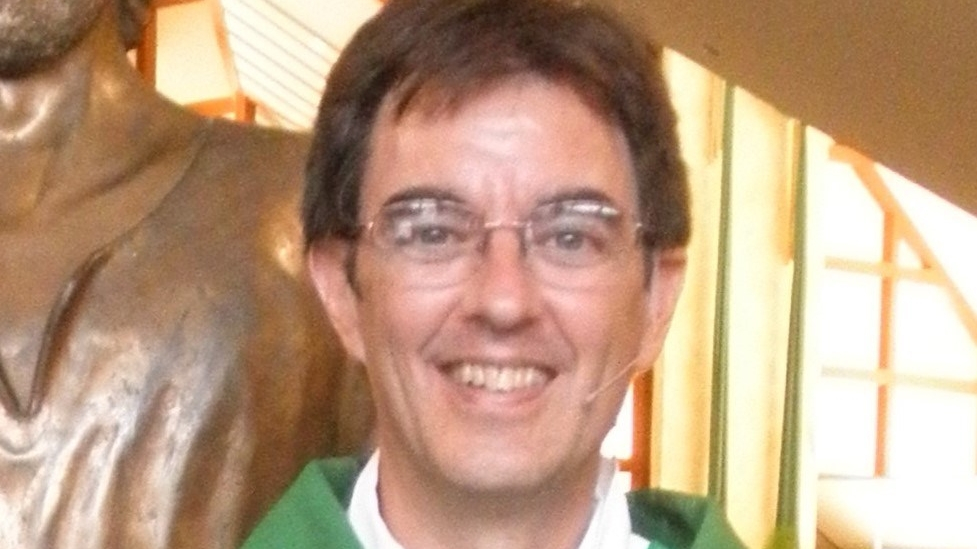
Catch the eye of another today and offer them a smile.
We have returned to the season of Ordinary Time. The focal point of this season expressed in the readings chosen from the Gospels will be on the life and teachings of Jesus. Our series of readings for the next few weeks will be a return to Jesus’ Sermon on the Mount. In today’s account, Jesus encourages his disciples to be “the salt of the earth” and “the light of the world” (cf. Mt 5:13-16).
This call continues to ring true for us today as his disciples. We too are to be “salt” and “light”. Salt has two major properties, preservation and flavor. Jesus emphasizes the aspect of salt being seasoning that one puts on food, which enhances its flavor. Light allows those to see in the darkness. How then can we be salt and light?
We begin by remembering that we are an Alleluia people, meaning that we are a people grounded in hope and joy because we who die with Christ will rise with him. Also, our faith is not just for us alone, we are to go out and share it with others, we are to bring Jesus to others. Pope Francis, in the very first line of his apostolic exhortation, Evangelii Gaudium, writes: “The joy of the gospel fills the hearts and lives of all who encounter Jesus. Those who accept his offer of salvation are set free from sin, sorrow, emptiness, and loneliness.”
The Pope is not saying that when we accept Jesus into our lives and develop a relationship with him that all will go our way, there will no longer be conflict or pain and that our life will now be perfect. What he means is that Jesus is the very embodiment of love and the light that leads us away from the darkness of our sin. Jesus is present and accompanies us in our pain and sorrow, and assures us that we are not alone. Jesus is the one who fulfills the longing of our heart’s deepest desire, he reveals to us our meaning and vocation in life. Jesus brings us hope and offers his hand to lead us through our darkest nights of despair and trauma.
We who have experienced the healing balm of the presence of Jesus in our life, have grasped his hand for strength, have leaned on his shoulder to cry on, and experienced the joy of our encounter with him, are to be present to others in the same way. We are to be salt by bringing the joy of Jesus to all those we encounter. Too many who claim to be Christian, walk with a cloud of gloom around them, they have become salt that has lost their flavor. Instead of drawing others to the gospel, they have withdrawn within themselves and push people away.
A simple, yet genuine smile can work wonders for someone who begins to believe that no one cares or has the time of day for them. This is true for the recipient as well as the giver. If you have felt like you have lost some of your flavor or if you are not sure how to be a light for others, next time you catch the eye of another, smile.
I am not the most extroverted of people and was more introverted in my youth. In my freshman or sophomore year of college, I heard a talk on cassette given by St Mother Theresa. On the tape, she mentioned reaching out to others with a smile. I still remember the first time of risking to smile at someone after hearing Mother’s encouraging words. I was walking up the sidewalk toward the parking garage on campus. I do not remember if the person I smiled at returned the smile, yet I do remember that day as a key moment in my faith journey. Having heard of how to share the light of God’s love with another, and then to follow through with the courage to do so, filled me with joy, and it continues to make a difference in my life and hopefully, the lives of others.
How can we be salt and light in our everyday experiences? I would recommend beginning by smiling at those we encounter. This we can do even from six feet away and it need not only be limited to those we feel comfortable with or like either. We can share a smile with those we may have had conflicts with and even those for whom we may feel a bias or prejudice. This is only a small beginning, but it draws us out from our own self-centered focus and directs our attention toward willing the good of another.
In this small act, we also say to the person on the receiving end of our smile that we care enough to notice them, that they are loved just for being present in that moment. They have worth and dignity just for who they are. A simple, sincere smile can bring a little flavor to someone in a sour mood, as well as a little light to someone in a very dark place. These days we can certainly use a few more smiles.
———————————————————-
Photo: A smile for your day, may you receive it and pass it on!
Mass readings for Tuesday, June 9, 2020

The dignity of life matters. Whose cry do you hear?
The Beatitudes, like the Ten Commandments, are boundaries that define us as children, inheritors of God’s will and blessing. We have been created to be disciplined, so to strive for freedom of excellence. Those who are disciplined to practice and train for hours have the freedom, are blessed, to play the violin, guitar, or a French horn. I still possess the same guitar my father gave me when I was seven. I can pick it up and play some notes, but because of my lack of discipline in practicing daily, I do not have the freedom nor am I able to experience the joy my father does when he plays his guitar.
This holds true for any endeavor in the arts, sports, business, family, or our spiritual life. We become truly happy and we are blessed by God when we actualize and develop the gifts he has given us through our practice and discipline. Over time, with continued collaboration with God, we will experience the freedom to put these gifts into action.
The Beatitudes that Jesus presents to us today as recorded by Matthew in his Gospel offer us opportunities to experience meaning, fulfillment, and joy. Each of them is worthy of a reflection in their own right, but for today, let us look at the fourth Beatitude which is appropriate in our present climate.
“Blessed are they who hunger and thirst for righteousness, for they will be satisfied.” The righteousness Jesus is referring to here is the justice of God. In the fullness of time, God will make all things right. We will most likely not see the full measure of justice for all people in our lifetime this side of heaven. Yet, with so much injustice all around us, we are not to just put our heads in the sand and do nothing. We are to follow the hunger and thirst God stirs up within us to discipline ourselves and work for justice.
We begin by moving toward those issues that bring us to tears and move our hearts with compassion. Whose cry do we hear? Do we hear the unborn whose parents choose to end their life before they are born, those unarmed African Americans and people of color killed by police officers? Do we weep over the increasing epidemic of missing and murdered Native American and Alaskan women, people fleeing war and violence that have been denied entry into our country or worse separated from their families? Are we aghast when we hear about those dying from mass shootings and gun violence, the exponential number of our youth that are dying from addiction, and the vast number of people who die because of lack of access to adequate health care?
To me what is the most horrific of the above mentioned, as well as the many more that I didn’t, is that each of the above has become, but ought not to be, politicized. Precious human beings continue to die because too many of us do not make the effort to see the issue from the point of view of those who are losing their lives. Each is a human dignity issue. To attempt to rationalize or justify any one issue weakens a consistent ethic of the dignity of all life. We begin to bring about change by becoming aware, educating ourselves, coming to understand the plight of, and build relationships with those whose cries we hear. We pray for God’s guidance and we act to bring about systematic change that protects the lives of those we feel most called to help as well as not hindering but supporting those seeking to answer the cries of others. Even if in answering the thirst and hunger that arises in our hearts saves one life, we can experience some satisfaction and build from there.
Photo: @socialworktutor Helps to explain those who misunderstand the purpose of the phrase Black Lives Matter. The sign reads: We said – Black Lives Matter – Never Said – Only Black Lives Matter – We Know – All lives matter – We just need your help with #BlackLivesMatter for black lives are in danger. Being willing to understand another’s point of view is an important first step.
Link for the Mass readings for Monday, June 8, 2020

Jesus built a bridge between heaven and earth so we can build bridges of relationship between each other.
Today we celebrate Trinity Sunday. The Trinity is the foundation of not only our faith but the reality of all that exists. God has been, is, and always will be. God exists as a communion of three Persons, God the Father, God the Son, and God the Holy Spirit. Three Persons in one God, but not three beings.
Anything we say about God is going to be woefully inadequate of the truth about who God is. As the saying goes, all analogies limp regarding our description of God. We have a better chance of saying what God is not. To say that God is not a being is a good place to start because God is not in the same genus as us, nor in any genus. God is not even a supreme being, the being of all beings. God transcends all space and time. God is completely self-sufficient, God does not need anything, does not rely on anything else, and thus he does not need us, so he is not in competition with us.
God is infinite act of existence, or in the Latin of St Thomas Aquinas, ispum esse subsistens, the sheer act of “to be”. This means that God has no limitations. To say that God is three Persons is harder for us to comprehend because we often in our modern context use the words person and being as synonyms. To use the word person in speaking of God means that we are speaking relationally.
We describe God as Father because he begets God the Son, God the Son is the one begotten. The Son is not generated or created, because the Son has always existed with the Father. This is true because they are not finite beings separate from one another. They are infinite, though distinct in their relation to one another. God the Holy Spirit is then the Love shared between God the Father and God the Son. God’s immanence, God within himself then is an infinite communion because of the infinite giving and receiving between each other. Each person gives and receives infinitely, perfectly giving all and holding nothing back.
We will never be able to fully comprehend God because he transcends our finite reality, but we can encounter him and develop a relationship with him because he draws close to us, he reveals himself to us, he seeks us his created beings out. We are blessed in that he has drawn close to us in the Person of his Son. “God so loved the world that he gave his only Son, so that everyone who believes in him might not perish but might have eternal life” (Jn 3:16).
Jesus, in his incarnation, is the enfleshed Son of God. Jesus is fully divine and fully human and this is how he reveals God the Father to us. Through becoming one with us in our humanity, we are able to share in the love that he experiences as Son with his Father because God has created all as interconnected, such that what affects one, affects all.
The best way to understand, to know, and to build our relationship with God, is not to force God to fit into our finite reality, mindset or limited view, but to be open to, “the Spirit of truth, he will guide [us] to all truth” (Jn 16:13). The Holy Spirit will guide and lead us to all truth when we resist turning in upon ourselves and instead be open to following his lead. When we are willing to be expanded by his love, we will be more open to opportunities to be loved and to love in our everyday moments. For where the willing of the good of each other is, God is, and Love is present.
Jesus was sent into the world to save all of humanity, not just a select few, such that all might have eternal life. The richness of the diversity of humanity is not a curse, but a gift. This Holy Trinity Sunday, may the Love of God move us beyond our defensive and divisive postures such that we resist closing our hearts and minds but instead become more willing to open them to build bridges of encounter and relationship.
Photo: Building relationships
Link for the Mass readings for Sunday, June 7, 2020
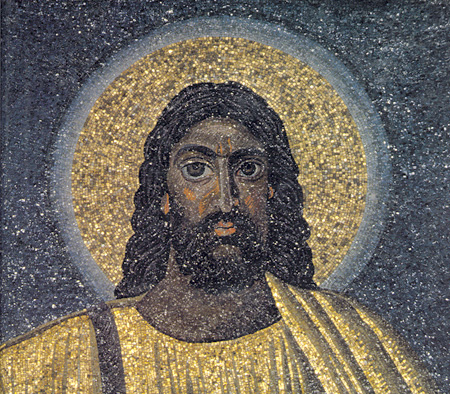
Jesus through George Floyd is holding up a mirror. Will we look away or see?
In our Gospel reading from Mark, there appear to be two separate accounts. In the first, we witness Jesus’ critique of the scribes, and in the second, the generosity of a poor widow is emphasized. There could not be a much starker contrast between the two. Jesus points out those scribes with the primary motivation of self-aggrandizement, “who like to go around in long robes and accept greetings in the marketplaces, seats of honor in synagogues, and places of honor at banquets” (Mk 12:38-39). They make a lofty show of themselves, yet, what is worse is the following verse. “They devour the houses of widows and, as a pretext, recite lengthy prayers” (Mk 12:40).
The implication is that certain scribes used their position not to edify, provide care for, and lead widows closer to God, but instead chose to exploit them for their own selfish gain. As Jesus finishes his rebuke of the scribes, he moves to observe those making contributions at the treasury of the Temple. A poor widow donates two coins. No one, except Jesus, pays her any notice. Jesus calls his disciples to him and says, “Amen, I say to you, this poor widow put in more that all the other contributors to the treasury. For they have all contributed from their surplus wealth, but she, from her poverty, has contributed all she had, her whole livelihood” (Mk 12:43-44).
Jesus commends this woman for her generosity. She does not make a fancy show of what she is doing, she quietly and simply gives all that she has. Is Jesus sharing his critique of the scribes just moments before related to this expression of generosity by the widow? Could she have done so through the influence of one of these scribes? We are not told why she gives all she has, but her willingness to do so is clearly on display.
Jesus so often in the Gospels holds up a mirror, especially to those in positions of religous authority who place their focus on themselves, their own gain, and their own prestige, instead of their service to the poor and those in need. Those like Matthew and Zacchaeus, though not scribes but tax collectors, embraced Jesus’ invitation of repentance, were willing to make a 180 degree turn from their old ways of self-service, and instead were willing to change and begin anew.
Jesus, through George Floyd, has been holding up a mirror to all of us this past week. George, when he asked for water while the police officer had his knee on his neck, echoed Jesus on the Cross when he said, “I thirst” (Jn 19:28). George also called out for his “mama” as he died, just as Jesus looked down to his mother before he gasped his last breath and said, “It is finished” (Jn 19:30).
Will we be like the unnamed scribes and Pharisees who were not willing to look in the mirror that Jesus held before them, more interested in supporting their place of entitlement and privilege, and unwilling to change? Will we acknowledge in the death of George Floyd and so many who have gone before him the disparity of equality for people of color in our country and the poison of racism that sickens our society? Will, we as did Matthew and Zacchaeus allow our consciences to be convicted, be willing to repent and rend our hearts so to be moved and more willing to love, so to stand alongside our brothers and sisters in need?
We are receiving a clear message through this pandemic and from Jesus through George Floyd that what affects one of us, affects all of us or as Bruce Lee stated, “Under the sky, under the heavens, there is but one family.”
Photo: Closeup of a mosaic of Jesus in the apse of the Basilica of St Cosmas and Damien in Rome.
Link for the Mass readings for Saturday, June 6, 2020
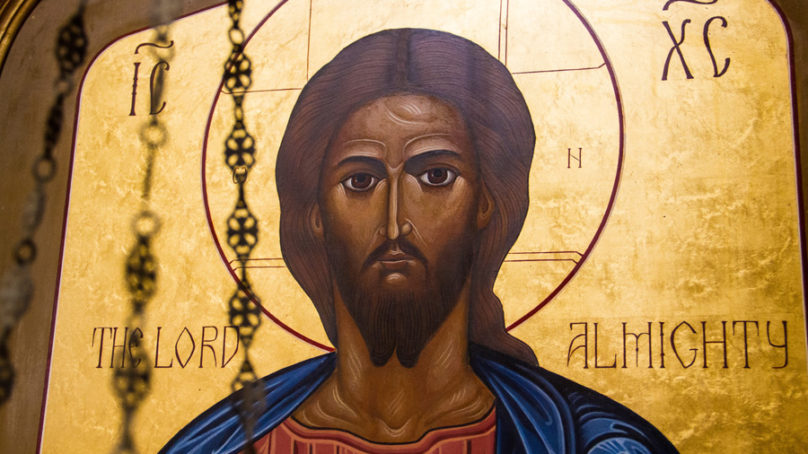
Who are we to follow? Iesous Kyrios – Jesus our Lord!
The opening scene from the Gospel from Mark opens with Jesus teaching in the temple area. He poses this question to those gathered, “How do the scribes claim that the Christ is the son of David” (Mk 12:35)? The question that Jesus is offering engages in the Jewish debate regarding the promise of the Messiah or Mashiach in Hebrew, the Christ or Christos in Greek. Messiah or Christ is not a surname but a title meaning anointed one.
One interpretation of the long-awaited Messiah would be a kingly figure descended from King David. Son of David is a common Messianic title. The blind Bartimaeus called out to Jesus using this title (cf. Mk 10:46-48). Jesus then quotes the beginning of Psalm 110 as he goes deeper. “David himself, inspired by the Holy Spirit, said: The Lord said to my lord, ‘Sit at my right hand until I place your enemies under your feet’” (Mk 12:36).
This statement can be a little confusing, especially if you are hearing this word proclaimed and not reading it closely. The first Lord referred to by Jesus has a capitol letter l and the second lord has a lower case l. The reason for this is that in the original Hebrew the sacred name of God was not to be uttered or written. Instead, the Hebrew Adonai, meaning Lord, would be used to refer to God. The use of the word lord with a lower case l could refer to a military leader like King David.
In this very short account from Mark today, Jesus deftly addresses some of the titles floating around about him, Messiah, Son of Man, Son of David, and with his final question, “David himself calls him ‘lord’; so how is he his son” (Mk 12:37), this One to follow David would be even greater than the expectations of these messianic titles because he actually preceded David and so is even greater than the genetic heir to David. Jesus is saying that he is the Son of God and he is Lord.
This not only far surpasses even the highest ideal of messianic hope but would also be a direct challenge to the occupying Romans. For in the ancient Greek, of which Mark is written, Kyrios, means Lord. For the Romans, Caesar is Lord. Jesus is challenging the worldly establishment by saying that he, not Caesar, is Lord.
Jesus will soon after these words participate in his suffering, death, resurrection, and ascension, where he will return to be seated at the right hand of God his Father. The enemies that will be subjected under his feet will be sin and death, each of which he will defeat.
This is why Jesus is our hope even and especially during our troubled times. Jesus is our Lord not any emperor, president, or worldly leader. It is he to whom we are to place our trust, to follow and Jesus is the Lord who will lead us to freedom from our bondage to addiction, racism, sin, suffering, and ultimately even our death.
Photo of an icon of Jesus the Lord accessed from Orthodox Christian Network
Link for the Mass readings for Friday, June 5, 2020
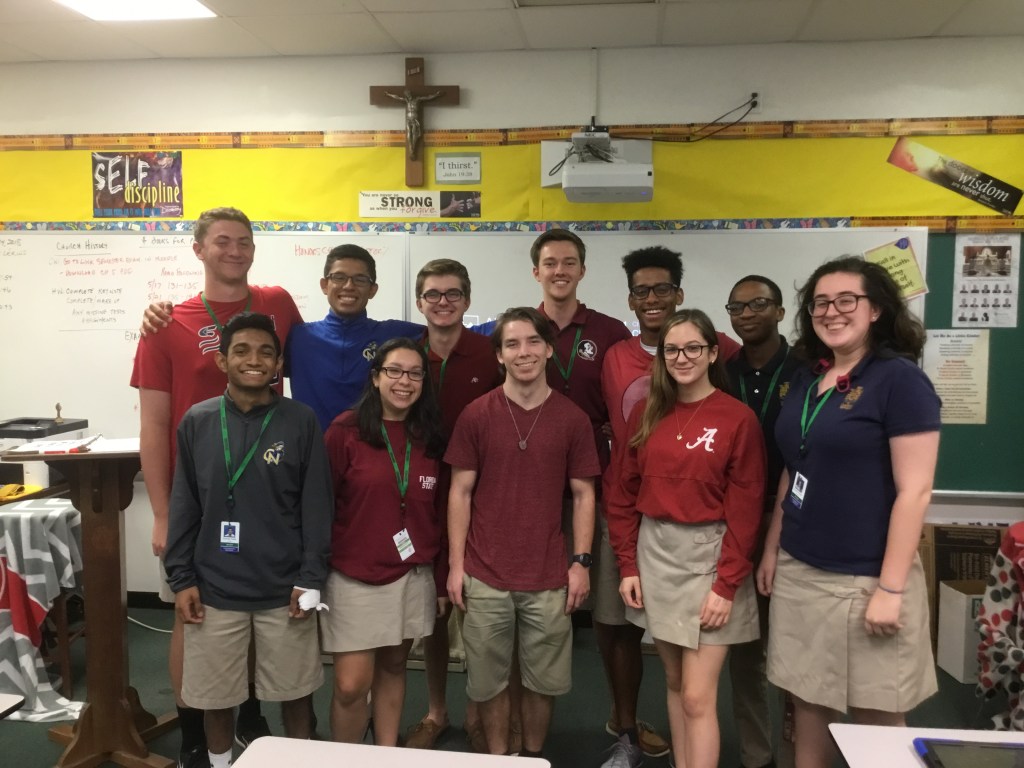
Love God, love your neighbor as yourself starting today.
In today’s Gospel from Mark, one of the scribes approached Jesus and asked him, “Which is the first of all the commandments” (Mk 12:28). This may have been a challenge to Jesus or it may just have been a valid question of one seeking the Truth. Scribes were the experts in securing and making known the Torah. They could read and write, a skill not only used for protecting and passing on the faith, but also for the daily tasks of commerce and contract writing.
This question of the scribe was one that was asked often by those who sought how best to live out the Torah. Not only were there the Ten Commandments, but throughout the Torah, there were 613 prescribed laws! A common debate that was often entered into was which were the most important to follow to be faithful, as well as the minimalist approach, being, which were the most important to be followed so someone could just get by?
Jesus replied, “The first is this: Hear, O Israel! The Lord our God is Lord alone! You shall love the Lord your God with all your heart, with all your soul, with all your mind, and with all your strength. The second is this: You shall love your neighbor as yourself. There is no other commandment greater than these.” With this response, Jesus drew first on Deuteronomy 6:4-5 and then regarding loving your neighbor, Leviticus 19:18. By answering in this way, Jesus stated that when we orient our lives to who God has created us to be, which is to Love God first, place God at the center instead of ourselves, we can then better love our neighbors and ourselves.
St Augustine, the bishop of Hippo (354-430), echoed Jesus’ “Greatest Commandment” by stating that we can love God and do whatever we want. The order of that statement is aligned to the commandment Jesus gave. God is first. The problem many of us have is that we place ourselves first, and seek to bend God’s will to our own. We look to flip the words to, do what I want and God will love me. True God will love us, but we will not experience his love, for we have disconnected ourselves from our relationship with him.
When we shift our orientation to seeking God first, such that he is our foundational approach to our life, our world opens up. Many of us are wounded by our own sin and the sin of others. We retreat into defensive postures and actualize defense mechanisms to survive. These may be good and necessary at the moment, but the challenge is that if we continue to live in a posture of survival mode, we are merely existing.
God wants us to strive, to be fully alive. His greatest joy is when we become fully alive and flourish, actualizing our vocation and the truth of who we have been created to be. This becomes a reality in our life when we open ourselves to the love of God, when we recognize we need him in our life, and that we need him to bring us the healing balm of his love and mercy. Once we begin to experience the love of God we will begin to see ourselves and others, not from our own limited perspectives, but from the greater breadth and depth of how God sees us.
God is reaching out to us in so many ways to tell us that he loves us. He is loving us more than we can ever imagine. We unfortunately are so turned in on ourselves that we close ourselves off to him. God’s love for us is unconditional, it is not based on a feeling or an emotion, though we sometimes experience those. God’s love is a deeper experience of willing our good. God loves us as we are, right now, right at this moment. We just need to take some time to sit, breathe, and experience God loving us. As we slow down enough to receive the love of God, we will begin to see in the course of our day how many ways he reaches out to us.
What we are needing now more than ever is to expereince the love of God so we can move out of our defensive postures and risk loving each other. This is possible when we are willing to say yes to God’s invitation for us to enter into a relationship with him and each other. What will begin to heal the division, dehumanization, and polarization in our country is our willingness to encounter one another as human beings, resisting the labels and prejudgments, to experience our differences not as obstacles but gifts to our mutual growth, and loving our neighbors as ourselves as God loves us. This takes time, there is no quick fix to building relationships. But start now we must.
Photo: Loving God, loving each other as ourselves
Link for the Mass readings for Thursday, June 4, 2020

 Spiritual Stepping Stones