Reflections on the Gospel Reading for the Day
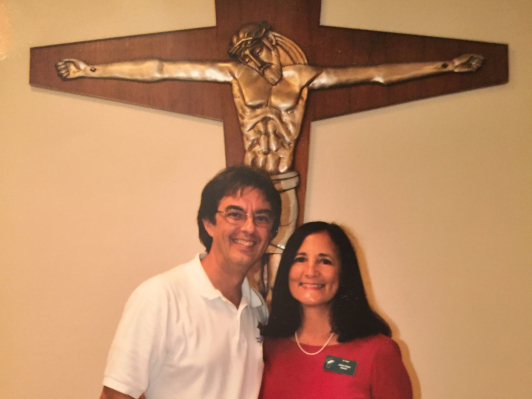
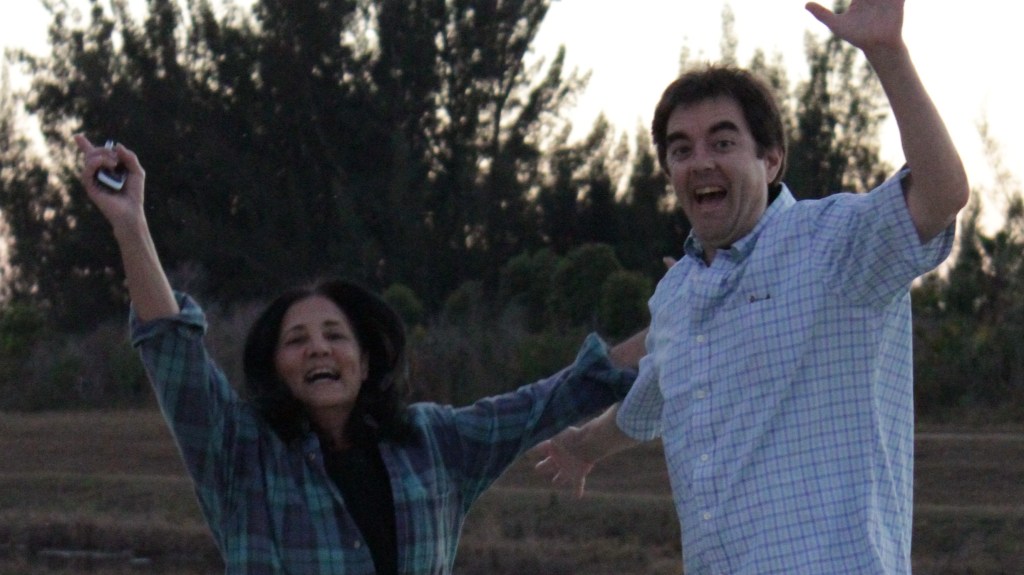
There is freedom in forgiveness!
“So will my heavenly Father do to you, unless each of you forgives your brother from your heart” (Mt 18:35)
Unfortunately for many of us, we do not do forgiveness well, yet, Jesus is very clear with this parable that we need to. Our salvation depends on it! Go ahead, click the link below and read the parable. We are to forgive because God has forgiven us, over and over again, and he will continue to over and over again. If we repent and are contrite, showing genuine sorrow for our sin, God will forgive us. As I learned from Pastor Barry Johnson when he was still the pastor at Jupiter First Church: “God loves us more than we can ever mess up.”
Jesus is clear throughout the Gospels and in today’s parable that God will forgive us, the issue at hand though is that we need to also forgive as God has forgiven us. The servant in this parable was forgiven his massive debt by the king. Shortly thereafter this same servant had the opportunity to forgive someone who owed him a much smaller debt, a no brainer that the servant would act in kind, yet, he did no such thing. He strangled his debtor, and when asked to be patient, he offered none and had the man placed in prison.
Our lives are emblematic of this parable. God has not only had compassion on us, and set us free, as does the king, he has forgiven us our debts as sinners. More amazing he paid our debts through offering the death of his Son. Through that payment, we are the recipients of such mercy, grace, and forgiveness that we will never fully grasp and comprehend, and it is in an unlimited, infinite wellspring that we can draw from again and again.
Waking up each day with gratitude for the gift of our life is a good start, yet, how many of us actually take the time to be thankful for the life we have? Jesus reminds us that not only are we to be thankful but we are also to be forgiving, remembering the forgiveness that we have received. We are to be patient with one another, we are to assume a stance of understanding and support, not one of condemnation and hardness of heart.
We don’t do forgiveness well, but we need to. Maybe we don’t do so well because we do not avail ourselves of the wonderful gift we have been given. We stay mired in our own self-guilt or pity, we stay too busy to be aware, or we compare – I am not as bad as…
Wallowing in our guilt is not what Jesus asks of us. He calls us to humility and a healthy awareness of when we miss the mark of living a life of service and following the will of God. We are to examine our conscience daily to acknowledge what we have done and what we have failed to do, confess, commit to do better and begin again. For those who have access to the Sacrament of Reconciliation – which is a gift of mercy, not a dress down, there is great healing available.
There have been times I have walked out of the confessional feeling as if a massive weight has been lifted. A comparison I can think of is when I had an asthma attack that was not being relieved by my normal intake of inhaler. After receiving a shot of adrenaline from the doctor, within minutes I felt such relief and peace. Even though there have been a few grace-filled confessions that surpassed even that visit to the hospital, I still stay away from the healing sacrament for months.
When we begin to experience God’s forgiveness more we might be better able to offer more understanding and forgiveness with one another. There is a lightness and a peace when we let go of a grudge or hurt we have held onto, especially those we have held onto for a long time. One small action that can help us to better forgive is to change the habit of saying, “That’s alright” to “I forgive you” when someone apologizes.
If you are wondering now, as did Peter, how much are we to forgive? The answer is the same for us, “Seventy-seven times seven”, or every opportunity we can. Hopefully, we will begin to let go of the tight grip we have on our biases, prejudices, and judgments and unlike the wicked servant recognize that in heaven and under heaven we are all brothers and sisters and say yes to our loving God and Father’s invitation of love. Will we receive his love, and will we share his love?
————————————————————————-
Photo credit: Jack McKee
From the adundance of our hearts may we share that which is good.
“A good person out of the store of goodness in his heart produces good, but an evil person out of a store of evil produces evil; for from the fullness of the heart the mouth speaks” (Lk 6:45).
We can experience hardships, trials, and suffering. We may have experienced traumas, and even come face to face with evil. Yet, we are not evil ourselves because of what happens to us, how we are tempted, nor are we defined by any trauma, suffering, or abuse. We have been created good by a loving God.
Negativity, sin, hate, and evil, can be seductive, can lure us to rationalize and come to make a decision for what we may think of as a good in the moment, yet it is just an apparent good. To encounter or experience a word or act of unkindness, negativity, or even violence, we may feel justified in retaliation, yet if we speak or act in this way we become the negativity or evil we seek to stand up against. In The Strength to Love, a collection of Dr. Martin Luther King’s sermons he wrote:
“Returning hate for hate multiplies hate, adding deeper darkness to a night already devoid of stars. Darkness cannot drive out darkness; only light can do that. Hate cannot drive out hate; only love can do that. Hate multiplies hate, violence multiplies violence, and toughness multiplies toughness in a descending spiral of destruction.”
We need to be aware from the moment we have a thought in our mind as to what we will do with that thought. Many thoughts come from ourselves but others come externally from our experiences, our observations, our concupiscence – our tendency to sin, and yes even demonic influences.
What we listen to, read, and/or watch on a regular basis matters. We need to discipline ourselves so as not to entertain every thought or influence that comes our way. We need to be discerning, otherwise once we allow ourselves to regularly consume negative ideas, especially those that support our fears and anxieties, we will soon begin to speak and act on those ruminations.
As followers of Jesus Christ we need to meditate on the things from above (cf. Colossians 3:1) and aspire in our lives to bear the fruits of the Spirit of “love, joy, peace, patience, kindness, generosity, faithfulness, gentleness, self-control” (Galatians 5:22-23). We need to prune that which is deadening and nourish that which gives life. Examining our conscience with honesty daily will help the pruning process. Seeking God’s strength and support is just the fertilizer that we need.
Each day, with humility, we need to allow the light of God’s truth to shine within our own darkness as well as that darkness that gathers around us. Then we will better be able to commit to rooting out any fear, hatred, and/or dehumanization. With a heart that is filled with the love of the Holy Spirit we can better think, speak, and act in ways that convict, provide healing, understanding, empowerment, and love so to be the good that God created us to be!
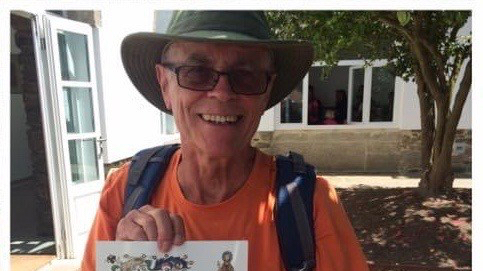
Photo: Fr. Ray, a man of God, of goodness and a good friend who will be missed. I am sure JoAnn, along with many, welcomed him home this week.
We need people in our lives who love us enough to tell us the truth.
“Can a blind person guide a blind person? Will not both fall into a pit” (Lk 6:39)?
This phrase from today’s Gospel appears to be one of Jesus’ simple teachings. It seems to be straightforward, practical and makes sense. Yet, as with much of what Jesus teaches, there is a deeper level. The are many degrees of spiritual blindness that we can succumb to, and follow others, thinking we are improving, yet allowing them to lead us to fall into a pit.
Succumbing to a cult of personality is very tempting to many of us. Who are our models, our heroes? Who is it that we seek to emulate. Are they people who are seeking all that is good, true and beautiful? Are they people who are guiding us to our highest hope and good to actualize our potential, or do they constantly lead us astray?
We need people in our lives that are not afraid to tell us the truth, or who respect us enough to guide us in such a way that they do not manipulate and take advantage of our blind spots but instead, help reveal to us our shortsightedness and give us the light to see a clearer path to avoid the pitfalls along the way.
My wife, JoAnn, was a person who did just that. She spoke openly and freely about what was on her mind. She was open to hear about her own weaknesses and faults and was willing to help me see mine as well. When I had time to digest her insights, I agreed with her assessment the majority of the time. JoAnn helped me to move beyond my comfort zones as well as pull me back when I would overextend myself by helping me to learn to say no. I often discerned God’s will through her redirection or confirmation.
My heart continues to be heavy with JoAnn no longer in my life while at the same time full of gratitude for having been blessed to have spent twenty-three years of marriage together. I became a much better person with JoAnn in my life and I believe she continues to guide me to better understand and discern God’s will going forward each day.
For JoAnn, Fr. Ray, my cousin Serge, JoAnn’s aunt Rose, my Godmother Claudette, Brigette, those you may know who have also recently died, and especially those we commemorate today on 9/11, let us remember that death does not have the final answer – Jesus does.
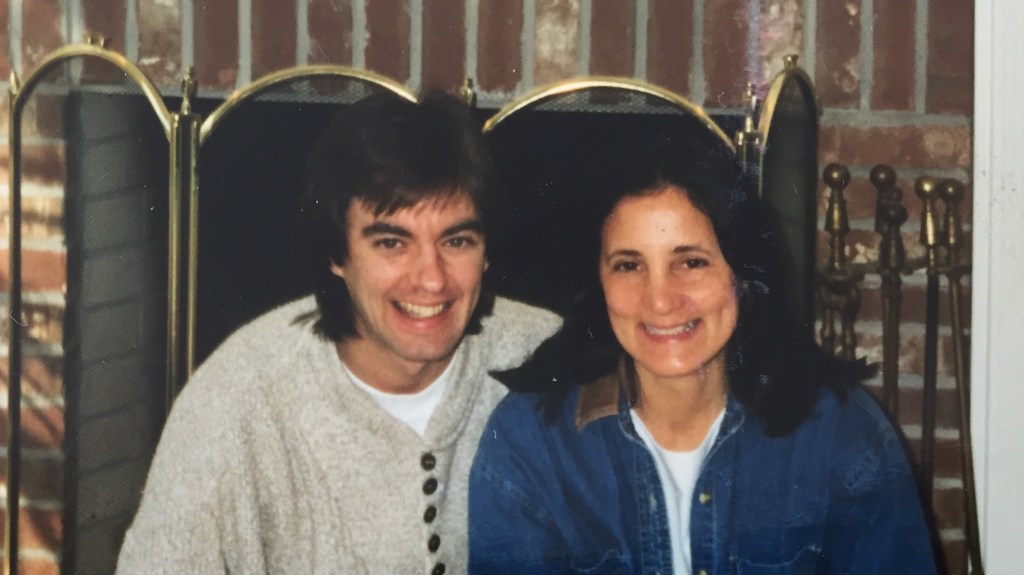
Photo: One of the earliest pictures from when JoAnn and I began dating.
Link for the Mass readings for Friday, September 11, 2020
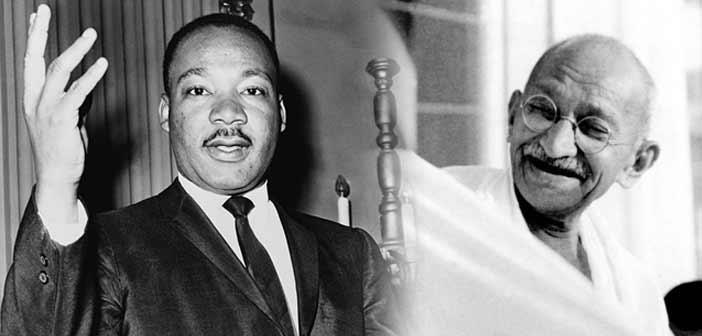
A return to respectable argument is not only possible but necessary for growth.
Jesus said to his disciples: “To you who hear I say, love your enemies, do good to those who hate you, bless those who curse you, pray for those who mistreat you” (Luke 6:27-28).
Certainly, this is as hard of a teaching as any of us have ever heard, yet this is the path to peace. Peace that is not just an absence of violence but a peace that is grounded in mutual respect and unity. No matter where we might look, there are very few examples or models for us to see this Gospel being put into practice. We instead see a consistent engagement in rhetoric, language, and outright hostility that promotes division and polarization not only in through secular and political voices but those within the Church as well.
Nor do I believe in the temptation of the pendulum swing that would threaten to counter and go the other way, where what we think and say has the substance of milk toast, meaning, that we are so careful not to offend that we don’t share our ideas or what we truly believe. Staying away from hot button issues and the taboos of talking religion and politics is not a way to bring about peaceful coexistence nor solve important issues. Neither approach is helpful to mature growth.
Neither an overly aggressive nor a lukewarm engagement is what Jesus is presenting in today’s Gospel. Jesus is inviting us to proclaim what we think and believe but in our interactions with one another, the primary starting point is respecting the dignity of the other person. We can have a dialogue and disagree without it devolving into disparaging, demeaning and belittling attacks, shouting at and over people. We can agree to disagree, while still stating clearly what we believe, even boldly doing so, while at the same time being willing to listen to the others do the same. In this way, we each can be heard, we can exchange ideas, and quite possibly learn and grow from our encounter with one another.
We are able to have a constructive argument when we come to the table willing to love our “enemy” instead of making another person into a monster. We can clearly point out the actions of others that can even be abhorrent, and unconscionable without disparaging the person. Otherwise, if we meet hate with hate, violence with violence, darkness with darkness, we will only beget and increase that which we denounce. Jesus offers a different way, by loving, by willing the good of the other, we don’t have to even like the person but we can love the other as other. In so doing, we counter darkness with light, violence with nonviolent resistance, and hate with love.
Mahatma Gandhi and Dr. Martin Luther King, Jr., models for us who lived today’s Gospel by loving their enemies. Photo accessed from publicradiotulsa.org.
Link for the Mass readings for Thursday, September 10, 2020
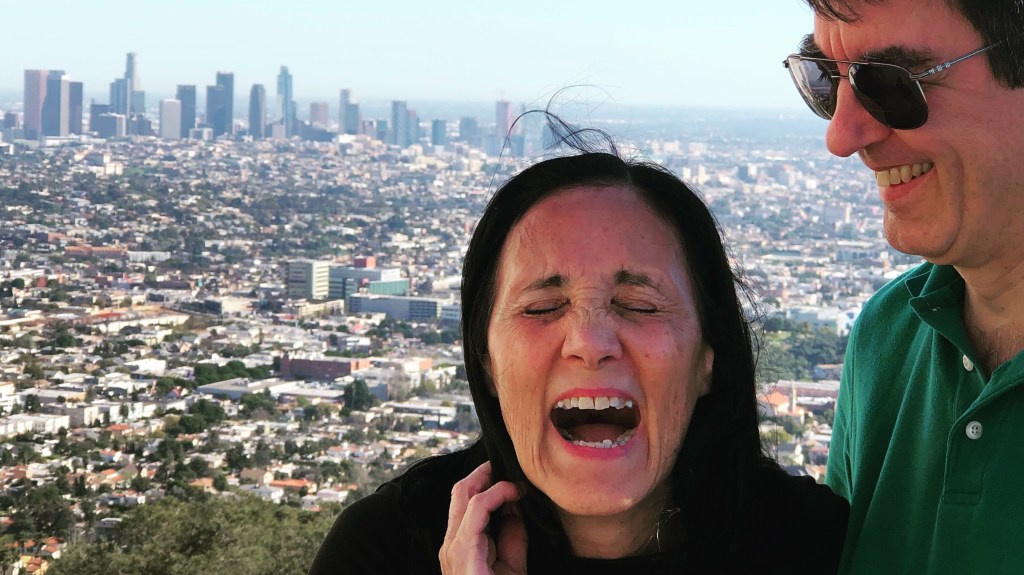
May you experience a taste of God’s joy today.
“Blessed are you when people hate you, and when they exclude and insult you, and denounce your name as evil on account of the Son of Man” (Lk 6:22).
The Beatitudes are contrary to much of what too many of us are tempted by when seek our satisfaction, security, and fulfillment in power, fame, wealth, pleasure, and celebrity. What is more, how many of us who proclaim to be people of faith resist Jesus’ teachings because of our own anxieties, fears, and self-centered reasons?
In today’s Gospel account from Luke, Jesus taught his disciples how to attain the kingdom through five blessings and four woes. Jesus’ message is a universal message, an invitation to and for all who have ears to hear and a heart open to receive. Yet, these teachings challenge us to place our trust, not in the things of this world, for that which is finite and material are fleeting and passing but in Jesus. By placing our trust in Jesus, he will lead us to his Father, and it is in building that relationship that we will experience true happiness and fulfillment.
This is an inviting offer, yet when putting Jesus’ teachings into practice in our everyday lives we will receive opposition. To live in accord with Jesus is to identify with the poor, the hungry, those who mourn, and to speak the truth to power and those in authority, within and without of the Church. This we are to do even when we risk being hated, excluded, insulted, and denounced as evil. We are also to resist the lure and attachment to the false promise of a security believed to be found in material wealth, thinking that we can have all the food, drink, clothes, friends, and happiness that money can buy. These are only apparent goods, and if we seek to be fulfilled by them solely, we will be left empty and wanting more time and again. Pursuing the material and finite to fill our deepest hunger can also lead us into being ensnared by attachment and addiction.
To be blessed, to be happy, to be fulfilled in this life can be fleeting, like trying to catch the wind if we seek to put the aquisition of material things and pursuits first. We can experience happiness and even deeper joy when we are willing to let go of our attachments to the things of this world and instead, be anchored in building a relationship with Jesus.
If we are serious about being his disciple, then a good place to start is learning and living the beatitudes. This is no easy task but when we live and proclaim the Gospel in our day and time, “we will rejoice and leap for joy” (Lk 6:23)! Joy because we can experience the good things that God gives us, so to be less apt to be ensnared by them because we are fueled by the love of Jesus, the source of our joy, which wells up from within and never runs dry!
For, Jesus was not just an amazing teacher, he is the Son of God, the wellspring of eternal life. He became one with us so that we can become one with him, one with us in our humanity so that we can become one with him in his divinity! The same “power that came forth from him” (Lk 6:19) to heal, to cast out demons, to teach the truth, is still active in our lives today through our participation in his life. Jesus is the kingdom of Heaven that is at hand and he will lead us, if we are willing to follow, to the ultimate desire and deepest craving and hunger of our being, to be in communion with God and one another. When we experience moments of our oneness with God in this life we will experience true joy!
Photo: JoAnn had the greatest laugh, here displayed a year ago from this past March at the Griffith Observatory in Los Angeles. May you experience a taste of God’s joy today!
Link for the Mass readings for Wednesday, September 9, 2020
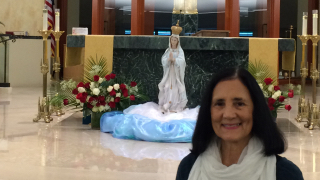
Best way to celebrate Mary’s birthday is to be people of integrity.
The Book of the genealogy of Jesus Christ, the son of David, the son of Abraham (Mt 1:1).
Many may gloss over the long genealogy of names that follows verse one. Matthew certainly had a reason, Luke also had his, as did other ancient writers for compiling genealogical lists. Those reasons are interesting in and of themselves, but I wanted to key in on something basic we may miss if we quickly pass over Jesus’ bloodline.
Matthew placed the context of the incarnation of the Son of God in history, time, and place. Jesus belonged to a people. All of us, as human beings, have the same desire and yearning for belonging. Knowing where we come from, sharing stories of our families, of our culture, ethnicity, race, language, customs, celebrations, rituals, and religion, provide a place for us, provide stability and security. On the flip side, the more we lose the connectedness to our roots, the more we may feel adrift. The need to belong is primal.
Matthew penned for his community the roots of Jesus’ genealogy. Matthew invites us to hear them again, to recognize our place in the same saga of salvation history, for this is our genealogy also. The Church chose this Gospel today as we remember and celebrate the nativity of Mary. All of the Bible, this rich library of faith, is a part of a sacred Tradition, not separate from but an integral part of sacred Tradition. The Bible, from Genesis to Revelation, is a compilation from Mary and our ancestors who encountered God and shared their stories. They passed them on, generation after generation, to provide for us a foundation, so we can know that we are never alone, that we have a place, that we are a people, we stand in solidarity with one another, that we belong. We are a part of something greater than ourselves.
One thing that can weaken the richness of the foundation of our roots and identity is when it is corrupted by a lack of integrity. We see this time and again throughout these same pages of the Bible. Those who not only turn their back on their faith, tradition, and God for their own means and purposes but also those who do not speak up for what is right and just. Yet, even in the darkest of times, there have been those judges, prophets, and people of integrity who have stood up to speak truth to power, to give voice and access to those on the peripheries, leading up to Mary and Jesus himself and his disciples who walked this path of solidarity with others.
Even if we may feel like our country, church, or even our own lives are spinning out of control, let us remain faithful and seek courage and strength from our ancestors in the faith, those people of integrity who remained true, remained faithful, and did not turn and flee, but drew closer to God and became his mouthpiece, even willing to give their lives for what they believed in.
May we resist the swirling clouds of corruption, negativity, hate and division, and instead draw strength from the Son of Mary, and conform ourselves to his life and teaching such that we choose to seek transparency, hold others accountable, empower, love, and seek reconciliation and unity. May we seek and live that peace that surpasses all understanding, such that we can be for ourselves and others a light in the darkness and a calm in the eye of the storm.
Photo: Mary, Mother of God, on this your birthday, please pray for us!
Link for the Mass readings for Tuesday, September 8, 2020
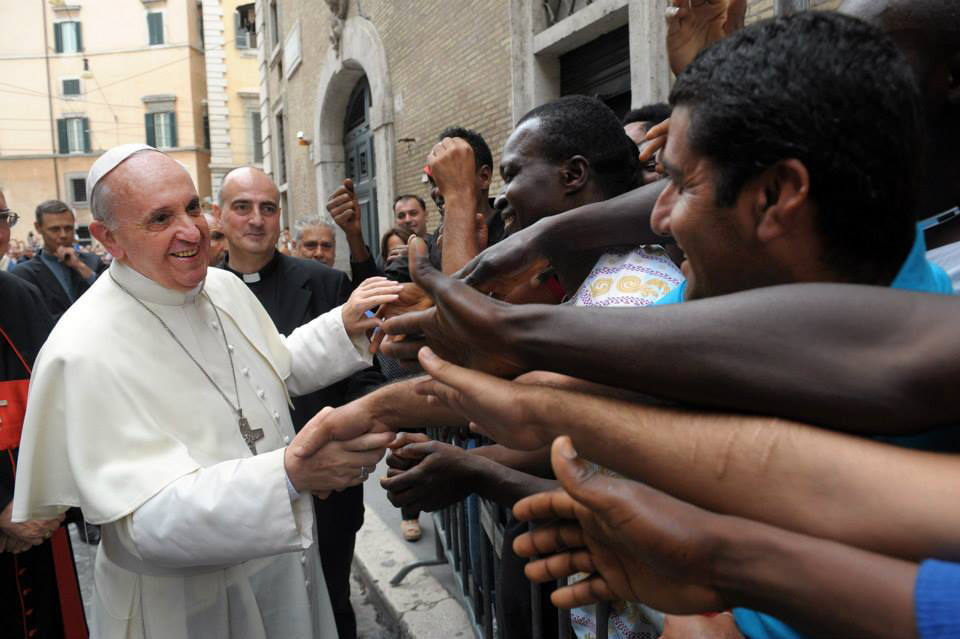
We must stretch out our hands to provide support for one another.
The scribes and the Pharisees watched him closely to see if he would cure on the sabbath so that they might discover a reason to accuse him (Lk 6:7).
This is an unfortunate and sad scene in the Gospel. What is even worse is that this is not an isolated incident for some of the scribes and Pharisees. They are often watching him closely to accuse him. Accuse Jesus of what? Of not honoring the sabbath and breaking the law of God. There is quiet anticipation as Jesus calls a man with a withered hand up to him.
Jesus knows the hearts and minds of his would-be accusers, he also knows what is at stake regarding what he is about to do but because he is more concerned with the condition of the man and not his standing in the community, because Jesus seeks to express the will of God and not impress those in his midst he asks aloud: “I ask you, is it lawful to do good on the sabbath rather than to do evil, to save life rather than to destroy it” (Lk 6:9)? Jesus did not wait for an answer but told the man to stretch out his hand. The man did so and was healed.
These two phrases coming from Jesus in today’s Gospel are not only good to commit to memory and meditation but to also put into practice, for they are foundational principles regarding how we ought to interact with one another. First, whenever we wonder as to whether or not we ought to help someone, we need to ask ourselves, “Is it lawful to do good or evil, to save life or destroy it?” If more of us ask this question, we will be more ready, willing, and available to help those in need in our realm of influence. If a law promotes evil, demeans the dignity of another in inhumane ways, we are to speak out against it and provide help to those oppressed by it.
Second, “Stretch out your hand”, is another phrase we can take to heart. We can address the need of a person by providing what understanding and assistance we can. Are we the Son of God? No, but we can access the power of God through calling on the name of Jesus. Maybe we will not heal a man’s withered hand but we can provide a smile, a cup of water, food, some money, our presence, volunteer with groups who are already engaged, and we can write to and pressure our congressional leaders to support the dignity of the people they represent, at every stage of development from conception until natural death. Ultimately, we just need to be open to where and to whom God sends us.
Pope Francis shared in a homily September 8, 2019, that “we Christians cannot stand with arms folded in indifference, or with arms outstretched in helplessness. No. As believers, we must stretch out our hands, as Jesus does with us.” To be a Christian is to be willing to serve as Jesus did. That means being willing; to encounter one another, to respect the dignity of each person we meet, to provide a human hand and human presence to those in need and to assist them the best we can, one person at a time.
Photo credit: Australian Jesuits
Link for the Mass readings for Monday, September 7, 2020

May we allow the light of Jesus to shine through us to dispel the darkness of division.
I am concerned about the gathering oppressive clouds and destructive winds of division, polarization, tribalism, nationalism, racial unrest, violence, and war that is wearing down our country and world. We are ripping ourselves apart with the lack of respect and unwillingness to acknowledge the dignity of one another. Our Gospel today offers some hope.
The opening and close of today’s Gospel reading is very telling: “Jesus said to his disciples: ‘If your brother sins against you, go and tell him his fault between you and him alone’ ” (Mt 18:15) and “For where two or three are gathered together in my name, there am I in the midst of them” (Mt 18:20). Jesus provides for us a model and he himself is the source for dealing with conflict.
Jesus offered the steps for coming together to resolve disharmony. First one to one, then three two one, then if the person still does not see their error, bringing in the elders and leaders of the Church. Each is an appeal to the conscience of the individual who has offended, who has sinned, who has caused harm, and at the foundation of each attempt is the intent to not bring down condemnation but conviction. Jesus insists that we resist the temptations of gossip, character assassination, and dehumanization. In this way, we can work to hold each other accountable in love, moving toward reconciliation and mutual respect, to win over our brother or sister.
We are called to embrace the gift and grace of our own God given dignity and diversity. Each one of us are a unique gift and expression of our loving Abba that no one has nor ever will again express, as each of us can, in our own original way. Yet, we will not attain the harmony and peace of Jesus’ call for unity if we keep making decisions rooted in our fear and prejudices, if we continue to crouch and operate from a defensive posture.
On our own initiative, from a posture of I am right and you are wrong, and even with the best of intentions, we will fall short, for “with human beings this is impossible, but for God all things are possible” (Mt. 19:26). As we deal with conflict and division, we need to be willing to come together, to see each other as human beings first and foremost, and with two or more, be willing to pray with and for one another, knowing and trusting that Jesus will be with us. Jesus, who spoke and stilled the storm can speak to through us and quiet the storm of division as well.
We need to be willing to unite in prayer, to accompany one another, to seek reconciliation, and be willing to work together to resolve our conflicts. St Paul in his willingness to be transformed by Jesus got this. We are to love our neighbor as ourself, for “Love does no evil to the neighbor; hence, love is the fulfillment of the law” (Romans 13:9-10). Even though the darkness and gathering gloom of division, polarization, and prejudice appears to be growing, let us commit to be bearers of light, love, and reconciliation.
Photo: A light shines in the darkness and the darkness did not overcome it.

Jesus, the Lord of the Sabbath, calls us to a greater good.
Then he said to them, “The Son of Man is lord of the sabbath” (Lk 6:5).
The disciples were traveling with Jesus, they gathered food where they could. In today’s Gospel, they picked heads of grain and rubbed them in their hands to make them easier to chew. The critique of those Pharisees, presumably, walking along with or close by to Jesus, was that his disciples were breaking the sabbath law by working and thus not keeping it holy.
The reason for this was that pious Jews would often practice what is called, building a hedge around the Torah, meaning that they would institute practices beyond the original law so that there would be no way of breaking it. Fr. Bill Burton, ofm, shared an example that has stuck with me since my Scripture studies in seminary.
There is a prescription in Exodus 23:19, that states that you should not cook a kid (baby goat) in its mother’s milk. So as not to even come close to breaking this law, observant Jews developed the practice, which continues today, to not cook any meat and dairy together; thus the idea of building a hedge around the Torah.
The hedge in today’s reading had to do with what constituted work and what did not, so as to keep the sabbath rest intact and keep the Sabbath holy. Jesus settled the debate by claiming that he was the Lord of the Sabbath.
The Lord of the Sabbath needs to be the Lord of our lives. We live in a fallen world, but even at its best, we live in a finite and fragile world. We as human beings can only do so much. The best we can do is to use our intellect and ability to reason while at the same time seek to discern God’s will and direction so to have access to the spiritual resources that he offers to us in our everyday affairs, especially when tragedy strikes.
Tragedy, pain, and suffering happen in our independent lives directly and in our world collectively. Yet, in each instance, we are not abandoned, we are not alone. God works with and through us and others who allow their hearts and minds to be open to his love working through them.
I cannot answer why these things happen. I cannot answer why JoAnn had pancreatic cancer. But I do know God was with us every step of the way and as JoAnn physically decreased she allowed her mind and heart to be open, such that Jesus increased in her life and she shared his love with others.
Jesus needs to be the Lord of our lives, in and out of season, in the midst of our trials as well as our joys and celebrations. As we lean on him and each other all things are possible and what may seem incomprehensible or hopeless at the moment, God will bring about a greater good through his will and timing.
———————————————————–
Photo: Sunset at Santa Monica Beach about this time last year with Jack and Christy watching the sunset.
Link for today’s Mass readings for Saturday, September 5, 2020
 Spiritual Stepping Stones