Jesus’ crucifixion was his coronation as Christ the King.

Today is the last Sunday in Ordinary Time. Next Sunday will begin the new liturgical year in the Church calendar as we begin Advent. In today’s Gospel from Luke, Jesus is engaged by two criminals being crucified with him.

The first “reviled” him and demanded Jesus, “save himself and save us!” There was no acknowledgment of his own transgressions. The other criminal acknowledged that they were justly condemned and deserved their fate on the cross. He recognized his sin and crime, and reached out to Jesus with deference, when he said, “Jesus, remember me when you come into your kingdom.”

Jesus replied, “Amen, I say to you, today you will be with me in Paradise” (cf Luke 23:35-43).

This second criminal saw beyond what appeared to many others to be the end of this man, Jesus. Instead, he recognized Jesus as the messiah, the king and that his coronation was happening before his eyes, his crucifixion. Jesus recognized this man’s contrition and welcomed him into his kingdom, for Jesus became the Messiah, the Christ, the King, through his Passion, Death, and Resurrection.

This solemnity is 100 years old this year. It was first instituted by Pope Pius X to counteract the rise of secularism and the atrocities of World War 1. Over and above all philosophies, ideologies, political theories and the like, Jesus is to be our King. Pope St. Paul VI, after Vatican II, thought the solemnity would be more fitting to be placed on the last Sunday of Ordinary Time. This also echoes the intent of Pope Pius. Even though he placed the feast at the end of October to be near the feast of all saints, he wrote in his encyclical, Quas Primas, that the solemnity would  be placed best, “at the end of the liturgical year, and thus the feast of the Kingship of Christ sets the crowning glory upon the mysteries of the life of Christ already commemorated during the year.”

Jesus, the Son of God, came among us to re-orient and to re-align the worldly order. Throughout his public ministry he spoke and acted in the Person of the God of Israel and he did this most profoundly as he allowed himself to be nailed to and lifted up on the cross. Leadership would no longer be about the aggrandizement of the self nor to be lorded over at the expense of others. God was very aware of the suffering of his people. He sent Moses to free his people from slavery from Egypt and he sent his Son to free all humanity from slavery to sin.

Yet this freedom has a cost. Today, we are reminded that we have a choice to make. Who are we to serve? Are we to serve Pharaoh or Moses, Pilate or Jesus, our self or God. If we seek to be free from the shackles of our slavery to sin, the choice is clear. When listen to the voice of the king of the universe, the way, the truth, and the life of Jesus the Christ, the King of the Universe and choose to follow him, we will as did Mary have chosen the better part.

The reign of the kingship of Jesus is about a personal encounter. We serve Christ the King when we are aware of and accompany one another. We are not to be about bringing world peace, ending hunger, providing homes for all in some abstract utopian pursuit. We are to concretely and intimately treat each person we meet with dignity. We are to see Jesus in our midst: “For I was hungry and you gave me food, I was thirsty and you gave me drink, a stranger and you welcomed me, naked and you clothed me, ill and you cared for me, in prison and you visited me” (Mt 25:35-37). Jesus, our king, commands us to act as he lived, to be aware of, to accompany, and to make a difference, one life at a time.

We may feel overwhelmed with our own struggles, let alone the present state of our country or weight of the world, but we do not have to bear the weight alone, nor are we expected to change the world. We just need to begin each day with a commitment to serve Jesus Christ our King. We do so when we resist the temptation to turn inward upon ourselves and instead adjust our attitude and focus outward. God is guiding us already through the love of the Holy Spirit, we just need to slow down and breathe so that we can feel safe enough and remain still long enough to receive his love, and choose to open our eyes to see, our ears to hear, and be willing to follow his will.

We are invited today, on this feast day of Christ the King, to remember who we are and whose we are. Are we willing to allow Jesus to re-orient, to re-align the order of our lives so that we also participate with St. Dismas, the traditional name given to the penitent thief? If so, we need to acknowledge our failures and sins, repent from the ways in which we have turned away from God and each other, and turn back to him. We will then be better able to serve Jesus our king and follow his command to be forgiving, merciful, loving, and to enter into the chaos of another, one person at a time.

When we are willing to be, as St Mother Teresa said, a pencil in God’s hand in our everyday moments, with each thought we entertain, before each word we speak, and before each action we take, and in every encounter we engage in, we follow God’s will. As we surrender to Jesus our king, follow the inspiration of the Holy Spirit, and accept the will of our Father in every circumstance, then with our last breath, we will know Jesus and hear his words, “Amen, I say to you, today you will be with me in Paradise” (Lk 25:43).

——————————————————————-

Photo: Ending the evening in prayer with my Savior and King, my God and my all.

The Mass readings for Sunday, November 23, 2025

“You are Peter and upon this rock I will build my Church.”

“You are the Christ, the Son of the living God” (Matthew 16:16).

If you have been walking through each of the daily readings through Mark, this quote from Peter might sound very familiar and you would be correct. For the Mark parallel version of this account was presented this past Thursday: “You are the Messiah” (Mark 8:29). Peter is saying more than he is aware of because he is speaking through the inspiration of the Holy Spirit not from his own insight, not as man does but as God does. He is recognizing that Jesus is the long awaited Messiah, but still not with full comprehension, as again we saw in Mark’s account when he Peter sought to rebuke Jesus for saying what kind of Messiah he would be.

That Jesus is the Messiah, the Christ, the Anointed One for whom the people of Israel have been waiting for with great anticipation, is beyond what anyone could have even imagined. Peter, in Matthew’s account, also stated that Jesus is “the Son of the living God.” Messiah and Son of God, bringing to the fore that Jesus is the preeminent priest, prophet, and king. Jesus indeed was the One to “gather the tribes and cleanse the temple and defeat Israel’s enemies” and Peter knew “that there was something qualitatively different about his Master” (Barron, 100).

Jesus does not hide or sidestep Peter’s affirmation. He commends Peter by saying, “Blessed are you, Simon son of Jonah.” (Matthew 16:17). Imperfect Peter, shared the deposit of faith that is the ground of what we believe as Christians. Jesus not only affirms this statement but goes further and renames Simon as Peter. Throughout the Bible when there are those who follow the will of God through their acts of faith they are renamed, as was Abram who became Abraham. Simon becomes Peter, the rock, upon which Jesus will build his Church.

Our lives will be changed when we not only accept this truth but like Peter follow Jesus. Step by faithful step, we come to know, Jesus the Christ, the Son of the living God. At each Mass we can behold Jesus re-presented on the altar, receive him, and consume him so that we can be transformed by his love. In reading these accounts we are invited to meditate, pray, and listen to God speaking to us through them. Being nourished by the Gospels we can then like, Peter, think, speak, and act not as humans do, but as God does.

When we allow God in, he will touch our minds, hearts, and the depths of our souls to reveal to us our sins and those areas of our lives in need of healing. Not to condemn us, but to free and heal us. When we trust in Jesus, when we are willing to take up our cross and follow him, our lives will never be the same. There is a freedom and love that we will experience that is beyond anything that we can ever imagine and it continues to expand and grow the more we receive and share what we have received.

Let us meditate on this great testament of faith given to us by Peter our first Pope. Let us ponder what it means that Jesus is the Christ the Son of the living God, and that he came to forgive and heal, guide and lead us to be members of his Church, the Body of Christ, so that we may conquer evil and reign with him in this life and into the next.


Photo: St. Peter with the keys in front of St. Peter’s Basilica. Accessed from Vaticannews.va

Link for the Mass readings for Saturday, February 22, 2025

St. Peter gives us hope that even though imperfect we can be perfected in Christ.

“Get behind me, Satan. You are thinking not as God does, but as human beings do” (Mk 8:33).

Peter received this rebuke from Jesus only moments after he recognized Jesus as the Messiah, the Christ. Acknowledging Jesus as the Anointed One was a significant insight inspired by God, but Peter still saw Jesus from his limited perspective, his preconceived notion of who the Messiah was to be. Peter was not alone in this presumption. For some five hundred years the chosen people were awaiting the promise and coming of the Messiah. The greater majority sought a Messiah in the mold of a new King David. One who politically and militarily would liberate the people from their Roman oppression. As was also echoed by the disciples, they offered that Jesus was the return of Elijah or John the Baptist, maybe one of the prophets like Jeremiah, although they do not ascribe to Jesus as being the one whom Moses promised would be sent “who would speak God’s definitive word” (Deuteronomy 18:15-18) (Healy,  161).

The Messiah would set things right. The Messiah would restore proper order politically as well as spiritually. Many of the Jews were not happy with the alliance that the Sadducees, who held control over the Temple, had with Rome. The Messiah would do just that but not in the way anyone would ever conceive of, except maybe for Elijah.

Peter got the first part right when he answered the question that Jesus asked, “Who do people say that I am” (Mk 8:27), but he saw not the suffering servant of Isaiah 53 but most likely some other view of the Messianic hope of Israel. Jesus makes a shift building on Peter’s first insight. He for the first time is speaking more openly by sharing how he would suffer, be rejected, and killed. Peter probably did not even hear anything about Jesus rising on the third day. He pulled Jesus aside and began to rebuke him!

We can learn from Peter’s boldness and misstep. In both instances, Peter confidently shared what he believed. In the first insight, that Jesus is the Christ, he was on target. In the second, he was off the mark by not understanding the reality of Jesus’ impending suffering and death and was corrected. Peter stated what he believed, sometimes insightful, sometimes shortsighted, yet through each experience, he learned. He came to learn when he was led by the Holy Spirit and when he was led by the enemy.

Sometimes they were hard lessons, such as when Peter rejected Jesus three times. Yet Peter kept coming back to Jesus. Peter was not lukewarm nor indecisive. Jesus’ reminder to Peter is a good one for us as well. That we are followers of Jesus as his disciples. We are not to attempt to lead Jesus as we believe to be correct but to be willing to be lead along his way as he directs.

I could use more of Peter’s boldness. What doesn’t work is being afraid of making mistakes. Jesus shared a key lesson with Peter that we need to fully appreciate, and that is, we need to understand things from God’s perspective instead of our own. Our discernment in this area will improve, as did Peter’s, when we build our relationship with God and trust in his will for our lives.

Making mistakes, sinning, and being tripped up by our temptations is not so much the problem as much as trying to rationalize or justify them, and staying in a state of self-justification and hardness of heart when we become aware of them. We need to instead face them with contrition, seek forgiveness, and learn from them if we are to mature in our relationship with God and no longer be enslaved. The good news is that we are not alone. Jesus walks with us each step of the way. Will he convict us and rebuke us as he did with Peter? Absolutely, and thank God. Because he loves us and seeks the best for us. In his conviction and through our willingness to be corrected, Jesus will provide the support, strength, and courage we need to get the most effective balance of boldness and humility as we put his guidance into action.

——————————————————————-

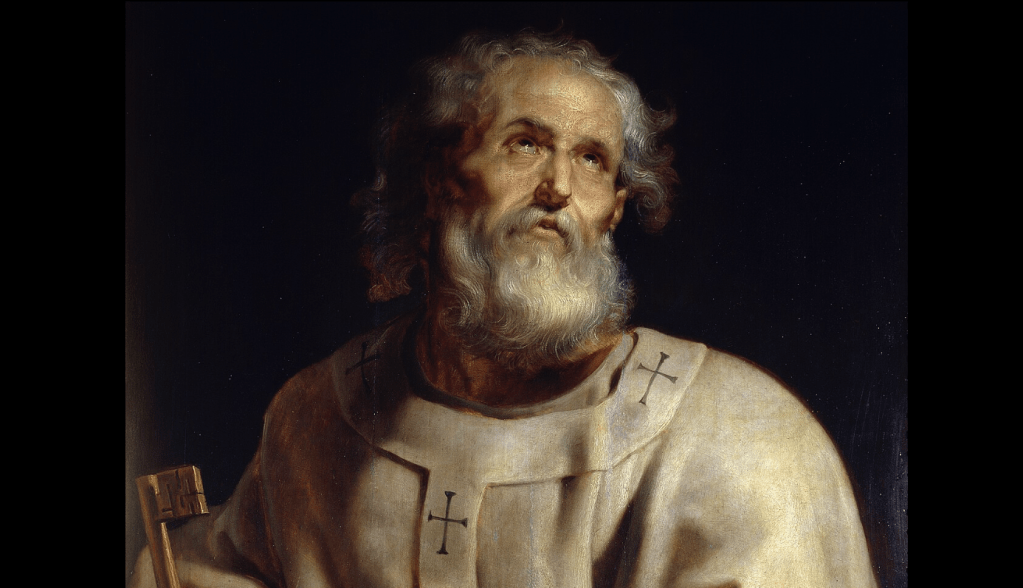
Painting: The Apostle Saint Peter by Peter Paul Reubens

Healy, Mary. The Gospel of Mark. Grand Rapids, MI: Baker Academic, 2008.

Link for the Mass readings for Thursday, February 20, 2025

Let us listen carefully to, pray and meditate upon the word from the Word of God.

Since diving deeper into John Chapter 6 about a month ago, the refrain, “This saying is hard, who can accept it?” (John 6:60) continues to rise up with almost every reading from the weekday and Sunday Masses since then. To read, listen, meditate upon and pray with, the teachings of Jesus is not easy, especially if we want to also put them into practice into our lives. Which means deciding as to whether or not we want to be his disciple.

We may have been tempted to not listen closely while at Mass so not to recall anything that we have heard, we may let it go in one ear and out the other, or we may actually hear God’s word, and then when it is challenging, rationalize why we don’t have to follow it in today’s day and age.

My invitation is to go back and read each of the readings from today’s Mass carefully, slowly, prayerfully, and meditate upon them. This we are invited to do with each of God’s word proclaimed to us or in our own time of prayerful reading. The words we hear or read are not just a dead letter, they are not just an account of history, they are not just lessons to be shared, they are God’s living word in which we are invited to take in, chew upon, struggle with, and allow ourselves to be changed, to be transformed.

The appropriate response to hearing God’s word that we have received comes from the first line of Isaiah: “The Lord GOD opens my ear that I may hear; and I have not rebelled, I have not turned back” (Isaiah 50:5). As with the deaf man who Jesus healed last week, God seeks for all of us to hear his word and when we are willing to allow him to open our ears to hear, he will do so, and when we hear his word may we, like Isaiah, not rebel but receive his word.

Because Isaiah did so, he received the help of the Lord GOD.

Jesus not only healed the man of his deafness, but he also continually strove to heal the spiritual ears of his disciples. But we all have the freedom to choose. We can rebel and walk away as did so many after hearing Jesus’ Bread of Life discourse, and even when we don’t understand, we can answer with Peter, “Where else are we to go? You have the words of eternal life” (Jn 6:68).

Why ought we listen to this man who died almost two thousand years ago? In a sense, Jesus asked his disciples the same question when he asked them, “Who do people say that I am?” and then directly to his disciples: “Who do you say that I am?” Peter answer for them, “You are the Messiah” (cf. Mk 8:27-29).

In Matthew’s account he shares more of Peter’s response. “You are the Messiah, the Son of the living God” (Mt 16:16). Peter got it right, almost. Once Jesus saw that Peter received this insight from the Holy Spirit and was able to articulate it, Jesus shared with them all what kind of Messiah his Father sent him to be. He was not to be in line with any image the disciples thought of. He was more aligned to the suffering servant that Isaiah prophesied about.

As soon as Jesus began to speak about his suffering and being killed, Peter moved him away and rebuked him and Jesus without hesitation called Peter out: “Get behind me Satan.” Satan is the father of lies, the one who opposes. In one breath, Peter was listening to the guidance of the Holy Spirit and in the next he was listening to the words of the enemy. Jesus was making a clear distinction for Peter, the disciples and us. Whose voice we are to listen to?

Why are we to listen to Jesus’ words, even when they are hard, even when they are challenging? We listen to him because he is the Son of God, the second person of the Holy Trinity, the Son of God incarnate. He came not to condemn us but to save and free us from the sin of the world. Jesus came to open our spiritual ears so that we can hear the Holy Spirit, so that we may discern clearly between the voice of the enemy which leads us to death and the words of God that leads us to eternal life.

And if we want to be his disciples, we are invited to hear anew: “If any want to become my followers, let them deny themselves and take up their cross and follow me. For those who want to save their life will lose it, and those who lose their life for my sake, and for the sake of the gospel, will save it” (Mk 8:34-35).

“This saying is hard, who can accept it” (Jn 6:60)? Resist the temptation to water this invitation down. Instead, let us be like Isaiah and Peter, let us implore our loving God and Father to open our ears that we may hear his word, receive his word, breathe, pray and meditate upon his word and put what we have received, like James guided in our second reading, into action.

How we take up our cross, how we lose our life for Christ, how we surrender is unique to each of us. God meets us where we are and leads us. He shines his light just enough so that we can see two steps ahead. When we take those steps, he will shine a little more of his light ahead of us.

How do we take up our cross and lose our life for Christ? We begin with our willingness to listen and hear the living word of God daily and allow it to transform every aspect of our lives. Such that God’s word becomes our own in our lived experiences. We start with a posture of humility that recognizes that we need and depend upon God for everything, and he desires nothing less than all our mind, heart, and soul.

We begin to deny ourselves and take up our cross when we make the words of Mary our own: “Behold, I am the handmaid of the Lord, let it be done to me according to thy will”(cf. Lk 1:38). And the words of Jesus, “Not my will but yours be done” (cf. Lk 22:42). The words of St. Thomas, “My Lord and my God.” (Jn 20:28) and St. Peter, “You are the Messiah. The Son of the living God” (Mt 16:16).

As we say these words to ourselves, as we meditate and pray with them, as we bring them into our daily experiences, as we say them before entertaining any thought, speaking any word, and following through on any action, we invite God’s word into our being so that we may be healed of our blindness and our deafness; so that we will hear the Holy Spirit speak and guide us to understand how to receive and put Jesus’ teachings into practice and so reflect his light into the dark places of our hearts and into the dark corners of our world in the unique ways that God invites us.


Photo: Icon of Christ from the 6th century in St. Catherine’s Monastery in Sinai Peninsula in Egypt.

Link for the Mass readings for Sunday, September 15, 2024