May we realize where we are lost and return to our Father.

In today’s Gospel from Luke we encounter the well known parable of the Prodigal Son. With the parables it is important not to skip over who Jesus is talking to, just so we can dive into the parable itself. Jesus is speaking to tax collectors and sinners. They are drawn to him. The Pharisees and scribes are also present. They are drawn to him also, but are not celebrating but complaining.

With these two groups now focused on Jesus, he shares his parable. Three main characters are present in the telling, the younger son, the father, and the older son. The younger son represents the tax collectors and sinners. They have embraced the sin of Adam and Eve in taking for themselves that which God would have freely given to them. They have squandered their inheritance and separated themselves from the relationship and love of God. Yet, as the son realized, and the tax collectors and sinners are coming to see in Jesus, all that the material life offers is limited, and it does not fully satisfy. They, like the younger son who returned from the “distant country”, are prepared to come home.

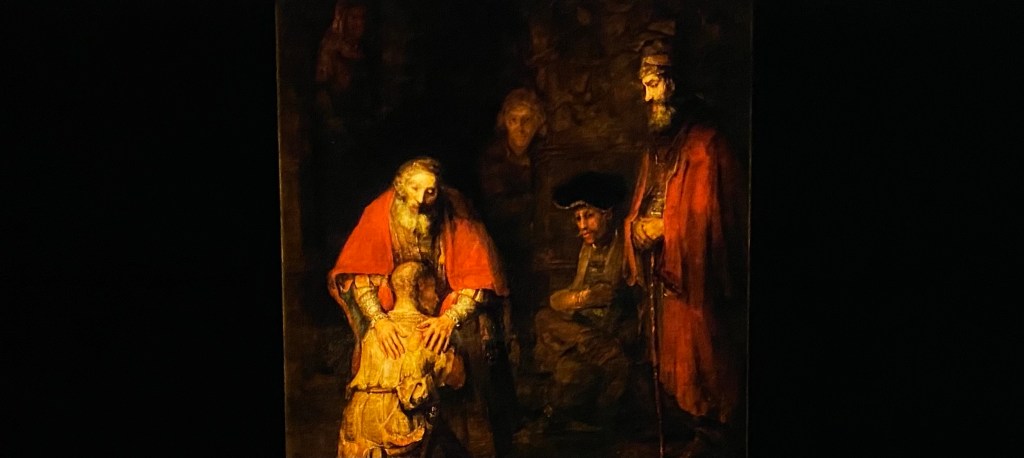
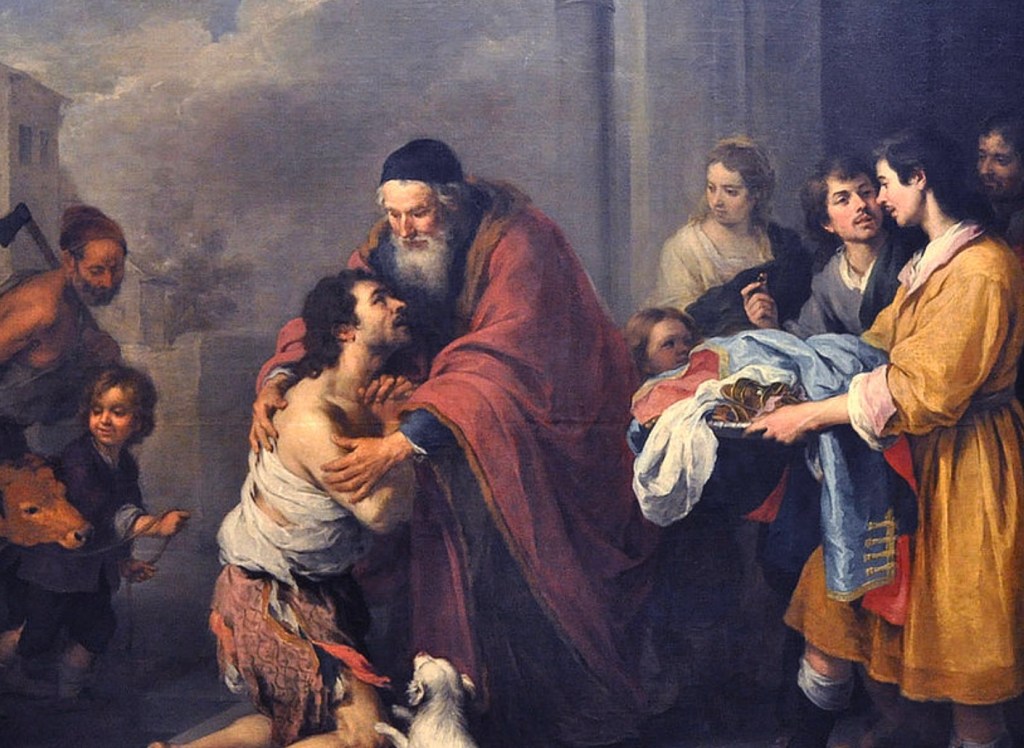
The wonderful light and joy of the parable is that: “While he was still a long way off, his father caught sight of him, and was filled with compassion.” The father then did the unthinkable as: “He ran to his son, embraced him and kissed him” (Lk 15:20). The father never held a grudge, but also never gave up or stopped looking for a sign that his son would return. His racing to meet his son showed the outpouring of love and mercy that this father had for his son. This uncharacteristic action would also certainly draw attention to himself, and take the focus away from the wagging of tongues that would have certainly begun regarding his son’s return.

In covering the son with a robe and placing a ring on his finger, the father showed his forgiveness, and restored the bond and covenant that was broken. He still considered him his son. The party that began was a celebration of this fact. As the festivities continue, the parable turns to the older son, and again, the father goes out to meet him. The elder son meets his father with anger. Filled with not only self righteousness, but also revealing that even though he remained with the father he did so with no love or joy. He too was looking for more from the father than the greatest gift he offered him, which was his relationship, his love.

The parable of the Prodigal Son ends with an invitation to all those who had gathered around to listen to Jesus. The tax collectors and sinners were invited to come home to their father, to turn away from their pursuit of the empty and false substitutes of wealth, power, pleasure, and honor. They were invited to be born again from their life of death, to be embraced as the children of God that they were, embrace their relationship, and restore their covenant with him.

The Pharisees and scribes also were invited as was the elder son. They were invited to turn away from judgment and instead celebrate the return of those who were willing to repent, to turn away from sin and to turn back to God and come home. Those who had been lost had now been found. In doing so, they would realize that they too were lost, and separated from the loving relationship of God.

We are loved by our God and Father, more than we can ever mess up. God loves us as his daughters and sons, even when we are lost in our sin. Who do we identify with in this parable? Are we willing to recognize that the God of Jesus Christ has always been watching for us, always reaching out for us, always running out to meet us, welcome us as we are, and urging us to come home to be with him? God is running to meet us and embrace us. Will we run away from him or run to him? God could also be inviting us to come in and celebrate with those who have been lost and now have been found. Will we choose our pride and judgment or will we like Jesus be willing to draw close and be part of the family?


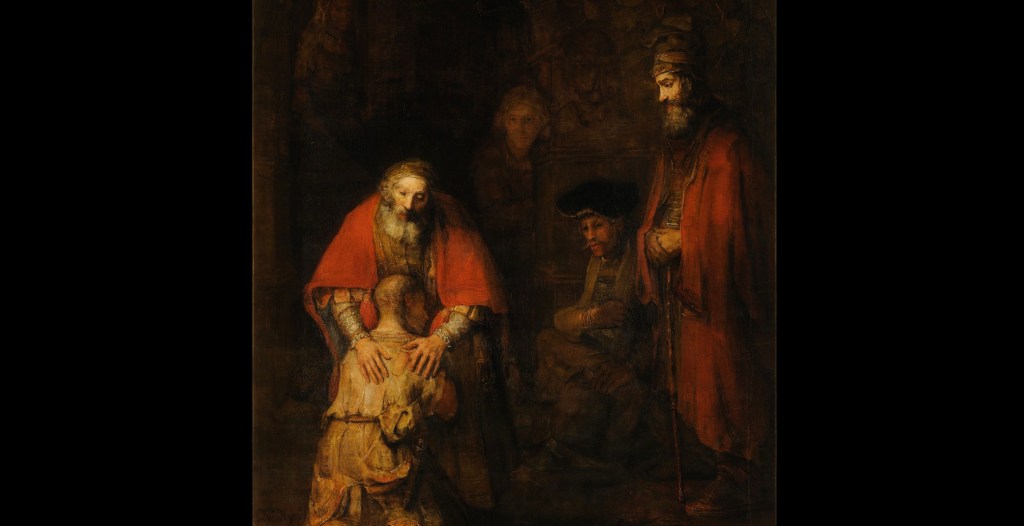
Painting: Rembrandt’s “Return of the Prodigal Son”

The Mass readings for Sunday, March 30, 2025

Lent is a time for reconciliation and to come home to the Father.

Those who edited the lectionary readings for the day chose to present the parable of the lost son and skip the parable of the lost sheep and the lost coin. This trilogy of parables is found in Luke chapter 15. Reading the three together allows us to get a better sense of what Jesus is showing. There is great joy in finding what has been lost, there is great joy in being found! Maybe we can recall something or someone that had been lost and then found, or have we ever experienced a time where we had been lost or separated, or a time when we have experienced a time of reconciliation from someone that we have been estranged from?

I was somewhere in the age range from about six to eight when I came to the realization that I was separated from my parents in the Enfield Mall in Connecticut. I believe it was close to Christmas and we were in the toy store. I must have become distracted by something interesting, and stayed to investigate, while my parents and sister continued on. At some point, I became aware of that fact. It did not take long for the anxiety and fear to rise within me and the tears to well up. I walked through a few isles with no success in finding my family and then I headed toward the entrance that led out into the main mall.

Before continuing on I remembered my mother telling me that if I ever got lost, that I was to stay where I was and she would find me. As I stood indecisively and wondering what to do, a woman noticed my predicament and led me to a stone bench outside the store. We sat and she stayed with me until my parents returned. I am sure the time of separation seemed a lot longer to me than the actual time, and much of the memory is fuzzy, but the anxiety of separation had an impact on me as did the relief and joy of reconciliation!

In my story as well as each of these parables, there is a great joy for that which has been lost and found. How many of us are not even aware of our separation from God or each other? While I was in my own world of material wonder, I was left behind. The son who had squandered every bit of the inheritance he asked of his father before his death, realized not so much that he had really messed up, but that he was in a dire situation, and he made the right decision to come back home. His father never stopped looking for him, he actually saw his son returning “while he was still a long way off” and “filled with compassion. He ran to his son, embraced him and kissed him” (Lk 15:20).

This father is not seeking his son to bow before him and prove his repentance, his loyalty, and allegiance. The father runs to his son without hesitation. This act is no small thing, for an elder to run to a younger family member was unheard of and simply not done. He was breaking this social taboo, most likely to redirect the focus away from his returning son; the one who had betrayed his father, the son who would receive glares and snide remarks. Instead, the father rushed out with a reckless abandonment of love to embrace his son. The jaw-dropping, followed by echoes of gossip surely rose in chorus about the father’s present actions, not his son’s past actions.

God is watching and waiting, seeking opportunities to run to us with compassion and love to welcome us home as the father did in the parable of the prodigal son. God is also like the shepherd who does the absurd in his outpouring act of love, leaving the ninety-nine sheep to go and find the one stray. God seeks each and every one of us just like that shepherd. God is represented by the woman who rejoices over finding one seemingly insignificant coin, for God rejoices in our turning back to him because not one of us is insignificant to him. We are all precious to God, each in our own unique way, and he loves us more than we can ever imagine.

No matter the reason that we have strayed, no matter the temptations and distractions we have fallen for, and/or how far we have wandered away, God loves us more than we can ever mess up. Lent is a season to open our eyes and recognize where we are in our relationship with God and with each other, to recognize the separation our choices have caused, and begin to turn back to God and those we are estranged from within our lives. There is indeed great joy in the healing of relationships and reconciliation! Lent is a time to be found, Lent is a time to come home.

——————————————————————–

Painting: “The Return of the Prodigal Son” by Esteban Murillo

Link for the Mass readings for Saturday, March 22, 2025

It is wonderful to be found. It is wonderful to be reconciled.

Those who edited the lectionary readings for the day chose to present the parable of the lost son and skip the parable of the lost sheep and the lost coin. This trilogy of parables is all found in Luke chapter 15. Reading the three together allows us to get a better sense of what Jesus is revealing to us. There is great joy in finding what has been lost, there is great joy in being found! Maybe we can recall something or someone that had been lost and then found, or have we ever experienced a time where we have been lost or separated, or a time when we have experienced a time of reconciliation from someone that we have been estranged?

I was somewhere in the age range from about six to eight when I came to the realization that I was separated from my parents in the Enfield Mall. I believe it was close to Christmas and we were in the toy store. I must have become distracted by something interesting, and stayed to investigate, while my parents and sister continued on. At some point, I became aware of that fact. It did not take long for the anxiety and fear to rise within me and the tears to well up. I walked through a few isles with no success in finding my family and then I headed toward the entrance that led out into the main mall.

Before continuing, I remembered my mother telling me that if I ever got lost, that I was to stay where I was, and she would find me. As I stood indecisively and wondering what to do, a woman noticed my predicament and led me to a stone bench outside the store. We sat and she stayed with me until my parents returned. I am sure the time of separation seemed a lot longer to me than the actual time, and much of the memory is fuzzy, but the anxiety of separation had an impact on me as did the relief and joy of reconciliation!

In my story as well as each of these parables, there is a great joy for that which has been lost and found. How many of us are not even aware of our separation from God or each other? While I was in my own world of material wonder, I was left behind. The son who had squandered every bit of the inheritance he asked of his father before his death, realized not so much that he had really messed up, but that he was in a dire situation, and he made the right decision to come back home. His father never stopped looking for him, he actually saw his son returning “while he was still a long way off” and “filled with compassion. He ran to his son, embraced him and kissed him” (Lk 15:20).

This father is not seeking his son to bow before him and prove his repentance, his loyalty, and allegiance. The father runs to his son without hesitation. This act is no small thing, for an elder to run to a younger family member was unheard of and simply not done. He was breaking this social taboo, most likely to redirect the focus away from his returning son; the one who had betrayed his father, the son who would receive glares and snide remarks. Instead, the father rushed out with a reckless abandonment of love to embrace his son. The jaw-dropping, followed by echoes of gossip surely rose in chorus about the father’s present actions, not his son’s past actions.

God is watching and waiting, seeking opportunities to run to us with compassion and love to welcome us home as the father did in the parable of the prodigal son. God is also like the shepherd who does the absurd in his outpouring act of love, leaving the ninety-nine sheep to go and find the one stray. God seeks for each and every one of us just like that shepherd. God is represented by the woman who rejoices over finding one seemingly insignificant coin, for God rejoices in our turning back to him because not one of us is insignificant to him. We are all precious to God, each in our own unique way, and he loves us more than we can ever imagine.

No matter the reason that we have strayed, no matter the temptations and distractions we have fallen for, and/or how far we have wandered away, God loves us more than we can ever mess up. Lent is a season to open our eyes and recognize where we are in our relationship with God and with each other, to recognize the separation our choices have caused. To say, “I am sorry.” “Please forgive me.” and “I forgive you.” are powerful words of healing. This is how we can turn back to God and those we are estranged from within our lives. There is indeed great joy in the healing of relationships and reconciliation! Lent is a time to be found, Lent is a time to come home.

——————————————————————–

Photo: St. Joseph with Jesus in his arms, St. Vincent de Paul Regional Seminary, Boynton Beach.

Link for the Mass readings for Saturday, March 2, 2024