May we resist reaction and gossip and instead seek understanding and reconciliation.

Gossip is a seductive and enticing poison. Many of us fall for its lure and its intoxication to greater or lesser degrees. There are many different reasons we engage. We may think we feel better about ourselves by pointing out and pontificating about other’s faults true or imagined, we may be jealous, envious because we wish someone ill, maybe someone just rubs us the wrong way, or there is a sense of intimacy with another in the commonality of talking about someone else. We may even feel justified to do so when someone has hurt, offended, or wronged us, or someone close to us, in some way. Even in that instance, Jesus offered a different approach in today’s Gospel.

Jesus said to his disciples: “If your brother sins against you, go and tell him his fault between you and him alone” (Mt 18:15). Jesus is drawing on his Jewish heritage. Leviticus 19:17 warns against holding hate in your heart and instead encourages seeking to reason with your brother. Jesus is redirecting us from disparaging, gossipping, adding fuel to the fire by seeking revenge or stewing in our own hurt, which will build resentment and hate. Instead, he is inviting us to seek reconciliation.

The wisdom of approaching someone with an issue sooner rather than later, also helps to get the issue out of our minds and hopefully provide and opportunity for resolution and reconciliation. By churning the negative over in our minds and talking about it with others exacerbates the issue, distorts it out of proportion, and fuels a greater emotional angst. Doing so also keeps another other, keeps them at a distance, and less human.

Pope Francis, in his September 9, 2016, General Audience was very clear: “[G]ossip is a ‘terrorist’ who throws a grenade – chatter – in order to destroy,” he added. “Please, fight against division, because it is one of the weapons that the devil uses to destroy the local Church and the universal Church.” Let us refuse to be a weapon of the devil in his plot to divide us with our thoughts or our words. Instead, let us seek to be a disciple of Jesus by advocating for forgiveness and reconciliation.

St. Paul guides us to let no evil talk pass our lips and to say only the good things people need to hear (see Ephesians 4:29). May we meditate upon and pray with this verse as well as put it into practice. With our words, we can cut, wound, and destroy, or we can convict, reconcile, and heal. We can commit to being more discerning with our thoughts and tongue, and choose to lift up and empower one another.

Pope Leo XIV encouraged the youth at Rate Field in Chicago last year on June 14: “To share that message of hope with one another – in outreach, in service, in looking for ways to make our world a better place – gives true life to all of us, and is a sign of hope for the whole world.” We can share messages of hope and make our world a better place when we take time for a prayerful pause and discern well what we are going to say before letting the words fly.

Yes, it is easier to grumble about someone than to approach them in love and work for reconciliation. But this only perpetuates division. It is worth the time and energy to be more intentional with our thoughts, words, and actions. When needing to hold another accountable, it is important to do so directly and with respect. It is also helpful to step out of reactive mode, by taking some breaths, seeking the help of the Holy Spirit, and thinking before we speak. If we just aren’t there yet, maybe we can start with a slow breath and a simple smile. We will all be better for the effort.


Photo: For guidance in conflict, let us, “seek what is above where Christ is seated at the right hand of God” (Colossians 3:1).

Link for the Mass readings for Wednesday, August 12, 2026

May we open ourselves to the wonder of God, creation, ourselves, and each other.

“Where did this man get such wisdom and mighty deeds? Is he not the carpenter’s son?” (Mt 13:54-55).

Jesus most likely worked as a carpenter. This was rough, menial work, and as a day laborer, a position that was looked down upon. We can even see evidence of this in the Gospel accounts. Mark describes Jesus as the carpenter, the son of Mary, Matthew in today’s account portrays Jesus as the carpenter’s son, and Luke and John just refer to Jesus as Joseph’s son, leaving out any reference to carpenter altogether. Most scripture scholars believe Mark was written first and if following that understanding, we can see a progression in the biblical tradition moving away from identifying Jesus as a carpenter.

Many people wonder what Jesus did from the age of twelve until he began his ministry around the age of thirty. Today’s reading can offer some insight into that question. Most likely, Jesus did nothing extraordinary, he was just as ordinary, if that, as any other first-century Palestinian Jew living in the small town of Nazareth, with a population of about 250 to 500 people.

Jesus’ return to his hometown and his teaching was first met with astonishment. The question then arose, “Where did he get such wisdom and how did he work such mighty deeds?” That the response to change moved to judgment so quickly could lead one to think that “the astonishment is not an expression of admiration but of suspicion and anger” (Curtis and Sri, 185). Who is he? Isn’t he just the carpenter of Nazareth, no better than any of us? In effect, “Who does he think he is?” Not only does this show that Jesus probably lived a very simple peasant life, but that Jesus’ social status was not very high.

The people’s hearts and minds of his hometown were closed to Jesus. THEY KNEW who he was and there was no way someone like him could do what they had heard, so they “took offense at him… And he did not work many mighty deeds there because of their lack of faith” (Mt 13:57-58).

How many times have we judged someone? Have we said to ourselves, “I know who he or she is.” We box them in, not as they are, but as WE see them, as we define or label them. We look at another individual not as a person with dignity, but as a two-dimensional caricature to satisfy our own prejudgments and lack of vision. We also do this to ourselves by limiting our potential when we say we can’t do this or that. Husbands and wives, having been married for years, can fall into the routine of everyday and not allow themselves to be surprised by one another, to wonder at what about each other they still don’t know!

Maybe we have had a similar experience as Jesus did in returning to his hometown, in that we have sought or are seeking to move beyond our particular social status, or follow a dream or career out of the norm of familial or community expectations. No matter our age, through no fault of our own, by pursuing this path some or many may feel threatened. Thus, not willing to accept our vision, those who are not willing to grow beyond what they have always known may meet us with misunderstanding, wariness, or even disdain.

I read an account from the writer/producer Stirling Silliphant regarding how one day Bruce Lee challenged him to run five instead of his usual three miles. Into their fourth mile, Stirling said, “if I run any more I’m liable to have a heart attack and die.” [Bruce] said, “Then die.” And then he ran off. Stirling was enraged at Bruce’s statement, that he finished the five miles. Afterward, Stirling approached Bruce and asked him why he said that.

Bruce replied, “Because you might as well be dead. Seriously, if you always put limits on what you can do, physical or anything else, it’ll spread over into the rest of your life. It’ll spread into your work, your morality, into your entire being. There are no limits. There are plateaus, but you must not stay there, you must go beyond them. If it kills you, it kills you. A man must constantly exceed his level” (p. 23).

Jesus consistently rebukes limiting attitudes and perspectives. His Father has a plan for our lives and so he invites us to open our minds and hearts, to see the potential he sees in us. Jesus, the carpenter, invites us to embrace the infinite possibilities that will arise when we participate in his life and love. With God there are no limitations. The villagers of Jesus’ hometown are said to have had a lack of faith or unbelief, and because of that limitation, Jesus “did not work many mighty deeds there” (Mt. 13:58). When Jesus challenged his disciples, he said that they had “little faith” (Mt. 14:31).

The disciples struggled to understand Jesus, but they were open to learning from Jesus. We just need a little faith to let Jesus in. If we are closed, if our hearts are hardened, Jesus will respect the boundary we have set. He will not go against our free will. If we give him just a little faith though, just as he was given and few loaves and fishes he fed thousands, Jesus will do wonders in our lives.

The Holy Spirit seeks to free us from the shackles that bind us, the limitations imposed upon us from without, as well as those we impose upon ourselves from within. Let us cooperate with the urgings of the Holy Spirit, to be free with each breath and step we take into embracing the freedom of the love of God. When willing to follow the lead of the Holy Spirit, receive and abide in the love of God, healing will begin, trust will arise, limiting attitudes can then give way to see ourselves and each other as beloved daughters and sons of our Father.
———————————————————————–
Photo: At the end of each day, God gives us the invitation to pause, breathe, ponder the gift of his creation, and call to mind what and who we are grateful for.

Mitch, Curtis and Edward Sri. The Gospel of Matthew. Grand Rapids, MI: Baker Academic, 2010.

Stirling Silliphant story accessed from Bruce Lee: The Art of Expressing the Human Body, compiled and edited by John Little. North Clarendon, VT: Charles E. Tuttle, Co., 1998.

Parallel Gospel accounts: Mark 6:3, Matthew 13:55, Luke 4:22, and John 6:42

Link for the Mass readings for Friday, July 31, 2026

Jesus offers us the sign of Jonah.

“An evil and unfaithful generation seeks a sign, but no sign will be given it except the sign of Jonah the prophet” (Mt 12:39).

Jonah is the prophet best known as the one who spent three days and nights in the belly of a whale, great fish, or sea monster, depending on your scriptural translation. Jonah ended up in that predicament because he refused to follow God’s direction to speak his message of forgiveness to the sworn enemies of Israel, the Ninevites. It would be like God asking one of us to fly out to the Middle East to meet with members of ISIS or Al-Qaeda and invite them to repent. Not only would we not believe they would want to repent, would we want them to even if they would? Also, whether they did or didn’t, would we be able to return from such a meeting with our heads intact?

These were probably some of the issues running through Jonah’s mind when he refused to follow God’s will. After swimming to shore, Jonah overcame his resistance and followed the command of the Lord, kept his head on his shoulders, and the people of Nineveh repented. Happy, happy, joy, joy! Not exactly. At the repentance of his enemies and God’s expression of mercy and forgiveness, Jonah said to God, “This is why I fled at first to Tarshish. I knew that you were a gracious and merciful God, slow to anger, rich in clemency, loathe to punish” (Jonah 4:2)”. Jonah shows his hardness of heart in that he did not want to go to Nineveh because he did not want his enemies to receive God’s forgiveness!

The scribes and the Pharisees asked Jesus for a sign and the sign of Jonah is what he gives them: The Ninevites, Gentiles, non-Jews, were willing to repent at the word of Jonah, and those scribes and Pharisees questioning Jesus, God’s chosen, were not willing to repent at the urging of one greater than Jonah, the Son of God, who was in their midst.

Jesus announced his ministry, as recorded in Mark 1:15, with the words: “The kingdom of heaven is at hand. Repent and believe in the Gospel.” That is again our invitation today, to examine our conscience by asking God to help us to recognize his presence among us, then reflect on what good God has done in our lives and give him thanks. Review the last day or two to see where God has called us to act. Where did we answer his call, where did we, like Jonah, resist or refuse?

Someone greater than Jonah, is Jesus the Christ. May we allow his love, mercy, and forgiveness to fill us and to soften our hardness of hearts. Jonah spent three days in the belly of the whale and was saved, Jesus spent three days experiencing death and rose again. Once we repent and die to our self-sufficiency and surrender our pride, we will experience the love and mercy of Jesus flow through us to all those we meet in person and online. Even, and especially, those for whom we would rather not: those who get under our skin, grate on our nerves, and/or those who mirror to us our own biases and prejudices.

Suffering is a very concrete and harsh reality. That is something we all agree on whether we believe in God or not. The question is, how do we respond to suffering, especially the hurt caused by another? We can harden our hearts, slip into denial, despair, or wish our problems away, but none of these work very well for the long term. Jonah found that out when he hardened his heart against forgiveness and refused to follow God’s will. Jesus followed the will of God to the cross, forgave those who crucified him, and experienced new life.

Let us not run away from God, his will, or his offer of forgiveness. Forgiveness stops the bleeding from the original wound received. When we forgive, we will not be alone. Jesus waits for us with his arms wide open to embrace us and journey with us each step of the way. Jonah hardened his heart, but still was willing to repent and follow God’s will to preach repentance to his enemies who did just that. When willing to forgive, we open our hearts and minds to God’s love which opens the door for healing, mercy, and reconciliation.

—————————————

Photo: There is no resurrection without the cross. There is no healing without forgiveness. There is no suffering without God’s consolation.

Link for the Mass readings for Monday, July 20, 2026

Telling the truth is a much more peaceful way to live.

In today’s Gospel, we read about the fourth antithesis where, Jesus said to his disciples: “You have heard that it was said to your ancestors, Do not take a false oath, but make good to the Lord all that you vow. But I say to you, do not swear at all (Mt 5:33-34). The taking of an oath in Jesus’ time became an acceptable practice to confirm that someone was telling the truth. Taking an oath by invoking God made the testimony or presentation of one’s statement more believable because he was willing to receive God’s judgment upon himself if he was lying.

People expanded this oath taking as Jesus pointed out by replacing God’s name with taking an oath by heaven, earth, Jerusalem, or one’s head. The thought being that one would escape God’s judgement if they were not being fully honest. Jesus points out that this would not be the case. For heaven is God’s throne, the earth is his footstool, Jerusalem is the city of the great King, and it was even God who made the color of one’s hair.

As with his other antitheses, Jesus called his disciples to go deeper, to be better. The word of the disciple ought to stand on its own weight such that they need not take an oath at all. Jesus spoke the truth always and his disciples are called to do the same. If his disciple tells the truth, there is no need to take an oath. The “Yes” or “No” of a disciple is sufficient. “Anything more is from the evil one” (Matthew5:37).

We can see remnants of this practice today, when we hear someone say, “I swear on my mother’s grave that I did not…, I swear on our friendship that I did not…, or I swear to God as my witness that I did not…”

Jesus is teaching us as well that we are to resist the temptation to swear an oath at all. We are to just tell the truth in all circumstances. We are to be people of integrity and stand on what we say as the truth. We are living in a time period in our country where the ability to tell the truth is being called into question, where lies and the bending of the truth are becoming common place. This is one of the reasons why so many people have such a low opinion of secular and even religious leadership. But it is also present in our day-to-day interactions with one another.

In a 2014 episode of his television show, Dr. Phil, he gave a list of reasons researchers gave for why people lie: People lie to take what is not rightfully theirs, to escape accountability, to create a fantasy/false self-esteem to escape their mundane life, to avoid punishment, to inflict pain, to feel better in the moment, steal admiration, and to gain advantage to exploit others.

This is by no means an exhaustive list, but it is a very good place to start. Lying destroys the very foundation of our relationships which is trust. Once trust has been broken, it is very hard to come back from and rebuild. Lying also supports our false self. Even if we do not get caught in a lie, we know, and our conscience convicts us of that fact. There is an ache in our soul because we are not being true to who we really are.

Covering up lies expends a lot of energy because we have to constantly remember what we said. Left unchecked, one lie leads to another, and we then string together a web of lies. We also begin to feel sick inside, because we have not been created to be deceitful and dishonest. We have been created good, to be people of honesty and integrity. The worst damage is that when we live a life of lies, have been lied to, not only our trust in each other falters, but so does our trust in God. Anxiety and stress increases because we feel a growing isolation and separation from God and each other. 

Examining our conscience is a good daily practice, and being humble enough to admit where we have lied is the next best step. In the beginning, to undo a habit of lying may feel hard because we have allowed a habitual pathway to form. We experience a knee-jerk or automatic response. Yet with intentionality and prayer we can rework our mental wiring. By asking God to help us to imagine how we could have handled the original situation in a more honest way, we can reach out to the person and apologize, move toward reconciliation, and be better prepared to tell the truth the next time, live a life of honesty, which is a healthier and more peaceful way to live.

Being patient with ourselves and seeking the Sacrament of Reconciliation for habitual patterns, grants us an opportunity to express our contrition and seek not only forgiveness, but Jesus’ grace to help and strengthen us to tell the truth. When we call on Jesus’ name, make a prayerful pause, Jesus will help us to harness the courage to resist the temptation to lie and to instead tell the truth. In time, with the help and love of the Holy Spirit, our vices of deceit will be transformed into new virtues of honesty. Let us live by Jesus’ command to make our, “‘Yes’ mean ‘Yes,’ and [our] ‘No’ mean ‘No.’ Anything more is from the evil one” (Mt 5:37).

——————————————————————–

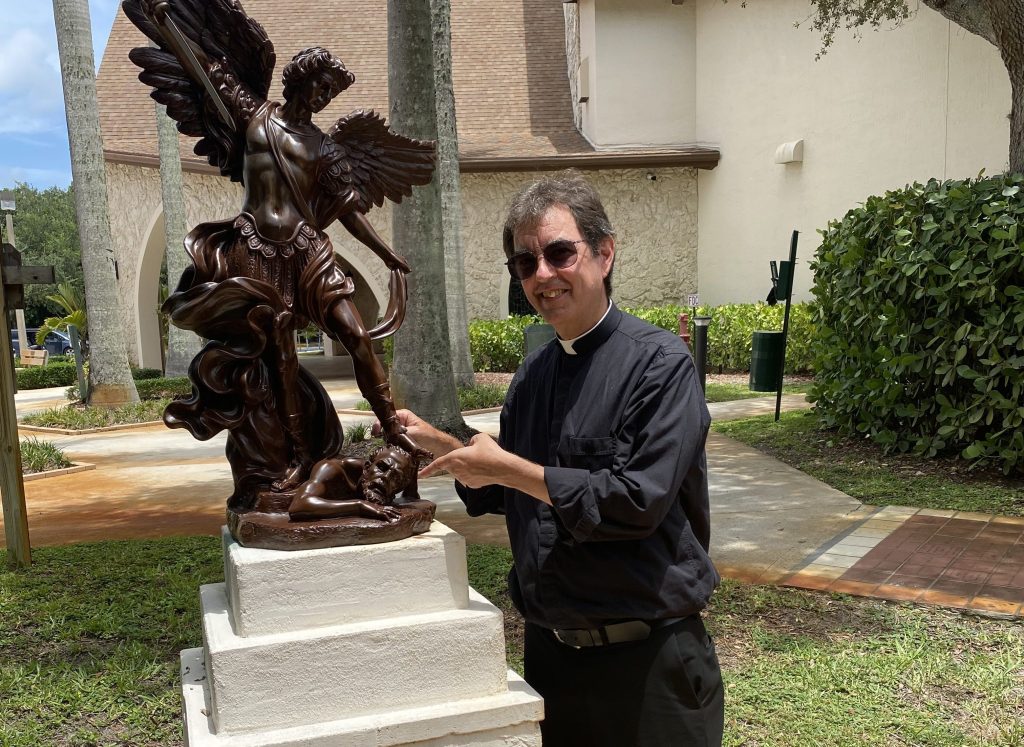
Photo: The father of lies has already lost, let us not give him any entry.

Link for the clip from the Dr. Phil Show showing the list for why we lie

Link for the Mass readings for Saturday, June 13, 2026

God our Father is always looking for us to come home so he can forgive us.

Those who edited the lectionary readings for the day chose to present the parable of the lost son and skip the parable of the lost sheep and the lost coin. This trilogy of parables is found in Luke chapter 15. Reading the three together allows us to get a better sense of what Jesus is revealing. There is great joy in finding what has been lost, there is great joy in being found! Maybe we can recall something or someone that had been lost and then found, or have experienced a time where we had been lost or separated, and/or a time when we have experienced a time of reconciliation from someone that we have been estranged from?

There were a few times in my marriage to JoAnn that I didn’t have the best judgment, messed up, and she understandably got upset. One memory that comes to mind was when I had been a permanent deacon for a few years and we were still adjusting to the demands of another responsibility that I took on in addition to still teaching full time along with all that went with that obligation. We were out for our anniversary and I was thinking out loud, my first mistake.

We were parishioners of St. Peter Catholic Church and our parish had a good number of deacons, and yet none of us helped out at our one Sunday, Spanish Mass. I mentioned that fact and also that I was thinking of helping out our Hispanic ministry. I didn’t need to speak another word. I saw the change in JoAnn’s face and as she expressed her frustration that she hardly saw me as it was without taking on another responsibility, my chest constricted such that I could barely breathe and I felt like someone just grabbed and started twisting my intestines.

Already operating under an unconscious fear that I would do something to mess up our marriage because of my own unhealed and unconscious insecurities, the next few days were a bit bumpy and internally I was experiencing an emotional maelstrom. We were able to work through not only the poor timing of sharing my thoughts, but the content of them. I would help out with our Spanish Masses once a month. The experience of our reconciliation and that JoAnn indeed loved me more than I messed up, felt like a new lease on life.

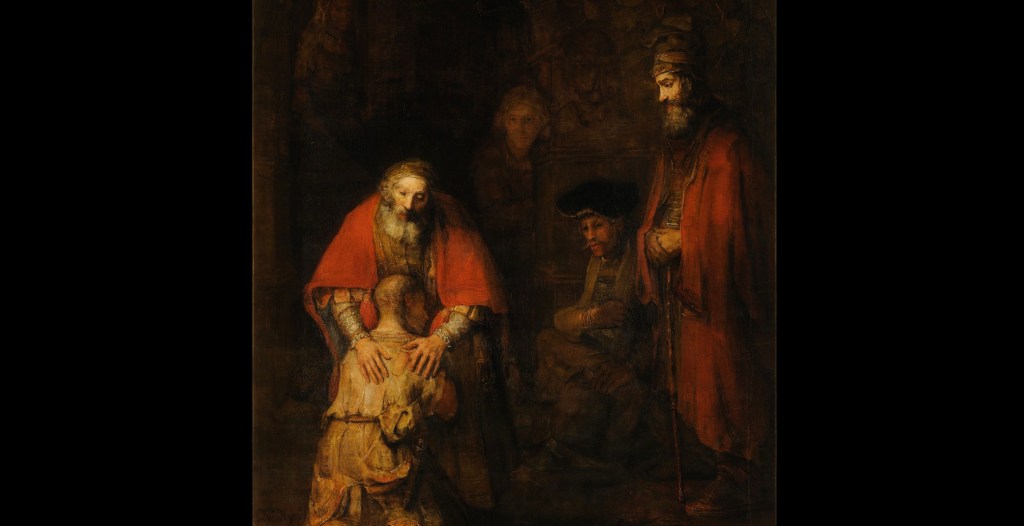
In my story as well as each of these parables, there is a great joy for that which or who has been lost and found. How many of us are not even aware of our separation from God or those unconscious mines that we can trip at any time? The son who had squandered every bit of the inheritance he asked of his father before his death, realized not so much that he had really messed up, as I had, but that he was in a dire situation, as I was. He made the right decision to come back home and I admitted the unthoughtful timing of my request. His father never stopped looking for his return, and so saw his son returning “while he was still a long way off” and “filled with compassion. He ran to his son, embraced him and kissed him” (Lk 15:20).

The father was not seeking his son to bow before him and prove his repentance, his loyalty, and allegiance. The father ran to his son without hesitation. No insignificant act. For an elder to run to a younger family member was unheard of and simply not done. He was breaking this social taboo, most likely to redirect the focus away from his returning son; the one who had betrayed his father, the son who would receive glares and snide remarks. The father rushed out with a reckless abandonment of compassion and love to embrace his son. The jaw-dropping, followed by echoes of gossip surely rose in chorus about the father’s present actions, not his son’s past actions.

God is watching and waiting, seeking opportunities to run to us with compassion and love to welcome us home as the father did in the parable of the prodigal son. God is also like the shepherd who does the absurd in his outpouring act of love, leaving the ninety-nine sheep to go and find the one stray. God seeks each and every one of us just like that shepherd. God is represented by the woman who rejoices over finding one seemingly insignificant coin, for God rejoices in our turning back to him because not one of us is insignificant to him. We are all precious to God, each in our own unique way, and he loves us more than we can ever imagine.

No matter the reason that we have strayed, no matter the temptations and distractions we have fallen for, and/or how far we have wandered away, God loves us more than we can ever mess up. Lent is a season to open our eyes and remember who and whose we are. We are God’s beloved daughters and sons, and that is our truest identity! No matter the separation our choices have caused all we need to do, is turn back to the Father and seek his forgiveness, healing and love. There is great joy in the healing of relationships and reconciliation! Lent is a time to be found, Lent is a time to come home, and Lent is a time to heal and reconcile.

——————————————————————–

Painting: “Return of the Prodigal Son” by Rembrandt

Link for the Mass readings for Saturday, March 7, 2026

“I have not come to call the righteous to repentance but sinners.”

Think about how good we feel after coming to be on the other side of healing from a bad cold or the flu, recovering from a twisted ankle, a broken collar bone, or other health conditions. If you have ever experienced an asthma attack or had the breath knocked out of you, it is such a relief to able to breathe fully again. We experience a feeling of wholeness that was missing during the midst of our suffering where we may have pondered a time or two whether or not we would ever get better.

The same can be said for estranged relationships. There is a distance of separation that can be agonizing, an inner gut-wrenching experience that gnaws away at us. We wonder if there can ever be a coming back together. When there is reconciliation, forgiveness, and mending of the brokenness, we can experience relief, lightness, and joy that we never imagined possible while in the midst of the conflict, the silence, and the separation.

Sin damages our relationship with God and one another. Unchecked and unbridled sin can rupture those relationships. The Pharisees and the scribes questioned why Jesus was eating with tax collectors and sinners, and Jesus replied: “Those who are healthy do not need a physician, but the sick do. I have not come to call the righteous to repentance but sinners” (Lk 5:32).

Jesus is a light in the darkness. For Levi and his friends, who were ambling in the darkness, Jesus shone gently and warmly. They realized there was a sage path to walk and they did. A great celebration of fellowship ensued in Levi’s home because these men and women, who had been outcasts, who were separated from the greater community were forgiven, welcomed, and embraced. They were loved by Jesus as they were. They did not have to change first for Jesus to call Levi and gather with them.

They were welcomed into the kingdom and reign of God. Their ticket to reconciliation and healing was accepting the invitation of Jesus, to receive and experience his love and welcome. Levi and the other sinners did not run from the light of Jesus, but were willing to recognize their need for healing, were willing to repent, to turn away from their prior ways of life, and so were reborn!

They were divinized because of their willingness to participate in the life of Jesus. Levi chose not to just be a repentant sinner, but continued to follow Jesus. He gave his whole life to him and allowed himself to be transformed. He chose to leave the path of darkness and to follow the Way. He continued to follow Jesus such that it was no longer he who lived, as Paul had experienced, but Christ who lived in him (cf. Galatians 2:20)!

Jesus invites us, as he invited Levi, to come and follow him. We are given the same invitation and opportunity for healing, discipleship, and transformation. Will we resist rationalizing and justifying our sinful thoughts, actions, and habits, welcome the light of Jesus that reveals our venial and mortal sins, and admit that we are in need of healing, repent, be forgiven, and be released from all the energy we have expended in protecting and hiding from ourselves and our God who loves us more than we can ever mess up?

We say yes, by quietly spending time, especially each evening, and recalling our day. When we are willing, Jesus reveals to us those ways in which we have not lived according to his will. Jesus does not reveal our sins to condemn or shame us, he does so to convict us in the hope that we will identify, renounce, and confess them. Then he will forgive us. Even when uncovering deeply rooted and mortal sins, through the intimate encounter with Jesus in the Sacrament of Reconciliation, we will be forgiven and freed.

Jesus loves us as we are. Yet holding on to our sin, keeps us at a distance from experiencing the greater breadth and depth of his love. We only need to be willing to be contrite, to embrace sorrow for the harm we have inflicted with our personal sins, and go to the Divine Physician in our time of prayer and/or Reconciliation. Once absolved, the heavy weight is lifted and we are healed and go forward into the light to engage in penance, atone for our sins, and are better able to forgive others as we have been forgiven, and to love as we have been loved!

——————————————————————–

Photo: Jesus is the light that reveals the path to lead us out of darkness.

Link for the Mass readings for Saturday, February 21, 2026

May we not reject but welcome the light of Jesus.

“Whoever listens to you listens to me. Whoever rejects you rejects me. And whoever rejects me rejects the one who sent me” (Lk 10:16).

On the surface, today’s Gospel as well as the first reading and the psalm may sound like a Debbie Downer of a message, but it is actually the road map, the passage that will lead us from the darkness of slavery steeped in our own sin to the light of truth and freedom found in dedicating our life to Christ. Jesus is continuing to prepare the 72 that are about to go out to proclaim his message of repentance. This echoes Mark’s recording of Jesus’ mission statement: “This is the time of fulfillment. The kingdom of God is at hand. Repent, and believe in the gospel” (Mk 1:15).

A sin is any actively contemplated thought, word, or action that we knowingly know goes against the will of God and we freely choose to act upon it anyway. This is why many of us prefer the darkness to the light because we do not have to see and name our sins. We hold on to apparent goods or substitutes that we believe will make us happy and fulfill us, otherwise we would not hold on to them. Yet, they are empty promises. After experiencing the lack of satisfaction, once the emotion or passion of the moment or experience wanes, we either seek more to fill the void or hopefully, recognize the false lure and begin to seek something else to fill the void.

If we choose to seek more or seek within the material and world of finite creation apart from God, we continue along a slippery slope that may lead to our ensnarement or addiction. When we instead heed Jesus’ call and repent, allow the light and truth of Jesus into our darkness, trust that he truly wills our good, we can begin to see our sin, name it, repent from it, let it go, be forgiven, be healed, and fulfilled by receiving the true good, the love that God seeks to give and deepen our relationship with him for whom we have been created.

As servants of the Lord, we are invited to repent, to realign ourselves and our lives in such a way that we are saying yes to building a relationship with God. This is a daily, moment by moment, lifetime task of examining our conscience, asking God to reveal to us our sins, and willingness to embrace the humility to see and confess. This process is not just for ourselves.

Having experienced God’s love and forgiveness, we are called to bring the light of truth we have received to those we meet. This does not mean we are perfect. Through the awareness and confession of our sins, we are incrementally more open to receiving more of the love and light of Jesus within us than before, such that he can shine his light through us into another’s darkness and gently guide them to come out of the shadows.

We need to resist though the temptation to go forth and wag our finger of judgment. For then we are only a darker storm cloud approaching those needing a healing balm. This approach can either cause people to slip deeper into their own shell or come out fighting, seeking to dispel us from their midst. Jesus sends us out like the 72 to encounter one another with understanding, mercy, patience, and love. In the beginning, our light needs to be soft, like the morning dawn, so as not to blind those we seek to offer an invitation.

Jesus, this day and each day going forward, please dwell within us. Help us to be open to those you place near us that we may be present to them with your warmth, welcome, and joy. May we respect each person we encounter and be present, so that they may know that they are not alone, that they, in fact, do exist, that they matter, that they are loved as you love us. May we be like the light of the dawn to help awaken those in the darkness of their pain, suffering, and sin. May we be a lamp unto their feet and a light unto their path, that leads to an encounter and embrace with you; our Truth, our Way, and our Life. Amen.

———————————————————

Image: When we allow the light of Jesus to shine in our hearts and minds, he will lead us to freedom from that which and those who hold us captive.

Link of the Mass readings for Friday, October 3, 2025

As we commit to a deeper relationship with God our relationships with each other will improve.

Accompanying him were the Twelve and some women (Lk 8:1-2).

A simple statement but significant regarding how Jesus again is showing us how to live our lives as his followers, his disciples. Jesus is fully human and fully divine. What he has done and continues to do as the Son of God incarnate is to draw close to us in our humanity, as human beings, so that we can enter into a relationship with him and his Father through the love of the Holy Spirit, thus becoming one with him in his divinity.

From the beginning of his public ministry, throughout his time walking this earth, and continuing on after his resurrection and ascension into heaven, he  invites people to participate in his life and the kingdom of Heaven which is at hand in his very presence. Jesus does so by building relationships. This is how Luke can write the verses that Jesus was accompanied by the Twelve and Mary Magdelene, Joanna, and Susanna. These were real people with whom Jesus developed real and intimate bonds.

Christianity is not a Lone Ranger religion, it is not the survival of the fittest, and Jesus did not teach us to pull ourselves up by our own bootstraps. We are created by God to be in communion, to be in a relationship with him and each other, to experience his love and to love one another. That means we need to ask for help from God and each other when in need and to come to the aid of, accompany, empower, and support one other.

We are invited to welcome, engage with, and make time for each other by exchanging in the stories of our tragedies and our triumphs. Let us resist the temptation of withdrawing into our own bubbles and instead, risk encountering one another. Relationships are not perfect. By putting God first, making a commitment to him and his commandments, and putting them into practice, we can better commit to being there for each other.

When we are growing in our relationship with God, he feeds the deepest core of our being as no other can. Thus fulfilled by his love for us, our insecurities that seek to derail our human relationships will diminish. We can risk being ourselves even when tempted by our fears to be otherwise. As we begin to feel safe in God’s love we can better breathe, trust, keep an open heart and mind, give the benefit of the doubt, and be more understanding, kind, and forgiving, all of which are ingredients for healthier relationships.

Jesus chooses each one of us to accompany him and to forge relationships grounded in mutual respect, where no one is last and where no person is left behind. Our addictions, insecurities, and prejudices only survive when we keep people at a distance. When we allow Jesus to come close, spend time with him and one another, we will see our weaknesses, sins and shortcomings, but also our gifts, possibilities, and promise. Conflicts will arise as we heal and purify, leading to greater intimacy. We will realize that we are not alone, we can acknowledge and reject the lies we have believed, and our relationships will heal and deepen.

————————-

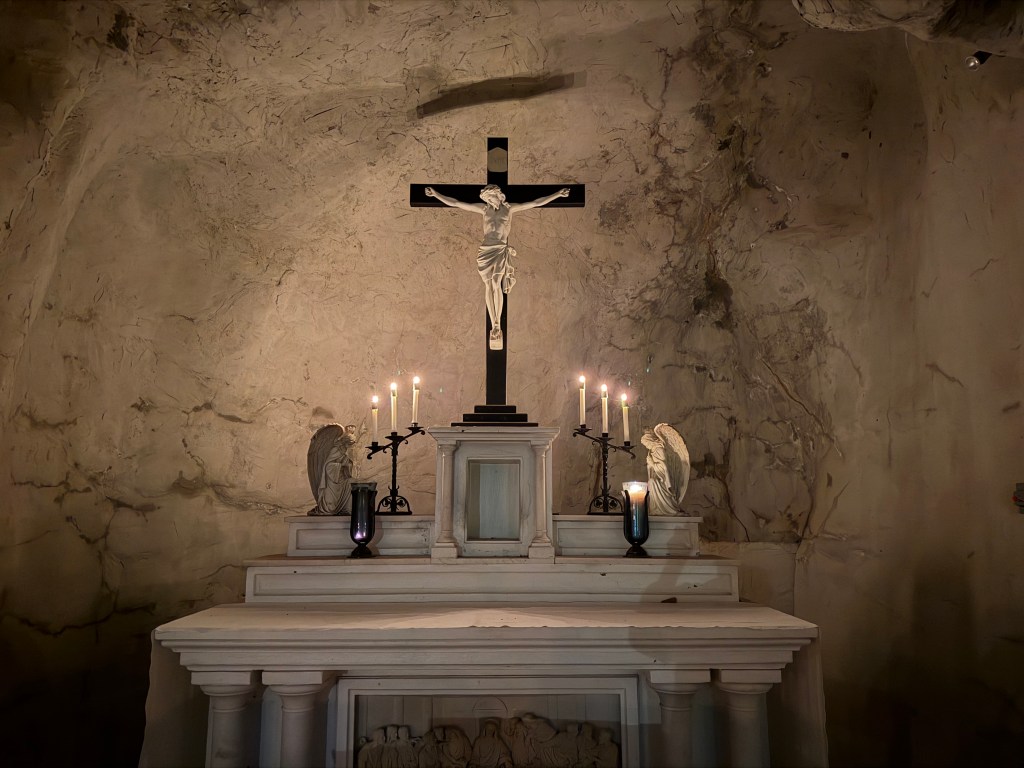
Photo: Quiet time with the Jesus and Mary in the sanctuary of St. Mary Catholic Church, Windsor Locks, CT.

Link for the Mass readings for Friday, September 19, 2025

Instead of pointing out the sins of another, let us confess our own.

Logistically, to our modern minds, the setting of this verse may appear confusing. How could this “sinful” woman be standing behind Jesus such that her tears would fall on his feet? When we think of someone sitting and eating, we imagine them doing so by sitting in a chair. Thus, the feet would be under the chair or toward the front of the person.

During the time period and cultural setting in which Jesus lived, the customary practice when eating was not to sit at all but to recline for the tables were lower. From this position of reclining then it would make sense that she, “stood behind him at his feet weeping and began to bathe his feet with her tears” (Luke 7:38). She then knelt down, dried his feet with her hair, and then anointed Jesus’ feet with the ointment she brought for him.

She did not rationalize, deny, ignore, or come grudgingly nor wait for Jesus to call her out, she came not asking for healing but with true contrition for her sins. Hopefully, we can be like this woman, and come to Jesus with the same open heart to his love so that we too will experience his compassion and have our hearts pierced with our own sorrow for the hurt we have caused others through our sinful actions.

Those quick to point the finger at other’s sins, like Simon, who judged this woman, are less apt to be aware of the depth of their own sin and thus “the one to whom little is forgiven, loves little” (Lk 7:47). We are not forgiven less because God is not willing to forgive but because God will not go against our free will. Hiding, being in denial of, rationalizing, or justifying our sins, curving in upon ourselves or listening to the father of lies keeps us at a distance. If we are unaware or unwilling to bring our sins forward in a contrite manner, we are cutting ourselves off from the healing forgiveness God wants so much to share.

When we are instead like the woman in today’s Gospel account by expressing the same trust and faith, are willing to bear our soul with humility and sorrow, with our deepest and darkest sins, we will not only be forgiven but experience a deeper outpouring of God’s love. The one who confesses truthfully, fully, and contritely is forgiven more, be loved more, and thus will love more.

We may not want to face our sins and as we open our hearts and minds to the purifying fire of the Holy Spirit we will experience the pain of seeing our sins. We will not physically heal without experiencing the pain of broken bones mending or skin growing back together to make a scar. Jesus experienced the excruciating pain of dying on the Cross. There could be no Resurrection until he experienced his death. When we are contrite, confess, and atone for our sins, the truth will set us free, and we will experience God’s freedom more fully and his love and peace more deeply.


Photo: Just as running water keeps a pool clean and fresh, so a daily examination of conscience helps us to remain open to the purifying flow of the Holy Spirit.

Link for the Mass readings for Thursday, September 18, 2025


Let us say only the good things people need to hear.

Gossip is a seductive and enticing poison. Many of us fall for its lure and its intoxication. There are many different reasons we engage in gossip. We may think we feel better about ourselves by putting someone else down, we may be jealous of what another has, envious because we wish someone ill, maybe someone just rubs us the wrong way, or there is a sense of intimacy with another in the commonality of talking about someone else. We may even feel justified to do so when someone has hurt, offended, or wronged us or someone close to us in some way. Even in that instance, we observe Jesus offering a different approach in today’s Gospel.

Jesus said to his disciples: “If your brother sins against you, go and tell him his fault between you and him alone” (Mt 18:15). Jesus is drawing on his Jewish heritage. Leviticus 19:17 warns against holding hate in your heart and instead encourages seeking to reason with your brother. Jesus is redirecting us from disparaging, gossipping, adding fuel to the fire by seeking revenge or stewing in our own hurt, which will build resentment and hate. Instead, he is inviting us to seek reconciliation.

Pope Francis, in his September 9, 2016, General Audience was very clear: “[G]ossip is a ‘terrorist’ who throws a grenade – chatter – in order to destroy,” he added. “Please, fight against division, because it is one of the weapons that the devil uses to destroy the local Church and the universal Church.” Let us refuse to be a weapon of the devil in his plot to divide us with our thoughts or our words, but instead, seek to be a disciple of Jesus by advocating for forgiveness and reconciliation.

St. Paul guides us to let no evil talk pass our lips and say only the good things people need to hear (see Ephesians 4:29). May we meditate upon and pray with this verse as well as put it into practice. With our words, we can cut, wound, and destroy, or we can convict, reconcile, and heal. We can commit to being more discerning with our thoughts and tongue, and choose to lift up and empower one another.

Pope Leo XIV encouraged the youth at Rate Field in Chicago on June 14: “To share that message of hope with one another – in outreach, in service, in looking for ways to make our world a better place – gives true life to all of us, and is a sign of hope for the whole world.” We can share messages of hope and make our world a better place when we discern well in our minds what we are going to say before letting the words fly.

Yes, it is easier to grumble about someone than to approach them in love and work for reconciliation. But this only perpetuates division. It is worth the time and energy to be more intentional with our words. When needing to hold another accountable, it is important to do so directly and with respect. It is also helpful to step out of reactive mode, by taking some breaths, seeking the help of the Holy Spirit, and thinking before we speak. If we just aren’t there yet, maybe we can start with a slow breath and a simple smile. We will all be better for the effort.


Photo: With my seminarian brother, now Dcn. Carlos, on our 30-day silent retreat back in July of 2023. A good fast from words and making friends with silence can help us better discern what to think and speak.

Link for the Mass readings for Wednesday, August 13, 2025