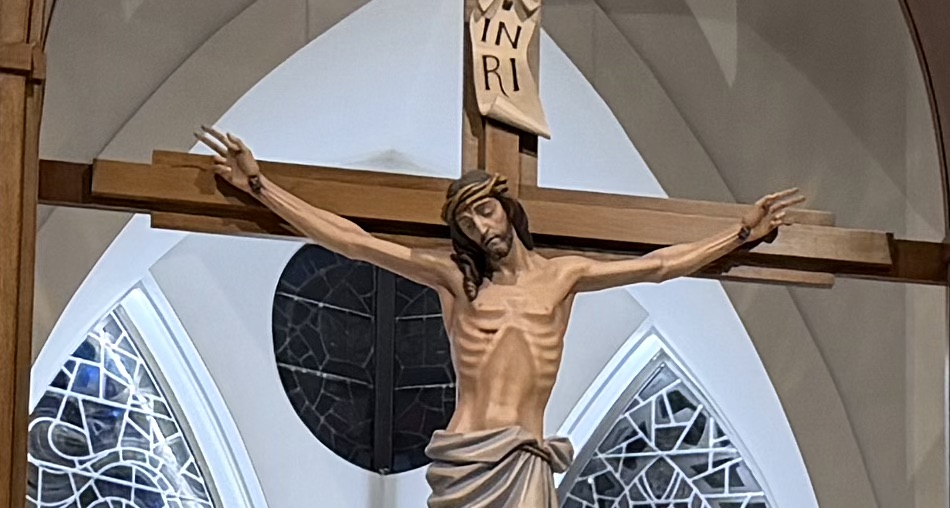
“Give me a sign!”
Often, when we ask for a sign, we have a preconceived notion of what we are seeking and we want God’s stamp of approval on it. The impetus is coming from us, seeking to bend the will of God to our will. More often times than not this approach will end in frustration. The Pharisees in today’s account are asking for a sign. Jesus has already been preaching with authority, healing, casting out unclean spirits and demons, encountering the unclean and restoring them to the community and right worship, and this is not enough?
The Pharisees hardness of heart echo their ancestors in the desert who constantly complained and were rebellious toward Moses and God. They refused to be grateful that God had freed them from their bondage in Egypt and was caring and providing for them every step of the way on their journey. They refused to see God working in their midst. The Pharisees refused to see in Jesus, the Son of God working miracles in their midst.
We can understand how: He sighed from the depth of his spirit and said, “Why does this generation seek a sign? Amen, I say to you, no sign will be given to this generation” (Mk 8:12). The majority of the Pharisee’s minds were set, they were “motivated not by a sincere desire for truth but by a refusal to relate to God on his own terms. To insist on irrefutable evidence is really a demand for control” (Healy, 153). Jesus knew there was nothing he could say or do to prove to them that the kingdom of God was at hand in their very midst.
If they had not the eyes to see nor the ears to hear, there was no argument, point, or sign that would have changed their minds. Jesus sighed from the depths of his spirit because their hearts were hardened such that they closed themselves off from the gift of the grace he sought to share. There was nothing left to say, so he then got into the boat to go to the other shore. He was determined to now put his energy into preparing his disciples, to ready them for his death and their mission.
Do we believe, do we really believe, that Jesus is “the way, the truth, and the life” (Jn 14:6)? Do we seek to bend God’s will to our own or are we willing to change, be transformed, and seek to align our will with his? The woman with the hemorrhage for twelve years, Jairus whose daughter died, the Syrophoenician woman whose daughter was possessed, the friends with the man with the withered hand, and the leper, did not ask for a sign, they asked for healing. They trusted, believed, and risked getting closer to Jesus seeking to encounter him despite the barriers in place to prevent them. In each of these cases, Jesus recognized their faith and each received the healing they sought.
In our discernment, we need to be aware of our intent. There is a subtle distinction, but it is important. Are we seeking proof, a sign, on our terms, or do we have faith in Jesus? Do we believe him, trust him, and seek to know God’s will, as Mary did when she asked, “How can this be” (Lk 1:34)? Are we demanding proof, a three-point plan from God before we follow his lead, or do we trust his invitation and believe that he will reveal what we need to do each step of the way? Often times, if we knew the end result and full ramifications of his original request, our doubt would crush our spirit before we even started.
Let us not seek a sign but instead a relationship. Making time to be still, to pray, to open and lift up our hearts and minds to God and spend time with him each day in the living words of the Bible, the Mass, examining our conscience, going to confession regularly, will help us to better know him and his will. May we trust as Mary did when she said, “May it be done to me according to your word” (Lk 1:38), and as did her Son, “not my will but your will be done” (Luke 22:42). Let us take the hands of Jesus and Mary in ours. They who know God the Father can help us to know him as well and help us to discern and accomplish what he calls us to do just for today and that is enough.
————————————————————————————–
Photo: If we want the best sign of Jesus’ love for us, the crucifix is it.
Healy, Mary. The Gospel of Mark. Grand Rapids, MI: Baker Academic, 2008.
 Spiritual Stepping Stones