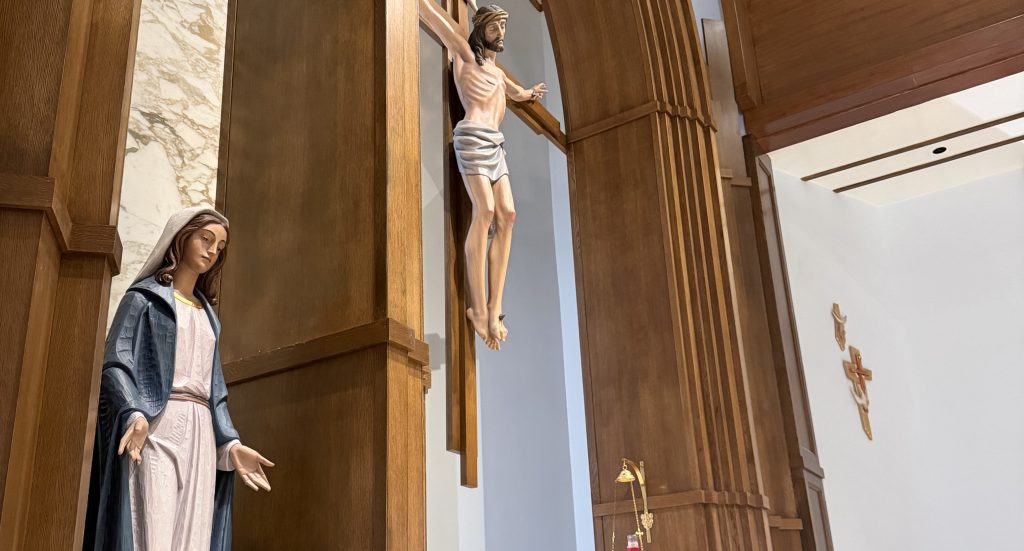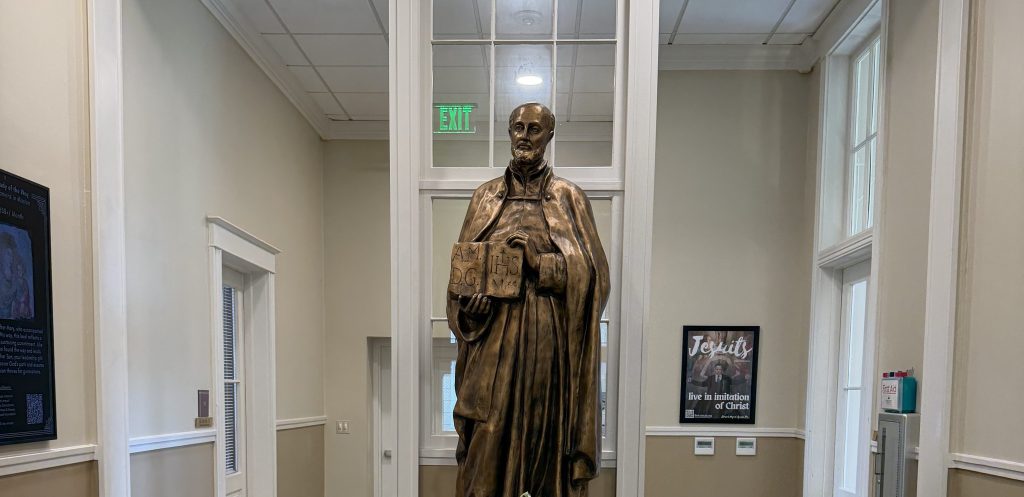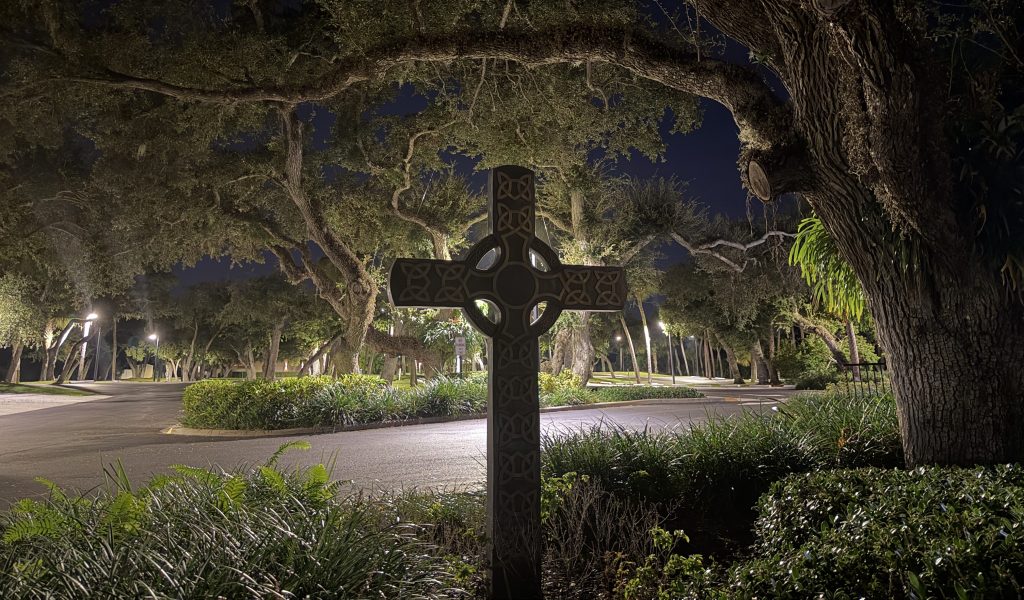
When we trust and have faith in Jesus, we will experience his help in times of trouble.

Our days are so full of activities, conflicts, health issues, technological stimulation, 24/7 news cycles, social media interaction, challenges, polarization, as well as good and healthy activities, pursuits, interactions, recreation, and engagements which can all contribute to our emotional, physical, psychological, and spiritual weariness. If we do not have the proper foundation and orientation, we can feel stretched, hollowed out, and/or fatigued at best. One day can seem to blend into another, and another, and another. The image of being on a hamster wheel or an unending treadmill can fall afresh in our mind’s eye when we actually do take a minute to breathe. Anxiety, worry, stress, fear, prescriptions, and addictions all appear to be on the rise and swirling out of control.
Is there an answer to this hyper pace or are we doomed to just keep going until the wheels fall off? The opening verse in today’s reading provides an antidote when we are feeling any or all of the above. As well as a bell going off if we are riding along at this pace unaware the lug nuts are even loosening!
Jesus said to his disciples: “Do not let your hearts be troubled. You have faith in God; have faith also in me” (Jn 14:1).
Jesus spoke specifically to his disciples after he had talked to him about leaving them. He was going back to the Father through the way of the cross. No matter what challenges we are experiencing, what is knocking on the door of our minds as we are reading these words, we are invited to breathe, identify them, seek the discernment of the Holy Spirit and renounce any thoughts that are not of his will, allow any emotions to be experienced and released, and seek clarification on any issues that we need to discern. We can trust Jesus with helping us to discern how best to deal with the external challenges as well as the internal, menacing thoughts. Putting God first does not mean that the externals to our life will immediately take an abrupt turn for the better, nor does it mean that we will feel a peace within from our mental maelstroms.
What establishing a foundational relationship with Jesus does mean is that we will have support and divine assistance. We will come to know and experience that we are not alone in our struggles. The disciples found this out when in the midst of a sudden sea squall. Their boat was taking on water as the waves grew higher such that they were terrified and so, called to a sleeping Jesus. Jesus awoke and with a word, he calmed the sea (cf. Mk 4:35-41).
Jesus may or may not calm the sea of our trials and tribulations, but what he will do is be present with us through our storms in life and we can trust in him that he will guide us through. As we grow more confident in our trust in Jesus, as we feel safer that he has our back, we will be assured that no matter who or what comes at us, he will be there by our side to assist us. We will experience a peace that surpasses all understanding and calm within ourselves. The ultimate assurance that Jesus provides is that when we surrender our life to him, we belong to him, we are not alone nor orphaned. He gave his life for us, to redeem and save us so that we can be assured of our home for eternity. “I will come back again and take you to myself, so that where I am you also may be” (John 14:3).
Jesus has not so much saved us from our sin as he has saved us for eternity. Jesus promises that he will come back for us at the hour of our death. He is preparing a place for us in the heavenly kingdom. We do not have to just wait for him to come back though. By growing in our relationship with him now, we enter into and participate in his life and so experience his relationship with his Father and experience the love of the Holy Spirit. Jesus grants us a participation in the life of the Trinity. Even though these moments of grace are fleeting, they are very powerful and consoling and last.
If we are struggling at any level and are seeking to build our trust and faith in Jesus, it is important to proceed patiently. God works slowly and this goes against the instant gratification culture we are swimming in. God is building a foundation in us which is meant to last not only for the moment, or even this life alone, but to lead us into the next. When we make time to sit at the feet of  Jesus, slow down and breathe, ask for his help, seek his discernment about where we can make changes in our life, he will lead us. We just need to trust him and be willing to follow his lead.
This time does not need to be lengthy, three to five minutes a day to start can do wonders. On the surface level, by stopping for five minutes to pray and breathe more deeply and consciously, we get off the wheel, we step out of survival and reaction mode, so that we can then make more intentional and insightful decisions, and we can come to see that we truly have options, but more importantly, we begin to develop a relationship and intimacy with Jesus so to begin to recognize his voice in our stillness and in our activity. When we show up, God will happen. When we show up, breathe a few deep breaths, allow the shoulders to come out of our ears, we can begin to experience God’s love as well. Once slowing down, then there are some practices that can help us to grow in our relationship with God.
The Liturgy of the Hours, and the daily readings of the Mass, meditating, praying, and contemplating the word of God have been foundational for me and my transformation, healing, and growth. Over my two years at the seminary, I was also introduced to practicing a holy hour of prayer, often before the Blessed Sacrament daily. Each of these practices have become foundational and non-negotiable anchors in my day. My schedule has gotten even busier in my second year of priesthood, and St. Francis de Sales wise words remind me, “It is important to set aside thirty minutes a day to pray, and if busy, one hour.” Seems counter intuitive. But if we hold firm to the half or full hour, other activities of the day must go. Then we discern what not have been there in the first place.
Having set times to stop to meditate and pray throughout the day has been helpful, especially on those days when my schedule is full to overflowing. Author Wanda E. Brunstetter, wrote, “If you are too busy to pray, you are busier than God wants you to be.” There is a lot of truth in her statement. I have had busy days, weeks and months, where I have wondered if taking the time to pray and meditate was really the most sensible choice. Time and again doing so has made an incredible difference and has now been helping me better reevaluate what I schedule into each day. 
The Rosary is another great way to get into God’s word by meditating on the mysteries of the life of Jesus and Mary. If you are not able to pray the whole Rosary in one sitting, start with one decade a day. Read for a few minutes from the Bible once in the morning and then return to meditate on the same verse or verses that touch or challenge you throughout the day. You can also read the daily Mass readings and place your self in the scene and allow the account to open up before you as if were actually there – your own version of the Chosen.
A wonderful invitation given by St. Teresa of Avila is when we are reading and feel the sense to close our eyes and just be still, to do so. Each of these practices offer us a few of the many ways to stop the madness, to slow down, simplify, and connect with the power, the love, and the grace that Jesus yearns to share with us such that no matter the external or internal upheaval, we may experience his peace, that peace that surpasses all understanding (cf. Philippians 4:7).
—————————————————–
Photo: Tuesday afternoons with Jesus, refreshing and renewing time!
Link for the Mass readings for Friday, May 1, 2026

“Jesus walks with us. Always.”

Jesus continues to present the imagery of the shepherd in today’s Gospel reading from John. He offers the assurance of security and protection that is to be found for those that are in his fold when he says, “No one can take them out of my hand. My Father, who has given them to me, is greater than all, and no one can take them out of the Father’s hand. The Father and I are one” (Jn 10:28-30). How does one enter the fold of the Good Shepherd? All who hear his voice, believe in, and follow him will be known by him, come to know him, and so be a part of his flock.

Yet, there are those who hear his voice and do not recognize the Shepherd. They do not follow him and so are not known by him, although he seeks them out. They may know about the Shepherd, have heard of him, but do not know him. Their hearts and minds are closed. They do not believe in his miracles, his exorcisms, his teachings, and the question of those opposing him in today’s reading is, “If you are the Messiah, tell us plainly” (Jn 10:24). Jesus did just that by saying that he and the Father are one. The response to the forthright comment of Jesus is that those who are closed to his answer pick up rocks to throw at him (see Jn 10:31).

Jesus offers the gift of relationship with him and his Father, to experience the love shared between them, the Holy Spirit. Jesus offers eternal life. Jesus is open about who he is, who we are, and who we can become in participation with him. Those who say no to his invitation do so for their own reasons. Just as Jesus invites us to freely come to him, he will only come so far as we are willing to receive him. He does not conform to us or to our will.  Jesus does not need us nor does he force his will upon us, yet he loves us by willing our ultimate good. He is willing to risk that we will walk away, but he continues to be close and ready for when we turn back.

Even many of us who have said yes, only go so far. We hedge our bets, dip our toes into the water, and maybe go in ankle-deep, but not too many of us are willing to relinquish control, let go, and surrender fully all at once. Jesus offers, eternal life, true, but also a life of meaning and fulfillment now. A perfect life? No, there will continue to be challenges, conflicts, mistakes, and missteps. There will be suffering, pain, and heartache. All the while, Jesus’ voice continues to call us to follow him, to trust him, and seek safety and healing from our anxieties, fears, wounds, weakness, and sins. Our safety is truly in Jesus, because he is eternal and unchanging.

Jesus empowers us to face our conflicts and resistances, and as we grow in our trust in him, we can feel safe to let go of our control and defense mechanisms, and become more disciplined in resisting temptations and apparent goods. Through all our experiences, the ups and downs, the only assurance is that we are not alone. No matter what we may face today or tomorrow, we can be assured that Jesus will never let us go and no one can take us out of his hand. Each step of the journey we take, we can be confident that Jesus, our Good Shepherd, will be there to guide and protect us as he leads us to experience deeper intimacy with him, his Father, and the Holy Spirit.

——————

Painting: Accessed on Amazon.com wall art

Link for the Mass readings for Tuesday, April 28, 2026

Choosing Jesus will help us to experience his peace.

Some of the context for today’s reading of the Gospel is found in John’s account of the multiplication of the loaves which closes with this verse: “Since Jesus knew that they were going to come and carry him off to make him king, he withdrew again to the mountain alone” (Jn 6:15). Both Jesus and the people knew the Torah. In Deuteronomy 18:15-18, Moses shared that he was not the seal or end of prophetic tradition, he, like John the Baptist, pointed to one that would be greater than he.
As the five-thousand ate they talked among themselves, many may have then recalled how God fed the Hebrews in the desert, manna, bread from heaven. The miraculous multiplication mingled with the manna remembrance, comingled with the already growing messianic hope, could make a good case for why the people began to believe that Jesus was the “Prophet, the one who is to come into the world” (Jn 6:14), and then they rose to make him their king.
Recognizing their motivation and lack of understanding of the fullness of the kingship he would indeed assume, Jesus withdrew back higher up the mountain upon which he saw the people coming to him in the first place. The people presumably camped where they had eaten since evening drew near. Separation occurred between Jesus and the people because they moved to make him into something he was not. He refused, as he did during his fast in the desert, to give in to the temptation of power, pride, and honor.
The disciples were also separated from Jesus. They set out on the sea and headed toward Capernaum and would be reunited as they experienced a storm that arose on the sea of Galilee. Already full of anxiety as they were being tossed about by the waves, their fear grew as Jesus came closer to their boat, walking on the water. He calmed them as he said, “It is I. Do not be afraid” (Jn 6: 20).
Those present at the multiplication of the loaves and fish, the disciples, nor us today totally comprehend all of who Jesus is, for he embodies the fullness of humanity and divinity. Nor is he ours to tame. Jesus comes to us, is present to us, loves, and is willing to walk with us through all our trials and tribulations, as well as our joys and wonders. Though, what he will not do is be untrue to himself or to who he calls us to be. If we want to be fulfilled in this life, we need to let go of making Jesus into our image and likeness. Instead, with humility, we are invited to be conformed to his will, which, deep down is what we want too. We need to decrease, so that he may increase. We need to die in him, so that he may live in us.
In our willingness to surrender to the will of Jesus, we are able to keep our eyes focused on him. This does not mean our life will be perfect. There will continue to be challenges and conflict. The closer we come to Jesus the clearer we will see the truth and the absence of it within us and without. Conflicts with others will still arise. The difference is that when we experience the closeness of Jesus, while storms may rage on the outside, we will experience more calm on the inside. We will feel less need to react when our buttons are pressed, see people with a wider lens, experience more understanding, and love, and discern better how to engage or remain still.
We will grow stronger in our faith and trust in Jesus, and be more able to help others along the way to do the same, when we are willing to follow the guidance of Jesus and collaborate with him. In this free act of our will, we are aligning ourselves with the infinite power and ground of our being. In our participation with Jesus, we have access to his power working in and through us, we become agents of stillness and calm for ourselves and others, even while experiencing the storms of our everyday lives: “Be not afraid!” Trust in Jesus! When we do so, we will experience his peace.
——————————————————————
Painting: “Christ Walking on Water after. Julius Von Klever by Jay Bryant Ward
Link for the Mass readings for Saturday, April 17, 2026

When we remember Jesus is with us and for us, we can always change, we can always change course.

As Jesus and his companions shared the Passover, Jesus offered this morsel, “One of you will betray me” (Mt 26:21). I am sure that this bitter herb shifted the mood of the meal and fellowship. Each apostle asked if they were the one to betray him. There is no recorded response, though the assumption is that Jesus says no to each, except for one.

A unique feature about this exchange was that each of the disciples in asking Jesus if they would betray him prefaced their request by calling him, Lord. In doing so, they acknowledged that Jesus was the Messiah. When Judas addressed Jesus he called him, Rabbi. He did not acknowledge Jesus as his Lord. Could this be a tell regarding why Judas was willing to turn Jesus over because he did not believe Jesus to be the Messiah, that he too believed Jesus to be a blasphemer?

Jesus’ response to Judas was an affirmation of truth: “You have said so” (Mt 26:25).

Jesus offered this affirmative response two other times, confirming each time the truth presented to him by another. When Caiaphas asked if he was the Messiah and then later with Pilate when he asked Jesus if he was the king of the Jews. In answering in the affirmative to Judas, was Jesus giving him the opportunity to look at himself in the mirror? Jesus knew that Judas would betray him, he did not have to make this point known. Judas could have remained silent, yet he asked, as did the others who went before him. Could he have been contemplating shifting his prior determination of betrayal? Was Jesus inviting Judas to acknowledge what he had agreed to do, confess, change course, and ask for forgiveness?

Judas chose his course of action to betray Jesus, and unfortunately, even with Jesus’ intervention, Judas was not able or willing to stop or change course. Judas fulfilled his agreement with the chief priests to turn Jesus over. Often we set a similar course of action and even when Jesus makes an attempt to intercede on our behalf, we do not slow down enough to hear.

God speaks to us in the silence of our hearts but too often we are focused on or diverted by other things and we do not hear. We can instead allow fear, anxiety, pride, prejudice, a grudge, or anger to be our guide. We can be too blind to see or too determined to do it our own way, regardless of the consequences. Habitual reactions can also be a big challenge. We can also buy into the lie that the momentum is already too strong to turn around. That it is too late to change course.

We need to know in the depth of our being, that it is never too late to change course, to make amends, to repent, and to turn back to God. The first step is being willing to be still or aware enough to hear or see his guidance. The second step is to be willing to look in the mirror and see what Jesus presents to us, accept what we see, and then seek his forgiveness and repent. Yet, sometimes we feel we are digging ourselves into a hole that we can’t escape from. The answer is that we need to just stop digging and put the shovel down. Jesus will meet us in the deepest of the holes we have dug for ourselves and when we are willing to stop, he will but us on his shoulders and lift us out!

————————————————————–

Photo: One way to remember Jesus is with us, is to breathe, slow down, and look up.

Link for the Mass readings for Wednesday, April 1, 2026

Do we reject or trust in and follow Jesus?

Jesus is recorded, a few verses before (cf. 7:37-39) today’s Gospel,  speaking about quenching the thirst of those gathered around to listen to him. The thirst he is talking about fulfilling is spiritual thirst, that thirst which we all desire to be refreshed by, that which we have been created to receive; the thirst to belong, to be in communion, to be loved and to love in return. A thirst that is satiated in experience the truth that we are never alone as long as we remember that God is our Father. God cares for and is present to us in all our needs.

Jesus speaks of coming to those who thirst to be refreshed with: “Rivers of living water [that] will flow from within” (Jn 7:38). Jesus spoke of the day when he would send the Holy Spirit to well up from within the soul of each person who would follow him. All who participate in the life of Jesus would come to experience also the love shared between God the Father and God the Son, who is God the Holy Spirit.

Some who heard Jesus speaking in this way were deeply moved, they believed him to be the Prophet, others believed him to be the Messiah. Yet, there were those who could not see past their own preconceived notions. They heard his teaching, may have even been moved as well but said, “The Messiah will not come from Galilee, will he” (Jn 7:41)? Remember Nathaniel’s first reaction when Philip had told him that they had found the Messiah? Nathaniel asked if anything good could come out of Nazareth (cf. Jn 43-47). Jesus was also rejected by many in his hometown of Nazareth! He was just a simple tekton, a carpenter or a day laborer.

Why the region of Galilee, the town of Nazareth itself, would be disparaged is a matter of speculation. Those Pharisees that were not believing in Jesus, sought a scriptural basis that the Messiah would not come from Galilee but from Bethlehem, the house and line of David. They would state that, “No prophet arises from Galilee” (John 7:52). Although, Jonah is mentioned in 2 Kings 14:25 coming from Gath-he’pher, which is in the lower region of Galilee.

The fact was that there were those, unlike Nathaniel, that could not see past their initial prejudices. Even though Jesus spoke and taught with authority, even though the Temple guards who were sent to arrest him said, “Never before has anyone spoken like this man” (Jn 7:46), and even when Nicodemus spoke out rationally, requesting they hear Jesus out in accordance with the Law, (Deut 19:15-19), allow for an investigation, and give him the opportunity to make his case, they could or would not hear Jesus. They closed themselves off to the invitation to receive the gift of the love of God that Jesus offered. Their charge was that he was not from Bethlehem, he was not of the line of David, case closed.

Our ingrained, prejudicial attitudes and our limitations of thought can prevent us from seeing as God sees. If we are not willing to follow Jesus’ invitation to repent, we run the risk of cutting ourselves off from the living water Jesus provides and so become like a stagnant pool. Many of our daily routines, habits, livelihoods, health, and very lives can be shaken in an instant with unexpected news. A catastrophic medical diagnosis, layoff, weather event, the consequences of a sinful choice can come crashing down. We can react out of fear and feel debilitated on one hand or with the other we can brashly deny the reality of the situation. Aristotle wrote that virtue is the means between two extremes. Courage is the means between being paralyzed with fear and excessive reckless abandon.

We can face head on what arises, feel what emotions come, offer them to and place our trust in the Jesus. I have had a few experiences with unexpected news. I have done much better when I have leaned on Jesus and trusted in him. In doing so, I have not only survived the external storms and internal storms of anxiety, I have gone through them feeling his presence. In relying on Jesus and less on my own strength, I experienced his peace and grew from the challenges. In times of trial, we can also be tempted by the question: Does Jesus care, why would he do this to me, or does he even exist?

The words of Pope Francis in his Ubi et Orbi message at the height of Covid are still helpful. He said that Jesus, “more than anyone, cares about us.” Jesus cares. His hand is held out before us. We can reject it or receive it, the choice is ours. Jesus is the source of living water, he is the eye in the midst of any storm, he is the light leading us through the darkness. When we choose to breathe more and react less, we will be more likely to recognize and accept the offer of Jesus’ hand as Peter did when he was sinking in the storm at sea. By taking his hand and allowing him to lead us, we will act with more prudence, be more present and mindful, and better prepared to face any challenge.

———————————————————————————-

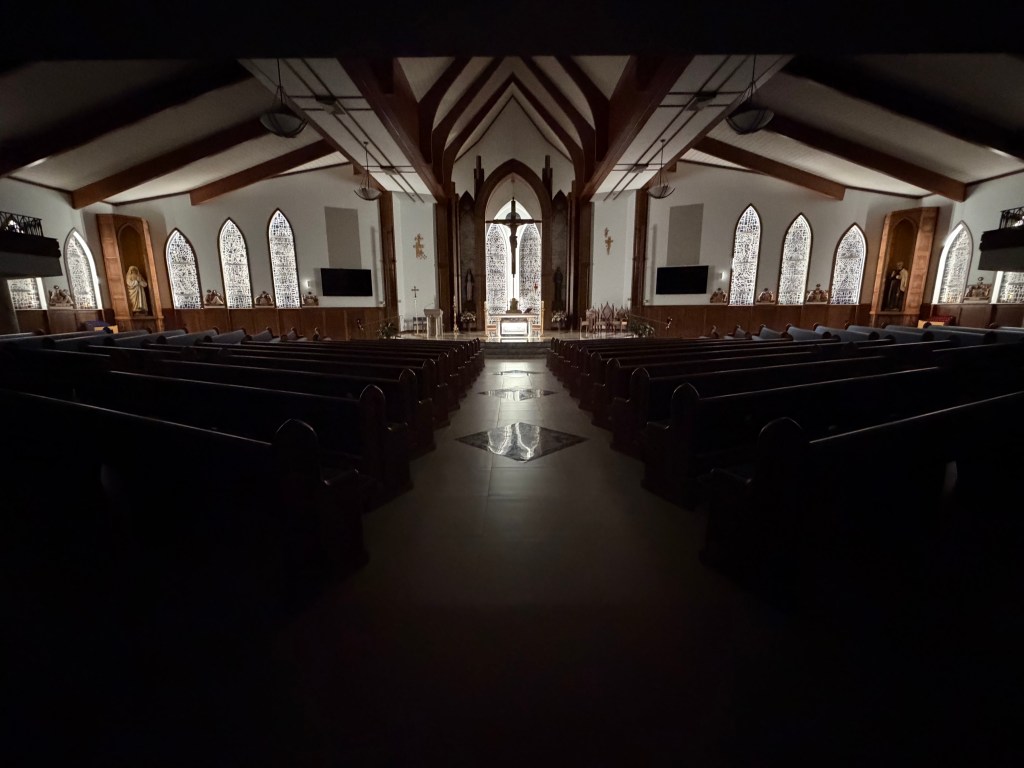
Photo: Blessed to be back at SVDP Regional Seminary Chapel where I was blessed to spend many holy hours and Masses getting to know Jesus and learning to be and serve as his priest.

Link for the Mass reading for Saturday, March 21, 2026

Discerning or feeling stressed about a decision, maybe time for a nap.

Who do we want to be? It is so easy to get caught up in being busy, taking care of children, the home, school assignments, work, as well as a myriad of other activities that each of us, experiencing our unique vocational state in life, can add to the list. These can all be good things, but we can lose ourselves in our business and responsibilities as well as how we define ourselves, such that we slip into a state of survival mode or merely existing. One day can move into one week, into one month, into one year, and then we wake up one morning and wonder where the last ten years have gone!

We can fall into the trap of being defined by what we do instead of who we are and who God is calling us to be. We may have heard or be told at some point in our lives, “Don’t just sit there, do something.” God has another way of presenting us this statement: “Don’t just do something, sit there, and let me do something in you.” God has a plan for each one of us with the end result being eternal communion with him in heaven. Living a life of holiness and becoming saints is who God seeks each of us to be. We need to remind ourselves of this from time to time, by assessing where we are now and if we are listening to the guidance of God.

Our Gospel account from Matthew today gives us an opportunity to see holiness in action. Joseph has become aware that Mary, his betrothed, is with child and he is not the Father. Pass the Pepto Bismol please… Joseph, “a righteous man” follows the law, but is “unwilling to expose her to shame, decided to divorce her quietly” (Mt 1:19). Joseph’s life of righteousness pulls him to follow the law, yet he shows that discernment in matters of the dignity of the person is just as important. Joseph not only was unwilling to make Mary into a public spectacle but was also unwilling to allow the possibility of her to be stoned to death.

Joseph pondered the idea of divorcing her quietly. Before he made his final decision, Joseph slept on the matter, which is often a good course of action when weighing heavy issues or dealing with stressful conflict. How many times do we rush into decisions only to regret them later? Joseph receives God’s direction through the angel of the Lord in a dream.

When Joseph awoke in the morning, he did not dig in his heels feeling that he knew best, that he knew better than Gabriel, and return to his original decision. Joseph did not let fear or anxiety about the possible scenarios that were running through his mind regarding what others may say or think sway him, nor did the possible and real difficulties he could envision deter him.

Joseph trusted God. With confidence and assurance of who he was and what God called him to do, Joseph acted on the guidance he had received without hesitation.

St. Joseph is a model for us. When faced with decisions to make, we need to remember who we are, whose we are, and who we are called to be. We are children of God, and that means we belong to God who loves and cares for us. He has a plan and each thought, decision and action we follow through on is a step in diverting from or fulfilling that plan.

There are many elements in good discernment, gathering information, ponder the reasonable options, praying and seeking God’s guidance, slowing down to breathe and think, seeking guidance from a trusted family member or friend, reading, praying, meditating with the Bible, his creation, being open to Godincidents, or a good nap or early to bed. Joseph followed some of the above and had the humility to listen to God’s messenger and he granted him not only the guidance he sought but the support to fulfill the commission he received. God will do the same as we discern his direction too.

St. Joseph, pray for us!

——————————————————————–

Painting: Closeup of Rembrandt’s “Dream of St. Joseph”

Link for the Mass readings for Thursday, March 19, 2026

Jesus knew he was when challenged, do we?

In today’s account from John, Jesus responded to the criticism that he received from healing the man at the pool of Bethesda. The issue for those who were incensed was that he healed on the Sabbath, and he did not help his case any when he justified himself by saying that he was directed to do so by his Father: “For just as the Father raises the dead and gives life, so also does the Son give life to whomever he wishes” (Jn 5:21). Jesus did not make concessions with those who opposed him.

He clearly stated the truth about who he is, the Son of God, the Lord of the Sabbath. For those not believing Jesus, that he said that he is equal with God… this is blasphemy of the highest order. This is one of the reasons they plot to kill him.

So too in our own age, there are many ways to express our understanding and belief about who Jesus was in his time and who he is still today. If you haven’t thought about Jesus beyond his name in a while, about who he really is and why he is relevant to our lives, then allow St. Athanasius, the bishop of Alexandria, who lived from 297 to 373 AD, to offer a point to ponder today.

St. Athanasius held firmly to and taught with conviction that, Jesus is, “the Son of God [who] became man so that we might become God” (Catechism of the Catholic Church, 480). We cannot be saved on our own merits, through our own will power, and discipline alone. Jesus can save us particularly because in what he assumes as fully human, he is able to redeem as fully divine.

The reality that the second Person of the Holy Trinity, was sent through the overshadowing of the Holy Spirit to enter the womb of Mary and take on flesh, became one with us in our humanity by becoming also human, so that we can become one with him in his divinity, is something worth meditating and praying about. There is much writing and discussion about how many people are leaving the Church, while at the same time their hunger still remains. I would say starving, for a deeper, more intimate relationship with God. This is true for those who leave as well as those who remain, whether either could or would articulate it in that way.

Could it be that we have forgotten the foundation of our faith, which is participating in and deepening our relationship with Jesus?

The words of St. Athanasius, “The Son of God became man so that we might become God.” Are words that will help us to remember who and whose we are, beloved daughters and sons of God. They are words that might help us to remember our meaning and purpose in life. They are words that might help us to stretch a little more from our comfort zones, to risk being who we are, and to trust God to walk with us in places where we are need of healing and reconciliation. Hopefully, they are words that help us to slow down and spend some time with Jesus and get to know him a little better.

————————————————————————–

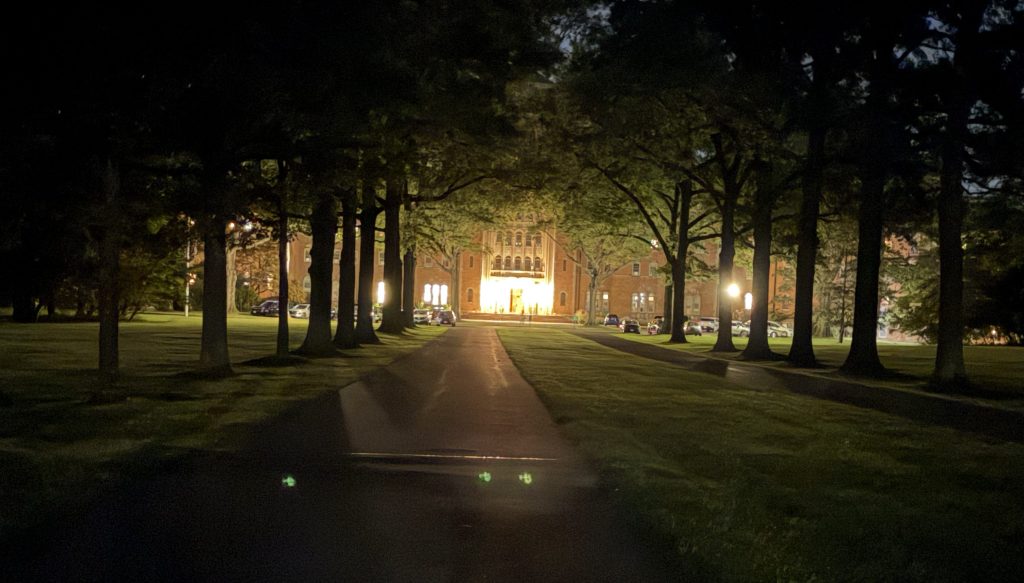
Photo: Quiet walk on the way to celebrate Mass.

Link for the Mass readings for Wednesday, March 18, 2026

Jesus has come to heal and help to transform our minds and our hearts.

We hear often in the Gospels how those who believed in Jesus received healings, exorcisms, and were forgiven of their sins. We have also read accounts such as from the Gospel of Matthew that he “did not work many mighty deeds” in Nazareth “because of their lack of faith” (Mt 13:58).

In today’s Gospel account from John, Jesus speaks to a royal official whose son is close to death. Jesus said to him, “You may go; your son will live.” The man believed what Jesus said to him and left (Jn 4:50). On his way home to his son the man is met by the slaves from his household and they told him that his son would live and when they compared notes, they realized the healing occurred at the moment Jesus spoke and the man believed.

What do faith and belief have to do with Jesus being active in our lives? The way of the Gospel, the good news, is all about invitation and acceptance. Jesus enters our world, our reality, and he comes to each one of us intentionally, gently, and humbly. He came as a poor infant, completely dependent on Mary and Joseph for his very survival. He lived the majority of his life in the obscure village of Nazareth most likely working as a day laborer. When he began his public ministry he did so by inviting people to be a part of his life, to enter into a relationship with him and his Father. People are free to say, “no”, or to say, “yes”, to that invitation.

Faith is trusting that what Jesus says, is true, and that he is who he says he is. Belief is the act of our will that aligns with our faith, our trust in him. Jesus invited the man to believe that his son was healed and the man believed. He walked away with full confidence that his son would be healed. Belief is followed by an affirmative act of the will. I can believe my car will run, but unless I get in it and turn the key, I am not going anywhere.

This miracle was not just for the man and his son. As with each miracle, Jesus is teaching a lesson to those present. The preliminary statement to the people of Galilee is, “Unless you people see signs and wonders, you will not believe” (John 4:48). This was a challenge to the man and to those present. The father believed Jesus and went on his way. Did the people who were seeking signs believe as the father did? Because this father did, his son was healed.

Jesus is fully human and fully divine. He has come to show us the promise of the life his and our Father wants to give to us. Jesus, the first born of the new creation, is collaborating with his Father: “To set right a world that has gone wrong” (Barron, 92). Jesus comes into our lives each day to show us a new way, a better way. Are we willing to let go of our defense mechanisms, our comfort zones, stepping out of daily survival mode and instead walk the path of this new way with Jesus? Do we believe, as did this man seeking a healing for his son?

Just as the sun rises each day, Jesus comes to us to set our minds and our hearts on the right path, toward our forgiveness, healing, and freedom. Just as Jesus was present for this man and his son, he is present to each of us as our divine healer, teacher, and savior. We experience that truth the more we believe in and choose to seek his help and guidance with each thought, word, and deed and in every situation. May we trust in Jesus with everything, may we thank him for everything, and when we sin, let us seek his forgiveness and begin again.

——————————————————————————–

Painting: Jesus meets us where we are and as we are to provide healing for ourselves and those we intercede for.

Barron, Bishop Robert. Lenten Gospel Reflections. Word on Fire, 2020.

Link for the Mass readings for Monday, March 16, 2026

Let us put into practice Jesus’ teaching, and help one another with each step forward.

The challenge of Jesus’ convicting the hypocrisy of many of the Pharisees may be one for which most hearers and readers would agree with: “For they preach but they do not practice. They tie up heavy burdens hard to carry and lay them on people’s shoulders, but they will not lift a finger to move them” (Mt 23:3-4).

We have an innate sense that alerts us to hypocrisy and when hypocrisy raises its head with religious leadership it can be catastrophic because many, especially our youth, look to our leaders, as representatives of the God they are to be serving. Inexcusable behavior not only affects how we look at our leaders, it also affects the way we look at the institution, as well as God. The Catholic Church is still reeling from not only those clergy who have abused children, but those bishops who have covered up the abuse.

As horrific as these acts are, and even though there have been many improvements that have been made to put practices and protocols in place, the damage is still there and will take time to heal. There also are many other ways that people have been hurt or disillusioned by the hypocritical actions and statements of priests and leaders in the church. It is easy to give up, walk away and say this is not my problem, to point fingers and justify our own acts of hypocrisy by saying well at least I am not that bad. Yet even the human frailty and fallen nature of each of us does not change the truth that Jesus is the way, the truth, and the life. He is the source of our being and fulfillment.

Even for those who have left the Church, many would say they are still spiritual. This is true because, we all have the inborn desire to be in relationship with the God who has created us. Those of us who are followers of Jesus, are to receive the message as he gave it then directed toward the religious leadership of his time, as well as it was given for his disciples, and each of us who follow him today. The standard that is set and for which we strive after is to live as Jesus lived his life.

Jesus always pointed the way to the Father. We as human beings are finite and we are going to make mistakes and sin. While Jesus is our model, even more, he is the source for our living faithfully to his teachings. Through his forgiveness and love working through us and directed out toward others, we are capable of standing up for the dignity of those entrusted to us within our realm of influence. For we are to be our brothers’ and sisters’ keepers.

If we want to guide someone in the ways of our faith tradition it is not enough to say this is what you need to do and live accordingly. We need to put into practice and live what we are sharing, be willing to accompany, assist, and walk with those we accompany along the way. As a Christian, just giving someone the Bible, saying there you go, that’s all you need, and quoting a couple of scripture passages is not enough. If we are sharing a principle to put into practice and we are not willing to lift a finger to help them, or worse to not put it into practice ourselves, we do more damage than if we said nothing.

Jesus calls us this Lent, and everyday, to resist judging and condemning, to love our enemies, to be forgiving, and merciful. Powerful actions to live up to and even a heavier lift than the laws of the Pharisees. To say that the bar Jesus sets is high is an understatement, and yet, the One who calls us to follow them, lived them out perfectly. We not only learn about the life and teachings of Jesus but even more importantly, when we pray with, meditate upon, contemplate, and then seek to put into action his teachings, Jesus empowers and assists us to live them out. Apart from him we will not be able to carry out one of his commands, with him all things are possible.

Even when our leaders fall, we need to remain in the Church. Nor can we use poor leadership as an excuse not to be willing to see where we sin and seek to improve. When we miss the mark, let us be humble, ask Jesus for forgiveness, and his help to continue forward step by step. From our own experiences of falling down and getting back up, we are better able to help others. The most important guidance we can give anyone is to help them to encounter and experience Jesus for themselves. Even when we fall, they will still have Jesus as their ultimate guide. We can hold each other accountable and help each other as we continue our journey through this life side by side.

————————————–

Photo: Mosaic of Jesus the Pantocrator offering his blessing in the cathedral in Cefalu, Sicily, Italy.

Link for the Mass readings for Tuesday, March 3, 2026

Do we seek a sign or believe and trust in Jesus?

“Give me a sign!”

Often, when we ask for a sign, we have a preconceived notion of what we are seeking and we want God’s stamp of approval on it. The impetus is coming from us, seeking to bend the will of God to our will. More often times than not this approach will end in frustration. The Pharisees in today’s account are asking for a sign. Jesus has already been preaching with authority, healing, casting out unclean spirits and demons, encountering the unclean and restoring them to the community and right worship, and this is not enough?

The Pharisees hardness of heart echo their ancestors in the desert who constantly complained and were rebellious toward Moses and God. They refused to be grateful that God had freed them from their bondage in Egypt and was caring and providing for them every step of the way on their journey. They refused to see God working in their midst. The Pharisees refused to see in Jesus, the Son of God working miracles in their midst.

We can understand how: He sighed from the depth of his spirit and said, “Why does this generation seek a sign? Amen, I say to you, no sign will be given to this generation” (Mk 8:12). The majority of the Pharisee’s minds were set, they were “motivated not by a sincere desire for truth but by a refusal to relate to God on his own terms. To insist on irrefutable evidence is really a demand for control” (Healy, 153).  Jesus knew there was nothing he could say or do to prove to them that the kingdom of God was at hand in their very midst.

If they had not the eyes to see nor the ears to hear, there was no argument, point, or sign that would have changed their minds. Jesus sighed from the depths of his spirit because their hearts were hardened such that they closed themselves off from the gift of the grace he sought to share. There was nothing left to say, so he then got into the boat to go to the other shore. He was determined to now put his energy into preparing his disciples, to ready them for his death and their mission.

Do we believe, do we really believe, that Jesus is “the way, the truth, and the life” (Jn 14:6)? Do we seek to bend God’s will to our own or are we willing to change, be transformed, and seek to align our will with his? The woman with the hemorrhage for twelve years, Jairus whose daughter died, the Syrophoenician woman whose daughter was possessed, the friends with the man with the withered hand, and the leper, did not ask for a sign, they asked for healing. They trusted, believed, and risked getting closer to Jesus seeking to encounter him despite the barriers in place to prevent them. In each of these cases, Jesus recognized their faith and each received the healing they sought.

In our discernment, we need to be aware of our intent. There is a subtle distinction, but it is important. Are we seeking proof, a sign, on our terms, or do we have faith in Jesus? Do we believe him, trust him, and seek to know God’s will, as Mary did when she asked, “How can this be” (Lk 1:34)? Are we demanding proof, a three-point plan from God before we follow his lead, or do we trust his invitation and believe that he will reveal what we need to do each step of the way? Often times, if we knew the end result and full ramifications of his original request, our doubt would crush our spirit before we even started.

Let us not seek a sign but instead a relationship. Making time to be still, to pray, to open and lift up our hearts and minds to God and spend time with him each day in the living words of the Bible, the Mass, examining our conscience, going to confession regularly, will help us to better know him and his will. May we trust as Mary did when she said, “May it be done to me according to your word” (Lk 1:38), and as did her Son, “not my will but your will be done” (Luke 22:42). Let us take the hands of Jesus and Mary in ours. They who know God the Father can help us to know him as well and help us to discern and accomplish what he calls us to do just for today and that is enough.

————————————————————————————–

Photo: If we want the best sign of Jesus’ love for us, the crucifix is it.

Healy, Mary. The Gospel of Mark. Grand Rapids, MI: Baker Academic, 2008.

Link for the Mass readings for Monday, February 16, 2026