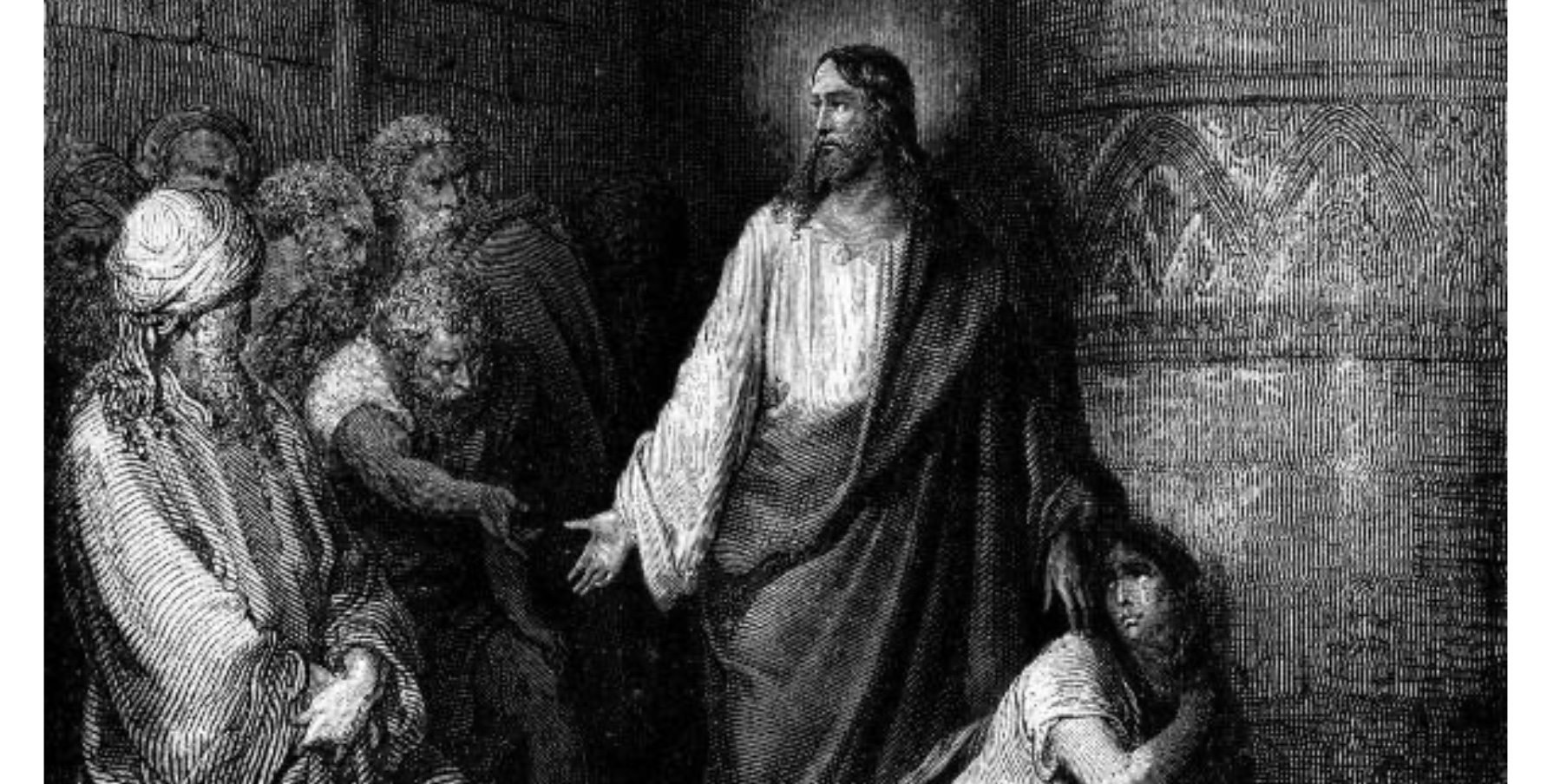
In today’s Gospel account from John, many people gathered around Jesus in the temple area and were sitting and listening to him, when a horrific display of human wickedness breaks in as, “the scribes and the Pharisees brought a woman who had been caught in adultery and made her stand in the middle” (Jn 8:3).
This act of depravity is worse if we spend any time thinking about this verse. This was a calculated plan hatched by the scribes and Pharisees. They had been watching this woman for the opportune time to break in and catch her, using their own words of accusation, in “the very act of committing adultery” (Jn 8:4). If this group was this calculated and malicious, they would not have probably even given her the opportunity to put her clothes on, but grabbed her and brought her to the temple area.
The shame that this woman must have had to endure as she was dragged openly and publicly through the streets was made worse because this crowd brought her to the temple area. The temple was where people came to give sacrifice to atone for their sins and to worship God. What was worse was that the dehumanization of this woman most likely had nothing to do with bringing her to repentance, but had all to do with demeaning her for their own twisted ends to trap Jesus.
The Pharisees and scribes hatched this plot just to trap Jesus in what they believed was a fool proof way to bring charges against him. If Jesus did not follow the law of Moses and condemn her to be stoned, he could be charged for speaking out against the Mosaic law. If he did condemn her, he then could be charged by Roman law. Only the Roman authorities could institute the death of a person.
Jesus bent down and began to write on the ground with his finger (Jn 8:6). With this action, Jesus could have been buying some time to think over his response. He could have just been showing an attitude of indifference toward the charges presented. The truth is, we also do not know what Jesus wrote in the dirt that day. St. Jerome proposed that he was writing the sins of those gathered around him as they were waiting for his judgment. Another interesting speculation is that Jesus was again showing his foundation in the prophetic tradition.
Jesus could have been quoting the prophet Jeremiah: “O LORD… all who forsake you shall be put to shame; those who turn away from you shall be written in the earth, for they have forsaken the LORD, the fountain of living water” (Jeremiah 17:13, RSV). Jesus had just shared a few verses earlier that anyone who believed in him : “Out of his heart shall flow rivers of living water” (John 7:37, RSV). Those who came to trap Jesus could have found themselves getting caught in the trap instead and receiving God’s judgement for their forsaking God present before them in His Son (Pitre).
Whatever Jesus wrote had an effect unless the pregnant pause before Jesus spoke: “Let the one among you who is without sin be the first to throw a stone at her” (Jn 8:7) and when he returned to writing allowing for another pregnant pause allowed for his words to sink in. One by one, starting with the elders, the accusers, and even those who had gathered to listen to Jesus that morning, all walked away.
Jesus stood a second time only to find the woman standing before him. This is the first time he addressed her: “Has no one condemned you?” She replied with three simple words, “No one, sir.” And Jesus replied, “Neither do I condemn you.” Jesus did not seek to inflict any more shame on this woman and forgave her. Nor did he dismiss the sin. In Jewish law, there needed to be two witnesses to condemn someone of a capital crime. There was no witness left to do so. Jesus chose not to condemn her but also stated clearly, “Go, and from now on do not sin any more” (Jn 8:8-11)
Jesus and the woman looked eye to eye in the temple area, a stone’s throw away from the Mercy Seat of God. Jesus met this woman surrounded in her sin, shame, and anguish with mercy and forgiveness. He cleansed the temple precincts of the hypocrisy of the Pharisees and scribes who had darkened the area that day and his forgiveness purified her from the stain of her sin. This was no cheap grace. Jesus did convict the woman of her sin, but did so in a way that respected her dignity, unlike those who hauled her out publicly to humiliate her for their own malicious purposes. Jesus convicted her in private, once everyone had gone.
In forgiving her with love and mercy, I can imagine, that she, who had been dragged through the streets, not only experiencing the humiliation, but fearing that her death was imminent, then walked away from her encounter with Jesus crying not just with tears of relief, but with tears of joy. Could the words of Isaiah have come to her mind then, “Remember not the events of the past, the things of long ago consider not; see I am doing something new” (Isaiah 43: 18-19). This woman having drunk from the “stream of living water” walked away born again, a new creature, transformed by the purifying love of God.
This account embodies the gift of the Sacrament of Reconciliation. We all sin and fall short of the glory of God. We bring our sins, contrition, fears, and are to be met with the loving mercy and forgiveness of Jesus in the priest. Not so that we can then just go out to do whatever we want to again, but to go and sin no more. To not only be forgiven, but to also receive the grace to help us to resist temptation, to heal, and through participating in the life in Jesus, walk with him along the way to restore the glory we lost.
————————————————————–
Painting: May we experience and share the same mercy and forgiveness.
 Spiritual Stepping Stones