“Do not be unbelieving, but believe.”

Then Jesus said to Thomas, “Put your finger here and see my hands, and bring your hand and put it into my side, and do not be unbelieving, but believe.” Thomas answered and said to him, “My Lord and my God” (Jn 20:27-28)!

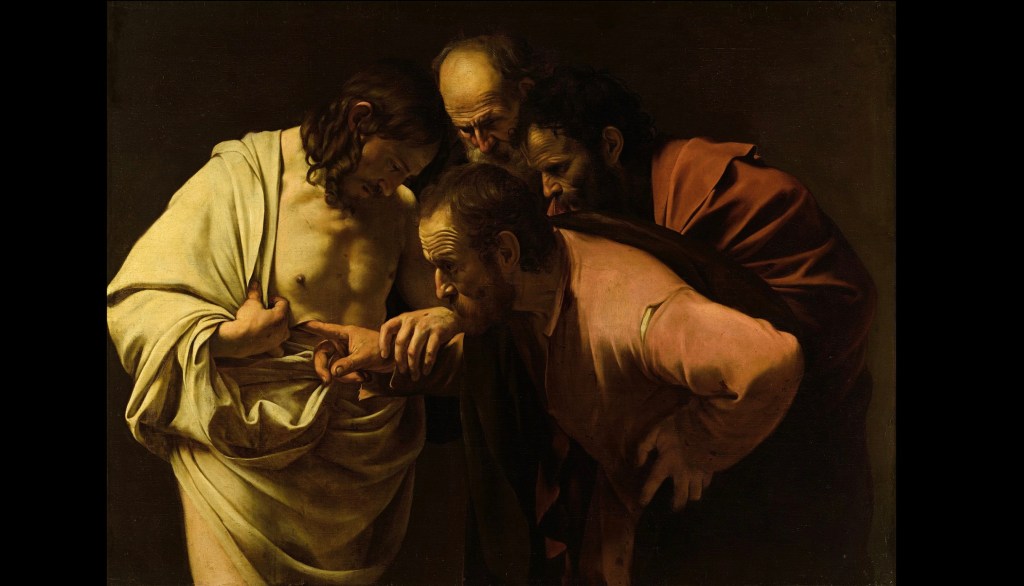
Thomas’ acclamation “My Lord and my God!” came from his seeing the risen Jesus and his wounds. Jesus rose from the dead, conquered death, and yet he still bore the wounds of his Passion. This is a profound message to the Apostles, those Jesus sent to proclaim his Gospel, and for us who have been called to follow him today.

The Body of Christ continues to be wounded by the sin and division of our fallen nature that Jesus experienced the fullness of on the Cross. Many people doubt and do not believe today in God because they question, “How can a loving God allow such suffering and pain, especially of the innocent?” A valid question. Many examples may come to our minds, from indirect or direct experience. Pondering this question can then lead to a series of others, “Why God? Where were you? Do you care?”

Some suffering we can bring upon ourselves by removing ourselves from God’s protection, our own selfish choices can lead to pain that God allows us to experience. We can turn away from him because of suffering that has happened in our lives. We can choose disordered affections and false goods seeking to fill the deep loneliness that we feel. There is evil in the world and selfish acts that ripples our and affects us. The enemy of God seeks to divide, destroy, and kill.

Through it all, God is present, God cares, though again we are limited in what we can see and understand. God allows suffering which can reveal our weaknesses, our attachments and our sins. He allows us to see our lives without him and what the promise if of our life with him. Choosing to turn to him and receive his love, may not change a particular suffering we may be experiencing but we will feel his presence and consolation, and receive the strength to endure and overcome.

Even in the case of death, God reveals a deeper truth that death does not have the final answer. His Son does. That is what Jesus showed Thomas in bringing him close to touch his wounded side. Jesus rose from the dead and conquered it, but the scarring of his wounds remained. Jesus calls us to draw close and to touch his wounds so we can embrace our own, those we can and cannot see. As we allow Jesus to come close to those areas we have not wanted anyone else to see, those sins we never thought would be forgiven, and when we trust and open our hearts and minds to Jesus, we experience his healing.

Though the temptation is strong to deny, rationalize, or flee from the conflict, challenges, hurt, and pain that we and others experience, we must resist. If we don’t embrace our or another’s trials we will not come to the root cause of them. Jesus understands the suffering of the innocent, for he himself was innocent and sinless and was crucified on the Cross. Fair? No. He was willing to do so to free us from our sin, to be present now in this particular time and moment to show us a way out of our darkness, pain, and suffering.

We can be easily overwhelmed with the suffering in our country, our world, or the personal challenges right before us. Denial or indifference is not the answer. There is an act of balancing that Jesus calls us to participate in as we allow ourselves to be loved by and learn to love God, love others, and love our neighbors as ourselves. The answer is found when we are willing to encounter Jesus, grow in our relationship with him, and follow his lead.

We do not know where Thomas was when the Apostles first encountered Jesus after the Resurrection, but we do know he was not with Jesus. Apart from Jesus, we can do nothing, yet with Jesus, the one who conquered death, all things are possible! When we feel overwhelmed, helpless, or indecisive, return to Jesus and acclaim with Thomas, “My Lord and my God!” and begin again with him.

Jesus is present, just as he was with Thomas and the other apostles. He invites us to be engaged in the unique way he calls us to make our corner of the world a little better. As Jesus enters the chaos of our lives, he prompts us to enter into the chaos of another’s, to hear their story, their experience, be present, and allow the Holy Spirit to happen.

St. Thomas, pray for us!


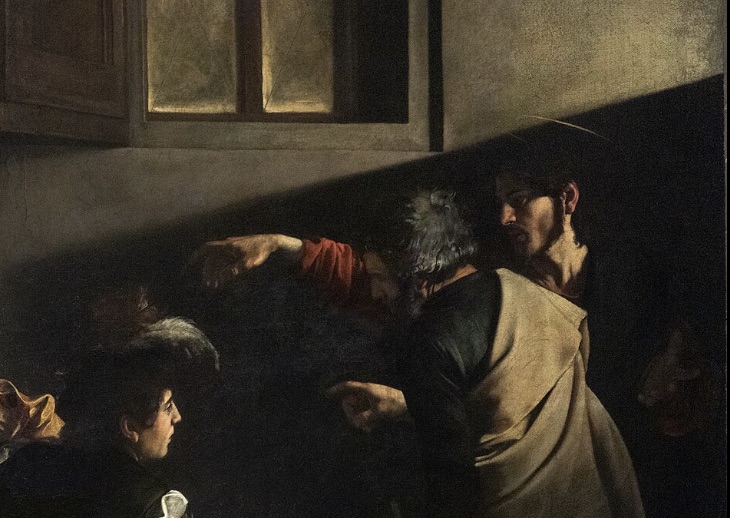
Painting from Caravaggio: Incredulity of St Thomas, 1601-1602

Link for the Mass readings for Friday, July 3, 2026

Let us not demean but embrace our humanity as well as those in need.

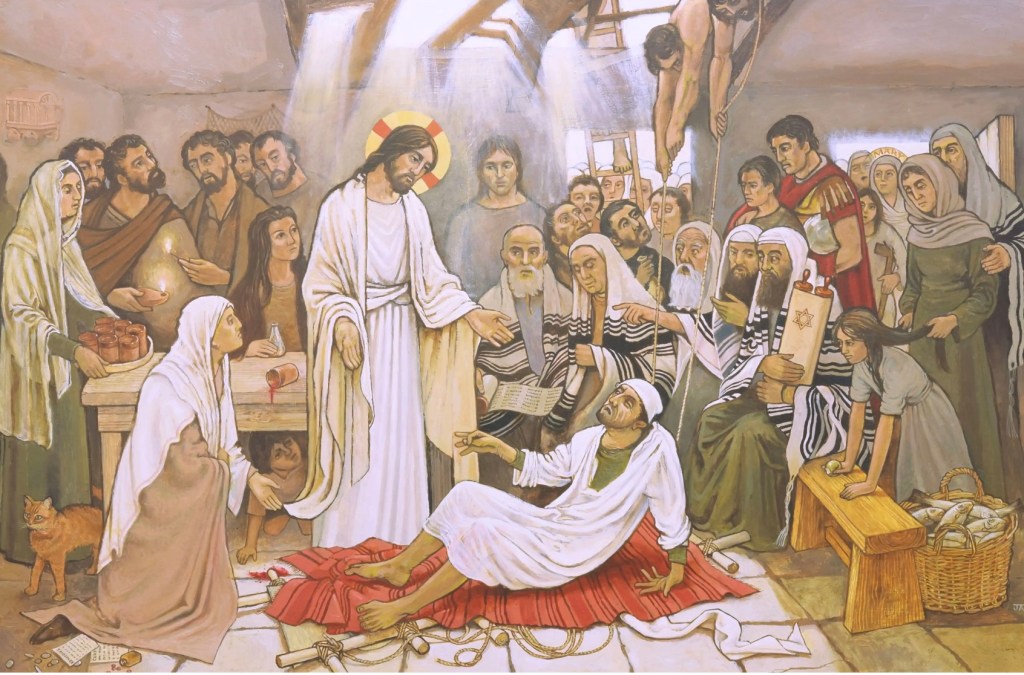
And there people brought to him a paralytic lying on a stretcher. When Jesus saw their faith, he said to the paralytic, “Courage, child, your sins are forgiven”(Mt 9:2).

Matthew’s account of this scene is much simpler than Mark and Luke’s, but the point is the same. The person paralyzed received healing because some people were willing to bear his weight and creatively bring him to Jesus. In neither of the three Gospel accounts do we know who the people are that bring this man to Jesus for healing. Were they family, friends, or neighbors, combination? It does not matter. They were aware of someone in need, they believed Jesus could heal him, and they put forth the effort to bring this man to Jesus.

Are we like the people in today’s Gospel; are we aware, do we care? St. Mother Teresa often said that people are “not only hungry for bread – but hungry for love, naked not only for clothing – but naked for human dignity and respect, homeless not only for want of home and bricks, – but homeless because of rejection.” If we are living our faith, indifference to the needs of others is not an option. Rationalizing why we ought not to care, or worse giving in to our fears and prejudices so as to dehumanize and reject others in need are counter to the call of Jesus.

When we may be closed off to helping others, a bit impatient or short, less than forgiving or merciful, it could be that we have been curving in upon ourselves and not allowing God to love us in areas we may not feel all that lovable. Yet, it is exactly there that Jesus yearns to enter. He seeks to love us in our most wounded places and where we feel shame. All sin is a curving in upon ourselves and away from God. Doing so also distorts reality and keeps us distant from the antidote. When we allow Jesus into our poverty, sin, and shame, we can be loved, forgiven, and consoled. Then we can embrace a disposition that is more open to sharing mercy, forgiveness, love, and care for others.

How is God speaking to and moving our hearts? There are so many who are hurting and suffering. May we not see people as interruptions but invitations to experience God’s grace. We just need to be honest about where God is leading us and act as the four in our Gospel reading did. When we are aware, willing to come close to those in need, access our personal gifts of creativity, and collaborate with Jesus, miracles can and still do happen. Structures of inhumanity and injustice can be turned around when we are willing to be loved by God and love others in return.

Pope Francis has been consistent and clear about the dignity of all life. He tweeted (do we still say tweet?) back in 2013: “It is God who gives life. Let us respect and love human life, especially vulnerable life in a mother’s womb.” During Mass on Sunday, January 14, 2018 he shared: “Migrants and refugees don’t represent just a problem to be solved, but are brothers and sisters to be welcomed, respected and loved.” On June 3, 2020, Pope Francis said, “My friends, we cannot tolerate or turn a blind eye to racism and exclusion in any form and yet claim to defend the sacredness of every human life”.


Painting: The Lord hears the cry of not just a select few but all of us in need. Are we willing to share our need, receive God’s love and so help others?

See also Mark 2:1-12, Matthew 9:1-8 and Luke 5:17-26

Link for the Mass readings for Thursday, June 30, 2022

Revenge, retribution, or eye for an eye? Neither. “Offer no resistance to evil” – Love, forgive, and show mercy.

Today we receive the fifth antithesis, in which, Jesus said to his disciples: “You have heard that it was said, An eye for an eye and a tooth for a tooth. But I say to you, offer no resistance to one who is evil” (Mk 5:38-39). The Mosaic law, an eye for an eye, that Jesus first addressed was originally an attempt to curb the emotive response of revenge. If someone had killed a clan or tribal member, there would have been those who would choose to retaliate by inflicting as much carnage as possible to the people responsible, even up to and including the death of the whole clan or tribe, even the women and children. The rationale behind this was that there would then be no one to come back for revenge. The idea of seeking instead an eye for an eye was to temper the retribution to a more measured and proportionate response.

Jesus though is saying that “an eye for an eye” does not go far enough, and raises the challenge of being his disciple to a higher level, being that even the thought of revenge is not to be considered. Jesus is not just seeking to lessen the cycle of violence, he is giving us the means to end it. Forgiveness is the cornerstone of the teachings of Jesus. Instead of seeking revenge, Jesus is commanding that we seek to forgive those who have harmed us. We who pray the Our Father or the Lord’s prayer, are to take to heart and be mindful of the words we pray each and multiple times each day: “forgive us our trespasses as we forgive those who trespass against us.

The urge for revenge is powerful and primal. Revenge is wired into our survival instinct to protect ourselves. Jesus invites us to grow beyond our mere instinctual responses and survival instincts. He is calling us to mature beyond the bestial and to be a people who do not merely survive, but thrive. Jesus is seeking to infuse us with his divine life so that we will be transformed. This is true not only for ourselves but for those who would seek to do us harm. Instead of striking back with revenge, we are to be flexible and adept enough to instead appeal to their conscience. We are to take all that others throw at us, and meet them with the courage to stand, receive their worst, and disarm them with the blinding light of the love and forgiveness of Jesus.

This is no easy task, especially when we experience ongoing injustice and needless loss of life. To put into practice such teachings as the turning of the other cheek, we need to start small. We need to resist the immediate thoughts of revenge that arise for the smallest of offenses. When someone makes a snide remark, and/or offers demeaning or dehumanizing comments directed at us or others, we resist retaliation. We hold them accountable by not adding more fuel to the fire. Our hope is to receive the offense and mirror back to them what they have done such that their conscience may be convicted. By loving them instead of striking back in kind, we may win back a brother or sister.

To be a disciple of Jesus means we need to be contemplatives in action in the face of cruelty, division, and dehumanization. We need to ground ourselves in the word of God as we return to these challenging teachings of the Beatitudes and antitheses often, believe in them, meditate and pray upon them, keep them at the forefront of our minds and, with the courage and guidance of the Holy Spirit, put them into practice. Doing so will then help us to be centered and intentional when conflict arises. Instead of responding with a knee-jerk reaction, we can breathe and seek the Holy Spirit’s guidance and then choose how best to respond.

Some would say this is naive and impossible. It is true that we will not be able to resist thoughts, words, and acts of revenge and walk the path of forgiveness on our willpower alone. We need to surrender our ego and pride to Jesus, who as the Son of God became one with us in our humanity, experiencing our humanity at its worst, so that we can become one with him in his divinity and become human at our best. As we receive his love, forgiveness, and mercy, we will be transformed. We will be even more transformed when we love, forgive, and extend mercy to others.

———————————————————–

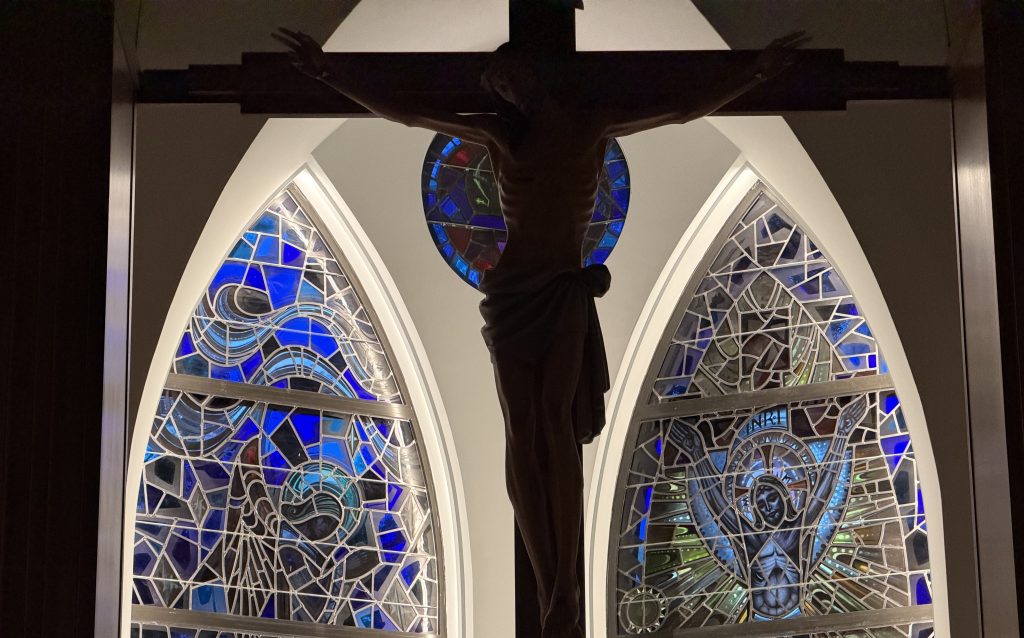
Photo: Jesus has taken our sins, our worst, and our inhumanity upon himself on the Cross to forgive us and show us that there is a way through our darkness into his light.

Link for the Mass readings for Monday, June 15, 2026

Let not the sins and wounds of our past define us. Let Jesus do something new in us.

In today’s Gospel account from John, many people gathered around Jesus in the temple area and were sitting and listening to him, when a horrific display of human wickedness breaks in as, “the scribes and the Pharisees brought a woman who had been caught in adultery and made her stand in the middle” (Jn 8:3).
This act of depravity is worse if we spend any time thinking about this verse. This was a calculated plan hatched by the scribes and Pharisees. They had been watching this woman for the opportune time to break in and catch her, using their own words of accusation, in “the very act of committing adultery” (Jn 8:4). If they were this calculated and malicious, they would not have probably even given her the opportunity to put her clothes on.
The shame that this woman must have had to endure as she was dragged openly and publicly through the streets was made worse because they brought her to the temple area. The temple was where people came to give sacrifice to atone for their sins and to worship God. What was worse was that the dehumanization of this woman most likely had nothing to do with bringing her to repentance, but had all to do with demeaning her for their own twisted ends to trap Jesus.
The Pharisees and scribes hatched this plot just to trap Jesus in what they believed was a fool proof way to bring charges against him. If Jesus did not follow the law of Moses and condemn her to be stoned, he could be charged for speaking out against the Mosaic law. If he did condemn her, he then could be charged by Roman law. Only the Roman authorities could institute the death penalty.
Jesus bent down and began to write on the ground with his finger (Jn 8:6). With this action, Jesus could have been buying some time to think over his response. He could have just been showing an attitude of indifference toward the charges presented. The truth is, we don’t know what Jesus wrote in the dirt that day. St. Jerome proposed that he was writing the sins of those gathered around him as they were waiting for his judgment. Another interesting speculation is that Jesus was again showing his foundation in the prophetic tradition.
Jesus could have been quoting the prophet Jeremiah: “O LORD… all who forsake you shall be put to shame; those who turn away from you shall be written in the earth, for they have forsaken the LORD, the fountain of living water” (Jeremiah 17:13, RSV). Jesus had just shared a few verses earlier that anyone who believed in him : “Out of his heart shall flow rivers of living water” (John 7:37, RSV). Those who came to trap Jesus could have found themselves getting caught in the trap instead and receiving God’s judgement for their forsaking God present before them in His Son (Pitre).
Whatever Jesus wrote had an effect and allowed for the pregnant pause before Jesus spoke: “Let the one among you who is without sin be the first to throw a stone at her” (Jn 8:7). Jesus returned to writing in the dirt, allowing for another pregnant pause. One by one, starting with the elders, the accusers, and even those who had gathered to listen to Jesus that morning, all walked away.
Jesus stood a second time only to find the woman standing before him. This is the first time he addressed her: “Has no one condemned you?” She replied with three simple words, “No one, sir.” And Jesus replied, “Neither do I condemn you.” Jesus did not seek to inflict any more shame on this woman and forgave her. Nor did he dismiss the sin. In Jewish law, there needed to be two witnesses to condemn someone of a capital crime. There was no witness left to do so. Jesus chose not to condemn her but also stated clearly, “Go, and from now on do not sin any more” (Jn 8:8-11)
Jesus and the woman looked eye to eye in the temple area, a stone’s throw away from the Mercy Seat of God. Jesus met this woman surrounded in her sin, shame, and anguish and met her with mercy and forgiveness. He cleansed the temple precincts of the hypocrisy of the Pharisees and scribes who had darkened the area that day and his forgiveness purified this woman from the stain of her sin. This was no cheap grace. Jesus did convict the woman of her sin, but did so in a way that respected her dignity, unlike those who hauled her out publicly to humiliate her for their own malicious purposes. Jesus convicted her in private, once everyone had gone.
In forgiving her with love and mercy, I can imagine, that she, who had been dragged through the streets, not only experiencing the humiliation, but fearing that her death was imminent, then walked away from her encounter with Jesus crying. Crying not just with tears of relief, but with tears of joy. Could the words of Isaiah have come to her mind then, “Remember not the events of the past, the things of long ago consider not; see I am doing something new” (Isaiah 43: 18-19). This woman having drunk from the “stream of living water” walked away born again, a new creature, transformed by the purifying love of God.
This account embodies the gift of the Sacrament of Reconciliation. We all sin and fall short of the glory of God. We bring our sins, contrition, fears, and are to be met with the loving mercy and forgiveness of Jesus in the priest. Not so that we can then just go out to do whatever we want to again, but with his help, to go and sin no more. To not only be forgiven, but to also receive the grace to help us to resist temptation, to heal, and through participating in the life in Jesus, walk with him along the way to restore the glory we have lost.
————————————————————–
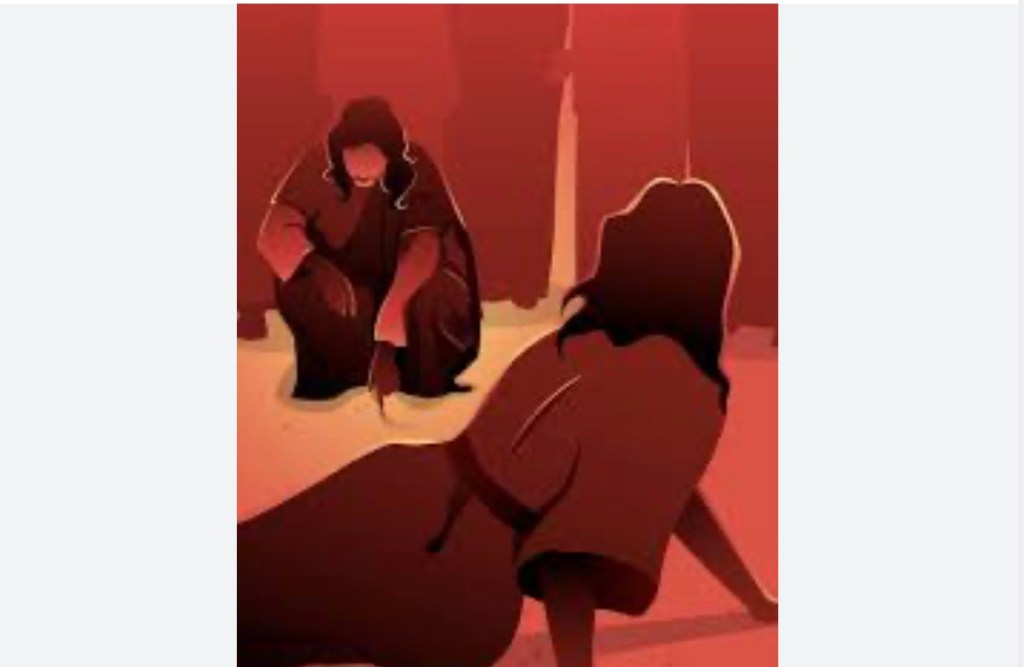
Painting: May we experience and share the same mercy and forgiveness.
Dr. Brant Pitre, Catholic Productions
Link for the Mass readings for Monday, March 23, 2026

The antidote to division and polarization? Jesus commands us to be merciful, forgiving, and giving.

Polarization, division, and finger-pointing appear to continue to be the order of the day on the national level. Unfortunately, it is taking a firmer hold at the community and familial level and has crept into the Church as well. Instead of entering into and embracing the blame game, may we instead look in the mirror and honestly assess how we may contribute to division and isolation. The good news is that we have founding motto that we can aspire to; In the United States of America – E Pluribus Unum – Out of Many One and put into practice the words of Jesus’ prayer request to his Father – “That they may all be one” (John 17:21).

It is important to take a step back, take a breath or two or three, and examine our conscience and honestly acknowledge how we are contributing to the divisiveness and polarization through our own thoughts, words, and actions. Then we will be in a better position to act instead of react. We can disagree and offer different points of view and seek different approaches to solve problems respectfully when we are willing to engage in dialogue and collaboration instead of forcing or seeking to prove our own point.

Let leads us back to the basics of Jesus’ teachings and we are given another good one today:

“Be merciful, just as your Father is merciful” (Lk 6:36)

Mercy, from the Hebrew word chesed, meaning to show tender compassion, can help us to turn the momentum away from disunity and polarization and toward respecting the gift of our diversity while at the same time embracing our unity.  Fr. James Keenan, S.J. defines mercy as the willingness to enter into the chaos of another. Instead of imposing our point of view, mercy is the willingness to draw close with a posture of seeking to understand someone. Instead of keeping someone at a distance, reducing them to a caricature, seeking to prove someone wrong, and/or prejudging or labeling, we can instead make a concerted effort to understand, to listen, to seek common ground, and to seek the best in each other.

When we aspire to be merciful we lead with listening, asking questions to seek clarification and better understanding. A merciful perspective even seeks to assess thoughtfully the underlying point of what has been said, even when the message conveyed is emotionally charged, derogatory, and/or inflammatory. There may be some truth in the maelstrom of what has been spewed.

This is why Jesus also encourages us to stop judging and condemning. We are limited by our own finite natures as it is. We are limited also by our own wounds, defensive mechanisms, and knee-jerk responses. We are not God and are not capable of fully reading the heart of another person.

In most cases, we do not know another’s struggles, anxieties, fears, traumas, and experiences. When encountering each another and we notice the anxiety, stress, or fear beginning to rise, it is important to resist slipping into a fight or flight response. We do so when we intentionally breathe, invite Jesus to filter our thoughts, breathe more, and listen more. When allowing someone to vent without taking offense, the person has a chance of feeling heard. Instead of escalating the situation, by not reacting, we can help to bring calm and peace. It is also helpful to let go the need to want to fix the problem at hand.

Jesus commands us to forgive. As God forgives us we are also to forgive others, to let go of grudges. Not to do so means allowing the poison injected to spread. The one who has wounded us has walked away and when we are not willing to forgive, we choose to continue to allow the harm that was inflicted to continue to fester. The antidote is forgiveness. When we forgive, we don’t condone the harm done, nor keep ourselves in harm’s way. When we forgive, we heal.

It is much easier to stay in our shell or bubble. We feel protected and safe so no one can hurt us, but that is not the posture Jesus would have us assume. In doing so, we remain focused on our self. Staying in our bubble suffocates us, stunts our growth, and limits our potential as human beings created in the image and likeness of God. Jesus calls us, not to constrict, to cave in upon ourselves, but to expand, to go out from ourselves, to be agents of love and mercy.

Each moment we have a choice. We can withdraw, remain indifferent, judge, and condemn. Each of these choices contributes to isolation, division, and polarization. We can also follow Jesus’ invitation to seek to be merciful, forgiving, and giving. These choices contribute to building relationships, communion, and unity. In our willingness to forgive, we will promote healing and invite others to forgive and heal. Let us choose in this moment to invite the Holy Spirit to expand our hearts and minds that we may become more understanding, forgiving, and merciful just as our heavenly continues to be with us.

——————————————————————————

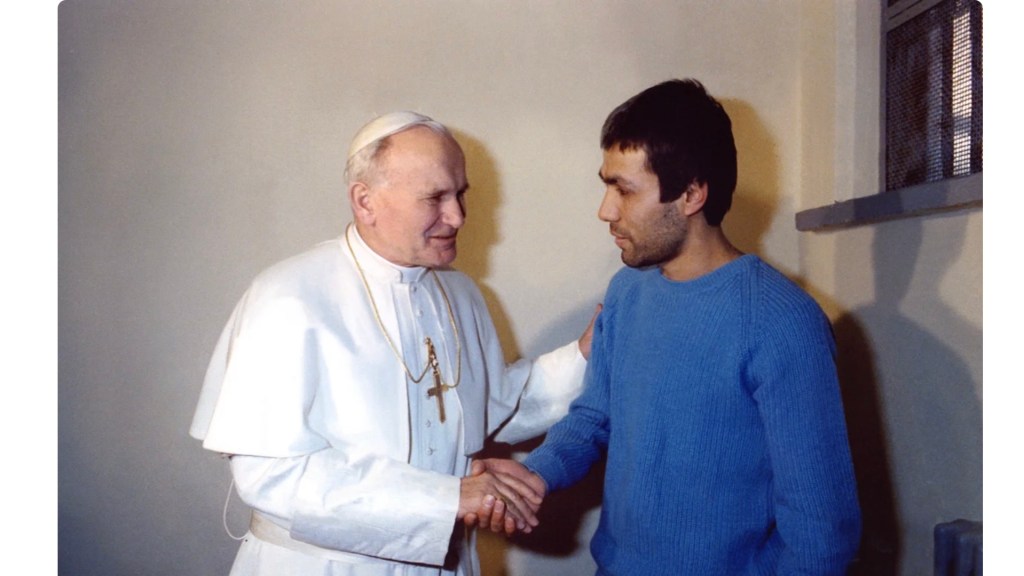
Image: Pope St. John Paul II living Jesus’ teaching of forgiveness in his meeting with the man who shot him, Mehmet Ali Agca – ARTURO MARI/AFP/Getty Images

Link for the Mass readings for Monday, March 2, 2026

When we are willing to die to our selfishness, we will love as God loves us.

“I have told you this so that my joy might be in you and your joy might be complete” (John 15:11).

What is this referring too? “If you keep my commandments, you will remain in my love, just as I have kept my Father’s commandments and remain in his love.”

And what is his commandment? “This is my commandment: love one another as I love you.”

Even when life appears pretty dark and division and suffering seem to be waiting around every corner, we need not give up or fall into despair. God wants us to experience fulfillment, meaning, and joy despite our experiences and not through being lemmings or slaves but as Jesus said, his “friends”. The friends of Jesus are those who hear the word he has received and shared from his Father which are his commandments, the greatest of these is the commandment to love as Jesus and the Father have loved us.

If we truly want to be happy, fulfilled, and have meaning in our lives, Jesus invites us to align our wills with the will of God who is Love. St. Irenaeus taught that the joy of God is the human being fully alive. For us to be fully alive, we need to allow ourselves to be loved by and then love as God loves us. God knows what will fulfill us. Many of us do not experience the fullness of this joy because we are distracted and diverted by apparent goods, instead of striving for what actually is good. Time and discernment with the guidance of the Holy Spirit can help us to distinguish the difference.

Neither will we experience fulfillment and joy through denying, covering over, or being so busy that we don’t face the sufferings in our or other’s lives. We ease suffering by entering into it and receiving God’s loving embrace. He will heal us when we are willing to experience our pain. When we experience our pain with him, we receive his mercy and love, and experience healing at the root. As we heal, as we experience God’s love, we can then help to alleviate some of the sufferings of those around us.

“To love as God does, we must be constantly dying to our own sinfulness and selfishness and living for God. And we live for God by obeying the Father’s will and loving one another” (Martin and Wright, 260). Each day we are invited to choose to curl up in our shell of selfish concern or allow ourselves to be loved and to love in return, to come out of our shell, to risk, and become agents of healing and love. As agents of God’s love and mercy we can help to make our corner of the world a little better.


Photo: With JoAnn, who taught me how to come out of my shell, to live, and to love.

Martin, Francis and Wright IV, William M. The Gospel of John. Grand Rapids, MI: Baker Academic, 2015.

Mass readings for Wednesday, May 14, 2025

“Let he who is without sin cast the first stone.”

In today’s Gospel account from John, many people gathered around Jesus in the temple area and were sitting and listening to him, when a horrific display of human wickedness breaks in as, “the scribes and the Pharisees brought a woman who had been caught in adultery and made her stand in the middle” (Jn 8:3).

This act of depravity is worse if we spend any time thinking about this verse. This was a calculated plan hatched by the scribes and Pharisees. They had been watching this woman for the opportune time to break in and catch her, using their own words of accusation, in “the very act of committing adultery” (Jn 8:4). If this group was this calculated and malicious, they would not have probably even given her the opportunity to put her clothes on, but grabbed her and brought her to the temple area.

The shame that this woman must have had to endure as she was dragged openly and publicly through the streets was made worse because this crowd brought her to the temple area. The temple was where people came to give sacrifice to atone for their sins and to worship God. What was worse was that the dehumanization of this woman most likely had nothing to do with bringing her to repentance, but had all to do with demeaning her for their own twisted ends to trap Jesus.

The Pharisees and scribes hatched this plot just to trap Jesus in what they believed was a fool proof way to bring charges against him. If Jesus did not follow the law of Moses and condemn her to be stoned, he could be charged for speaking out against the Mosaic law. If he did condemn her, he then could be charged by Roman law. Only the Roman authorities could institute the death of a person.

Jesus bent down and began to write on the ground with his finger (Jn 8:6). With this action, Jesus could have been buying some time to think over his response. He could have just been showing an attitude of indifference toward the charges presented. The truth is, we also do not know what Jesus wrote in the dirt that day. St. Jerome proposed that he was writing the sins of those gathered around him as they were waiting for his judgment. Another interesting speculation is that Jesus was again showing his foundation in the prophetic tradition.

Jesus could have been quoting the prophet Jeremiah: “O LORD… all who forsake you shall be put to shame; those who turn away from you shall be written in the earth, for they have forsaken the LORD, the fountain of living water” (Jeremiah 17:13, RSV). Jesus had just shared a few verses earlier that anyone who believed in him : “Out of his heart shall flow rivers of living water” (John 7:37, RSV). Those who came to trap Jesus could have found themselves getting caught in the trap instead and receiving God’s judgement for their forsaking God present before them in His Son (Pitre).

Whatever Jesus wrote had an effect unless the pregnant pause before Jesus spoke: “Let the one among you who is without sin be the first to throw a stone at her” (Jn 8:7) and when he returned to writing allowing for another pregnant pause allowed for his words to sink in. One by one, starting with the elders, the accusers, and even those who had gathered to listen to Jesus that morning, all walked away.

Jesus stood a second time only to find the woman standing before him. This is the first time he addressed her: “Has no one condemned you?” She replied with three simple words, “No one, sir.” And Jesus replied, “Neither do I condemn you.” Jesus did not seek to inflict any more shame on this woman and forgave her. Nor did he dismiss the sin. In Jewish law, there needed to be two witnesses to condemn someone of a capital crime. There was no witness left to do so. Jesus chose not to condemn her but also stated clearly, “Go, and from now on do not sin any more” (Jn 8:8-11)

Jesus and the woman looked eye to eye in the temple area, a stone’s throw away from the Mercy Seat of God. Jesus met this woman surrounded in her sin, shame, and anguish with mercy and forgiveness. He cleansed the temple precincts of the hypocrisy of the Pharisees and scribes who had darkened the area that day and his forgiveness purified her from the stain of her sin. This was no cheap grace. Jesus did convict the woman of her sin, but did so in a way that respected her dignity, unlike those who hauled her out publicly to humiliate her for their own malicious purposes. Jesus convicted her in private, once everyone had gone.

In forgiving her with love and mercy, I can imagine, that she, who had been dragged through the streets, not only experiencing the humiliation, but fearing that her death was imminent, then walked away from her encounter with Jesus crying not just with tears of relief, but with tears of joy. Could the words of Isaiah have come to her mind then, “Remember not the events of the past, the things of long ago consider not; see I am doing something new” (Isaiah 43: 18-19). This woman having drunk from the “stream of living water” walked away born again, a new creature, transformed by the purifying love of God.

This account embodies the gift of the Sacrament of Reconciliation. We all sin and fall short of the glory of God. We bring our sins, contrition, fears, and are to be met with the loving mercy and forgiveness of Jesus in the priest. Not so that we can then just go out to do whatever we want to again, but to go and sin no more. To not only be forgiven, but to also receive the grace to help us to resist temptation, to heal, and through participating in the life in Jesus, walk with him along the way to restore the glory we lost.

————————————————————–

Painting: May we experience and share the same mercy and forgiveness.

Dr. Brant Pitre, Catholic Productions

Link for the Mass readings for Sunday, April 6, 2025

Tired of division and polarization, how about we practice forgiveness and mercy?

Polarization, division, and finger-pointing continue to seem to be the order of the day on the national level. Unfortunately, it is taking a firmer hold at the community and familial level and within the Church as well. Instead of looking for someone to blame for the cause of this situation, we need to look in the mirror and honestly assess how we are contributing to division instead of seeking to uphold the motto of the United States of America – E Pluribus Unum – Out of Many One; or instead of upholding a motto of our faith – “That they may all be one” (John 17:21).

It is important to take a step back, take a breath or two or three, and examine our conscience and honestly acknowledge how we are contributing to the divisiveness and polarization through our own thoughts, words, and actions. Then we will be in a better position to act instead of react. We can disagree and offer different points of view and seek different approaches to solve problems respectfully when we are willing to engage in dialogue and collaboration instead of forcing or seeking to prove our own point.

A beginning place for us this Lent can be to understand and put into practice what Jesus said in the opening of today’s Gospel:

“Be merciful, just as your Father is merciful” (Lk 6:36)

Mercy, from the Hebrew word chesed, meaning to show tender compassion, can help us to turn the momentum away from disunity and polarization toward respecting the gift of our diversity while at the same time embracing our unity.  Fr. James Keenan, S.J. defines mercy as the willingness to enter into the chaos of another. Instead of imposing our point of view, mercy is the willingness to draw close instead of keep someone at a distance, to come to know instead of prove wrong, and to make a concerted effort to understand instead of prejdudge.

When we aspire to be merciful we seek to hear first and assess thoughtfully what has been said, even when the message conveyed is heated, derogatory, and inflammatory. There may be some truth in the maelstrom of what has been spewed. Jesus also encourages us to stop judging and condemning. We are limited by our own finite natures as it is. We are not God and are not capable of fully reading another person.

In most cases, we do not know another’s struggles, anxieties, fears, traumas, and experiences. When encountering one another we need to resist the knee-jerk reaction to judge, and instead, listen first, allow someone to vent without taking offense, and without seeking a way to “fix” them or a problem.

Jesus also reminds us to forgive. As God forgives us we are also invited to forgive others, to let go of grudges. Not to do so means allowing the poison injected into us to spread instead of seeking the healing antidote of forgiveness. The one who has wounded us has walked away and if we are not willing to forgive we continue to do harm to ourselves as we allow that wound to fester.

It is much easier to stay in our shell or bubble. We feel protected and safe so no one can hurt us, but that is not the posture Jesus would have us assume, for in doing so we remain focused on our self. Staying in our bubble suffocates us, stunts our growth, and limits our potential as human beings created in the image and likeness of God. Jesus calls us, not to cave in upon ourselves, but to go out from ourselves, to be agents of love and mercy.

Each day we have a choice. We can withdraw and remain indifferent seeking to protect ourselves, we can choose to dig in our heals to prove we are right and contribute to disunity and polarization, or we can seek to be merciful and build relationships. We can hear and put into practice Jesus’ teachings to resist the temptation to judge and condemn, and instead seek to understand, listen, and forgive. In our willingness to forgive, we can promote healing and invite others to forgive. Let us choose today to allow the Holy Spirit to expand our hearts and minds that we may become more understanding, forgiving, and merciful just as our heavenly Father is merciful.

——————————————————————————

Image: Blessed to receive a touch of God’s forgiveness and mercy many times while at prayer in St. Vincent de Paul Regional Seminary Chapel.

Link for the Mass readings for Monday, March 17, 2025

Let us reflect the light of the mercy of Jesus as the moon reflects the light of the sun.

I say to you, something greater than the temple is here. If you knew what this meant, I desire mercy, not sacrifice, you would not have condemned these innocent men. For the Son of Man is Lord of the sabbath.” (Mt 12:6-8).

Jesus continues to rock established regulations and practices. Here he is challenging the understanding of the Sabbath itself when justifying the accusations leveled toward his disciples who were picking and eating grain on the Sabbath, and he does so in a profound way by saying that,“something greater than the temple is here.” Present in the heart of the temple, the area called the Holy of Holies, was the ark of the covenant. Atop the ark was the lid called the mercy seat of God. Jews believed that this was where God sat and when the blood of atonement was offered from sacrifices, God’s mercy was offered to the people. In the temple then, was the mercy seat, the very presence of God.

Jesus’ claim that he is greater than the temple is putting him on the same level as God. A blasphemous statement to say the least, unless of course, he is God. Jesus even doubles down by claiming that he is the Lord of the sabbath; Jesus used this latest challenge by those Pharisees seeking to trap him to help to reveal to them, his disciples, and us today that Jesus is God!

In quoting Hosea 6:6: “I desire mercy, not sacrifice”, Jesus is not only saying that he is the something greater, but that his Way is something greater. One of the foundational points of the Way of Jesus is mercy. Through the incarnation, the Son of God dwelt among us, became one with us in our humanity. He restored our dignity in the midst of our brokenness and sin. What Jesus said, in defending his disciples eating from the grains of wheat on the Sabbath, he is saying to us today: “What is owed to every human being on the basis of his or her human dignity is personal respect, personal acceptance, and personal care” (Kasper 2014, 202).

We grow closer to God and one another when we put Jesus’ teachings into practice. This is especially true when we bestow acts of mercy on our neighbor. “The works of mercy are charitable actions by which we come to the aid of our neighbor in his [or her] spiritual and bodily necessities. Instructing, advising, consoling, comforting are spiritual works of mercy, as are forgiving and bearing wrongs patiently. The corporal works of mercy consist especially in feeding the hungry, sheltering the homeless, clothing the naked, visiting the sick and imprisoned, and burying the dead. Among all these, giving alms to the poor is one of the chief witnesses to fraternal charity: it is also a work of justice pleasing to God” (Catechism of the Catholic Church).

Jesus came among us not to condemn us, but to forgive, instruct, and advise, to comfort, console, and provide care and accompany us in our needs. He extends mercy as his starting point, as his invitation. Jesus was and continues to be willing to join us in the midst our chaos. He does not wait for us to be perfect or worthy. He only asks if we are willing to allow him to love and heal us and then are we willing to enter the chaos of others and allow him to work through us to provide the same. Reviewing and examining our consciences with the spiritual and corporal works of is a good place to start. Praying about and deciding which one(s) to put into practice is a good next step. 

—————————————

Photo: Rosary walk, view from the midpoint of the Merrill P Barber Bridge, Vero Beach, FL.

Link for the Mass readings for Friday, July 19, 2024

Kasper, Walter. Mercy: The Essence of the Gospel and the Key to Christian Life. NY: Paulist Press, 2004.

Catholic Church. Catechism of the Catholic Church: Revised in Accordance with the Official Latin Text Promulgated by Pope John Paul II. Vatican City: Libreria Editrice Vaticana, 1997.

“Be merciful, just as your Father is merciful.”

My wife, JoAnn, asked me on a couple of occasions what were the favorite clothes of mine that she wore that I would like her to pack for our trip. I said the ones that you feel most comfortable in. She also shared with me what clothes she liked on me, including a pair of black, skinny jeans.

The reason we were having this conversation was because we were moving to Los Angeles. JoAnn had been diagnosed with Stage IV Pancreatic Cancer and we were moving to LA, for her final months this side of heaven.

With all packed, JoAnn flew ahead to Los Angeles with Jack. I would follow two weeks later after I finished out the school year. When I arrived and we were unpacking, JoAnn said, “You didn’t pack your black, skinny jeans.” The look on her face pierced my heart. We didn’t talk about it again.

About four months later and a few days after JoAnn died. The image of the look on her face came back to me again, and with some time to think, I realized that JoAnn was focusing on the clothes because these would be our last weeks together and why not dress in clothes that we both liked on each other. I was devastated that I missed it. The feeling also brought up times throughout our marriage where I did not make the time to listen to JoAnn, where I was impatient, and even treated her with contempt.

In that moment I experienced a deep sense of contrition at how I must have hurt JoAnn in those times. I cried as I walked to the cathedral in downtown LA which was about a half mile away. I got myself together and then fell apart again as I confessed to the priest. When I finished, he said that JoAnn forgave me, and that God forgave me.

Mercy, in Hebrew – Chesed – tender compassion.

God’s mercy, his tender compassion, is what I felt in that moment.

This is what Jesus is calling us to receive and be in our Gospel today. We are to be merciful, just as our Father is merciful with us.

Lent is a time to experience the mercy, forgiveness, and love of God. We do so when we are willing to be humble enough to allow Jesus to show us our sin, where we have fallen short of loving him, ourselves, and one another as he has created us to be. When we see our sin, Jesus does not condemn, berate, or demean us. If we experience any of that, know it is the devil seeking to isolate and separate us from the mercy, forgiveness, and love God wants to embrace us with.

All God asks of us is to be ourselves, to be who he has created us to be and that is his beloved daughter or son. All the other things we think we need to be, we can let go of. We can let go of all the anxiety, stress, and confusion about who we think we ought to be and just breathe deeply, receive, rest, and abide in the love our Father wants to share with us. When we live from this experience of God’s love, we will be in a better place. And when we mess up, we just need to be contrite, confess, be forgiven, do penance, and begin again.

As I shared my experience above, I encourage you to think of a time when you have experienced God’s mercy, chesed – his tender compassion. Rest in that moment and return to it again and again today and this week. When we return to and experience these anchor moments of God’s mercy for us, we will remember who and whose we are, and we will better be able to share God’s mercy, forgiveness, and love with others.


Photo: Treasure each moment you have with those you hold close to your heart. Even in the best of circumstances, time goes too quickly and the unexpected can happen. Let those you love, know you love them, with your thoughts, words, faces, and actions.

Link for the Mass readings for Monday, February 26, 2024