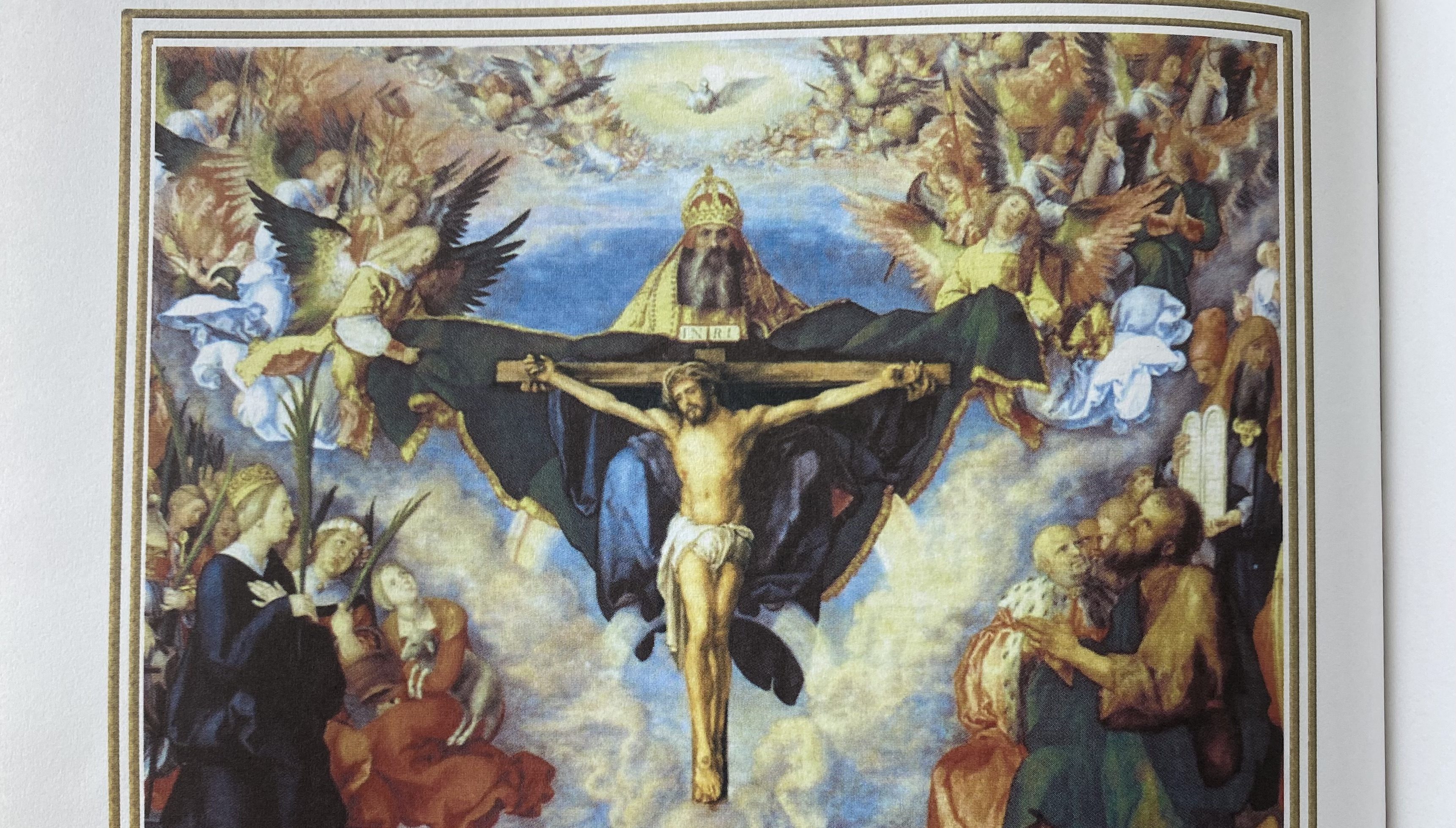
Jesus bestowed his love and his grace upon his Apostles as a gift. The fundamental option, our ultimate end goal, that which we seek from the very depths and core of our being, is to experience the same love that the Apostles experienced. The Creator of all that exists, the One who so transcends our comprehension, that is so beyond our ability to comprehend fully, has come close to us, become one with us in the person of his Son, and loves us more than we can ever imagine.
This reality, the core of the deposit of faith that they received, was not to be hoarded, buried, or to be shared with a select few. This living gift of grace was to be shared by the Apostles, the ones who Jesus called by name, who he hand-picked to receive his message and then sent them forth to proclaim his word. They were to protect it for the purpose of transmitting it accurately to their successors so that it would then be passed on to each successive generation who would receive and make it relevant for their own time.
Jesus said to his Father in his farewell discourse, as recorded by John that: “I made known to them your name and I will make it known, that the love with which you loved me may be in them and I in them” (Jn 17:26). Through our participation in the love of Christ, we are perfected and conformed by his will such that we too can experience and share in the love of the Father.
The Trinity is at the heart of the Gospel, the Good News. The Trinity is a divine communion of three Persons, Father, Son, and Holy Spirit. We have been created with a burning hunger and desire to experience this same communion. Why do we resist saying, “Yes” or more fully embracing this joyous invitation? St Thomas Aquinas in his Summa Theologiae, or Summa, outlines four substitutes or temptations that we may put in place of our highest hope and good; these are wealth, honor, pleasure, and power. In and of themselves, these are not unhealthy desires, as long as God is first and we orient ourselves to them from God’s perspective. Then they will be properly ordered by God’s direction and will.
When we assume the posture of pride, believing that we are the center of our lives and we seek wealth, power, pleasure, and/or honor for our own sake and self-aggrandizement, each will be distorted and disordered. These finite pursuits will leave us empty, or worse lead us into the crippling slavery of addiction. How many times have there been reports of someone who has amassed most or all of these four, and then come to a place of such despair and emptiness that they had taken their own lives?
Through a properly ordered sense of power grounded in love, defined by St Thomas, as the willing the good of the other, those in positions of power and privilege are called to be a voice for those who otherwise would not have a voice. Those with access to wealth, are to recognize that this is a gift from God, and they are to be good stewards of what they have received to help and support others, not only in the limited stance of a hand-out but as a primary means to provide a hand up. To accompany and shepherd those who do not have access such that they can arrive at the point where they can be provided with access, skills, and means to participate in the dignity of meaningful work and gainful employment.
The ultimate goal of pleasure is to embrace the Beautiful, the gift that God provides in which we can experience and enjoy the wonders of his creation. At the same time, we can be participants in the expression of creativity through the arts as well as our everyday actions by finding joy in our interactions with one another. If honor, fame, and glory arise in the faithful, they arise not for their own sake or as to heighten the focus on themselves. This attention comes with the responsibility to further radiate the light and love of God so to evangelize and draw others to the Good, the True, and the Beautiful, as did Peter when he preached and three thousand came to accept the love of Christ. When Pope Francis visited the United States the news for a week was filled with joy and hope. When St Mother Teresa accepted the Nobel Peace Prize she began her speech by saying, “As we have gathered here together to thank God for the Nobel Peace Prize” and ended with the words, “God bless you!” These are all examples of God being the source and focus to bring about the proper alignment and use of wealth, power, pleasure, and fame.
Jesus revealed the love with which his Father loves him and sent him to share with us. He invites each and every one of us to receive and live in the love that he shares with his Father such that we may experience the very presence of the Holy Spirit dwelling within us. May wealth, power, pleasure, and honor, not be distractions or diversions to our embracing the love of God, but a means to radiate his light and love, and to provide opportunities and access for others who otherwise would not have any access.
“Humanity’s participation in the divine communion is the goal of the Father’s saving plan, indeed, the goal of the whole of human history” (Martin and Wright). Relationship with God is to be our fundamental option, our ultimate goal, such that we strive to open our hearts and minds daily to breathe, receive, rest, and abide in his love, be filled with, and experience his joy, and radiate his presence through thought, word, and deed. In this way, we are sent to accompany others, to share God’s presence and love with those who are in need of hope.
In respecting, serving, standing up for the goodness and dignity of each person; in teaching and guiding others to experience the truth; and above all to help others to encounter the beauty and love of the Holy Spirit; we provide others the opportunity to experience the transforming love of the Trinity. As disciples, may we turn away from sin and all that divides, and share our witness and testimony of love and service as led by the Holy Spirit. As we do so, we will help us to make our corner of the world a little bit better today than it was yesterday and to take one step closer toward helping others to realize the salvation and unity that Jesus gave his life for.
————————————————————————————————–
Photo: Accessed from Roman Missal. p. 497. Jesus showed his love for us in giving us all of himself on the cross, holding nothing back.
Martin, Francis and Wright VI, William M. The Gospel of John. Grand Rapids, MI: Baker Academic, 2015.
 Spiritual Stepping Stones